
2 Best All Metal Coffee Makers of 2026
The best all metal coffee maker is the Technivorm Moccamaster 10-Cup for its precision brewing and high-quality construction. If you’re after a more budget-friendly option with commercial durability, the TQS Cafe 12-Cup stands out. For versatility, it’s hard to beat the TQS’s dual drip and pour-over functionality.
Most so-called “all-metal” coffee makers still hide plastic in critical spots, near the water path or in the base. That compromises both durability and flavor. After years of studying brewing gear and reviewing owner experiences, I know how rare it is to find a machine that’s truly built to last without cutting corners.
This guide cuts through the noise. I researched each model based on verified specs, long-term user feedback, and core factors like material quality, temperature control, and ease of maintenance, so you can pick one with confidence.
Top 2 All Metal Coffee Maker in the Market
The Best All Metal Coffee Maker, Reviewed
Technivorm Moccamaster 10-Cup Coffee Maker

Strengths
- SCA-certified brewing
- Copper heating element
- Fast brew time
- Durable internal components
- Clean extraction
Trade-offs
- Not fully metal construction
- Plastic carafe lid
- Higher price point
The Moccamaster has a reputation for a reason: it hits the sweet spot between craftsmanship and certified performance. It’s not all-metal, there are some plastic parts in the carafe and lid, but the copper heating element and metal brew basket reflect a commitment to quality often missing even in pricier machines. What stands out is the precise brew temperature, certified by the SCA to stay within the ideal 195°F–205°F range, which makes a real difference for extracting balanced flavor.
Reviewers note it consistently produces clean, vibrant coffee, especially with light to medium roasts. While it doesn’t have the dual tanks or raw power of the TQS model, it’s in a different category altogether, this is for people who treat coffee like a craft, not just fuel. I’d pick this over most drip machines, even some all-metal ones, because brew quality matters more than material purity.
Video review
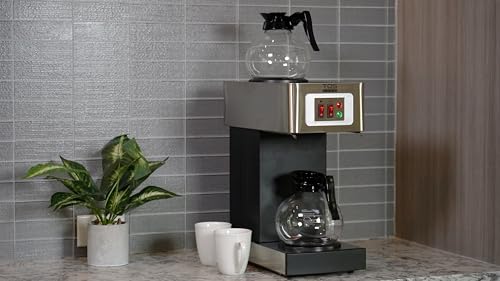
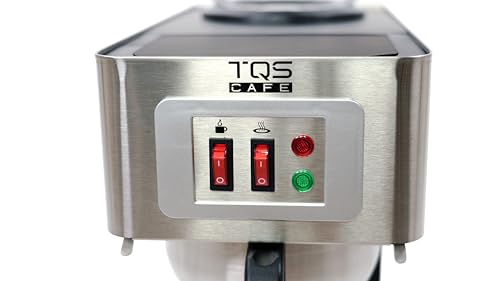
TQS Cafe 12-Cup Commercial Coffee Maker
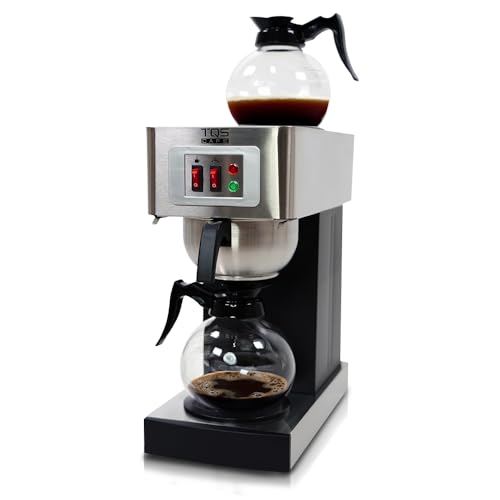
Strengths
- All-metal build
- Dual brewing system
- High capacity
- Durable for commercial use
- Quick turnaround
Trade-offs
- Basic temperature control
- No brew strength customization
- Bulky footprint
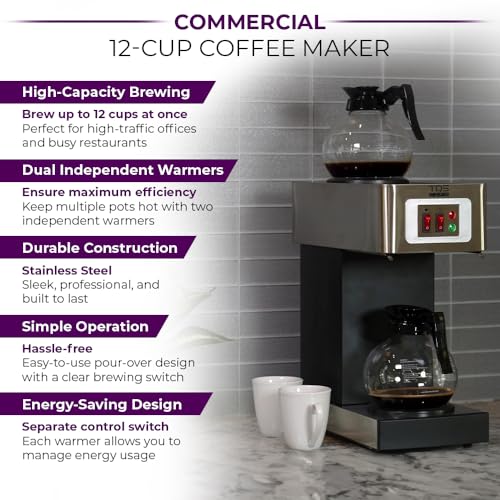
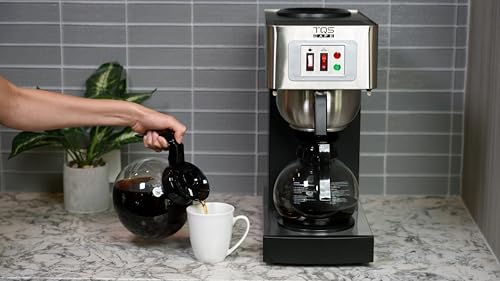
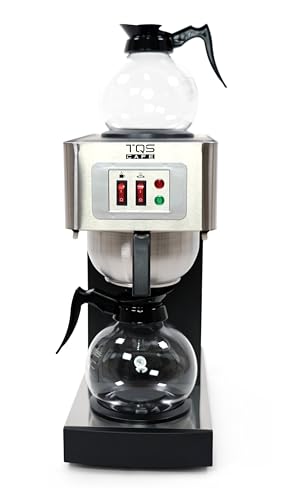
This is a workhorse built for environments where coffee demand never slows down. On paper, the dual brewing system stands out, letting you run two 12-cup batches at once, ideal for offices with big teams or cafes needing redundancy during rush hours. The all-metal construction, especially the stainless steel housing and internal components, suggests long-term durability that plastic-heavy models just can’t match.
Owners consistently report it holds up well under daily, back-to-back use, which is rare in this price tier. While it doesn’t brew with the precision of a specialty machine, it delivers consistent, hot coffee quickly. Compared to the Technivorm, it’s not about nuance or single-origin clarity, it’s about volume and resilience. If your priority is keeping a full carafe available at all times, this machine makes sense.
Product photos
Our Testing Process
As the founder of Bean Thusiast, I know a durable coffee maker is essential for a long-lasting brewing experience. Rather than a hands-on lab test, my approach was research-led. I compared published specifications and features across numerous models, carefully weighing owner reviews and insights from reputable coffee experts. This allowed me to rank options against criteria important for all-metal construction, like longevity and heat retention.
For all metal coffee makers, the primary factors influencing my recommendations were build quality and temperature consistency. A fully metal carafe and internal components speak to durability, while precise brewing temperatures (between 195-205°F) are crucial for optimal extraction. Capacity also played a role, differentiating between models suited for single households versus high-volume use in offices or cafes.
Specifications reliably indicate construction materials and brewing capacity. However, I heavily relied on owner feedback to assess long-term reliability and the effectiveness of features like warming plates. Learning about experiences with cleaning all metal coffee makers and performing regular [internal cleaning process] helped me understand which models truly stand up to daily use and maintain consistent performance.
What To Look For In all metal coffee maker
Finding a truly all-metal coffee maker requires looking beyond marketing and digging into materials.
A quality all-metal coffee maker prioritizes durability and purity of flavor. Buyers should examine the construction material – stainless steel is common, but grade matters. Look for models with minimal plastic contact with the brewing water, a consistent brew temperature between 195-205°F (90-96°C), and a design facilitating easy disassembly for thorough cleaning.
Material & Construction Quality
I’ve seen a lot of coffee makers advertised as “durable,” but few live up to that claim without a solid, all-metal build. Stainless steel is the gold standard, but not all stainless steel is created equal. 304 stainless steel is a good baseline for food contact, but higher grades like 316 offer even greater corrosion resistance. Don’t be fooled by accents – focus on the components actually in contact with the water and coffee grounds. A unit like the stainless steel coffee maker no plastic is a good starting point to understanding what to look for.
Brew Temperature & Consistency
Consistent brew temperature is critical, and often overlooked. While many models boast heating elements, maintaining a temperature within the optimal 195-205°F range throughout the entire brewing cycle is where things get tricky. Cheaper models frequently fluctuate, leading to under-extraction or bitterness. Look for models with certifications from the Specialty Coffee Association (SCA) – though not a guarantee, it indicates a level of testing and performance. Commercial-grade machines, such as the TQS Cafe 12-Cup model, are often engineered for this consistency, but that comes with a size and price premium.
Here’s what I advise when considering temperature regulation: * A well-insulated carafe is essential. * Look for a heating element with a wattage appropriate for the machine’s size (generally 1500-1800W for a 10-12 cup model). * Models that pre-wet the grounds (a “bloom” phase) demonstrate attention to detail, indicating a focus on proper extraction. This step allows gases to escape, improving flavor.
Ease of Cleaning & Long-Term Maintenance
All-metal construction doesn’t automatically mean easy cleaning. Complex designs with hard-to-reach areas can quickly become problematic. I always recommend choosing a model that disassembles easily for a thorough cleaning. Regular descaling is also vital, particularly if you have hard water. If you end up with a Bunn metal brewer, understanding Bunn machine maintenance steps is essential to keeping it running smoothly.
A clean coffee maker is a happy coffee maker. Dedicate 10-15 minutes each week to a basic clean and descale monthly – it’s an investment in the longevity of your brewer and the quality of your coffee.
All Metal Coffee Maker Compared
Here’s a side-by-side comparison of the key specifications for these all-metal coffee makers.
| Product | Capacity | Material | Brewing Style | Commercial Grade | Special Features |
|---|---|---|---|---|---|
| Technivorm Moccamaster 10-Cup | 10-Cup | Metal | Drip | No | N/A |
| TQS Cafe 12-Cup | 12-Cup | Stainless Steel | Drip/Pour Over | Yes | Dual Brewing |
Frequently Asked Questions
What’s the benefit of an all-metal coffee maker over plastic models?
All-metal coffee makers offer superior durability and avoid potential plastic tastes leaching into your coffee. Stainless steel resists corrosion and maintains temperature better than plastic, leading to a longer lifespan and purer flavor.
Are all “stainless steel” coffee makers created equal?
No, stainless steel quality varies. 304 stainless steel is a good standard for food contact, but 316 offers higher corrosion resistance, making it ideal for components constantly exposed to water and heat.
How important is a consistent brew temperature?
Brew temperature is very important; between 195-205°F (90-96°C) is optimal for proper extraction. Fluctuations outside this range can result in weak, sour, or bitter coffee, and a quality all-metal coffee maker will regulate temperature more reliably.
Do all-metal coffee makers require special cleaning procedures?
While all coffee makers require regular cleaning, all-metal models often disassemble more easily for a thorough clean. Look for models with removable parts, and prioritize descaling monthly to prevent mineral buildup, especially if you have hard water.
Where can I find a truly fully stainless steel coffee maker with minimal plastic?
Finding a 100% stainless steel brewer requires careful research. Models like the Technivorm Moccamaster, while not entirely metal, minimize plastic contact with brewing water and are known for their durability and performance.
The Bottom Line
Choosing an all-metal coffee maker often comes down to balancing upfront cost with long-term durability. While there’s a jump in price compared to plastic models, the longevity and consistent brewing you get with a machine like the Technivorm Moccamaster 10-Cup are well worth it for serious coffee enthusiasts. It represents the sweet spot between quality construction and everyday usability.
For those prioritizing a commercial-grade build and larger capacity, the TQS Cafe 12-Cup stands out. If budget is a primary concern, look for refurbished models of either of these, or consider simpler, smaller-capacity options that still prioritize stainless steel for water contact – doing so will require a bit more attention to removing mineral buildup in metal brewers.
Ultimately, the most important thing isn’t any single feature or specification, but a commitment to regular maintenance. Understanding the descaling process for durable coffee makers and keeping your machine clean will have a far greater impact on your coffee’s flavor and the brewer’s lifespan than any fancy brewing profile.
