
Using a Coffee Grinder for Spices: Pros, Cons, and Key Tips
Using a coffee grinder for spices requires a dedicated, inexpensive blade grinder. The porous ground coffee and complex burr mechanics trap tenacious spice oils permanently, guaranteeing flavor transfer. A $200 burr grinder like a Baratza Encore will be ruined, permanently brewing spiced coffee.
Most guides treat this as a simple cleaning challenge. They miss the physical reality. Spice oils are tenacious. They coat burrs, cling to plastic chambers, and seep into the static-prone nooks of a grinder’s interior. What starts as a convenient hack ends with a $200 Baratza Encore that permanently brews spiced coffee.
This guide walks through the mechanical why, compares blade and burr grinder risks, and gives you a step-by-step mitigation plan if you choose to proceed. We will also name the specific spices that will wreck your equipment.
Key Takeaways
- Flavor cross-contamination is guaranteed, not potential. Oily spices like cloves and nutmeg will permanently scent a grinder.
- A dedicated $20 blade grinder is the only safe “yes” for grinding spices. Never use your primary coffee burr grinder.
- Cleaning with rice or bread is a partial fix for dry spices only; it fails completely against oils.
- Burr grinders are mechanically worse for spices because their multiple internal surfaces trap oil and powder.
- The USDA states spices lose potency over time, which is the only real argument for grinding them fresh, but not with your coffee gear.
The One Rule That Prevents Ruined Coffee
Never run pungent or oily spices through a grinder you also use for coffee. This is not a suggestion. Communities like r/spices and Home-Barista.com are filled with reports of ruined equipment. A user grinds cumin for taco Tuesday, cleans the grinder thoroughly, then finds their morning espresso tastes like a fajita. The problem is mechanical.
Coffee and spice grinders function by fracturing dry material. The process creates fine dust and, with spices like cloves or nutmeg, releases volatile oils. These oils coat every internal surface, the burrs, the grind chamber, the exit chute, and are absorbed by the porous plastic used in most consumer grinders.
The odor lingers. It then transfers to the next material processed, which is your expensive single-origin coffee. A blade grinder has fewer parts, making it slightly easier to clean, but the principle remains. Oils stick.
TL;DR: If you value your coffee’s flavor profile, buy a separate, cheap grinder for spices. Full stop.
Why Spices and Coffee Grinders Are a Toxic Match
The conflict comes down to two material properties: oil retention and particle size. Coffee beans contain oils. Spices contain different, often stronger, oils. When you grind, you heat the material through friction. This warming action drives the oils into a more liquid state, allowing them to coat surfaces.
A burr grinder like the Baratza Encore has a 40mm conical hardened steel burr set. The grounds travel through a narrow path between the burrs, across a plastic grind chamber, and out a chute. Each point of contact is a potential trap for spice oil. The steel burrs themselves, while non-porous, can develop a thin, persistent film.
Blade grinders, like a basic Krups or Cuisinart model, have a simpler cavity. But the blade assembly often sits in a recess that collects powder. The underside of the blade is nearly impossible to clean without disassembly. You might get the visible grounds out, but the scent remains in that hidden pocket.
The USDA’s Food Safety and Inspection Service notes that whole spices lose potency over time. Grinding fresh maximizes flavor. This fact is what tempts people to use their coffee grinder. The goal is valid; the tool choice is the error.
Common mistake: Grinding a small batch of dry cinnamon in a blade grinder, assuming a quick wipe cleans it. Cinnamon powder is electrostatic and clings to the lid seal and the blade shaft. The next coffee grind picks up that cinnamon dust, resulting in a subtly spiced cup that tastes off.
Blade vs. Burr: A Cleanability Showdown
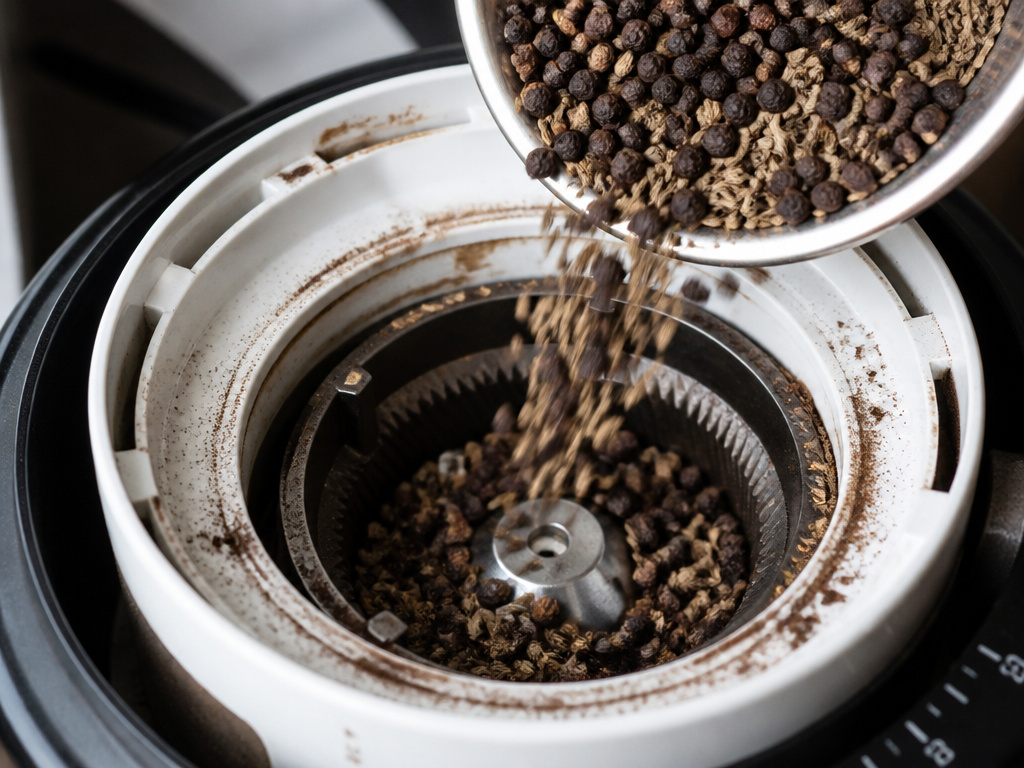
Your grinder type dictates your risk level. Most online advice glosses over this, treating all grinders as equal. They are not.
| Grinder Type | Best For | Spice Grinding Risk | Why It Fails |
|---|---|---|---|
| Conical Burr Grinder (Baratza Encore, etc.) | Consistent coffee grind size | High – Likely permanent contamination | Complex internal pathway with multiple plastic surfaces traps oils and powder. Burrs are difficult to remove and clean fully. |
| Flat Burr Grinder (Many espresso grinders) | Uniform fine grinds for espresso | Very High – Certain contamination | Even more surface area and tighter tolerances. Oily spice residue can impede burr alignment. |
| Blade Grinder (Basic Krups, Cuisinart) | Quick, coarse grinding | Medium – Contamination likely but manageable | Simple cavity, but powder hides under the blade assembly. Easier to dedicate as a spice-only tool. |
The table reveals the core issue. Burr grinders are precision tools designed for one job. Introducing foreign material, especially oily or pungent foreign material, compromises that precision. A blade grinder is a blunt instrument. Its lack of precision makes it a better candidate for spice duty because you aren’t ruining a finely-tuned mechanism.
For coffee, the burr coffee grinder is the undisputed winner for consistency. That same complexity is its downfall with spices. The choice becomes binary: preserve your coffee gear, or sacrifice it.
The Step-by-Step Damage Control Plan

If you have already ground spices in your coffee grinder, or if you are determined to try with a sacrificial grinder, follow this sequence. It minimizes, but does not eliminate, risk.
- Grind a Neutral Absorbent Medium. Immediately after grinding spices, process 1/4 cup of dry, uncooked white rice or a large piece of stale bread in the grinder. The starch acts as a blotters, pulling some of the oil and residual powder out of the mechanism. Discard this material.
- Unplug and Disassemble Completely. Take apart every user-accessible component. This means the lid, the grind chamber, the burr or blade assembly if it removes. Do not just wipe the bowl.
- Dry Brush Every Surface. Use a small, clean brush (a pastry brush works) to physically dislodge powder from crevices, threads, and the underside of blades. Do not use water or cleaners on electrical parts.
- Wipe With a Dry Cloth. Use a microfiber cloth to wipe all parts. Reassemble the grinder.
- Run a Test Batch. Grind a small amount of inexpensive, neutral-flavored coffee beans (like a cheap medium roast). Smell the grounds. If you detect any spice aroma, the grinder is contaminated. That grinder is now a spice grinder.
Skipping the dry-brush step leaves powder in the gap between the burr carrier and the grinder body. That powder slowly disperses over your next five coffee sessions, each cup carrying a faint spice note.
This entire process takes about twenty minutes. Compare that to the five seconds it takes to grab a dedicated spice mill. The math is straightforward.
The Spices That Will Wreck Your Grinder
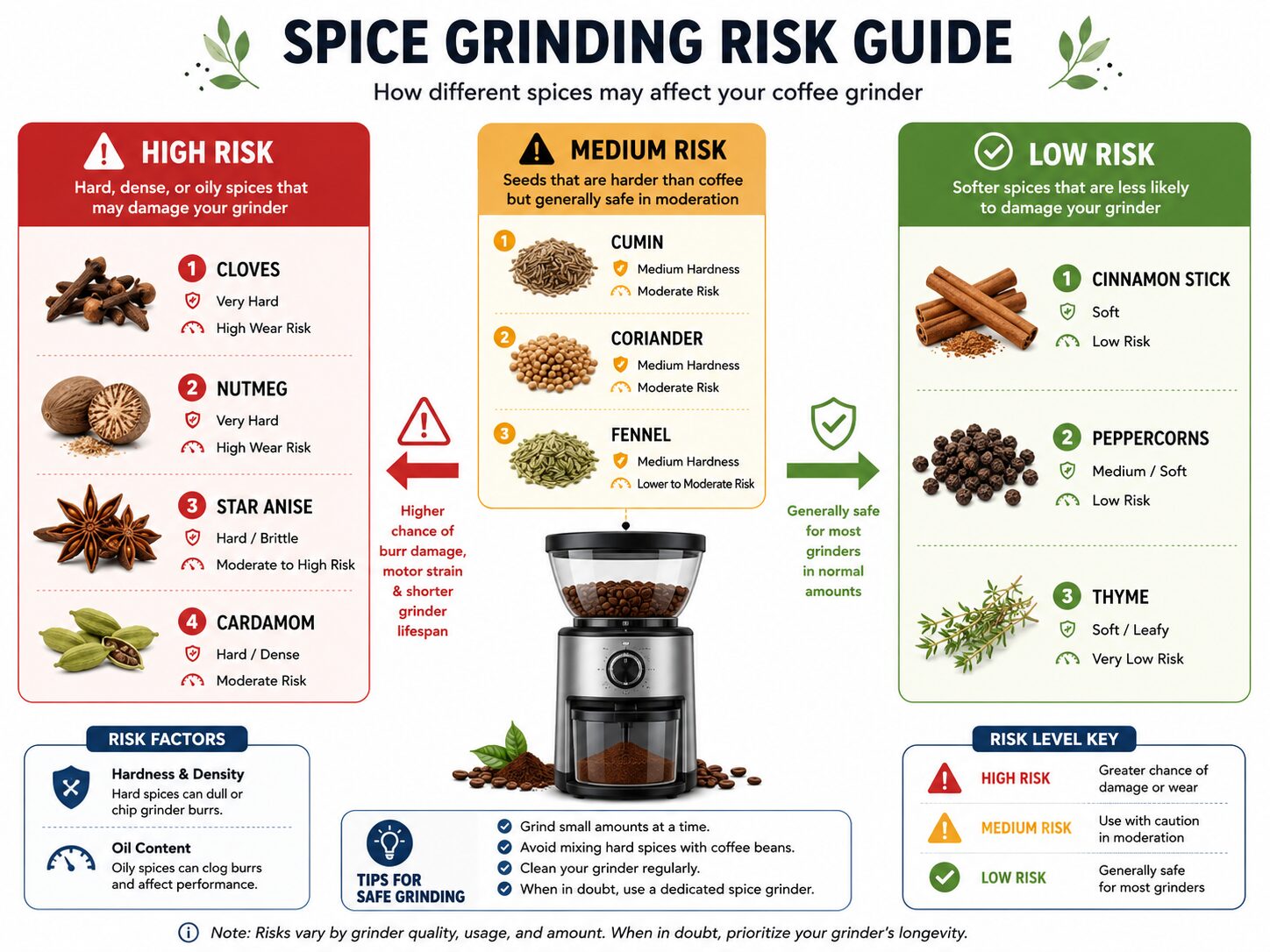
Not all spices pose equal danger. The level of risk is directly tied to oil content and pungency. This is the specific breakdown most articles omit.
- High Risk (Oily & Pungent): Cloves, Nutmeg, Star Anise, Cardamom. These spices contain volatile oils that are both aromatic and sticky. They will coat burrs and plastic with a scent that rice cannot pull out. One use can permanently dedicate a grinder.
- Medium Risk (Dry but Pungent): Cumin, Coriander, Fennel Seed. These are drier but have dominant, pervasive aromas. The powder is fine and electrostatic, clinging to plastic. Thorough cleaning with rice and brushing can work, but trace scent often remains.
- Low Risk (Dry & Mild): Cinnamon Stick, Peppercorns, Dried Thyme. These are the safest candidates if you must share a grinder. They are low-oil and have less aggressive aromas. The rice-and-brush method stands a good chance of success.
If you must use a coffee grinder for spices, stick exclusively to the low-risk category. Never, ever put a high-risk spice through a grinder you care about. The oils in a single nutmeg can scent a grinder for months.
This principle of material risk applies elsewhere in the kitchen. For instance, using a Ninja blender for both coffee beans and pungent ingredients like garlic poses the same cross-contamination problem.
When to Consider a Dedicated Spice Grinder
The argument for a separate tool is not just about coffee purity. It’s about workflow and flavor integrity. A dedicated spice grinder, whether a simple blade model or a manual mill, keeps your coffee gear pristine and your spices tasting true.
I keep a dated, second-hand blade grinder on a shelf. Its sole job is grinding dry, low-risk spices like peppercorns for a specific recipe. It cost less than a bag of good coffee. The peace of mind is worth that small investment. My Baratza Encore never smells anything but coffee.
This is the same logic behind using specific filters for specific machines. You wouldn’t use a Bunn filters in a Breville machine, because the fit and function are wrong. The right tool for the job matters.
I tried the “rice cleaning method” after grinding some coriander in a spare blade grinder. The first rice batch came out yellow. The second batch was less yellow. The third batch still smelled faintly of coriander. The grinder is now labeled “SPICES ONLY” in permanent marker. Lesson learned the hard way.
Frequently Asked Questions
Can you use a blender as a spice grinder?
Yes, and it’s often a better choice than a coffee grinder for large batches. A blender like a Vitamix or a Ninja blender has a larger, smoother container that is easier to clean thoroughly. The blade assembly is also typically more accessible. Pulse in short bursts to avoid turning spices into a paste.
Does grinding rice really clean a coffee grinder?
It helps, but it’s incomplete. Dry rice acts as an abrasive absorbent, pulling out some loose powder and surface oils. It cannot reach into threaded connections or deep crevices, and it is ineffective against the thin oil film left by cloves or nutmeg. It’s a first step, not a solution.
Why does my coffee taste like spices after one use?
Because spice particles or oils are still inside the grinder. The most common hiding spots are the static-cling zone around the plastic grind chute, the underside of the burr or blade assembly, and the seal inside the lid. These areas require physical disassembly and brushing to clean.
Is a pepper mill the same as a coffee grinder?
No. A pepper mill is designed for one specific, low-oil spice and uses a different grinding mechanism (usually adjustable burrs made of ceramic or steel). You should not reuse a pepper mill as a coffee grinder, as the stale pepper oils will taint the coffee, and the mechanism may not be suited for harder coffee beans.
Before You Go
The question has a simple technical answer: yes, a coffee grinder can physically grind spices. The practical answer is far more nuanced. The permanent risk of flavor transfer, especially from oily spices, makes it a poor choice for anyone who values their coffee.
The safest path is absolute separation. Designate a cheap blade grinder for spices and never cross the streams. If you’ve already contaminated a grinder, the rice-and-brush method is your best attempt at salvage, but manage your expectations. Some aromas never fully leave.
Your coffee equipment, from your grinder to your paper filters, works best when dedicated to its primary task. Introducing strong foreign elements is a gamble where the house, your spice cabinet, always wins. Keep a separate mill for your cumin and cardamom. Your morning cup will thank you.
