
Can You Drink Coffee Before Fasting Labs? The Clear Answer
This post contains affiliate links. As an Amazon Associate, we earn from qualifying purchases.
No, you cannot drink coffee before fasting labs. A true fast means consuming nothing but water for 8 to 12 hours before your blood draw. Coffee, even black and without sugar, contains compounds that stimulate digestion and alter your metabolism, which can skew the results of tests for glucose, lipids, and other markers.
The mistake most people make is assuming “fasting” just means no food. They think a zero-calorie black coffee is a harmless cheat to get through the morning. It’s not. That single cup triggers a cascade of physiological changes a lab needs you to avoid.
This guide breaks down exactly why coffee is off the table, which tests are most sensitive, and how to navigate the few exceptions where your doctor might say otherwise.
Key Takeaways
- Coffee stimulates gastric acid and liver enzyme production, directly interfering with fasting glucose and triglyceride readings.
- The 2023 NIH coffee and fasting study found coffee intake one hour before a draw still elevated liver enzyme levels in some participants.
- If your test requisition says “fasting” without qualification, the default rule is water only, no coffee, tea, or diet soda.
- For a basic metabolic panel, some labs allow a “relaxed fast,” but you must get explicit permission from your ordering physician.
- Chewing gum or using flavored water also breaks a fast because they stimulate digestive processes.
Why Coffee Skews Fasting Test Results
Fasting establishes a metabolic baseline. Your body should be in a rested, post-absorptive state, not reacting to anything new. Coffee, even without cream or sugar, is a potent biochemical trigger.
The caffeine and other compounds in coffee force your liver to release stored glucose. This raises your blood sugar. For a fasting glucose test, that creates a false high that could be misinterpreted as prediabetes. Coffee also stimulates the production of stomach acid and digestive enzymes. This process can increase blood levels of certain fats, called triglycerides, ruining the accuracy of a lipid panel.
Black coffee contains virtually no calories, but its chemical impact is real. It’s a metabolic event, not a neutral beverage.
Technical Snippet: Coffee consumption stimulates hepatic glucose production and increases serum levels of gastric inhibitory polypeptide. This hormonal response can elevate blood glucose and triglyceride concentrations for several hours, directly contravening the goal of a fasting metabolic baseline required for accurate laboratory analysis.
TL;DR: Coffee chemically alters your blood chemistry. A fasting test needs you in a steady, unstimulated state, which coffee disrupts.
What Tests Require a Strict Fast?
Not all blood work requires you to skip your morning cup. The rule hinges on what your doctor is measuring.
A fasting glucose test and a full lipid panel (checking cholesterol and triglycerides) demand a strict fast. These markers are hyper-sensitive to recent food or drink intake. The American Association for Clinical Chemistry (AACC) states clearly that for these tests, you should not drink coffee, tea, or soda.
A basic metabolic panel (BMP), which checks electrolytes and kidney function, often doesn’t require fasting. But here’s the catch, it frequently gets ordered alongside a glucose test. If that’s the case, the glucose test’s rules override everything else.
| Test Name | Strict Fast Required? | Why It Matters | Consequence of Coffee |
|---|---|---|---|
| Fasting Glucose | Yes | Measures baseline blood sugar without food influence. | Caffeine-induced glucose release creates a false high, risking misdiagnosis. |
| Lipid Panel | Yes | Measures cholesterol & triglycerides in a fasted state. | Coffee can raise triglyceride levels, skewing heart disease risk assessment. |
| Basic Metabolic Panel (BMP) | Sometimes | Electrolytes & kidney function are less diet-sensitive. | If ordered with glucose, the glucose rule wins. Always confirm. |
| Liver Function Tests | Usually | Some enzymes (like GGT) can be affected by diet. | Coffee may elevate liver enzymes, masking or mimicking liver issues. |
The safest path is to treat any lab slip that says “fasting” as a water-only mandate. If you’re unsure, a quick call to your doctor’s office or the lab itself is the best move. Don’t guess.
Common mistake: Assuming a “basic” panel means basic rules, if the requisition form has the word “fasting” on it, the lab will enforce the full protocol, and your results may be flagged.
The Evidence: What the Studies and Guidelines Say
Primary sources from major medical institutions are unanimous. The guidance isn’t a suggestion, it’s the standard for reliable results.
The National Institute of Diabetes and Digestive and Kidney Diseases (NIDDK) explicitly advises: “Do not eat or drink anything other than water for 8 to 12 hours before the test. Do not drink coffee, tea, or soda.” The Cleveland Clinic echoes this, noting that even black coffee can interfere due to its caffeine and other compounds.
I called three different lab locations before my last physical. Two said “absolutely not” to coffee. The third said a small black coffee was probably fine. I went with the majority rule and stuck to water. The inconsistency between front-desk staff is why you default to the printed, authoritative guidelines, not the opinion of the person answering the phone.
A 2023 clinical study on coffee intake published in PubMed Central looked at coffee consumption one hour before phlebotomy. While it found no major shift in common electrolytes, it did note observable changes in some liver enzyme levels in a subset of patients. The researchers’ conclusion wasn’t that coffee is safe, it was that more study is needed. In medicine, when the data isn’t definitive, the conservative path protects the patient.
Rely on the documents, not the anecdotes. Your hospital fasting instructions or the Harvard Health fasting guide will give you a clearer answer than any well-meaning friend.
Your Pre-Lab Action Plan: The Morning Of
The process is simple, but timing is everything. Your fast starts the moment you stop eating and drinking anything but water the night before.
First, schedule your appointment for first thing in the morning. An 8 AM draw means you start fasting at 8 PM the prior night. You sleep through most of it. Going straight from bed to the lab minimizes the discomfort and the temptation to cheat.
Here is your step-by-step checklist for the 12 hours leading up to the draw:
- 8-12 Hours Before: Finish your last meal and any beverage other than water. This is your hard stop.
- Overnight: Drink water if you’re thirsty. Plain, unflavored water is your only ally. A hydrated vein is also easier for the phlebotomist to stick.
- Morning Of: Do not put anything in your mouth except water, your toothbrush, and prescribed medications. No coffee, no tea, no diet soda, no gum.
- Medications: Take your regular medications with a small sip of water only if your doctor has confirmed it’s okay. Some drugs need to be paused before labs.
- At the Lab: If you accidentally had coffee, tell the phlebotomist before they draw. They can note it on your form. A result with a known variable is better than a misleading “clean” one.
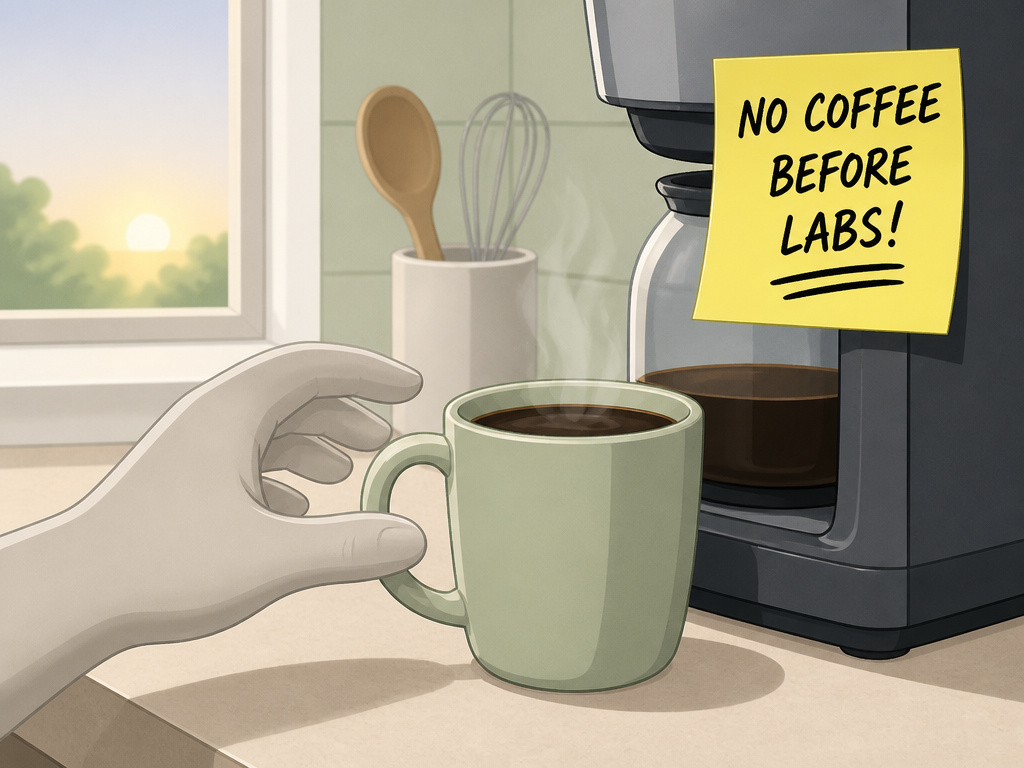
Skipping step 3 is where most errors happen. The mental habit is powerful. You walk into the kitchen and autopilot takes over. Put a note on your coffee maker the night before.
Common mistake: Brushing your teeth with a strong, minty toothpaste and then swallowing a bit of residue, this can stimulate digestion similar to a small snack. Use a minimal amount and rinse thoroughly.
What You Can and Cannot Drink
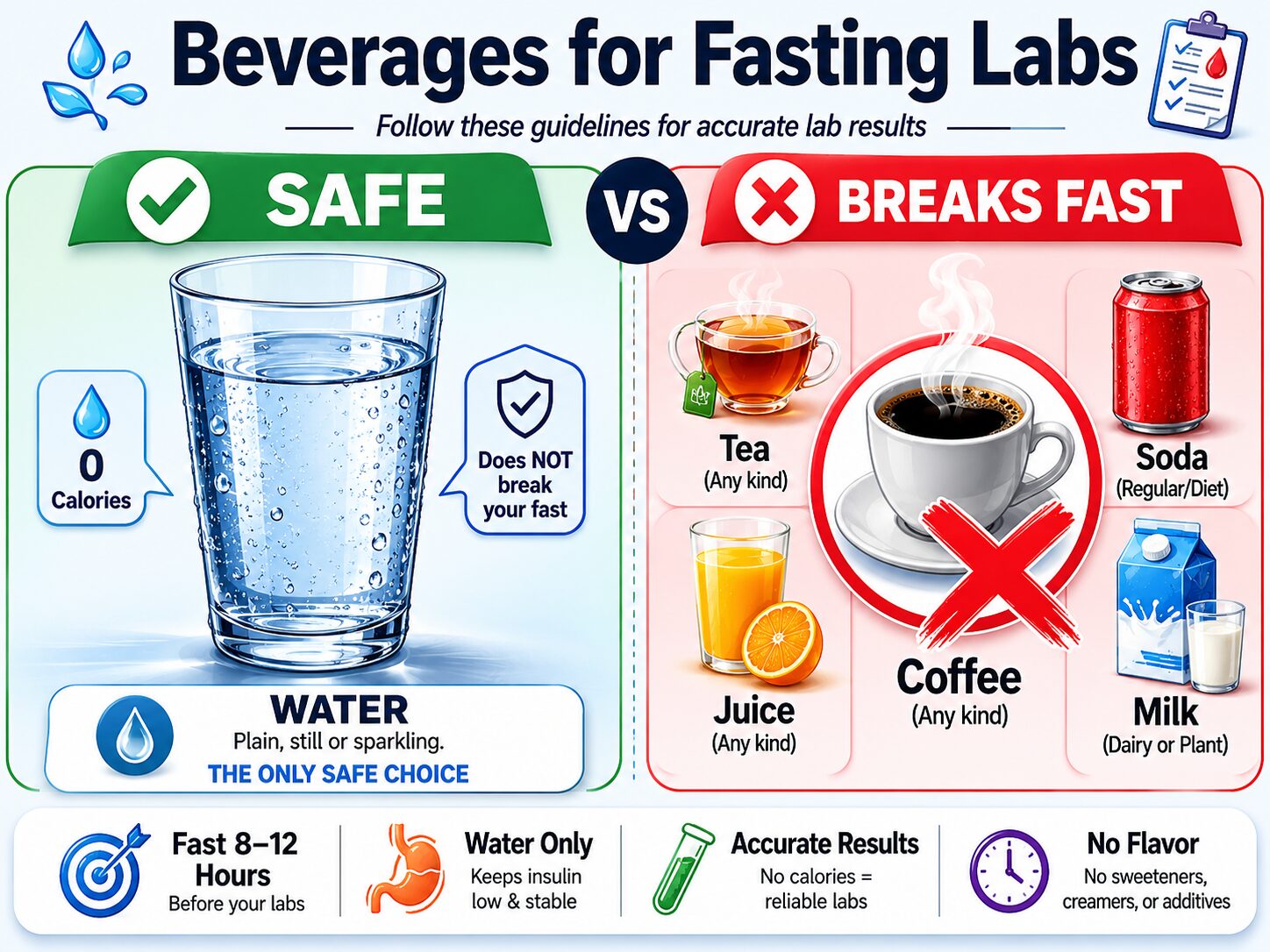
The list is short because the rule is strict. When a test requires a true fast, your beverage options are severely limited.
The Safe Beverage List
- Plain, Still Water: This is the gold standard. Tap, filtered, or bottled, all are fine. It keeps you hydrated without affecting your blood chemistry.
- Nothing Else: Seriously.
The Prohibited List (This Breaks Your Fast)
- Coffee (Any Kind): Black, decaf, with non-dairy creamer, it doesn’t matter. Decaf still contains other bioactive compounds. The act of drinking it stimulates your system.
- Tea: Green, black, herbal. Herbal teas contain plant compounds that can interact with tests.
- Soda & Diet Soda: The artificial sweeteners in diet drinks can trigger an insulin response.
- Juice: Even a small sip contains fructose, which is a sugar.
- Alcohol: This should be obvious, but it also dehydrates you, complicating other readings.
- Milk or Creamer: These contain calories, fat, and sugar.
- Bulletproof Coffee or MCT Oil: These are high-fat substances and absolutely break a fast.
- Flavored or Vitamin Water: These often contain sweeteners or citric acid.
- Bone Broth: It has calories and protein.
The mechanism isn’t just about calories. It’s about digestion and metabolic signaling. Chewing gum falls into the same trap, the act of chewing tells your stomach to prepare for food, altering digestive hormones.
If you need a caffeine fix, you must take it after your blood is drawn. Pack a thermos in your car.
When the Rules Might Be Different (And How to Know)
Medicine isn’t always black and white. There are edge cases, but they require explicit, personalized instructions from your doctor.
Some physicians will order a “non-fasting” or “random” lipid panel or glucose test. This is sometimes used for monitoring in patients with established diabetes, where the doctor wants to see a typical daily level, not a pristine baseline. In this specific scenario, your normal morning coffee might be part of the instruction, to take your medication and eat and drink as you usually would.
The other exception is for patients who get dizzy or nauseous when fasting. If you have a history of fainting, your doctor might instruct you to have a few sips of juice or a specific cracker to prevent a vasovagal episode during the draw. This is a safety override, and the lab will note it on your sample.
Never make this assumption yourself. The variance in caffeine content in espresso versus a standard drip coffee means you can’t gauge the “size” of the cheat. What looks like a minor transgression to you is an uncontrolled variable for the lab technician.
How do you know if an exception applies to you? It will be written on your lab requisition form by your doctor, or you will have received a direct verbal instruction from them or their nurse. “I forgot to ask” is not an exception. When in doubt, fast fully.
Navigating Common Confusions and Questions
Can I drink coffee if my test is in the afternoon?
No. The fast is defined by time before the blood draw, not the time of day. If your appointment is at 2 PM, you stop eating and drinking (except water) at 2 AM. A morning coffee breaks that fast.
What about taking medication with coffee?
Do not use coffee to swallow pills before a fasting lab. If your doctor says to take your medication, use the smallest sip of water possible. The interaction between coffee and heart health medications like beta-blockers is a separate issue, but for the fast itself, coffee is not a valid liquid.
I accidentally drank coffee. Should I cancel?
Do not cancel. Go to your appointment and tell the phlebotomist exactly what you had and when. They will note it on your requisition. Your doctor can then interpret the results with that known variable. A result with a noted “non-fasting” flag is infinitely more useful than a no-show.
How does this compare to other stimulants?
The concern with coffee is multifaceted, caffeine, antioxidants, and digestive stimulants. A high-caffeine beverage like an energy drink is worse due to added sugars and other stimulants. Even a Monster Energy drink has different compounds than coffee, but the rule is the same: it breaks the fast. The same logic applies when comparing the caffeine in tea vs coffee, while the caffeine release rate differs, both beverages are prohibited.
Frequently Asked Questions
Can I drink black coffee before a fasting blood test?
No. Black coffee contains caffeine and other compounds that stimulate your liver and digestive system, which can raise blood glucose and triglyceride levels. This defeats the purpose of a fasting baseline.
How long before a blood test should I stop drinking coffee?
You should stop consuming coffee at the same time you start your fast, typically 8 to 12 hours before your blood draw. If your test is at 8 AM, your last coffee should be before 8 PM the night before.
What can I drink besides water before a fasting blood test?
For a strict fast, you should only drink plain water. Any other liquid, including tea, diet soda, juice, milk, or bone broth, can interfere with test results. Some labs allow black coffee for a basic metabolic panel, but you must get explicit permission.
Will one sip of coffee affect a cholesterol test?
Yes, it can. A lipid panel, which includes cholesterol and triglycerides, is highly sensitive. Even a small amount of coffee can trigger metabolic changes that affect triglyceride readings, potentially altering your heart disease risk assessment.
Can I chew gum or use mints before a fasting lab?
No. Chewing gum or sucking on mints stimulates saliva production and digestive enzyme release, which can invalidate a fast. Stick to water and a plain toothbrush.
What happens if I drink coffee before a fasting blood test?
Your results, particularly for glucose and triglycerides, may be falsely elevated. Your doctor could misinterpret this as insulin resistance or high cardiovascular risk, leading to unnecessary worry, repeat testing, or even incorrect treatment plans.
The Bottom Line
The rule is unambiguous for a reason. When your lab slip says “fasting,” it means water only for 8 to 12 hours beforehand. Coffee, in any form, breaks that fast.
The potential consequence isn’t just a minor data blip, it’s a misread of your metabolic health that could lead to repeat needles and unnecessary stress. The temporary discomfort of skipping your morning ritual is far less than the hassle of a misdiagnosis. Drink the water, get the draw done, and then enjoy that well-earned cup with accurate results in hand.
