
Black Coffee Before a Fasting Blood Test: Can You Drink It?
This post contains affiliate links. As an Amazon Associate, we earn from qualifying purchases.
No, you cannot drink black coffee before a fasting blood test. Official guidelines from the American Diabetes Association, Mayo Clinic, and the National Institute of Diabetes and Digestive and Kidney Diseases (NIDDK) define fasting as consuming nothing but water for 8 to 12 hours prior to the draw. Coffee, even without cream or sugar, stimulates digestion and can alter hormone and blood sugar levels, potentially skewing results for glucose, cholesterol, and triglyceride tests.
Most people think the rule is about calories. It’s not. The issue is biochemical activation. Your morning ritual, the one thing you count on, is the one thing that can turn a routine check into a diagnostic wild goose chase.
Here is exactly what labs are looking for, why that single cup matters more than you think, and what to do if you slip up.
Key Takeaways
- Fasting means water only for 8–12 hours. Black coffee, tea, diet soda, and even sugar-free gum are prohibited.
- Coffee triggers gastric acid and liver enzymes, which can raise triglyceride and glucose readings independent of calories.
- Chewing gum, smoking, and vigorous exercise during the fasting window can also invalidate results.
- Always take your prescribed medications unless directed otherwise. Ask your doctor about supplements.
- If you break the fast, tell the lab technician and your doctor immediately. Do not hide it.
The Official Stance: Water Only
The definition is unambiguous across every major medical authority. The American Diabetes Association states fasting means “not eating or drinking anything (except water).” Mayo Clinic Laboratories specifies you “should not eat or drink anything other than water.” The NIDDK echoes this: “you should not eat or drink anything but water.”
Fasting for a blood test is defined as the consumption of no calories and no substances that stimulate metabolic processes for a period of 8 to 12 hours prior to phlebotomy. This excludes all beverages except plain water.
This isn’t a suggestion. It’s the protocol for obtaining a baseline metabolic snapshot. When you fast, your body settles into a steady state. Insulin drops. Blood sugar stabilizes. Fat cells release triglycerides into the bloodstream at a predictable rate. Introducing any foreign substance, including caffeine, disrupts that baseline.
TL;DR: “Nothing but water” means exactly that. Black coffee breaks the fast.
Why Black Coffee Skews the Results
It’s not about the two calories. It’s about the chemical cascade coffee initiates.
Caffeine is a stimulant. It prompts your adrenal glands to release cortisol and adrenaline. These hormones tell your liver to dump stored glucose into your bloodstream. For a fasting glucose test, that’s a problem. Your reading could show a false elevation, suggesting prediabetes or diabetes when your fasted state is actually normal.
Coffee also stimulates gastric acid production. Your digestive system kicks on, which can affect certain metabolic markers. A 2023 study in the NIH coffee before phlebotomy study noted that even black coffee consumed an hour before a draw produced measurable, though not always clinically significant, changes in some lipid panels. The risk isn’t worth the ritual.
Finally, coffee is a diuretic. It promotes fluid loss. Dehydration thickens your blood, concentrating everything in it—cholesterol, glucose, electrolytes. This can lead to falsely high readings across the board.
| What You Drink | Why It’s a Problem | Likely Test Affected |
|---|---|---|
| Black Coffee | Stimulates cortisol/adrenaline, triggers digestion, acts as a diuretic. | Glucose, Triglycerides, Comprehensive Metabolic Panel |
| Diet Soda | Artificial sweeteners can trigger an insulin response in some individuals. | Glucose, Insulin (if measured) |
| Tea (Even Herbal) | Contains compounds that can affect liver enzyme pathways. | Liver Function Tests (ALT, AST) |
| Juice | Contains fructose, which is processed by the liver and affects triglycerides. | Triglycerides, Glucose |
Your lab slip isn’t judging your willpower. It’s asking for a clean, controlled sample. Giving it anything else is like calibrating a scale with a finger on it.
What Tests Require This Strict Fast?
Not all blood work requires fasting. But the common ones that do are big-ticket items for metabolic health.
- Lipid Panel: This measures your cholesterol—total, LDL (“bad”), HDL (“good”), and triglycerides. Food and drink, especially fats and sugars, directly impact these numbers. A non-fasting lipid panel is essentially useless for establishing a baseline.
- Fasting Blood Glucose: The cornerstone test for diabetes screening and management. Any carbohydrate or stimulant can raise your blood sugar, leading to a misdiagnosis or incorrect medication adjustment.
- Comprehensive Metabolic Panel (CMP): This bundle includes glucose, electrolytes, and kidney and liver function markers. While not every component is fat-sensitive, the glucose part is, and dehydration from diuretics like coffee skews electrolyte readings.
- Some Hormone Tests: Tests for cortisol, insulin, or growth hormone often require strict fasting, as their levels follow a circadian rhythm and are easily influenced by food and stimulants.
If your doctor orders any of these, the “water only” rule applies. When in doubt, call the lab or your doctor’s office the day before. Assuming is how people get incorrect results.
The Full List of Fasting No-Nos
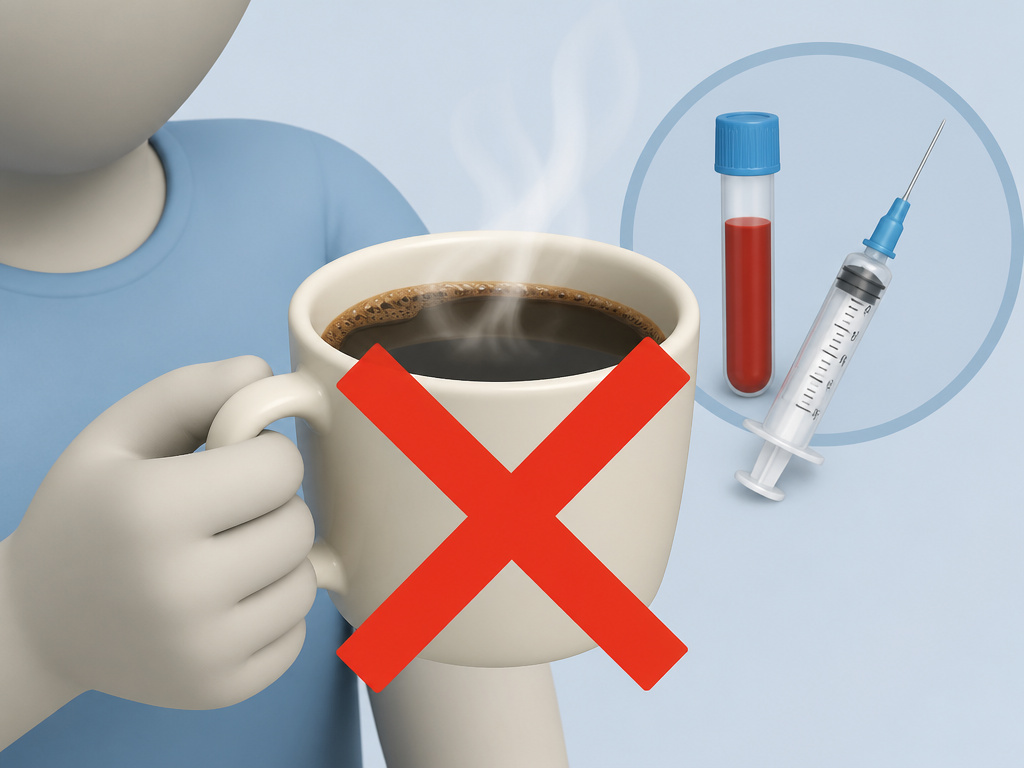
Coffee is the most common slip, but it’s not the only one. The fasting window is a complete physiological pause.
Common mistake: Chewing sugar-free gum before the draw — the act of chewing stimulates digestive enzymes and insulin, which can alter glucose and triglyceride results within minutes.
Here’s everything else you must avoid for 8–12 hours before your appointment:
- All Food. This one is obvious. No snacks, no midnight fridge raids.
- All Beverages Except Water. This includes:
- Coffee (black, decaf, with artificial sweeteners)
- Tea (green, black, herbal)
- Juice, soda, diet soda, sports drinks
- Alcohol
- Chewing Gum or Lozenges. Even sugar-free varieties. Chewing signals your pancreas.
- Smoking or Vaping. Nicotine affects blood vessel constriction and can raise glucose and cortisol.
- Strenuous Exercise. A hard workout the morning of your test can elevate muscle enzymes (CK) and liver enzymes (ALT, AST), mimicking injury or disease.
The rule is simple. If it’s not plain water or a life-saving medication your doctor told you to take, it doesn’t go in your mouth.
What You Can Do Before a Fasting Test
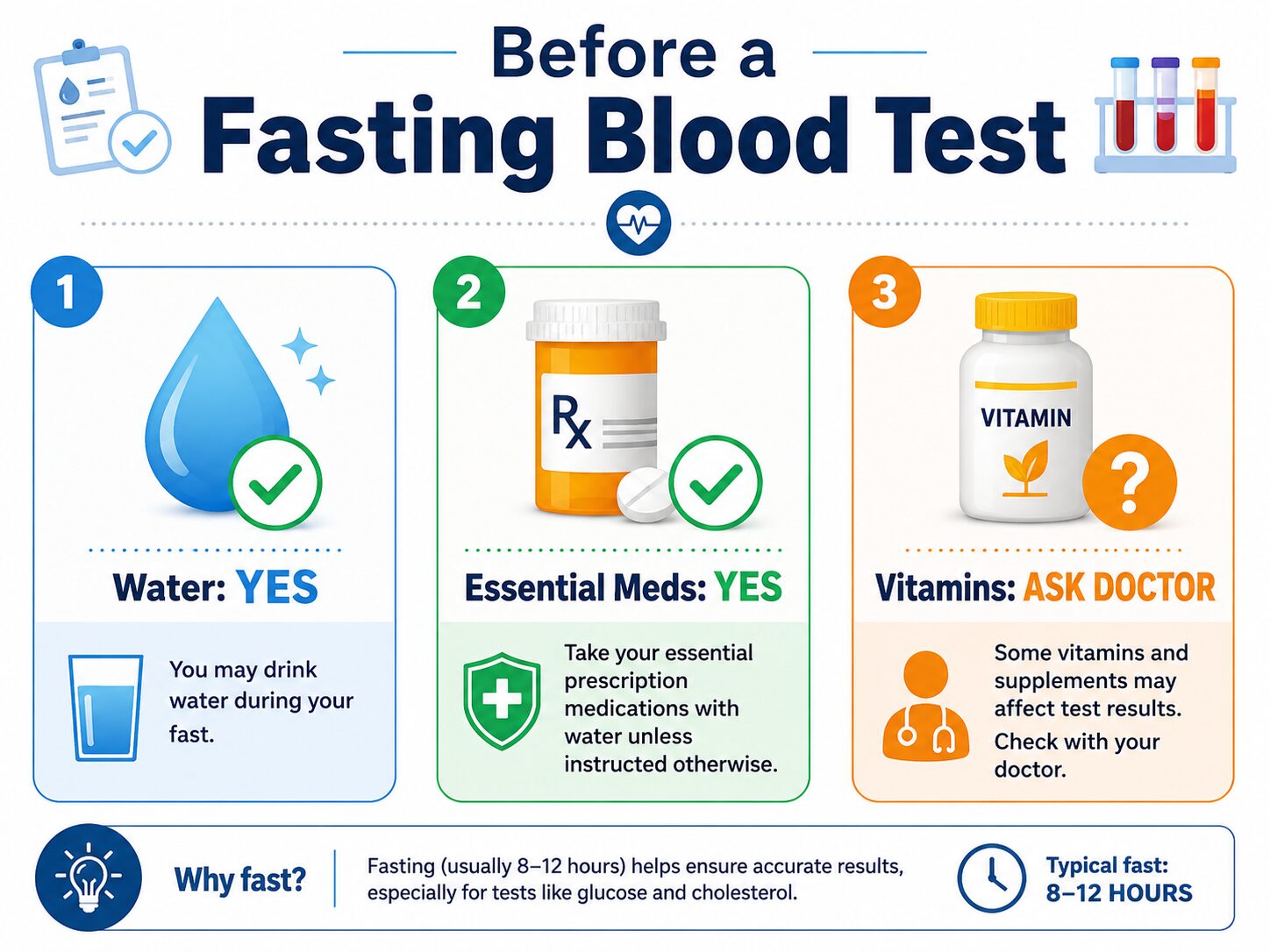
The list of prohibitions is long. The list of permissions is short, but critical.
- Drink Plenty of Water. Hydration makes your veins easier to find and your blood easier to draw. It also prevents dehydration from skewing your results. Sip water freely up until your appointment.
- Take Your Prescribed Medications. Do not stop taking prescription medications for a blood test unless your doctor explicitly tells you to. The risks of stopping usually far outweigh the potential for a slightly skewed result. If a medication must be taken with food, call your doctor for instructions.
- Ask About Vitamins and Supplements. This is the gray area. Biotin (a common B-vitamin supplement) is notorious for interfering with thyroid and hormone tests. Fish oil can affect triglyceride readings. The safe move is to skip your vitamins the morning of the test unless your doctor says otherwise.
TL;DR: Water and essential meds are fine. Everything else, including your multivitamin, is a question for your doctor.
What Happens If You Cheat?
You have two choices: reschedule or confess.
If you realize your mistake with enough time, the best course is to call the lab, explain you broke the fast, and reschedule for another day. This gives you a clean slate and ensures your doctor gets accurate data.
If you’re already in the waiting room, you must tell the phlebotomist. Do not stay silent. They will note “non-fasting” on your requisition form. This tells your doctor that the results for glucose, lipids, etc., cannot be interpreted against standard reference ranges. It’s better to have a flagged, known-invalid result than a seemingly normal one that’s actually wrong.
Hiding a coffee slip can lead to misdiagnosis. A falsely high glucose could trigger unnecessary diabetes testing. An altered lipid panel might lead to a statin prescription you don’t need. The consequences are real.
I once had a lipid panel come back with triglycerides nearly double my baseline. I was confused until I remembered the “splash of cream” I’d used in my coffee that morning, thinking it was negligible. The lab had no note, my doctor saw the number, and we wasted a month re-testing and worrying. Now I tell the tech everything.
How to Make Fasting Easier
Schedule your appointment for first thing in the morning. You’ll be sleeping for most of the 8-12 hour window, and you can have your coffee immediately after the draw. Bring a snack with you to eat right after.
If you are a heavy coffee drinker, plan for a caffeine headache. Do not take aspirin or other pain relievers unless they are your usual prescribed medication, as some can thin the blood. Hydrating well the day before can sometimes mitigate the headache.
The discipline is temporary. The accuracy of the results lasts until your next check-up.
Frequently Asked Questions
Can I drink decaf coffee before a fasting blood test?
No. Decaffeinated coffee still contains compounds that stimulate stomach acid and digestive processes. The “fasting” rule is about metabolic activation, not just caffeine content.
What about black tea or green tea?
All teas are prohibited. They contain other bioactive compounds like theanine and catechins that can influence liver enzyme pathways and hydration status. The caffeine in black tea is still a factor, but even herbal teas without caffeine can interfere.
I take medication in the morning with food. What should I do?
Call your doctor’s office for instructions. Do not guess. They may tell you to take it with a small, plain cracker (which breaks the fast and must be reported) or to hold the dose until after the blood draw. This decision is medical, not logistical.
Can I brush my teeth?
Yes, but be careful not to swallow toothpaste or mouthwash. The sugars and artificial sweeteners in these products can be absorbed through the mucous membranes in your mouth.
Will one sip of coffee really ruin my test?
It might. Depends on the test, your metabolism, and timing. The point of a standard protocol is to eliminate “depends.” For consistent, comparable results year over year, the line is zero sips.
Before You Go
The rule is absolute for a reason. “Nothing but water” means exactly that—no black coffee, no tea, no gum, no exceptions. This isn’t medical nitpicking; it’s the foundation of accurate diagnosis and effective treatment.
Schedule early, drink water liberally, and take your prescribed meds. If you slip, own it. Tell the lab. A noted result is better than a misleading one.
Your health picture is only as clear as the data you provide. Make sure yours is crystal clear.
