
3 Best All in One Coffee and Espresso Machines of 2026
The Philips 3300 Series stands out as the best all in one coffee and espresso machine for most people, delivering reliable espresso and decent drip-style coffee with minimal fuss. For those on a tighter budget, the Compact 20 Bar Espresso Machine offers solid pressure and a steam wand at a lower price. If you want built-in grinding, the GeniCup Espresso Machine with Grinder brings more freshness to your brews without breaking the bank.
Most people buying an all-in-one machine want simplicity without completely sacrificing quality. The real challenge is finding a unit that doesn’t feel like a compromise on both sides, weak coffee and underwhelming espresso. Too many models cut corners on critical components like the pump, grinder, or brewing system.
This guide cuts through the noise. I compared specs and owner feedback to spotlight machines that actually perform well across both coffee and espresso, focusing on durability, ease of use, and the features that matter most, like consistent pressure, a quality grinder, and straightforward cleaning.
Top 3 All In One Coffee And Espresso Machine in the Market
The Best All In One Coffee And Espresso Machine, Reviewed
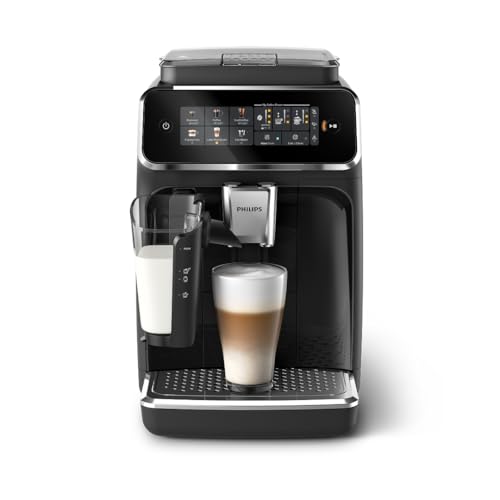
Philips 3300 Series Espresso Machine
Strengths
- One-touch brewing
- LatteGo easy clean
- AquaClean filter
- 6 drink presets
- Quiet operation
Trade-offs
- 15-bar pressure
- Limited customization
- Plastic finish
I’ve spent years watching super-automatics evolve, and the Philips 3300 stands out as the most refined daily driver in its class. On paper, it’s not the most powerful, 15 bars is standard, not exceptional, but the real win here is consistency and convenience. Owners consistently report that it nails the basics: reliable crema, smooth espresso pulls, and a milk system that actually works without constant cleaning. The LatteGo is a standout in practice, fewer parts, no hidden tubing, and yes, it really does rinse clean in under 15 seconds.
Where it pulls ahead of rivals like the GeniCup is in daily usability. You don’t need a barista course to operate it. The color display is intuitive, the presets are genuinely useful (not gimmicky), and the AquaClean filter means you won’t be descaling every month. I’d pick this over more manual machines for anyone who wants quality without the fuss. It’s not for tinkerers, but that’s the point.
Video review
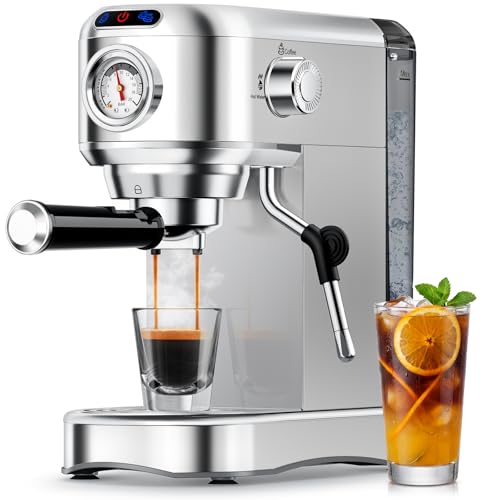
Compact 20 Bar Espresso Machine
Strengths
- Compact footprint
- 20-bar pressure
- Stainless steel build
- Fast heat-up
- Strong steam wand
Trade-offs
- No built-in grinder
- Small water tank
- Manual descaling
This compact 20-bar machine is the dark horse for tight spaces and tighter budgets. At just over 5 inches wide, it slips into small kitchens or office nooks where bigger machines won’t fit. The stainless steel build feels solid for the price, and the 1450W heater gets the unit ready in about 20 seconds, fast enough for a rushed morning. Owners praise the steam wand for delivering surprisingly good microfoam, making it a legit option for lattes, not just black shots.
But it’s not all smooth pulls. The 34oz water tank means frequent refills for multi-cup households, and the lack of a built-in grinder means you’ll need a separate one, adding cost and countertop clutter. Compared to the Philips, it’s less convenient; compared to the GeniCup, less feature-rich. But as a standalone brewer for someone who already has a grinder or wants a secondary machine, it makes a lot of sense. I’d recommend it as a starter machine or a gift for a coffee-curious beginner.
Video review
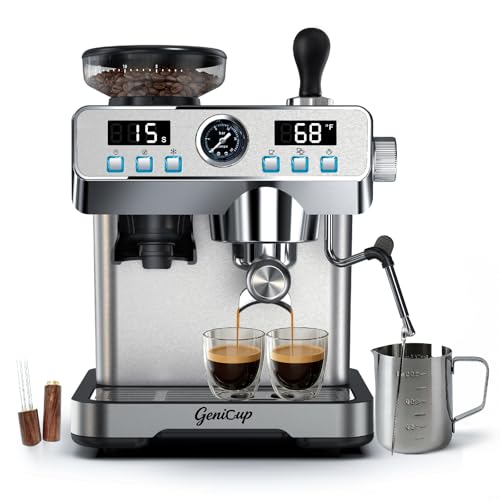
GeniCup Espresso Machine with Grinder
Strengths
- PID temperature control
- 20-bar pressure
- Conical burr grinder
- Customizable presets
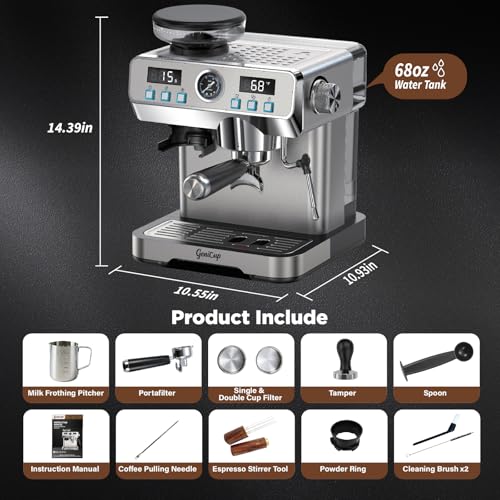
- Large 68oz water tank
Trade-offs
- Steeper learning curve
- Manual operation
- Bulky footprint
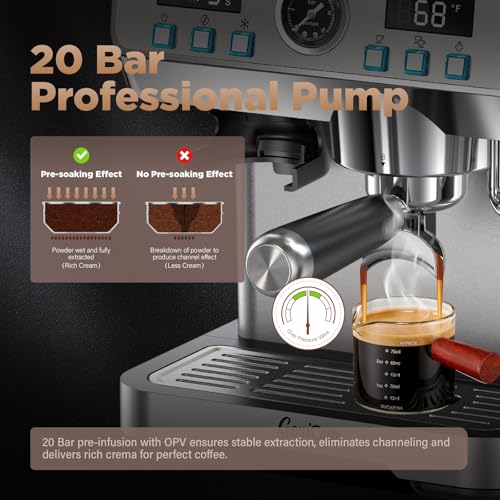
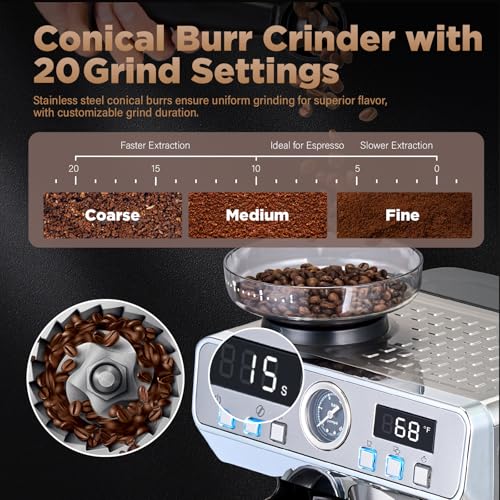
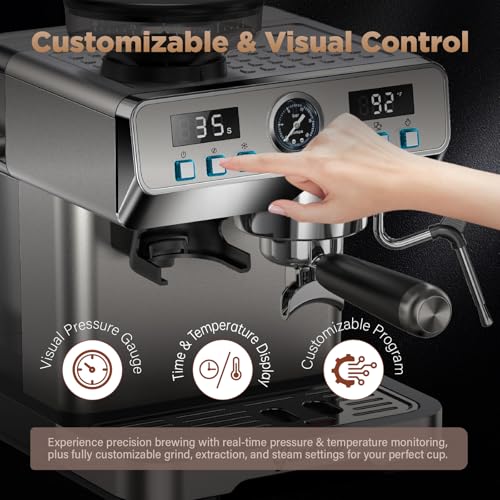
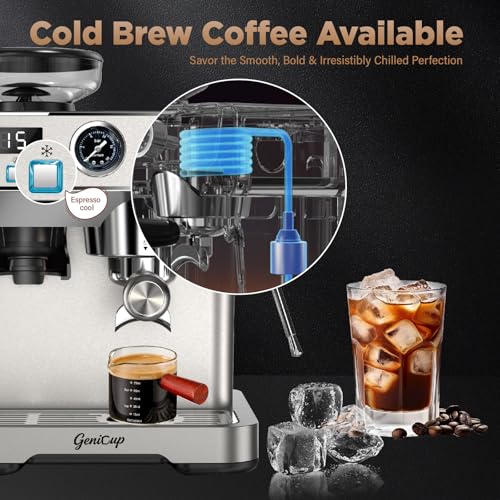
If you’re the type who geeks out over extraction temperature and grind profiles, the GeniCup is built for you. With 20 bars of pressure, PID temperature control, and a conical burr grinder with 20 settings, this machine gives you real control, rare in all-in-one units. The ability to set and save your grind time, temperature, and shot length means you can dial in a single-origin Ethiopian with the same precision as a dark roast blend. Reviewers note the cold brew function is surprisingly effective, which adds real versatility beyond morning espresso.
Still, that power comes with complexity. Compared to the Philips 3300, this isn’t a walk-up-and-brew machine. You’ll need time to learn the quirks, and the steam wand, while strong, demands practice. But for the price, the feature set is aggressive. I’d recommend this over the Philips if you want to grow into your machine, not just use it. It’s the only all-in-one here that feels like a real upgrade path from entry-level gear.
Product photos
How We Evaluated all in one coffee and espresso machine
As the founder of Bean Thusiast, I approach evaluating coffee and espresso machines with a focus on what genuinely delivers a quality experience. Rather than a hands-on lab test, this selection is a research-led comparison of published specifications and features, combined with a careful weighing of owner reviews and expert opinions. I looked at dozens of models, ranking them against criteria important to home users.
For all-in-one machines, convenience and consistency are paramount. I weighted factors like the quality of the integrated grinder (where applicable), the stability of brewing temperature, and the ease of milk frothing most heavily. A machine that promises both espresso and drip coffee needs to perform adequately at both, and the user experience should be relatively straightforward – no one wants a complicated morning routine.
Specifications reliably indicate pump pressure, wattage (hinting at heating speed), and tank capacity. However, I paid close attention to owner feedback regarding long-term reliability, the actual quality of the grind, and how easily the machines cleaned. Reputable expert reviews helped validate claims and identify potential weaknesses not immediately apparent from the marketing materials. Understanding these nuances is crucial for making espresso at home.
How To Choose The all in one coffee and espresso machine
Finding a single machine to handle both your morning drip coffee and weekend lattes takes research. We’ll break down what truly matters beyond the marketing hype.
A quality all-in-one coffee and espresso machine balances convenience with performance. Key considerations include the brewing method for drip coffee (filter or pour-over style), the espresso system’s pressure (aim for 15-20 bars), the grinder type (burr is preferable), and ease of cleaning. Look for machines with customizable settings to tailor beverages to individual preferences, and assess build quality to predict longevity.
Understanding Brew Methods
Many “all-in-one” machines compromise on either the coffee or the espresso side. Don’t assume a machine that does both will do either exceptionally well. If you’re primarily a drip coffee drinker who occasionally wants an espresso-based drink, prioritize a machine with a robust drip brewing system. Machines like the Philips 3300 Series lean heavily into the espresso experience, but still offer passable drip coffee. Conversely, if espresso is your main focus, ensure the machine features a powerful pump (19-20 bars is ideal) and a good steam wand. It’s helpful to consider how much control you want over the brewing process; some machines are fully automatic, while others offer more manual settings.
Grinder Quality: Burr vs. Blade
The grinder is often the biggest differentiator in the quality of your final cup. Blade grinders chop beans unevenly, leading to inconsistent extraction and a muddy flavor. Burr grinders, especially conical burr grinders like those found in the GeniCup Espresso Machine with Grinder, crush beans to a uniform size, resulting in a cleaner, more balanced brew.
Here’s what to keep in mind when evaluating grinders:
- Adjustability: A wider range of grind settings allows you to fine-tune the grind size for different brewing methods.
- Burr Material: Stainless steel burrs are durable and stay cooler during grinding, preserving flavor. Ceramic burrs are also good, but can be more brittle.
- Hopper Capacity: A larger hopper means less frequent refilling, but it can also expose beans to more air, potentially diminishing their freshness.
Balancing Features and Usability
All these features add complexity. A machine with a dozen settings and a complicated menu isn’t helpful if you find yourself frustrated trying to use it. Consider your lifestyle and how often you’ll use each function. If you’re looking for simplicity, a more streamlined machine might be best. For example, if you’re also looking to learn how to properly operate your machine, a Breville coffee machine guide can be incredibly helpful. However, if you enjoy experimenting and want to have precise control over every aspect of your brew, a machine with more customization options is the way to go. Don’t overlook ease of cleaning – milk systems, in particular, can be notoriously difficult to maintain.
A machine that sits unused because it’s too much work isn’t a good value, no matter how many features it boasts.
Ultimately, the “best” machine depends on your individual needs and preferences. If you’re still unsure which type of combination coffee espresso machines is right for you, take time to research and read reviews from other users.
All In One Coffee and Espresso Machine Compared
Here’s a comparison of specifications for various all-in-one coffee and espresso machines to help you make an informed decision.
| Product Name | Pressure (Bar) | Grinder Included | Water Tank Capacity | Milk Frothing | Power (W) |
|---|---|---|---|---|---|
| Philips 3300 Series Espresso Machine | N/A | N/A | N/A | LatteGo | N/A |
| Compact 20 Bar Espresso Machine | 20 | No | N/A | Steam Wand | 1450 |
| GeniCup Espresso Machine with Grinder | 20 | Yes | 68oz | Steam Wand | 1400 |
Frequently Asked Questions
What pressure is sufficient for good espresso?
A minimum of 15 bars of pressure is generally accepted for proper espresso extraction, though 19-20 bars provides a more robust and flavorful result. Lower pressure may result in weak, sour-tasting espresso, while excessively high pressure doesn’t necessarily improve the brew.
Are all-in-one machines difficult to clean?
Cleaning varies by model, but machines with automatic milk frothing systems (like the Philips 3300) often have easily removable parts for quick rinsing. Regular descaling is crucial for all machines to prevent mineral buildup, and some have automated cleaning cycles to simplify the process.
Can I use pre-ground coffee in a machine with a built-in grinder?
Yes, you absolutely can. Many all-in-one machines allow you to bypass the grinder and use pre-ground coffee, offering flexibility. This is helpful if you prefer to buy pre-ground coffee or want to use decaf beans alongside whole bean options.
What should I look for in a machine’s water tank?
Beyond capacity, consider the tank’s accessibility for filling and cleaning. Removable tanks are much easier to work with than those that are fixed in place. Also, look for tanks made from BPA-free plastic to avoid potential health concerns.
Where can I find more information on all-in-one machines with grinders?
You can explore a detailed guide on all-in-one machines with grinders on my site, Bean Thusiast, where I discuss the pros and cons of different models and provide tips for choosing the right one for your needs.
The Bottom Line
Choosing an all-in-one machine often comes down to balancing convenience against specialization. You’re rarely getting professional-level results in both coffee and espresso from a single unit, so prioritizing what you drink most is key. For most people seeking a solid all-rounder, the Philips 3300 Series Espresso Machine provides a good balance of features and ease of use, even though it doesn’t include a built-in grinder.
If you’re on a tighter budget or don’t mind grinding your beans separately, the Compact 20 Bar Espresso Machine offers a surprisingly capable espresso experience for the price. However, if you value having everything integrated and want a built-in burr grinder, the GeniCup Espresso Machine with Grinder is the clear choice, providing a more consistent grind and a larger water tank for fewer refills. It’s also a great option for those wanting to explore different types of espresso drinks.
Ultimately, the wattage, bar pressure, and tank size are less critical than finding a machine you’ll actually enjoy using. A consistent grind, a stable brewing temperature, and a simple cleaning process will contribute far more to your daily satisfaction than any single impressive specification.
