
9 Best Airtight Coffee Bean Containers 2026
The AirScape Kilo Coffee Storage Canister is the best overall pick for preserving freshness, thanks to its effective plunger-based vacuum seal and durable stainless steel build. For a budget-friendly option that still delivers solid performance, the Veken Large Coffee Canister offers great value with its one-way valve and included scoop. If you prefer visibility and a sleek look, the NUZEAK Glass Coffee Storage Jar works well, provided you store it in a dark place.
Most coffee lovers don’t realize how quickly beans lose their flavor once exposed to air and light. Even high-quality beans can taste flat within days if stored improperly. I’ve seen it happen too many times, freshly roasted beans gone stale, all because of a poor container.
This guide cuts through the marketing hype. I selected these picks based on a deep explore specs, owner feedback, and real-world usability. You’ll learn what actually matters, like oxygen control, material durability, and smart features, and avoid common mistakes when choosing a container that keeps your coffee tasting its best.
Top 9 Airtight Coffee Bean Container in the Market
The Best Airtight Coffee Bean Container, Reviewed
AirScape Kilo Coffee Storage Canister

Strengths
- Large 2.2 lb capacity
- Patented oxygen removal
- Blocks UV light
Trade-offs
- Bulky footprint
- Hand wash only
- Higher price point
The AirScape Kilo is the big brother in a respected lineup, and it delivers exactly what serious coffee buyers need: massive, oxygen-free storage. With a 2.2-pound capacity, it’s built to handle full retail bags from roasteries, no splitting or repackaging. The patented plunger lid isn’t just clever, it’s effective. Owners consistently report beans staying vibrant past the two-week mark, which is rare in home storage. The stainless steel body blocks light completely, a detail too often overlooked in containers with windows.
Compared to standard airtight jars, this one actively removes air instead of just sealing it in. That’s the real difference. The swoosh sound when you press the lid down is satisfying, yes, but it’s also functional feedback. For anyone buying in bulk or scoring limited-release beans, this is the closest you’ll get to professional-grade preservation at home. It’s not cheap, but you’re paying for engineering, not just materials.
Video review
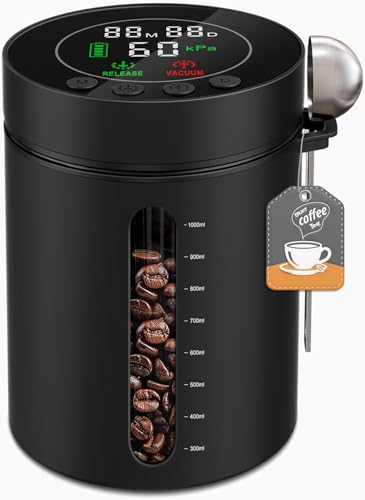
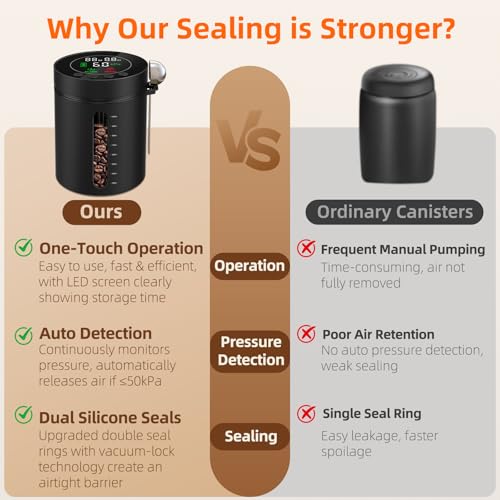
Automatic Vacuum Coffee Canister with LED
Strengths
- Auto-resealing sensor
- LED display with date
- Rechargeable battery
Trade-offs
- Requires charging
- Glass window allows light
- Higher failure risk
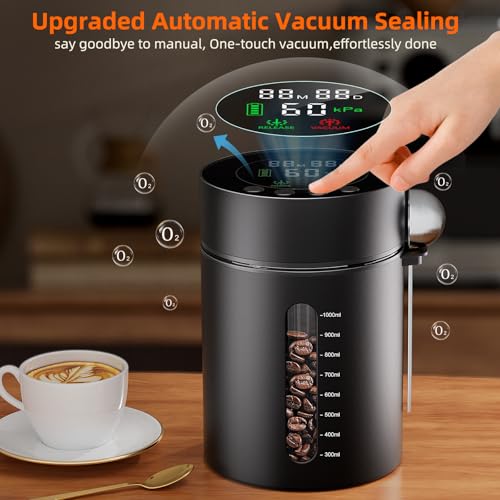
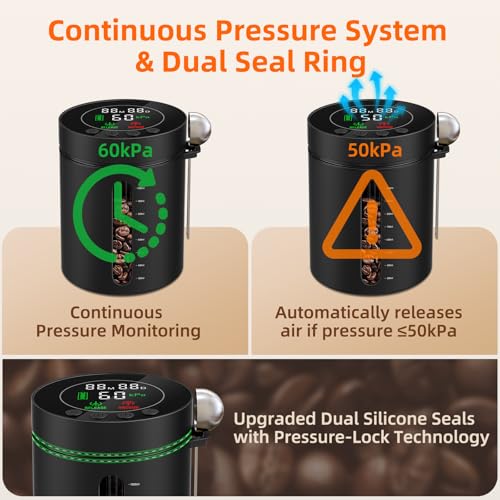
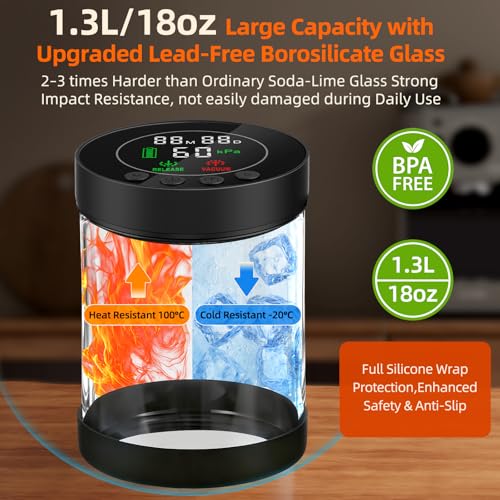
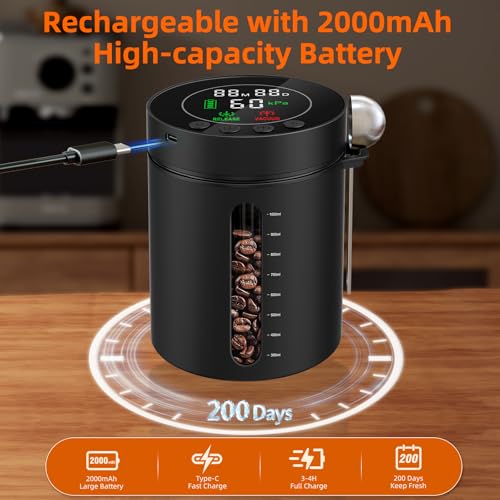
This is the high-tech play: an electric, auto-vacuuming canister with an LED display, smart pressure sensor, and glass window. It’s undeniably cool. The vacuum engages at the press of a button and maintains seal integrity by auto-recharging when pressure drops. The LED readout shows date, battery, and vacuum status, very modern. And the 1.3L capacity fits a standard bag.
But complexity brings trade-offs. It needs charging (via USB-C), and while the battery lasts months, it’s another thing to manage. The glass window, while handy for seeing contents, again risks UV exposure. Some reviewers note the motor noise is subtle but noticeable. For tech lovers or gift-givers, it’s a showstopper. For purists? It’s overkill. I’d pick the AirScape for reliability, but this wins on novelty and smart features.
Product photos
AirScape Stainless Steel Canister Medium
Strengths
- Active oxygen removal
- Compact 1 lb size
- Blocks UV light
Trade-offs
- No date tracker
- Hand wash only
- No included scoop
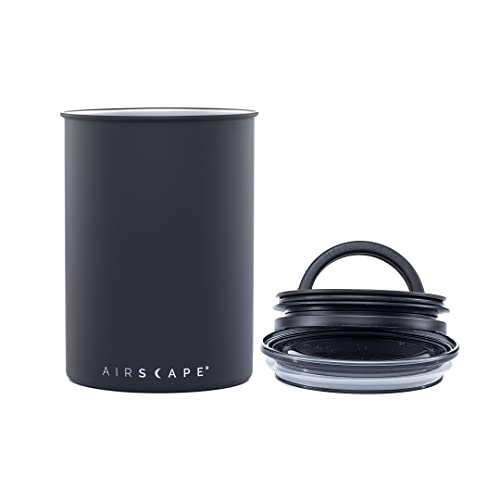
This is the original AirScape formula in a more accessible size. The medium 1 lb capacity fits most home brewers perfectly. The same patented plunger lid removes oxygen actively, not just sealing it in, this is the key difference from passive airtight containers. Stainless steel body, no window, no UV risk. Owners praise the swoosh sound as both fun and functional.
Compared to the Kilo, it’s more compact and better for standard rotation. It doesn’t have a date tracker or scoop, but it doesn’t need them, the freshness speaks for itself. For coffee lovers who want the gold standard in oxygen removal without the bulk, this is my top pick. It’s not flashy, but it’s effective. This is the one I’d keep in a typical setup if I had to choose one.
Video review
Veken Large Coffee Canister 39oz

Strengths
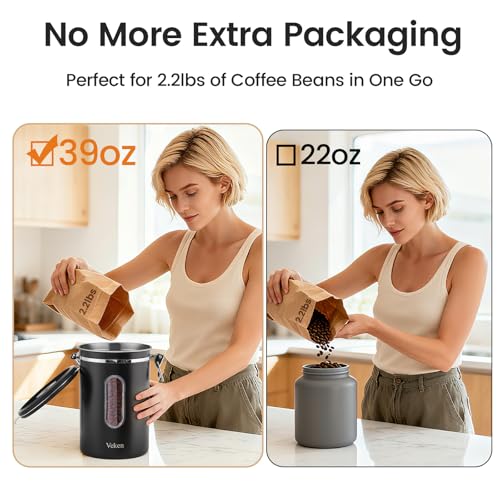
- Large 2.2 lb capacity
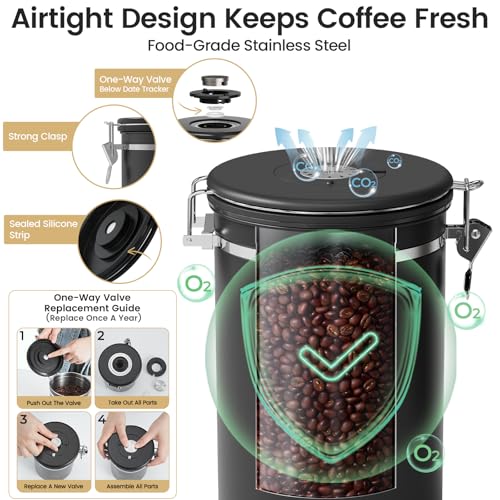
- CO2 valve included
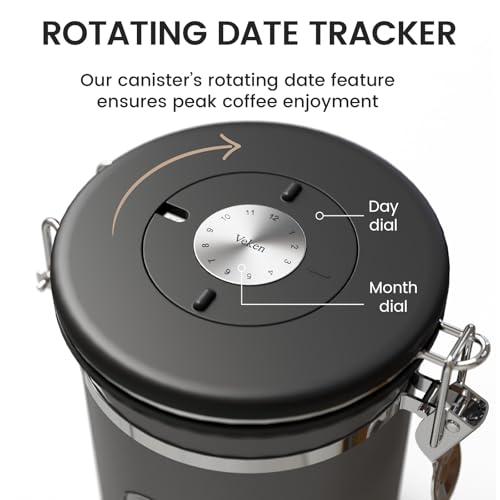
- Date tracker and scoop
Trade-offs
- Clear window allows light
- Slightly shorter freshness
- Basic seal design
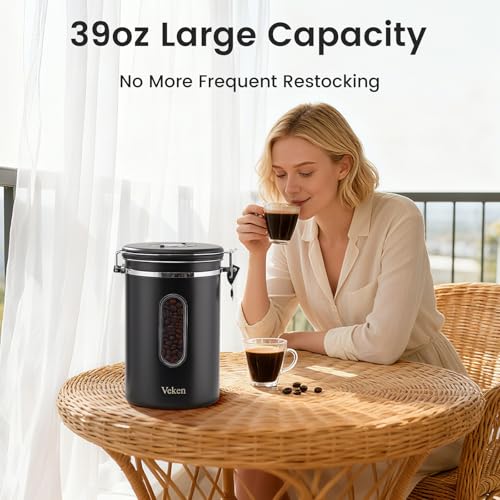
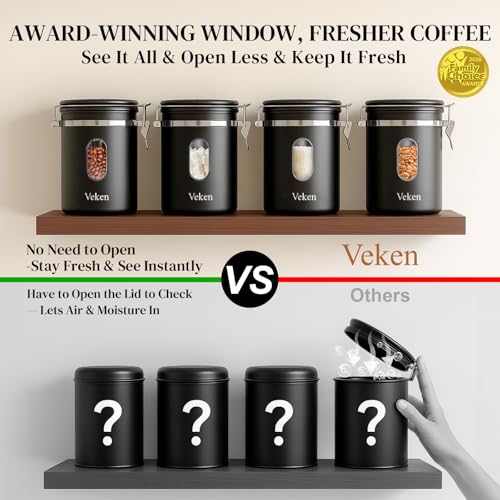
Veken aims for the sweet spot: large capacity (39oz), a clear window, and a CO2 valve, all at a competitive price. It holds up to 2.2 lbs, making it ideal for frequent brewers or households that buy in bulk. The stainless steel body is durable, and the included scoop with hook is a nice touch. The date tracker on the lid helps you monitor freshness, and the window means you never have to open it just to check levels.
But that window is still a concern. Like the Oggi, it sacrifices UV protection for visibility. Owners report good performance for the first 10–12 days, but flavor fades faster than in opaque containers. Still, for the price and size, it’s one of the better large options. If you rotate beans quickly, this works. If you savor a bag over three weeks, go opaque.
Product photos
NUZEAK Glass Coffee Storage Jar 17oz

Strengths
- Premium borosilicate glass
- Twist-seal with click feedback
- Dishwasher-safe jar
Trade-offs
- Glass allows light
- No CO2 valve
- Lid not microwave safe
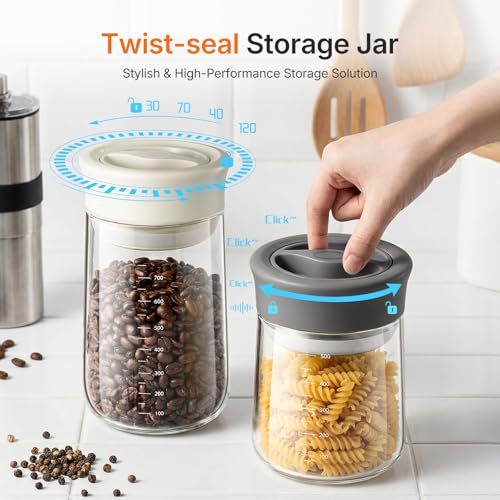
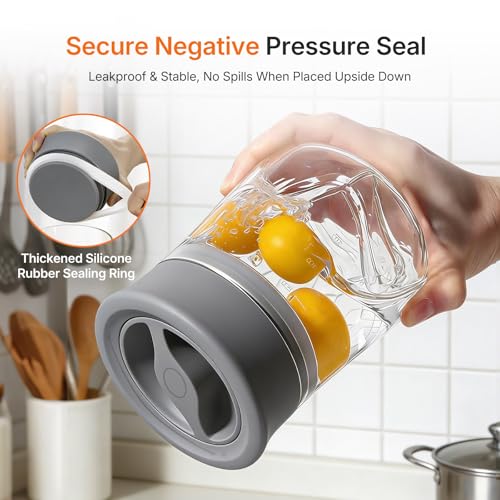
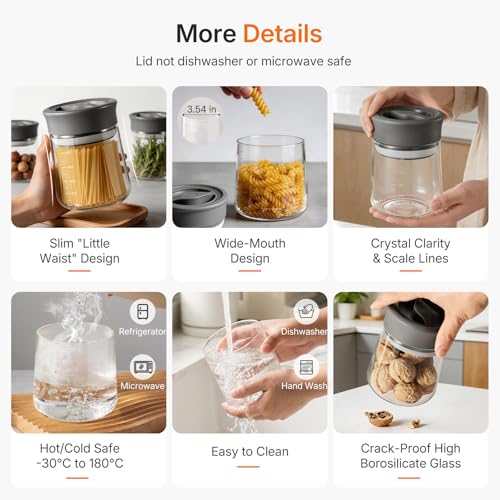
NUZEAK stands out with its glass construction and twist-seal mechanism. The borosilicate glass is heat- and cold-resistant, safe for fridge or counter, and the wide mouth makes scooping easy. The twist lid gives a rhythmic ‘click’ as it seals, owners love the tactile feedback. It’s airtight, not vacuum, but the silicone ring does a solid job.
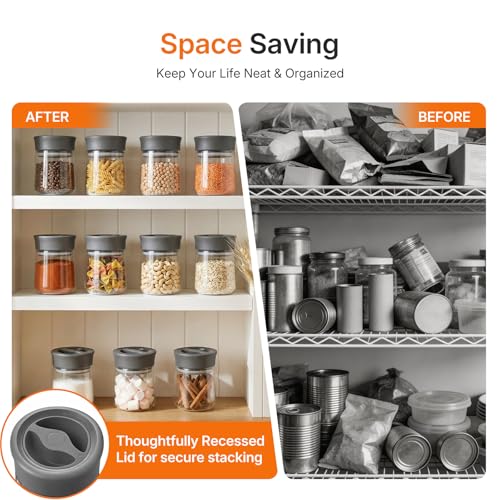
Glass has pros and cons. It’s easy to clean and won’t stain, but it allows light in, unless you store it in a cabinet. The sleek “waist” design looks great on a coffee bar, and it’s stackable. For those who want a non-metal, hygienic option that’s also stylish, this is a strong contender. But for true freshness, I’d still lean toward opaque stainless with a CO2 valve.
Product photos

KIVY Vacuum Coffee Canister Stainless

Strengths
- Affordable vacuum seal
- Stainless steel build
- Simple one-push operation
Trade-offs
- Seal longevity concerns
- No CO2 valve
- No date tracking
KIVY enters a crowded market with a simple promise: a budget-friendly vacuum canister that actually works. On paper, it delivers, stainless steel build, airtight push-down lid, and decent sealing mechanics. Reviewers note it keeps beans noticeably fresher than basic jars, especially in the first 10 days. It doesn’t remove air as thoroughly as the AirScape plunger, but for the price, it’s a solid step up from passive containers.
Where it falls short is consistency. Some owners report the seal weakening after a few weeks of use, possibly due to gasket wear. It lacks a date tracker or CO2 valve, which hurts its long-term performance. Still, for someone who wants vacuum-style benefits without spending top dollar, it’s a reasonable compromise. It won’t match the high-end models, but it beats the generic Amazon tins hands down.
Product photos


Kirecoo Stainless Steel Coffee Canister 22oz

Strengths
- Date tracker dial
- Includes measuring scoop
- One-way CO2 valve
Trade-offs
- Smaller capacity
- No oxygen removal
- Limited stackability
Kirecoo packs a lot into a mid-tier price: a date tracker dial, a bonus stainless scoop, and a one-way CO2 valve, all in a sleek 22oz stainless body. This is the kind of thoughtful design that makes daily use easier. The double silicone seals deliver solid airtight performance, and owners report beans staying bright for up to two weeks. The date dial is a small touch, but it’s effective for tracking roast dates and avoiding stale brews.
Compared to the AirScape, it doesn’t remove oxygen, but it does a great job of blocking it. The included scoop is actually useful, 30ml is a standard dose, and the hang hook keeps it tidy. It’s not the largest, but it’s ideal for most households. For the bundle of features, it’s hard to beat. My recommendation? This is the smarter buy over pricier models if you don’t need oxygen removal and want organization built in.
Product photos


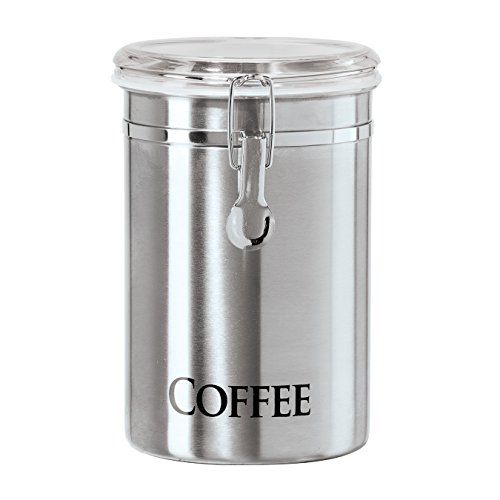
Oggi Stainless Steel Canister 62oz
Strengths
- See-through lid
- Clamp-seal airtight
- Sleek countertop look
Trade-offs
- Clear lid allows UV exposure
- Shorter freshness window
- No CO2 valve
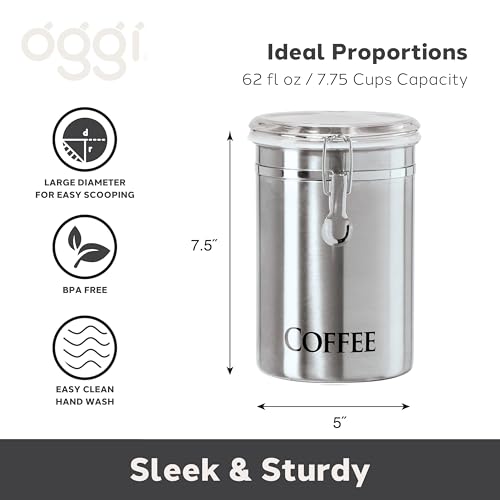
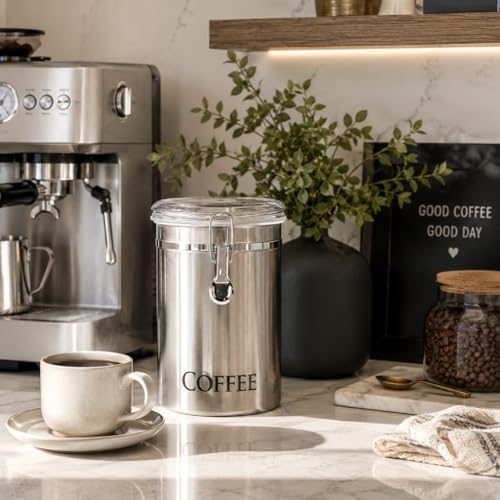
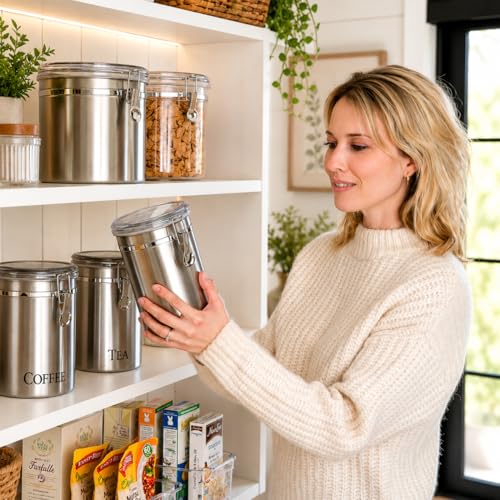
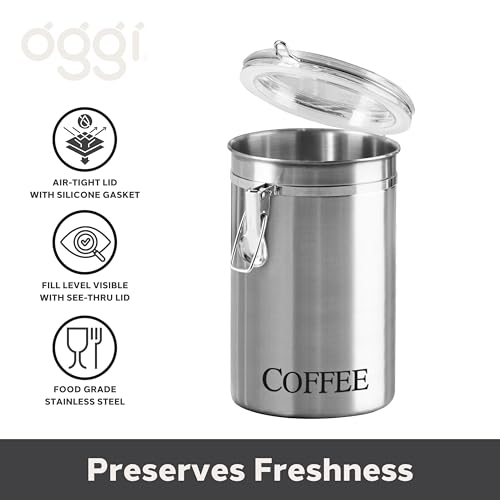
The Oggi canister stands out for one controversial feature: the clear see-through lid. It looks sharp on the counter, no doubt, and the clamp-style seal feels secure. The 62 fl oz capacity is generous, and the stainless steel body is durable. But that window? It’s a freshness compromise. UV light degrades coffee compounds, and no amount of silicone gasketing can fix that. Owners love the visibility, but many notice a drop-off in flavor after day 7, earlier than with opaque models.
It’s well-made and easy to clean, and the clamp lid gives a satisfying closure. But if you’re serious about freshness, light exposure is a real enemy. This one’s better for pantry staples like flour or sugar than for prized single-origin beans. As a countertop accent with function, it works. As a true coffee preservation tool? It’s a step behind.
Product photos

OXO Good Grips POP Container 1.7 Qt

Strengths
- Space-efficient shape
- Dishwasher safe
- Easy push-button seal
Trade-offs
- No CO2 valve
- Clear body allows light
- Not coffee-specific
OXO’s POP container is a pantry staple for a reason. The push-button seal is satisfying and effective, and the rectangular shape maximizes cabinet space. It’s BPA-free, dishwasher-safe, and stacks beautifully. But it’s not designed specifically for coffee. No CO2 valve, no dark body, just a solid airtight seal. Owners use it for flour, sugar, and cereal, and it performs well there.
For coffee? It’s okay. It keeps air out, but built-up CO2 can degrade beans over time. The clear plastic lets you see contents, but again, light is an issue. It’s a great general-purpose container, but if you’re serious about coffee freshness, it’s not the best pick. I’d use this in the pantry for staples, but keep my beans in something more specialized.
Product photos


How We Picked These airtight coffee bean container
As a founder deeply immersed in the world of coffee, I approached researching airtight coffee bean containers by focusing on what truly impacts freshness and usability. Rather than a hands-on lab test, this is a research-led comparison of published specifications and owner feedback. I compared features across numerous models, carefully weighing owner reviews from platforms like Amazon alongside expert opinions found in coffee-focused publications. My goal was to identify the containers that consistently deliver on their promises.
For this category, the most important factors were truly effective airtightness and material quality. Maintaining maximizing coffee freshness is paramount, and that relies on a strong seal to prevent oxygen and moisture exposure. Capacity also played a key role, as different households have different consumption habits. Finally, ease of use – how easily the container opens, closes, and is cleaned – influenced my rankings.
Product specifications reliably tell you about capacity and materials (stainless steel versus glass, for example). However, judging airtightness and long-term seal integrity requires looking at owner feedback. I paid close attention to reviews that detailed how long beans stayed fresh, and whether users experienced issues with the seals failing over time. Reputation and brand consistency also factored in; established brands with a history of quality tended to perform better overall. Recognizing the signs of stale coffee is also a good indicator of a container’s effectiveness.
What To Look For In airtight coffee bean container
Finding the right container to store your coffee beans is about more than just keeping them dry; it’s about actively preserving the delicate flavors you’ve sought out.
A quality coffee bean container prioritizes an airtight seal to minimize oxygen exposure, blocks harmful UV light, and ideally offers a way to vent CO2 released after roasting. Look for durable materials like stainless steel or borosilicate glass, and consider features like one-way valves and date trackers to optimize freshness. Capacity should match your consumption habits, avoiding overly large containers that leave beans exposed for too long.
Material Matters: Stainless Steel vs. Glass
I often get asked about the best material for a coffee container, and my answer is usually, “it depends.” Stainless steel, particularly 18/8 food-grade stainless, is incredibly durable and completely blocks light, a major enemy of fresh beans. However, you can’t see how much coffee you have left. Glass containers, like the NUZEAK option, let you monitor your supply, but require careful handling and typically need to be paired with a dark storage location to avoid light exposure. Don’t dismiss ceramic – it’s a good insulator, but ensure it has a truly airtight seal.
The Importance of Oxygen Control
Oxygen is the biggest threat to coffee freshness. It rapidly degrades the oils that give coffee its flavor and aroma. While “airtight” is a common claim, the reality is more nuanced. Many containers simply trap air inside. The best options actively remove it. The AirScape canisters, for instance, use a patented plunger system to physically force oxygen out. This is a superior approach to simply relying on a rubber seal.
Here’s what to consider when evaluating oxygen control:
- One-way valves: These release CO2 (a natural byproduct of roasting) without letting oxygen in.
- Vacuum sealing: Models like the Automatic Vacuum Coffee Canister provide a very low-oxygen environment, but require power or manual operation.
- Plunger systems: These physically displace oxygen, offering a reliable, passive solution.
A container that simply seals air in is far less effective than one that actively removes oxygen. Remember, freshness isn’t just about keeping air out; it’s about managing the atmosphere inside the container.
Capacity, Features, and Value
Don’t overbuy. A huge container might seem appealing, but if you don’t use the beans quickly enough, you’re just exposing them to air for longer. Consider your brewing habits. Do you go through a pound a week? A 1-pound container (like the AirScape Medium) is ideal. If you prefer to buy in bulk, a larger capacity container might be necessary, but be prepared to transfer beans to smaller containers as needed. Beyond size, look for useful extras. Some containers, like the Veken Large Coffee Canister, include a handy scoop. Others have date trackers to help you monitor freshness. Ultimately, you want a container that fits your lifestyle and budget. If you’re looking for a versatile solution for all your pantry needs, exploring top coffee bean jars will give you a broader perspective.
Airtight Coffee Bean Container Compared
Here’s a comparison of key specifications for various airtight coffee bean containers to help you choose the best one for your needs.
| Product Name | Capacity | Material | Vacuum Seal | Date Tracker | Accessories |
|---|---|---|---|---|---|
| AirScape Kilo Coffee Storage Canister | 2.2 lbs (Kilo) | Stainless Steel | Yes | No | Scoop |
| Automatic Vacuum Coffee Canister w/ LED | 1.3L (18oz) | Stainless Steel/Glass | Yes | Yes | Scoop |
| AirScape Stainless Steel Canister Medium | 1 lb (500g) | Stainless Steel | Yes | No | None |
| Veken Large Coffee Canister 39oz | 39oz | 304 Stainless Steel | One-way Valve | Yes | Scoop |
| NUZEAK Glass Coffee Storage Jar 17oz | 17oz | Borosilicate Glass | No | No | None |
| KIVY Vacuum Coffee Canister Stainless | N/A | Stainless Steel | Yes | No | None |
| Kirecoo Stainless Steel Coffee Canister 22oz | 22oz | 304 Stainless Steel | One-way Valve | Yes | Scoop, Valves |
| Oggi Stainless Steel Canister 62oz | 62oz | Stainless Steel | No | No | None |
| OXO Good Grips POP Container 1.7 Qt | 1.7 Qt | Plastic | No | No | N/A |
Frequently Asked Questions
What’s the advantage of a stainless steel container over plastic?
Stainless steel, particularly food-grade 18/8, is much more durable and completely blocks light which degrades coffee flavor. Plastic containers, even BPA-free ones, can sometimes impart flavors and aren’t as effective at long-term preservation.
Do one-way valves really make a difference in freshness?
Yes, one-way valves allow carbon dioxide to escape after roasting without letting oxygen in. This is crucial because coffee releases CO2, and allowing that release prevents pressure buildup while maintaining an airtight environment.
How much coffee bean container capacity do I actually need?
You should aim for a container size that matches your consumption rate. If you typically use a pound of beans per week, a 1-pound container is ideal to minimize air exposure; otherwise, consider a larger container and portioning.
Are vacuum-sealed containers truly superior for long-term storage?
Vacuum-sealed containers remove the most oxygen, which significantly slows down the staling process. However, they often require manual pumping or electrical operation, and the added complexity isn’t always necessary for daily use.
Where is the best place to store my airtight coffee bean container?
Even with a quality container, location matters. Store your optimal coffee storage container in a cool, dark, and dry place, away from direct sunlight and strong odors, to maximize freshness.
The Bottom Line
Choosing the best airtight coffee bean container really comes down to balancing control with convenience. If you’re serious about maximizing freshness and want a truly superior level of oxygen control, the AirScape Kilo Coffee Storage Canister is the standout choice. It’s a bit of an investment, but the active oxygen displacement system is unmatched in preserving your beans’ delicate flavors.
For those on a tighter budget, or who simply want a reliable, everyday container, the Veken Large Coffee Canister 39oz provides excellent value. Similarly, if you prefer to visually monitor your bean supply, the NUZEAK Glass Coffee Storage Jar 17oz offers a practical solution – just be mindful of storing it away from light. And for those interested in exploring options for preserving bean freshness, remember there are other methods to consider.
Ultimately, the specs matter less than your habits. A fancy vacuum system won’t help if you leave the container open while scooping. Prioritize a good seal, a reasonable capacity for your consumption, and a container you’ll actually use consistently. That consistent effort to minimize oxygen exposure is far more impactful than any single feature.
