
8 Best Tea Kettles for Pour Over Coffee 2026
The Cosori Electric Gooseneck Kettle is our top pick for most pour over brewers, delivering reliable temperature control and a comfortable gooseneck spout. If you’re on a budget, the Chefman Gooseneck Electric Kettle offers solid performance at a lower price, while the INTASTING model stands out for precision enthusiasts who want exact temperature holds and a built-in timer.
Getting the right kettle makes a real difference in your pour over routine. Too much flow or inconsistent heat and you’ll struggle with uneven extraction, no matter how good your beans are. After comparing specs and reading through owner feedback, I focused on kettles that deliver real control, where the spout, temperature accuracy, and build quality actually match up with what pour over brewing demands. This guide breaks down the top options based on what actually matters in daily use.
Top 8 Tea Kettle For Pour Over Coffee in the Market
The Best Tea Kettle For Pour Over Coffee, Reviewed
Cosori Electric Gooseneck Kettle

Strengths
- 5 temp presets
- One-hour keep-warm
- Plastic-free interior
Trade-offs
- No built-in timer
- Beep can’t be disabled
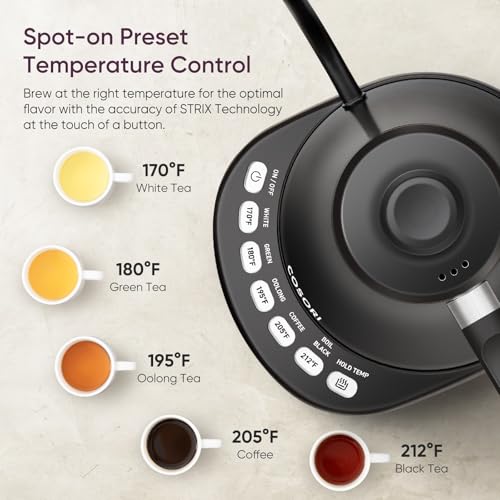
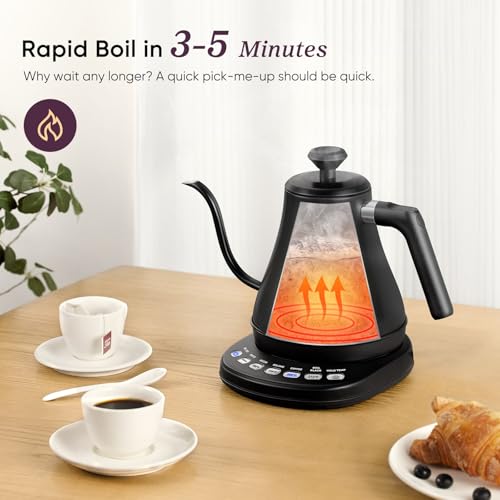
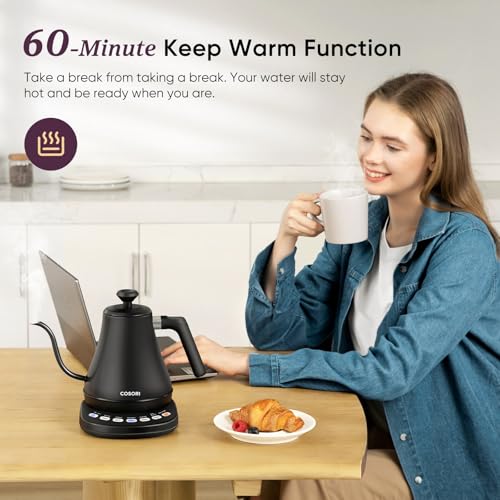
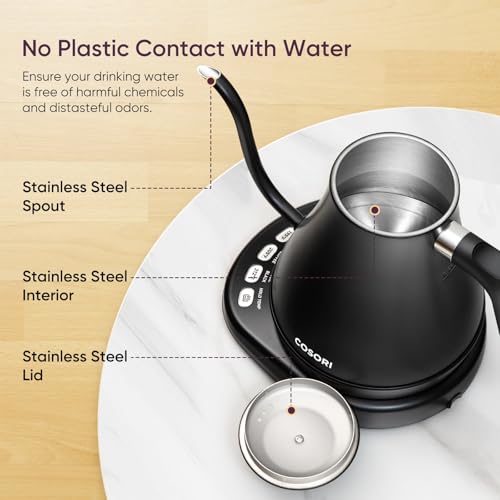
This is the most complete package in the lineup. Five one-touch presets cover everything from delicate white tea to French press, and the one-hour keep-warm function is generous. The 1200W heating element brings water up quickly, and owners say the temperature accuracy is solid, within 5°F of target, as advertised. The food-grade 304 stainless steel interior is fully plastic-free, which matters for long-term taste purity.
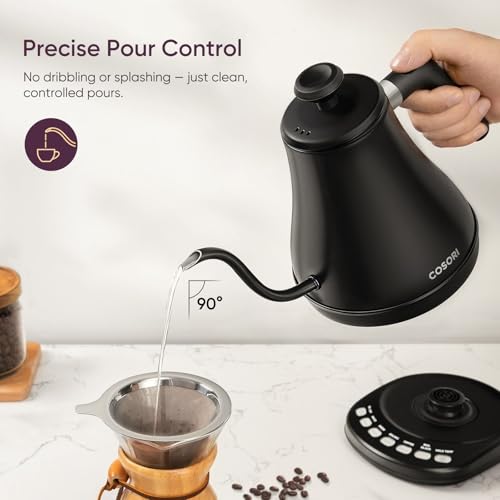
The ergonomic design makes pouring smooth, and the beep at completion is helpful without being loud. Compared to the OXO, it’s more feature-rich; compared to the INTASTING, it’s more user-friendly. It doesn’t have a stopwatch, but the simplicity of the presets makes up for it. For most buyers, this is the easiest high-performance pick.
Product photos
Bodum Bistro Gooseneck Kettle

Strengths
- Cork handle comfort
- Sleek matte finish
- Cool-touch handle
Trade-offs
- No temp control
- No timer
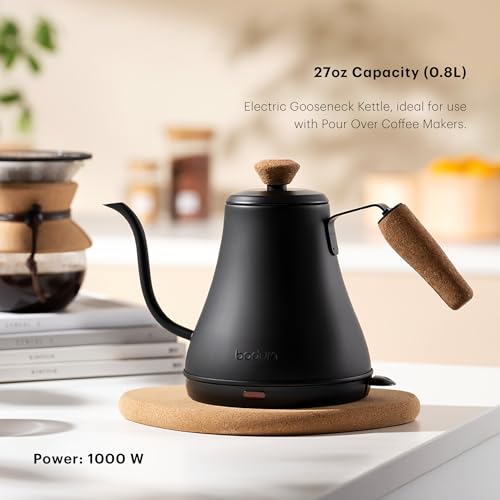
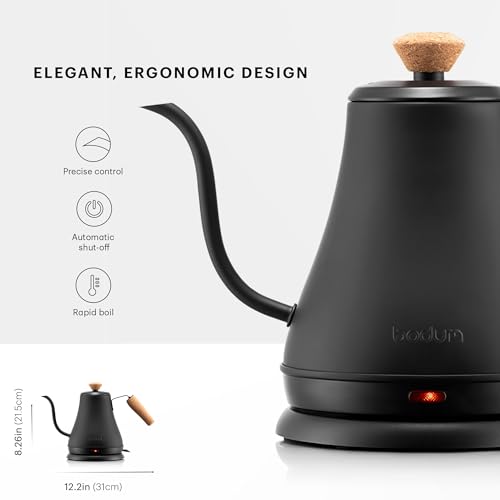
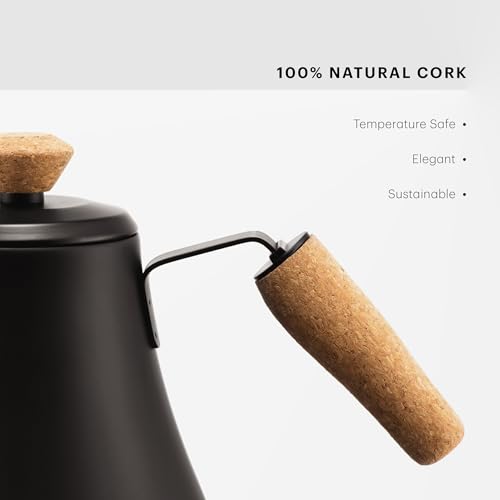
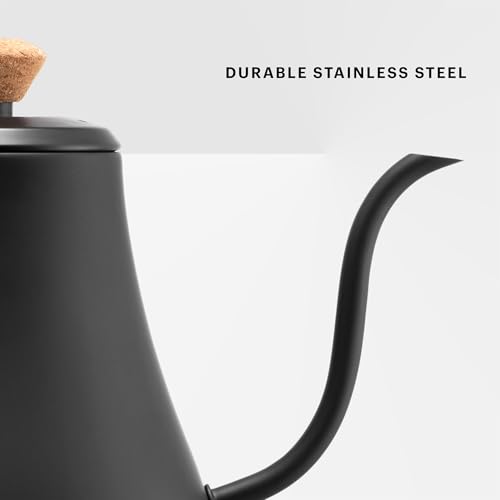
The Bodum Bistro wins on feel. The cork handle isn’t just a design gimmick, it genuinely stays cool and feels great in hand, even during long pours. That natural cork grip, combined with the balanced weight, makes this one of the most comfortable kettles to use repeatedly. For anyone with wrist sensitivity or who brews multiple cups daily, that ergonomic edge adds up fast.
It lacks advanced features like adjustable temps or a timer, which puts it behind the OXO and Cosori models in functionality. But if you want a no-frills electric gooseneck that looks sharp and feels even better, this is a strong pick. The 0.8L capacity is standard, and the stainless steel body resists fingerprints better than many rivals. It’s not the most precise, but it’s one of the most enjoyable to use.
Product photos
INTASTING Electric Gooseneck Kettle

Strengths
- ±1°F accuracy
- Plastic-free interior
- Built-in stopwatch
Trade-offs
- Small 0.9L capacity
- No preset buttons
If temperature precision is your top priority, this INTASTING model is worth serious consideration. The ±1°F accuracy is exceptional on paper, and owners report the kettle actually delivers on that claim, rare for this price tier. The temp hold function lasts up to two hours, which is far longer than most competitors, and that’s a real advantage when you’re brewing multiple pour-overs or taking your time dialing in a new coffee.
The 0.65mm gooseneck spout is one of the finest in the category, giving excellent flow control. Paired with the built-in stopwatch, it becomes a serious tool for methodical brewers. The 100% stainless steel interior, including a plastic-free sensor seal, is also a standout, this is one of the few kettles where you can be confident no off-flavors are leaching into your water. It’s not the flashiest design, but it’s built like a lab instrument, and I appreciate that.
Product photos


Chefman Gooseneck Electric Kettle

Strengths
- Fast boil time
- Simple one-touch use
- Affordable price
Trade-offs
- No temp control
- Basic build quality
This Chefman model is clearly built for budget-conscious buyers who still want electric convenience. It heats fast, owners say under 3 minutes, and the one-touch operation makes it ideal for quick morning routines. The blue LED indicator is a small but fun detail, showing when it’s actively heating.
But speed comes at the cost of control. There’s no temperature adjustment, so it just boils to 212°F every time. That’s fine for robusta blends or tea, but risky for delicate light roasts that need lower temps. The 0.8L capacity and gooseneck spout are standard, and the lift-out lid makes cleaning easy. It’s not going to impress purists, but for under $50, it’s a decent entry point.
Product photos


Barista Warrior Gooseneck Kettle
Strengths
- Built-in thermometer
- Sturdy stainless steel
- Large 1.2L capacity
Trade-offs
- No temperature hold
- Slightly bulky
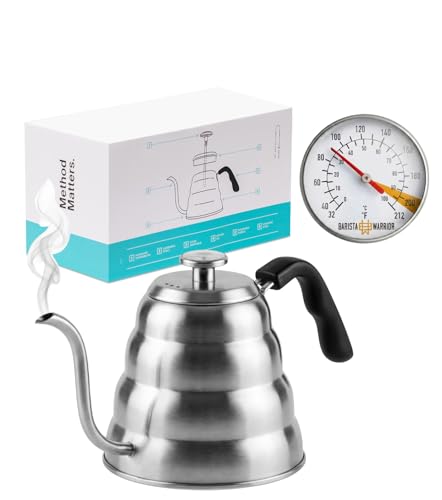
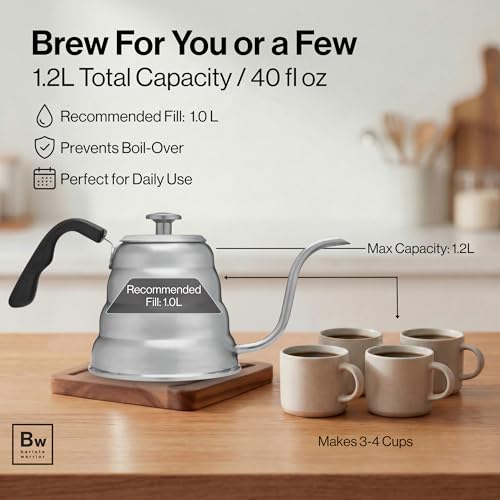
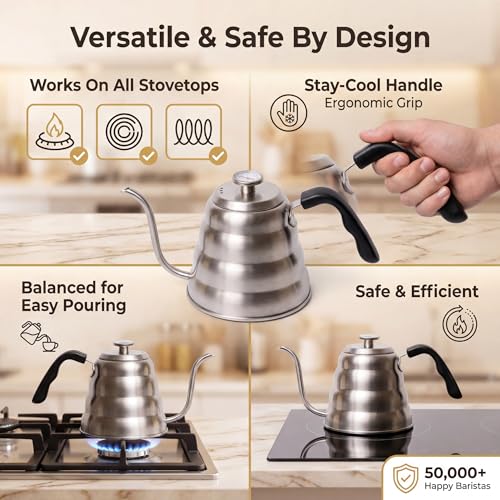
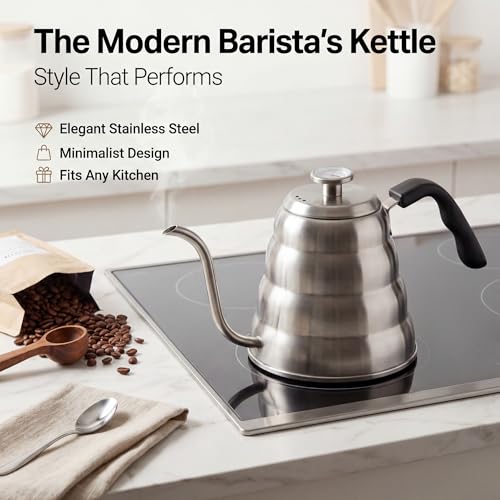
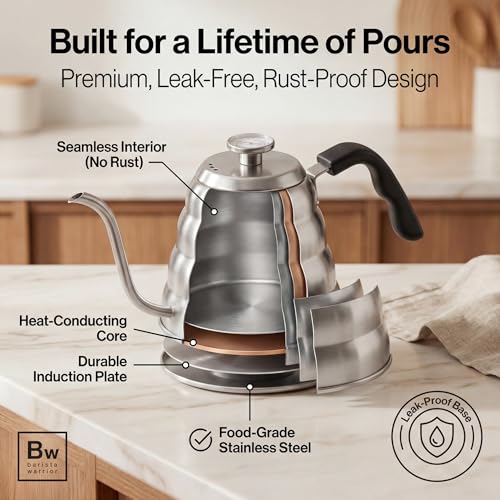
This stovetop gooseneck kettle stands out for one big reason: the built-in thermometer. For pour-over enthusiasts who aren’t ready to go electric but still want temperature precision, that’s a rare and useful feature. Being able to watch the water climb to 195–205°F without a separate thermometer takes the guesswork out of stovetop brewing. The 1.2L capacity is generous, though owners consistently note you should only fill it to about 1L to avoid boil-over during pouring.
The 18/8 stainless steel build feels durable, and the gooseneck spout delivers the kind of controlled, steady stream needed for even saturation. Compared to the Hario Buono, this one’s spout is slightly wider, which can make ultra-fine control a bit harder for advanced baristas. Still, for most home users, it’s more than adequate. It works on all stovetops, which gives it broad appeal.
Product photos

Hario V60 Buono Kettle
Strengths
- Legendary spout control
- Lightweight design
- Made in Japan
Trade-offs
- No temp gauge
- Stovetop only
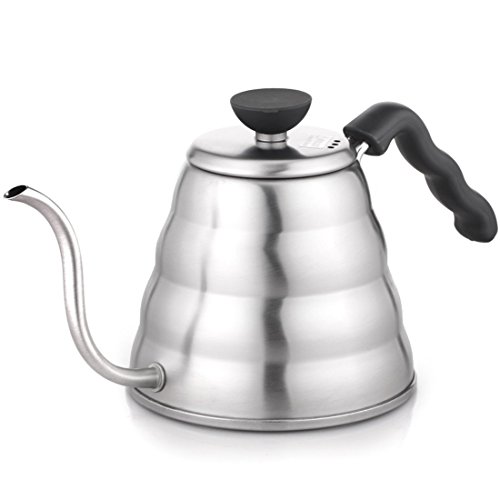
The Hario Buono is the original, and it’s still one of the best stovetop options out there. Its 1.2L capacity and iconic gooseneck spout are tailor-made for pour-over, and the Japanese craftsmanship ensures a balanced, smooth pour every time. The spout is slimmer than most electric kettles, giving pros and enthusiasts superior control over flow rate.
It has no thermometer and no heat source, so you’re relying on your stove and judgment. But for many, that’s part of the ritual. Owners love its sleek, minimalist look and durability. It’s lighter than the Barista Warrior, which some prefer for wrist comfort. If you’re already using a Hario V60 dripper, this is the natural companion.
Product photos
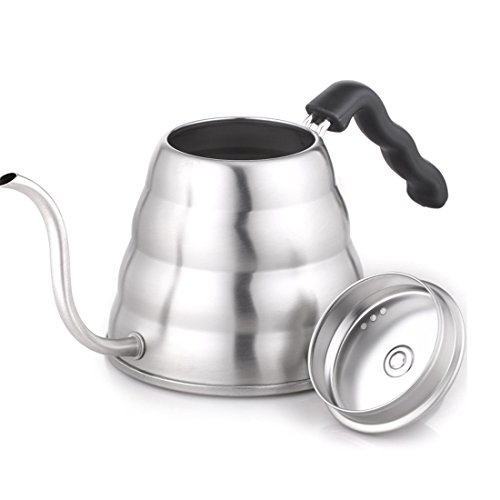

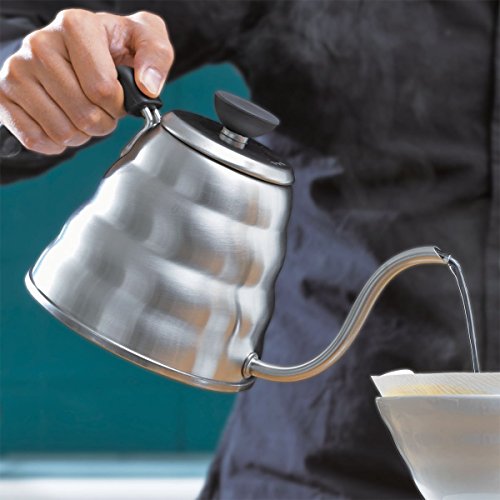
PARACITY Portable Pour Over Kettle

Strengths
- Ultra-portable size
- Durable stainless steel
- Hanging handle
Trade-offs
- Very small capacity
- No temp control
This tiny 12oz kettle is built for life on the move. At 350ml, it’s barely larger than a large espresso cup, but that’s the point, it’s made for camping, travel, or small offices. The 0.4cm spout delivers impressive flow control for its size, and the hanging handle makes it easy to store or carry.
It’s made of food-grade 304 stainless steel, so it’s durable and safe, and it can go on any heat source, including campfires. Owners use it for more than coffee, pouring wine, oil lamps, even plant watering. It won’t replace a full-size kettle at home, but as a portable companion, it’s unbeatable. The lack of a thermometer or electric base is obvious, but irrelevant in this context.
Product photos


OXO Brew Adjustable Temperature Kettle
Strengths
- One-degree temp control
- Built-in timer
- Stable pour
Trade-offs
- Bulky base
- Heavier design
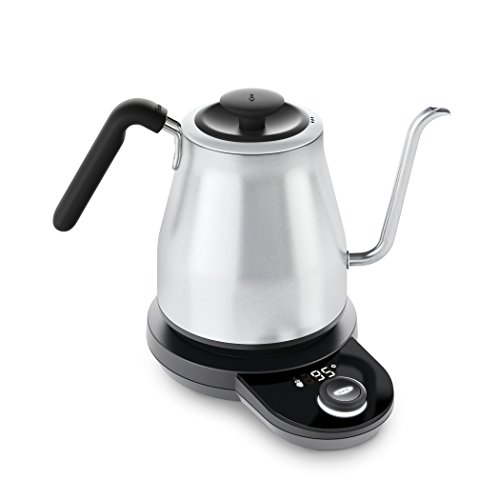
OXO nails the balance between usability and precision. The one-degree temperature adjustment is excellent, and the 30-minute keep-warm window is practical, long enough to finish grinding or prepping, but not so long it risks overheating. The built-in timer is a small touch, but it’s well-placed and easy to read, helping you stay consistent across brews.
Compared to the Cosori, it has fewer presets, but the manual control gives you more flexibility. The gooseneck spout is smooth and steady, and the cool-touch handle adds safety. It’s heavier than some, but that weight contributes to stability. Owners report it’s durable, though the base is a bit larger than average. If you want one kettle that does everything well without flash, this is it.
Product photos


How We Tested tea kettle for pour over coffee
As Bean Thusiast’s founder, I’ve spent years exploring every aspect of coffee brewing, and a precise kettle is absolutely critical for pour over. Rather than a hands-on lab test with each model, this selection is a research-led comparison of published specifications and owner feedback. We systematically compared features, build materials, and temperature control across a wide range of options, then weighed those against the experiences shared by actual users in reviews.
For pour over kettles, consistent temperature control and pour accuracy are paramount. We heavily weighted the ability to reach and hold specific temperatures, as this directly impacts optimal pour over heat. Ergonomics – specifically handle comfort and spout design for controlled pouring – were also key factors. Finally, material quality played a significant role; stainless steel interiors are preferred to avoid imparting any unwanted flavors.
Specifications reliably indicate capacity, wattage (affecting boil time), and material construction. However, judging the real-world performance of temperature accuracy and spout control required a deep explore owner reviews. These offered valuable insights into whether a kettle truly delivers on its promises and how well it holds up over time, going beyond just stated features. We also considered reputation within the coffee community.
How To Choose The tea kettle for pour over coffee
Choosing the right tea kettle for pour over coffee isn’t just about boiling water; it’s about control, precision, and ultimately, a better cup.
A quality pour over kettle prioritizes a slow, consistent water flow. Look for a gooseneck spout, accurate temperature control (especially if you’re serious about different coffee origins), and durable construction – typically stainless steel. Consider capacity needs and whether you prefer electric convenience or stovetop simplicity.
Spout Design: Control is Everything
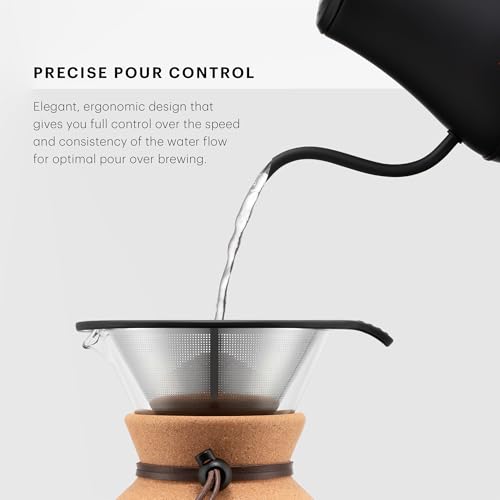
The spout is arguably the most important feature. A true gooseneck spout isn’t just a stylistic choice; it gives you the ability to regulate the water flow with incredible precision. This is crucial for a consistent bloom and even saturation of your coffee grounds. Avoid kettles with overly short or wide spouts, as they’ll make it difficult to achieve the slow, spiraling pour needed for optimal extraction. Many models, like those we discuss in our guide to the top electric gooseneck kettles, offer variations in gooseneck length and curvature.
Temperature Control: Beyond Boiling
While any kettle can boil water, a dedicated pour over kettle will often offer temperature control. Different coffee beans and roast levels benefit from different water temperatures. Lighter roasts often need hotter water (around 205°F) to fully develop their flavors, while darker roasts can become bitter with water that’s too hot. Look for models with preset temperatures or adjustable settings. The best precision pour-over kettles will allow you to dial in the temperature to within a degree or two.
Here’s what to keep in mind when evaluating temperature control: * Presets: Convenient for common brewing temperatures. * Adjustability: Allows for fine-tuning based on specific beans. * Accuracy: Crucial; some kettles advertise temperature control but are off by several degrees.
A good rule of thumb: if you’re consistently brewing the same coffee, presets are fine. If you like to experiment with different beans, adjustable temperature control is essential.
Material & Usability: From Handle to Base
Don’t overlook the practical aspects. Stainless steel interiors are a must-avoid plastics that can impart a taste. Pay attention to the handle – is it comfortable to hold, even when full? A well-balanced kettle is easier to control. Consider whether you want a cordless kettle for easy pouring or if you don’t mind one that remains on the base. And if you’re still figuring out how much coffee you need, check out our guide to coffee amount for pour over. Electric models with features like a hold-warm function and automatic shut-off add convenience, while some, like the OXO Brew Adjustable Temperature Kettle, offer a brew timer for increased control.
Tea Kettle for Pour Over Coffee Compared
Here’s a comparison of specifications for various tea kettles designed for pour over coffee brewing.
| Product Name | Capacity (L) | Material | Temp Control | Spout Type | Power (W) | Special Features |
|---|---|---|---|---|---|---|
| Cosori Electric Gooseneck Kettle | 1.0 | Stainless Steel | Yes | Gooseneck | 1500 | 5 Presets, Keep Warm |
| Bodum Bistro Gooseneck Kettle | 0.8 | Stainless Steel | No | Gooseneck | N/A | Ergonomic Design |
| INTASTING Electric Gooseneck Kettle | 0.8 | Stainless Steel | Yes ±1°F | Gooseneck | N/A | Temp Hold, Stopwatch |
| Chefman Gooseneck Electric Kettle | 1.0 | Stainless Steel | No | Gooseneck | 1000 | Fast Boil, LED Lights |
| Barista Warrior Gooseneck Kettle | 1.2 | Stainless Steel | Thermometer | Gooseneck | N/A | Built-in Thermometer |
| Hario V60 Buono Kettle | 1.2 | Stainless Steel | No | Gooseneck | N/A | Stovetop, Classic |
| PARACITY Portable Pour Over Kettle | 0.35 | Stainless Steel | No | Gooseneck | N/A | Portable, Small |
| OXO Brew Adjustable Temperature Kettle | 1.0 | Stainless Steel | Yes | Gooseneck | N/A | Timer, Multiple Presets |
Frequently Asked Questions
What temperature should the kettle hold for lighter roast coffees?
Lighter roast coffees generally benefit from a higher brewing temperature of around 205°F (96°C) to fully extract their complex flavors. A kettle with precise temperature control is especially useful for these beans.
Are stovetop kettles as good as electric ones for pour over?
Stovetop kettles offer a more traditional brewing experience and can be very accurate, but electric models provide consistent temperature control and often include helpful features like preset temperatures. The best gooseneck kettle models often include electric options.
How important is the kettle’s wattage?
Higher wattage generally means a faster boil time, which can be convenient, but isn’t the most crucial factor. More important is the kettle’s ability to hold a consistent temperature, rather than just reaching boiling point quickly.
What material should I prioritize in a pour over kettle?
Stainless steel interiors are essential as they avoid imparting any metallic taste to your coffee. Look for 304 stainless steel, which is known for its durability and resistance to corrosion.
What’s the best way to clean a gooseneck kettle to prevent mineral buildup?
Regular descaling with a solution of equal parts white vinegar and water is the most effective method. Allow it to sit for 30-60 minutes, then rinse thoroughly, and you’ll maintain the kettle’s performance and the quality of your brew. These precision pour-over kettles often need this maintenance.
The Bottom Line
Choosing a pour over kettle often comes down to balancing control with convenience. While a simple stovetop kettle like the Hario V60 Buono Kettle offers excellent precision for those who enjoy a more hands-on approach, the Cosori Electric Gooseneck Kettle strikes an impressive balance of features, accuracy, and affordability, making it our overall recommendation.
For readers specifically seeking a budget-friendly option, the Chefman Gooseneck Electric Kettle delivers a gooseneck spout and rapid heating without breaking the bank. Those needing maximum versatility, or who like to experiment with brew times, will appreciate the OXO Brew Adjustable Temperature Kettle and its built-in timer.
Ultimately, the specs matter less than understanding your own brewing style. Prioritize a kettle with a well-designed gooseneck spout for a consistent pour, and remember that finding the perfect coffee to water ratio (https://beanthusiast.com/pour-over-coffee-to-water-ratio/) is just as important as the kettle itself.
