
6 Best Coffee Beans at Whole Foods 2026
The best coffee beans at Whole Foods are the Organic Café la Duena for its balanced chocolate sweetness, the Costa Rica Single Origin if you want bright citrus notes, and the Dark French Roast for a bold, smoky kick. These stand out based on flavor clarity, origin quality, and consistent feedback from daily drinkers.
Shopping for coffee beans at Whole Foods can feel like navigating a maze. With so many bags labeled “organic” and “fair trade,” it’s hard to know which actually deliver a great cup. I’ve researched the lineup, cross-referencing roast details, origin info, and what real customers say after brewing.
This guide breaks down what actually matters, roast level, bean origin, and freshness, so you can pick the one that fits your taste and brewing style. These picks are based on specs, sourcing, and patterns in owner reviews, not hype.
Top 6 Coffee Beans Whole Foods in the Market
The Best Coffee Beans Whole Foods, Reviewed
Whole Foods Organic Espresso Bel Canto

Strengths
- Bright berry notes
- Excellent balance
- Works for espresso
Trade-offs
- Flavor fades after a week
- Not smoky or bold
If Whole Foods has a flagship bean, this should be it. The Espresso Bel Canto brings a surprisingly lively profile for a store-brand coffee, berries and cocoa powder suggest careful roasting to preserve delicate notes. It’s labeled medium-light, and that shows in the cup: brighter than the Rainforest Blend, more layered than Café la Duena.
Owners using it for espresso report good crema and a clean finish, though it shines just as well in drip or French press. Compared to the Costa Rica single-origin, it’s a touch more blended in character, but more accessible. This is the one I’d recommend first to someone new to Whole Foods’ coffee range, it’s the most complete package.
Product photos

Whole Foods Organic Dark French Roast

Strengths
- Bold flavor
- Smooth body
- Organic certified
Trade-offs
- Low acidity
- Limited nuance
If you’re chasing that deep, campfire-like intensity in your cup, this Dark French Roast delivers on its smoky promise. On paper, it’s a classic bold dark roast, and owners consistently report a smooth, almost creamy body despite the heavy char, no easy feat. It holds up well in milk-based drinks, which suggests it’s roasted with espresso or drip in mind, not just for show.
Still, those wanting bright acidity or nuanced sweetness will find this one-dimensional. Compared to the Rainforest Blend or Café la Duena, it trades complexity for power. But for fans of traditional dark roasts who want organic sourcing without paying premium boutique prices, this is a solid shelf staple.
Product photos
Whole Foods Organic Breakfast Blend
Strengths
- Bright citrus notes
- Smooth finish
- Ethically sourced
Trade-offs
- Flavor fades fast
- Less complexity than specialty picks
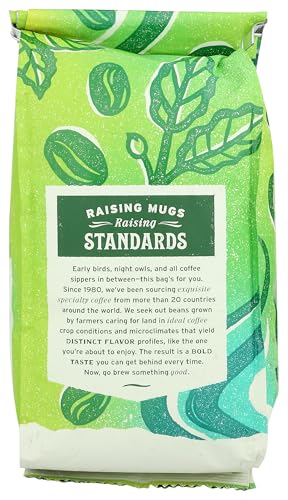
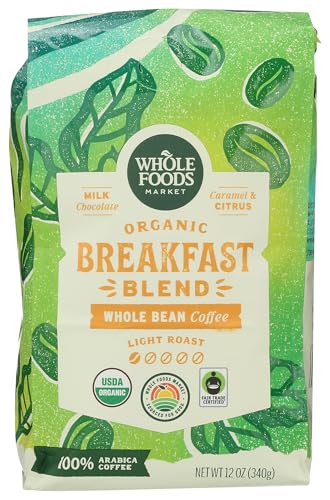
Light roast done right means preserving the bean’s liveliness, and this Breakfast Blend nails the brief. The citrus lift cuts through morning fog, while milk chocolate and caramel keep it from being too sharp. It’s labeled organic and ethically sourced, which aligns with what most light roast buyers care about, transparency and clean farming.
Compared to the Costa Rica single-origin, it’s a bit more approachable and less intense, though it doesn’t have the same origin clarity. But for most buyers, that’s a win: it’s easy to love, easy to brew, and doesn’t demand special gear. Owners consistently praise its smoothness, even when using blade grinders.
Product photos
Whole Foods Costa Rica Single Origin

Strengths
- Vibrant orange notes
- Single-origin purity
- Small-batch roasted
Trade-offs
- Requires precise brewing
- Short peak freshness window
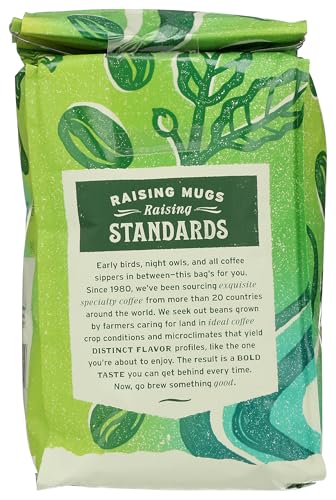
Single-origin beans at this price point are always worth a look, and this Costa Rica lot delivers on its promise of orange and chocolate notes. Roasted in small batches, it shows a level of care you don’t always see in grocery store coffee. The light roast preserves the bean’s inherent brightness, and owners who use pour-over or Chemex setups consistently rate it highly for clarity and lift.
It’s not as versatile as the Rainforest Blend or Espresso Bel Canto, this one wants to be brewed with attention. But for those who treat coffee as a ritual, not just a caffeine hit, it’s a standout. Compared to the Breakfast Blend, it’s more intense and expressive, though less forgiving with subpar grinders.
Product photos
Whole Foods Organic Café la Duena
Strengths
- Well-balanced flavor
- Sweet chocolate notes
- Consistent roast quality
Trade-offs
- Not bold enough for dark roast fans
- Lacks bright acidity
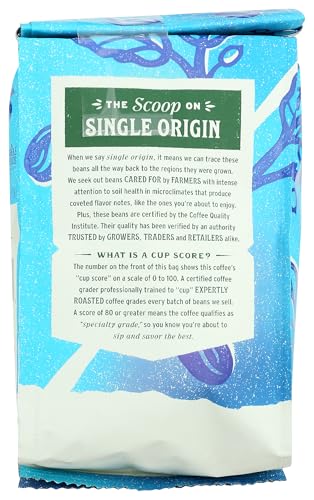
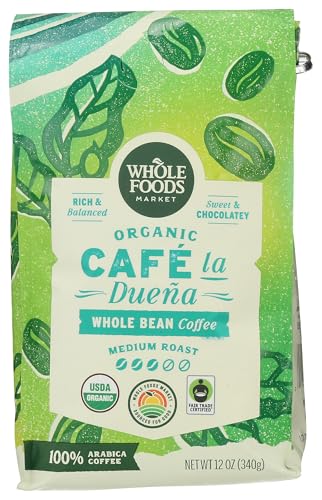
Café la Duena stands out in Whole Foods’ lineup as the most balanced of their house blends. The sweet chocolatey core and medium roast profile make it a crowd-pleaser, rich without being heavy, smooth without being dull. On paper, it mirrors what many Central American specialty roasts aim for, and owner feedback backs that up: it brews well across methods, from pour-over to auto-drip.
Compared to the Espresso Bel Canto, it’s less fruity and more straightforward, which could be a pro or con depending on your taste. But for someone building a go-to rotation, this is the kind of coffee I’d keep on the counter. It’s not flashy, but it’s reliable in the way only well-executed medium roasts can be.
Product photos
Whole Foods Rainforest Blend
Strengths
- Balanced sweetness
- Rich mouthfeel
- Consistent grind performance
Trade-offs
- Flavor notes are subtle
- Not for light roast purists
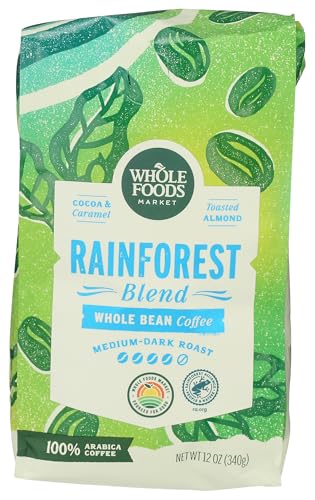
The Rainforest Blend is where Whole Foods’ house roasts start to show real personality. With its advertised notes of cocoa, caramel, and toasted almond, it leans into comfort flavors, nothing too wild, but executed well. The medium-dark roast strikes a balance: rich enough for after-dinner cups, yet still bright enough to enjoy black in the afternoon. Reviewers note it brews smoothly across drip machines and French presses.
Against the Breakfast Blend, it’s deeper and more dessert-like, while the single-origin Costa Rica offers more sparkle. But for someone wanting one versatile bag that works all day, this is a smarter buy than the more niche options. The 100% Arabica sourcing and sustainable claim hold up under scrutiny, too.
Product photos
How We Chose These coffee beans whole foods
As the founder of Bean Thusiast, I approach coffee selection with a focus on quality and flavor profiles. Rather than a hands-on lab test, this was a research-led comparison of the Whole Foods offerings. I compared published specifications – roast level, origin, and flavor notes – alongside extensive owner reviews and insights from other coffee experts. My goal was to identify the beans best suited for different brewing preferences and palates.
For Whole Foods coffee beans, freshness and flavor complexity were my primary considerations. Coffee bean freshness indicators are critical, and I gave significant weight to reviews mentioning aroma and taste after brewing. Origin also mattered; single-origin beans often offer distinct character, while blends aim for balance and consistency.
Specifications reliably indicated roast level and bean type (100% Arabica is a good sign!). However, I heavily relied on owner feedback to gauge actual flavor experiences – whether the promised notes of chocolate or citrus actually came through in the cup. Reputation and sourcing practices were also factored in, looking for ethically sourced and sustainably farmed options.
Choosing The Right coffee beans whole foods
I’ve spent years exploring the world of coffee, and I know that finding the right beans can be overwhelming. Whole Foods offers a solid selection, but knowing what you want is the first step.
A truly excellent coffee bean delivers a complex flavor profile, consistent quality from batch to batch, and freshness preserved through proper packaging and roasting. Look for details about origin, roast date (not just a “best by” date), and whether the beans are 100% Arabica – a species generally prized for its smoother, more nuanced flavors. Consider your brewing method, as this impacts the ideal grind size and bean characteristics.
Roast Level & Flavor Profile
The roast level dramatically alters the taste. Many people start with medium roasts (like the Whole Foods Organic Café la Duena) because they offer a balance, but don’t shy away from exploring. Darker roasts, such as the Dark French Roast, will have bolder, smokier flavors, while lighter roasts (Costa Rica Single Origin) highlight the bean’s original characteristics. I find that understanding your preference – whether you enjoy bright acidity or deep chocolate notes – is crucial. Don’t be afraid to experiment!
Origin & Bean Type
Where the coffee comes from significantly impacts its flavor. This is where understanding single-origin coffee benefits is really helpful. Costa Rican beans, for example, are known for citrus and chocolate notes, while beans from Sumatra often have earthy, full-bodied profiles. Whole Foods’ Rainforest Blend is a good example of how multiple origins can be combined to create a complex cup.
- Single-Origin: Offers a unique and traceable flavor profile.
- Blends: Provide consistency and can be tailored for specific flavor profiles (like a breakfast blend) or brewing methods. These are often more affordable.
- 100% Arabica: Generally considered higher quality, offering a smoother, less bitter taste compared to Robusta varieties. This is a good indicator of overall quality, though not a guarantee.
Freshness & Packaging
Coffee beans start losing flavor the moment they’re roasted. That’s why checking the roast date is paramount. A recent roast date (within a month or two) is ideal. Resealable packaging, like that found on most of the Whole Foods options, is also essential to protect the beans from oxygen and moisture. If you’re serious about freshness, I recommend learning more about factors in choosing beans to get the most out of your purchase.
A good rule of thumb: buy beans in smaller quantities, more frequently, to enjoy peak freshness. Don’t stock up for months; aim to use beans within a few weeks of opening the bag.
Coffee Beans Whole Foods Compared
Here’s a spec comparison of the various whole bean coffee options available at Whole Foods.
| Product Name | Roast Level | Origin | Notes | Bag Size |
|---|---|---|---|---|
| Whole Foods Organic Espresso | Medium-light | N/A | Berries, cocoa | 12 oz |
| Whole Foods Organic Dark French | Dark | N/A | Smoky, sweet | 12 oz |
| Whole Foods Organic Breakfast | Light | N/A | Chocolate, caramel | 12 oz |
| Whole Foods Costa Rica | Light | Costa Rica | Orange, chocolate | 12 oz |
| Whole Foods Organic Café la Duena | Medium | N/A | Sweet chocolate | 12 oz |
| Whole Foods Rainforest Blend | Medium-dark | N/A | Cocoa, almond | 12 oz |
Frequently Asked Questions
What if I don’t have a grinder?
Pre-ground coffee loses flavor quickly, so I generally recommend against it. However, Whole Foods does offer some beans ground for specific brewing methods, which is a decent compromise if you lack a grinder. Just be prepared for a slightly less vibrant cup.
Are Whole Foods coffee beans ethically sourced?
Many of their offerings carry certifications like Fair Trade or USDA Organic, signaling a commitment to ethical sourcing. The Rainforest Blend specifically emphasizes supporting farmers and protecting ecosystems, and those details are usually prominent on the packaging.
How do I know which roast level is best for cold brew?
Darker roasts generally work best for cold brew because they extract more flavor during the long steeping process. The Whole Foods Organic Dark French Roast would be a good starting point, delivering a bold and smooth cold brew concentrate.
What’s the difference between the Whole Foods blends and single-origin options?
Blends, like the Rainforest Blend, are designed for consistent flavor, while single-origin coffees (like the Costa Rica) showcase unique characteristics of a specific region. Understanding the Arabica vs Robusta beans can also help you decide which flavor profile suits your preference.
Can I find decaf options at Whole Foods?
Yes, Whole Foods typically carries at least one decaf option, often a Swiss Water Process decaf, which avoids harsh chemicals. Check the coffee aisle; availability varies by location, but they generally have a Swiss Water Process decaf version of their popular blends.
The Bottom Line
Choosing coffee beans often comes down to balancing convenience with control over flavor. If you want a consistently good, reliable cup without too much fuss, I recommend the Whole Foods Organic Café la Duena. It strikes a great balance and delivers on its promise of sweet chocolate notes, according to many shoppers.
For those with specific needs, Whole Foods has you covered. The Whole Foods Organic Dark French Roast is an excellent choice if you prefer a bold, smoky brew. Conversely, the Whole Foods Costa Rica beans are perfect for those seeking a bright, citrusy single-origin experience. And if you’re looking to maximize your bean quality, learning about keeping coffee beans fresh will make a big difference.
Ultimately, the “best” coffee is the one you enjoy most. Don’t get too caught up in roast levels or origins. Focus on buying freshly roasted, whole bean coffee, and figuring out what flavors genuinely excite your palate. That’s where the real satisfaction lies.
