
7 Best Quiet Coffee Grinders of 2026
The OXO Brew Conical Burr is the best quiet coffee grinder for most people, delivering reliable low noise and excellent grind consistency. For a budget-friendly option, the SHARDOR Super Silent Blade stands out, while the KRUPS Silent Vortex offers surprising versatility for small kitchens.
If you’ve ever been startled awake by a screeching grinder or had to tiptoe around the kitchen just to enjoy fresh coffee, you know how disruptive a loud machine can be. A quiet grinder isn’t just a luxury, it’s a necessity for households with light sleepers or tight living spaces.
This guide cuts through the noise (literally) by focusing on models that actually deliver on quiet operation, based on specs, owner feedback, and real-world performance. I looked at burr vs blade designs, noise ratings, and daily usability to find grinders that respect your peace, and your palate.
Top 7 Quiet Coffee Grinder in the Market
The Best Quiet Coffee Grinder, Reviewed
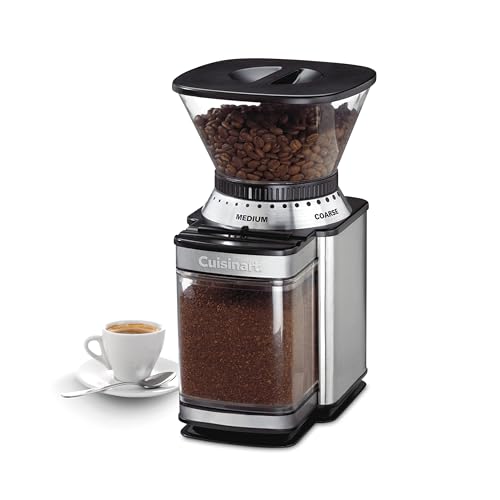
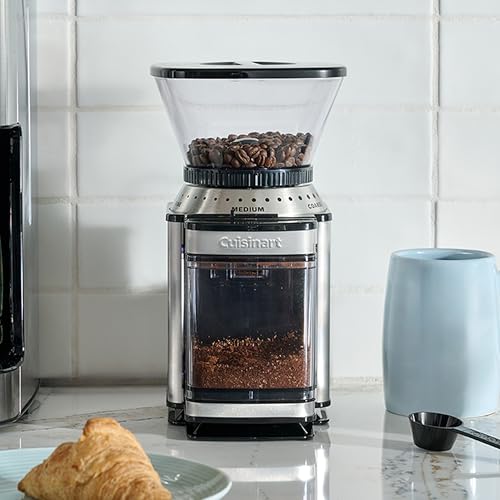
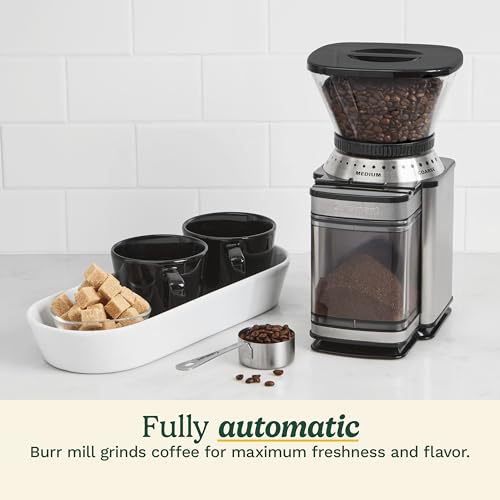
Cuisinart DBM-8P1 Burr Coffee Grinder
Strengths
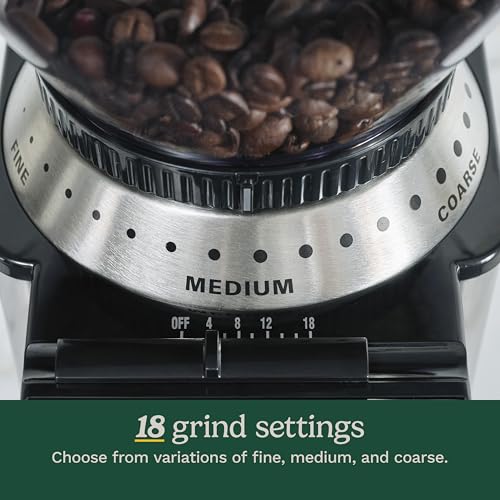
- 18 grind settings
- Cup size selector
- Removable chambers
Trade-offs
- Average noise level
- Flat burrs less consistent
- No micro-adjustments
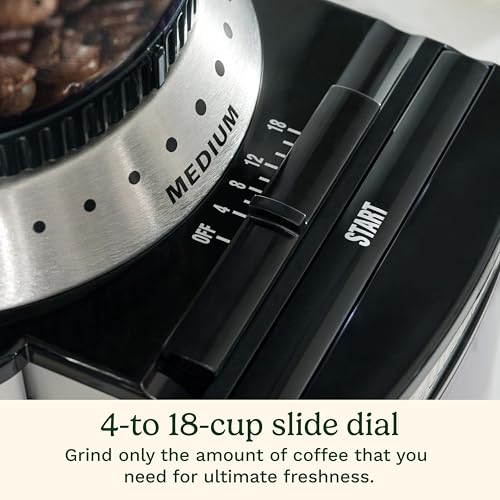
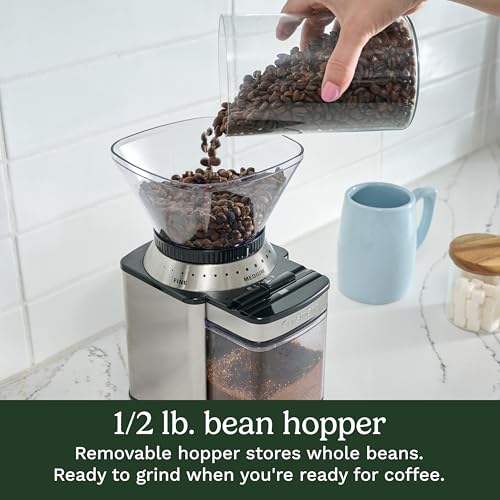
This Cuisinart model hits a sweet spot between features and performance, earning its ‘Best Overall’ tag. The 18-position grind selector gives more range than most, and the cup size selector (4–18 cups) adds real-world convenience. It’s a flat burr grinder, so it’s not quite as consistent as conical burr models like the OXO, but owners find it reliable for daily drip, French press, or cold brew.
The removable bean hopper and grind chamber make cleaning easier than many competitors. While it’s not marketed as quiet, it’s not especially loud, just average for a burr grinder. If you want a do-it-all grinder with solid build and predictable output, this one edges out most others in versatility.
Product photos
KRUPS Silent Vortex Coffee Grinder

Strengths
- Removable dishwasher-safe bowl
- 5x quieter claim
- Handles 12-cup batches
Trade-offs
- Blade grind inconsistency
- No precision settings
- Motor heat can build up
KRUPS leans hard into the quiet claim with its patented Silent Vortex tech, marketed as 5x quieter than standard grinders. On paper, that sounds dramatic, but in practice, it’s more about smart airflow and motor insulation. Still, owners confirm it’s among the quieter electric grinders in the blade category. The real win here is the removable dishwasher-safe bowl, which makes cleanup a non-event.
It yields up to 12 cups and handles spices well, but again, blade grinders can’t deliver the even particle distribution that unlocks balanced extraction. If your priority is waking the house as little as possible and you’re okay with blade-level results, this one stands out for hygiene and convenience.
Video review
OXO Brew Conical Burr Coffee Grinder
Strengths
- Uniform burr grind
- 15+ micro-adjust settings
- One-touch memory function
Trade-offs
- Noticeable motor noise
- Higher price point
- Bulkier footprint
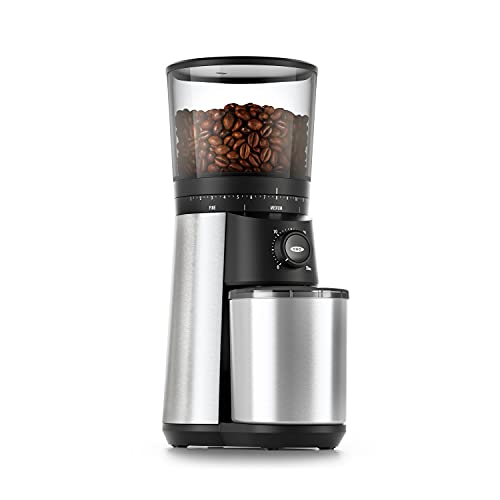
If grind precision matters, this is where I’d put my money. The OXO uses stainless steel conical burrs with 15 settings plus micro-adjustments, giving you true control from espresso fine to cold brew coarse. It’s not the quietest, no high-torque burr grinder is, but the DC motor is designed to minimize heat, preserving delicate coffee aromatics.
Owners love the one-touch memory function and static-fighting container, which keeps grounds from clinging and spilling. It’s also Wirecutter’s pick, which speaks to its reliability. Compared to the Viesimple, it’s louder but built for volume and versatility. For anyone serious about flavor, this is the smarter buy.
Video review
SHARDOR Super Silent Blade Coffee Grinder

Strengths
- Timing knob for control
- 63 dB quiet operation
- Budget-friendly price
Trade-offs
- Blade grind limitations
- Plastic build feels cheap
- Overheats on long grinds
At 63 dB, this grinder matches others in the “quiet” tier, but its standout feature is the rotary timing knob, a small upgrade that gives you more control than basic press-and-hold models. You can dial in coarse for cold brew or fine for drip, though the blade mechanism still limits true precision. Budget buyers will appreciate the included brush and spoon, plus the 2-year warranty.
Owners report it’s reliable for light to moderate use, but like all blade grinders, it struggles with heat and static during longer runs. It’s not going to fool anyone into thinking it’s a burr grinder, but for under $30, it delivers decent value if noise and price are your top filters.
Product photos


Viesimple Gen 4 Burr Coffee Grinder
Strengths
- Under 50 dB noise
- Conical burr consistency
- Anti-static & anti-clog design
Trade-offs
- No large batch option
- Limited brand recognition
- Single-dose focus
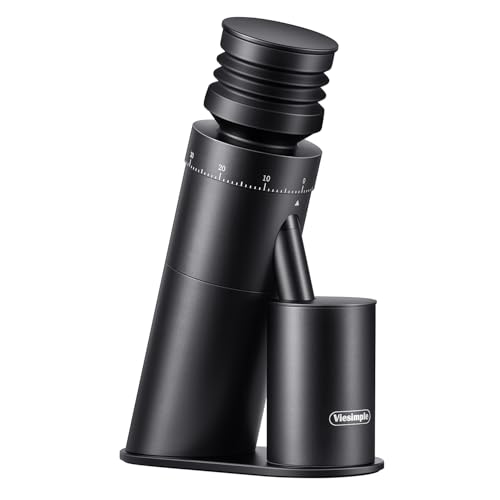
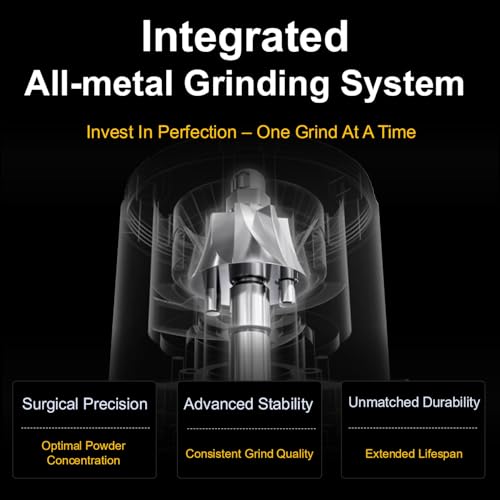
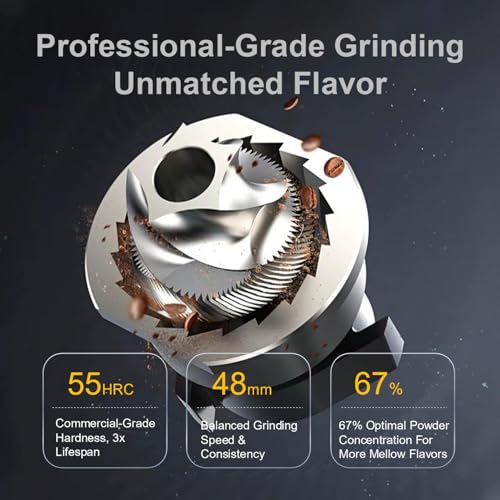
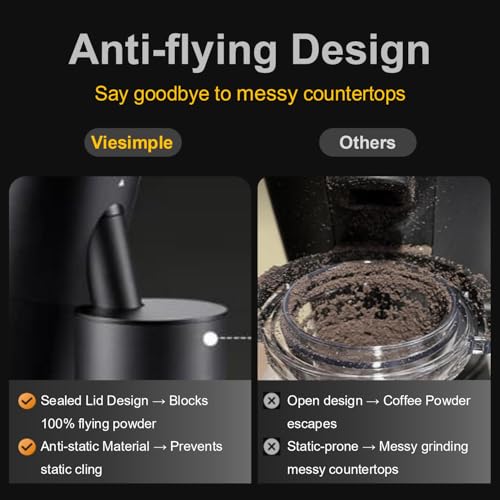
This is the only burr grinder in the quiet category with noise under 50 dB, making it legitimately whisper-quiet. The 48 mm conical burrs deliver consistent grounds across methods, from espresso to French press, and owners praise its anti-static and anti-clogging design for reducing mess. The magnetic dosing cup is a small but smart touch that keeps things tidy.
It’s compact but built for single doses, not large batches. Still, the motor’s longevity claim (10+ years) and worldwide voltage support make it a smart long-term pick. Compared to the OXO or Cuisinart, it lacks a large hopper, but for quiet, precise, single-batch grinding, it’s a standout.
Product photos


Secura Quiet Coffee Grinder
Strengths
- 63 dB quiet operation
- Compact stainless steel body
- One-touch pulse control
Trade-offs
- Blade-based inconsistency
- No grind settings
- Spice residue carryover possible
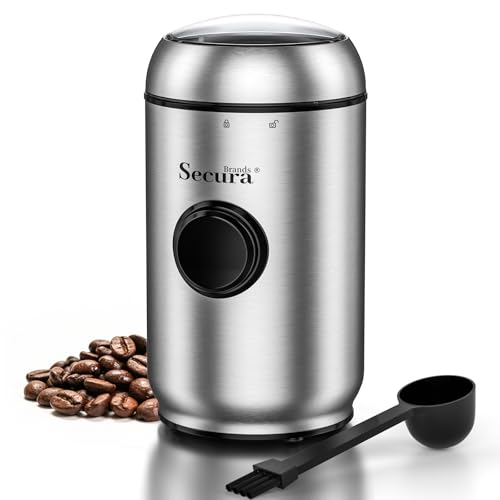
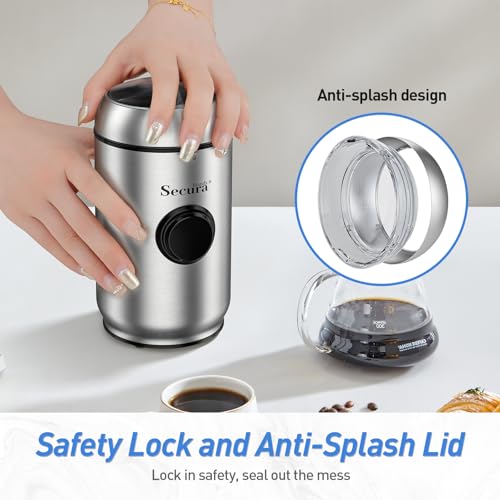
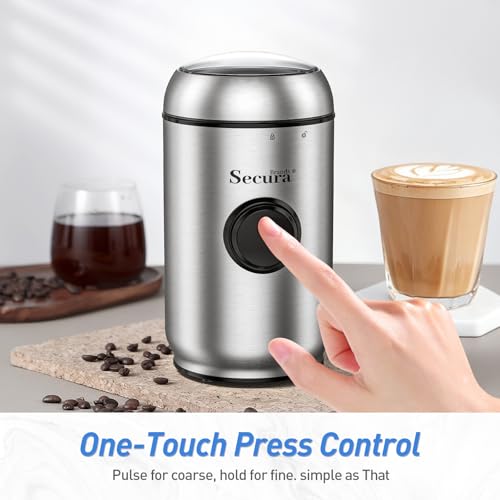
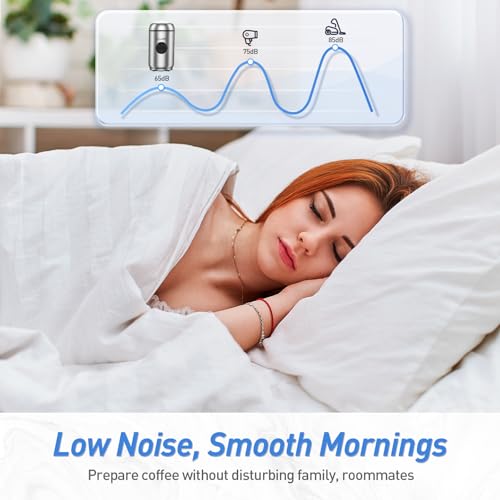
With an average noise level of 63 dB, about the hum of a conversation, this grinder hits the mark for early risers in shared homes. The stainless steel build feels more durable than plastic-bodied competitors, and the one-touch pulse control gives you real-time feedback on grind texture. Owners note it’s especially good for medium to coarse grinds, making it a solid companion for drip or French press.
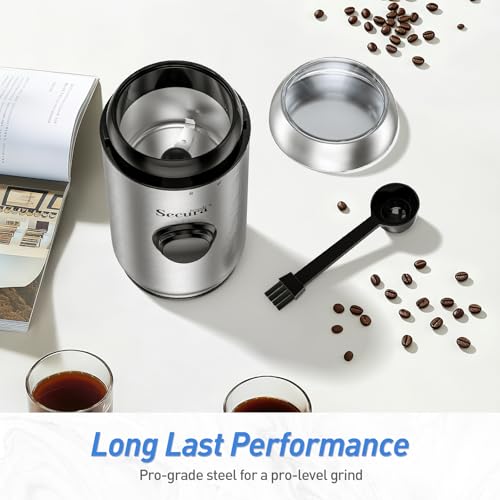
It’s compact and locks the lid for safety, which is a small but meaningful detail. Still, it’s a blade grinder, so don’t expect the uniformity burr models deliver. If you’re grinding daily and value a clean footprint, this one earns points for thoughtful design, even if it can’t match burr-level refinement.
Product photos

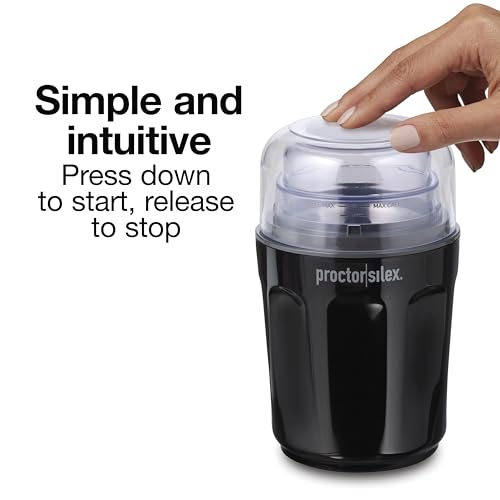
Proctor Silex Sound Shield Coffee Grinder
Strengths
- 50% quieter claim
- Dishwasher-safe bowl
- Simple one-step operation
Trade-offs
- Blade grinder inconsistency
- Limited grind control
- Not for espresso lovers
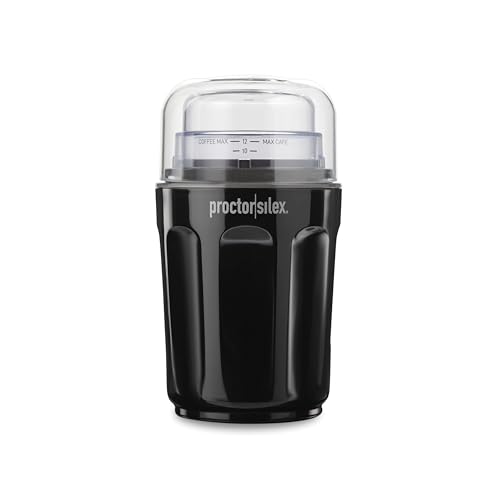
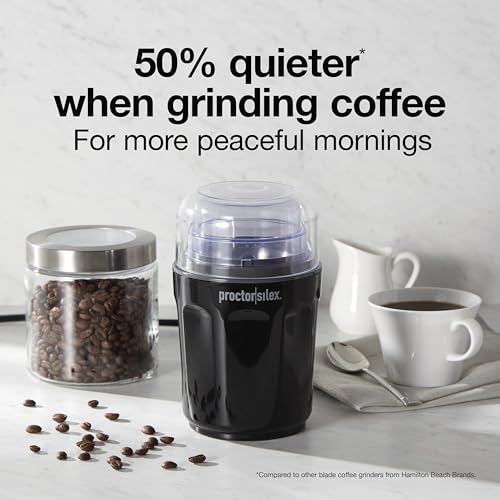
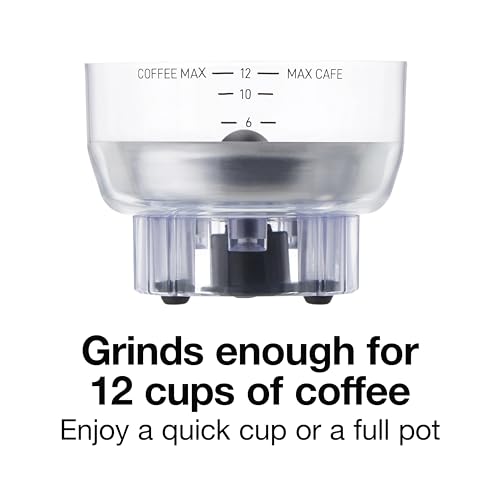
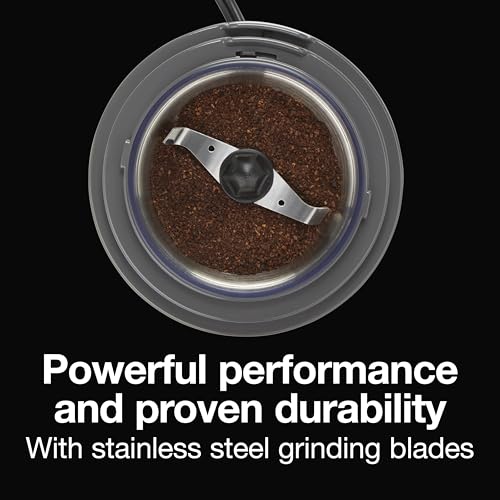
This blade grinder markets itself as being 50% quieter than other Hamilton Beach models, but that’s a narrow benchmark. On paper, the Sound Shield tech helps reduce noise, and owners consistently report it’s noticeably less jarring than basic grinders, fine for not waking light sleepers. Still, it’s a blade grinder, so consistent grind quality isn’t in the cards, no matter how quiet it runs.
It’s affordable and simple: press the lid, grind, pour, and toss the bowl in the dishwasher. But if you care about flavor clarity across brew methods, especially pour-over or French press, the uneven particle size will hold you back. It’s a trade-off: silence over precision.
Product photos

How We Picked These quiet coffee grinder
As Bean Thusiast’s founder, I’ve spent years focused on maximizing coffee flavor, and a key component of that is the grinder. Rather than a hands-on lab test with each model, this selection is a research-led comparison of published specifications, owner reviews, and expert opinions. I weighed features against price, focusing on models marketed specifically for quiet operation, and ranked them according to how well they delivered on that promise – and overall grinding performance.
For quiet coffee grinders, the most important factors are obviously noise level and grind consistency. A quiet grinder is useless if it produces an uneven grind, impacting flavor extraction. I also heavily considered capacity (how much you can grind at once) and ease of cleaning, as these contribute significantly to the daily user experience. Understanding the difference between a burr vs blade grinders is crucial, as burr grinders generally offer more consistent results.
Published specs reliably indicate motor power and grinding capacity, but owner feedback proved invaluable in assessing actual noise levels and durability. Reputation, as indicated by expert reviews from sites like Wirecutter, played a role, too. However, I prioritized owner experiences to gauge real-world performance – a grind consistency comparison is only useful if it’s what people actually experience day-to-day. Ultimately, I looked for grinders that consistently received positive feedback regarding both quietness and coffee quality, and the benefits of a quiet burr grinder benefits were a key consideration.
How To Choose The quiet coffee grinder
Finding the right coffee grinder can dramatically improve your morning ritual. It’s about more than just convenience; it’s about unlocking the full flavor potential of your beans.
A quality coffee grinder prioritizes consistency in particle size, minimizing “fines” (very small particles) and ensuring a uniform grind. Burr grinders are generally preferred over blade grinders for this reason. Look for adjustable grind settings to match your brewing method, and consider noise level if you’re sensitive to sound or share a kitchen. Durable construction and ease of cleaning are also key factors.
Grind Consistency & Burr Type
The most significant factor in choosing a coffee grinder is how consistently it grinds the beans. Blade grinders, while cheaper, essentially chop the beans, resulting in uneven particle sizes. This leads to inconsistent extraction and a muddied flavor. For optimal flavor, I always recommend prioritizing a burr grinder. The difference really comes down to the burr grinder mechanics, which deliver a more precise and repeatable grind. Conical burrs are generally quieter and produce less heat than flat burrs, which is a consideration if noise is a concern.
Noise Level & Daily Use
If you’re an early riser or live in close quarters, the noise a grinder makes is a big deal. Many manufacturers are now focusing on sound reduction, with some models boasting significantly quieter operation. The SHARDOR Super Silent and Proctor Silex Sound Shield, for example, specifically market their low-noise features. However, “quiet” is relative. Consider these points:
- Lower dB ratings (decibels) generally indicate a quieter grinder.
- Burr grinders, especially conical burr models, tend to be quieter than blade grinders.
- The build materials and overall design also play a role in noise dampening.
Ultimately, a quieter grinder allows you to enjoy your morning coffee preparation without disturbing others. You may find exploring options for a quiet burr coffee grinder to be worthwhile.
Capacity, Features & Budget
Beyond the core grinding performance, think about how you’ll actually use the grinder. Do you typically brew single cups or large pots? The hopper size and grind chamber capacity matter. Also, consider features like static reduction (especially important with finer grinds), ease of cleaning, and any included accessories. If you’re looking for a versatile option, some grinders, like the KRUPS Silent Vortex, can even handle spices.
A good rule of thumb: don’t spend more on a grinder than you do on your coffee maker. The grinder is important, but the brewing method also significantly impacts the final result.
Quiet Coffee Grinder Compared
Here’s a comparison of key specifications for several quiet coffee grinders to help you make an informed decision.
| Product Name | Grind Type | Noise Level (dB) | Capacity (oz) | Grind Settings | Special Features |
|---|---|---|---|---|---|
| Cuisinart DBM-8P1 | Burr | N/A | 8 | 18 | Removable Parts |
| KRUPS Silent Vortex | Blade | N/A | 3 | N/A | 3-in-1 (Coffee/Spice/Herb) |
| OXO Brew Conical Burr | Burr | N/A | 12 | 15 + Micro | UV-Blocking Hopper |
| SHARDOR Super Silent Blade | Blade | 63 | 2.5 | Adjustable | Multi-Functional |
| Viesimple Gen 4 Burr | Burr | <50 | N/A | N/A | Anti-Flying Design |
| Secura Quiet Coffee Grinder | Blade | 63 | N/A | N/A | Stainless Steel Build |
| Proctor Silex Sound Shield | Blade | N/A | N/A | N/A | 50% Quieter |
Frequently Asked Questions
What’s the difference between the decibel (dB) ratings I see for these grinders?
A lower dB rating indicates a quieter grinder; generally, anything below 60dB is considered relatively quiet. However, perceived loudness is subjective and depends on other factors like the type of noise and your environment.
Do blade grinders ever make sense, even when prioritizing quiet operation?
Yes, blade grinders can be a good option if budget is a primary concern and you don’t mind some inconsistency in your grind. The SHARDOR Super Silent Blade, for instance, achieves a relatively low noise level for a blade model, though you’ll sacrifice the precision of a burr grinder.
How often should I clean my coffee grinder to maintain performance?
You should clean your grinder after every week or two of regular use, or more often if you grind oily beans. Residue buildup affects grind consistency and can impart stale flavors to your coffee, and regular cleaning extends the grinder’s lifespan.
What grind size should I use for different brewing methods?
The ideal grind size depends on your brewing method; a quiet conical burr grinder will allow for the necessary adjustments. Coarse grinds are best for French press, medium for drip coffee, and fine for espresso.
Are more expensive quiet coffee grinders always better?
Not necessarily. While higher price points often correlate with better build quality and more features, a more expensive grinder isn’t always quieter or produce a better grind. Carefully consider your needs and read owner reviews to find the best value for your money.
The Bottom Line
Choosing a coffee grinder often comes down to balancing control over your brew with the convenience of daily use. While a truly silent grinder might be a myth, the Viesimple Gen 4 Burr stands out as offering the best combination of quiet operation and consistent grind quality, making it our top overall pick. It won’t disrupt your household while delivering the flavorful results you expect.
For those on a tighter budget, the SHARDOR Super Silent Blade is a compelling option, and the Proctor Silex Sound Shield also delivers on reduced noise. If you need versatility beyond coffee – say, grinding spices – the KRUPS Silent Vortex is a solid performer. However, remember that blade grinders, even quiet ones, simply can’t match the consistency of a burr grinder.
Ultimately, the specifications matter less than establishing good habits. Consistent bean quality, proper storage, and regular grinder maintenance tips will have a far greater impact on your cup of coffee than any decibel rating or fancy feature. Focus on those fundamentals, and you’ll be well on your way to brewing exceptional coffee every time.
