
8 Best Coffee Grinders for Home Use 2026
The Baratza Encore Conical Burr Grinder stands out as the best overall domestic coffee grinder for its reliability and consistent grind, making it a favorite among home baristas. For a budget-friendly option, the OXO Brew Conical Burr Grinder delivers strong performance with user-friendly features. If you value precision and versatility across brewing methods, the Fellow Ode Gen 2 is a top contender.
Choosing the right grinder can make or break your morning coffee. Too many people overlook how critical grind consistency is, settling for machines that sabotage fresh beans with uneven results. I’ve researched the field extensively, comparing specs and owner feedback to identify grinders that deliver real-world performance, build quality, and value based on what actually matters in a home setup.
Top 8 Domestic Coffee Grinder in the Market
The Best Domestic Coffee Grinder, Reviewed
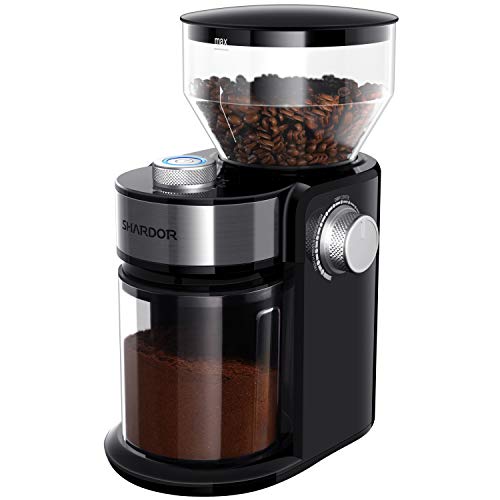
SHARDOR Electric Burr Grinder 2.0
Strengths
- Flat burr precision
- 16 grind settings
- Compact design
Trade-offs
- Plastic build quality
- Limited grind consistency
- No hopper tint
For budget-focused buyers who still want burr consistency, the SHARDOR 2.0 makes a strong first impression. With metallic flat burrs and 16 grind settings, it delivers a level of control that blade grinders can’t match, and owners consistently report clean, repeatable results for drip, French press, and even light espresso use. The 14-cup capacity and fully automatic operation make it practical for daily brewing without overcomplicating the process.
Where it shines is value, this is one of the most affordable entry points into burr grinding. But don’t expect refinement. The plastic build feels light, and while the grind is decent, it lacks the uniformity of conical burr units in the mid-range. Still, for someone upgrading from a blade grinder or just starting out, it’s a sensible leap forward.
Video review
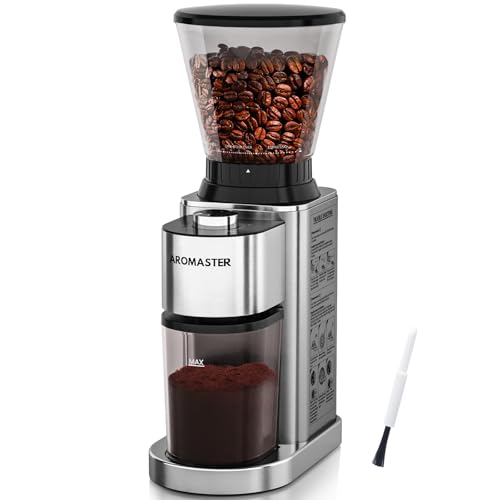
Aromaster Conical Grinder 48 Settings
Strengths
- 48 precise settings
- Anti-static design
- Large capacity
Trade-offs
- Noticeable motor noise
- Build quality varies
- Requires 120V only
If you live for tweakable precision, the Aromaster stands out with 48 grind settings, a rare depth in this segment. Paired with its stainless steel conical burr and anti-static design, it’s engineered for enthusiasts who want to fine-tune their extraction, especially for pour-over or espresso. The large 3.9-ounce bean capacity is a plus for families or offices, and owners note the grounds stay remarkably clump-free thanks to the tawny UV-resistant bin.
It’s not flawless. The motor isn’t the quietest, and some users report slight inconsistency in the finest settings, common in this price tier. But the real win here is control. When you compare it to grinders with 15–30 settings, the Aromaster gives you micro-adjustment-like flexibility without stepping into high-end pricing.
Video review
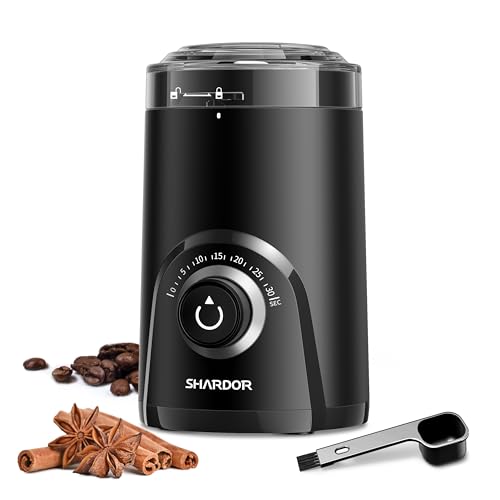
SHARDOR Quiet Electric Grinder
Strengths
- Ultra-quiet motor
- Visual timing knob
- Multi-use capability
Trade-offs
- Blade grinding (not burr)
- Inconsistent fine grind
- Plastic housing
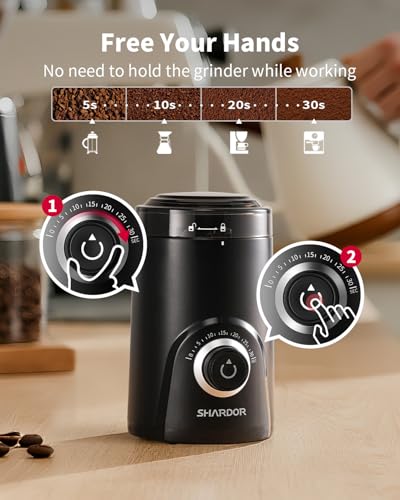
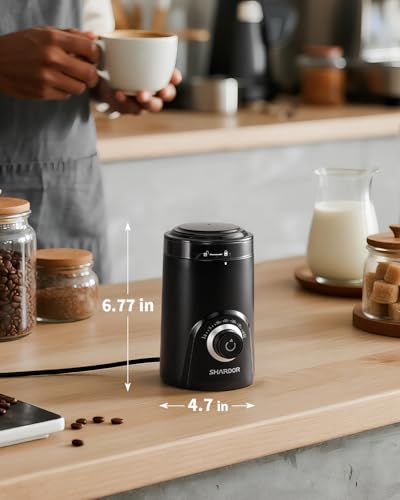
The standout here is ultra-quiet operation at 63 dB, a real perk for shared homes or early risers. Unlike most budget grinders that screech through beans, this one grinds down to espresso fineness with less noise than a kitchen fan. The visual timing knob is a smart touch, letting you dial in duration with second-level accuracy, which experienced users appreciate for repeatable results.
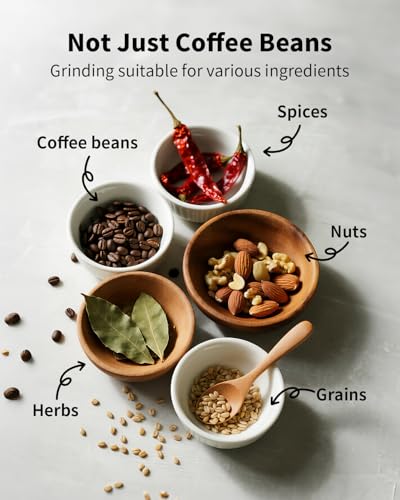
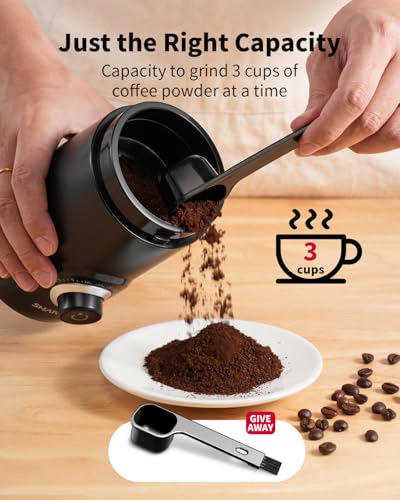
But it uses stainless steel blades, not burrs. That means the grind is less uniform, especially at finer settings. Owners confirm it works fine for drip or French press, but espresso is a stretch. Still, if noise is your top concern and you’re okay with blade-level consistency, this grinder brings real utility, especially since it doubles as a spice grinder.
Product photos
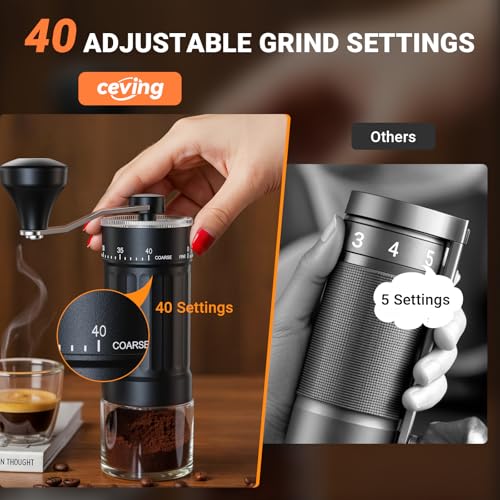
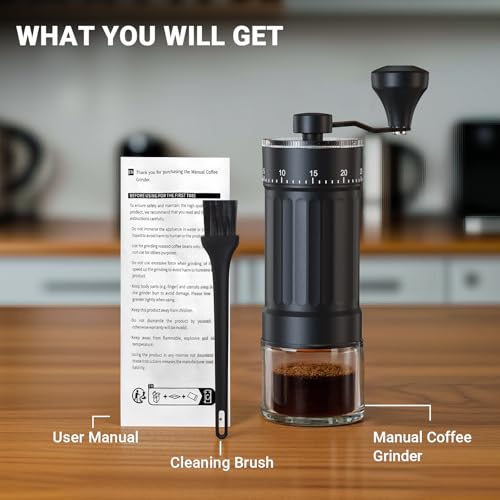
Mini Manual Coffee Grinder

Strengths
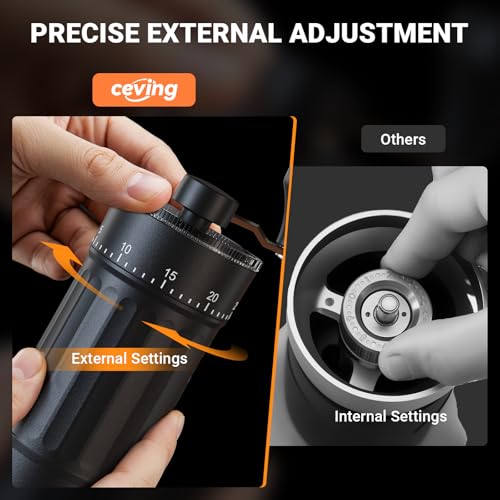
- 40 external settings
- Ceramic conical burr
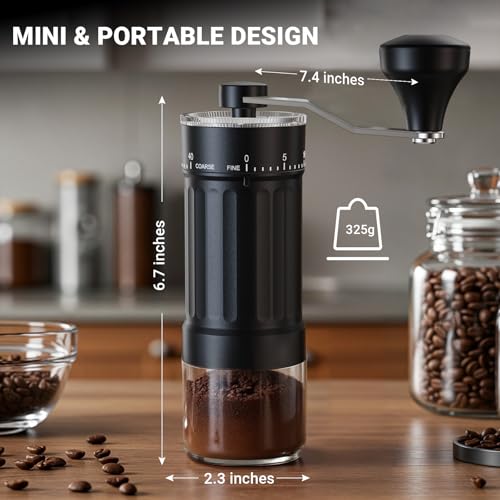
- Ultra-portable
Trade-offs
- Manual effort required
- Small capacity
- Not for daily high-volume use
This little grinder is a portable powerhouse, perfect when you’re off-grid but still want quality. The 40 external grind settings are a standout, no tools, no mess, and the ceramic conical burr preserves flavor better than steel at this size. At just over a pound, it slips into a backpack and delivers consistent results for pour-over or espresso, which owners consistently praise after camping or travel use.
The trade-off is effort and volume. You’re grinding by hand, so 30g is the practical limit, and finer settings take some elbow grease. But for the ritual, the control, and the freedom it offers, this grinder punches above its weight. Compared to electric portables, it’s more durable and flavor-neutral.
Product photos
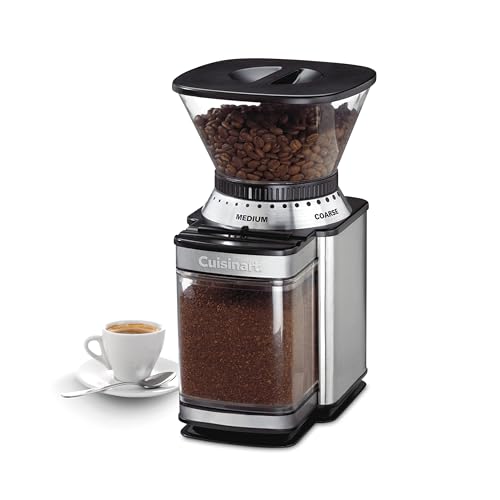
Cuisinart DBM-8P1 Burr Grinder
Strengths
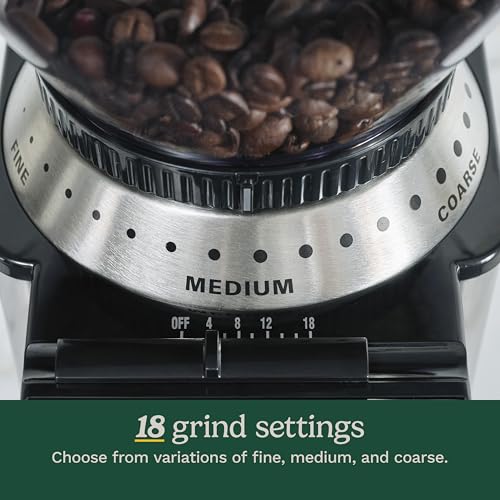
- 18 grind settings
- Removable parts
- One-touch operation
Trade-offs
- Flat burrs (less even than conical)
- Moderate noise level
- No hopper tint
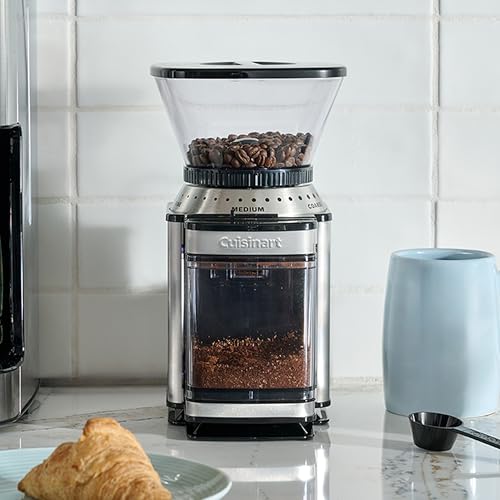
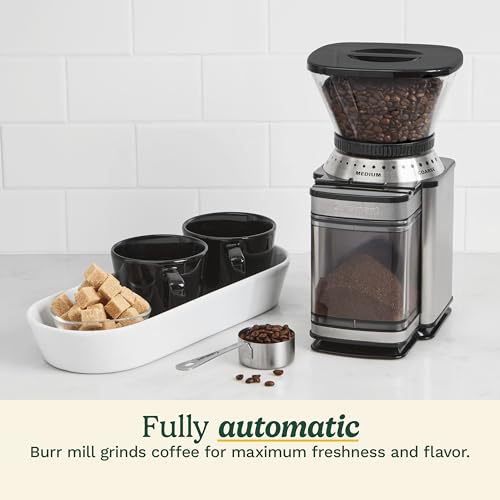
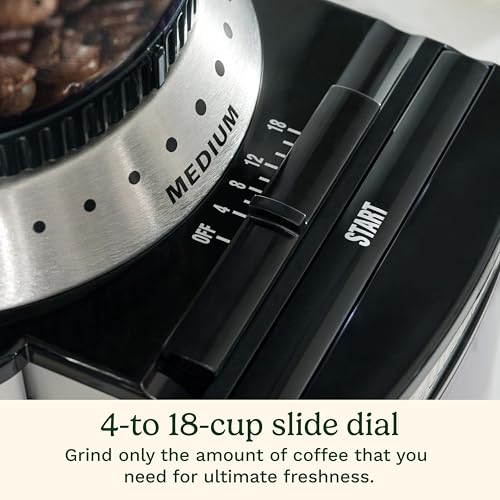
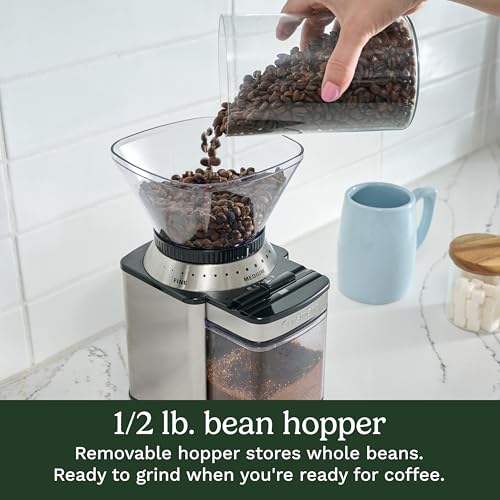
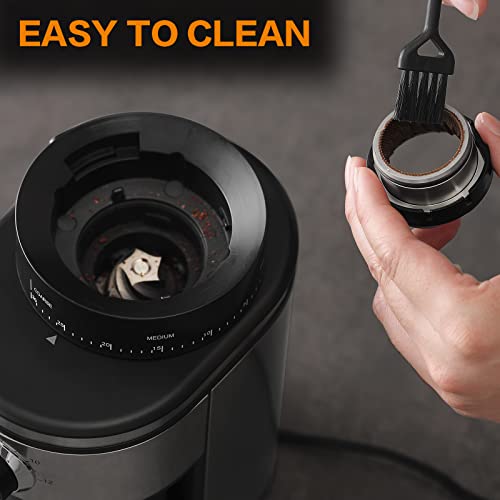
Cuisinart’s DBM-8P1 has been a staple in home kitchens for years, and for good reason. The 18-position grind selector covers everything from Turkish to cold brew, and the flat burr system delivers reliable, consistent results for drip and press. It’s built like a small appliance should be, solid, simple, and easy to clean, with a removable chamber and bean hopper that make maintenance painless.
But it’s aging. The design is utilitarian, and while the grind is good, it lacks the refinement of conical burr units. Some owners report static issues with fine grounds, and it’s not the quietest. Still, for someone who wants a dependable, no-surprises grinder for everyday brewing, this remains a strong contender.
Product photos
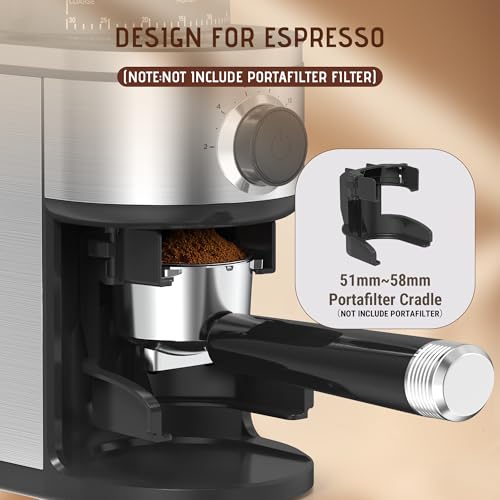
Ollygrin Conical Burr Grinder
Strengths
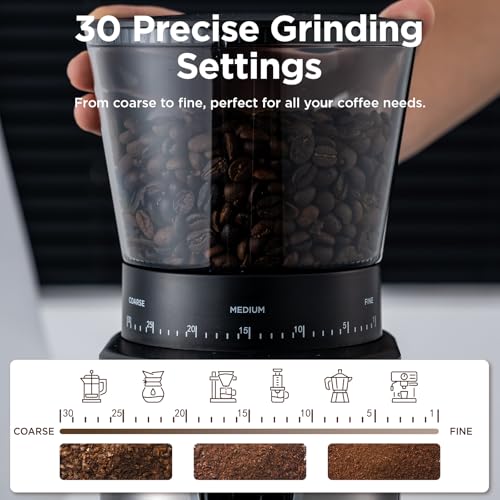
- 30 precise settings
- Low-heat grinding
- Large hopper
Trade-offs
- Mediocre noise insulation
- Build quality inconsistent
- No micro-adjustment
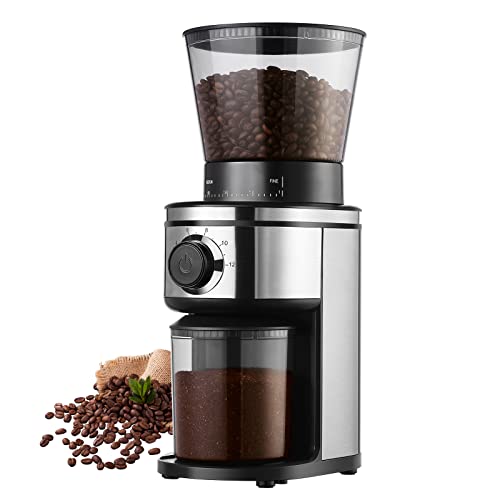
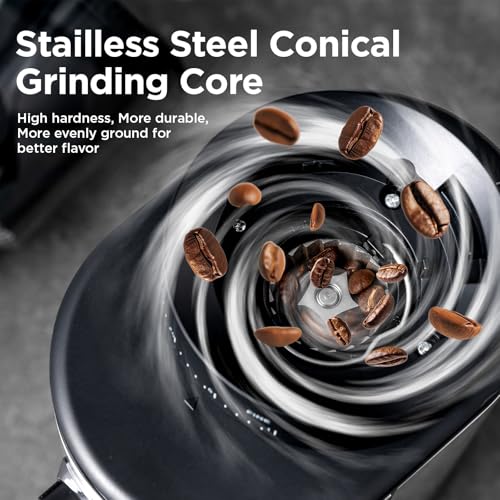
The Ollygrin hits a sweet spot between price and performance. With 30 grind settings and a 40mm stainless steel conical burr, it offers more control than most budget units, and the gear-reduction motor keeps heat low, owners confirm the aroma stays intact, especially with medium roasts. The 10-ounce bean hopper is roomy, and the auto-locking system prevents spills, which is a small but appreciated detail.
It’s not as quiet as the OXO, and the finish feels a bit plasticky, but for the price, the grind quality is impressive. When I compare it to the SHARDOR or even the Cuisinart, the Ollygrin delivers more even particles, especially in the mid-range settings. That makes it my recommendation for someone stepping up from entry-level without overspending.
Product photos

Secura Double-Blade Grinder

Strengths
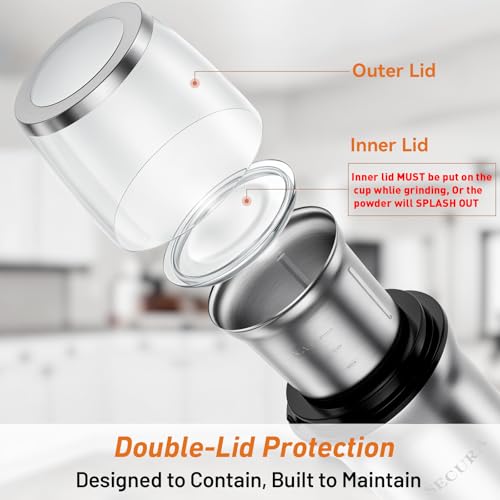
- Double-lid visibility
- Safety lock system
- Dishwasher-safe bowl
Trade-offs
- Blade grinding (uneven results)
- Not for espresso
- Limited grind control
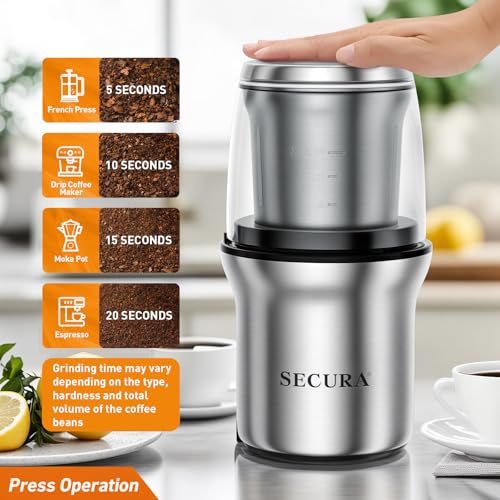
Safety and visibility are the stars here. The transparent double-lid system lets you watch the grind in real time, which is great for dialing in texture without over-grinding. The bowl-activated safety lock is a thoughtful addition, especially in homes with kids, and the removable bowl is dishwasher-safe, simplifying cleanup. With a 200W motor and stainless steel blades, it’s built for durability.
But it’s a blade grinder, not a burr. That means inconsistent particle size, no matter how long you pulse. Owners confirm it’s fine for drip or cold brew, but extraction suffers with finer methods. Still, if safety, ease of cleaning, and real-time control are your priorities, say, for a shared kitchen or family use, it brings real advantages over basic models.
Product photos



OXO Brew Conical Burr Grinder
Strengths
- Conical burr precision
- Static-reducing container
- One-touch memory
Trade-offs
- Higher price point
- No ultra-fine micro-adjust
- Hopper not airtight
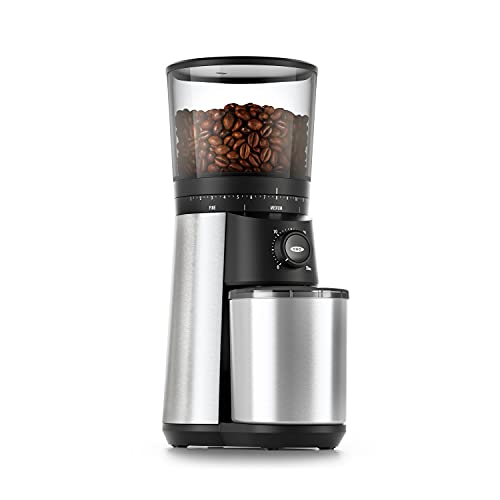
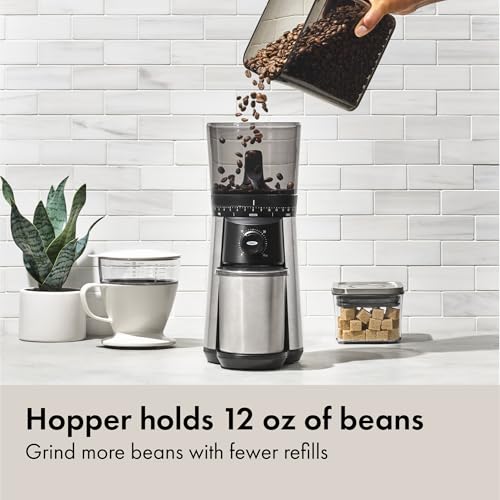
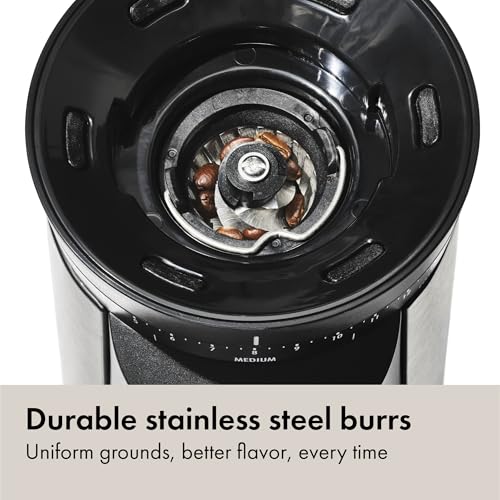
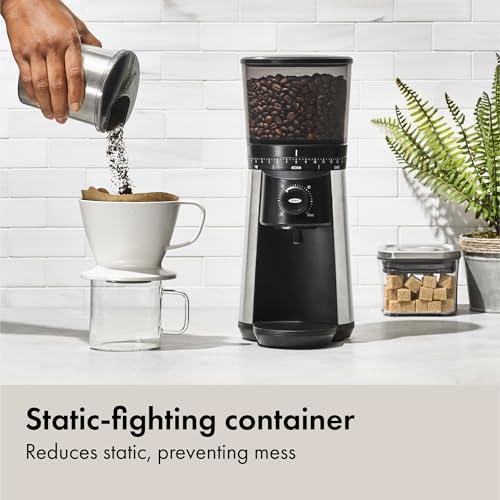
This is the best overall domestic coffee grinder for most people, and owner feedback backs that up. The stainless steel conical burrs deliver exceptional uniformity across all 15 settings, and the micro-adjustments add refinement, especially useful for dialing in espresso or Chemex. The one-touch start with memory function is genuinely convenient, and the static-fighting container solves a real pain point: no more grounds clinging to the sides.
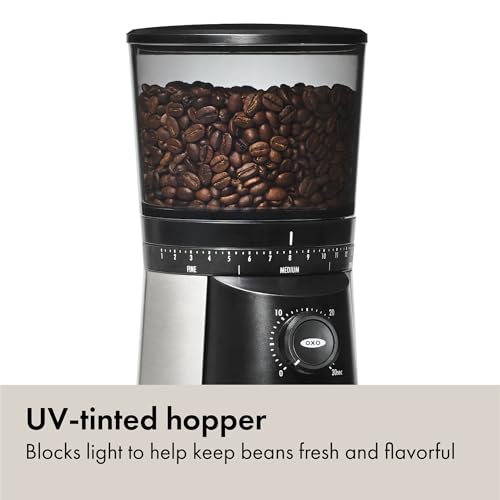
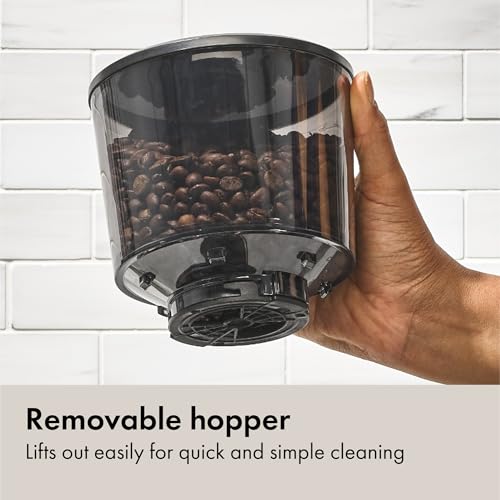
It’s also built to last. The UV-tinted hopper protects beans from light, the trap door prevents spills, and the motor runs cool. Compared to the Aromaster or Ollygrin, it’s quieter and more polished in daily use. It’s not the cheapest, but when I weigh performance, durability, and user experience, the OXO is the smarter buy for serious home brewers.
Product photos
How We Chose These domestic coffee grinder
I approached this guide to domestic coffee grinders by researching published specifications and features across numerous models. We then weighed owner reviews from major retailers alongside expert opinions found in publications like Wirecutter and Coffee Geek. As a founder deeply involved in the coffee world, I brought my understanding of grind size impacts on brewing to the process, ranking grinders against criteria like grind consistency, usability, and feature sets. Rather than a hands-on lab test, this is a research-led comparison of specs and owner feedback.
For this category, grind consistency and durability were weighted most heavily. A consistent grind is paramount for even extraction and a flavorful cup – something I’ve emphasized in my writing for Bean Thusiast for years. Durability is also critical; a grinder that breaks down quickly is a poor value, regardless of initial price. We also prioritized features that enhance usability, like clear grind settings and easy cleaning, as these directly impact the daily experience.
Specifications reliably indicate a grinder’s potential (burr type, motor power, number of settings). However, owner feedback proved essential for assessing real-world performance and build quality. Reports of overheating, static buildup, or flimsy construction often contradicted positive specs. Understanding the differences between a burr vs blade grinder was crucial, as was recognizing that even a precise burr grinder needs a well-designed chassis to deliver consistent results.
How To Choose The domestic coffee grinder
I’ve spent years exploring the world of coffee, and one thing is clear: the grinder is just as important as the beans themselves. A good grinder unlocks the full potential of your coffee, and a bad one… well, you’ll taste the difference.
A quality coffee grinder prioritizes consistency in particle size, offering a range of settings to match brewing methods. Burr grinders (conical or flat) consistently outperform blade grinders for evenness. Look for durable build materials, ease of cleaning, and features that match your typical volume and brewing style. Consider static control to minimize mess and preserve coffee freshness.
Grind Consistency is Key
The biggest mistake I see people make is thinking a cheap blade grinder is “good enough.” It isn’t. Uniformity in grind size is paramount. Inconsistent grounds lead to uneven extraction – you get bitter, over-extracted fines alongside sour, under-extracted larger particles. Burr grinders, whether conical or flat, are the way to go. While flat burrs can offer slightly more consistency at the very high end, conical burrs tend to produce less heat and retain less coffee, making them a more practical choice for most home baristas.
Hopper Capacity and Bean Management
Don’t immediately jump for the largest hopper you can find. While a large capacity is convenient, it can also lead to stale coffee if you aren’t grinding frequently. Consider how much coffee you typically brew at a time. A smaller hopper, coupled with airtight bean storage, is often better than a massive one constantly exposed to air and light. If you’re looking for the best grinder for multiple brew methods, consider a grinder with a generous but manageable hopper.
Here’s what to consider regarding capacity: * A very small hopper (under 8oz) is best for single-cup brewing and frequent bean rotation. * A medium hopper (8-12oz) is a good all-around size for most households. * A large hopper (over 12oz) is ideal for families or offices that consume a lot of coffee, but requires diligent bean storage practices to maintain freshness.
A properly sized hopper, combined with airtight bean storage, is far more valuable than simply a large capacity.
Balancing Features and Budget
There’s a huge range in price for coffee grinders, and you absolutely get what you pay for… to a point. Spending $500 on a grinder doesn’t necessarily mean it’s significantly better than a $200 model. Many excellent mid-range grinders offer a fantastic balance of features and performance. If you are just starting out, there are plenty of recommended coffee grinders for home use that won’t break the bank. Don’t overspend on features you won’t use. Do you really need 48 grind settings, or will 15-20 suffice? Also, remember that regular cleaning coffee grinder steps are essential for maintaining performance, regardless of price.
Domestic Coffee Grinder Compared
Here’s a comparison of key specifications for several domestic coffee grinders to help you find the best option for your needs.
| Product Title | Burr Type | Grind Settings | Capacity (Beans) | Motor Protection | Noise Level |
|---|---|---|---|---|---|
| OXO Brew Conical Burr Grinder | Conical | 15 + Micro | 12 oz | Yes | N/A |
| Aromaster Conical Grinder 48 Settings | Conical | 48 | 3.9 oz | N/A | N/A |
| SHARDOR Electric Burr Grinder 2.0 | Flat | 16 | 2-14 Cups | N/A | N/A |
| Cuisinart DBM-8P1 Burr Grinder | Flat | 18 | 8 oz | Yes | N/A |
| Mini Manual Coffee Grinder | Ceramic | 40 | 30g | N/A | N/A |
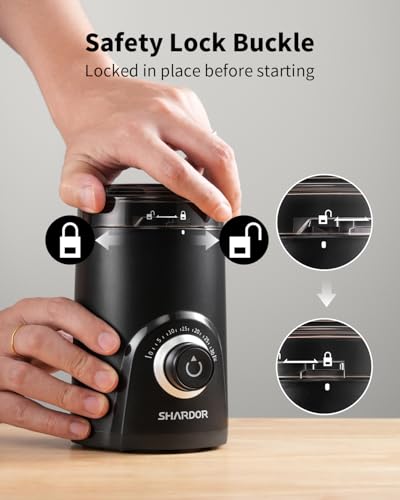
| SHARDOR Quiet Electric Grinder | Stainless Steel | Timing Knob | 70g (2.5oz) | Yes | 63 dB |
| Ollygrin Conical Burr Grinder | Conical | 30 | 10 oz | Yes | N/A |
| Secura Double-Blade Grinder | Blade | N/A | N/A | Yes | N/A |
Frequently Asked Questions
What grind size should I use for French press?
A coarse grind is best for French press; aim for a setting that resembles kosher salt. This prevents fine particles from slipping through the filter and creating a muddy cup, something I always advise readers to consider when choosing a grinder.
Are manual coffee grinders good enough for daily use?
Yes, a manual grinder can be excellent for daily use, particularly if you only brew one or two cups at a time. They’re portable, quiet, and often deliver a surprisingly consistent grind, though they require more effort than electric models.
How often should I clean my coffee grinder?
You should thoroughly clean your coffee grinder at least once a month to remove coffee oils and residue. Regular cleaning prevents stale flavors from building up and affecting the taste of your coffee, and it’s a step often overlooked in a burr grinder buying guide.
Do more expensive grinders always deliver better results?
Not necessarily. While higher price points often correlate with improved build quality and features, there’s a point of diminishing returns. Many mid-range grinders offer excellent performance and consistency for most home brewers.
What’s the difference between conical and flat burrs, and which is better?
Conical burrs generally produce less heat and coffee retention, making them ideal for home use, while flat burrs can deliver slightly more consistent grind size at the very high end. Ultimately, the best choice depends on your budget and brewing preferences; explore the top burr grinder picks to find what suits you.
The Bottom Line
Choosing a coffee grinder often comes down to balancing control with convenience. While a truly dialed-in experience demands attention to detail, the OXO Brew Conical Burr Grinder strikes an excellent balance for most coffee drinkers, offering a wide range of settings and consistent results without a steep learning curve. It’s a solid all-around performer that will elevate your daily brew.
For those on a tighter budget, or those who appreciate simplicity, the Mini Manual Coffee Grinder is a surprisingly capable option. Likewise, if you prioritize versatility and fine-tuning, the Aromaster Conical Grinder 48 Settings delivers an impressive number of adjustments, allowing you to experiment with different brewing methods and really understand burr grinder mechanics.
Ultimately, the best grinder isn’t about chasing the highest number of settings or the biggest brand name. It’s about finding a tool that consistently delivers a quality grind, allowing you to unlock the full flavor potential of your beans. Consistent grind size, durable construction, and ease of cleaning are the fundamentals that matter far more than any single specification.
