
Why De’Longhi Superautomatic Machines Brew Bitter Coffee & Fixes
Your De’Longhi superautomatic makes bitter coffee because of three fixable issues: the grind is set too fine, the machine needs descaling, or you’re using beans that are too dark or oily. Adjust the grind coarser while the grinder runs, descale with De’Longhi EcoDecalc, and switch to a medium-roast Arabica bean.
Most people taste that bitterness and assume the machine is broken or the beans are bad. They buy new beans, run a cleaning cycle, and the problem stays. The frustration builds because the machine is supposed to be automatic.
The real fixes aren’t complicated, but they require matching the symptom to the specific mechanical failure inside the machine. This guide walks through each cause, the physical reason it creates bitterness, and the step you can’t skip.
Key Takeaways
- Turn the grinding adjustment knob only while the grinder is running; forcing it while stopped can damage the burrs and lock in a fine, bitter setting.
- Never use vinegar to descale. De’Longhi’s official advice warns it leaves a permanent acidic smell and taste in the coffee circuit.
- Avoid oily, caramelized, or dark roast beans; the oils coat the grinder burrs, cause inconsistent grinding, and lead to rapid over-extraction.
- The machine’s default “My Coffee” volume is about 30ml; a longer pour time from a fine grind extracts bitter chlorogenic acids at the tail end of the shot.
- Install a De’Longhi WaterFilter or SoftBalls; they reduce limescale buildup on the Thermoblock, which maintains consistent brew temperature and prevents uneven extraction.
The Grind Is Too Fine (The Most Common Culprit)
A superautomatic grinds, tamps, and brews in one sequence. If the grind setting is too fine, the machine’s pump forces water through an overly dense puck too slowly. This over-extracts the coffee, pulling out harsh, bitter compounds like chlorogenic acids that should stay in the grounds.
You’ll notice the coffee flows from the spout in a slow, dark drip instead of a steady honey-colored stream. The shot might take 40 seconds or more for a standard volume. The used puck will be sodden and sludgy, falling apart when you eject it.
Common mistake: Adjusting the grind knob when the machine is off — this can jam the burrs. The De’Longhi user manual states the knob “must only be turned when the coffee mill is in operation.”
The fix is straightforward but specific. You must adjust the setting while the machine is grinding. Navigate to the menu for a manual grinding cycle or simply start a coffee preparation cycle. As you hear the grinder spin, turn the adjustment knob one notch toward the coarser setting (often symbolized by a larger dot or a number). Run a test shot. The target is a 30ml shot in roughly 25-30 seconds for most De’Longhi models.
TL;DR: Coarsen the grind while the grinder runs. Aim for a 30ml shot in 25-30 seconds, not a slow drip.
The Machine Needs Descaling (The Silent Saboteur)
Limescale accumulates on the internal Thermoblock, the component that heats water on demand. Scale acts as an insulator. The machine’s temperature sensor reads the Thermoblock casing as hot, but the scaled interior isn’t transferring heat efficiently to the water. You get lukewarm water hitting the coffee grounds.
Insufficient brew temperature causes uneven extraction. The outer parts of the puck extract poorly (sour), while the center, where water lingers, over-extracts (bitter). The result is a muddy, bitter cup with a sour aftertaste. It’s the telltale sign of temperature instability.
The De’Longhi Magnifica Evo Next service manual includes a “COFFEE TEMPERATURE TEST” for diagnosing user complaints about taste, directly linking temperature performance to flavor issues.
Descaling is non-negotiable. Use only a descaling solution designed for coffee machines, specifically De’Longhi EcoDecalc. The official FAQs explicitly warn against vinegar, stating it is “prone to leave a strong smell and an acid taste to your coffee” that can persist. Follow your machine’s automated descaling program, which will cycle the solution through the entire brew group and steam wand.
| Descaling Solution | Why It’s Recommended | Risk If Substituted |
|---|---|---|
| De’Longhi EcoDecalc | Formulated to dissolve scale without damaging internal seals or leaving residue. | Safe for machine warranty and taste. |
| Vinegar (White) | Leaves persistent acetic acid smell and flavor in coffee circuit. | Can void warranty, per De’Longhi guidance. |
| Citric Acid | May not fully dissolve certain scale types and can leave a film. | Incomplete cleaning leads to recurring temperature issues. |
After descaling, install a new water filtration system. A De’Longhi WaterFilter or SoftBalls drastically reduces the mineral content entering the machine, extending the time between descaling sessions. The SoftBalls system is designed to maintain mineral balance without chemicals, which the manual says guarantees “consistently creamy and aromatic coffee.”
You’re Using the Wrong Coffee Beans
The bean is the raw material. Put the wrong input in, and the most precise machine outputs a bad cup. For superautomatics, bean choice is a mechanical constraint as much as a flavor preference.
De’Longhi’s FAQs are blunt: avoid “oily, caramelised or coated” coffee beans. The oils from dark roasts or flavored beans stick to the grinder’s burrs and the internal dosing chute. This gunk creates friction, causes inconsistent grinding, and makes the grinder work harder. The resulting grind is a mix of dust and boulders. The dust over-extracts into bitterness instantly, while the boulders under-extract, leaving sour notes.
Here’s what happens with different beans:
- Dark, Oily Roasts: Coat grinder burrs in oil. Grind consistency degrades within a few bags. You get bitter, ashy coffee and eventually, grinder motor strain.
- Flavored or Coated Beans: The flavoring oils are sticky and sugary. They caramelize on hot burrs and inside the brew group, leading to clogs and a permanent, artificial taste.
- Old or Stale Beans: Have lost their volatile aromatics. What’s left are the woody, bitter compounds, which the machine extracts efficiently into a flat, harsh cup.
The fix is to use fresh, dry, medium-roast Arabica beans. They have enough structure for the grinder to cut cleanly without releasing excessive oils. Store them in an airtight container away from light and heat. This simple switch often eliminates bitterness more effectively than any machine adjustment.
TL;DR: Use only dry, medium-roast Arabica beans. Oily dark roasts will gum up the grinder and guarantee bitter coffee.
The “My Coffee” Volume and Strength Settings
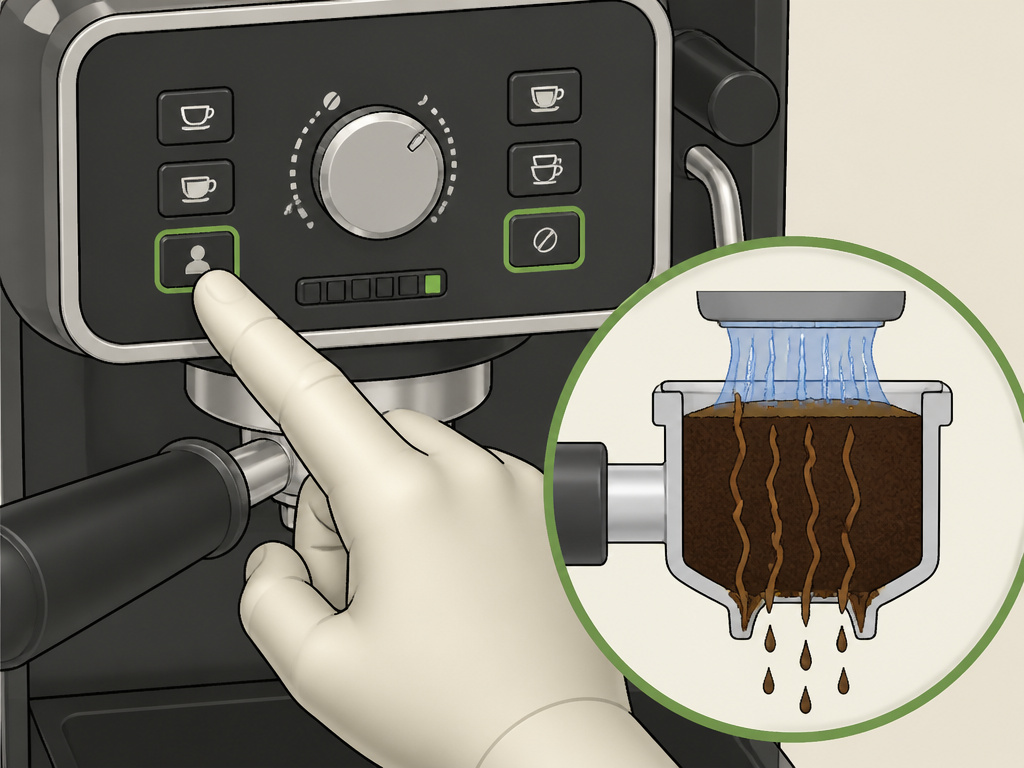
Your machine has programmable buttons for coffee volume and strength. These interact directly with the grinder and extraction time. Misunderstanding them locks in bitterness.
The “My Coffee” button defaults to about 30ml (a standard espresso shot). If you’ve reprogrammed it for a longer drink—say, 60ml for an Americano—the machine keeps the water flowing for twice as long. If your grind is already borderline fine, this extended contact time is pure over-extraction. The last 30ml of water is pulling nothing but bitterness from the spent puck.
The coffee strength selector (Extra-mild, Mild, Standard, Strong, Extra-strong) doesn’t just add more coffee. On many De’Longhi models, it changes the grinder’s run time. “Strong” means the grinder runs longer, putting more ground coffee into the basket. A fuller, denser puck requires a coarser grind to allow water to pass through in the same time. If you select “Strong” but don’t coarsen the grind, you create a clogged puck that over-extracts.
I used the “Strong” setting with a fine grind for a month, chasing a richer flavor. All I got was thicker, more bitter coffee and a machine that groaned during every extraction. The puck was a hard, wet disc.
| Setting | What It Changes | Required Grind Adjustment |
|---|---|---|
| Longer Volume (e.g., 60ml) | Increases water flow time through the same puck. | Grind must be coarser to prevent over-extracting the tail end. |
| Higher Strength (e.g., Strong) | Increases grind time, creating a denser, fuller puck. | Grind must be coarser to maintain proper flow rate. |
| Standard (30ml, Standard) | Factory default balance. | The baseline for all other adjustments. |
Reset your “My Coffee” volume to the default 30ml. Dial in your grind for a perfect shot at that volume and strength. Only then should you consider increasing volume or strength, and you must re-adjust the grind coarser to compensate.
A Step-by-Step Diagnostic and Fix
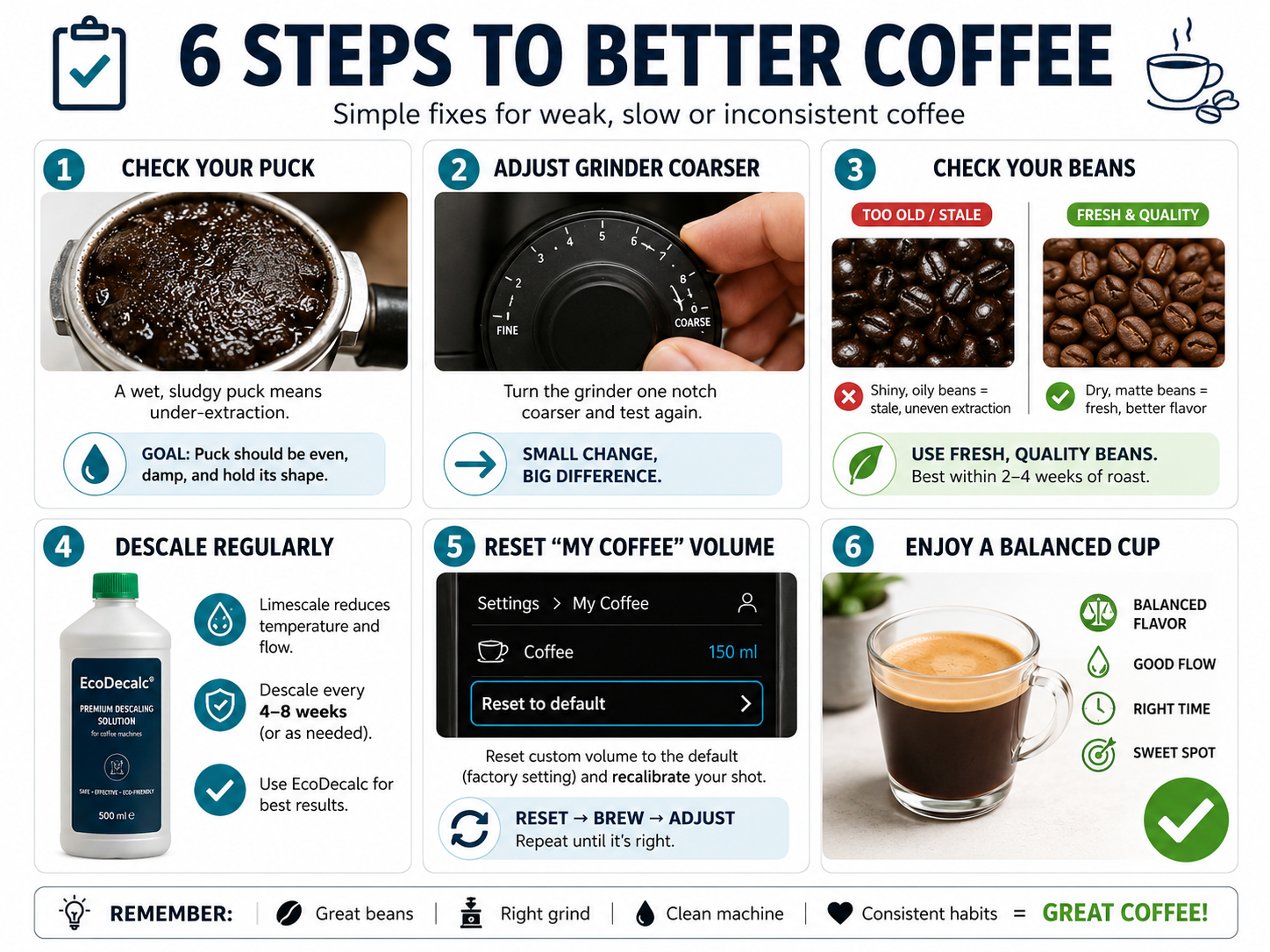
When bitterness strikes, don’t change multiple variables at once. You’ll never know what worked. Follow this sequence.
- Taste and Observe. Make a coffee at your usual settings. Is the flow a slow drip? Time it. Over 35 seconds for 30ml points to a fine grind. Eject the puck. Is it a wet, sludgy mess? That confirms over-extraction.
- Adjust the Grind. With the grinder running, turn the knob one notch coarser. Make another coffee. Taste it. If it’s less bitter but now sour, you’ve gone too far—go back one notch finer. This is the core of grind size impact.
- Check Your Beans. Empty the bean hopper. Inspect the beans. Are they shiny with oil? Do they smell intensely smoky? Swap them out for a fresh bag of dry, medium-roast beans. Run three shots through to clear the old oils from the grinder.
- Descale. If the bitterness persists and the coffee also tastes flat or sour, it’s likely temperature. Run the full descaling program with EcoDecalc. This is a core part of any machine filter maintenance routine.
- Reset Programmed Volumes. Go into the machine’s menu and reset the “My Coffee” volume to its factory default (approx. 30ml). This ensures you’re working from a known baseline.
- Taste Again. After these steps, make a coffee. The bitterness should be gone, replaced by balanced sweetness and acidity. If not, the issue may be deeper, like a worn grinder burr, and consulting the machine troubleshooting guide for your specific model is the next step.
This process isolates the cause. Most bitterness resolves at step 2 or 3.
Frequently Asked Questions
Can I use pre-ground coffee in my De’Longhi superautomatic?
Yes, using the bypass doser, but only with one level measure. The manual warns that using more can cause grounds to “spread through and dirty” the machine. Pre-ground coffee is almost always finer than the machine’s own grind, which can lead to over-extraction and bitterness. It’s a temporary fix, not a solution.
How often should I descale my machine?
It depends entirely on your water hardness. With very hard water and no filter, every 2-3 months. Using De’Longhi SoftBalls or a WaterFilter can extend that to 6 months or more. The machine’s descaling reminder light is a guideline, but if coffee turns bitter before it lights up, descale immediately.
Does a darker roast always mean more bitterness?
In a superautomatic, often yes. The darker roast profile itself has bitter, roasted notes. More critically, the oily surface causes the grinder issues described. For a method less sensitive to grind, like drip coffee, a dark roast can be manageable. For an espresso extraction, it’s a high-risk choice.
The coffee is both bitter and sour. What does that mean?
This is the classic sign of uneven extraction, most commonly from limescale affecting brew temperature. Different parts of the coffee puck extract at wildly different rates. Descaling is your first and most important action.
Will adding a pinch of salt fix bitter coffee?
It can mask bitterness by blocking bitter receptors on your tongue, and it’s a famous bitterness reduction trick. It’s a treatment for the cup, not a fix for the machine. Address the root cause first, then use salt as a last-resort tweak for a particular bag of beans.
The Bottom Line
Bitter coffee from your De’Longhi isn’t a defect; it’s a diagnostic tool. The machine is telling you one of three things: the grind is too fine, the Thermoblock is scaled, or the beans are wrong. Listen to it.
Start with the beans—switch to a dry, medium roast. Then, with the grinder running, coarsen the grind one click. If the problem remains, run a descaling cycle with the correct solution. This sequence fixes ninety percent of bitterness complaints. The automation handles the brewing, but you still have to handle the maintenance and the inputs. Do that, and the machine will deliver the sweet, balanced shot it was designed for.
{
“@context”: “https://schema.org”,
“@type”: “HowTo”,
“name”: “How to Fix Bitter Coffee from a De’Longhi Superautomatic”,
“totalTime”: “PT20M”,
“tool”: [
{
“@type”: “HowToTool”,
“name”: “De’Longhi EcoDecalc descaler”
},
{
“@type”: “HowToTool”,
“name”: “SoftBalls or a compatible water filter”
},
{
“@type”: “HowToTool”,
“name”: “Fresh, medium-roast Arabica beans”
}
],
“step”: [
{
“@type”: “HowToStep”,
“name”: “Check and adjust the grind size”,
“text”: “With the grinder running, turn the adjustment knob one notch toward a coarser setting. Run a test shot and taste.”
},
{
“@type”: “HowToStep”,
“name”: “Run the descaling program”,
“text”: “Use De’Longhi EcoDecalc solution in the water tank. Follow the machine’s prompts to complete the full descaling cycle.”
},
{
“@type”: “HowToStep”,
“name”: “Replace the water filter or SoftBalls”,
“text”: “Install a new De’Longhi WaterFilter or set of SoftBalls to reduce mineral content and protect the Thermoblock.”
},
{
“@type”: “HowToStep”,
“name”: “Switch to medium-roast beans”,
“text”: “Use fresh, dry Arabica beans. Avoid dark, oily, or flavored beans that can gum up the grinder and over-extract.”
}
]
}
{
“@context”: “https://schema.org”,
“@type”: “FAQPage”,
“mainEntity”: [
{
“@type”: “Question”,
“name”: “Can I use pre-ground coffee in my De’Longhi superautomatic?”,
“acceptedAnswer”: {
“@type”: “Answer”,
“text”: “Yes, using the bypass doser, but only with one level measure. The manual warns that using more can cause grounds to \”spread through and dirty\” the machine. Pre-ground coffee is almost always finer than the machine’s own grind, which can lead to over-extraction and bitterness. It’s a temporary fix, not a solution.”
}
},
{
“@type”: “Question”,
“name”: “How often should I descale my machine?”,
“acceptedAnswer”: {
“@type”: “Answer”,
“text”: “It depends entirely on your water hardness. With very hard water and no filter, every 2-3 months. Using De’Longhi SoftBalls or a WaterFilter can extend that to 6 months or more. The machine’s descaling reminder light is a guideline, but if coffee turns bitter before it lights up, descale immediately.”
}
},
{
“@type”: “Question”,
“name”: “Does a darker roast always mean more bitterness?”,
“acceptedAnswer”: {
“@type”: “Answer”,
“text”: “In a superautomatic, often yes. The darker roast profile itself has bitter, roasted notes. More critically, the oily surface causes the grinder issues described. For a method less sensitive to grind, like drip coffee, a dark roast can be manageable. For an espresso extraction, it’s a high-risk choice.”
}
},
{
“@type”: “Question”,
“name”: “The coffee is both bitter and sour. What does that mean?”,
“acceptedAnswer”: {
“@type”: “Answer”,
“text”: “This is the classic sign of uneven extraction, most commonly from limescale affecting brew temperature. Different parts of the coffee puck extract at wildly different rates. Descaling is your first and most important action.”
}
},
{
“@type”: “Question”,
“name”: “Will adding a pinch of salt fix bitter coffee?”,
“acceptedAnswer”: {
“@type”: “Answer”,
“text”: “It can mask bitterness by blocking bitter receptors on your tongue, and it’s a famous bitterness reduction trick. It’s a treatment for the cup, not a fix for the machine. Address the root cause first, then use salt as a last-resort tweak for a particular bag of beans.”
}
}
]
}
