
Feeling Tired After Coffee? Discover the Reasons and the Fixes
This post contains affiliate links. As an Amazon Associate, we earn from qualifying purchases.
Coffee makes you tired because it blocks adenosine receptors in your brain, causing a delayed crash when caffeine wears off, and it can trigger dehydration, blood sugar swings, and genetic responses that lead to fatigue. The body absorbs 99% of caffeine within 45 minutes, and the recommended daily limit is 400 milligrams.
The most common mistake is treating coffee as a pure energy source. It’s a stimulant that borrows alertness from your future self, and the bill comes due faster if you’re already sleep-deprived, genetically predisposed, or loading your cup with sugar.
This guide walks through the six precise reasons your post-coffee slump happens, grounded in sleep science and genetics. We’ll cover the adenosine rebound with a timeline, the role of your CYP1A2 gene, and the counterintuitive fix that actually involves stepping away from the coffee pot.
Key Takeaways
- Adenosine rebound is the primary cause. Caffeine blocks sleep-inducing adenosine receptors; when it clears, the built-up adenosine floods your system, causing a crash often within 90 minutes.
- Your genetics are a major player. Variations in genes like CYP1A2 dictate whether you’re a fast or slow caffeine metabolizer, which directly impacts how long the energy lasts and when the fatigue hits.
- Added sugar creates a secondary energy slump. A sugar crash can occur independently within 90 minutes, compounding the caffeine crash for a double-whammy effect.
- Caffeine tolerance builds fast. Regular consumption over just three days can spark withdrawal symptoms like increased tiredness, trapping you in a cycle of needing more coffee for less effect.
- Coffee is a diuretic. For non-regular drinkers, it can contribute to low-level dehydration, which manifests as fatigue, headaches, and brain fog.
The Counterintuitive Adenosine Rebound
Headline advice says caffeine blocks adenosine to keep you awake. That’s surface-level. The real mechanics are what cause the crash.
Adenosine is a neurotransmitter that accumulates in your brain throughout the day, creating “sleep pressure.” Caffeine molecules are shaped similarly enough to adenosine that they lock into the same receptors. They don’t stimulate you; they prevent adenosine from delivering its “time to sleep” signal.
Caffeine competitively antagonizes adenosine receptors, primarily the A1 and A2A subtypes. Upon caffeine clearance, the built-up adenosine binds unimpeded, often producing a rebound effect of pronounced sleepiness and fatigue greater than the pre-caffeine baseline.
The problem is the backlog. While caffeine is occupying those receptors, adenosine production doesn’t stop. It piles up in the synaptic cleft, waiting. When the caffeine you consumed 45 minutes ago finally metabolizes and clears those receptors, the pent-up adenosine floods in all at once.
That’s the crash. It’s not just the caffeine wearing off. It’s your brain catching up on all the sleep signals it missed.
TL;DR: Your coffee crash is an adenosine debt coming due, not just the caffeine fading. The slump feels stronger because the signal was delayed.
Is It Your Genes? The CYP1A2 and Other Variants
If you feel sleepy immediately after a cup while your friend is wired for hours, blame your parents. Genetic variations are a primary non-commodity reason coffee affects people so differently.
The CYP1A2 gene encodes the liver enzyme responsible for metabolizing about 95% of ingested caffeine. A common polymorphism (rs762551) splits people into “fast” and “slow” metabolizers.
* Fast metabolizers (genotype AA) break down caffeine quickly. They get a sharp, short-lived energy burst and often feel the crash sooner.
* Slow metabolizers (genotype AC or CC) process caffeine slowly. They might not feel an immediate alertness spike, but the caffeine stays in their system longer, potentially disrupting sleep later and causing next-day fatigue.
But it’s not just CYP1A2. The PMC caffeine and fatigue article notes variants near the ABCG2, AHR, and POR genes also impact caffeine transport and metabolism. Furthermore, polymorphisms in adenosine receptor genes (like ADORA2A) dictate how strongly your brain responds to caffeine’s blockade in the first place.
| Gene | Primary Role | Impact on Coffee Fatigue |
|---|---|---|
| CYP1A2 | Caffeine metabolism speed | Slow metabolizers feel prolonged, muted effects; fast metabolizers get a sharper crash. |
| ADORA2A | Adenosine receptor sensitivity | Determines how strongly you feel the stimulant effect and, consequently, the rebound. |
| ABCG2 | Transport of caffeine across membranes | Affects how much caffeine reaches your brain and central nervous system. |
The takeaway is stark. Your DNA script dictates your coffee response more than the brew method or roast level. A slow metabolizer drinking a late-afternoon espresso is essentially guaranteeing a restless night and a tired tomorrow.
Common mistake: Assuming your caffeine tolerance is purely behavioral, your genes set the baseline metabolism rate, and fighting it leads to chronic fatigue and poor sleep architecture.
The Blood Sugar Roller Coaster (It’s Not Just the Caffeine)
Black coffee has a negligible glycemic index. But the moment you add sugar, syrup, or a flavored creamer, you’re running a separate physiological experiment.
Consuming sugar triggers your pancreas to release insulin to shuttle glucose into cells for energy. A large, rapid dose of sugar, think a flavored latte or a heaping spoonful in your drip, can cause an overshoot. Insulin clears too much glucose from your bloodstream, leading to hypoglycemia, or a “sugar crash.”
This crash has its own timeline. It can hit within 90 minutes of consumption. If your caffeine crash is scheduled for the 90-minute mark post-coffee, you now have two fatigue waves hitting the shore simultaneously.
There’s a more insidious link for some. Research cited by the Sleep Foundation sleep disruption FAQ suggests that morning coffee may temporarily increase insulin resistance. For individuals already managing blood sugar sensitivity or prediabetes, this can make them more reactive to any carbohydrates consumed alongside the coffee, amplifying the crash.
The fix is measurable. Weigh or measure your add-ins. Keeping added sugars under 5 grams per cup often dodges this secondary crash entirely. This is a key differentiator when comparing a simple espresso shot effects to a pre-sweetened energy drink side effects.
Dehydration: The Silent Amplifier
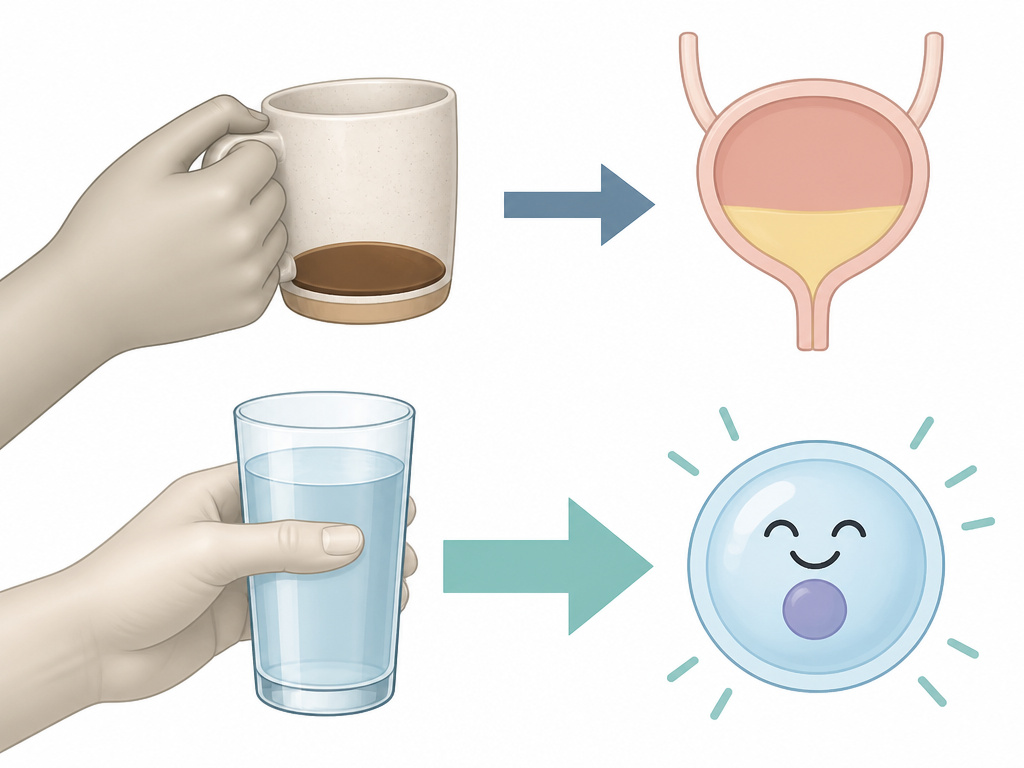
Coffee is over 95% water. Yet, caffeine is a mild diuretic, it promotes urine production. The net effect on hydration is nuanced and person-dependent.
For habitual coffee drinkers, a tolerance to the diuretic effect develops quickly. The body adjusts, and the fluid intake from the coffee largely offsets the fluid loss. For non-regular or occasional drinkers, the diuretic effect is more pronounced. This can lead to a net fluid loss, pushing you toward mild dehydration.
The symptoms of mild dehydration? Fatigue, headache, difficulty concentrating, and dry mouth. Sound familiar? It’s easy to misattribute this fatigue to a “caffeine crash” when it’s actually a hydration issue.
The rule is simple but non-negotiable: chase every cup of coffee with at least one full 8-ounce glass of water. It breaks no genetic codes and costs nothing, but it eliminates a major confounding variable in your personal coffee fatigue equation.
Rapid Tolerance and the Withdrawal Trap
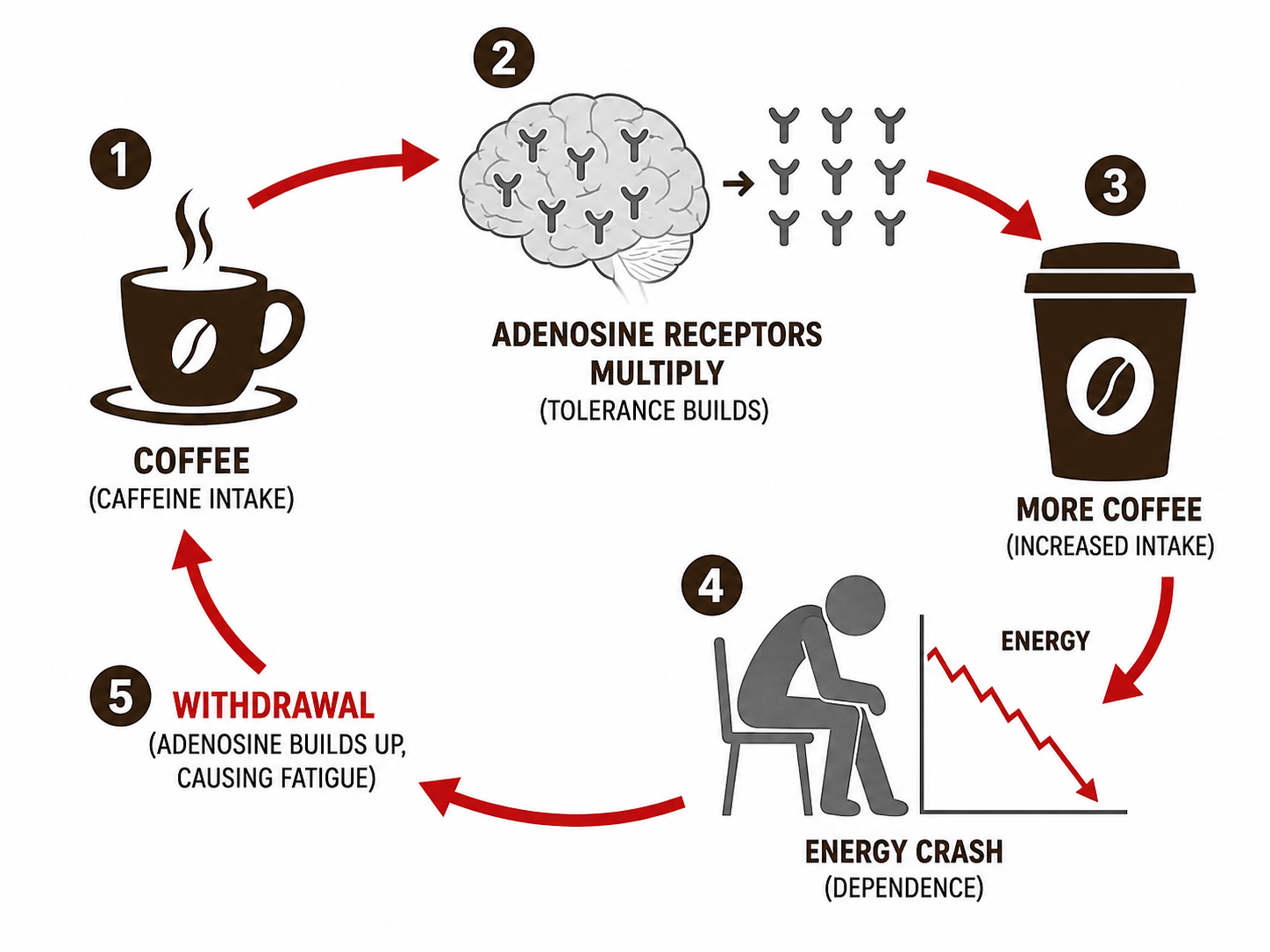
Here’s the cruel twist. The very act of drinking coffee daily to fight fatigue can be what’s making you more tired.
The body adapts. With consistent caffeine intake over just three days, your brain begins to create more adenosine receptors. This is tolerance. Now, you need more caffeine to block the increased number of receptors and achieve the same alertness. A 2018 review noted that after 15 days of regular consumption, caffeine’s perceptible effects began to diminish in participants.
This creates a cycle: drink coffee → build tolerance → need more coffee → feel more tired without it → drink more coffee.
The fatigue you feel mid-afternoon might not be an adenosine rebound from your morning cup. It could be the early onset of caffeine withdrawal. As your morning caffeine levels dip, those extra, now-unblocked adenosine receptors scream for attention, producing headache and fatigue. Your solution? Another cup, deepening the tolerance.
I stuck to two strong pour-overs every day for a month, convinced it was my baseline. By week three, I was adding an afternoon shot just to feel normal. I quit cold turkey for a long weekend. The first 48 hours were a headache-filled fog, but by day four, my natural energy levels in the morning were higher than they’d been in weeks. The coffee was sustaining a problem it created.
Breaking the cycle requires a reset. Taper your intake by half over a week, then take a full 72-hour break. It resets receptor sensitivity. The first cups after the break will feel potent again, and you can manage intake more strategically.
When Coffee Signals “Time to Sleep”

Your brain is a pattern-matching machine. If you have a long-standing habit of drinking a cup of coffee as you settle in for an evening of relaxation, or if you only drink coffee in safe, calm environments, your brain can begin to associate the ritual of coffee drinking with winding down.
This is a conditioned response, separate from pharmacology. The taste, smell, and ritual act as a psychological cue for relaxation. Your body begins its wind-down procedures in anticipation of the caffeine, sometimes overpowering the drug’s stimulating effects.
This is often reported by people who claim they can drink coffee and nap immediately. The conditioned sleep cue is powerful. It’s also why changing your routine, like having your first cup immediately after a morning shower instead of while reading the news, can sometimes disrupt this unhelpful association and restore coffee’s jolt.
How the Six Factors Stack Up
Your post-coffee fatigue is rarely one thing. It’s a combination of factors. This table helps diagnose your primary contributor.
| Contributor | How It Causes Fatigue | Key Diagnostic Sign | Timeline to Fatigue |
|---|---|---|---|
| Adenosine Rebound | Built-up adenosine floods receptors after caffeine clears. | Intense, predictable crash 60-90 minutes after drinking. | 60–90 minutes post-consumption |
| Genetic Metabolism | Slow metabolism prolongs effects, disrupting sleep; fast metabolism causes sharp drop. | Family history of similar response; DNA test confirmation. | Variable: fast (2-3 hrs), slow (6+ hrs, disrupts sleep) |
| Sugar Crash | Insulin overshoot leads to reactive hypoglycemia. | Fatigue paired with hunger, shakiness, irritability. | Within 90 minutes of consumption |
| Dehydration | Diuretic effect reduces blood volume, lowering oxygen transport. | Fatigue with headache, dry mouth, dark urine. | Cumulative, worsens throughout day |
| Tolerance/Withdrawal | More adenosine receptors mean withdrawal hits between doses. | Fatigue relieved by next cup of coffee; needing more for same effect. | Between regular caffeine doses (e.g., late morning) |
| Conditioned Response | Brain links coffee ritual with relaxation, triggering sleep cues. | Feeling calm or sleepy as soon as you start your coffee ritual. | Immediate, upon starting the ritual |
A Practical Roadmap to Beat Coffee Fatigue
Fixing this isn’t about finding a better bean. It’s about systematic troubleshooting.
- Track for three days. Log coffee time, amount, add-ins, and fatigue time. Patterns will emerge.
- Eliminate added sugar. Try a week with only black coffee or a splash of milk. See if the crash’s character changes.
- Hydrate aggressively. Drink a full glass of water before your first sip each morning.
- Respect the 400mg limit. The U.S. Food & Drug Administration’s recommended daily maximum is a line not to cross. A 12-ounce brewed coffee has ~120mg; do the math.
- Consider a reset. If you’re consuming over 300mg daily and feel tired, a 72-hour caffeine break is the most powerful diagnostic and corrective tool you have.
- Experiment with timing. If you’re a slow metabolizer (you suspect it), never consume caffeine after 2 PM. For fast metabolizers, smaller, more frequent doses might prevent a sharp crash.
Sometimes, the best tool is a different one. The L-theanine in tea provides a smoother, crash-free alertness for many. Understanding your response to a Monster Energy caffeine load versus coffee can also clarify if your issue is purely caffeine or the broader coffee package.
Frequently Asked Questions
Can drinking coffee on an empty stomach make you more tired?
Yes, significantly. Without food to slow absorption, caffeine hits your system faster and harder, often leading to a more intense but shorter spike followed by a steeper crash. It can also exacerbate coffee’s acidic impact on digestion, drawing blood to your gut and away from your brain, contributing to fatigue.
Is feeling tired after coffee a sign of ADHD?
Not reliably. While some with ADHD report paradoxical calming effects from stimulants, tiredness after coffee is too common and influenced by too many other factors (genetics, sleep debt, sugar) to be diagnostic. It’s a reported anecdote, not a clinical sign. The AMA public health caffeine FAQ advises discussing persistent fatigue with a physician, not self-diagnosing.
Does switching to decaf help with coffee fatigue?
It can, but not always. If your fatigue is primarily from the caffeine (adenosine rebound, tolerance, genetics), then yes, decaf will likely help. If it’s related to blood sugar (from your add-ins), dehydration, or a conditioned response to the ritual, you might still feel tired because those elements remain.
Why do I sometimes feel energized and other times tired by the same coffee?
Your baseline state changes daily. Key variables are last night’s sleep quality, current hydration level, stress hormones, whether you’ve eaten, and where you are in your caffeine tolerance cycle. A cup after a full night’s sleep on a hydrated stomach feels different than a cup replacing sleep while dehydrated. Track these other factors alongside your coffee intake.
How long does it take to reset caffeine tolerance?
significant reset requires about 7-12 days of complete abstinence. However, a noticeable reduction in tolerance and a return of caffeine’s “punch” can occur after just 72 hours (3 days) without any caffeine. Withdrawal symptoms peak at 24-48 hours.
The Bottom Line
Coffee-induced fatigue isn’t a character flaw. It’s a biochemical bill coming due. The solution isn’t always more coffee, often, it’s less, or different, or paired with a glass of water.
Start with the tracking. Identify if your crash is a predictable 90-minute adenosine avalanche, a slow genetic burn, or a sugar-induced slump. Address dehydration and respect the 400mg ceiling. If you’re stuck in a tolerance loop, a short reset is your most powerful tool. Your goal isn’t to fight your physiology but to work with it, using coffee as a precise tool rather than a blunt instrument against a sleep-deprived life.
