
The Real Difference Between White and Brown Coffee Filters
The real difference between white and brown coffee filters is defined by three factors: taste clarity, environmental processing, and brewer compatibility. White filters are bleached for a cleaner taste, while unbleached brown filters can impart flavor. The environmental impact hinges on whether chlorine or oxygen bleaching was used.
White vs brown coffee filters comes down to three things: taste clarity, environmental processing, and brewer compatibility. White filters are bleached, which removes lignin and tannins that can impart a papery taste. Brown filters are unbleached and retain those compounds, which can transfer flavor. The environmental impact depends entirely on whether the white filter was chlorine-bleached or oxygen-bleached.
Most people grab the brown box assuming it’s the natural, eco-friendly choice. They miss the part where some brown filters taste like wet cardboard and some white filters are cleaner for the planet than the brown ones.
Here’s what actually happens in your cup, what the manufacturing labels hide, and which filter you should buy for a V60, a Chemex, or a standard drip machine.
Key Takeaways
- Taste is not equal. In a side-by-side test with identical beans and water, a rinsed white filter produces a noticeably cleaner, more transparent cup than a rinsed brown filter. The papery aftertaste from brown filters is real.
- Brown does not mean recycled. “Natural” or “unbleached” brown filters are made from virgin wood pulp, just like white ones. The brown color comes from retained lignin, not post-consumer recycled content.
- The environmental winner isn’t obvious. A chlorine-bleached white filter is worse than a brown one. An oxygen-bleached white filter is arguably better, as the process creates fewer toxic byproducts and uses less water.
- Rinsing is non-negotiable for brown filters. Pouring hot water through a brown filter before brewing washes away loose paper fibers and surface tannins. Skipping this step guarantees a papery note in your coffee.
- Brewer compatibility overrides color. Your machine or pour-over cone dictates the filter shape and thickness. Using a V60 filter in a Chemex, or a Melitta #4 in a Bunn machine, will cause a leak or overflow regardless of color.
The Paper Taste Test That Changed My Mind
I used to buy the brown filters. The logic was simple: less processing equals purer coffee. Then I ran the test you see in every serious comparison video. I took a Chemex Bonded square filter in natural brown and its bleached white counterpart, rinsed each with 200°F water, and tasted the runoff.
The water from the white filter tasted like hot water. The water from the brown filter tasted like licking a cardboard box.
The 20-30% thicker paper in a Chemex Bonded filter traps more of the natural wood compounds called lignin and tannins. When hot water hits it, those compounds dissolve into your brew water unless you pre-rinse aggressively. A white filter has had most of those compounds removed during bleaching.
That papery taste isn’t your imagination. It’s lignin. If you skip the pre-rinse on a brown filter, you are brewing coffee with a side of wood soup. A white filter might still need a quick rinse to remove any dust, but the flavor risk is lower.
TL;DR: Brew with a brown filter without pre-rinsing, and you will taste paper. Brew with a white filter, and the cup tastes like the coffee, not the filter.
Why Rinsing a Brown Filter Isn’t Enough
You can rinse a brown filter for a full minute and still get a faint cardboard note in a light roast. The reason is mechanical. Lignin and tannins aren’t just on the surface; they’re woven into the paper matrix. Hot water pulls them out slowly, throughout the entire brew.
For a light roast Ethiopian that’s all delicate tea and bergamot notes, that underlying paper tone muddies the clarity. You lose the nuance. For a dark roast French or Italian blend, the bold, bitter notes might mask it. That’s why the taste impact is a bigger deal for pourover and drip methods than for a full-immersion method like a French press, where the paper isn’t involved.
| Filter Type | Primary Taste Impact | When It Matters Most | Fix (If Any) |
|---|---|---|---|
| Unbleached (Brown) | Papery, woody undertone | Light roasts, subtle single-origins | Extensive pre-rinse (100ml+ water) |
| Bleached (White) | Neutral, clean | All methods, especially clarity-focused brews | Quick rinse to remove paper dust |
| Thick Unbleached (e.g., Chemex) | Strong paper taste | Any method using thick paper | Mandatory heavy pre-rinse |
| Thin Unbleached (e.g., Hario) | Muted paper taste | Fast-flow pourover methods | Standard pre-rinse usually sufficient |
The takeaway isn’t that brown filters are bad. It’s that they add a variable. If you want your coffee to taste purely of the bean, you start with a neutral canvas. A bleached white filter is that canvas.
Bleached vs Unbleached: What the Labels Actually Mean
“Bleached” sounds chemical and scary. “Unbleached” sounds pure and natural. The reality is more about the type of bleach and what it removes.
Chlorine bleaching is the old method. It uses chlorine dioxide, and when done poorly, it can leave trace dioxins, a class of persistent environmental pollutants, in the wastewater. No major filter manufacturer uses chlorine bleaching anymore for food-grade products, but the stigma sticks.
Oxygen bleaching is the standard now. It uses hydrogen peroxide or ozone. It’s a “cleaner” process that breaks down lignin molecules, which are responsible for the brown color and the papery taste, into water and carbon dioxide. The resulting paper is bright white and biologically inert.
Unbleached filters skip the bleaching bath entirely. The paper keeps its natural brown color because the lignin remains. That’s the source of the potential taste transfer. It’s also why they are marginally better for composting, there’s no chemical residue to break down, just wood pulp.
I won’t recommend natural brown filters for any brewer that uses a thick paper, like a Chemex. The paper taste is too pronounced, even with a rinse. For a fast-draining cone like a Hario V60 with its thinner paper, a brown filter can work if you’re diligent about pre-rinsing.
The choice isn’t between “chemical” and “natural.” It’s between a process that removes taste-impairing compounds (oxygen bleaching) and one that doesn’t (unbleached).
The Environmental Math Isn’t Simple
The common assumption is that brown filters are the green choice. It’s more nuanced.
An unbleached filter has a lower manufacturing footprint because it skips the bleaching stage. It uses less water and energy. That’s a point in its favor. A chlorine-bleached filter is the worst option, but as established, it’s largely obsolete.
An oxygen-bleached filter, however, has a nearly closed-loop water system and creates fewer toxic byproducts than the pulping process used to make the paper for both white and brown filters. The environmental delta between an oxygen-bleached white filter and an unbleached brown one is surprisingly small.
If your priority is a zero-chemical composting stream in your backyard bin, the unbleached brown filter is the clear winner. It’s just wood pulp. If your priority is reducing overall industrial water and energy use, the specific mill’s practices matter more than the color of the final product.
Common mistake: Assuming all white filters are chlorine-bleached, most aren’t. Check the packaging for “oxygen-bleached” or “ECF” (Elemental Chlorine Free). If it doesn’t say, it’s probably oxygen-bleached.
Your most significant environmental act with filters isn’t choosing the color. It’s choosing a brand that uses responsibly harvested pulp with certifications like SFI or FSC, and then composting the used filter instead of sending it to landfill. Both white and brown paper filters are compostable.
Brewer Compatibility: The Filter That Actually Fits
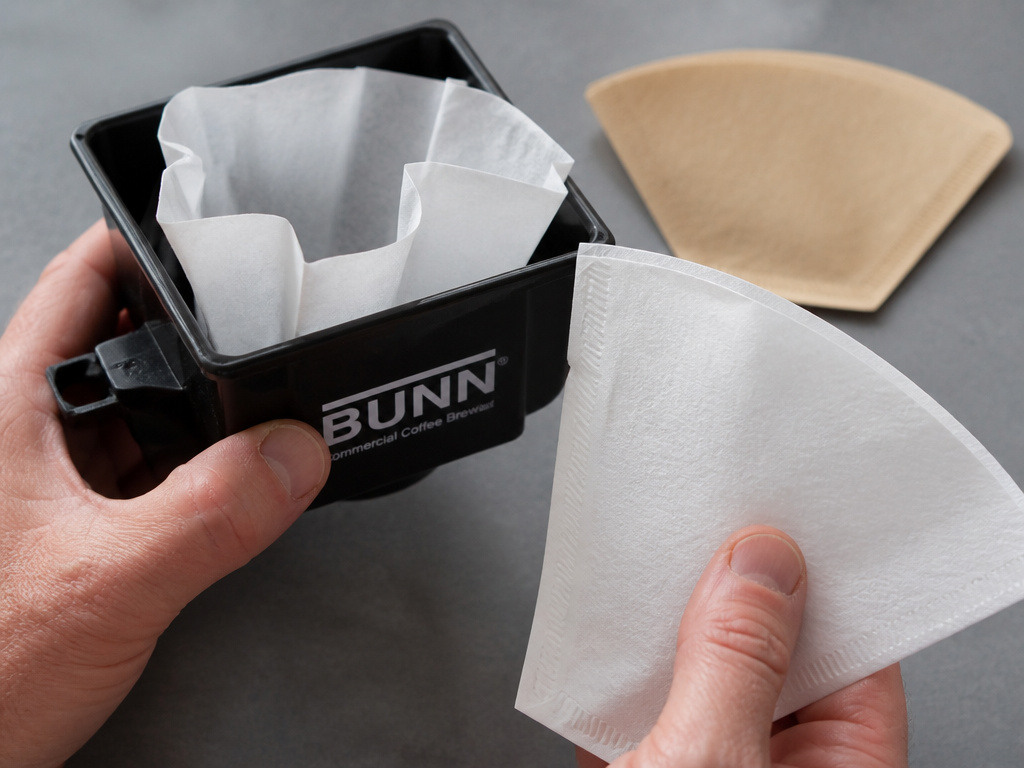
The color debate is irrelevant if the filter doesn’t fit your machine. A Bunn commercial pour-over machine needs a specific basket-shaped paper. A Breville espresso machine with a built-in water filter needs a specific replacement cartridge. Using a standard #4 cone filter in either will result in a mess.
This is where the specific coffee pot filters for your machine are non-negotiable. The shape, thickness, and flow rate are engineered together. A Chemex filter is famously thick and slow. A Hario V60 filter is thin and fast. Swapping them changes the brew time by minutes, which over-extracts or under-extracts your coffee.
- Identify your brewer’s model. Check the manual or the underside of the machine. Look for phrases like “uses 4-cup basket filter” or “compatible with Melitta #2.”
- Buy the exact shape first. Circle for basket brewers, cone for pour-overs, squares for Chemex. The color choice comes second.
- Test flow rate with water. If a new box of filters causes your brew to drain twice as fast or slow, the paper thickness is wrong, even if the shape fits.
Ignoring compatibility for the sake of color is a sure way to ruin a batch of coffee. The wrong filter shape leads to leaking, overflowing, or a stuck brew that turns to mud.
How Filter Choice Changes Your Coffee’s Body
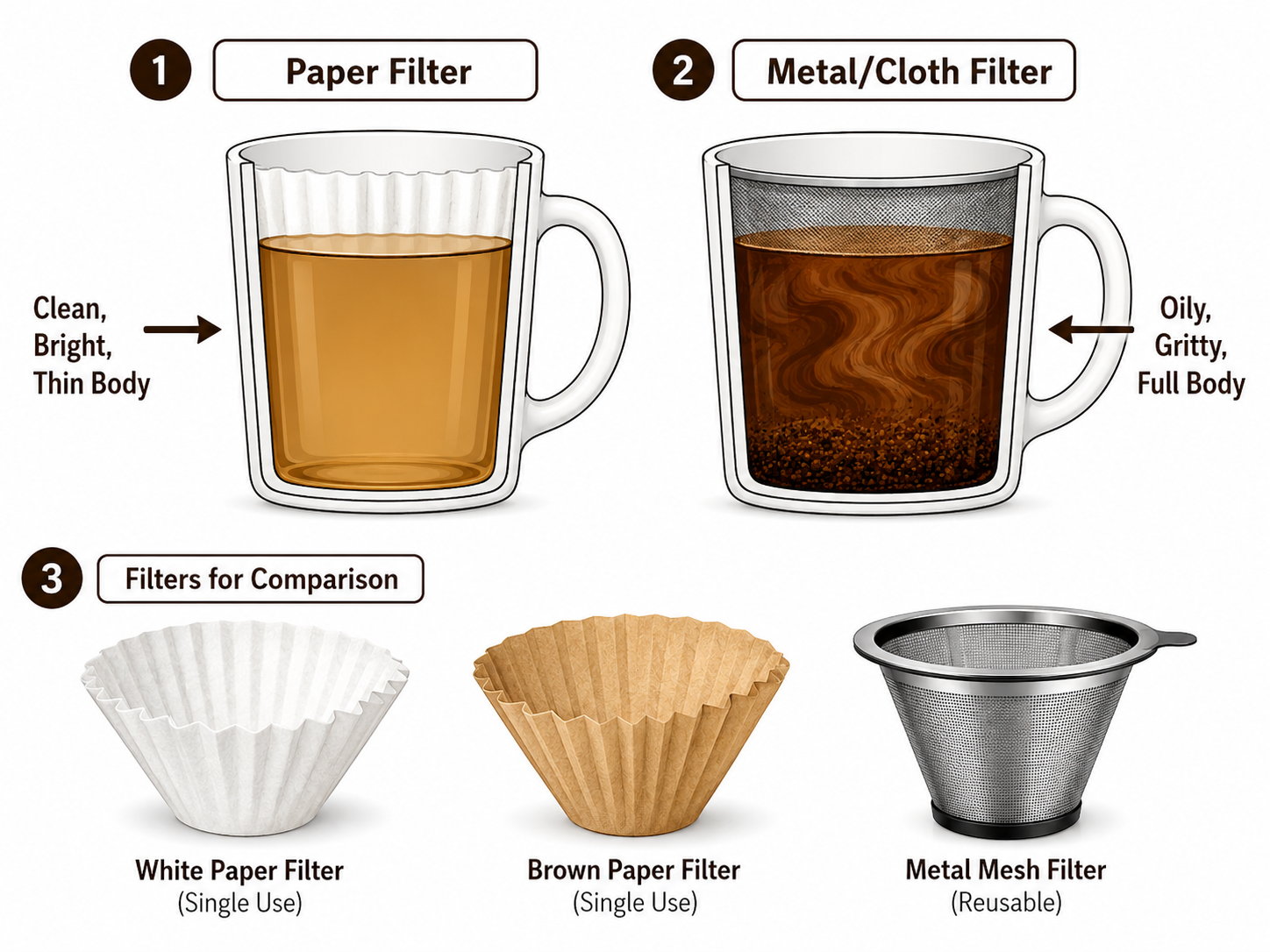
Paper filters trap oils and microscopic sediment. Metal and cloth filters let them through. This is the single biggest mechanical difference in your cup, far outweighing the white vs. brown choice.
A paper filter, whether white or brown, produces a cleaner, brighter, more nuanced cup. It’s the choice for highlighting acidity and floral notes in a light roast. The trade-off is body, the coffee will feel thinner in your mouth.
A reusable metal or cloth filter delivers a fuller-bodied, grittier, oilier cup. It’s better for dark roasts where you want that heavy, syrupy texture. The trade-off is clarity and, often, a layer of silt at the bottom of your mug.
Your decision between bleached vs unbleached filters happens after you’ve chosen paper over metal. If you want the cleanest possible expression of a single-origin coffee like a washed Ethiopian, you pick paper. Then, within the paper category, you pick white to eliminate the paper variable.
The One Filter You Shouldn’t Buy Blind
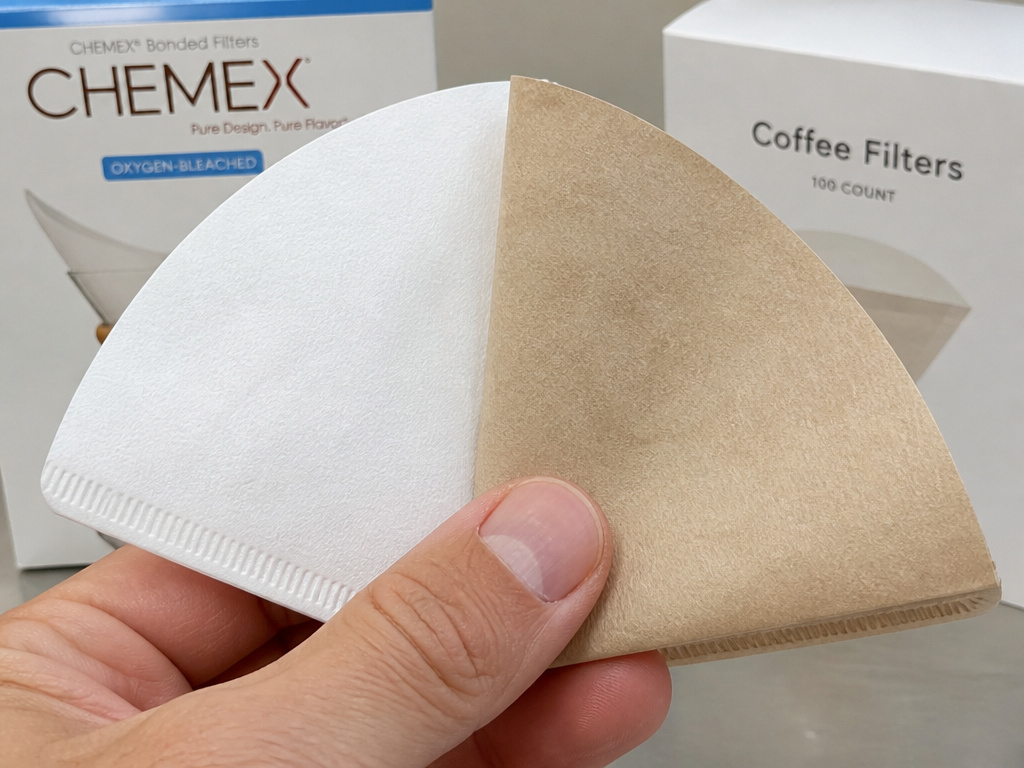
Walk down the grocery aisle, and you’ll see boxes labeled “Natural Brown Coffee Filters.” They’re often the same price as the white ones. Grab them if you compost and don’t mind a pre-rinse ritual.
Avoid the no-name generic white filters that don’t specify the bleaching process. They’re the most likely to use older, less-regulated manufacturing. Stick to brands that are transparent: Chemex (oxygen-bleached), Hario (oxygen-bleached), Melitta (oxygen-bleached).
For the best performance across methods, invest in a pack of Cafec Abaca filters or Sibarist Fast papers. These are specialty filters designed for specific flow rates and extract less paper taste, though they come at a premium. They’re typically white or off-white because the high-performance materials respond better to bleaching.
Your final choice should follow this hierarchy: brewer compatibility > paper vs. metal > bleached vs. unbleached. The color is the last variable, not the first.
Frequently Asked Questions
Do brown coffee filters make coffee taste different?
Yes. Unbleached brown filters can impart a papery or woody taste because they retain natural compounds like lignin. A thorough pre-rinse with hot water minimizes this, but a side-by-side taste test often reveals the white filter produces a cleaner cup.
Are brown coffee filters better for the environment?
Not always. Unbleached brown filters skip the bleaching process, saving water and energy. However, modern white filters are usually oxygen-bleached, a cleaner process with a minimal environmental footprint. The bigger impact comes from choosing filters made with certified sustainable pulp and composting them after use.
Should you rinse brown coffee filters?
Absolutely. Rinsing a brown filter with hot water before brewing is mandatory. It washes away loose paper fibers and starts dissolving the surface tannins that cause the papery taste. For thick filters like Chemex Bonded squares, use at least 100ml of hot water.
Can you use white filters in any coffee maker?
Yes, as long as the shape and size match your brewer. The bleaching process doesn’t affect the physical dimensions or flow rate. A white #4 cone filter will work in the same brewers as a brown #4 cone filter. Always match the shape (cone, basket, square) to your machine first.
Before You Go
Pick the filter that fits your brewer first. The shape is non-negotiable. If you’re after pure, unadulterated coffee flavor, especially for light roast characteristics or delicate single-origin coffees, choose an oxygen-bleached white filter. It’s the neutral baseline. If you compost religiously and don’t mind a dedicated pre-rinse, an unbleached brown filter works, just know the paper taste might linger in subtle coffees.
The real upgrade isn’t switching from brown to white. It’s understanding that the filter is part of the recipe. As Consumer Reports coffee filter tests confirm, paper filters produce a clearer, more nuanced cup by removing oils and sediment. Your choice between white and brown fine-tunes that clarity. Start with a box of each and taste the difference yourself. Your coffee will tell you which one it prefers.
{
“@context”: “https://schema.org”,
“@type”: “HowTo”,
“name”: “How to Choose Between White and Brown Coffee Filters”,
“totalTime”: “PT10M”,
“tool”: [
{
“@type”: “HowToTool”,
“name”: “Your preferred coffee brewer (e.g., V60, Chemex, drip machine)”
},
{
“@type”: “HowToTool”,
“name”: “A kettle”
},
{
“@type”: “HowToTool”,
“name”: “Two identical filters, one white and one brown”
}
],
“step”: [
{
“@type”: “HowToStep”,
“name”: “Rinse both filters with hot water”,
“text”: “Pour 200°F water through a white filter and a brown filter separately, catching the runoff in two clean cups. Let the water cool.”
},
{
“@type”: “HowToStep”,
“name”: “Taste the rinse water”,
“text”: “Sip the cooled water from each cup. The brown filter’s water will likely taste more of wet paper or cardboard.”
},
{
“@type”: “HowToStep”,
“name”: “Brew identical batches”,
“text”: “Using the same coffee, dose, grind, and water, brew one pot with the rinsed white filter and one with the rinsed brown filter.”
},
{
“@type”: “HowToStep”,
“name”: “Compare the cups side-by-side”,
“text”: “Taste each brew. Note any differences in clarity, body, and aftertaste. The white filter typically yields a cleaner, more transparent cup.”
}
]
}
{
“@context”: “https://schema.org”,
“@type”: “FAQPage”,
“mainEntity”: [
{
“@type”: “Question”,
“name”: “Do brown coffee filters make coffee taste different?”,
“acceptedAnswer”: {
“@type”: “Answer”,
“text”: “Yes. Unbleached brown filters can impart a papery or woody taste because they retain natural compounds like lignin. A thorough pre-rinse with hot water minimizes this, but a side-by-side taste test often reveals the white filter produces a cleaner cup.”
}
},
{
“@type”: “Question”,
“name”: “Are brown coffee filters better for the environment?”,
“acceptedAnswer”: {
“@type”: “Answer”,
“text”: “Not always. Unbleached brown filters skip the bleaching process, saving water and energy. However, modern white filters are usually oxygen-bleached, a cleaner process with a minimal environmental footprint. The bigger impact comes from choosing filters made with certified sustainable pulp and composting them after use.”
}
},
{
“@type”: “Question”,
“name”: “Should you rinse brown coffee filters?”,
“acceptedAnswer”: {
“@type”: “Answer”,
“text”: “Absolutely. Rinsing a brown filter with hot water before brewing is mandatory. It washes away loose paper fibers and starts dissolving the surface tannins that cause the papery taste. For thick filters like Chemex Bonded squares, use at least 100ml of hot water.”
}
},
{
“@type”: “Question”,
“name”: “Can you use white filters in any coffee maker?”,
“acceptedAnswer”: {
“@type”: “Answer”,
“text”: “Yes, as long as the shape and size match your brewer. The bleaching process doesn’t affect the physical dimensions or flow rate. A white #4 cone filter will work in the same brewers as a brown #4 cone filter. Always match the shape (cone, basket, square) to your machine first.”
}
}
]
}
