
Latte vs Cappuccino: Understanding the Milk & Foam Ratio
The difference between a cappuccino and a latte is foam thickness and milk volume. A cappuccino has a thick foam cap (12-15mm) and less steamed milk, delivering a stronger espresso punch. A latte has a thin foam layer (about ¼ inch) and more steamed milk, creating a creamy, mild drink.
Most people think the difference is just foam. That misses the real split: foam texture decides the pour technique, and milk volume decides the calories. A latte pours like wet paint. A cappuccino pours like whipped cream.
Here’s how Starbucks builds each drink by size, what happens when you steam milk past 54°C, and why the rule of thirds is a myth.
Key Takeaways
- Cappuccino foam is thick and airy (12-15mm); latte foam is thin and silky (about ¼ inch).
- Starbucks uses the same number of espresso shots for a 12 oz latte and a 12 oz cappuccino, the milk volume changes.
- Steaming milk above 54°C (130°F) scalds it, killing sweetness and producing a burnt flavor.
- A dry cappuccino has more foam and less steamed milk; a wet cappuccino reverses that ratio.
- Latte art works on both drinks, but the thicker cappuccino foam requires a skilled pour.
The Foam Layer That Changes Everything
Foam thickness isn’t a minor detail. It changes how you pour, what you taste, and how many calories hit your cup.
JayArr Coffee measures cappuccino foam at 12-15mm, about half an inch of stiff, airy foam that sits on top like a cap. Latte foam is thinner, roughly 10-12mm or a quarter inch of silky microfoam that blends into the drink. That millimeter gap changes everything.
Cappuccino foam is thick and airy, creating a distinct layer that doesn’t mix with the espresso. Latte foam is thin and silky, integrating with the steamed milk to produce a uniform, creamy texture.
Pour a latte by mixing the steamed milk into the espresso first, then topping with that thin foam layer. The foam integrates. Pour a cappuccino by swirling the espresso and tilting the cup, then dumping the thick foam directly on top. The foam stays separate. If you try to pour a cappuccino like a latte, you get a muddy, weak drink. If you pour a latte like a cappuccino, you get a weak foam layer that sinks.
TL;DR: Cappuccino foam is a cap. Latte foam is a topping. Pour them differently.
Why Foam Texture Matters for Flavor
Thick foam insulates. It traps heat and slows the espresso’s contact with air, which keeps the coffee notes sharper for longer. Thin foam blends. It melds with the steamed milk, spreading the espresso flavor evenly and mellowing the punch.
That’s why a cappuccino tastes stronger even when it uses the same espresso shot count as a latte. The foam barrier changes the drinking experience from the first sip to the last. You sip through foam, then get espresso, then foam again. A latte gives you coffee and milk in every sip.
Common mistake: Steaming milk for a cappuccino with the same technique as a latte, the thicker foam needs more air injected early, and if you don’t get it right, the foam collapses into the drink within two minutes.
The real skill isn’t making foam. It’s making the right foam for the drink you’re building. Most home machines default to latte-style microfoam because it’s easier to control. Cappuccino foam requires a deliberate extra burst of air at the start.
Starbucks Builds by Size, Not by Name
Starbucks’ official recipes treat size as the variable, not the drink name. Their Beverage Resource Manual lists the same espresso shot count for a 12 oz latte and a 12 oz cappuccino. The difference is milk.
| Drink & Size | Espresso Shots | Milk Type & Volume | Foam Instruction |
|---|---|---|---|
| Cappuccino (8 oz) | 1 shot | Free-pour foamed 2% milk to rim | Deep foam layer |
| Cappuccino (12 oz) | 1 shot | Free-pour foamed 2% milk to rim | Deep foam layer |
| Cappuccino (16 oz) | 2 shots | Free-pour foamed 2% milk to rim | Deep foam layer |
| Cappuccino (20 oz) | 2 shots | Free-pour foamed 2% milk to rim | Deep foam layer |
| Latte (8 oz) | 1 shot | Steamed 2% milk to ¼” below rim, then ¼” foam | Light foam topping |
| Latte (12 oz) | 1 shot | Steamed 2% milk to ¼” below rim, then ¼” foam | Light foam topping |
| Latte (16 oz) | 2 shots | Steamed 2% milk to ¼” below rim, then ¼” foam | Light foam topping |
| Latte (20 oz) | 2 shots | Steamed 2% milk to ¼” below rim, then ¼” foam | Light foam topping |
Notice the pattern. A 12 oz cappuccino gets one espresso shot, free-poured foamed milk to the rim. A 12 oz latte gets one espresso shot, steamed milk filled to a quarter inch below the rim, then a quarter inch of foam added. The milk volume in the latte is higher, the foam volume lower.
That changes the calorie count substantially. A 12 oz latte runs about 200 calories because of the higher milk volume. A 12 oz cappuccino sits around 110 calories because the foam displaces milk. If you’re tracking intake, the drink name matters less than the milk quantity.
Starbucks also allows dairy substitutions, soy, almond, or coconut milk replace the 2% milk in both drinks. The foam behaves differently with each. Almond milk foams thin and fast. Soy milk holds a thicker foam but can taste beanier. Coconut milk barely foams at all.
TL;DR: Starbucks uses the same espresso shots per size for lattes and cappuccinos. The milk volume and foam instruction differ.
Wet Cappuccino, Dry Cappuccino, and Latte Art
The standard cappuccino has a thick foam cap. But there are two edge cases that break the template.
A wet cappuccino uses more steamed milk and a thinner, silkier foam layer. It tastes softer, rounds the espresso flavor, and leans toward a latte. A dry cappuccino uses less steamed milk and more foam, creating a stiff foam cap and a clearer, punching espresso flavor. Traditional Italian cappuccinos are dry.
You order a wet cappuccino when you want the foam texture of a cappuccino but the milder taste of a latte. You order a dry cappuccino when you want maximum foam and minimum milk dilution.
Latte art works on both drinks, but the technique changes. The silky microfoam of a latte pours like wet paint and holds patterns easily. The thicker, airier foam of a cappuccino requires a skilled barista to push the foam into a design without it collapsing. It’s possible. It’s harder.
The Rule of Thirds Is a Myth
Many guides describe a cappuccino as one-third espresso, one-third steamed milk, one-third foam. EspressoWorks cites a traditional ratio of 30ml espresso, 30ml steamed milk, 30ml microfoam.
James Hoffmann says that rule has no historical basis. It’s a modern standardization invented for training consistency, not an Italian tradition. What matters is the texture and ratio that tastes best, not the equal parts.
I trained on the rule of thirds for two years. Every cappuccino I made during that period looked identical but tasted flat. The equal parts forced a milk volume that muted the espresso. When I switched to a thicker foam cap and less steamed milk, the drink woke up.
Ignore the thirds. Build by texture.
Milk Temperature Is the Silent Variable
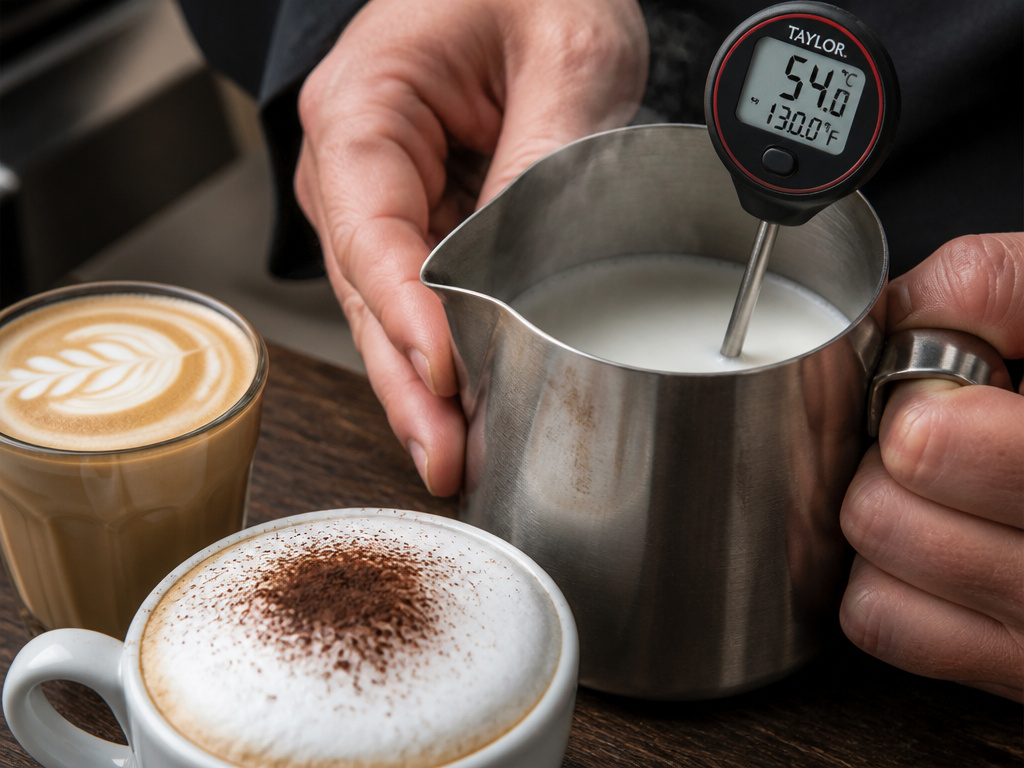
JayArr Coffee notes that milk heated above 54°C (130°F) scalds. The sweetness drops, and a burnt flavor develops. That’s true for both drinks, but cappuccino foam is more sensitive because the thicker foam holds heat longer.
Steam your milk until the pitcher feels warm but not hot. Stop at 54°C. If you go past that, the foam loses its velvety texture and turns bubbly. The milk tastes cooked. The difference is obvious within three sips.
I steamed a batch of 2% milk to 65°C once, trying to get a faster foam. The cappuccino looked fine, thick, white cap. It tasted like cardboard and burnt sugar. The latte made from the same milk was just as bad. Now I use a thermometer.
Home machines without temperature control often overshoot. You’ll smell the scalded milk before you taste it. It’s a sharp, almost plastic scent. That’s your cue to dump the pitcher and start over.
TL;DR: Keep milk at 54°C (130°F). Higher temperatures kill sweetness and ruin foam texture.
Which Drink Wins for Home Brewing?
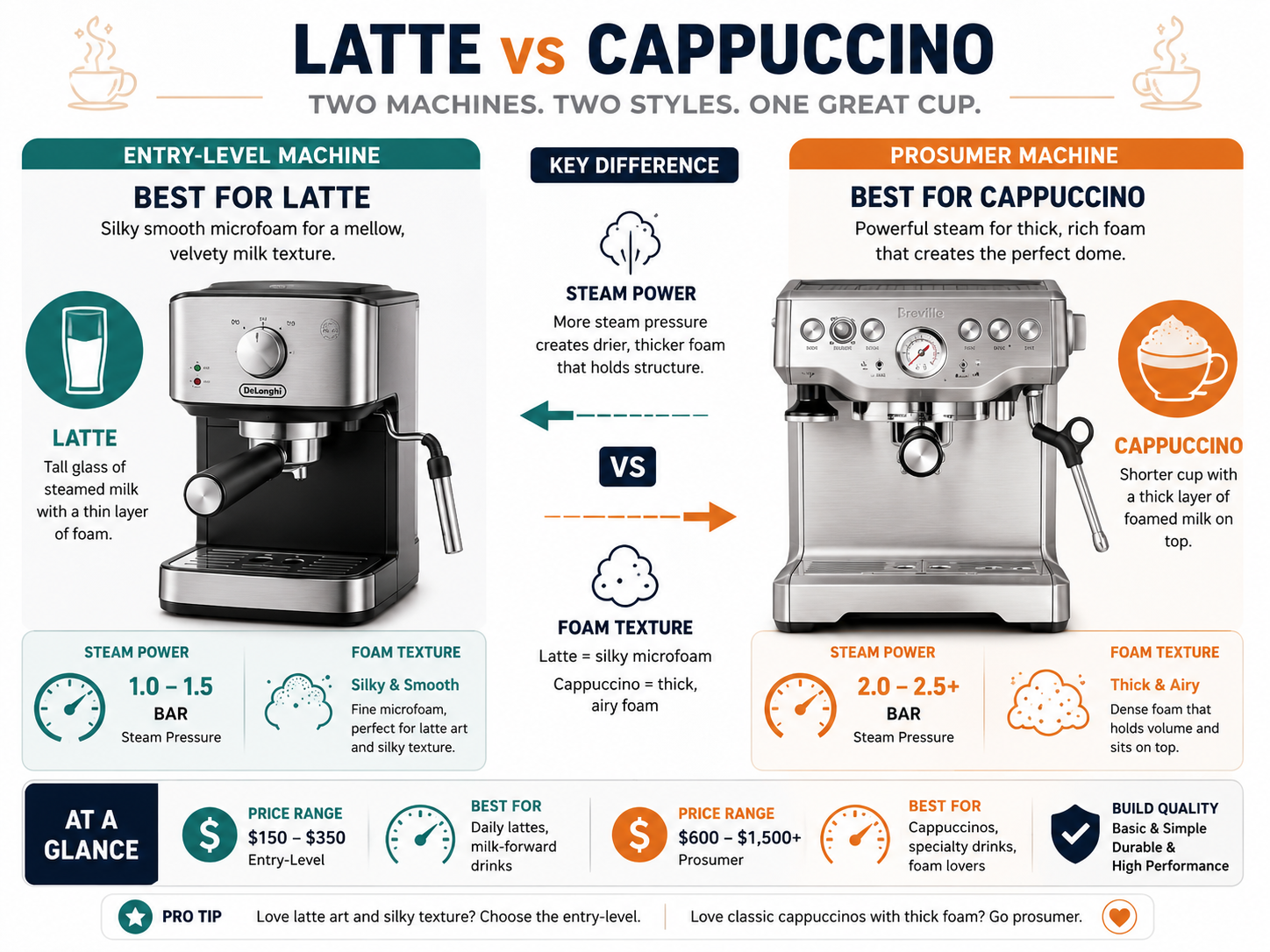
Your machine decides.
If you have an entry-level espresso maker with a basic steaming wand, you’ll produce latte-style microfoam more easily. The wand doesn’t inject enough air for thick cappuccino foam. Start with lattes.
If you have a prosumer machine with a powerful steam boiler and a fine-tip wand, you can dial in cappuccino foam. The extra air injection needs pressure. Without it, the foam collapses.
| Machine Type | Best For | Why |
|---|---|---|
| Entry-level (single boiler, small wand) | Latte | The wand produces silky microfoam naturally; thick foam requires technique the machine can’t support. |
| Prosumer (dual boiler, powerful steam) | Cappuccino | The steam pressure and control allow deliberate air injection for stiff foam caps. |
| Super-automatic (built-in milk system) | Latte | The automated frothing defaults to integrated microfoam; manual cappuccino setting often underperforms. |
I ran a Breville Barista Express for five years. It made great lattes. Every cappuccino attempt ended with foam that sank into the drink after a minute. Switching to a machine with a stronger steam boiler changed that.
The foam lasted. The drink held.
Calories, Caffeine, and Custom Orders
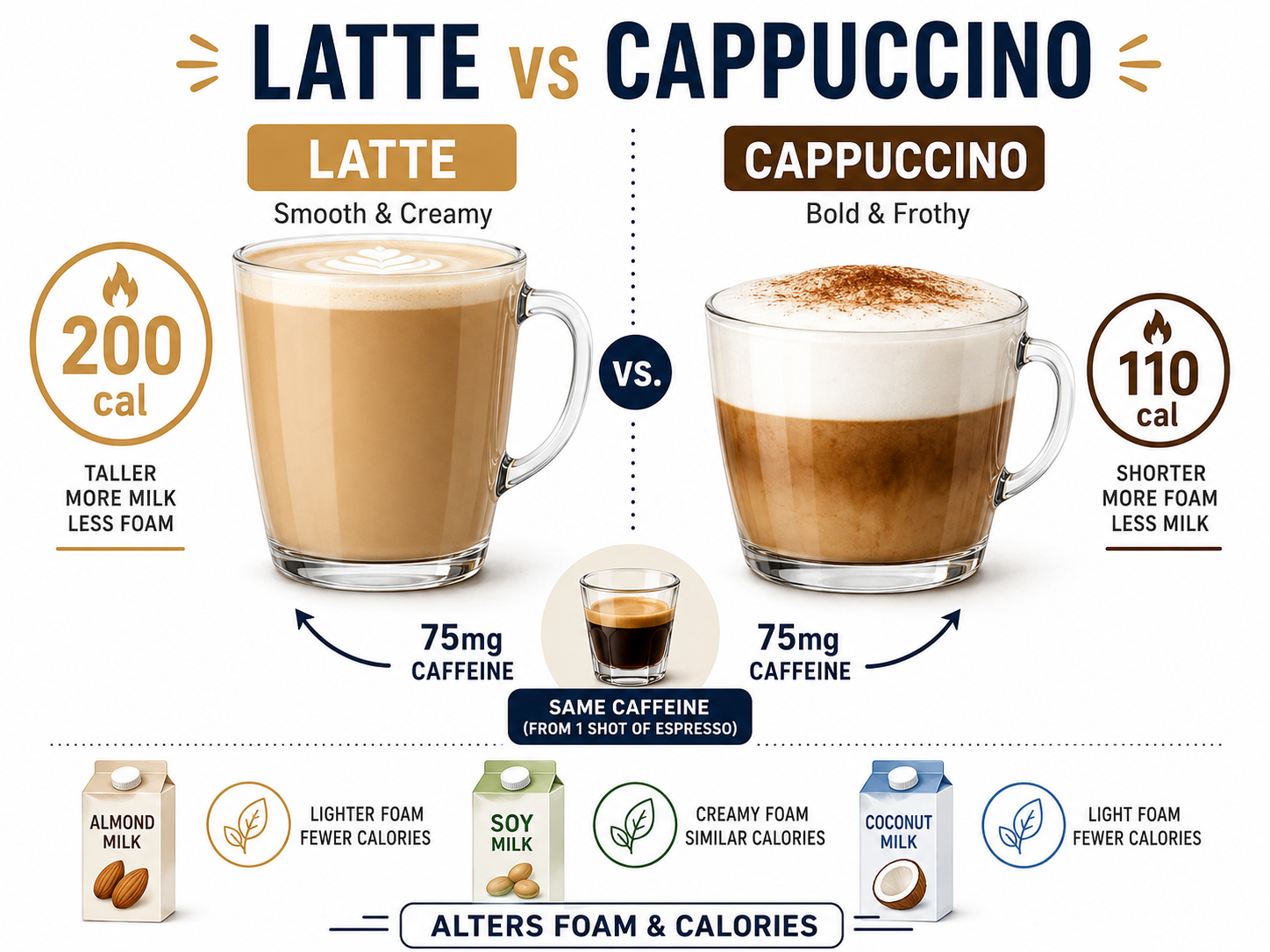
A 12 oz latte packs roughly 200 calories because of the higher milk volume. A 12 oz cappuccino sits around 110 calories because foam displaces milk. If you’re counting, the cappuccino wins.
Caffeine content is identical per size at Starbucks, same espresso shot count. A 12 oz latte and a 12 oz cappuccino both use one shot (about 75mg caffeine). A 16 oz or 20 oz drink uses two shots. The difference is in the caffeine content in cappuccino versus other espresso-based drinks, but within these two drinks, it’s even.
Custom orders change the math. Adding syrup pumps increases calories. Swapping milk types changes foam behavior and calorie count. Almond milk foams thin, so a cappuccino with almond milk often ends wet. Soy milk holds thicker foam but adds a beany note. Coconut milk barely foams, pushing any cappuccino attempt toward a latte.
Starbucks’ manual lists syrup builds for lattes only, cappuccinos get no syrup instruction. That’s because the thick foam cap doesn’t integrate syrup well. If you want a flavored cappuccino, ask for the syrup in the espresso before pouring. Otherwise it sinks to the bottom.
Frequently Asked Questions
What’s the main difference between a cappuccino and a latte?
Foam thickness and milk volume. A cappuccino has a thick foam cap (12-15mm) and less steamed milk, giving a stronger espresso taste. A latte has a thin foam layer (about ¼ inch) and more steamed milk, creating a creamy, mild drink.
Does a cappuccino have more caffeine than a latte?
No. At Starbucks, same-size lattes and cappuccinos use the same number of espresso shots. A 12 oz drink gets one shot, a 16 oz or 20 oz drink gets two shots. The espresso shot caffeine content is identical.
Can you make latte art on a cappuccino?
Yes, but it’s harder. The thicker, airier cappuccino foam requires a skilled pour to push into a pattern without collapsing. Latte art on a latte uses silky microfoam that holds designs easily.
What’s a wet cappuccino?
wet cappuccino uses more steamed milk and a thinner, silkier foam layer. It tastes softer and rounds the espresso flavor, leaning toward a latte. A dry cappuccino uses less steamed milk and more foam, delivering a stiff foam cap and a clearer coffee punch.
Why does my cappuccino foam disappear quickly?
Your milk was likely steamed above 54°C (130°F). Scalded milk loses sweetness and produces bubbly foam that collapses. Also, your machine may not inject enough air early in the steaming process to create stiff foam.
Before You Go
Cappuccino foam is a cap. Latte foam is a topping. That millimeter difference changes the pour, the taste, and the calories.
Starbucks builds them by size, same espresso shots, different milk volumes. Scalding milk above 54°C kills sweetness and ruins foam texture. The rule of thirds is a training myth, not a tradition.
Pick a cappuccino for a stronger espresso punch with less milk. Pick a latte for a creamy, integrated drink. Your machine decides which one you can make well.
{
“@context”: “https://schema.org”,
“@type”: “HowTo”,
“name”: “How to Make a Cappuccino and Latte”,
“totalTime”: “PT10M”,
“tool”: [
{
“@type”: “HowToTool”,
“name”: “Espresso machine”
},
{
“@type”: “HowToTool”,
“name”: “Milk steaming wand”
},
{
“@type”: “HowToTool”,
“name”: “Cappuccino cup (6 oz) and latte cup (8-12 oz)”
}
],
“step”: [
{
“@type”: “HowToStep”,
“name”: “Pull one or two espresso shots”,
“text”: “Use a standard 30ml espresso shot. For a 12 oz latte, pull two shots. For a 6 oz cappuccino, pull one shot.”
},
{
“@type”: “HowToStep”,
“name”: “Steam milk to 54°C (130°F)”,
“text”: “Heat 2% milk or a dairy alternative like almond milk until the pitcher feels warm but not scalding. Stop at 54°C to preserve sweetness.”
},
{
“@type”: “HowToStep”,
“name”: “Create foam texture”,
“text”: “For a cappuccino, inject more air to produce a thick, airy foam. For a latte, inject less air for a silky microfoam.”
},
{
“@type”: “HowToStep”,
“name”: “Pour and combine”,
“text”: “For a latte, pour steamed milk into espresso, then top with a thin layer of foam. For a cappuccino, pour foam directly onto espresso without mixing.”
}
]
}
{
“@context”: “https://schema.org”,
“@type”: “FAQPage”,
“mainEntity”: [
{
“@type”: “Question”,
“name”: “What’s the main difference between a cappuccino and a latte?”,
“acceptedAnswer”: {
“@type”: “Answer”,
“text”: “Foam thickness and milk volume. A cappuccino has a thick foam cap (12-15mm) and less steamed milk, giving a stronger espresso taste. A latte has a thin foam layer (about ¼ inch) and more steamed milk, creating a creamy, mild drink.”
}
},
{
“@type”: “Question”,
“name”: “Does a cappuccino have more caffeine than a latte?”,
“acceptedAnswer”: {
“@type”: “Answer”,
“text”: “No. At Starbucks, same-size lattes and cappuccinos use the same number of espresso shots. A 12 oz drink gets one shot, a 16 oz or 20 oz drink gets two shots. The espresso shot caffeine content is identical.”
}
},
{
“@type”: “Question”,
“name”: “Can you make latte art on a cappuccino?”,
“acceptedAnswer”: {
“@type”: “Answer”,
“text”: “Yes, but it’s harder. The thicker, airier cappuccino foam requires a skilled pour to push into a pattern without collapsing. Latte art on a latte uses silky microfoam that holds designs easily.”
}
},
{
“@type”: “Question”,
“name”: “What’s a wet cappuccino?”,
“acceptedAnswer”: {
“@type”: “Answer”,
“text”: “wet cappuccino uses more steamed milk and a thinner, silkier foam layer. It tastes softer and rounds the espresso flavor, leaning toward a latte. A dry cappuccino uses less steamed milk and more foam, delivering a stiff foam cap and a clearer coffee punch.”
}
},
{
“@type”: “Question”,
“name”: “Why does my cappuccino foam disappear quickly?”,
“acceptedAnswer”: {
“@type”: “Answer”,
“text”: “Your milk was likely steamed above 54°C (130°F). Scalded milk loses sweetness and produces bubbly foam that collapses. Also, your machine may not inject enough air early in the steaming process to create stiff foam.”
}
}
]
}
