
What Is a Cortado Coffee | The 1:1 Ratio Drink Explained
A cortado is a Spanish espresso drink made with a 1:1 ratio of espresso to warm, lightly steamed milk. The milk “cuts” the espresso’s intensity, reducing acidity without adding significant foam or sweetness, and it’s traditionally served in a small 4 to 4.5-ounce glass.
Most cafes outside Spain get this wrong. They serve it in paper cups, overload it with foam, or treat it like a tiny latte. That changes the drink’s entire character.
Here’s exactly what defines a real cortado, how to spot a fake one, and how to make the authentic version at home.
Key Takeaways
- The ratio is non-negotiable: equal parts espresso to steamed milk (1:1).
- The milk texture is key, steamed to about 140°F (60°C) for a silky, “paint-like” consistency, not frothy foam.
- Serve it in a small glass, ideally a 135ml Libbey Gibraltar, not a ceramic mug or paper cup.
- It’s not a small latte. A latte has more milk and foam; a cortado is about balance, not dilution.
- The Cuban version, a cortadito, often includes pre-sweetened espresso.
The Core Definition of a Cortado
The word “cortado” comes from the Spanish verb cortar, meaning “to cut.” In coffee terms, the warm milk cuts through the espresso’s sharpness. This isn’t about drowning the coffee. It’s a precise, surgical dilution.
A true cortado uses a 1:1 volume ratio. You pull a double shot of espresso (about 2 ounces) into a small glass. You then steam an equal amount of milk. The goal is a silky, integrated drink where the coffee’s flavor remains center stage.
The cortado is defined by its equal-parts construction: a double shot of espresso (2 oz) “cut” with 2 oz of steamed milk, served without ceremony in a small glass. This balance reduces acidity without masking the coffee’s origin characteristics.
Common mistake: Serving a cortado in a large cup with extra milk, this turns it into a small latte, and the espresso’s intensity gets lost. You’ll taste warm milk first, coffee second.
The Serving Vessel Matters
You’ll see it in a specific glass for a reason. The classic vessel is the Libbey Gibraltar glass, which holds about 135 ml (4.5 US fl oz). Fellow and other brands sell similar “cortado cups” in the 4-4.5 oz range.
The glass isn’t just tradition. It’s a built-in measuring tool. If your drink doesn’t fit in that glass, your ratios are off. A paper cup or a large ceramic mug invites over-pouring. The glass also lets you see the beautiful, distinct layers before you stir them together.
TL;DR: A real cortado is a 2oz espresso cut with 2oz of steamed milk, served in a ~4.5oz glass. Anything bigger or frothier is a different drink.
Cortado vs. Other Espresso Drinks
This is where most confusion happens. People see a small, milky coffee and call it a cortado. But the details change everything.
| Drink | Espresso | Milk | Milk Texture | Key Difference |
|---|---|---|---|---|
| Cortado | 2 oz (1 part) | 2 oz (1 part) | Silky, microfoam | 1:1 ratio, minimal foam, served in glass. |
| Flat White | 2 oz | 4-5 oz | Velvety microfoam | More milk, thinner layer of integrated foam. |
| Cappuccino | 2 oz | 2 oz milk, 2 oz foam | Dry, frothy foam | Distinct layers, equal parts espresso/milk/foam. |
| Latte | 2 oz | 6-8 oz | Steamed milk with light foam | Much milkier, focused on milk flavor. |
| Macchiato | 2 oz | 1-2 tsp foam | Foam only | Espresso “stained” with a dollop of foam. |
The flat white is the closest cousin, but it uses more milk. A flat white is about silkiness and a seamless blend. A cortado is about balance and restraint. Adding sugar or syrup to a cortado is uncommon in Spain, though it’s the foundation of the sweetened Cuban cortadito.
The caffeine content is straightforward. Since it’s built on a double shot, a cortado packs roughly 120-150mg of caffeine, similar to other milk-based espresso drinks like cappuccinos. The milk doesn’t dilute the caffeine, only the taste.
How to Make a Cortado at Home
You don’t need a Spanish cafe. You need an espresso machine, fresh beans, and a willingness to measure.
Before you start: The steam wand reaches temperatures that can cause severe burns in under a second. Always keep your hands clear of the nozzle, purge the wand before and after use to clear condensed water, and wipe it down immediately with a damp cloth, milk sugar caramelizes onto the metal and becomes a burn hazard on the next use.
The Tools You Actually Need
- Espresso machine with a steam wand. A stovetop Moka pot can work in a pinch, but it won’t be the same.
- Burr grinder. Blade grinders won’t produce the consistent fine grind needed for proper extraction. A good burr grinder is non-negotiable.
- Digital scale. Eyeballing 18 grams of coffee leads to weak or bitter shots.
- 4-4.5 oz glass. A Gibraltar, rocks glass, or small juice glass works.
- Small steaming pitcher. A 12oz pitcher gives you the best control for 2oz of milk.
The Step-by-Step Process
- Grind and dose. Weigh out 18 grams of fresh coffee. Grind it fine enough that it feels like table salt with a slight grit. Dose it into your portafilter, distribute evenly, and tamp firmly.
- Pull the shot. Place your glass under the portafilter. Pull a double shot, aiming for about 36 grams of liquid espresso in 25-30 seconds. You now have roughly 2 ounces of espresso in the glass.
- Steam the milk. Pour about 4 ounces of cold whole milk into your steaming pitcher, you need extra to accommodate stretching. Submerge the tip of the steam wand just below the surface. Turn on the steam and slowly lower the pitcher to introduce a tiny amount of air for about 2-3 seconds. You should hear a gentle paper-tearing sound, not a loud slurp. Then, submerge the wand deeper to create a vortex and heat the milk to 140°F (60°C). The texture should look like wet paint, not frothy foam. Turn off the steam.
- Tap and swirl. Tap the pitcher firmly on the counter to pop any large bubbles. Swirl the milk to integrate the microfoam. This creates that glossy, pourable texture.
- Pour and combine. Slowly pour the steamed milk into the espresso, stopping when the glass is full. The goal is that 1:1 ratio. No latte art needed.
I spent a month steaming milk to 155°F because that’s my latte sweet spot. Every cortado tasted flat and cooked. Dropping to 140°F was a revelation, the milk’s natural sweetness emerged without scalding, and it married with the espresso instead of sitting on top of it.
Why the specific temperature? Milk proteins begin to denature around 150°F, changing the flavor from sweet to bland and cooked. At 140°F, the lactose is fully dissolved and sweet, but the proteins are intact, giving you that silky, creamy mouthfeel without a burnt aftertaste.
Regional Variations and Edge Cases
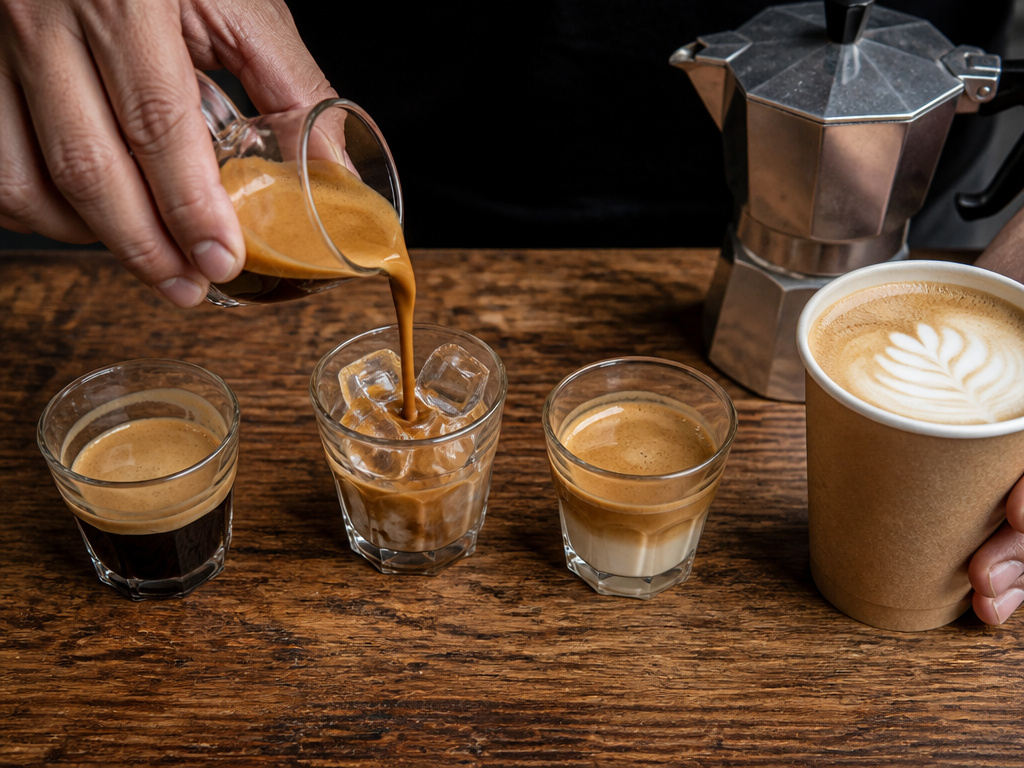
Order a cortado in Miami and you might get something completely different from Madrid. That’s the fun part.
- Cortadito: This is the Cuban take. The espresso is often pre-sweetened with demerara sugar during the pull, creating a cafecito base. The steamed milk is then poured on top. It’s sweeter, richer, and sometimes served in an even smaller cup.
- Cortado con Hielo: A Spanish summer lifesaver. You get your regular cortado alongside a glass full of ice. You pour the drink over the ice yourself, creating a quick, creamy iced coffee. Letting the barista pour it over ice waters it down immediately; doing it yourself preserves the initial mix.
- The “Not-Espresso” Cortado: Can’t make real espresso? You can mimic the spirit. Use a strongly brewed Moka pot coffee or a concentrated AeroPress brew. Steam your milk as usual and combine 1:1. It won’t be a true cortado, but it’ll be a damn good small milk coffee.
- The Mislabeled Latte: Walk into many North American shops and order a cortado. There’s a solid chance you’ll get a small latte, more milk, more foam, in a paper cup. Now you know to ask for it in a glass with equal parts.
Choosing Your Coffee and Milk
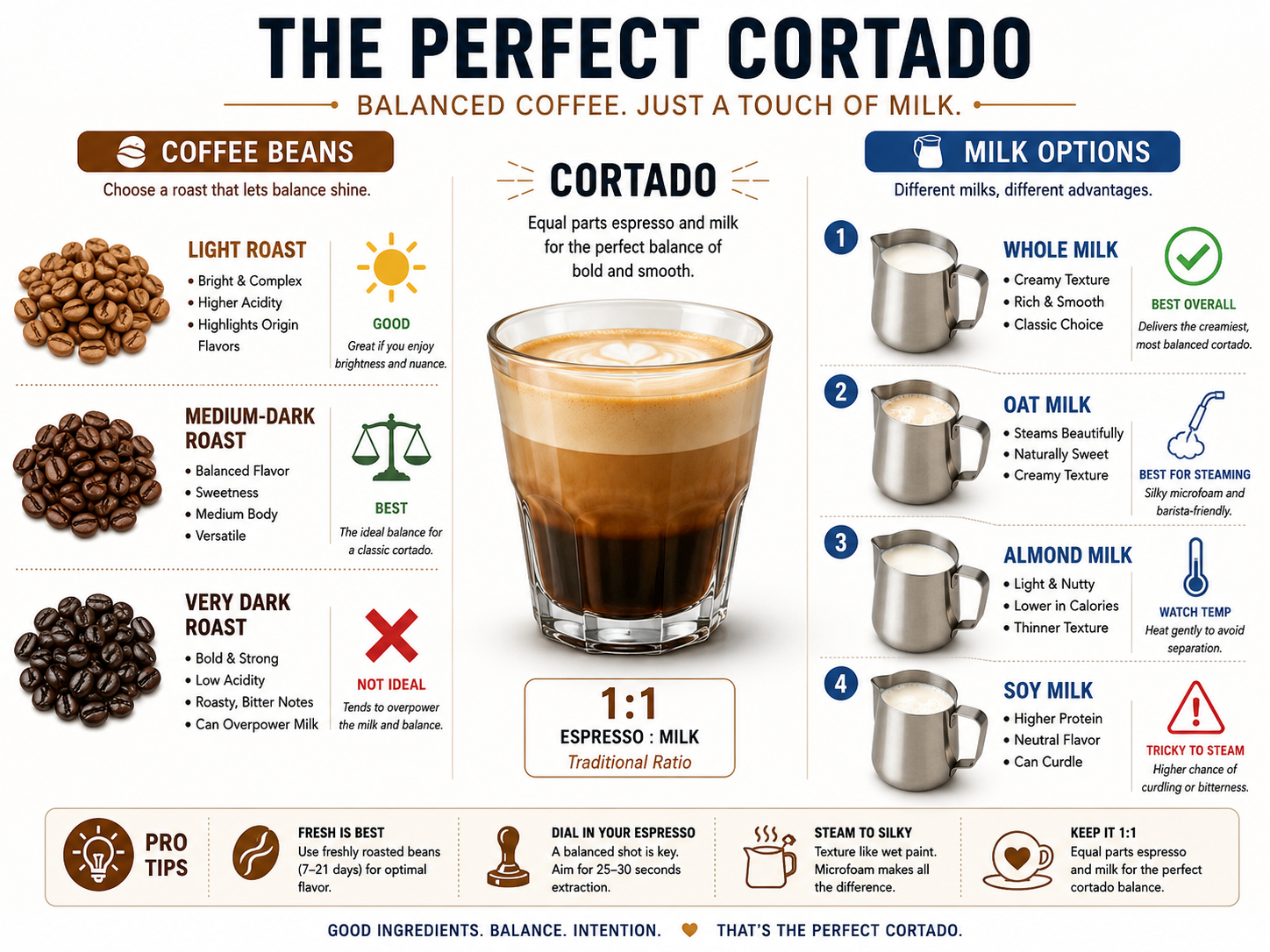
The coffee choice is critical. Since the milk doesn’t dominate, the espresso’s flavor shines through brightly.
Beans: A medium or medium-dark roast often works best. A classic espresso blend is designed for balance. A fruity, light-roast single-origin can be stunning but risks tasting too acidic if the milk doesn’t tame it enough. A very dark roast might overpower the milk’s subtle sweetness.
Milk: Whole milk is the standard. Its fat content creates the best microfoam and adds a pleasant richness. You can use dairy alternatives like oat or almond milk, but know they behave differently. Oat milk steams well; almond milk often separates if overheated. Always use the “barista” versions designed for steaming.
| Milk Type | Best For Cortado Because… | Watch Out For… |
|---|---|---|
| Whole Dairy | Perfect fat/protein balance for silky texture and sweet taste. | Can taste too rich if the espresso is very light. |
| Oat (Barista) | Steams beautifully, adds a creamy, slightly sweet flavor. | Can have a distinct oaty aftertaste that clashes with some coffees. |
| Almond (Barista) | Adds a nutty note, lower in calories. | Can separate and become watery if steamed above 135°F. |
| Soy | Creates stable, dense foam. | Can curdle if added to very acidic espresso. |
Frequently Asked Questions
Is a cortado stronger than a latte?
Yes, significantly. A cortado has a 1:1 coffee-to-milk ratio. A latte has a ratio closer to 1:3 or 1:4. The cortado delivers a much more intense coffee flavor and a higher caffeine concentration per ounce.
Can I make a cortado without an espresso machine?
You can make a cortado-style drink, but it won’t be authentic. Use a Moka pot for a strong, concentrated coffee base and heat/texture your milk with a French press or a handheld frother. The result is pleasant, but it lacks the crema and intense pressure extraction of true espresso.
How many calories are in a cortado?
cortado made with 2oz of whole milk contains roughly 30-40 calories. The drink contains no added sugar or sweeteners unless you specifically request them.
What’s the difference between a cortado and a Gibraltar?
In the United States, particularly in San Francisco, “Gibraltar” became a popular name for a cortado, named after the Libbey glass it’s served in. They are the same drink. If a menu has both, the Gibraltar might imply a specific bean or a slightly different ratio, but the foundation is identical.
Why is my cortado sometimes served with a small spoon?
The spoon is for stirring. While the drink is meant to be integrated, the dense espresso and lighter milk can separate slightly. A quick stir ensures you get the full, balanced flavor in each sip. It’s not for eating.
The Bottom Line
A cortado is a drink of precision, not volume. It’s for the moment you want the full character of your espresso, just slightly softened. Remember the three rules: equal parts, silky milk, and a small glass. Anything else is a compromise.
Skip the oversized paper cup. Skip the mountain of dry foam. Measure your shot, steam your milk to 140°F, and pour it into the right vessel. The first time you get that perfect, balanced sip, where the coffee’s brightness and the milk’s sweetness meet in the middle, you’ll understand why the Spanish refuse to complicate it.
{
“@context”: “https://schema.org”,
“@type”: “HowTo”,
“name”: “How to Make a Cortado Coffee at Home”,
“totalTime”: “PT5M”,
“tool”: [
{
“@type”: “HowToTool”,
“name”: “Espresso machine with steam wand”
},
{
“@type”: “HowToTool”,
“name”: “Burr coffee grinder”
},
{
“@type”: “HowToTool”,
“name”: “Digital scale”
},
{
“@type”: “HowToTool”,
“name”: “Small 4-4.5 oz glass (Gibraltar)”
},
{
“@type”: “HowToTool”,
“name”: “Milk steaming pitcher”
}
],
“step”: [
{
“@type”: “HowToStep”,
“name”: “Pull a double shot of espresso”,
“text”: “Grind 18g of fresh coffee and pull a double shot (about 2oz/60ml) directly into your small serving glass.”
},
{
“@type”: “HowToStep”,
“name”: “Steam the milk to 140°F”,
“text”: “Steam about 2oz of whole milk to 140°F (60°C), aiming for a silky, paint-like texture with minimal foam.”
},
{
“@type”: “HowToStep”,
“name”: “Combine equal parts”,
“text”: “Slowly pour the steamed milk into the espresso, stopping when you reach a perfect 1:1 volume ratio.”
},
{
“@type”: “HowToStep”,
“name”: “Serve immediately”,
“text”: “Serve the cortado immediately in the glass, without any additional stirring or garnishes.”
}
]
}
{
“@context”: “https://schema.org”,
“@type”: “FAQPage”,
“mainEntity”: [
{
“@type”: “Question”,
“name”: “Is a cortado stronger than a latte?”,
“acceptedAnswer”: {
“@type”: “Answer”,
“text”: “Yes, significantly. A cortado has a 1:1 coffee-to-milk ratio. A latte has a ratio closer to 1:3 or 1:4. The cortado delivers a much more intense coffee flavor and a higher caffeine concentration per ounce.”
}
},
{
“@type”: “Question”,
“name”: “Can I make a cortado without an espresso machine?”,
“acceptedAnswer”: {
“@type”: “Answer”,
“text”: “You can make a cortado-style drink, but it won’t be authentic. Use a Moka pot for a strong, concentrated coffee base and heat/texture your milk with a French press or a handheld frother. The result is pleasant, but it lacks the crema and intense pressure extraction of true espresso.”
}
},
{
“@type”: “Question”,
“name”: “How many calories are in a cortado?”,
“acceptedAnswer”: {
“@type”: “Answer”,
“text”: “cortado made with 2oz of whole milk contains roughly 30-40 calories. The drink contains no added sugar or sweeteners unless you specifically request them.”
}
},
{
“@type”: “Question”,
“name”: “What’s the difference between a cortado and a Gibraltar?”,
“acceptedAnswer”: {
“@type”: “Answer”,
“text”: “In the United States, particularly in San Francisco, \”Gibraltar\” became a popular name for a cortado, named after the Libbey glass it’s served in. They are the same drink. If a menu has both, the Gibraltar might imply a specific bean or a slightly different ratio, but the foundation is identical.”
}
},
{
“@type”: “Question”,
“name”: “Why is my cortado sometimes served with a small spoon?”,
“acceptedAnswer”: {
“@type”: “Answer”,
“text”: “The spoon is for stirring. While the drink is meant to be integrated, the dense espresso and lighter milk can separate slightly. A quick stir ensures you get the full, balanced flavor in each sip. It’s not for eating.”
}
}
]
}
