
Mr. Coffee Coffee Filters: The Water Filter Swap You Missed
Mr. Coffee coffee filters are the paper, reusable, or carbon-water units that fit inside your machine’s basket to hold grounds and filter brewing water. You must match the filter type to your specific Mr. Coffee model—using basket-style paper filters or the brand’s Gold Tone reusable filter for most drip machines, and the dedicated water filter kit only if your basket has the “WF” symbol.
Most people grab whatever box of filters looks right. They ignore the tiny symbols on the basket. The wrong paper filter collapses during the brew. The reusable one lets silt into the carafe. And that optional water filter? If you don’t pre-rinse it, the first pot tastes like a charcoal briquette.
This guide walks through the three filter systems in a Mr. Coffee machine. We will identify which one your model uses, explain how to install the tricky water filter, and detail what happens when you get the match wrong.
Key Takeaways
- Check for the “WF” (Water Filter Friendly) symbol on the bottom of your filter basket before attempting to install the carbon water filter system. No symbol means it’s not compatible.
- Pre-rinse a new carbon water filter disk for 10 minutes to wash away manufacturing dust; skipping this step makes your first pot taste sharply acrid.
- Use #4 basket-style paper filters for standard 10-12 cup Mr. Coffee drip makers; a too-small filter will buckle under wet grounds and cause a messy overflow.
- The Mr. Coffee Gold Tone reusable filter is BPA-free nylon and fits all basket-style machines, but expect a visible layer of ultra-fine silt at the bottom of your carafe.
- Replace the carbon water filter cartridge every 60 days for models like the BVMC-EL1; the manual’s 30-day guideline is for very hard water, but stretching it to 90 days lets chlorine taste through.
The Two Main Filter Types: Paper vs. Reusable
Your Mr. Coffee drip machine uses one of two filters to hold the coffee grounds: disposable paper or a permanent reusable basket. The choice changes the taste, the cleanup, and what you’ll find in your cup.
Paper filters are the default. They are the #4 basket-style size, often labeled for 10-12 cup machines. The paper traps nearly all coffee oils and fine sediment. Your brew tastes cleaner and brighter. The downside is waste and a recurring cost.
A paper filter that doesn’t sit flush against the basket walls will collapse inward when the hot water hits. The grounds then slurry into the gap, block water flow, and the basket overflows onto the warming plate. The fix is simple: dampen the filter with a splash of water before adding grounds. The moisture makes the paper cling to the basket.
Reusable filters are usually gold-toned or white nylon mesh. The Mr. Coffee brand version is BPA-free. These filters let coffee oils and very fine particles pass through. The result is a fuller-bodied, richer cup that some compare to a French press. You also eliminate the ongoing purchase of paper.
You will notice silt. After brewing, a layer of dust settles at the bottom of the glass carafe. It is not grit, but it is visible. If you use a very fine grind, more will get through. This is the trade-off for the heavier mouthfeel.
TL;DR: Paper for a clean, bright cup; reusable for a bold, oily brew with visible silt. Dampen paper filters to prevent collapse.
How the Mr. Coffee Water Filtration System Works
Several Mr. Coffee models include an advanced water filtration system. This is a third, separate filter. It does not hold coffee grounds. Its job is to strip chlorine and other impurities from the water before it touches the coffee.
The system has two parts: a plastic frame (part number 189274 for the BVMC-EL1) and a replaceable carbon-impregnated disk (part number 113035). The disk slides into the frame. You then place the entire assembly into the empty filter basket, sitting directly under the machine’s showerhead.
The carbon disk removes up to 97% of chlorine from tap water, according to Mr. Coffee manuals for the BVMC-MMX23 and BVMC-EL1 series. This targets the chemical taste that can dominate lighter roasts.
Water flows from the showerhead, through the carbon disk, then through your coffee grounds filter. The theory is sound: better water makes better coffee. The execution requires a compatible machine. Look for the “WF” symbol stamped on the bottom of your plastic filter basket. If that symbol is not there, the frame will not seat correctly and the system will not work.
Common mistake: Installing a brand-new carbon disk without pre-rinsing — the first brew carries carbon dust into the grounds, producing a cup with a distinct ashy, bitter aftertaste that ruins the beans.
| Model Series | Water Filter Compatible? | Key Identifier |
|---|---|---|
| BVMC-EL1 | Yes | “WF” symbol on basket |
| BVMC-JPX | Yes (check basket) | “WF” symbol on basket |
| BVMC-SC12BL1-2 | Yes | Designed for filter disk & frame |
| RF Series | Yes | Advanced filtration system |
| Basic 5-Cup | No | No “WF” symbol |
How to Install the Mr. Coffee Water Filter
Installing the water filter is a simple four-step process, but the first step is non-negotiable. Get it wrong and you’ll be calling customer service.
First, verify compatibility. Pull out your machine’s removable filter basket and turn it over. Look for the embossed “WF” symbol. If you see it, proceed. If you don’t, this system isn’t for your model. Trying to force it will block water flow.
Second, prepare the new carbon disk. This is the step every manual mentions and most people skip. Take the new disk out of its packaging and submerge it in a cup of clean water for 10 minutes. The water will turn light gray. That is carbon dust from manufacturing. Rinse the disk under running water after the soak. You only need to do this ritual once per disk.
Third, assemble. Slide the rinsed disk into the plastic frame. It clicks into place. Note the month indicator on the frame—set it to the current month so you can track when 60 days have passed.
Fourth, install. Place your coffee filter (paper or reusable) into the basket as normal. Then, set the assembled water filter frame on top of it, centered under the showerhead. The frame just rests there. When you close the brew head, it will press down and seal the assembly.
Now brew. The water will now take a path through the carbon before hitting the grounds. The difference is subtle but noticeable with soft, chlorine-heavy water. You get a purer coffee flavor.
I installed the water filter on a BVMC-EL1 and forgot the pre-rinse. The first pot had a sharp, chemical tang that wasn’t present in the beans. I dumped it, rinsed the disk, and the second pot was clean. Ten minutes of soaking saves a full pot of coffee.
Choosing the Right Paper Filter for Your Model
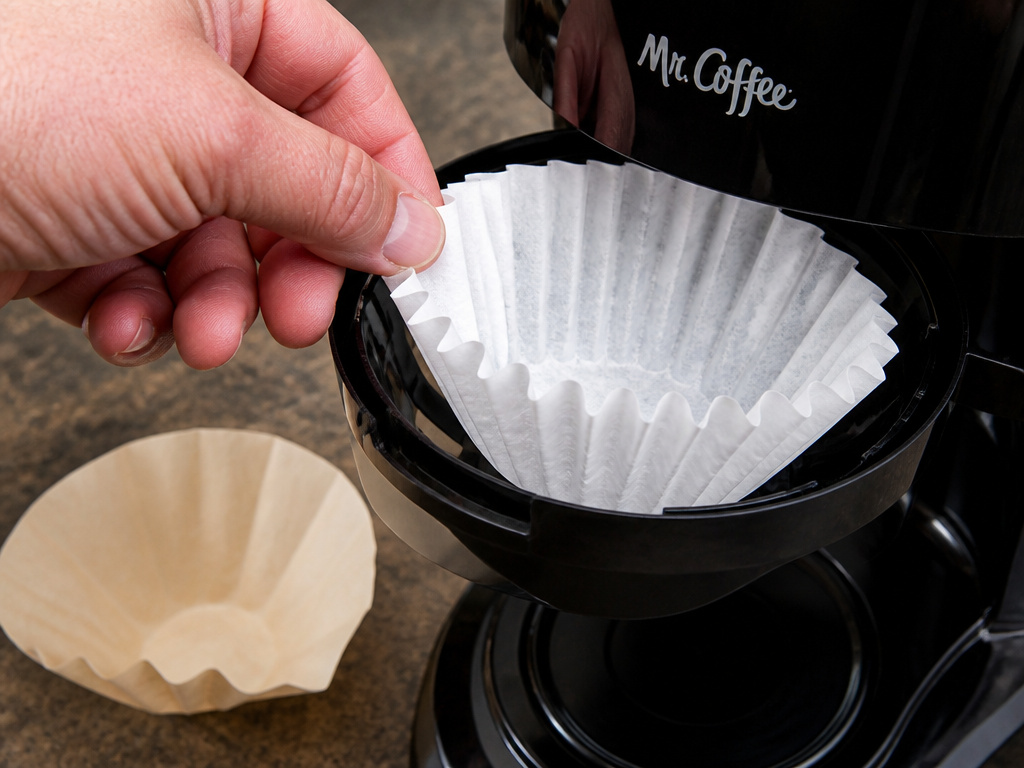
Not all paper filters are the same shape. Using the wrong one causes functional failure during the brew cycle. Mr. Coffee drip machines overwhelmingly use the #4 basket-style filter.
This filter has flat, pleated sides and a pointed bottom. It is designed to fit snugly against the walls of the removable basket. The right fit prevents bypass, where water runs down the sides of the filter without extracting the grounds. A proper fit also prevents the collapse mentioned earlier.
Some models, like the BVMC-EL1, have a slightly larger-capacity basket. It still uses the #4 filter. The “bolder brew” feature on that machine works by slowing water flow, not by changing filter geometry.
| Filter Type | Best For | What Happens If Wrong |
|---|---|---|
| #4 Basket-style (Flat Bottom) | Mr. Coffee 10-12 cup drip makers (BVMC-JPX, BVMC-EL1, etc.) | Correct fit; allows even water dispersion. |
| #4 Cone-style (Pointed Bottom) | Older pour-over cones or some single-serve systems | Sides won’t contact basket walls, causing massive bypass and weak coffee. |
| #2 Basket-style | Smaller 4-5 cup machines | Too small; will fall into the basket or collapse immediately. |
| “Natural” Unbleached Paper | Any #4 basket | May impart a faint papery taste for the first few uses until seasoned. |
If you are exploring paper filter types, consider that bleached filters are processed to remove the paper taste, while unbleached retain a more natural character. The choice between bleached vs unbleached filters is mostly about taste preference and environmental concern, not function.
Common mistake: Using a cone filter in a basket machine — the water channels down the narrow gap, extracting less than half the grounds, and your coffee tastes sour and weak.
The Pros and Cons of a Reusable Filter
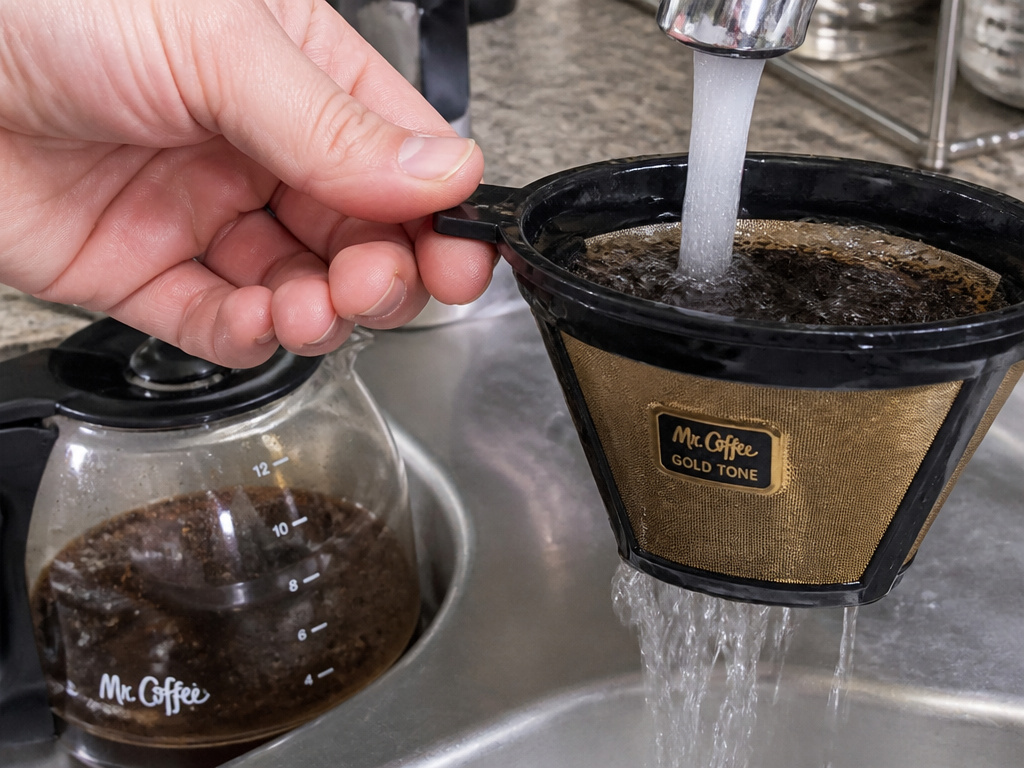
The Mr. Coffee Gold Tone reusable filter is a permanent mesh basket. It promises an end to buying paper and a boost in coffee body. It delivers on both, with specific physical trade-offs.
The pros are straightforward. You buy it once. It is BPA-free nylon, so no plastic taste leaches into hot water. It fits all standard basket-style machines. The handle makes removal easy, even when the basket is hot. Environmentally, it eliminates the weekly paper waste, making it a core item for anyone considering eco-friendly filters.
The cons are in the cup. The mesh allows micro-fines through. After brewing, a layer of silt settles in the carafe. It is not gritty on the tongue, but it is visible. If you use a blade grinder with inconsistent particle size, you will get more silt. A burr coffee grinder set for a medium drip grind minimizes this.
The other con is cleanup. You cannot just toss it. You must rinse it immediately after use, or the coffee oils harden into a varnish inside the mesh. That varnish eventually tastes rancid. A quick rinse under the tap right after dumping the grounds keeps it clean for years.
Before you start: The reusable filter will alter your brew time. Water flows through the larger mesh holes faster than through paper. If your coffee suddenly tastes weak, your grind is likely too coarse. Compensate by using a slightly finer grind setting to slow the extraction.
Troubleshooting Common Mr. Coffee Filter Problems
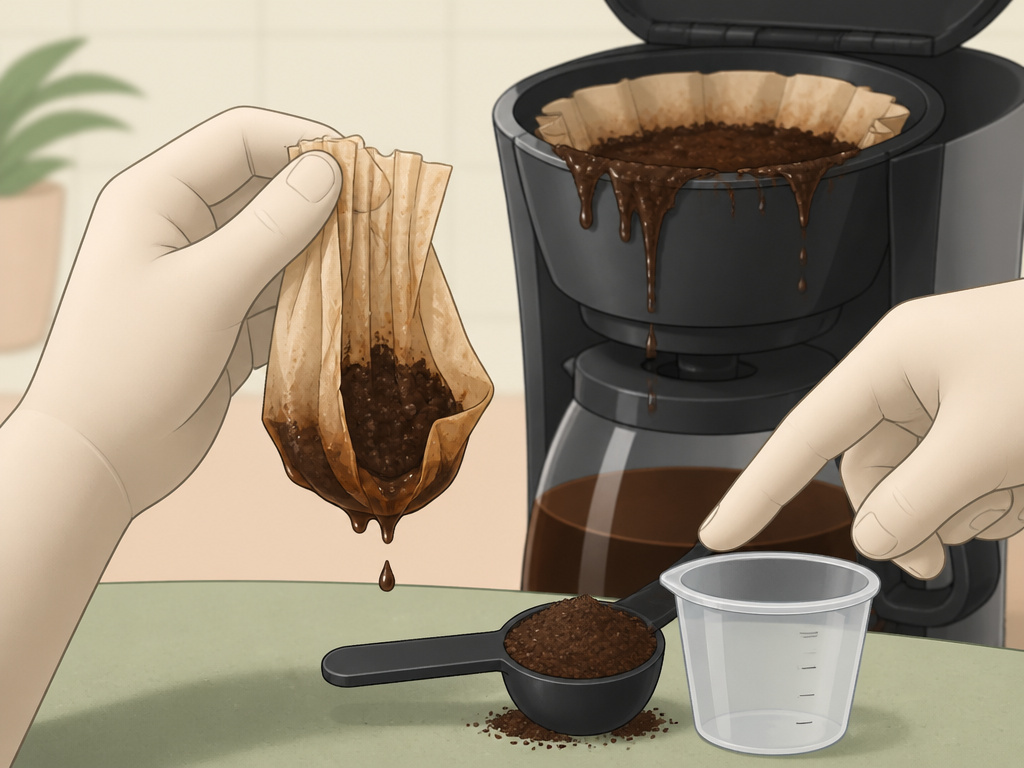
Filters are simple. When they fail, the symptoms are obvious: bad taste, overflow, or no coffee. Here are the fixes.
Problem: Coffee tastes like paper or chemicals.
- New paper filter: Run a cycle of clean water through the machine with just the filter installed. This seasons it.
- New carbon water filter: You didn’t pre-rinse. Soak the disk for 10 minutes, rinse, and try again.
- Reusable filter: Oils have gone rancid. Soak the filter in a solution of hot water and baking soda, then scrub gently with a soft brush.
Problem: The filter basket overflows during brewing.
- Paper filter collapsed: The filter was too dry or the wrong size. Always dampen a paper filter before adding grounds.
- Grind is too fine: An ultra-fine grind, like for espresso, can clog a paper filter’s pores. Use a proper medium grind for drip coffee method.
- Too many grounds: Overfilling the basket blocks water drainage. Stick to one scoop per 5-ounce “cup” as defined by Mr. Coffee.
Problem: Water bypasses the grounds, making weak coffee.
- Cone filter in a basket machine: You used the wrong shape. Use only #4 basket-style filters.
- Reusable filter not seated: Ensure the mesh basket is fully pressed down into the plastic holder. A tilt creates a channel.
Problem: The water filter frame doesn’t fit or water drips around it.
- Incompatible machine: Your basket lacks the “WF” symbol. Do not use the water filter system.
- Frame not centered: The frame must sit directly under the showerhead outlet. Reposition it.
For more detailed machine-specific issues, consulting your Black & Decker manuals or Braun coffee maker manual can provide analogous troubleshooting steps for basket and water systems.
Frequently Asked Questions
Are Mr. Coffee filters interchangeable with other brands?
For paper filters, yes, if the size matches. A #4 basket-style filter from any brand will physically fit. However, Mr. Coffee brand filters are engineered for the flow rate of their machines. Off-brands may be thicker or thinner, altering extraction slightly. For the carbon water filter system, you must use the Mr. Coffee brand disk and frame (part 113035 and 189274). Generic replacements will not fit the frame.
How often should I replace the Mr. Coffee water filter?
The official guideline for the RF Series and similar is every 30 days. For most municipal water supplies, 60 days is the practical maximum before chlorine removal efficacy drops. You will notice the chlorine taste returning in your brewed coffee basics. Mark the installation month on the frame. If you have very hard water or use a lot of coffee, stick to 30 days.
Can I use a reusable filter and the water filter at the same time?
Absolutely. This is the ideal setup for many. The water filter frame sits in the empty basket first. Then you place your Gold Tone reusable filter inside that frame. The water passes through carbon, then through the coffee grounds in the mesh. You get filtered water and a bold cup.
Why is there mud at the bottom of my pot with a reusable filter?
That is not mud; it is ultra-fine coffee sediment. The mesh cannot catch particles smaller than its weave. All reusable filters permit this. It is harmless and mostly tasteless when suspended in the full pot. To reduce it, use a coarser grind or switch to paper filter types which trap everything.
Do Mr. Coffee filters affect caffeine content?
No. Caffeine is highly water-soluble and extracts early in the brew. The filter type—paper, reusable, or with a water filter—does not change the amount of caffeine that dissolves from the grounds. The main variables are coffee-to-water ratio, grind size, and contact time.
The Bottom Line
Your Mr. Coffee machine likely needs a #4 basket-style paper filter or the brand’s Gold Tone reusable version. Check the basket bottom for the “WF” symbol before buying the carbon water filter kit. If you get that kit, soak the disk first. The paper filter gives a clean cup, the reusable one gives body and silt, and the water filter strips chlorine. Match them to your model, prep them correctly, and your morning routine gets a silent upgrade. The wrong filter just makes a mess.
