
The Truth About Cockroaches in Coffee: FDA Rule & Allergy Origin
Yes, there can be insect parts in coffee, but the pervasive claim that pre-ground coffee contains 10% ground-up cockroaches is a misinterpretation of a real FDA regulation and a decades-old allergy story. The FDA’s Defect Action Level targets insect-damaged coffee beans, not a measured volume of cockroach fragments.
The confusion starts with a single number: 10%. People hear “FDA allows 10% cockroaches in coffee” and imagine a tenth of every scoop being bug. That’s not how it works. The rule is about bean count, not bug biomass, and it exists because eliminating all insects from an agricultural product is practically impossible.
This guide separates the FDA’s actual rules from the urban legend. We’ll look at the primary pests, explain the grading system that rejects “trash” coffee, and trace the cockroach allergy anecdote back to its source. You’ll learn what the 10% really means and how your choice between whole bean and pre-ground coffee affects what ends up in your cup.
Key Takeaways
- The FDA’s 10% Defect Action Level refers to the count of insect-infested or damaged coffee beans, not a weight or volume of ground-up insect parts.
- The primary pests are field insects like the coffee berry borer, not common household cockroaches, though storage pests can be an issue in bulk lots.
- The “10% cockroach” myth is a fusion of a late-1980s entomologist’s allergy anecdote and a misunderstanding of the FDA’s bean-count rule.
- Buying whole bean coffee from reputable roasters and using a proper burr grinder significantly reduces any risk of contamination from post-harvest storage pests.
- Coffee graded below “exchange grade 8” is considered undeliverable “trash” by the trade, often due to high defect counts including insect damage.
What is the FDA’s 10% Defect Action Level?
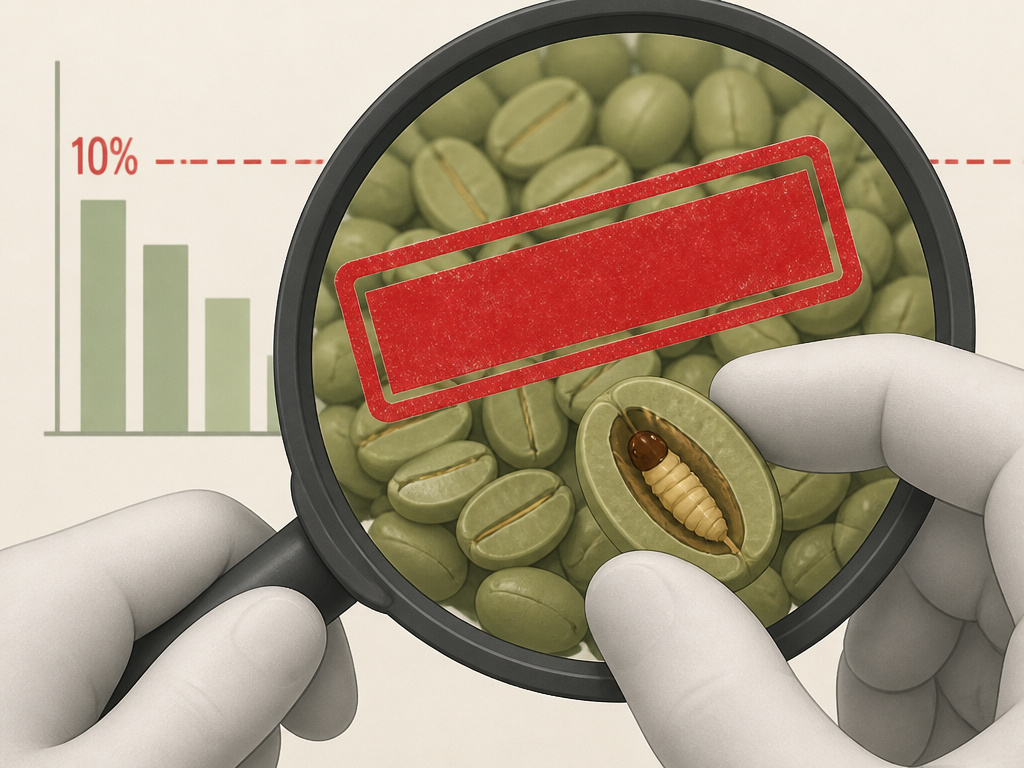
The FDA Beverage Materials Manual is the primary source. Its Defect Action Level for coffee is specific: regulatory action is warranted if an average of 10% or more by count of the beans in a sample are insect-infested or insect-damaged. The key phrase is “by count.” Inspectors examine a batch of beans. If 10 out of 100 beans show signs of insect activity, like a bore hole from the coffee berry borer, the batch fails.
The FDA’s Defect Action Level for coffee states that an average of 10% or more by count of coffee beans being insect-infested or insect-damaged is the threshold for regulatory action. This applies to green, unroasted coffee beans. The method involves inspecting bean samples for specific defects like insect boring, tunneling, or visible insect parts within the bean structure.
This is a quality control threshold, not a recipe. A failed batch is rejected or re-processed; it doesn’t get ground up and sold with a “10% bug” label. The rule exists because coffee is an agricultural product grown outdoors. The FDA guidelines on natural contaminants acknowledge that complete elimination of natural defects is impossible without destroying the food itself.
TL;DR: The 10% rule counts damaged beans, not bug parts. It’s a rejection threshold for green coffee, not an ingredient allowance for your can of grounds.
The Bugs You’re Actually Dealing With: Coffee Berry Borers and Weevils
When the FDA manual talks about insect infestation, it’s not pointing at common cockroaches. The named culprits are agricultural pests. The coffee berry borer beetle, Hypothenemus hampei, is the world’s most damaging coffee pest. A tiny female beetle bores into the coffee cherry and lays eggs inside the bean. The larvae eat the bean from the inside out, leaving a telltale hole. The coffee bean weevil, Araecerus fasciculatus, is another storage pest that attacks dried beans.
These insects cause economic loss and quality degradation. A bean with a borer hole is a defective bean. It’s counted in that 10% bean tally. The defect might be a minor surface scar or major internal tunneling. This damage happens primarily in the field or in early storage, long before coffee reaches a grinding facility. Understanding the origin of these defects highlights why focusing on coffee bean origins and sourcing from reputable farms matters for quality.
| Pest | Scientific Name | Type of Damage | Stage of Attack |
|---|---|---|---|
| Coffee Berry Borer | Hypothenemus hampei | Bores into cherry & bean; internal tunneling | Field (on the crop) |
| Coffee Bean Weevil | Araecerus fasciculatus | Bores into stored dried beans | Post-harvest storage |
| Other Storage Pests | Various moths, beetles | Surface damage, contamination | Bulk storage |
The manual is clear: coffee containing numbers of insect-infested berries is regarded as adulterated and is not classified in grading. This trade grading system, which uses terms like “blacks” and “quakers,” operates alongside FDA rules. Coffee graded below exchange grade 8 is considered “trash” and not deliverable on commodity exchanges, often because defect counts, including insect damage, are too high.
The Late-1980s Anecdote That Started the Rumor
The “ground cockroach” story has a traceable origin. In the late 1980s, an entomology professor with a severe, developed allergy to cockroaches began having allergic reactions when drinking pre-ground, tinned coffee. His professional conclusion was that bulk coffee stockpiles, which can attract storage pests including cockroaches, were being processed without effective filtering. The bugs were ground up with the beans.
This anecdote was recounted by Dr. Douglas Emlen and reported by outlets like Sprudge. It fused with public knowledge of the FDA’s 10% defect level to create a durable myth: “FDA allows 10% ground cockroaches in coffee.” The logic chain went: allergy story + 10% rule = proof. But the 10% rule counts damaged beans, not cockroach volume. The allergy story is an anecdote about cross-contamination in bulk processing, not a regulatory standard.
Common mistake: Citing the FDA’s 10% insect-damaged bean threshold as evidence that coffee contains 10% ground cockroach material, this conflates bean count with bug biomass and misidentifies the primary pest.
The story underscores a real, if overstated, risk. Large, open stockpiles of green coffee can attract pests. If processing facilities for low-cost, pre-ground coffee don’t have rigorous cleaning and sorting, contamination can occur. This is a argument for choosing whole bean coffee from roasters who control their bean sourcing and supply chain. You can visually inspect the beans before grinding.
Why the “10% Cockroaches” Claim is Wrong
Food scientists have directly addressed this myth. In a Facebook video, “Food Science Babe” explicitly refuted the claim, stating someone misinterpreted the regulation. The refutation hinges on three points:
1. The 10% is a bean-count threshold for regulatory action, not a permitted ingredient percentage.
2. The insects counted are typically field pests like borers, not cockroaches.
3. Even if a batch hits the 10% defective bean level, those beans are rejected, not ground and blended.
The myth also ignores the roasting process. Coffee is roasted at temperatures exceeding 200°C (400°F). Any insect material present would be carbonized. While this doesn’t remove the allergen protein that troubled the entomology professor, it does destroy the bug’s form. The real issue for allergic individuals is the protein, not the “crunch” humorously referenced in some YouTube videos.
The more plausible path for cockroach allergen contamination is the one described in the anecdote: poor storage and processing of bulk green coffee destined for pre-ground tins. This is a quality control failure, not a standard practice covered by the FDA’s defect level. It’s why the choice between pre-ground and whole bean isn’t just about freshness, it’s about processing chain visibility.
Whole Bean vs. Pre-Ground: A Practical Difference
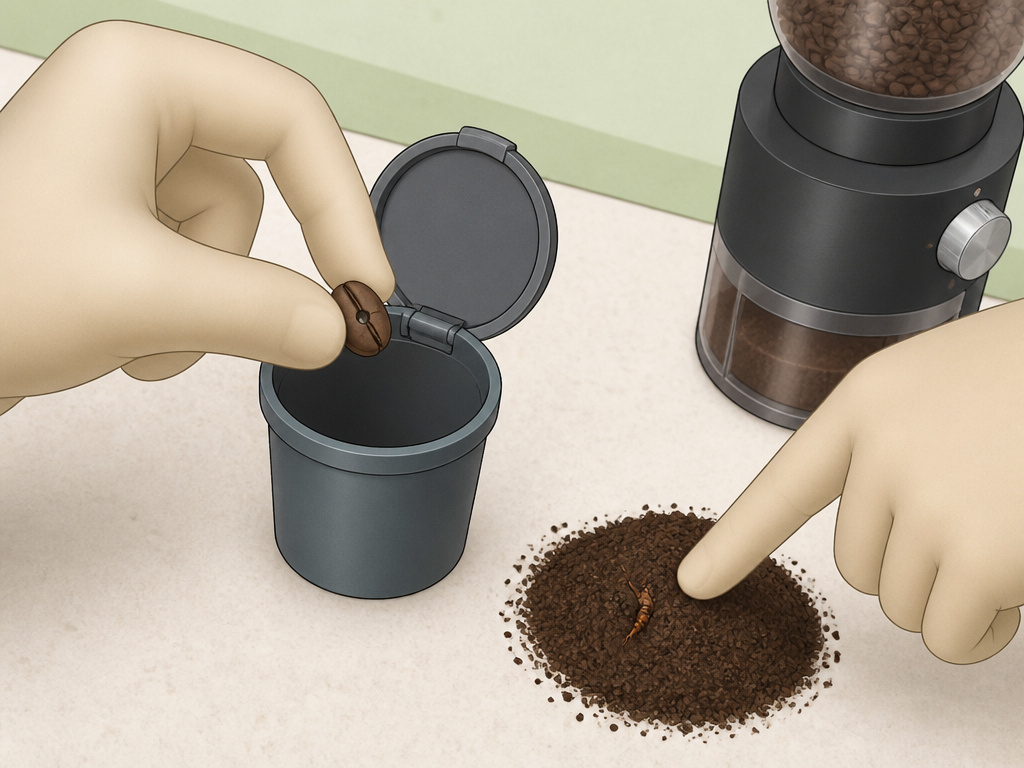
Your buying decision directly impacts your exposure to post-harvest contamination risks. Whole bean coffee typically goes through more hands-on sorting at the roastery. Roasters buying higher-grade beans have a financial incentive to weed out defective ones. When you buy whole beans, you can often see major defects before you grind them. A bean with a obvious borer hole gets tossed.
Pre-ground, tinned coffee is often made from cheaper, bulk-grade beans processed on a massive scale. The sorting might be more automated and less meticulous. The beans are ground in large batches, making any cross-contamination from storage pests impossible to see or remove. This doesn’t mean every tin is contaminated, but the risk profile is different. Using a home burr grinder gives you control from bean to cup.
Furthermore, the brewing method you use adds another filter. If you use a paper coffee filter, any particulate matter, including minute insect fragments, is trapped by the filter materials. Methods like French press or espresso, which don’t use a paper filter, allow more fine particulates into the cup. This is another variable under your control.
Other “Natural” Contaminants in Coffee
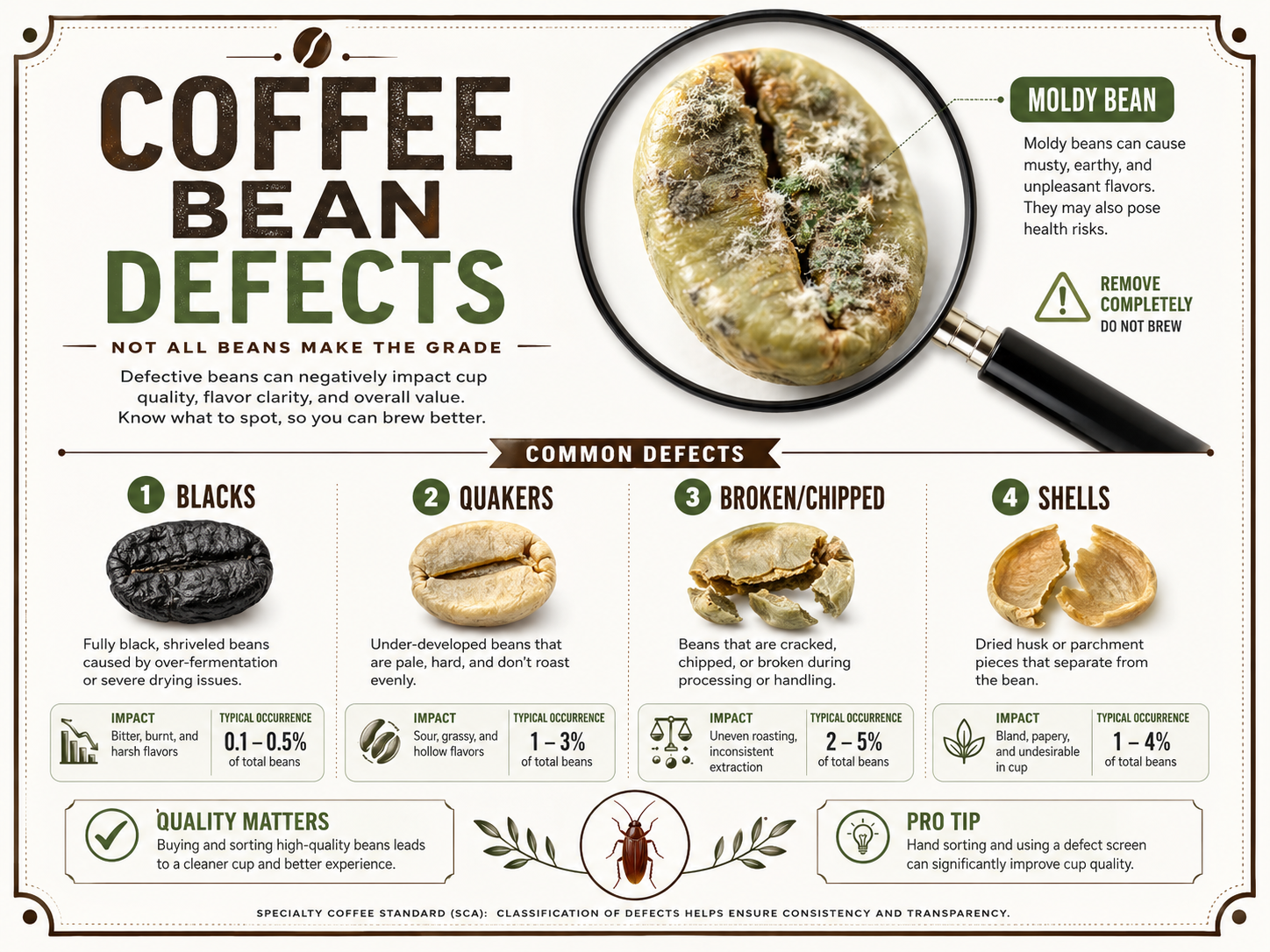
Insect damage is just one defect category. The FDA manual also addresses mold. If coffee berries are discolored by visible mold growth due to water damage and are present in significant numbers, the coffee is considered adulterated, and no grading is attempted. Mold can produce mycotoxins, which is a separate health concern.
The trade grading system for green coffee uses a language of imperfections:
* Blacks: Dead, fermented beans.
* Quakers: Underdeveloped, pale beans that don’t roast properly.
* Broken/Chipped: Mechanical damage.
* Shells: Beans where the two halves separated.
A high count of any of these, along with insect-damaged beans, lowers the coffee’s grade. Specialty coffee roasters often buy at grades where these defects are minimal (often well below 10% total defects). Commodity-grade coffee, which fills supermarket tins and institutional packs, operates closer to the tolerance limits. This is a fundamental quality distinction, not just a marketing one. When you choose a single-origin coffee from a reputable roaster, you’re buying a product with a documented, lower defect count.
Frequently Asked Questions
Does the FDA really allow cockroach parts in coffee?
The FDA’s Defect Action Level allows for the inevitable presence of natural contaminants. It sets a threshold (10% insect-damaged beans) for when a batch becomes actionable. This is not an allowance for a specific percentage of cockroach parts. The primary pests are agricultural, not urban cockroaches.
Can you be allergic to coffee because of bugs?
Yes, it’s possible. The anecdote from the late 1980s involved an entomologist allergic to cockroach proteins who reacted to pre-ground coffee. The protein tropomyosin, found in shellfish and insects, can cause cross-reactions. If you have a severe shellfish or cockroach allergy and react to coffee, this could be a cause.
Does roasting kill bugs in coffee?
Yes, roasting at high temperatures will kill any insects or larvae and carbonize any insect material. However, the allergenic proteins may survive the roasting process intact, which is why allergic reactions can still occur.
Is whole bean coffee safer than pre-ground?
From a contamination perspective, yes. Whole bean coffee allows for visual inspection and is typically sourced from better-graded, more carefully handled lots. Pre-ground coffee’s opaque processing makes it the more likely candidate for the type of bulk contamination described in the allergy anecdote.
What coffee has the least bugs?
High-grade specialty coffee, bought as whole beans from reputable roasters, has the lowest defect counts. These roasters often source specific bean varieties from farms with rigorous processing methods to minimize insect damage and other defects.
The Bottom Line
The story of bugs in coffee is a lesson in how a fact (an FDA defect level), an anecdote (an allergist’s reaction), and the creepy-crawly reputation of cockroaches can combine into a powerful, sticky myth. The truth is more mundane but still important for quality and choice.
The FDA’s 10% rule is a bean-count threshold for rejecting poor-quality green coffee, not a measure of bug content in your mug. The real pests are mostly beetles and weevils that attack the crop. The risk of actual cockroach allergen contamination is tied to the bulk processing of low-grade, pre-ground coffee, a risk you can largely avoid by buying whole beans and grinding them yourself with a dedicated coffee grinder.
Your daily coffee ritual doesn’t need to include a side of urban legend. Understanding the regulations and the supply chain lets you make informed choices that lead to a better, and yes, cleaner cup.
{
“@context”: “https://schema.org”,
“@type”: “HowTo”,
“name”: “How to Understand Insect Contamination in Your Coffee”,
“totalTime”: “PT10M”,
“step”: [
{
“@type”: “HowToStep”,
“name”: “Learn the FDA’s 10% rule”,
“text”: “The FDA’s Defect Action Level for coffee states that regulatory action is warranted if an average of 10% or more by count of coffee beans are insect-infested or insect-damaged. This refers to beans, not bug parts by weight.”
},
{
“@type”: “HowToStep”,
“name”: “Identify the real pests”,
“text”: “The primary pests are the coffee berry borer beetle (Hypothenemus hampei) and the coffee bean weevil (Araecerus fasciculatus). They damage beans in the field and storage, not typically common household cockroaches.”
},
{
“@type”: “HowToStep”,
“name”: “Trace the ‘ground cockroach’ rumor”,
“text”: “The persistent myth stems from a late-1980s anecdote about an entomologist’s allergic reaction, misinterpreted alongside the FDA’s 10% bean threshold. Food scientists like Food Science Babe have directly refuted the 10% cockroach claim.”
},
{
“@type”: “HowToStep”,
“name”: “Choose beans to minimize risk”,
“text”: “Buy whole bean coffee from reputable roasters and grind it at home. This avoids the bulk processing of pre-ground tinned coffee, where the risk of cross-contamination with storage pests is higher.”
}
]
}
{
“@context”: “https://schema.org”,
“@type”: “FAQPage”,
“mainEntity”: [
{
“@type”: “Question”,
“name”: “Does the FDA really allow cockroach parts in coffee?”,
“acceptedAnswer”: {
“@type”: “Answer”,
“text”: “The FDA’s Defect Action Level allows for the inevitable presence of natural contaminants. It sets a threshold (10% insect-damaged beans) for when a batch becomes actionable. This is not an allowance for a specific percentage of cockroach parts. The primary pests are agricultural, not urban cockroaches.”
}
},
{
“@type”: “Question”,
“name”: “Can you be allergic to coffee because of bugs?”,
“acceptedAnswer”: {
“@type”: “Answer”,
“text”: “Yes, it’s possible. The anecdote from the late 1980s involved an entomologist allergic to cockroach proteins who reacted to pre-ground coffee. The protein tropomyosin, found in shellfish and insects, can cause cross-reactions. If you have a severe shellfish or cockroach allergy and react to coffee, this could be a cause.”
}
},
{
“@type”: “Question”,
“name”: “Does roasting kill bugs in coffee?”,
“acceptedAnswer”: {
“@type”: “Answer”,
“text”: “Yes, roasting at high temperatures will kill any insects or larvae and carbonize any insect material. However, the allergenic proteins may survive the roasting process intact, which is why allergic reactions can still occur.”
}
},
{
“@type”: “Question”,
“name”: “Is whole bean coffee safer than pre-ground?”,
“acceptedAnswer”: {
“@type”: “Answer”,
“text”: “From a contamination perspective, yes. Whole bean coffee allows for visual inspection and is typically sourced from better-graded, more carefully handled lots. Pre-ground coffee’s opaque processing makes it the more likely candidate for the type of bulk contamination described in the allergy anecdote.”
}
},
{
“@type”: “Question”,
“name”: “What coffee has the least bugs?”,
“acceptedAnswer”: {
“@type”: “Answer”,
“text”: “High-grade specialty coffee, bought as whole beans from reputable roasters, has the lowest defect counts. These roasters often source specific bean varieties from farms with rigorous processing methods to minimize insect damage and other defects.”
}
}
]
}
