
Is a Cappuccino Coffee? | The 180ml Ratio That Defines It
Yes, a cappuccino is a specific espresso-based coffee drink defined by its strict 1:1:1 ratio. It contains one shot of espresso, an equal part of steamed milk, and an equal part of milk foam, traditionally served in a small 180ml cup. This precise ratio and small size are what make it a cappuccino.
A cappuccino is an espresso-based coffee drink. It consists of one shot of espresso, an equal volume of steamed milk, and an equal volume of milk foam, traditionally served in a small 180ml cup. The drink’s identity hinges on this specific 1:1:1 ratio and its small serving size.
Most people get this wrong because they call any milky coffee in a large cup a cappuccino. That’s a latte. The real thing is smaller, stronger, and defined by its three distinct layers.
Here’s what separates a cappuccino from other coffee drinks, how to spot the real thing, and how to make one even without an espresso machine.
Key Takeaways
- A cappuccino is a specific type of coffee beverage built on a shot of espresso.
- The traditional recipe is a strict 1:1:1 ratio of espresso, steamed milk, and milk foam in a 180ml cup.
- It is distinct from a latte, which has more steamed milk and less foam, and is served in a larger vessel.
- You can make a cappuccino without an espresso machine using a moka pot and a French press for frothing.
- Starbucks and other chains often serve larger, foamier drinks they call cappuccinos, which deviate from the Italian standard.
The Traditional 180ml Ratio
The definition isn’t vague. A traditional cappuccino is a 150–180 ml drink with equal parts espresso, steamed milk, and milk foam. That’s the standard cited by the International Trade Association and echoed in historical guides. The small cup isn’t a suggestion, it’s a requirement. A 12 oz or 16 oz drink cannot, by definition, be a cappuccino. It’s a latte or a caffè latte.
A cappuccino is typically described as a 5–6 oz (roughly 150–180 ml) coffee-and-milk drink with a clear foam layer and a balanced espresso-to-milk profile.
This volume constraint forces a specific balance. With only 60ml of liquid milk diluting the espresso shot, the coffee flavor remains pronounced. The foam layer is thick, dry, and structured enough to support a dusting of cocoa or cinnamon. When you pick up the cup, it should feel substantial but not heavy. The first sip delivers a strong coffee hit tempered by warm milk, followed by the light texture of the foam.
TL;DR: A real cappuccino fits in a 180ml cup with equal parts espresso, steamed milk, and foam. Bigger drinks are lattes.
Is a Cappuccino Just Coffee with Milk?
No. Calling a cappuccino “coffee with milk” is like calling a sports car “a vehicle with wheels.” It’s technically true but misses every defining characteristic. Coffee is the broad category; a cappuccino is a specific member of that category defined by its construction method.
All cappuccinos are coffee drinks, but not all coffee drinks are cappuccinos. The specificity matters when you’re ordering or making one. Ask for a coffee with milk and you might get a café au lait or a flat white. Ask for a cappuccino and you are requesting a drink built to a precise blueprint.
The blueprint has three non-negotiable components:
1. Espresso: The base must be a concentrated coffee shot, not drip coffee or another brew method. The pressure extraction creates the syrupy body and intense flavor that can stand up to the milk.
2. Steamed Milk: The milk is heated and aerated to about 60°C (140°F) to create microfoam, tiny, velvety bubbles that integrate with the espresso.
3. Milk Foam: A separate, thicker layer of foam sits on top. This isn’t the integrated microfoam but a distinct, almost meringue-like layer.
If you change any of these components, you get a different drink. Use drip coffee? That’s a café au lait. Integrate all the foam into the milk? That’s a flat white or a latte. The structure is the recipe.
Cappuccino vs. Latte: The Foam Test

The difference isn’t subtle. A cappuccino has a thick, dry foam cap you can spoon. A latte has a thin layer of velvety microfoam blended throughout the drink. The cappuccino’s foam is a separate ingredient; the latte’s foam is a texture.
| Characteristic | Cappuccino | Caffe Latte |
|---|---|---|
| Total Volume | 150–180 ml (5–6 oz) | 240–360 ml (8–12 oz) |
| Espresso | 1 shot (~30 ml) | 1–2 shots (~30–60 ml) |
| Steamed Milk | ~60 ml | ~180–300 ml |
| Milk Foam | ~60 ml (thick, dry layer) | ~12 ml (thin, velvety layer) |
| Cup | Small ceramic, often with a handle | Tall glass or large ceramic mug |
| Flavor Profile | Strong, bold coffee | Mild, creamy coffee |
The volume tells the story. A latte is mostly steamed milk. A cappuccino is one-third espresso. That’s why a cappuccino packs a stronger caffeine punch per ounce despite its smaller size. You can explore the detailed caffeine content in cappuccinos compared to standard brewed coffee for the exact numbers.
Common mistake: Ordering a “large cappuccino”, you’ll get a latte with extra foam. The large size changes the ratio, and the drink becomes a different thing entirely.
Dry Cappuccino vs. Wet Cappuccino
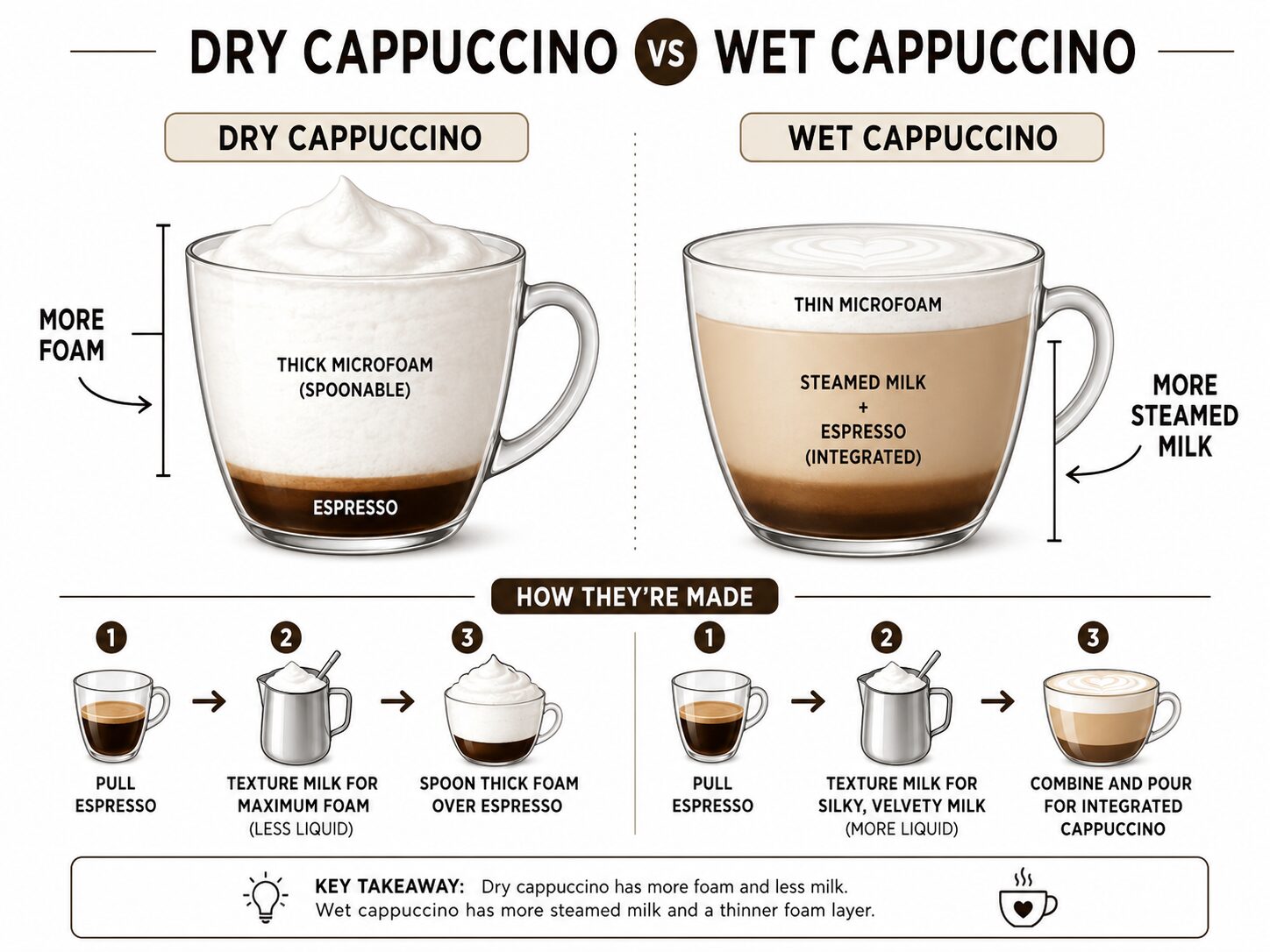
Even within the cappuccino category, the milk-to-foam ratio shifts. This is where the “dry” and “wet” labels come from, and they trace directly to service manuals like the one from Nestlé Coffee Partners.
A dry cappuccino has more foam and less steamed milk. The barista steams the milk to create a larger volume of stiff foam, then spoons it over the espresso, leaving much of the liquid milk behind in the pitcher. You get a lighter, airier drink where the foam dominates the experience. It’s the classic “spoonable” cappuccino.
A wet cappuccino has more steamed milk and less foam. The barista pours more of the liquid steamed milk into the cup, integrating it with the espresso, and tops it with a thinner layer of foam. This version is richer and creamier, edging closer to a small latte but still served in the proper 180ml cup.
The choice is textural. Dry for a light, frothy experience. Wet for a richer, more integrated sip. Most third-wave specialty shops serve a wet cappuccino by default because the microfoam integrates better. The old-school Italian bar might serve it dry.
The Tools You Don’t Need
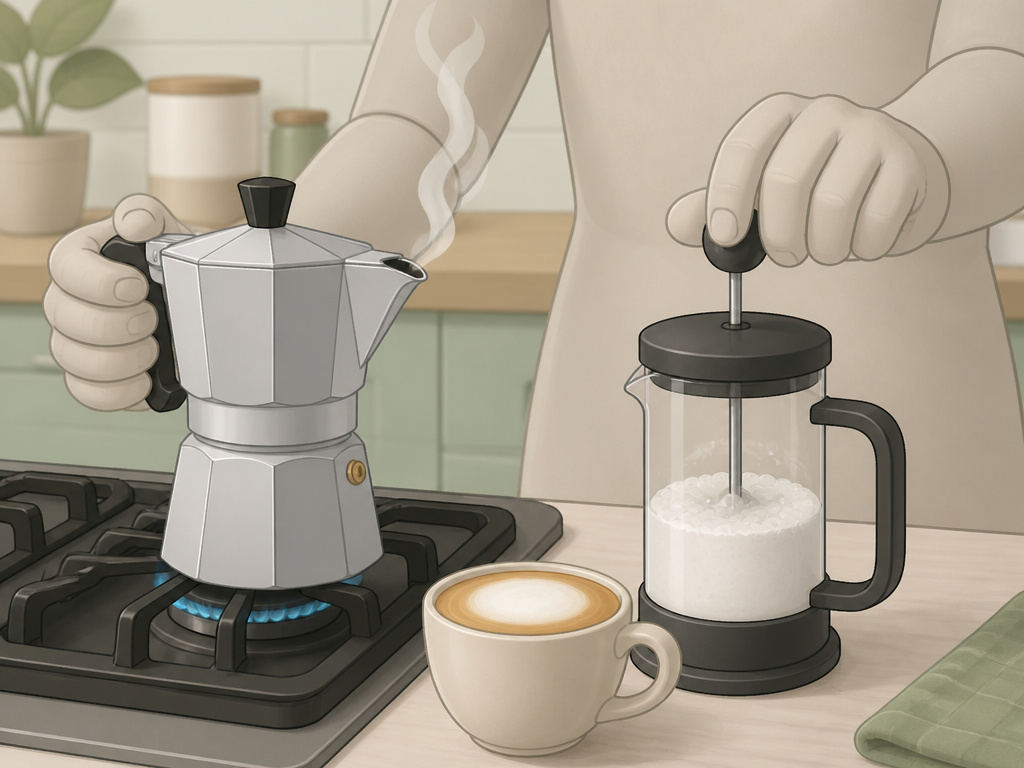
You don’t need a $3,000 espresso machine. While a proper espresso preparation requires one, a credible cappuccino does not. The goal is the three elements: concentrated coffee, steamed milk, and foam.
For the coffee, a moka pot is the workhorse. It produces a strong, concentrated brew that, while not true 9-bar espresso, is a solid substitute. Use a fine grind, pack the basket firmly, and brew on medium heat until you hear the characteristic hiss.
For the milk, a French press is the secret weapon. Heat 60ml of milk to 60°C in a microwave or saucepan. Pour it into a clean French press and pump the plunger vigorously for 30 seconds. You’ll create a stiff, dry foam perfect for a dry cappuccino. For a wet cappuccino, pour the milk in first, then spoon the foam on top.
The process takes eight minutes. It’s not café-quality, but it’s a legitimate cappuccino. The first time I tried it with a cheap blade-ground coffee, the result was weak and bitter. Switching to a freshly ground single-origin Arabica from a burr grinder changed everything. The flavor could stand up to the milk.
How to Make a Cappuccino at Home
Follow this sequence. Mess up the order and you get a layered mess, not a integrated drink.
- Warm your cup. Run it under hot water or leave it on top of your espresso machine. A cold cup shocks the espresso and makes the milk separate. Skip this and the drink goes lukewarm in two minutes.
- Pull your shot. Brew 30ml of espresso directly into the warmed cup. If using a moka pot, brew until you have 30ml of strong coffee.
- Steam your milk. Pour 60ml of cold milk into a pitcher. Insert the steam wand just below the surface to create a vortex. You’re listening for a gentle paper-tearing sound, not a loud screech. Heat to 60°C, any hotter and the milk scalds, tasting burnt.
- Tap and swirl. Tap the pitcher firmly on the counter to pop any large bubbles, then swirl it to integrate the microfoam. This step separates the velvety milk from the stiff foam.
- Pour the milk. Tilt the cup and pour the steamed milk into the espresso, aiming for the center. Hold back the foam with a spoon.
- Top with foam. Spoon the remaining thick foam on top to create a dome that rises slightly above the rim.
- Dust lightly. A light dusting of cocoa powder or cinnamon is traditional. Don’t overdo it, you want to taste the coffee, not a chocolate drink.
The whole process should take under ten minutes once you’ve done it a few times. The timing is tight. Let the espresso sit for more than 30 seconds after pulling and it starts to oxidize, turning bitter. Pour the milk immediately after steaming.
Why the Foam Matters
The foam isn’t decoration. It’s an insulator. That thick layer of microfoam traps heat, keeping the liquid below hotter for longer. It also adds a textural contrast that defines the drinking experience, first the light foam, then the warm, rich liquid.
Bad foam is the tell. If the foam is thin, bubbly, and collapses within a minute, the milk was either too hot or not textured properly. Good foam should hold its shape for the duration of the drink. You should be able to push your spoon into it and feel resistance.
I won’t serve a cappuccino if the foam looks like soap suds. It means the milk is over-aerated and the drink will taste flat and watery. I’ll steam a new pitcher. The twenty seconds it takes saves the whole cup.
For those using dairy alternatives, the rules change. Almond milk and oat milk behave differently under steam. They require a slower, lower-temperature approach to avoid separating.
Frequently Asked Questions
What’s the difference between a cappuccino and a regular coffee?
regular coffee is typically brewed by passing hot water through ground beans, like in a drip machine or French press. A cappuccino starts with a shot of espresso, a concentrated, pressurized extraction, and adds specific volumes of steamed milk and foam. The brewing method, ingredients, and final product are different.
Can you make a cappuccino without an espresso machine?
Yes. Use a moka pot to make a strong, concentrated coffee as the base. Heat milk in a saucepan or microwave, then froth it using a French press, a handheld milk frother, or even a sealed jar shaken vigorously. The result won’t be identical to a machine-made cappuccino, but it hits the same three-part structure.
Is a cappuccino stronger than a latte?
Yes, per ounce. A cappuccino has a higher proportion of espresso to milk. Since both drinks typically use one or two espresso shots, the cappuccino’s smaller size (150–180ml) means the coffee flavor is more concentrated and intense compared to a latte’s larger volume (240–360ml).
Why is my cappuccino foam disappearing so quickly?
The milk was either overheated or improperly textured. Milk proteins break down above 70°C, causing foam to collapse. If you hear a high-pitched screech while steaming, you’re injecting too much air too fast, creating large, unstable bubbles. Aim for a gentle paper-tearing sound and keep the temperature at or below 60°C.
Before You Go
A cappuccino is coffee, but it’s a very specific kind. It’s defined by the 1:1:1 ratio in a small cup, the distinct layers, and the experience of transitioning from foam to rich liquid. Knowing that turns a simple order into a deliberate choice. You’re not just getting a coffee with milk; you’re choosing strength over size, texture over simplicity. Next time you see one on a menu, you’ll know exactly what you’re signing up for, a small, strong, structured drink where every component has a job.
{
“@context”: “https://schema.org”,
“@type”: “HowTo”,
“name”: “How to Make a Traditional Cappuccino”,
“totalTime”: “PT8M”,
“tool”: [
{
“@type”: “HowToTool”,
“name”: “Espresso machine or moka pot”
},
{
“@type”: “HowToTool”,
“name”: “Steam wand or French press”
},
{
“@type”: “HowToTool”,
“name”: “180ml (6 oz) ceramic cup”
}
],
“step”: [
{
“@type”: “HowToStep”,
“name”: “Pull one shot of espresso”,
“text”: “Pull a standard 30ml (1 oz) shot of espresso directly into a pre-warmed 180ml cup.”
},
{
“@type”: “HowToStep”,
“name”: “Steam and texture the milk”,
“text”: “Steam 60ml of milk to about 60°C, creating a dense, velvety microfoam. The volume should double.”
},
{
“@type”: “HowToStep”,
“name”: “Pour milk into espresso”,
“text”: “Pour the steamed milk into the espresso, holding back the foam with a spoon to integrate the liquids first.”
},
{
“@type”: “HowToStep”,
“name”: “Top with foam”,
“text”: “Spoon the remaining thick foam on top to create a distinct layer that rises slightly above the cup rim.”
}
]
}
{
“@context”: “https://schema.org”,
“@type”: “FAQPage”,
“mainEntity”: [
{
“@type”: “Question”,
“name”: “What’s the difference between a cappuccino and a regular coffee?”,
“acceptedAnswer”: {
“@type”: “Answer”,
“text”: “regular coffee is typically brewed by passing hot water through ground beans, like in a drip machine or French press. A cappuccino starts with a shot of espresso, a concentrated, pressurized extraction, and adds specific volumes of steamed milk and foam. The brewing method, ingredients, and final product are different.”
}
},
{
“@type”: “Question”,
“name”: “Can you make a cappuccino without an espresso machine?”,
“acceptedAnswer”: {
“@type”: “Answer”,
“text”: “Yes. Use a moka pot to make a strong, concentrated coffee as the base. Heat milk in a saucepan or microwave, then froth it using a French press, a handheld milk frother, or even a sealed jar shaken vigorously. The result won’t be identical to a machine-made cappuccino, but it hits the same three-part structure.”
}
},
{
“@type”: “Question”,
“name”: “Is a cappuccino stronger than a latte?”,
“acceptedAnswer”: {
“@type”: “Answer”,
“text”: “Yes, per ounce. A cappuccino has a higher proportion of espresso to milk. Since both drinks typically use one or two espresso shots, the cappuccino’s smaller size (150–180ml) means the coffee flavor is more concentrated and intense compared to a latte’s larger volume (240–360ml).”
}
},
{
“@type”: “Question”,
“name”: “Why is my cappuccino foam disappearing so quickly?”,
“acceptedAnswer”: {
“@type”: “Answer”,
“text”: “The milk was either overheated or improperly textured. Milk proteins break down above 70°C, causing foam to collapse. If you hear a high-pitched screech while steaming, you’re injecting too much air too fast, creating large, unstable bubbles. Aim for a gentle paper-tearing sound and keep the temperature at or below 60°C.”
}
}
]
}
