
The Right Way to Store Ground Coffee for Maximum Freshness
Store ground coffee in an airtight, opaque container kept in a cool, dark pantry or cabinet. Grinding increases surface area, accelerating staling, so the goal is to block its four enemies: oxygen, light, heat, and moisture. Refrigeration introduces condensation that ruins flavor; freezing is only safe for long-term storage if you vacuum-seal single portions and thaw them correctly.
Most people get this wrong because they treat coffee like any other dry pantry item. They leave it in the original bag, clipped shut on the counter next to the stove. Or they put it in a clear glass jar because it looks nice. That bag isn’t airtight. That jar lets in light. The heat from the stove drives off volatile aromatics. Within a week, that premium roast tastes flat and papery.
This guide walks through the chemistry of staling, picks the right container for your kitchen, and settles the fridge vs freezer debate with a method that actually works. You’ll learn why “cool and dark” isn’t just a suggestion and how to keep your daily brew tasting like it should.
Key Takeaways
- Ground coffee loses about 50% of its aroma within 10 hours of being exposed to open air. Your storage container must be truly airtight.
- Never store your daily-use coffee in the refrigerator. The repeated temperature cycles draw moisture into the grounds, causing clumping and a sour, stale flavor.
- For freezing to work, you must divide coffee into single-use portions, vacuum seal them, and thaw overnight in the fridge before opening. This prevents condensation.
- The best containers are opaque, have a one-way valve or a plunger mechanism to expel air, and are sized to fit your weekly consumption.
- High humidity environments break standard rules. If your kitchen is consistently humid, consider adding a food-safe desiccant packet to your storage container.
The 4 Enemies of Ground Coffee (and the One You Can’t See)
Ground coffee is fragile. The grinding process shatters the bean’s cellular structure, releasing oils and exposing a massive surface area to the environment. This makes it far more perishable than whole beans. Staling isn’t just “getting old”, it’s a series of chemical reactions driven by four specific factors.
Oxygen is the primary villain. It reacts with coffee oils in a process called oxidation, turning them rancid. This produces the bitter, cardboard-like flavors of stale coffee. Light, especially UV rays from sunlight, accelerates this oxidation and breaks down aromatic compounds. Heat acts as a catalyst, speeding up every degrading reaction. Moisture absorption makes grounds clumpy, hinders extraction, and can even promote mold.
A 2023 study published in Scientific Reports analyzed roasted coffee storage and confirmed that exposure to oxygen and elevated temperature are the most significant factors driving the degradation of key quality parameters like volatile aroma compounds and antioxidant capacity.
The enemy you can’t see is your own usage pattern. Every time you open the container, you exchange the inert gas inside (often nitrogen, in packaged coffee) for humid, oxygen-rich kitchen air. This is why buying in small quantities you use quickly beats any storage trick.
TL;DR: Oxygen, light, heat, and moisture destroy coffee flavor. Grinding makes coffee vulnerable to all four, so your storage must be a fortress.
Why Your Current Method is Probably Wrong
Let’s diagnose the common setups. The clipped original bag offers almost no barrier. Those foil bags with a degassing valve are excellent for whole beans fresh off the roaster, but once you open them, the valve works both ways. Air gets in. The clear glass jar on the windowsill is a staling accelerator. It traps heat from the sun and exposes every ground to light.
The refrigerator is a particularly seductive mistake. The logic seems sound: cold slows spoilage. But a refrigerator is a humid box. Every time you take the coffee out, warm, moist air condenses on the cold grounds inside the container. You’re literally adding water to your coffee. After three or four cycles, the grounds at the top of the container will feel damp and smell sour.
Common mistake: Storing daily-use coffee in the refrigerator, condensation forms on the cold grounds each time you take it out, leading to clumping and a sour flavor within a week.
The freezer is a more complex case. The extreme cold does dramatically slow staling. The problem is almost never the freezing itself, it’s the thawing. If you take a large container of frozen coffee out, open it while still cold, scoop some out, and refreeze it, you guarantee condensation and freezer burn. Most home freezers also aren’t airtight, so odors from frozen fish or vegetables can seep in over months.
Your goal isn’t to stop time. It’s to slow it down enough that the last cup from the bag tastes nearly as good as the first.
The Right Container for the Job
Forget decorative canisters. Choose a container based on its engineering, not its color. You need a seal that keeps air out, walls that block light, and a size that minimizes headspace.
| Container Type | Best For | Critical Flaw If Chosen Wrong |
|---|---|---|
| Press-Button Vacuum (e.g., Fellow Atmos) | Whole bean or ground coffee for weekly use. | The seal fails if the lid rim has coffee grounds or oils on it. |
| Plunger-Canister (e.g., Airscape) | Whole beans; okay for grounds if you use it fast. | The plunger can’t fully compress fine grounds, leaving air pockets. |
| Airtight Opaque Canister (e.g., OXO Pop) | Daily-use ground coffee, 1-2 week supply. | The plastic can absorb odors over years; not for long-term storage. |
| Vacuum-Sealed Mylar Bag | Long-term freezing in single portions. | Once opened, it’s no longer a barrier; use the contents immediately. |
| Original Bag, Rolled & Clipped | Short-term, 2-3 day storage only. | The foil lining can tear at the seal; the valve lets air in after opening. |
The Airscape and Fellow Atmos are popular because they actively remove air. The Airscape uses a plunger lid you press down to the coffee level, forcing air out a one-way valve. The Fellow Atmos uses a pump mechanism on the lid to create a vacuum. Both are excellent, but for ground coffee, the OXO Pop-style container with a simple locking, silicone-gasketed lid is often more practical. You’ll open it daily; the simpler the mechanism, the more likely you are to close it properly every time.
Size matters more than people think. A half-empty gallon container holds a quart of air that rushes in each time you open it. Your container should hold just your weekly supply. This is a good argument for investing in a quality home burr grinder and grinding fresh each day, but for pre-ground, keep the volume small.
Material is the final spec. Stainless steel, ceramic, or opaque tinted glass are ideal. Avoid clear glass or transparent plastic. If you love the look of a glass jar, keep it inside a closed cabinet. Never store coffee in a container that previously held spices or other strong-smelling foods, the oils will linger and taint your brew.
The Step-by-Step System for Daily Freshness
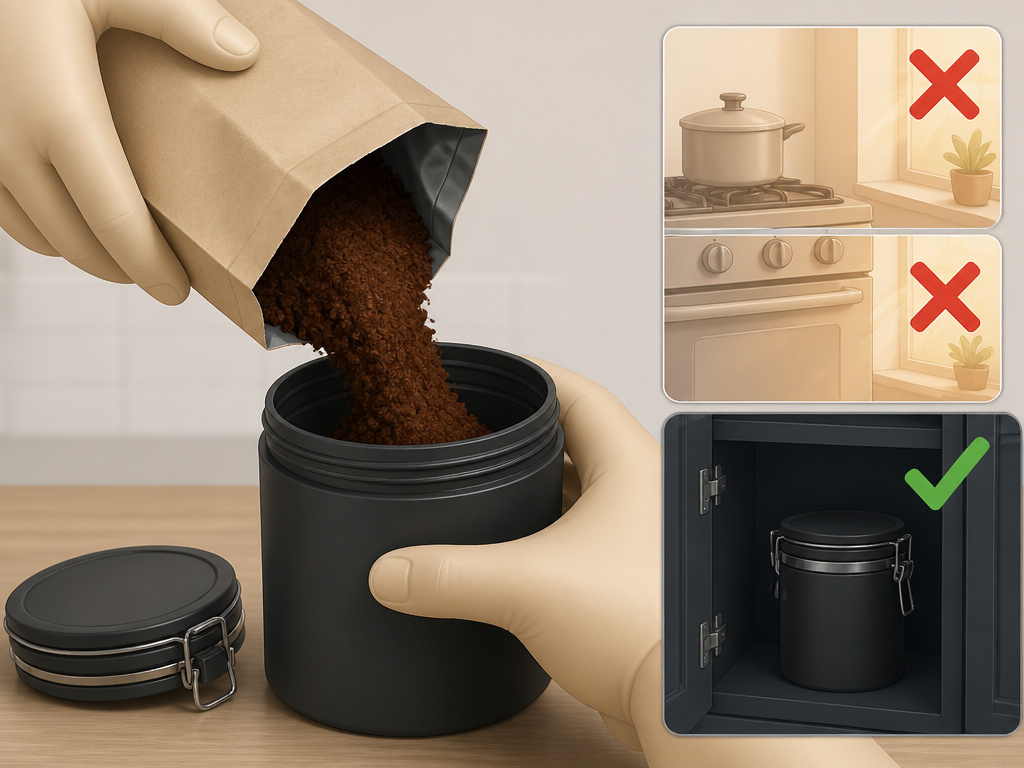
Follow this sequence from the moment you open a new bag of pre-ground coffee or finish grinding a batch.
- Transfer immediately. Dump the ground coffee directly into your clean, dry, opaque airtight container. Do not leave it in the original bag, even for an hour. That bag lost its protective atmosphere the second you opened it.
- Wipe the seal. Before closing the lid, use a dry paper towel to wipe the rim of the container and the lid’s gasket. Any stray grounds or oil will break the airtight seal.
- Choose the right spot. Place the sealed container in a cool, dark cabinet or pantry. The back of a lower cabinet is often cooler than a shelf at eye level. Never store it on the counter next to the stove, on top of the refrigerator, or in a cabinet directly over the oven. These spots are consistently 5-10 degrees warmer.
- Scoop, don’t pour. Keep a dedicated dry scoop inside the container. Pouring grounds out pours humid kitchen air in. Dip the scoop, level it off, and close the lid immediately.
- Buy for your timeline. Match your purchase size to your consumption rate. If you drink one pot a day, a 12-ounce bag should last about a week and a half. That’s the perfect lifespan for ground coffee stored this way. Buying a giant bag because it’s cheaper per ounce is a false economy if the last third of it tastes stale.
What happens if you skip step three? Heat accelerates staling reactions exponentially. Coffee stored at 77°F (25°C) will stale roughly twice as fast as coffee stored at 68°F (20°C). That spot next to the kettle? Probably 80°F. You’re cutting your coffee’s fresh life in half.
The Freezing Debate: A Method That Actually Works
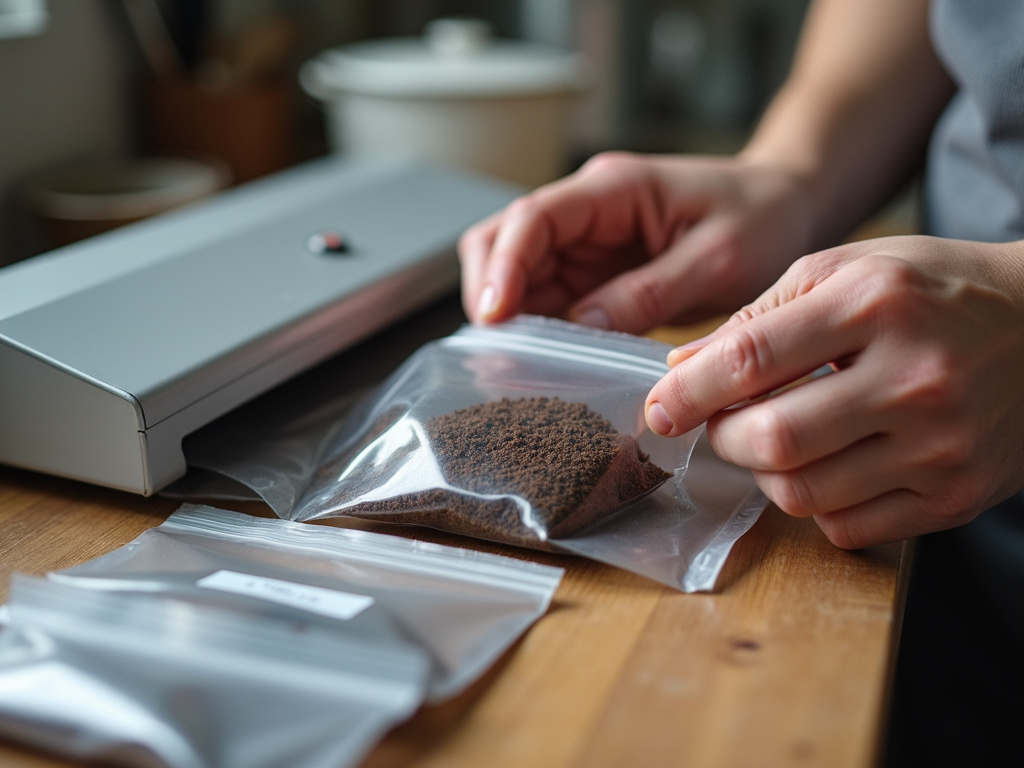
The National Coffee Association advises against freezing, citing moisture condensation. Many experienced home baristas and some roasters disagree, but only when a strict protocol is followed. Freezing is not for your daily stash. It’s for preserving an extra bag of a favorite light roast beans you found on sale, or for portioning out a large batch.
The core principle is to freeze once, thaw once, and never reintroduce frozen coffee to the freezer. Condensation occurs when warm, moist air hits a cold surface. If the coffee is sealed while at room temperature and never opened until it’s fully thawed, condensation happens on the outside of the package, not on the grounds.
Here is the only method I recommend:
1. Divide. Portion the ground coffee into amounts you will use in one brewing session (e.g., enough for one pot or two espresso shots).
2. Seal. Place each portion into a small, high-barrier Mylar bag. Use a vacuum sealer to remove all air, or press out as much air as possible and seal tightly with a heat sealer.
3. Freeze. Place the sealed bags flat in the freezer. Label them with the date and coffee type.
4. Thaw. The night before you plan to use a portion, move one bag from the freezer to the refrigerator. This allows it to come to room temperature gradually without sweating.
5. Use. Open the bag only after it has sat at room temperature for 30 minutes. Use all the contents immediately. Do not return unused grounds to the freezer.
| Freezing Method | Risk | Typical Outcome |
|---|---|---|
| Whole bag, original packaging | Freezer burn, odor transfer, condensation upon opening. | Stale, off-flavors within a month. |
| Large airtight container, repeated access | Condensation with every opening, extreme flavor loss. | Sour, musty coffee after 2-3 uses. |
| Single portions, vacuum-sealed in Mylar | Minimal if thawed correctly. | Preserves 90%+ of fresh flavor for 3-6 months. |
This method works because it treats each portion as a time capsule. The vacuum seal removes oxygen, the Mylar blocks light and odors, and the deep cold pauses chemical activity. It’s a practical solution for managing your coffee stock without waste.
Troubleshooting Stale Coffee
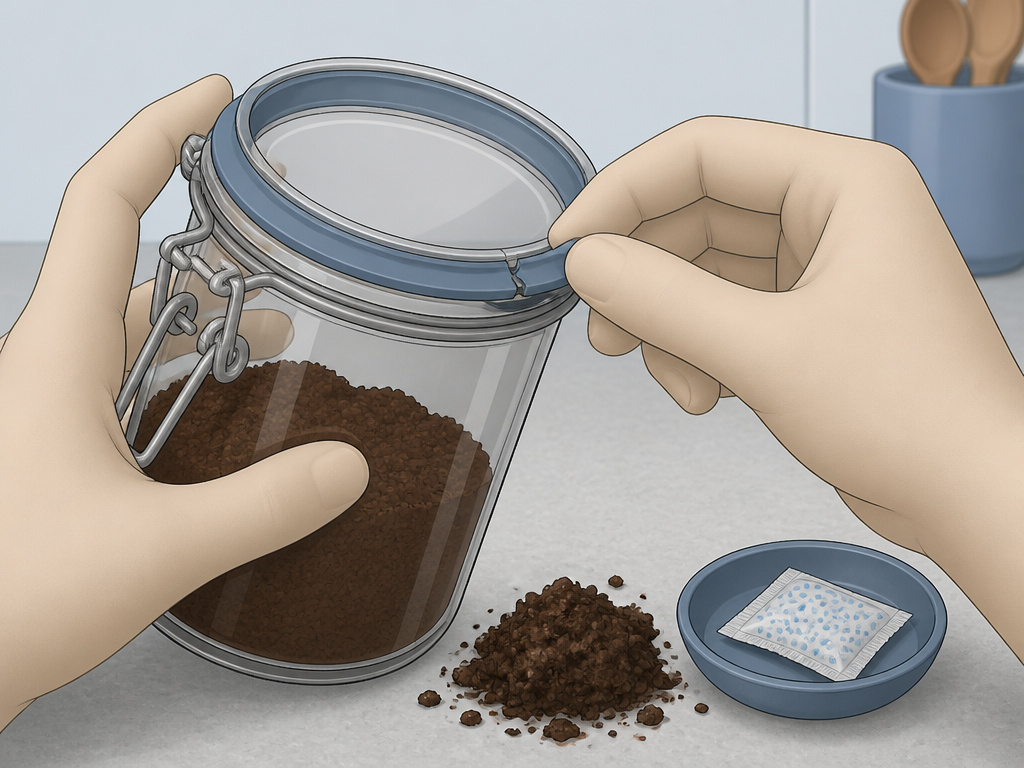
Sometimes, despite your best efforts, coffee goes stale. Here’s how to diagnose why and what you can salvage.
Your coffee tastes flat and papery.
This is classic oxidation. Your container isn’t airtight, or you’re leaving it open too long during scooping. Check the silicone gasket on your lid for cracks or deformities. Switch to a smaller container to reduce headspace.
The grounds are clumpy and hard to level.
Moisture has gotten in. You’re either storing in a humid environment (like under the sink) or introducing steam from a nearby kettle. Move the container. If you live in a high-humidity climate, a food-safe silica gel desiccant packet placed in the container can help, just don’t let it touch the coffee.
The coffee has a weird, sour-chemical note.
This could be contamination from the container itself, or odor absorption. Did you wash your container with scented soap and not rinse it thoroughly? Did you store it next to cleaning supplies? Always wash storage containers with unscented dish soap and hot water, and let them air-dry completely before use.
It just doesn’t taste like anything.
Heat damage. The coffee was stored in a hot car, mailed in summer, or sat on a sunny shelf in the store before you even bought it. Once those volatile aromatics are baked off, they’re gone. Your only recourse is to buy from a roaster with faster, climate-controlled shipping, or shop locally.
If your coffee is already stale, don’t brew it expecting a miracle. You can sometimes mask slight staleness in a milk-based drink like a latte, where the dairy sweetness covers the cardboard notes. For a stark look at waste, consider that old paper filters can sometimes impart a papery taste that mimics staleness, rule out your equipment first. Otherwise, stale coffee makes excellent garden compost or a natural odor absorber for the fridge.
Frequently Asked Questions
Can I store ground coffee in the refrigerator if I’m going to use it within a week?
No. The condensation risk exists every time you remove the cold container. The flavor degradation from that moisture happens faster than the staling it’s meant to prevent. The refrigerator is for butter, not coffee.
How long does ground coffee last in an airtight container?
For peak flavor, use pre-ground coffee within 1-2 weeks of opening the bag. After 3-4 weeks in even the best container, noticeable staling occurs. This timeline assumes storage in a cool, dark pantry. Compare this to the shelf life of different filter materials, some can last years when stored dry.
Does freezing ground coffee kill the flavor?
Freezing itself doesn’t kill flavor if done correctly. The violence is in the thawing. Incorrect thawing, opening a cold bag, introduces moisture that destroys flavor cells. The correct, gradual thawing method preserves most of the original character.
Is it better to store coffee in the bag it came in?
Only for the first 2-3 days after opening, and only if you roll the top down tightly and clip it. After that, the bag’s barrier is compromised. Those bags are designed for whole beans with a one-way valve; ground coffee needs a more robust, static defense.
What about those CO2 valve bags? Aren’t they good enough?
The valve is for degassing whole beans after roasting. It allows CO2 out but is not designed to keep oxygen from seeping in over time, especially once the bag is bent and manipulated. For ground coffee, a solid, passive barrier is better.
Can I use a vacuum sealer for my daily coffee?
You could, but it’s impractical. Vacuum sealing a bag, cutting it open, and resealing it daily is a hassle and wastes bags. Vacuum sealing is a powerful tool for long-term freezing, not daily defense. For machine maintenance, always consult your coffee maker manuals for specific care instructions, as forceful vacuum sealing near electronics isn’t recommended.
The Bottom Line
Coffee storage isn’t complicated, but it is specific. Your enemy list is short: oxygen, light, heat, moisture. Your weapon is a simple, opaque, airtight container kept in a cool, dark place. Freezing is a viable tool for the long game, but only with military-grade portion control and thaw discipline.
The biggest upgrade you can make isn’t a fancier canister, it’s buying less coffee more often. Match your supply to a two-week consumption window. That habit, paired with correct storage, guarantees every cup will taste like the roaster intended. For exploring other brewing methods that highlight fresh coffee, start with a solid storage foundation. Everything else in your brewing routine, from your water filtration to your coffee preparation technique, depends on the quality of the grounds you start with. Keep them fresh.
{
“@context”: “https://schema.org”,
“@type”: “HowTo”,
“name”: “How to Store Ground Coffee for Maximum Freshness”,
“totalTime”: “PT5M”,
“tool”: [
{
“@type”: “HowToTool”,
“name”: “Airtight, opaque storage container”
},
{
“@type”: “HowToTool”,
“name”: “Coffee scoop or spoon”
},
{
“@type”: “HowToTool”,
“name”: “Vacuum sealer and Mylar bags (for freezing)”
}
],
“step”: [
{
“@type”: “HowToStep”,
“name”: “Transfer immediately”,
“text”: “Move ground coffee from its original bag into your chosen airtight, opaque container as soon as you open it.”
},
{
“@type”: “HowToStep”,
“name”: “Minimize air exposure”,
“text”: “Place the container in a cool, dark cabinet away from the stove, oven, or sunlight. Open it only when you need to scoop coffee.”
},
{
“@type”: “HowToStep”,
“name”: “Scoop, don’t pour”,
“text”: “Use a dry scoop to remove coffee. Pouring from the container introduces more air and moisture each time.”
},
{
“@type”: “HowToStep”,
“name”: “Freeze for long-term storage”,
“text”: “For storage over a month, divide coffee into single-use portions, vacuum seal in Mylar bags, and freeze. Thaw overnight in the fridge before opening.”
}
]
}
{
“@context”: “https://schema.org”,
“@type”: “FAQPage”,
“mainEntity”: [
{
“@type”: “Question”,
“name”: “Can I store ground coffee in the refrigerator if I’m going to use it within a week?”,
“acceptedAnswer”: {
“@type”: “Answer”,
“text”: “No. The condensation risk exists every time you remove the cold container. The flavor degradation from that moisture happens faster than the staling it’s meant to prevent. The refrigerator is for butter, not coffee.”
}
},
{
“@type”: “Question”,
“name”: “How long does ground coffee last in an airtight container?”,
“acceptedAnswer”: {
“@type”: “Answer”,
“text”: “For peak flavor, use pre-ground coffee within 1-2 weeks of opening the bag. After 3-4 weeks in even the best container, noticeable staling occurs. This timeline assumes storage in a cool, dark pantry. Compare this to the shelf life of different filter materials, some can last years when stored dry.”
}
},
{
“@type”: “Question”,
“name”: “Does freezing ground coffee kill the flavor?”,
“acceptedAnswer”: {
“@type”: “Answer”,
“text”: “Freezing itself doesn’t kill flavor if done correctly. The violence is in the thawing. Incorrect thawing, opening a cold bag, introduces moisture that destroys flavor cells. The correct, gradual thawing method preserves most of the original character.”
}
},
{
“@type”: “Question”,
“name”: “Is it better to store coffee in the bag it came in?”,
“acceptedAnswer”: {
“@type”: “Answer”,
“text”: “Only for the first 2-3 days after opening, and only if you roll the top down tightly and clip it. After that, the bag’s barrier is compromised. Those bags are designed for whole beans with a one-way valve; ground coffee needs a more robust, static defense.”
}
},
{
“@type”: “Question”,
“name”: “What about those CO2 valve bags? Aren’t they good enough?”,
“acceptedAnswer”: {
“@type”: “Answer”,
“text”: “The valve is for degassing whole beans after roasting. It allows CO2 out but is not designed to keep oxygen from seeping in over time, especially once the bag is bent and manipulated. For ground coffee, a solid, passive barrier is better.”
}
},
{
“@type”: “Question”,
“name”: “Can I use a vacuum sealer for my daily coffee?”,
“acceptedAnswer”: {
“@type”: “Answer”,
“text”: “You could, but it’s impractical. Vacuum sealing a bag, cutting it open, and resealing it daily is a hassle and wastes bags. Vacuum sealing is a powerful tool for long-term freezing, not daily defense. For machine maintenance, always consult your coffee maker manuals for specific care instructions, as forceful vacuum sealing near electronics isn’t recommended.”
}
}
]
}
