
How to Make Coffee Without a Maker: The Quick Mug Method
To make coffee without a coffee maker, use a 4-minute steep in a mug: add 12 grams of medium-ground coffee to 200ml of hot water (195-205°F), wait 4 minutes, stir to settle the grounds, and pour through a strainer into another cup. This method, adapted from Central European “Turek,” produces a balanced cup with minimal sediment.
Most people assume you need complex gear for a decent cup. They boil grounds into a bitter sludge or try to strain through a paper towel that collapses. The frustration isn’t a lack of tools, it’s missing the three things that actually matter: grind size, water temperature, and a reliable separation method.
You can brew excellent coffee with items already in your kitchen. This guide covers three specific methods, from a fast single mug to a larger batch pour-over, explaining the physics behind each step so you can adapt it anywhere.
Key Takeaways
- The 4-minute mug steep works because a medium grind extracts evenly in hot water; stirring after steeping uses convection to pull grounds down, and straining removes the silt that over-extracts into bitterness.
- Cowboy coffee requires a cold water splash after boiling, adding roughly 1/4 cup of cold water to the pot causes thermal shock, making the grounds sink within 30 seconds instead of floating and over-extracting.
- An improvised pour-over needs a thick paper filter (like a Chemex filter) or a double layer of standard filters; thin paper towels or napkins clog and tear under the weight of wet grounds.
- Water hardness directly changes extraction time; if your tap water leaves scale in your kettle, use a slightly finer grind or extend the steep time by 30 seconds to compensate.
- Never boil coffee grounds for more than two minutes. Prolonged boiling vaporizes the aromatic compounds, leaving only harsh, bitter notes that no amount of cream can fix.
The Physics of Extraction Without a Machine
All coffee brewing is hot water dissolving soluble compounds from ground beans. Without a machine, you control two variables directly: contact time and separation. Get them wrong, and you get a cup that’s either weak and sour or strong and bitter.
The ideal water temperature is between 195°F and 205°F (90–96°C). Water just off a boil works. If you let it cool too much, the extraction stalls, and the cup tastes flat and underdeveloped.
Grind consistency is your biggest hurdle. A blade grinder or improvised method like a mortar and pestle creates a mix of dust and boulders. The dust over-extracts quickly, turning bitter, while the boulders stay under-extracted, contributing sourness. If you have no grinder, buy pre-ground coffee and use it within a week. Older pre-ground coffee goes stale and tastes papery regardless of your method.
Before you start: Boiling water can cause severe burns. Pour carefully and keep handles turned inward. Glass containers can shatter from thermal shock if placed on a cold surface straight from heat, use a trivet. If using a metal pot, remember the handle stays hot for several minutes after removing it from the stove.
Why Your Water Quality Matters More Now
Tap water minerals act as a buffer. Hard water (high in calcium and magnesium) slows extraction. Soft water accelerates it. If your usual machine-made coffee tastes fine but your improvised cup is suddenly weak, your water is likely hard. The machine’s pump pressure overcame it; your manual steep cannot. Using filtered or bottled spring water gives a consistent baseline.
TL;DR: Use water just off a boil. A consistent medium grind is ideal, but pre-ground works if fresh. Your local water chemistry will change the steep time.
The 4-Minute Mug Method (Improved “Turek”)
This is the most reliable method for a single cup with kitchen staples. It’s a refined version of the Central European “Turek” or “Turkish-style” coffee, but using a medium grind instead of a powder-fine one to avoid overwhelming sediment.
You need a mug, a spoon, hot water, and coffee. A fine mesh strainer is optional but recommended.
The process hinges on a four-minute steep. Shorter, and the coffee is weak. Longer, and the bitter compounds from the grounds sitting in the hot water overwhelm the cup. The four-minute mark is where the sweet spot compounds, the sugars and balanced acids, have mostly dissolved, but the harsh tannins are still largely trapped in the grounds.
Here’s the step-by-step breakdown.
- Dose the coffee. Use 12 grams of coffee. That’s about two and a half level tablespoons. If you don’t have a scale, fill your mug about one centimeter deep with grounds. Too little, and the cup tastes thin. Too much, and it becomes astringent, even with correct timing.
- Add hot water. Pour 200 milliliters of hot water (just off a boil) into the mug. This is almost a full standard mug, leaving about a centimeter of space at the rim. Pouring in a circular motion helps wet all the grounds evenly.
- Wait four minutes. Set a timer. Do not stir yet. A crust of coffee grounds and gases will form on the surface. This crust insulates the water below, keeping the temperature stable for extraction.
- Break the crust and stir. After four minutes, gently break the crust with a spoon and give the mug two or three slow stirs. This action serves two purposes. It releases trapped gases, and more importantly, it creates a convection current that pulls the heavier grounds toward the bottom of the mug.
- Strain (the pro move). Wait another 30 seconds for the grounds to settle. Then, slowly pour the coffee through a fine mesh strainer into a second, clean mug. This separates the liquid from the coffee slurry, preventing continued extraction and removing the fine silt that makes the last sip gritty and bitter.
Skipping the strainer is common. The consequence is that the last third of your cup will contain suspended fines that keep extracting. By the time you finish, the flavor has shifted from balanced to increasingly bitter and dirty.
I used to skip the strainer, thinking the sediment was part of the “authentic” experience. After a week of cups that started bright and ended with a tannic punch, I dug out an old kitchen strainer. The difference wasn’t subtle. The entire cup stayed clean and consistent from first sip to last.
| Variable | Target | What Happens If You’re Off |
|---|---|---|
| Grind Size | Medium (like table salt) | Too fine: bitter, sludgy cup. Too coarse: weak, sour cup. |
| Water Temp | 200°F (93°C) | Too cool (<185°F): weak, under-extracted. Too hot (boiling): scalds grounds, adds harshness. |
| Steep Time | 4 minutes | Under 3 min: sour, incomplete. Over 5 min: bitter, astringent. |
| Coffee-to-Water | 12g : 200ml (1:16.7 ratio) | Less coffee: watery. More coffee: overpowering, wastes beans. |
TL;DR: Steep 12g medium-ground coffee in 200ml hot water for 4 minutes, stir, then strain. This removes the sediment that over-extracts and turns your last sip bitter.
Improvised Pour-Over: The Colander & Filter Hack
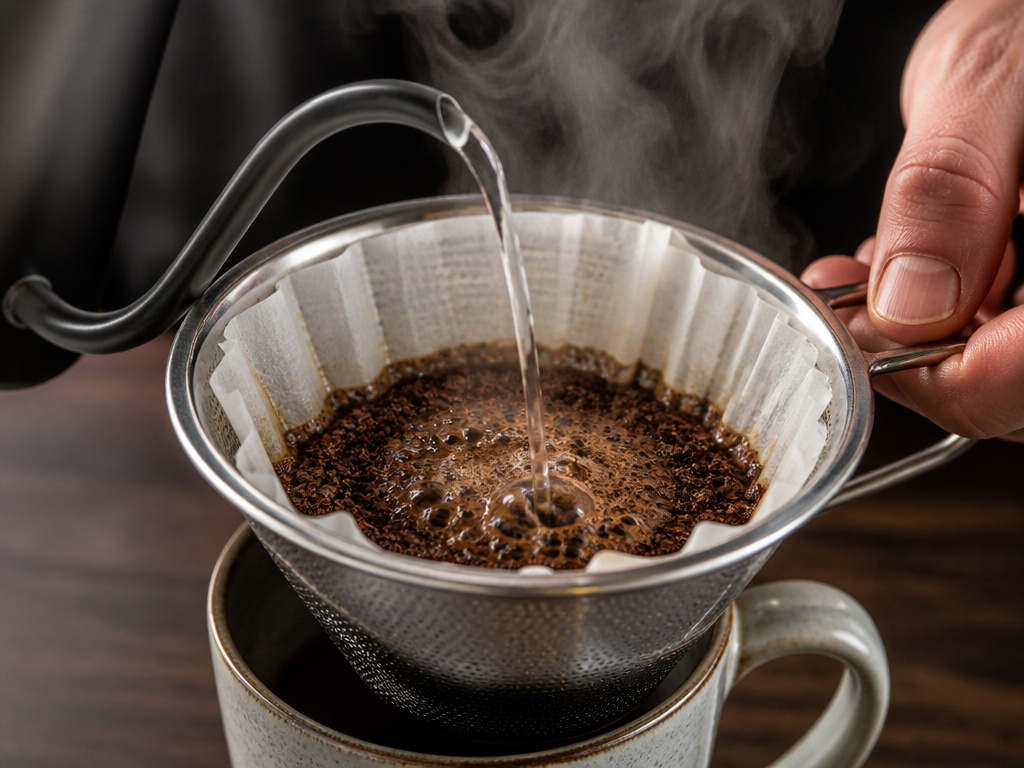
When you need to brew for more than one person, a pour-over setup is the answer. You can mimic it with a colander, a fine mesh sieve, or even a funnel. The critical component is the filter.
The U.S. Patent 2,909,985 for a “Coffee Brewer” filed in 1957 essentially describes this manual pour-over principle: a filter paper held in a vessel, with hot water dispensed over it. You’re building that vessel.
Your filter choice makes or breaks this. Standard paper coffee filters are designed for the task. A cloth coffee filter (like a clean cotton handkerchief or nut milk bag) works for multiple uses but requires meticulous cleaning to avoid old coffee oils turning rancid. Paper towels and napkins are a last resort, they are too dense, clog quickly, and often impart a papery taste.
The Setup and Pouring Rhythm
- Secure your filter. Place your filter inside your colander or sieve. Set this over your carafe or pot. If using a paper filter, rinse it first with hot water. This removes the paper taste and preheats your brewing vessel.
- Add coffee. Use a ratio of 1 gram of coffee to 16 grams of water. For a 600ml batch (about 3 cups), that’s 36 grams of coffee (roughly 7.5 tablespoons). Use a medium-coarse grind.
- Bloom the grounds. Pour just enough hot water (200°F) to saturate all the grounds, about twice the weight of the coffee. Wait 30 seconds. This allows gases to escape, creating a more even extraction bed. If you skip the bloom, the water will channel through dry patches, resulting in a weak and uneven brew.
- Pour the rest. Slowly pour the remaining water in a circular motion, starting from the center and moving outward. Keep the water level steady, never letting it rise above the top of the grounds. The entire pour should take about 2.5 to 3 minutes for a 600ml batch.
- Discard the filter. Once dripping stops, remove the colander and discard the spent grounds and filter.
Common mistake: Using a single layer of a thin paper towel as a filter, the wet grounds form a dense, impermeable mud that blocks water flow, causing overflow and a huge mess in under a minute.
This method gives you the most control and a very clean cup. It’s the closest you’ll get to a brewing without a machine experience that rivals a dedicated pour-over brewer.
The Cowboy Coffee Comeback
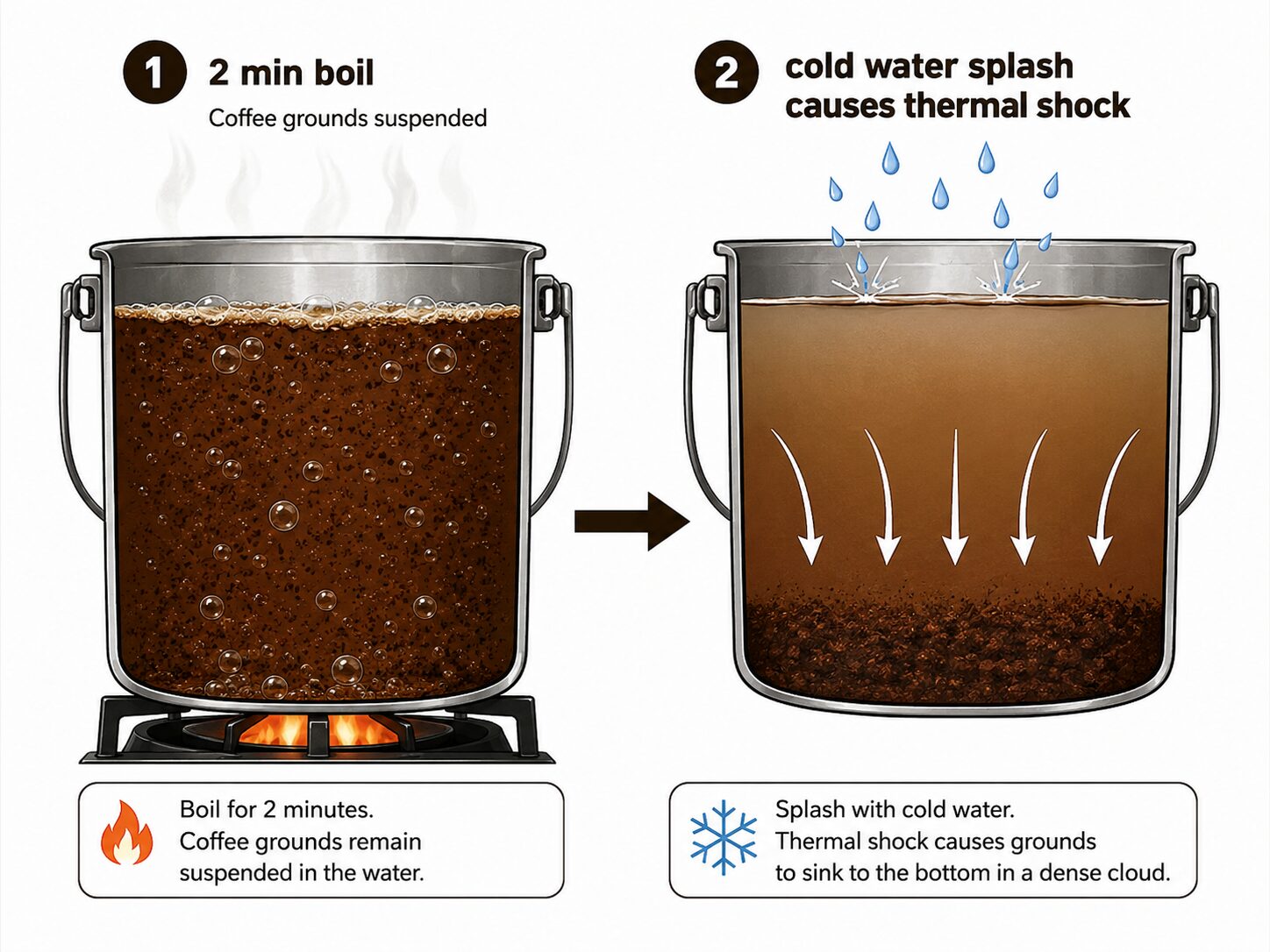
This is the classic campfire method: coffee grounds boiled directly in a pot of water. Done wrong, it produces a bitter, gritty cup. Done right, it’s robust and satisfying. The secret isn’t in the boiling, it’s in the stop.
The method from the YouTube transcript is correct: boil water, add grounds, boil for two minutes, remove from heat, add a quarter cup of cold water, stir, let settle, then pour.
The science behind the cold water splash is thermal shock. The cold water rapidly cools the liquid at the top of the pot. This increases the water’s density, causing it to sink. This sinking current drags the floating coffee grounds down with it. Without this step, the grounds stay suspended, continuing to over-extract into bitterness, and you’ll swallow a mouthful of silt with every sip.
The Exact Timeline That Matters
- Minute 0-2: Boiling. This extracts the body and caffeine. The vigorous boil agitates the grounds, ensuring full saturation.
- Minute 2: Remove from heat. This is non-negotiable. Continued boiling drives off the volatile aromatic compounds, leaving only harsh, bitter notes.
- Minute 2:05: Add cold water and stir. Watch as the grounds visibly rush toward the bottom.
- Minute 2:35: The majority of grounds have settled. You can now pour slowly, leaving the last half-inch of sludge in the pot.
I once let a pot boil for five minutes on a distracted camping trip. The result was undrinkable, a harsh, medicinal brew that tasted of nothing but bitterness. We had to ditch it and start over. The two-minute rule is a hard limit.
For a standard 1-liter camp pot, use 60 grams of coffee (a heaping 1/2 cup of grounds). A coarse grind is best here, as it creates less fine silt to settle out. This method is forgiving on grind consistency but brutal on timing.
TL;DR: Boil coarse grounds for exactly two minutes, cut the heat, add cold water to sink the grounds, wait 30 seconds, then pour carefully to leave the sludge behind.
Troubleshooting Your Improvised Brew

Your coffee tastes off. Here’s how to diagnose and fix it using the variables you control.
| Problem | Likely Cause | Immediate Fix | Long-Term Adjustment |
|---|---|---|---|
| Weak, sour coffee | Under-extraction. Water too cool, steep too short, grind too coarse. | Use hotter water next time. Extend steep by 30 sec. | Use a finer grind. Increase coffee dose by 10%. |
| Bitter, astringent coffee | Over-extraction. Water too hot, steep too long, grind too fine. | Use slightly cooler water (wait 30 sec after boil). Shorten steep. | Use a coarser grind. Decrease coffee dose by 10%. |
| Gritty, sludgy texture | No separation. Poor settling, no strainer, too many fines. | Pour through a strainer. Let pot sit longer after cold water. | Use a coarser, more consistent grind. |
| Flat, papery taste | Stale pre-ground coffee, or using a paper towel/napkin filter. | Try a fresher batch of coffee. Use a proper paper filter. | Buy whole beans and grind yourself, even crudely. |
The Altitude and Hardness Edge Cases
These environmental factors break the standard rules.
If you live above 3,000 feet, water boils at a lower temperature. At 5,000 feet, it boils around 203°F. At 7,500 feet, it’s about 198°F. This means you start with a lower maximum extraction temperature. To compensate, you must use a finer grind or increase your steep time by 15-30 seconds. Your cowboy coffee will need closer to three minutes of boil time.
If you have very hard water, the mineral content inhibits extraction. Your coffee will taste weak even with correct time and dose. Use filtered or bottled water. If that’s not possible, grind your coffee one step finer than you normally would. The increased surface area helps overcome the mineral barrier.
Frequently Asked Questions
Can I use instant coffee for these methods?
No. Instant coffee is already brewed and dehydrated. These methods are for extracting flavor from ground coffee beans. For instant, you just add hot water directly, no brewing required.
What’s the best way to grind beans without a grinder?
mortar and pestle is the most controlled manual method. Pulse a small batch of beans at a time, aiming for a coarse-to-medium consistency. A rolling pin and a sturdy plastic bag works in a pinch, crush, then roll. A blender will work but creates a very inconsistent mix of powder and chunks; pulse briefly and expect some sludge.
Why does adding salt to coffee help?
pinch of salt** can reduce perceived bitterness. Sodium ions block some of the bitterness receptors on your tongue. It doesn’t make bad coffee good, but it can smooth out the harsh edges of an over-extracted cup. It’s a classic trick for improving homemade coffee.
Can I make cold brew without a machine?
Absolutely. Cold brew is one of the easiest methods. Combine one cup of coarse-ground coffee with four cups of cold water in a jar. Stir, cover, and let it steep at room temperature for 12-24 hours. Strain through a fine mesh strainer lined with a paper coffee filter or a cheesecloth. The long, cold extraction produces a smooth, low-acid concentrate.
What can I add to my coffee if I don’t have cream or sugar?
For sweetness, try brown sugar or a drizzle of honey, they add depth beyond plain sweetness. For creaminess, almond milk or a spoonful of coconut oil can create a rich mouthfeel. For flavor, a dash of cinnamon in coffee adds warmth without sweetness.
Before You Go
Making coffee without a machine strips the process down to its essentials: good beans, hot water, and a way to separate the two. The 4-minute mug method is your most reliable daily option. The improvised pour-over is best for serving a group. Cowboy coffee is your resilient backup for when even a mug is a luxury.
Your single biggest upgrade isn’t a gadget, it’s a consistent grind. If you have nothing else, invest in a basic burr coffee grinder. The improvement in cup clarity over a blade grinder or pre-ground coffee is dramatic. Failing that, buy small batches of pre-ground from a local roaster and use them within the week.
Finally, don’t fear the experiment. The worst that happens is you pour a bad cup down the drain and try again. The variables are few, and the reward, a good cup of coffee, made by you, anywhere, is worth the few minutes of attention.
{
“@context”: “https://schema.org”,
“@type”: “HowTo”,
“name”: “How to Make Coffee Without a Coffee Maker Using the 4-Minute Mug Method”,
“totalTime”: “PT6M”,
“tool”: [
{
“@type”: “HowToTool”,
“name”: “Mug or heatproof cup”
},
{
“@type”: “HowToTool”,
“name”: “Spoon”
},
{
“@type”: “HowToTool”,
“name”: “Fine mesh strainer (optional)”
},
{
“@type”: “HowToTool”,
“name”: “Kettle or pot to boil water”
}
],
“supply”: [
{
“@type”: “HowToSupply”,
“name”: “Freshly ground coffee (12g or 2.5 tbsp)”
},
{
“@type”: “HowToSupply”,
“name”: “Hot water (200ml or ~1 cup)”
}
],
“step”: [
{
“@type”: “HowToStep”,
“name”: “Combine grounds and water”,
“text”: “Add 12 grams (about 2.5 tablespoons) of medium-ground coffee to a mug. Pour 200 milliliters of hot water (just off a boil, 195-205°F) over the grounds.”
},
{
“@type”: “HowToStep”,
“name”: “Steep for four minutes”,
“text”: “Let the coffee steep undisturbed for 4 minutes. A crust of grounds will form on the surface.”
},
{
“@type”: “HowToStep”,
“name”: “Break the crust and settle grounds”,
“text”: “Use a spoon to gently break the crust and stir. This helps the grounds sink to the bottom.”
},
{
“@type”: “HowToStep”,
“name”: “Strain for a clean cup”,
“text”: “For a cleaner drink with less sediment, slowly pour the coffee through a fine mesh strainer into a second mug.”
}
]
}
{
“@context”: “https://schema.org”,
“@type”: “FAQPage”,
“mainEntity”: [
{
“@type”: “Question”,
“name”: “Can I use instant coffee for these methods?”,
“acceptedAnswer”: {
“@type”: “Answer”,
“text”: “No. Instant coffee is already brewed and dehydrated. These methods are for extracting flavor from ground coffee beans. For instant, you just add hot water directly, no brewing required.”
}
},
{
“@type”: “Question”,
“name”: “What’s the best way to grind beans without a grinder?”,
“acceptedAnswer”: {
“@type”: “Answer”,
“text”: “mortar and pestle is the most controlled manual method. Pulse a small batch of beans at a time, aiming for a coarse-to-medium consistency. A rolling pin and a sturdy plastic bag works in a pinch, crush, then roll. A blender will work but creates a very inconsistent mix of powder and chunks; pulse briefly and expect some sludge.”
}
},
{
“@type”: “Question”,
“name”: “Why does adding salt to coffee help?”,
“acceptedAnswer”: {
“@type”: “Answer”,
“text”: “pinch of salt** can reduce perceived bitterness. Sodium ions block some of the bitterness receptors on your tongue. It doesn’t make bad coffee good, but it can smooth out the harsh edges of an over-extracted cup. It’s a classic trick for improving homemade coffee.”
}
},
{
“@type”: “Question”,
“name”: “Can I make cold brew without a machine?”,
“acceptedAnswer”: {
“@type”: “Answer”,
“text”: “Absolutely. Cold brew is one of the easiest methods. Combine one cup of coarse-ground coffee with four cups of cold water in a jar. Stir, cover, and let it steep at room temperature for 12-24 hours. Strain through a fine mesh strainer lined with a paper coffee filter or a cheesecloth. The long, cold extraction produces a smooth, low-acid concentrate.”
}
},
{
“@type”: “Question”,
“name”: “What can I add to my coffee if I don’t have cream or sugar?”,
“acceptedAnswer”: {
“@type”: “Answer”,
“text”: “For sweetness, try brown sugar or a drizzle of honey, they add depth beyond plain sweetness. For creaminess, almond milk or a spoonful of coconut oil can create a rich mouthfeel. For flavor, a dash of cinnamon in coffee adds warmth without sweetness.”
}
}
]
}
