
How Much Coffee Is Too Much? The 400mg Daily Safety Limit
How much coffee is too much starts with a single number: 400 milligrams of caffeine per day for a healthy adult, as established by the U.S. FDA and European Food Safety Authority. This equals roughly four 8-ounce cups of home-brewed coffee, but one large Starbucks can hit 360mg alone, blowing half your daily budget in one drink.
Most people miss this because they count “cups,” not milligrams. They assume a mug from their kitchen equals a venti from a coffee shop. It doesn’t. The difference between a safe habit and a trip to the ER is about 1,200 milligrams consumed in a few hours, as one college student learned the hard way.
This guide breaks down the 400mg rule with the specific numbers that matter. You’ll learn how to translate cups to milligrams, recognize the physical signs of crossing the line, and adjust the limit for pregnancy, age, and health conditions. We’ll also look at what happens inside your body when you ignore those signs, it’s more than just a headache.
Key Takeaways
- The 400-milligram daily caffeine limit from the FDA and EFSA is for healthy adults, not a universal rule.
- Caffeine content varies wildly: a Starbucks Blonde Roast (360mg) has over four times the caffeine of a standard home-brewed cup (80mg).
- Pregnant women, children, and people with certain health conditions have a much lower safe limit, often 200mg or none at all.
- Acute caffeine toxicity can begin at doses around 1,200 mg and involves seizures, cardiac arrest, and kidney damage.
- Track your intake by milligrams, not cups, using nutrition labels or a caffeine database, because “one cup” is a meaningless measure.
The Official Safety Limit: 400mg
Forget vague advice about “a few cups.” The authoritative answer comes from two primary sources. The U.S. Food and Drug Administration states 400 milligrams of caffeine daily is an amount “not generally associated with dangerous, negative effects” for healthy adults. The European Food Safety Authority’s scientific opinion, adopted in January 2015, concurs: intakes up to 400 mg per day are safe.
This is not a recommendation to consume that much. It is the upper safety threshold identified by toxicological review. The number is based on avoiding adverse effects like insomnia, jitteriness, and increased heart rate in the general population.
The FDA and EFSA define 400 milligrams of caffeine per day as the safe upper limit for healthy adults. This threshold is derived from toxicological data assessing the dose at which significant adverse effects begin to appear in the general population.
TL;DR: The 400mg limit is a regulatory safety ceiling, not a daily target.
What Does 400mg of Caffeine Actually Look Like?
This is where people get it wrong. They think “four cups of coffee” and pour four mugs from their 12-cup brewer. But a “cup” in dietary guidelines is 8 fluid ounces, and caffeine concentration is not standardized.
Your average home-brewed coffee, using a standard drip machine and a medium roast, delivers about 80 to 100 milligrams per 8-ounce cup. At that rate, four cups land you right at the 400mg limit. But almost nobody drinks an exact 8-ounce serving. A typical mug holds 12 to 16 ounces. One large mug of home coffee could be 200mg.
Commercial coffee is a different beast. Starbucks publishes its caffeine content. A 16-ounce “grande” Pike Place Roast has 310mg. The same size Blonde Roast has 360mg. One of those drinks uses up most of your entire day’s safe budget. An espresso shot, by volume, is more concentrated, about 63mg per ounce, but a standard single shot is only 1 ounce. The problem is the double, triple, or quad shots added to modern drinks.
| Beverage (Typical Serving) | Approximate Caffeine (mg) | % of 400mg Daily Limit |
|---|---|---|
| Home-brewed coffee (8 oz) | 80–100 | 20–25% |
| Starbucks Pike Place (16 oz) | 310 | 78% |
| Starbucks Blonde Roast (16 oz) | 360 | 90% |
| Single espresso shot (1 oz) | 63 | 16% |
| Black tea (8 oz) | 40–70 | 10–18% |
| Can of cola (12 oz) | 30–40 | 8–10% |
You cannot eyeball this. You must check. If you drink coffee from a chain, look up their nutrition facts online. For home brewing, weigh your grounds. Twenty grams of ground coffee brewed into 300ml of water yields a caffeine content in that 80-100mg range. Guessing will put you over.
Why 400mg? The Biology of a Limit
The limit exists because caffeine is a central nervous system stimulant, not a harmless flavor. It works by blocking adenosine receptors in your brain. Adenosine is a neurotransmitter that promotes sleep and relaxation. By blocking it, caffeine promotes wakefulness and alertness.
This blockade has downstream effects. It triggers the release of other neurotransmitters like dopamine and norepinephrine. It also stimulates the release of adrenaline from your adrenal glands. In moderate doses, this feels like focus and energy. In excessive doses, it feels like a panic attack.
Common mistake: Assuming caffeine only affects your brain, it forces your adrenal glands to release adrenaline, which directly accelerates your heart rate and can trigger arrhythmias at high doses.
Your body adapts through tolerance. With regular consumption, your brain creates more adenosine receptors. This means you need more caffeine to achieve the same blocking effect, which is why a two-cup-a-day person feels nothing from a single cup. The 400mg limit accounts for a range of tolerances but assumes the underlying physiology, the adrenaline surge, the cardiac stimulation, has a breaking point.
The “why” for the specific number involves liver metabolism. The average adult liver can metabolize a certain amount of caffeine per hour, and the 400mg daily spread keeps the concentration in the blood below the threshold where it overstimulates the heart and brain for a sustained period. Exceed that, and the system overloads.
When the 400mg Rule Doesn’t Apply: Edge Cases and Lower Limits
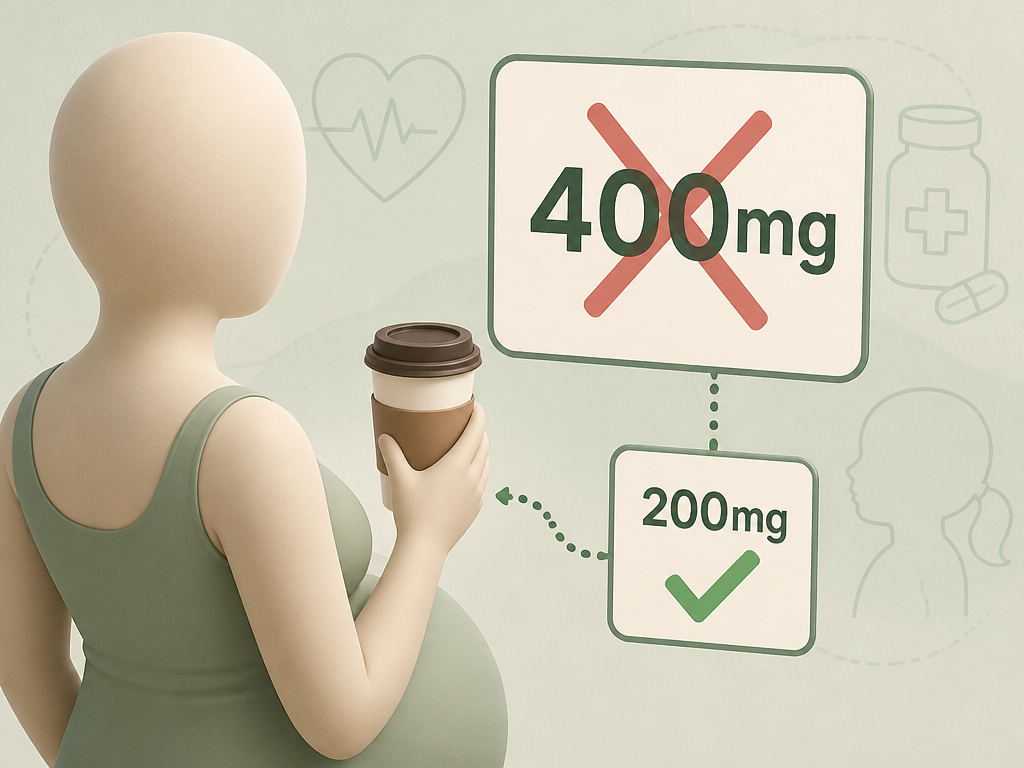
The 400mg guideline is for a healthy, non-pregnant adult. For entire groups of people, the safe limit is half that, or zero.
Pregnant and breastfeeding women are the most critical exception. The Mayo Clinic and EFSA explicitly recommend a maximum of 200mg per day. Caffeine crosses the placenta freely, and a fetus metabolizes it extremely slowly. High intake is associated with an increased risk of miscarriage and low birth weight. While breastfeeding, caffeine passes into milk, and infants can become irritable and have sleep disturbances.
Children and adolescents should avoid caffeine. The American Academy of Pediatrics discourages its consumption in this age group. Their developing nervous systems are more sensitive, and caffeine can exacerbate anxiety, disrupt sleep architecture critical for growth, and affect heart rhythm. There is no established safe dose for kids.
Underlying health conditions create a hard stop. If you have:
– Heart conditions (arrhythmia, hypertension)
– Anxiety or panic disorders
– Insomnia
– Gastroesophageal reflux disease (GERD)
– Migraines that are triggered by caffeine withdrawal
…your tolerance is lower. Caffeine can increase heart rate and blood pressure, worsen anxiety, disrupt sleep, and irritate the stomach lining. For some with arrhythmias, even one cup can trigger an episode.
Medication interactions are a hidden risk. Caffeine can interfere with drugs like:
– Ephedrine (increases nervous system side effects)
– Theophylline (increases risk of toxicity)
– Certain antibiotics (can slow caffeine clearance)
– Echinacea (may increase caffeine concentration)
Always consult your doctor or pharmacist if you take medication and consume caffeine regularly.
If you fall into any of these categories, your personal “how much coffee is too much” number is not 400mg. It could be 200mg, 100mg, or zero. Start there.
Signs You’ve Had Too Much (And What To Do)
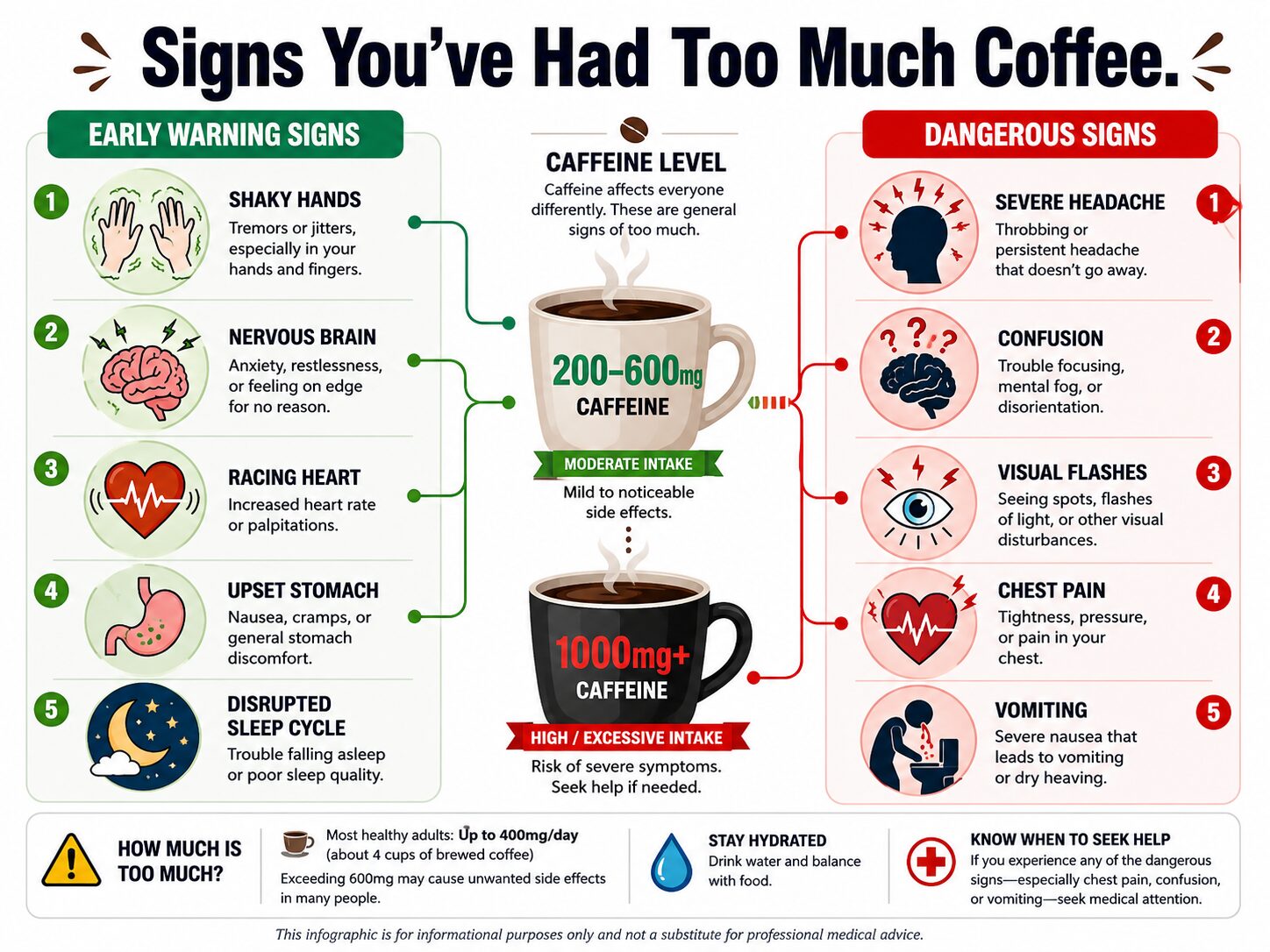
You’ll feel it before you hit a toxic dose. Mild to moderate overconsumption has a clear signature.
The Early Warning Signs (200-600mg for a low-tolerance person):
- Jitters or shaky hands: Adrenaline is hitting your muscles.
- Anxiety or nervousness: Your brain is overstimulated.
- Racing heart (palpitations): Adrenaline is directly stimulating cardiac tissue.
- Upset stomach or acid reflux: Caffeine increases stomach acid production.
- Insomnia or disrupted sleep: Even if you fall asleep, the quality will be poor.
What to do: Stop all caffeine immediately. Drink a large glass of water to help flush your system. Eat a small, bland snack like crackers or a banana to settle your stomach and slow absorption. Go for a gentle walk, light movement can help metabolize the adrenaline. Do not “sober up” with more caffeine.
The Dangerous Signs (Approaching 1,000mg+ in a short period):
- Severe headache and dizziness.
- Confusion or disorientation.
- Visual disturbances (seeing flashes).
- Chest pain.
- Vomiting.
What to do: This is a potential medical emergency. Call for help or have someone take you to an emergency room. Do not try to wait it out. Medical staff can provide supportive care and medications to stabilize your heart rhythm and blood pressure.
A Real-World Failure: The 2-Gallon Case Study
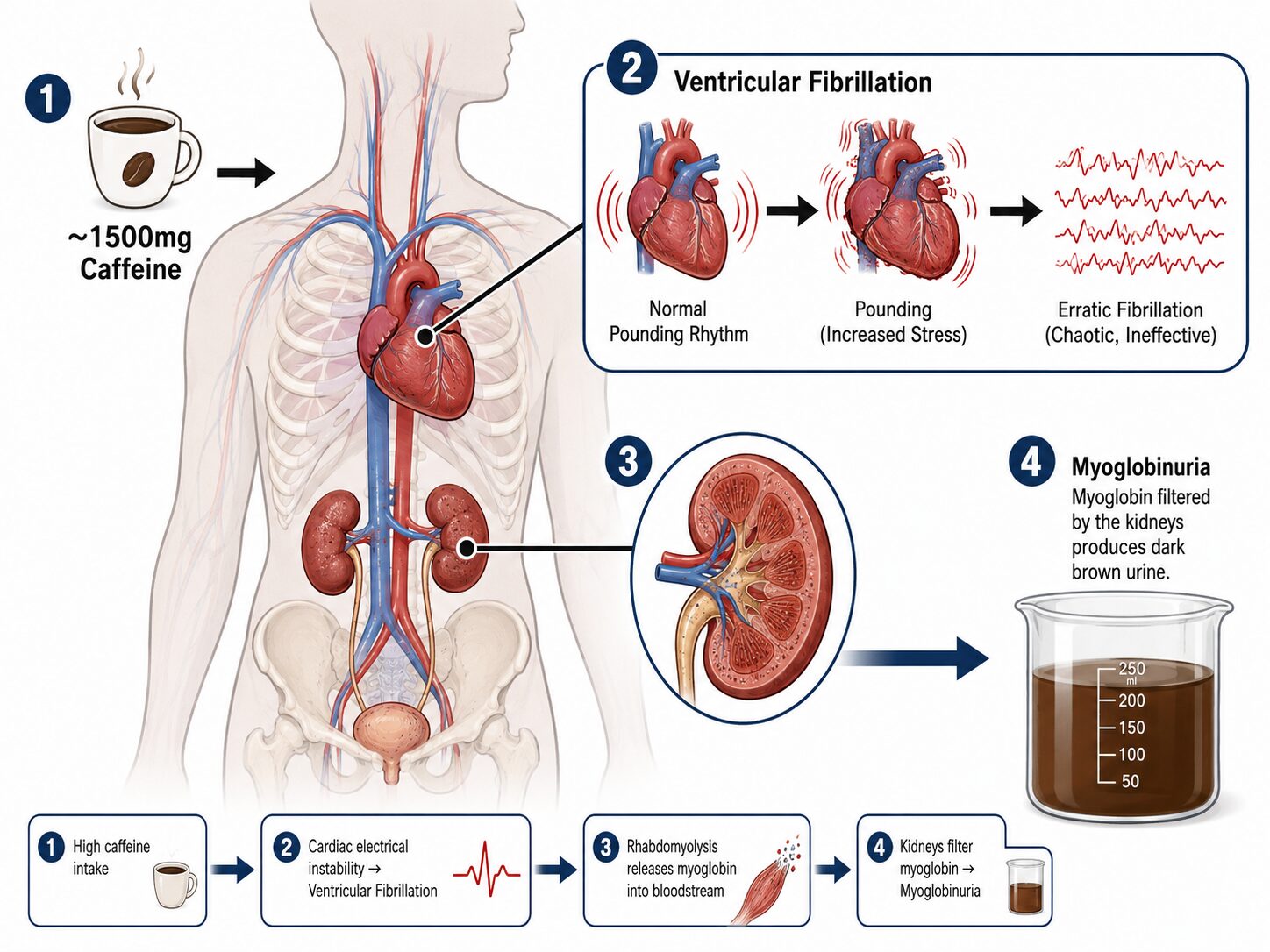
The YouTube transcript from Dr. Bernard details a specific, documented case. A 21-year-old student, studying for finals, consumed approximately two gallons of coffee over three hours. That’s an estimated 1,200 to 1,500 milligrams of caffeine in a very short window.
The timeline was textbook caffeine toxicity. First, the adrenaline surge: sweating, shaking, a heart pounding in his neck. Then neurological effects: racing thoughts, confusion, a burning chest sensation. The first physical marker was brown urine, a sign of rhabdomyolysis, where overstimulated muscle tissue breaks down and floods the kidneys with myoglobin.
Common mistake: Chasing a caffeine crash with more caffeine, this creates a spike-and-crash cycle that can escalate intake to toxic levels within hours, as the body’s regulatory systems are overwhelmed.
The final stages were catastrophic: a seizure, followed by cardiac arrest. His heart entered ventricular fibrillation, a “shaking” rhythm that doesn’t pump blood. He was resuscitated but arrested five more times in three hours because the caffeine was still saturating his system, continually stimulating his heart and brain.
This case is extreme but illustrates the mechanism. Caffeine at that dose blocks too many adenosine receptors, leading to uncontrolled neuronal firing (seizure). It also forces a massive, sustained adrenaline release that overexcites the heart muscle until it fails. The kidney damage from muscle breakdown is a secondary, severe complication. It happened from coffee, not pills or powder.
How to Track Your Caffeine Intake Accurately
Guessing fails. You need a system.
- Know your sources. Coffee is the big one, but don’t forget:
- Tea (black, green, matcha)
- Soda (cola, some root beers, Mountain Dew)
- Energy drinks (Monster Energy caffeine content can range from 140mg to over 300mg per can)
- Chocolate (especially dark)
- Some over-the-counter pain relievers and weight loss supplements
- Use verified numbers. For chain coffee, use their official nutrition PDF. For home brewing, use a standard estimate of 8-10mg of caffeine per gram of dry coffee grounds. A 20g dose yields 160-200mg in the entire pot.
- Log it. Use a notes app or even a paper notebook for one week. Write the drink and the estimated milligrams. The goal is awareness, not perfection.
- Listen to your body. If your log says 350mg but you’re jittery at 3 PM, your personal tolerance is lower. The number on paper is a guide; your physiology is the law.
The difference between espresso caffeine content and caffeine in Red Bull matters. A double espresso might be 125mg. A 16-ounce can of Monster might be 160mg. They count equally toward your limit, but people often forget the energy drink.
Frequently Asked Questions
Can I build a tolerance to caffeine so 400mg doesn’t affect me?
Yes, tolerance develops. Your brain creates more adenosine receptors. This means you need more caffeine to feel the alertness effect, but the cardiovascular effects (increased heart rate, blood pressure) do not tolerate as completely. You may not feel jittery at 400mg, but your heart is still working harder.
Does decaf coffee have caffeine?
Yes. Decaffeinated coffee typically contains 2-5 milligrams per 8-ounce cup. It’s not zero. If you drink ten cups of decaf, you’ve consumed a small but notable amount of caffeine.
Is caffeine in tea different from caffeine in coffee?
The molecule is identical. However, tea caffeine content is often lower per cup, and tea contains L-theanine, an amino acid that can promote relaxation and soften the jittery edge of the caffeine. The caffeine release rates may also be slower due to other compounds in tea.
How long does caffeine stay in your system?
The half-life of caffeine is about 5-6 hours in a healthy adult. This means if you drink a 200mg coffee at 3 PM, you still have about 100mg in your system at 9 PM. It can disrupt sleep even if you feel tired.
What about caffeine while breastfeeding?
Most experts, as noted in our article on caffeine while breastfeeding, agree that up to 200mg per day is generally considered safe. The key is timing: drink your coffee right after a feeding session to allow the most time for your body to metabolize it before the next feed.
The Bottom Line
The question “how much coffee is too much” has a numerical answer: 400 milligrams of caffeine daily for a healthy adult. But that number is useless if you don’t know what 400mg looks like in your mug, your venti cup, or your energy drink. It’s also irrelevant if you’re pregnant, underage, or managing a health condition.
Track your milligrams, not your cups. Learn the signs of overdoing it, the jitters are a stop sign, not a challenge. And remember the student who learned the hard way that two gallons of coffee isn’t a study aid; it’s a toxin. Your coffee ritual should be a pleasure, not a peril. Keep it under the limit, and it will keep serving you well for years.
{
“@context”: “https://schema.org”,
“@type”: “HowTo”,
“name”: “How to Determine Your Safe Caffeine Limit”,
“totalTime”: “PT10M”,
“step”: [
{
“@type”: “HowToStep”,
“name”: “Identify the 400mg daily baseline”,
“text”: “Start with the FDA and EFSA guideline: 400 milligrams of caffeine per day is safe for most healthy adults. This is your anchor number.”
},
{
“@type”: “HowToStep”,
“name”: “Check your specific brew’s caffeine content”,
“text”: “Look up your drink. A 16oz Starbucks Pike Place has 310mg; a home-brewed 8oz cup has 80-100mg. Do not assume all ‘cups’ are equal.”
},
{
“@type”: “HowToStep”,
“name”: “Account for your personal health status”,
“text”: “If you are pregnant, breastfeeding, under 18, or have a heart condition, anxiety, or take certain medications, your limit is lower—often 200mg or zero.”
},
{
“@type”: “HowToStep”,
“name”: “Track your intake for one week”,
“text”: “Write down every caffeinated drink. Add the milligrams. The goal is to see your pattern and ensure you stay under your personalized limit.”
},
{
“@type”: “HowToStep”,
“name”: “Listen to your body’s warning signs”,
“text”: “If you experience jitters, anxiety, a racing heart, or insomnia, you have exceeded your personal tolerance. Cut back the next day.”
}
]
}
{
“@context”: “https://schema.org”,
“@type”: “FAQPage”,
“mainEntity”: [
{
“@type”: “Question”,
“name”: “Can I build a tolerance to caffeine so 400mg doesn’t affect me?”,
“acceptedAnswer”: {
“@type”: “Answer”,
“text”: “Yes, tolerance develops. Your brain creates more adenosine receptors. This means you need more caffeine to feel the alertness effect, but the cardiovascular effects (increased heart rate, blood pressure) do not tolerate as completely. You may not feel jittery at 400mg, but your heart is still working harder.”
}
},
{
“@type”: “Question”,
“name”: “Does decaf coffee have caffeine?”,
“acceptedAnswer”: {
“@type”: “Answer”,
“text”: “Yes. Decaffeinated coffee typically contains 2-5 milligrams per 8-ounce cup. It’s not zero. If you drink ten cups of decaf, you’ve consumed a small but notable amount of caffeine.”
}
},
{
“@type”: “Question”,
“name”: “Is caffeine in tea different from caffeine in coffee?”,
“acceptedAnswer”: {
“@type”: “Answer”,
“text”: “The molecule is identical. However, tea caffeine content is often lower per cup, and tea contains L-theanine, an amino acid that can promote relaxation and soften the jittery edge of the caffeine. The caffeine release rates may also be slower due to other compounds in tea.”
}
},
{
“@type”: “Question”,
“name”: “How long does caffeine stay in your system?”,
“acceptedAnswer”: {
“@type”: “Answer”,
“text”: “The half-life of caffeine is about 5-6 hours in a healthy adult. This means if you drink a 200mg coffee at 3 PM, you still have about 100mg in your system at 9 PM. It can disrupt sleep even if you feel tired.”
}
},
{
“@type”: “Question”,
“name”: “What about caffeine while breastfeeding?”,
“acceptedAnswer”: {
“@type”: “Answer”,
“text”: “Most experts, as noted in our article on caffeine while breastfeeding, agree that up to 200mg per day is generally considered safe. The key is timing: drink your coffee right after a feeding session to allow the most time for your body to metabolize it before the next feed.”
}
}
]
}
