
Learn How to Use a Coffee Machine With Our Expert Step-by-Step
To use a coffee machine correctly, start with a hot, pre-heated machine and fresh water, measure and grind the correct coffee dose for your brew type, then start the cycle and serve immediately. Skipping the pre-heat causes sour, under-extracted coffee.
Most people start at the wrong step. They grab beans, grind them, and dump them into a cold, dry machine. That sequence guarantees under-extracted, sour coffee because the water never reaches the right temperature in time to pull flavor from the grounds. The machine’s internal heater is playing catch-up while your coffee brews.
This guide walks through the correct starting sequence for the three main machine types. You will get the model-specific details that manuals gloss over and the physical reasons why skipping a step ruins the cup.
Key Takeaways
- Always start with a full water tank of fresh, cold water. Starting with coffee or grounds first lets the machine heat stale reservoir water, which tastes flat.
- Pre-heat espresso machines by running a water-only cycle through the grouphead and portafilter for 5 minutes. A cold portafilter drops brew temperature by 10°C, resulting in a weak, sour shot.
- Weigh your coffee dose. Two tablespoons is not a reliable measure. Use 55-60g of coffee per liter of water for drip, or 18g for a double espresso.
- Serve coffee within 5 minutes of brewing. Leaving it on a hot plate for longer than 10 minutes begins a scorching reaction that turns the flavor bitter and acrid.
- Match your grind size to your machine. Drip needs a medium grind (like coarse sand); espresso needs a fine grind (like table salt). Using a drip grind in an espresso machine clogs the filter and stalls the pump.
The Universal Three-Step Coffee Rule
Every coffee machine operates on the same three-step logic. Get the sequence wrong, and you waste coffee. Get it right, and you cut waste in half.
First, prepare the machine. This means water. Open the reservoir, dump any old water, and fill it to the marked line with fresh, cold tap or filtered water. Cold water holds more oxygen, which the heating element needs to create proper steam pressure in espresso machines or consistent percolation in drip machines. If you fill with warm or hot water, the heating element cycles incorrectly and the brew temperature fluctuates.
Second, measure and grind the coffee. This step happens after the machine is ready. Use a digital scale. For a standard 12-cup drip machine (which brews about 1.7 liters), you need 95-102 grams of coffee. That is roughly one full 12-ounce bag of beans per pot. For a double espresso, the Breville Barista Express Impress manual targets 18 grams. Grind the beans immediately before brewing. Ground coffee begins oxidizing the moment it hits air, and after 15 minutes it loses about 60 percent of its volatile aromatics.
Third, brew and serve immediately. Start the cycle. For drip, the entire brew should take 4-6 minutes. For espresso, watch the clock: a 25-30 second extraction for a 36 gram yield is the professional benchmark per the Breville manual. Pour the coffee right away. The hot plate on a drip machine maintains a temperature high enough to scorch the coffee, initiating a chemical reaction that turns the flavor bitter within 10 minutes.
Common mistake: Grinding coffee before filling the water tank, the grounds oxidize while you fumble with the reservoir, and the first half of the pot tastes stale while the second half tastes weak.
TL;DR: Water first, then coffee, then immediate service. This order preserves flavor and cuts coffee waste by ensuring every gram is brewed at the correct temperature.
How to Use a Drip Coffee Machine
A drip machine is the most forgiving, but it has two silent failure points. The first is the water spreader. The second is the filter choice.
Start with the carafe. Wash it with hot, soapy water and rinse thoroughly. A film of old coffee oil changes the taste of the new brew, adding a rancid note. Place a clean filter in the basket. The choice between a bleached vs unbleached filter matters. Unbleached filters can impart a faint papery taste to the first few pots; bleached filters are neutral. For no taste transfer, a permanent gold-tone metal filter works, but it requires more cleaning.
Now, add cold water to the reservoir. Use the lines on the carafe to measure, not the lines on the machine’s tank, they are often inaccurate. For a full pot, use the 12-cup mark.
The water should flow evenly over the grounds in a spiral pattern from the shower head. If it drips from one side only, the spreader is clogged with mineral scale. Descale the machine with a citric acid solution, not vinegar, to avoid leaving a residual odor.
Next, add coffee to the filter. This is where weighing is non-negotiable. The “scoop” method fails because bean density varies. A light roast bean is denser than a dark roast; a scoop of light roast weighs more. Use 55-60 grams of coffee per liter of water. For a standard pot, that’s roughly 10-12 tablespoons, but weigh it once to be sure.
| Brew Size | Water Volume | Coffee Weight | Grind Size |
|---|---|---|---|
| Small (4 cups) | 600ml | 33–36g | Medium |
| Medium (8 cups) | 1.0L | 55–60g | Medium |
| Large (12 cups) | 1.7L | 95–102g | Medium-Coarse |
Place the carafe on the warming plate, close the lid, and press brew. The brewing should complete in 4-6 minutes. If it takes less than 3 minutes, the grind is too coarse and the coffee will be weak. If it dribbles for over 8 minutes, the grind is too fine and the coffee will be over-extracted and bitter. Adjust your burr vs blade grinder setting accordingly.
Pour the coffee as soon as the cycle finishes. Leaving it on the hot plate is the most common error. The heating element keeps the coffee at a temperature that accelerates oxidation. After 10 minutes, the flavor turns flat. After 20 minutes, it becomes acrid.
How to Use an Espresso Machine
Espresso machines demand precision. The margin for error is about two grams of coffee and three seconds of time.
Begin with the water. Fill the tank. For machines like the Breville Barista Express Impress, there is a removable tank with a fill line. Use filtered water if your tap water is hard; scale buildup will destroy the boiler. The Breville manual specifies replacing the water filter every 3 months or 40 liters.
Now, pre-heat. This is the step every beginner skips. Turn on the machine and let it reach operating temperature. This takes 5-10 minutes. Once the ready light is on, lock the empty portafilter into the grouphead and run a water-only cycle for 5 seconds. This brings the portafilter and basket up to brew temperature (around 94°C). A cold portafilter can drop the water temperature by 10°C at the puck, resulting in a sour, under-extracted shot.
While the machine heats, weigh your beans. The target is 18 grams for a double basket. Grind directly into the portafilter. The grind must be fine, like table salt. If you are using a burr coffee grinder, set it to the fine espresso range. A blade grinder cannot achieve the consistent particle size needed; it creates dust that chokes the machine and boulders that under-extract.
Distribute the grounds evenly in the basket. Do not tap the side of the portafilter; that creates density channels. Use a finger or a distribution tool to level the mound.
Now, tamp. Apply firm, even pressure, about 10kg, or 22 pounds. The Breville Barista Express Impress has an auto-tamping system that does this for you. If tamping manually, press straight down until you feel solid resistance. An uneven tamp causes water to flow faster through one side of the puck, creating a unbalanced shot.
Lock the portafilter in. Place your cup on the tray. Start the extraction immediately. You are targeting a yield of 36 grams of liquid espresso in 25-30 seconds. Use a scale under your cup to measure.
Common mistake: Using pre-ground coffee for espresso, it oxidizes too quickly and the lost CO2 means the puck offers no resistance, causing the shot to gush through in 15 seconds, tasting watery and sour.
If the shot runs too fast (under 25 seconds), grind finer. If it runs too slow (over 35 seconds), grind coarser. The adjustment is always grind size, not dose weight.
After pulling the shot, remove the portafilter and knock out the spent puck. Run a quick water flush through the grouphead to clean any residual grounds. This keeps the shower screen from clogging.
How to Use a Single-Serve Pod Machine

Pod machines trade control for convenience. The rules are different.
First, fill the water reservoir. The Keurig K-Elite has a 75-ounce removable tank. Take it to the sink, empty it, and refill with fresh water every morning. Stagnant water in the reservoir grows biofilm, which you will taste as a musty note in your coffee.
Insert a pod. The machine will have a holder, a cradle or a chamber. Lift the handle, place the pod in, and close the handle firmly until it clicks. Do not force it. Forcing it can puncture the pod foil incorrectly and cause a leak.
Select your brew size. The K-Elite offers 4, 6, 8, 10, and 12 ounce settings. A smaller size brews a stronger, more concentrated coffee. A larger size brews a weaker one. If your coffee tastes weak, try a smaller size setting with the same pod.
Place your mug on the drip tray. Make sure it is large enough for your selected brew size. A 12-ounce brew will overflow a standard 8-ounce cup.
Press the brew button. The machine will pierce the pod, inject hot water, and dispense the coffee. The entire cycle takes about 30-60 seconds.
When finished, lift the handle to eject the used pod. Some machines have a used pod container; others require you to remove it manually. Discard it.
After each use, run a water-only cycle without a pod to flush the needle. This prevents old coffee residue from clogging the injection system. If you notice the brew becoming slower or weaker, the needle is likely clogged. Use a paperclip to gently clear it, following your Braun coffee maker manual or other brand guide for specific instructions.
For iced coffee, many pod machines like the Keurig have a dedicated “Iced” button. This brews a more concentrated hot coffee over a cup full of ice to account for dilution. Use it.
Essential Tools You Didn’t Know You Needed
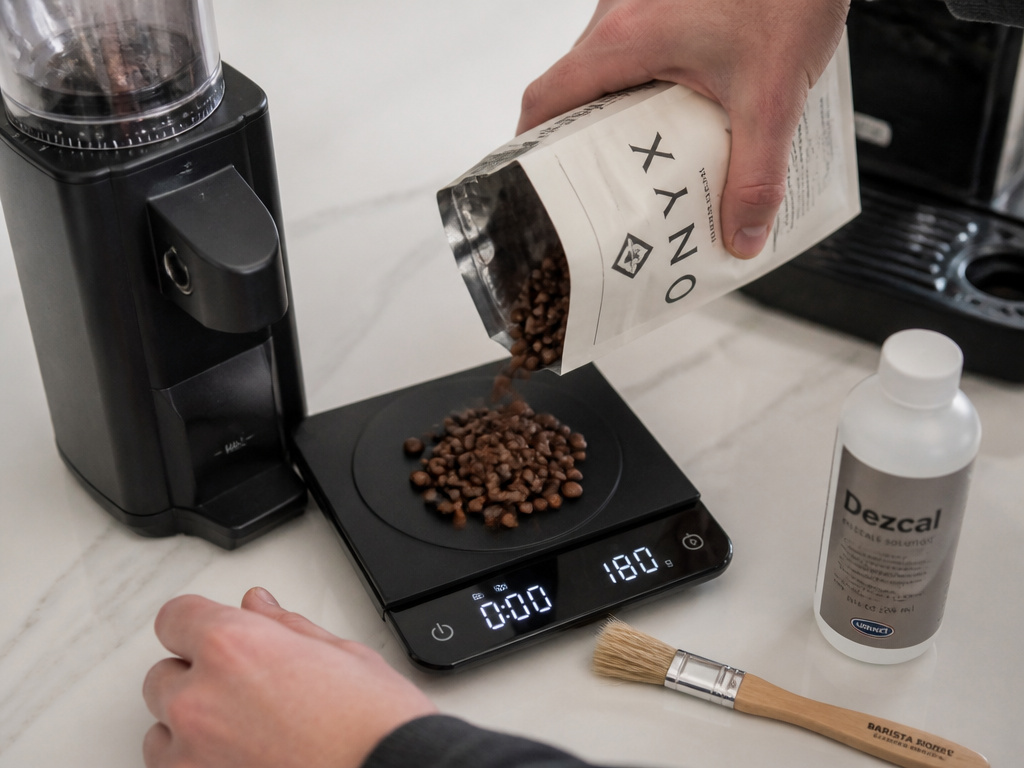
You can operate a coffee machine with just the machine. To make good coffee, you need three extra tools. They replace a $200 service visit.
A digital kitchen scale is the first. Eyeballing coffee is the root of weak or bitter pots. A scale that reads to 0.1 grams costs less than a bag of good beans. Use it for every brew.
A burr grinder is the second. Blade grinders smash beans into uneven particles. A burr grinder crushes them between two surfaces for a consistent size. Consistency is what allows water to extract flavor evenly. The difference in cup quality is dramatic, especially for methods like espresso or pour-over that are sensitive to grind. For a deep dive on the mechanics, see our comparison of burr vs blade grinder performance.
A cleaning brush and descaling solution are the third. Coffee oils and mineral scale are silent killers. Oils build up in the grinder, brew basket, and carafe, turning rancid. Scale builds up in boilers and heating elements, reducing efficiency and eventually causing failure. Clean the carafe and basket daily with soapy water. Descale the machine every 3-6 months, or per your water hardness. Use a commercial descaling solution or citric acid powder, not vinegar.
| Tool | Purpose | Consequence If Skipped |
|---|---|---|
| Digital Scale | Accurate coffee dosing | Inconsistent strength, wasted beans |
| Burr Grinder | Uniform particle size | Uneven extraction, bitter/weak cups |
| Descaling Solution | Removes mineral scale | Reduced heating efficiency, machine failure in 12-18 months |
| Grouphead Brush (Espresso) | Cleans shower screen | Clogged screen, uneven water flow, channeling in the puck |
These tools are not optional for quality. They are the difference between drinking coffee and enjoying it.
Frequently Asked Questions
Why does my drip coffee taste bitter?
Your coffee is over-extracting. The most likely cause is a grind that is too fine, causing water to move too slowly through the grounds. The second cause is leaving the finished brew on the hot plate for more than 10 minutes, which scorches it. Check your grind size and serve immediately.
How much coffee do I use for 4 cups?
For a drip machine, “4 cups” is typically 600ml (about 20 ounces). Use 33 to 36 grams of coffee. This is roughly 5-6 tablespoons, but weighing is more accurate. Using the “scoop per cup” rule often leads to weak coffee because cup lines on machines are small.
Do I need to pre-heat my espresso machine?
Yes. Always. Run the machine until it reaches temperature, then run a water-only cycle through the portafilter for 5-10 seconds. A cold portafilter and basket will cool the brew water by up to 10°C, resulting in a sour, under-extracted shot that lacks body.
Can I use pre-ground coffee in an espresso machine?
You can, but you shouldn’t expect great results. Pre-ground coffee for espresso is ground for a pressurized basket system. In a traditional machine, it will likely extract too fast, yielding a weak, watery shot. For best results, always grind fresh beans immediately before brewing.
How often should I clean my coffee machine?
Clean the carafe, filter basket, and any removable parts with soap and water after every use. Descale the internal tank and heating element every 3-6 months, depending on your water hardness. For pod machines, run a water-only cleaning cycle weekly and clear the pod needle with a paperclip monthly.
What’s the difference between an Americano and drip coffee?
An Americano vs drip coffee is a common question. An Americano is made by diluting a shot of espresso with hot water. Drip coffee is made by passing hot water through a bed of grounds once. The Americano has the concentrated, intense flavor of espresso but a lighter body, while drip coffee has a more uniform extraction and often a lighter flavor profile.
Before You Go
Using a coffee machine correctly boils down to sequence and measurement. Start with fresh, cold water in a clean machine. Measure your coffee by weight, not volume. Grind it right before you brew. And serve the coffee the moment it’s ready.
The type of machine dictates the finer points. A drip machine needs a clean filter and the right coffee-to-water ratio. An espresso machine demands a pre-heated portafilter, a precise 18-gram dose, and a 25-30 second extraction. A pod machine requires fresh water in the reservoir and regular needle cleaning to prevent clogs.
Ignore the hot plate. It is a tool for keeping coffee warm for minutes, not hours. Anything left on it for more than ten minutes is a lost cause. Your goal is to drink the coffee, not to preserve it.
Finally, maintain your machine. Descale it. Clean the grinder. Replace water filters. A clean machine is a reliable machine. It will brew better coffee for years longer. Now go fill the water tank first.
