
Hamilton Beach Coffee Maker Instructions: Manuals, Recalls, Tips
To operate your Hamilton Beach coffee maker, you need three things: your specific model number, the official PDF manual from Hamilton Beach, and the understanding that the ‘Bold’ button changes the brew time, not the water temperature. The 2017 recall on Model 46201 proves why the manual matters, overheating warming plates melted countertops.
Most people guess. They press buttons, assume the ‘Bold’ setting just makes things hotter, and clean only when they see gunk. That guesswork leads to weak coffee, a sour smell in the carafe, and in extreme cases, a safety hazard that recalls are issued for.
This guide walks you through finding your exact manual, brewing correctly on everything from a single-serve Scoop to a 45-cup urn, and the cleaning routine that stops mineral scale from ruining your machine in under a year.
Key Takeaways
- Your model number is printed on the bottom or back of the machine. Download the official PDF manual from the Hamilton Beach website, third-party summaries miss critical safety and spec info.
- The ‘Bold’ function on most Hamilton Beach drip machines extends contact time between water and grounds; it does not increase brew temperature, which is fixed between 195–205°F.
- Descale with a food-safe solution every 30 brew cycles. Rinsing with vinegar leaves an acetic acid residue that makes the next three pots taste sour unless you run two clear-water cycles after.
- Check if your model is part of the 2017 recall (Model 46201 series). If it is, stop using it immediately and contact Hamilton Beach for a free replacement.
- For single-serve Scoop models, use the provided plastic scoop with your own ground coffee. Do not overfill, the scoop is the correct dose for the brew chamber.
Where to Find Your Official Hamilton Beach Manual
Stop searching for “Hamilton Beach coffee maker instructions” on blogs. Go straight to the source. The Hamilton Beach Use & Care Manuals page hosts PDFs for every current and discontinued model. You need your model number, which is on a sticker on the bottom or back of the machine. It looks like “49465R” or “46310”.
The Hamilton Beach Model 49465R FlexBrew Trio coffee maker has a 1.2‑liter carafe reservoir and a separate 0.29‑liter reservoir for the single‑serve side. Its carafe brew temperature is specified between 195°F (91°C) and 205°F (96°C), with a two‑hour auto shut‑off for the warming plate.
This technical snippet comes verbatim from the OEM manual. Third-party sites often paraphrase this, dropping the exact temperature range or the dual-reservoir detail. That detail matters if you’re troubleshooting a lukewarm pot. The official manual also includes your warranty information and safety warnings that generic guides skip.
TL;DR: Your model number is your key. Get the PDF from Hamilton Beach, not a blog.
The Daily Brew Cycle – What’s Actually Happening
You add water and grounds, then press brew. The machine takes over. Here’s what it’s doing while you wait.
First, cold water from the reservoir siphons into a sealed aluminum tube wrapped around a heating element. The tube heats the water to between 195°F and 205°F, the industry standard for proper extraction. Once the water is hot enough, pressure from created steam pushes it up a tube and over a drip nozzle onto the grounds.
The ‘Bold’ button on most models, like the 12‑cup programmable, alters this cycle. It doesn’t make the water hotter. Instead, it pauses the drip cycle intermittently, letting the water saturate the grounds longer before draining. This extracts more flavor compounds, resulting in a stronger cup. Use it for dark roasts or when brewing a full pot.
For single-serve models like the Scoop (Model 49976), the process is faster. The brew chamber is smaller, so the 10‑ounce reservoir heats and dispenses water in about 2–3 minutes. The included plastic scoop is sized to hold the precise amount of grounds that chamber can handle. Overfilling it jams the mechanism and leads to overflow.
Common mistake: Using the ‘Bold’ setting for light roast coffee, the longer contact time over‑extracts the delicate beans, pulling out bitter notes that overwhelm the bright acidity. Save ‘Bold’ for dark roasts.
Model-by-Model Breakdown: From Scoop to Urn
Not all Hamilton Beach coffee makers work the same. The controls on a 45‑cup commercial urn are different from a programmable 12‑cup kitchen model. This table clarifies the primary controls for four common types.
| Model Type | Primary Control | Key Spec | Best For |
|---|---|---|---|
| Single-Serve Scoop (e.g., 49976) | ‘Regular’/‘Bold’ button | 10 oz reservoir, 2‑3 min brew time | One travel mug, office use |
| Programmable Drip (e.g., 46310) | Digital clock, ‘Program’, ‘Bold’ | 12‑cup carafe, 180°F keep‑warm plate | Family mornings, auto‑brew |
| FlexBrew Trio (e.g., 49465R) | Selector knob (Carafe/Single-Serve) | 1.2L + 0.29L reservoirs, 2‑hr auto shut‑off | Households with multiple coffee preferences |
| 45‑Cup Commercial Urn | None (auto‑on when plugged in) | Coarse‑ground basket, no filter needed | Events, church basements, large gatherings |
The 45‑cup urn is the simplest. You plug it in, and it heats. There’s no on/off switch. For coffee, you add coarse grounds directly to the basket, no paper filter. For hot water, you remove the basket entirely. It’s a brute-force machine that highlights how even basic drip coffee brewing method relies on controlled temperature.
The programmable models require a bit more setup. You must set the clock before the auto‑brew function will work. If the clock is flashing, the timer is useless. This is where people get stuck, and where the official Black & Decker coffee maker manual or a Braun coffee maker manual can show a similar process if you’re more familiar with those brands.
TL;DR: Identify your model type first. A urn has no buttons; a programmable has a clock to set; a FlexBrew has a knob.
Cleaning: The Step That Prevents a Sour Pot
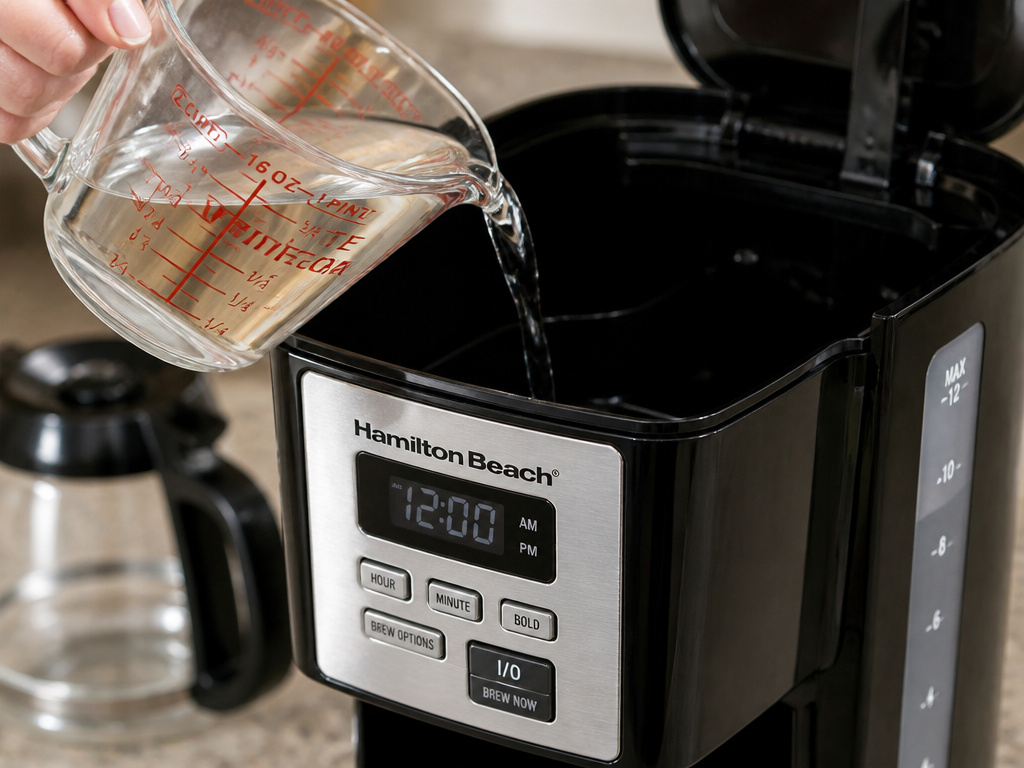
Coffee makers are not self-cleaning. Oils from coffee grounds coat the interior brew path, and minerals from water harden into scale. This scale insulates the heating element, making it work harder and eventually fail. Your nose will tell you first, a sour, stale smell in the carafe even after washing.
Here is the monthly routine that works.
- Descale with a solution. Use a food-safe descaling liquid or a 50/50 mix of white vinegar and water. Fill the reservoir. Run a brew cycle without coffee or a filter. Let the solution sit in the carafe for 15 minutes, then pour it back into the reservoir and run a second cycle.
- Flush twice with clear water. This is the step everyone misses. Vinegar leaves behind acetic acid. If you don’t flush it out, your next several pots of blonde roast coffee beans will taste vaguely of pickles. Run two full reservoirs of fresh water through the machine, discarding the water each time.
- Wash the removable parts. Use warm, soapy water on the carafe, brew basket, and lid. For the permanent filter, a soft brush gets the grounds out. Never use abrasive scouring pads on the carafe, they scratch the glass and trap oils.
- Wipe the warming plate. Caffeine and sugar from spills bake onto the hot plate. A damp cloth wiped across it while cool removes the residue and prevents uneven heating.
The type of filter you use impacts cleaning too. Paper Bunn coffee maker filters catch most oils, making basket cleanup easier. The debate between bleached vs unbleached filters is mostly about taste and environmental choice, but both keep the machine cleaner than a permanent metal filter. If you use a permanent filter, you must scrub it after every use.
I skipped the clear-water flush after descaling a client’s machine once. They called three days later complaining their expensive Ethiopian Yirgacheffe tasted “off.” We ran two water cycles through it, and the next pot was clean. The acid residue clings to the plastic tubing.
TL;DR: Descale monthly. Always run two clear-water cycles after to purge cleaning solution taste.
Safety, Recalls, and the Auto Shut-Off

Your coffee maker uses electricity to heat water to near-boiling temperatures. Safety isn’t an optional chapter. The auto shut-off feature is your first guardian. Most Hamilton Beach models will turn off the warming plate after two hours. This prevents a dry carafe from cracking and reduces fire risk if you forget.
But features can fail. In January 2017, Hamilton Beach recalled approximately 100,000 units of its 12‑Cup Digital Coffee Maker (Model 46201). The official CPSC recall notice states the warming plate could overheat, posing a fire hazard. Sixteen reports were filed, with incidents including melted countertops and cabinets.
If your model number starts with 46201 and was manufactured between October 2012 and September 2016, stop using it. Unplug the machine and contact Hamilton Beach for a free replacement. This isn’t a theoretical warning, it’s a documented hazard with a specific fix.
For daily safety:
* Always plug the machine directly into a wall outlet, not a power strip or extension cord.
* Keep the cord away from the hot warming plate and the edge of the counter.
* Never operate the machine without water in the reservoir. The heating element will burn out.
* Ensure the carafe is fully seated on the warming plate. A tilted carafe can drip water onto the electronics below.
This level of attention to device-specific hazards is what separates a generic list from real guidance. It’s the same reason you’d consult a Breville coffee machine filter guide for that brand’s unique cartridge system, or a burr vs blade grinder article to understand how grind consistency affects your machine’s performance.
Troubleshooting: When the Simple Brew Goes Wrong
Coffee makers are simple machines. When they fail, it’s usually one of five things. Use this diagnostic table before you consider the machine dead.
| Symptom | Most Likely Cause | Immediate Fix |
|---|---|---|
| Machine won’t turn on | No power at outlet; faulty power cord | Test outlet with another device; check cord for damage |
| Water doesn’t heat / no brewing | Mineral scale clogging the internal tube | Descale the machine (see Cleaning section) |
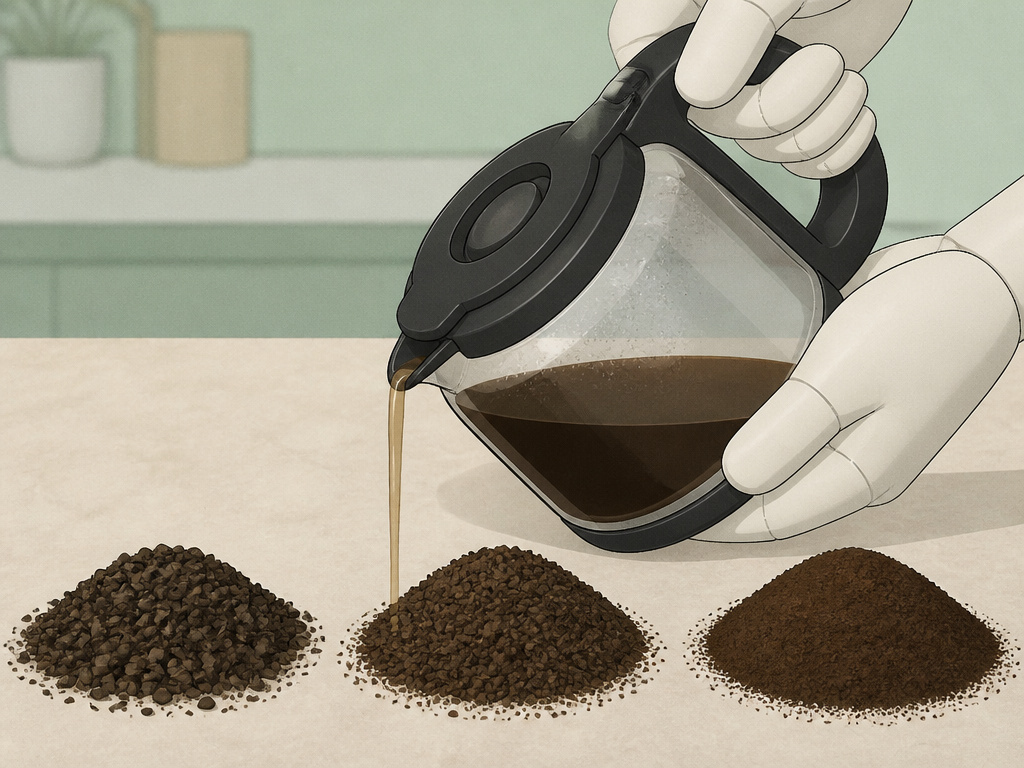
| Coffee tastes weak or bitter | Incorrect grind size; stale beans; dirty machine | Use a medium grind, fresh beans (<3 weeks post-roast), clean carafe and basket |
| Coffee leaks from bottom | Cracked water reservoir; overfilled single-serve chamber | Inspect plastic for cracks; reduce grounds in Scoop models |
| ‘Bold’ function makes no difference | Misunderstanding of function; grounds too coarse | ‘Bold’ adds time, not heat. Try a slightly finer grind. |
Weak or bitter taste is the most common complaint. It’s rarely the machine’s fault. If your coffee grind consistency is off, too coarse for drip, the water flows through too fast, producing a weak, sour cup. If the grind is too fine, it can compact, restrict flow, and over-extract, creating bitterness. Start with a medium grind, like table salt.
If the machine leaks, especially from the bottom, unplug it immediately. This indicates a crack in the internal water reservoir or a failed seal. Continuing to use it risks a short circuit. For single-serve Scoop models, leaking usually means you’ve overfilled the brew chamber. The plastic scoop is a measured dose, heaping it will cause overflow.
TL;DR: 90% of taste issues are grind or freshness. Leaks or no power need physical inspection.
Frequently Asked Questions
My Hamilton Beach coffee maker doesn’t have a model number sticker. What now?
Check the original box or your purchase receipt. If those are gone, visit the Hamilton Beach support site and use their “Identify Your Model” tool, which guides you through identifying features. Without the model number, you cannot access the correct manual or check for recalls.
Can I use my own ground coffee in the Hamilton Beach Scoop single-serve maker?
Yes, that’s its main purpose. Use the provided plastic scoop. Fill it level with your preferred ground coffee, a medium grind works best. Do not pack the grounds or overfill the scoop, as this will clog the brew chamber.
How often should I replace the water filter on my Hamilton Beach coffee maker?
If your model has a built-in water filter (like some FlexBrew models), replace the cartridge every 60 days or after 60 brew cycles, whichever comes first. Using it longer reduces its effectiveness at removing chlorine and minerals that cause scale.
Is it safe to leave my coffee maker plugged in all the time?
While the auto shut-off turns off the heating plate, the clock or display may still draw a tiny amount of power. For safety and energy savings, it’s best to unplug the machine if you’ll be away for more than a day. For daily use, leaving it plugged in is generally fine.
What’s the difference between ‘Bold’ and ‘Regular’ brew on a Hamilton Beach?
The ‘Regular’ cycle provides a consistent flow of hot water through the grounds. The ‘Bold’ cycle intermittently pauses that flow, allowing the grounds to steep longer. This extracts more body and flavor, resulting in a stronger-tasting cup. It does not increase the water temperature.
Can I brew tea or just hot water in my Hamilton Beach coffee maker?
Yes. You can run a cycle without coffee in the basket to dispense hot water. For tea, place tea bags directly in the carafe and run the hot water over them. Do not put loose tea leaves in the coffee filter basket, as they are too fine and will clog the system.
The Bottom Line
Your Hamilton Beach coffee maker is a tool, not an appliance with a mind of its own. Its performance hinges on three non-negotiable inputs: your model-specific manual, fresh cold water, and correctly ground coffee. The ‘Bold’ button is a timer trick, not a magic wand. Scale buildup is inevitable, but the sour taste afterward is optional, flush the machine with two cycles of water after every descaling.
That 2017 recall on Model 46201 is the ultimate reminder. These machines are simple, but they are not infallible. Knowing your model number and checking for that piece of paper, or PDF, isn’t bureaucratic. It’s how you get a reliable cup tomorrow and ensure the machine on your counter isn’t a hidden risk. Now go find that number. Your manual, and a better pot of coffee, are a download away.
