
French Roast Coffee Beans: The Bold, Smoky Dark Roast Guide
French roast coffee beans are roasted to an internal temperature of 230-240°C (446-464°F), pushing them well into the second crack stage. This creates a dark, oily bean with a smoky, bold flavor, low acidity, and a weight loss of 18-25% from the original green bean.
People get this wrong by assuming all dark roasts are the same. They buy the cheapest bag labeled “French roast” and brew it like a medium roast. The result is a cup that tastes like bitter charcoal water, which convinces them they hate dark coffee. The problem isn’t the roast. It’s the bean selection and the brewing method.
This guide walks through what French roast actually is, the chemistry that creates its signature flavor, and how to pick a good one. You’ll learn why brewing it wrong ruins the cup and how to adjust your grind, water, and time to get a rich, smoky brew without the bite.
Key Takeaways
- A true French roast hits an Agtron Gourmet scale reading of 25-35 and loses nearly a quarter of its weight during roasting.
- The smoky flavor comes from pyrolysis, a chemical breakdown that happens after the Maillard reaction finishes. This is why it tastes different from a medium-dark roast.
- High-density beans from regions like Guatemala or Ethiopia survive the dark roast process better, retaining more body and complexity than low-density beans.
- Brew French roast with cooler water (90-92°C) and a slightly coarser grind to avoid extracting harsh, ashy compounds. Never use boiling water.
- French roast works best in methods that highlight body, like espresso or French press. It’s a poor choice for delicate pour-over methods seeking floral notes.
What Defines a French Roast?
Look past the label. A real French roast is defined by measurable, physical changes to the coffee bean, not just a dark color.
The industry standard is the Agtron Gourmet scale, which measures the reflectance of ground coffee. Lower numbers mean darker roasts. French roast consistently falls between 25 and 35 on this scale. For perspective, a City (light) roast is 55-65, and a Full City (medium) roast is 45-55. That number isn’t arbitrary. It correlates directly to the internal bean temperature during roasting, which for French roast reaches 230-240°C (446-464°F). At this heat, the beans spend significant time in or past the “second crack” phase, where the bean structure fractures audibly for a second time.
This temperature range triggers pyrolysis, the thermal decomposition of organic compounds after sugars and amino acids have already reacted. It’s the point where the bean’s own structure starts to break down, creating the characteristic smoky, carbon-like notes.
The most tangible proof of a French roast is weight. A green coffee bean is about 10-12% water. By the time it hits 240°C, it has lost all that moisture plus a significant portion of its dry mass. A proper French roast sees a total weight loss of 18-25%. That means nearly a quarter of what went into the roaster is gone. This isn’t just water vapor. It’s volatile organic compounds, acids, and sugars that have been burned away. If a roaster isn’t hitting that weight loss, they’re likely pulling the beans early and calling it dark.
TL;DR: A true French roast is an Agtron reading of 25-35, a bean temperature of 230-240°C, and a weight loss of 18-25%. Anything less is a dark roast, not a French.
The Chemistry Behind the Smoky Flavor
The taste of French roast isn’t just “more roast.” It’s a completely different chemical profile. The journey has three phases: drying, Maillard reaction, and pyrolysis.
First, the drying phase removes moisture. Next, the Maillard reaction, the same one that browns steak and toast, takes over between 150-200°C. This reaction between amino acids and reducing sugars creates hundreds of flavor compounds, including nutty, chocolatey, and caramel notes. In a medium roast, this is where you stop. For a French roast, you keep going.
The final phase is pyrolysis. Above 200°C, with most sugars and amino acids already spent, heat begins breaking down the bean’s cellulose and lignin structures. This creates a new set of compounds: pyrazines (earthy, roasty), pyrroles (nutty, burnt), and furans (smoky, caramel-like). The balance of these compounds defines a good French roast versus a bad one. Too much pyrolysis and you get sharp, ashy phenols that taste like charcoal. Just enough and you get a smooth, smoky depth.
Common mistake: Assuming French roast’s boldness means it has more caffeine. It has slightly less. Caffeine is remarkably stable under heat, but the bean loses so much mass that, by weight, a scoop of dark roast contains fewer caffeine molecules than a scoop of light roast.
This is why bean origin matters immensely. A dense, high-grown Arabica coffee bean from the Guatemalan highlands has more structural integrity. It can withstand the pyrolysis phase longer, allowing the roaster to develop those smoky notes without the bean tasting hollow or charred. A less dense bean falls apart chemically much sooner.
| Chemical Phase | Temperature Range | Primary Flavors Created | Risk If Skipped/Rushed |
|---|---|---|---|
| Drying | Up to ~150°C | Removes moisture, prepares bean for reactions. | Bean steams instead of roasts, leading to a baked, flat flavor. |
| Maillard Reaction | ~150–200°C | Chocolate, nut, caramel, toast. | Bean tastes grassy and sour; lacks foundational sweetness. |
| Pyrolysis | ~200–240°C+ | Smoke, earth, carbon, spice. | Roast tastes blandly “dark” without the signature smoky complexity; stopping too late creates ash and tar notes. |
How to Choose High-Quality French Roast Beans
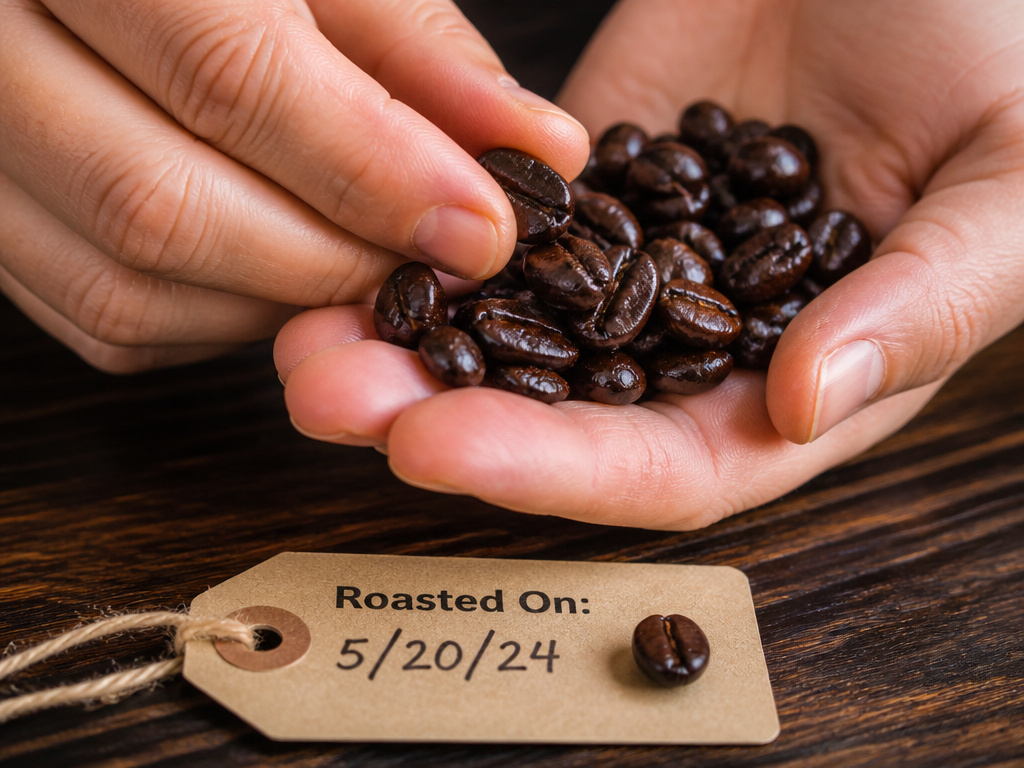
You cannot turn bad beans into good French roast. The process exposes flaws. Start with quality.
- Look for High-Grown, Dense Arabica Beans. The product description should mention a specific region, not just “French Roast.” Look for origins known for density: Guatemalan, Ethiopian, Sumatran. These beans have more to give during the long roast. Avoid blends heavy with lower-grown, less dense beans, they turn ashy.
- Inspect the Surface. There should be a visible sheen of oil. This is coffee oil (caffeol) migrating to the surface during the intense heat. However, the beans should not look wet, black, or cracked. Wet-looking beans are old and stale; the oil has turned rancid. Cracked beans were roasted too fast.
- Check the Roast Date. This is non-negotiable. French roast beans degrade faster than lighter roasts. Those surface oils oxidize quickly. Buy beans roasted within the past two weeks. Never buy pre-ground French roast. The increased surface area accelerates staling, and you lose all control over grind size.
- Smell Them. A good French roast smells deeply smoky and sweet, like a campfire with a hint of dark chocolate. A bad one smells sharp, acrid, or like burnt rubber. If it doesn’t smell inviting, it won’t taste inviting.
- Understand the Roaster’s Style. Some roasters aim for a “baked” French roast, longer time at lower temperature, which can taste flat. Others go for a high-heat “tipped” roast, which risks scorching. Look for roasters who discuss their profile. A note about “development time” or “managing the roast curve” is a good sign.
A quality-focused roaster will often use a specific coffee production method for their dark roast, sometimes choosing a resilient single-origin coffee over a blend to highlight how the origin survives the dark roast.
How to Brew French Roast Coffee
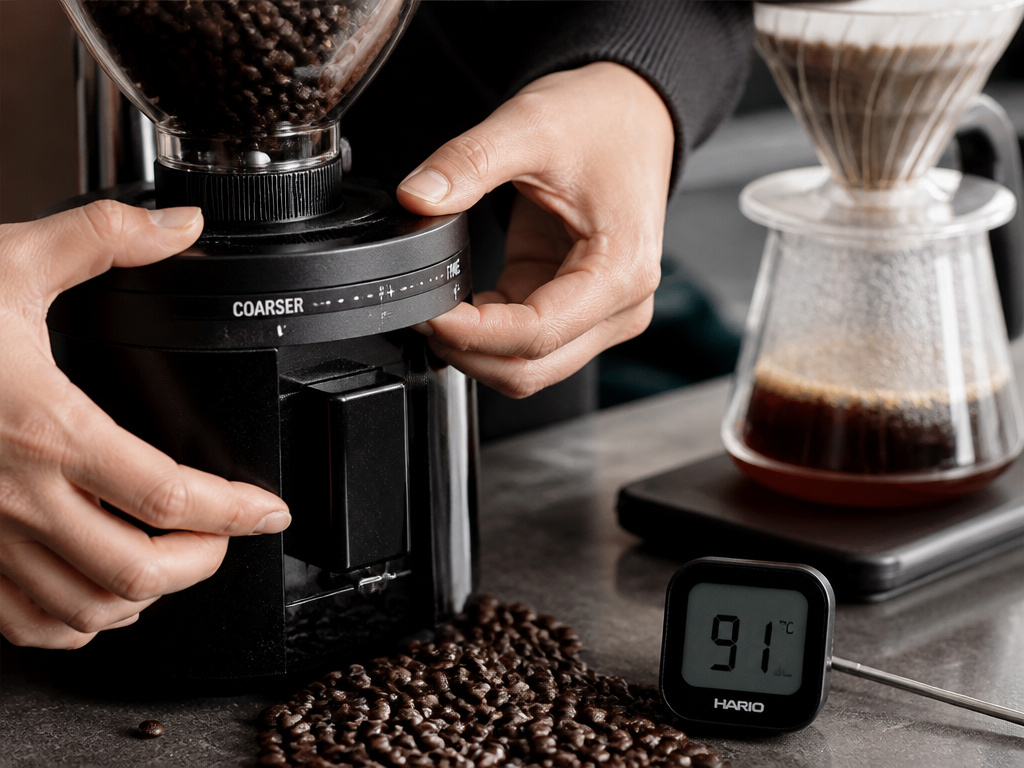
Brewing French roast with your usual light-roast protocol is a guaranteed path to bitterness. You must compensate for the roast’s nature.
Grind Coarser. The pyrolysis phase makes the bean structure more brittle and porous. It extracts much faster. If you use your usual medium-roast grind setting, you will over-extract the hell out of it. Set your burr coffee grinder one full notch coarser. The goal is fewer fine particles, which are the main source of harsh, ashy flavors.
Use Cooler Water. The ideal water temperature for light roasts is 93-96°C (199-205°F) to efficiently extract delicate acids and sugars. For French roast, those delicate compounds are gone. You’re now trying to extract the smoky, chocolatey base notes without pulling out the bitter, carbonized ones. Drop your temperature to 90-92°C (194-198°F). If you don’t have a temperature-controlled kettle, let boiling water sit off the heat for 45 seconds.
Shorten the Contact Time. Faster is better. Adjust your technique to reduce the time water is in contact with the grounds. * Espresso: Target a 20-25 second shot, not 25-30. The darker roast will still produce ample crema and body in that shorter window. * Pour-Over: Pour more aggressively to finish your drawdown 30-45 seconds sooner than your typical recipe. * French Press: Use a standard 4-minute steep, but grind extra coarse. Plunge and pour immediately; don’t let it sit.
I once dialed in a French roast espresso using my standard medium-roast recipe: 18g in, 36g out, 28 seconds, 94°C water. The shot was pure ash. It took backing the temperature down to 91°C, grinding two clicks coarser, and pulling a 22-second shot to get a rich, smoky shot with a dark chocolate finish. The numbers matter.
Adjust Your Ratio. Consider using a slightly higher coffee-to-water ratio. Because the flavors are so bold, a 1:15 ratio (common for pour-over) can taste thin. Try 1:14 or even 1:13.5 to increase body and intensity without extending brew time.
French Roast vs. Other Dark Roasts
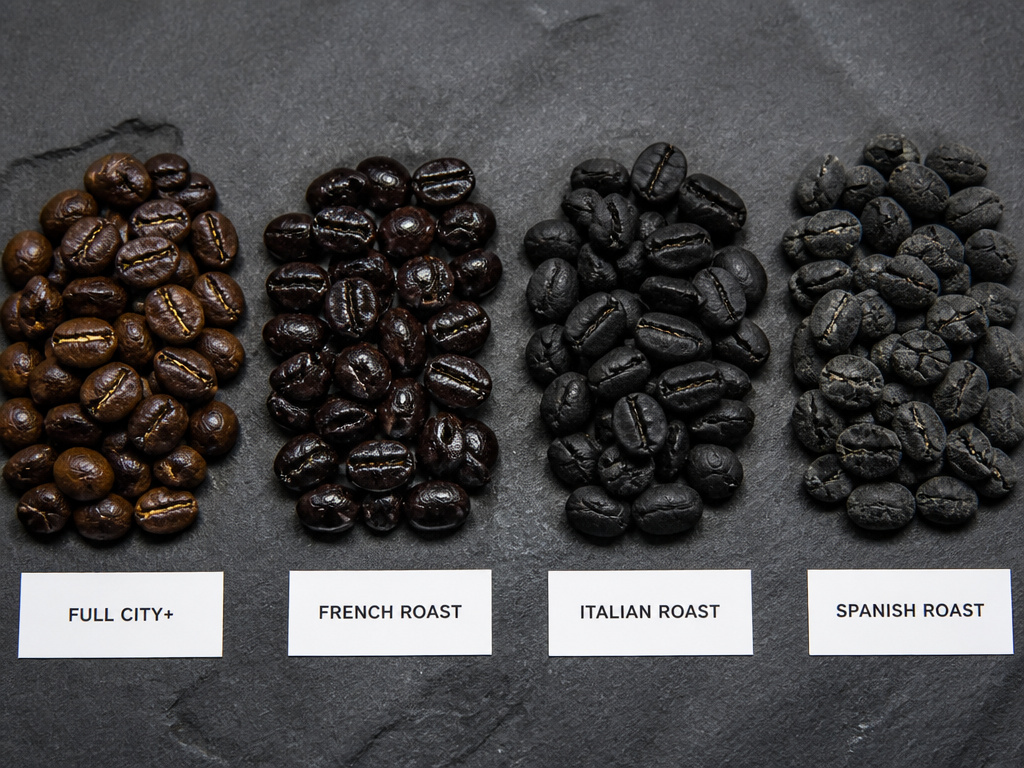
Not all dark roasts are created equal. The naming is inconsistent, but French roast sits at the extreme end.
| Roast Level | Agtron Range | Bean Temp | Flavor Profile | Best Use Case |
|---|---|---|---|---|
| Full City+ | 40-45 | ~225°C (437°F) | Chocolate, nut, low acid, slight sweetness. | Drip coffee, manual brew methods where you want body with some origin character. |
| Italian Roast | 20-25 | ~240°C+ (464°F+) | Very smoky, charred, thin body, almost no acidity. Bitter dominant. | Traditional dark espresso blends aiming for a sharp, pungent shot. |
| French Roast | 25-35 | 230-240°C (446-464°F) | Smoky, bold, smooth, with hints of dark chocolate or spice. Low acidity. | Espresso, French press, milk drinks where you want a strong, non-acidic base. |
| Spanish Roast | <20 | >245°C (473°F) | Burnt, ashy, woody. The bean structure is nearly carbonized. | Rarely used for specialty coffee; sometimes in very traditional blends. |
The main difference between French and Italian roast is the degree of pyrolysis. Italian is pushed further, resulting in a thinner body and more dominant char notes. French should still have a syrupy mouthfeel. Compared to a lighter blonde roast coffee bean, you’re trading floral acidity and tea-like clarity for powerful, roast-driven body and smoke.
Common Pitfalls and How to Avoid Them
You can have great beans and still ruin them. These are the mistakes I see every time.
Pitfall 1: Storing them in the grinder hopper.
The oils on French roast beans go rancid quickly when exposed to air and light. Within three days in a clear hopper on a counter, those oils will start to smell like old crayons. Always store French roast in an airtight, opaque container in a cool cupboard. Buy in smaller quantities.
Pitfall 2: Using a blade grinder.
A blade coffee grinder creates an inconsistent mix of dust and boulders. The dust from a dark roast will instantly over-extract, flooding your cup with bitterness, while the boulders under-extract. You get the worst of both worlds: harsh and weak. A burr grinder is mandatory for control.
Pitfall 3: Pairing it with the wrong additives.
French roast has a powerful flavor that can clash. Delicate almond milk in coffee might be overwhelmed and taste watery. Conversely, its boldness can stand up to strong flavors. A dash of cinnamon in coffee or a spoon of brown sugar sweetener can complement the smoky notes beautifully. For a different take, a small pinch of salt can actually soften any remaining harsh edges, much like it does with dark chocolate.
Common mistake: Brewing French roast in a single-cup drip machine with a hot plate. The hot plate continues to cook the coffee, amplifying bitter and burnt flavors within 20 minutes. By the time you finish your first cup, the pot is undrinkable.
Frequently Asked Questions
Is French roast coffee stronger?
It has a stronger, bolder flavor due to the roast, but it is actually slightly lower in caffeine by weight. The intense heat breaks down some caffeine molecules, and the significant weight loss means you have less coffee mass per scoop. The perception of strength comes from the powerful smoky and bitter compounds.
What’s the best grind size for French roast?
Always go coarser than you would for a medium roast of the same bean. For espresso, use a grind that gives you a 20-25 second shot. For pour-over (like V60), use a grind similar to coarse sand. For French press, use a very coarse, breadcrumb-like grind.
Can you taste the origin in French roast?
Most of the origin’s unique, delicate flavors (like floral, fruity, or winey notes) are destroyed by the high heat. What you can sometimes taste is the bean’s inherent structure: a dense bean from Ethiopia might retain a hint of berry-like sweetness underneath the smoke, while a Sumatran might contribute an earthy, woody base. It’s more about texture and body than specific flavor notes.
How long do French roast beans stay fresh?
Because of the surface oils, they stale faster than lighter roasts. Consume them within 2-3 weeks of the roast date for peak flavor. After a month, the oils will oxidize and the coffee will taste flat and papery.
Is French roast good for cold brew?
Yes, it’s excellent. The long, cold extraction minimizes bitterness and highlights the chocolate and smoky notes, resulting in a very smooth, full-bodied concentrate. Use a coarse grind and a 1:8 coffee-to-water ratio, steep for 18-24 hours.
Before You Go
French roast is a commitment to a specific flavor experience. It’s not a subtle, nuanced cup. It’s a bold, smoky, low-acid brew that stands up to milk and sugar. Success hinges on three things: starting with high-density beans that can survive the roast, grinding coarser to avoid over-extraction, and using cooler water to keep the bitterness in check.
Remember the weight loss figure, 18-25%. That’s what you’re paying for: a transformation so complete that a quarter of the bean is gone. Respect that process by brewing it with intention. Skip the cheap, oily beans from the supermarket shelf. Find a local roaster who talks about their roast profile and try their French roast in an espresso or a French press. When done right, it’s less of a morning coffee and more of an evening digestif, something rich and satisfying that doesn’t ask for your attention but commands it.
