
Earl Grey Caffeine vs Coffee: Which Brew Packs More Punch?
Earl Grey caffeine ranges from 40–70 mg per 8oz cup, while brewed coffee ranges from 95–165 mg. The real difference isn’t just the milligrams, it’s how the stimulants work. Coffee delivers caffeine fast and alone, causing a sharper peak and crash. Earl Grey’s caffeine is moderated by L-theanine, an amino acid that promotes calm alertness.
Most comparisons stop at the basic numbers. They miss why you feel so different after a cup of tea versus a pot of coffee. The crash, the jitters, the focus, or lack of it, come down to chemistry, not just quantity.
This guide breaks down the exact caffeine content, the science behind the different buzzes, and how to choose based on what you actually need from your cup.
Key Takeaways
- Coffee packs roughly 2–3 times more caffeine per ounce than Earl Grey tea.
- Earl Grey contains L-theanine, which smooths the caffeine’s edge and promotes focused alertness without anxiety.
- Brewing method drastically changes caffeine yield: a 5-minute steep vs. a 2-minute steep can double your tea’s caffeine.
- Hybrid drinks like an Earl Grey latte or a “dirty tea” combine flavors and offer a middle-ground stimulant effect.
- The afternoon crash from coffee is real and tied to its rapid absorption; tea’s gentler release often avoids it.
How Much Caffeine Is Really In Each?
Forget vague claims. The numbers come from primary sources. The USDA’s National Nutrient Database lists brewed coffee at 95 mg of caffeine per 8-ounce cup. That’s the baseline. A study in the Journal of Food Science and Technology confirms that figure is a midpoint in a wide range, from 95 mg on the low end for a light roast drip to over 165 mg for a strong dark roast or espresso.
Earl Grey is black tea. The USDA puts an 8-ounce cup of black tea at 47 mg. Because Earl Grey is flavored black tea, its range is similar: 40 to 70 mg per cup. The variation hinges on the tea’s origin (Ceylon vs. Assam), leaf grade, and your steep time.
A standard 8oz serving of brewed coffee contains 95–165 mg of caffeine. A same-sized serving of Earl Grey tea contains 40–70 mg. Brewing time, water temperature, and coffee grind size account for the ranges.
Steeping is the lever you control. A tea bag left in boiling water for five minutes will hit the top of that range. A two-minute steep with slightly cooler water might land at 30 mg. Coffee works the same way. A fine grind in an espresso machine extracts more caffeine per ounce than a coarse grind in a French press, though the serving size is smaller.
TL;DR: An average cup of coffee has about 120 mg of caffeine; an average cup of Earl Grey has about 55 mg. Coffee wins on pure volume, but tea offers more control through steeping.
The Pharmacological Difference: Why They Feel So Different
This is where the commodity advice fails. Comparing only milligrams is like comparing a sugar cube to a whole apple because they both have carbs. The delivery system matters.
Coffee delivers a bolus of caffeine, fast. Your blood concentration spikes. That’s the jolt. It blocks adenosine receptors quickly, which is why you feel awake in 15 minutes. It also triggers a bigger adrenaline response. The crash happens when those receptors clear and the accumulated adenosine floods back in.
Earl Grey, and all tea from the Camellia sinensis plant, contains L-theanine. This amino acid crosses the blood-brain barrier and promotes alpha brain wave activity, the state associated with relaxed focus. It doesn’t sedate you. It modulates the caffeine.
The caffeine and L-theanine work together. The caffeine provides the alertness; the L-theanine takes the sharp, anxious edge off. The result is what tea drinkers call “calm alertness.” You’re awake, but not wired. This is why the historical association mentioned in that YouTube transcript, tea with contemplation, coffee with raucous debate, has a biochemical basis.
Common mistake: Assuming a lower-caffeine tea will be ineffective for focus. The L-theanine synergy means 50 mg of tea caffeine can provide clearer, longer-lasting concentration than 100 mg of coffee caffeine for many people.
Your personal biochemistry decides which you prefer. If you’re a fast caffeine metabolizer, you might only feel coffee’s benefits. If you’re sensitive, coffee’s jangle is real, and tea’s balanced effect is a revelation.
Choosing Your Stimulant: A Use-Case Breakdown

Your goal should pick your drink. Need brute-force wake-up power? Coffee. Need sustained mental clarity for a long task? Earl Grey. This table lays out the winning choice for common scenarios.
| When You Need… | Better Choice | Why It Wins |
|---|---|---|
| A rapid morning jolt | Coffee | Higher caffeine concentration acts faster for immediate wakefulness. |
| Focus without jitters (afternoon) | Earl Grey | L-theanine promotes alpha waves for calm concentration, avoiding the coffee crash. |
| Social, energetic buzz | Coffee | The sharper stimulant effect aligns with heightened social interaction. |
| A gentle start or before bed | Earl Grey (short steep) | Controllable caffeine dose via steep time; L-theanine can aid relaxation even with minimal caffeine. |
The “afternoon rule” is practical. Reaching for coffee after 2 PM is a gamble. The crash might hit right during your evening. A cup of Earl Grey, steeped for three minutes, gives you a lift that fades gently. It’s the difference between a slingshot and a ramp.
For creative work, the tea advantage is clear. The relaxed focus state lets your mind wander productively without anxiety. Coffee can make that process feel frantic. I schedule tea for writing sessions and coffee for administrative tasks. The split works.
Hybrid Drinks: The Best of Both Worlds
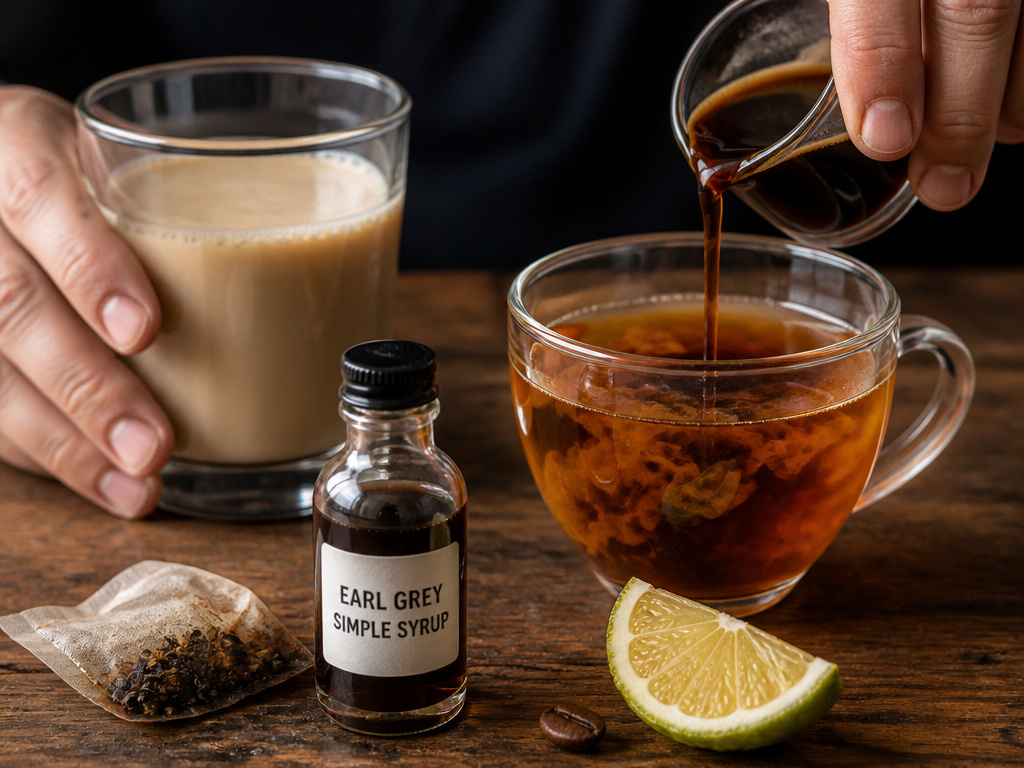
You don’t have to pick a side. The fusion of tea and coffee is a delicious middle path. Two hybrids stand out: the Earl Grey latte and the “dirty” Earl Grey.
The Earl Grey latte is simple. Steep a strong Earl Grey tea bag directly in steamed milk for 4-5 minutes. The milk fats carry the bergamot flavor beautifully, creating a rich, floral drink. The caffeine is all from tea, so you get the L-theanine benefit. It’s a perfect afternoon treat.
The “dirty” Earl Grey is for the true enthusiast. Brew a strong cup of Earl Grey. Pull a single shot of espresso and pour it over the tea. The YouTube recipe that uses Earl Grey simple syrup is brilliant, it layers the flavors without watering down the drink. The combined caffeine is significant, but the tea components still soften the espresso’s harshness.
I tried the syrup method. Steeping four tea bags in a cup of hot water makes an intensely fragrant base. Adding equal parts sugar creates a syrup that keeps for weeks. A half-ounce of that syrup in a shot of espresso, topped with cold milk, is a complex, powerful beverage. It bridges the gap.
I won’t recommend the “dirty tea” for caffeine-sensitive folks. The combined stimulant load is real. But for someone who loves both flavors, it’s a revelatory drink that highlights how well bergamot and coffee roast notes can complement each other.
These hybrids are more than novelty. They let you engineer a specific caffeine and flavor experience. They prove the debate isn’t tea versus coffee. It’s about using both tools in your kit.
Brewing for Caffeine Control
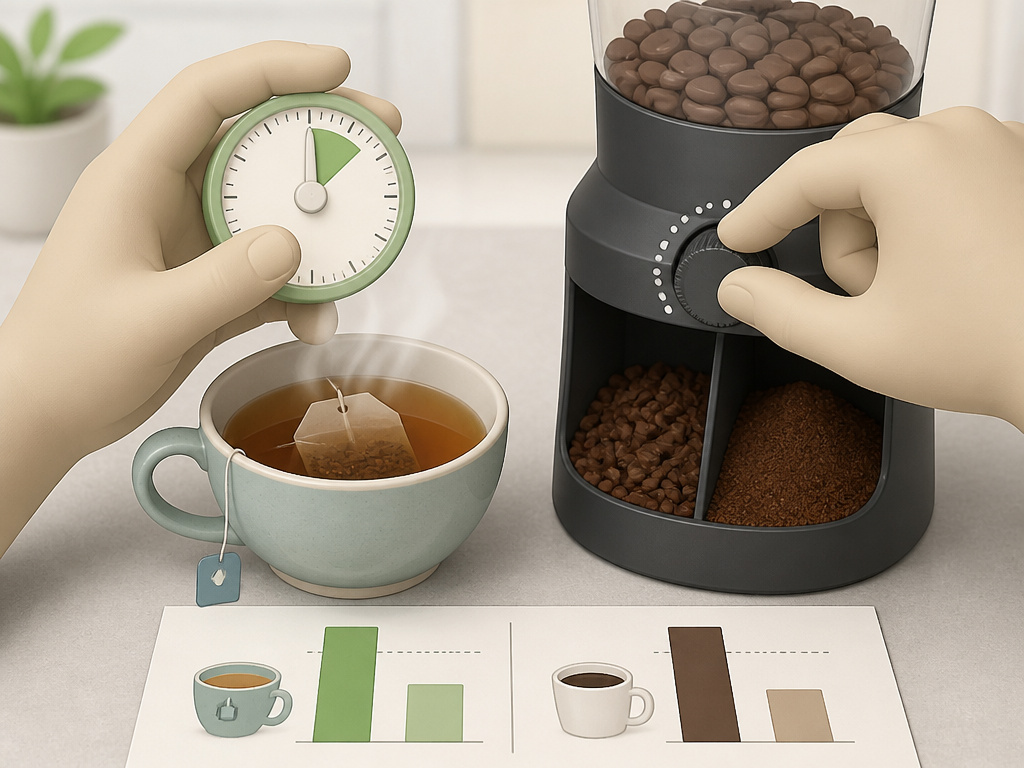
You are not stuck with default caffeine levels. You can brew intentionally to hit a target.
For Earl Grey:
* Max Caffeine: Use boiling water and steep for 4–5 minutes. Use two tea bags or a heaping teaspoon of loose leaf.
* Min Caffeine: Use water just off the boil (190°F) and steep for 90 seconds to 2 minutes. One tea bag is plenty.
The type of leaf matters slightly. Broken-leaf teas (common in bags) extract caffeine faster than whole loose leaves. If you need a consistent dose, stick with one brand and style.
For Coffee:
* Max Caffeine (per serving): Use a fine grind for espresso or a long immersion method like a French press (4+ minutes). More surface area and time equals more extraction.
* Min Caffeine (per serving): Use a coarse grind for a faster drip method or a pour-over with a shorter total brew time (under 3 minutes).
Remember, a 2-ounce espresso shot has 60–80 mg of caffeine, similar to a cup of tea, but it’s consumed instantly, creating that spike. A 12-ounce drip coffee has 180+ mg, released over many sips. Your consumption speed changes the effect.
Frequently Asked Questions
Can Earl Grey tea ever have more caffeine than coffee?
Almost never in a like-for-like serving. The only conceivable way is if you compared a very weakly brewed, small cup of coffee (a 4oz Americano) to an extremely strong, large cup of Earl Grey (16oz, double-bagged, steeped for 10 minutes). In normal consumption, coffee’s caffeine density is always higher.
Does decaf Earl Grey have any caffeine?
Yes. Decaffeinated black tea, including Earl Grey, is not 100% caffeine-free. It typically retains 2–5 mg per 8oz cup. The decaffeination process for tea is different than for coffee, but the goal is the same: remove most, but not all, of the stimulant.
Why do I feel more anxious with coffee than with an energy drink that has more caffeine?
It’s not just the caffeine. Coffee has hundreds of other compounds, including acids like chlorogenic acid, that can irritate your stomach and potentially heighten the jittery feeling. Many energy drinks contain taurine or B-vitamins which may, for some people, slightly modulate the experience. The rapid liquid consumption of coffee versus sipping an energy drink also affects the absorption rate. For a detailed look at this, see our comparison of energy drinks vs coffee.
Is the L-theanine effect proven?
Yes. Multiple peer-reviewed studies, including papers in Biological Psychology and Nutritional Neuroscience, have demonstrated L-theanine’s ability to increase alpha-brainwave activity and reduce subjective stress responses when combined with caffeine. This is the core science behind the “calm alertness” of tea versus the “jangled alertness” of coffee.
What about the acidity of tea vs coffee?
This is a separate but important factor. Coffee is generally more acidic (pH 4.5-6) than black tea (pH 6-7). This can affect tooth enamel and stomach sensitivity. The perceived brightness of Earl Grey comes from bergamot oil, not a low pH. If acidity is a concern, tea is the gentler choice on your gut.
The Bottom Line
The choice between Earl Grey caffeine and coffee caffeine isn’t about which is better. It’s about which is better for you, right now.
Reach for coffee when you need a powerful, immediate ignition. Understand you might pay for it with a crash later. Reach for Earl Grey when you need steady, clear-headed focus that lasts. Use the brewing guidelines to fine-tune your dose.
And when you can’t decide, break the rules. Make a dirty Earl Grey. The best caffeine strategy is an informed one, using both these ancient stimulants to their full, delicious potential. Your caffeine comparison toolkit just got a lot more versatile.
