
Dark Roast Espresso Ground Coffee: Expert Grind & Temp Rules
Use dark roast espresso ground coffee by adjusting three things from the light-roast standard: grind slightly coarser (target 300-350 microns), lower the brew water temperature to 90-93°C, and pull a shorter shot with a 1:1.5 to 1:2 output ratio. Dose by weight, 18 grams, because dark roast beans are less dense and a volumetric scoop will under-dose.
Most people treat all espresso coffee the same. They buy a bag labelled “espresso grind,” dump it in their machine’s hopper, and hit brew. The result with a dark roast is often a thin, bitter, ashy shot that tastes nothing like the rich chocolate notes promised on the bag. The problem isn’t the coffee. It’s applying light-roast rules to a bean that’s been fundamentally changed by heat.
This guide breaks down the specific adjustments for dark roast espresso ground coffee. We’ll cover the science of why it extracts faster, the exact grind and temperature targets that work, and the common mistakes that turn a great bag into a wasted one.
Key Takeaways
- Dark roast beans are less dense and more porous, so you must dose by weight (18g) not volume to avoid a weak shot.
- Target a coarser espresso grind (300-350 microns) and lower brew temperature (90-93°C) to prevent over-extraction and bitterness.
- Pull a shorter shot with a 1:1.5 to 1:2 output ratio (e.g., 18g in, 27-36g out) to maintain body and intensity.
- Storing pre-ground dark roast in a freezer introduces moisture that mutes flavor; use an airtight container in a cool, dark cupboard.
- The bitter, ashy taste in dark roast espresso is usually from water that’s too hot, not from the roast itself.
Why Dark Roast Extraction Works Differently
Dark roast coffee beans undergo a chemical transformation that light roasts don’t. Internal bean temperatures hit 225-240°C (437-464°F), pushing past the “first crack” and well into the “second crack.” This prolonged heat does two critical things to the bean’s structure. First, it drives off more water content, making the bean less dense and more brittle. Second, it creates a complex matrix of melanoidins, the compounds responsible for the deep brown color and many of the roasty, bittersweet flavors.
The chemical changes during roasting include the formation of melanoidins and the degradation of chlorogenic acids, which contribute to the flavor and color of dark roasts. This structural shift makes the bean’s cell walls more porous and its soluble compounds easier to extract.
That increased porosity is the core reason your brewing parameters must change. Hot water finds an easier path through the ground coffee, dissolving sugars, oils, and acids faster than it would in a denser light roast. If you use the same fine grind and high temperature as you would for a light Ethiopian, you’ll over-extract in seconds. You’ll pull out an unbalanced concentration of bitter compounds long before the shot timer hits 28 seconds.
TL;DR: Dark roast beans are more porous due to high-temperature roasting, so water extracts their flavors much faster. Using light-roast settings leads to immediate over-extraction.
The 3-Step Dark Roast Espresso Method
This isn’t a generic espresso recipe. It’s a calibrated adjustment for the physical properties of dark roast. Follow these steps in order.
1. Dose by Weight, Every Time
This is non-negotiable. Because dark roast beans are less dense, a scoop from your grinder’s hopper or a tablespoon from a bag of pre-ground will contain less actual coffee by mass than the same volume of a light roast. If your recipe calls for 18 grams and you dose by volume, you might only get 15 or 16 grams. The shot will run fast, taste weak, and lack the syrupy body you want.
Weigh 18 grams of dark roast espresso ground coffee on a scale accurate to 0.1 grams. This ensures dose consistency, which is the foundation for every other adjustment. Grinding your own beans from a quality burr coffee grinder is ideal, but if you’re using pre-ground, the scale is even more critical.
2. Adjust Grind Size and Temperature
These two settings work together. Get one wrong and the other can’t compensate.
- Grind Coarser: The Specialty Coffee Association’s target espresso grind particle size is 250-350 microns. For dark roast, aim for the coarser end of that spectrum, around 300-350 microns. Visually, the grounds should feel slightly gritty, not like powdered sugar. A grind that’s too fine will compact into a dense puck that restricts water flow, causing over-extraction and channeling.
- Drop the Temperature: Set your espresso machine’s brew water temperature between 90°C and 93°C (194-199°F). Most machines default to 93-96°C for medium roasts. High heat rapidly extracts the bitter-tasting compounds that are more pronounced in dark roasts. Lower temperature slows the extraction of these harsh elements, allowing the sweeter, chocolatey notes to come forward.
3. Pull a Shorter, Richer Shot
The standard 1:2 brew ratio (18g in, 36g out) often dilutes a dark roast’s intensity. A shorter ratio concentrates the flavors and preserves mouthfeel.
Start with a 1:1.5 ratio. For an 18g dose, stop the shot when your cup reaches 27 grams of liquid. Taste it. If it’s too intense or syrupy, lengthen it slightly toward a 1:2 ratio (36g out). The total shot time should land between 23-28 seconds. If it’s faster, your grind is too coarse. If it’s slower, your grind is too fine.
Common mistake: Using the same 1:2.5 ratio for dark roast as for a light roast, the extra water washes out the body and highlights ashy, bitter notes instead of chocolate.
TL;DR: Weigh 18g, grind at 300-350 microns, set water to 90-93°C, and pull a 27-36g shot in 23-28 seconds.
Tools & Ingredients That Make a Difference
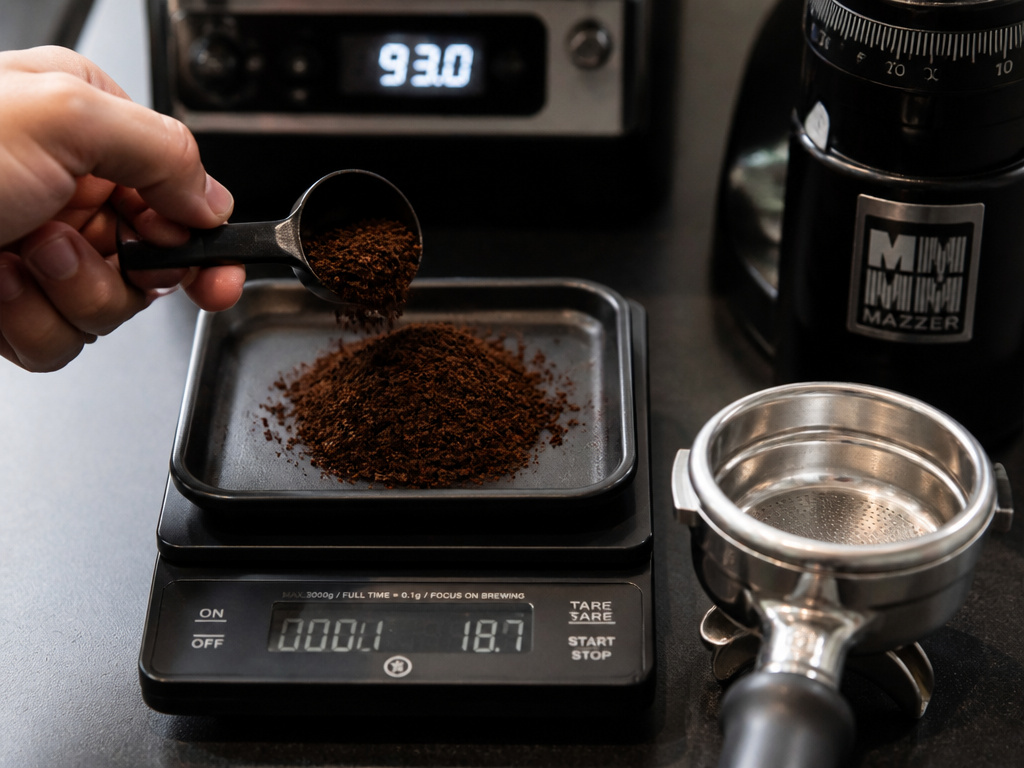
You can’t tweak what you can’t measure. These tools move you from guesswork to precision.
| Tool | Why It’s Critical for Dark Roast | What Happens Without It |
|---|---|---|
| Scale (0.1g) | Ensures accurate dose despite bean density changes. | Volumetric dosing under-doses by 10-15%, producing a weak, fast, sour shot. |
| Temperature-Controlled Kettle or Machine | Allows you to lower brew temperature to the 90-93°C sweet spot. | Water at 96°C+ scorches the coffee, extracting harsh bitterness that overwhelms flavor. |
| Burr Grinder | Provides consistent particle size for even extraction. | A blade grinder creates fines that over-extract and boulders that under-extract, leading to a muddled, both bitter and sour cup. |
| Water Filter / Third Wave Water | Controls mineral content, which dramatically impacts flavor clarity. | Hard water can make dark roast taste flat and chalky; soft water can make it taste sharp and sour. |
The ingredient list is short but vital. Start with freshly roasted dark roast espresso blends or single-origin beans known for chocolatey profiles. Then, address your water. Tap water’s mineral content is a wild card. Using a filter pitcher is a good start. For the most control, consider a product like Third Wave Water’s Dark Roast profile mineral packets, designed to optimize extraction for this specific roast level.
The Science Behind the Flavor: Chlorogenic Acids & Melanoidins

To understand why the method works, look at the chemistry. A 2015 study in Food Science and Biotechnology tracked how roasting degree changes coffee’s composition. Two findings are key for dark roast lovers.
First, chlorogenic acids, a major source of perceived acidity and astringency, break down significantly as roast temperature increases. A dark roast has much lower acidity than a light roast. This is why you don’t get the bright, fruity notes; those compounds are gone.
Second, the Maillard reaction and pyrolysis produce melanoidins. These large, brown molecules contribute to the body, bitterness, and dark color. They also contain antioxidants. Because they are more abundant and easier to extract in dark roasts, they dominate the flavor profile. Your brewing goal is to extract these melanoidins and the remaining sugars without pulling out the carbon-like bitter compounds created at the very end of the roasting spectrum. That’s precisely what the coarser grind and lower temperature achieve.
This chemical shift also explains why some coffee additives for energy, like MCT oil, pair well with dark roast. The robust, bitter base can carry the fat without tasting muddy.
Storing Dark Roast Ground Coffee: What Actually Works
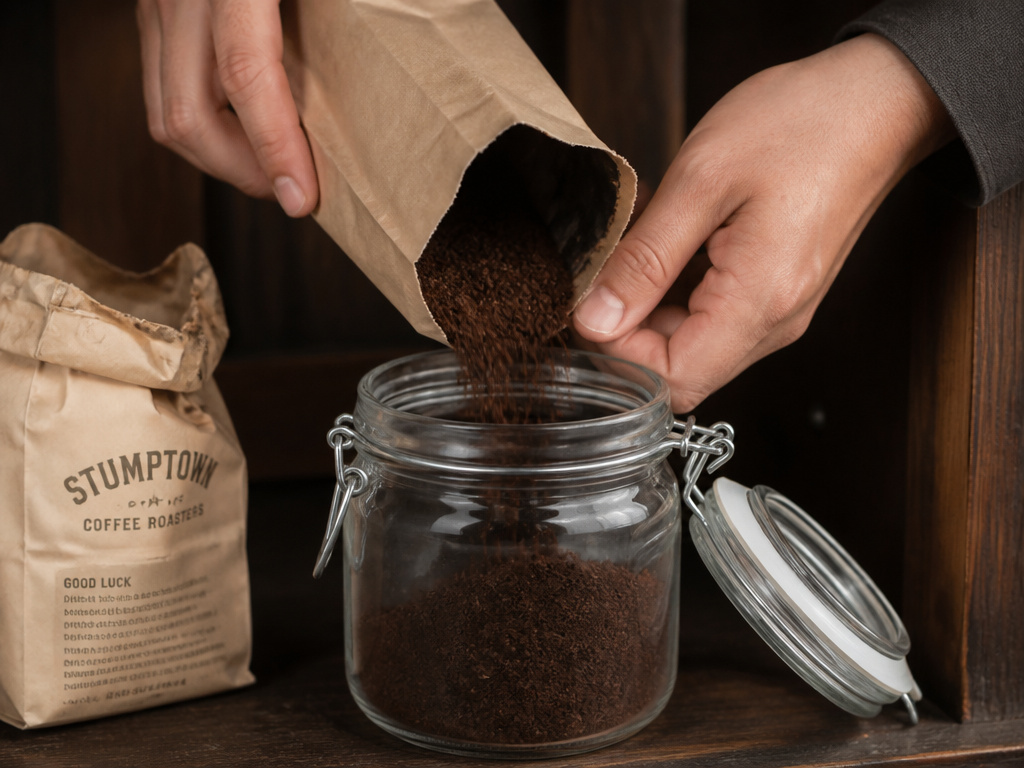
Pre-ground coffee is at its peak for about 15 minutes after grinding. Since we’re often using pre-ground for espresso, storage is a damage-control game. The enemy is oxygen, not time.
Never store ground coffee in the refrigerator or freezer. When you remove the cold container, moisture condenses on the coffee particles. This accelerates staling and can introduce off-flavors from other foods.
The best practice is to buy whole beans and grind only what you need for the day. If you must use pre-ground dark roast espresso coffee, transfer it immediately from the bag to a rigid, airtight container. A canning jar with a rubber-sealed lid works. Store it in a cool, dark cupboard, not on the counter by the stove. Use it within two weeks of opening. After that, the aromatic oils that carry flavor have oxidized, and you’re left brewing cardboard notes no matter how perfect your technique.
Frequently Asked Questions
Can I use dark roast espresso ground coffee in a regular coffee maker?
Yes, but you should adjust there too. Use a slightly coarser grind if possible, and lower your brewer’s temperature if it has a setting. The result will be a bold, low-acidity cup, but it may lack the complexity of a lighter roast suited for drip brewing.
Is there more or less caffeine in dark roast espresso?
By weight, there is roughly the same amount of caffeine. However, because dark roast beans are less dense, a scoop by volume will contain fewer beans and thus slightly less caffeine than a scoop of light roast. If you dose by weight (as you should), the espresso caffeine content is consistent across roasts.
Why does my dark roast espresso taste sour and bitter at the same time?
This is a classic sign of uneven extraction, often caused by an inconsistent grind from a blade grinder. The tiny fines over-extract (bitter) while the large boulders under-extract (sour). Investing in a quality burr grinder is the most effective fix.
What’s the best way to reduce bitterness if my shot is already pulled?
tiny pinch of salt in coffee can neutralize perceived bitterness by blocking certain bitter receptors on the tongue. Start with two or three grains dissolved in the cup. Alternatively, try sweetening with brown sugar sweetener, whose molasses notes complement dark roast’s chocolate profile.
Should I use single-origin or blended dark roast for espresso?
Both can work. A high-quality espresso blend is crafted for balance and consistency in espresso machines. A single-origin dark roast can offer unique, powerful notes but may be less forgiving during extraction.
Before You Go
Dark roast espresso ground coffee demands a different approach. Forget the one-size-fits-all espresso recipe. Success lies in three deliberate shifts: coarsen the grind, lower the temperature, and shorten the shot. These adjustments respect the bean’s chemistry, extracting the rich chocolate and caramel while leaving the ash behind. Remember to dose by weight on a scale, it’s the only way to account for the bean’s lower density. Start with an 18g dose, a 300-micron grind, 92°C water, and a 27g output. Taste, then tweak. That’s how you turn a potentially bitter shot into a balanced, powerful one.
