
Is Cold Brew Coffee Less Acidic? The Science-Backed Answer
Cold brew coffee is less acidic than hot-brewed coffee because cold water extracts fewer acidic compounds, particularly those associated with a sharp, biting taste. Scientific studies measure this as lower titratable acidity, with one 2017 study in Food Research International reporting cold brew at 1.31 g/L versus hot brew at 1.48 g/L.
Most people reach for cold brew hoping it will solve their heartburn. They hear it’s “70% less acidic” and expect a magic bullet. The reality is more nuanced, and getting it wrong means you still get that familiar stomach pang—just from a drink that took a full day to make.
This guide breaks down the peer-reviewed science on cold brew coffee acid, explains the difference between pH and what you actually taste, and gives you specific brewing adjustments to make your cold brew as gentle as possible.
Key Takeaways
- The key metric is titratable acidity, not just pH. Cold brew typically has 10-15% less measurable acid than hot brew.
- Chlorogenic acids degrade in hot water. Cold brewing preserves more of them, which can contribute to a perceived brightness or tang that some mistake for harsh acidity.
- Grind size and steeping time are your primary controls. A coarser grind and a shorter steep (12-16 hours) generally yield a milder, less astringent cup.
- Your coffee beans matter more than the method. A dark roast, low-acid origin bean (like Brazil or Sumatra) brewed hot will often be smoother than a light roast, high-acid Ethiopian bean brewed cold.
- Dilution is critical. Cold brew concentrate can be surprisingly potent. Cutting it with water or a low-acid milk alternative before drinking reduces the acid load per sip.
The Science of Acidity: pH vs. Titratable Acidity
You need to understand two terms. pH measures the potential hydrogen ions in a solution—its chemical activity. Titratable acidity (TA) measures the total amount of acid present, the stuff that actually interacts with your stomach.
A 2017 study published in Food Research International by Rao, Fuller, and Green provides the numbers. They found the mean pH of hot brew was 5.06, while cold brew was 5.13. That difference is tiny, almost negligible on a logarithmic scale. The real story is in the titratable acidity: hot brew measured 1.48 grams per liter, cold brew measured 1.31 g/L. That’s an 11.5% reduction in actual acid content.
Cold water extraction yields a beverage with statistically lower titratable acidity than hot water extraction, even when the pH values appear similar. This is due to the selective dissolution of acidic compounds at different temperatures.
TL;DR: Cold brew has less total acid (titratable acidity), not just a different pH. Your stomach feels the total acid load.
Why Does My Cold Brew Still Taste Sour or Sharp?
This is where the commodity advice falls apart. If cold brew has less acid, why does that batch you made still bite? Two reasons. First, your taste buds are detecting specific acids. Malic acid tastes apple-like, citric acid is lemony, and acetic acid is vinegary. Cold water might extract less of the harsh, bitter-tasting compounds, but it can still pull these brighter acids.
Second, and this is critical, cold brewing preserves chlorogenic acids. These are antioxidants that break down when exposed to heat. A 2011 study in the Journal of Food Science noted their thermal instability. In your cup, chlorogenic acids can present as a tangy, almost tea-like brightness. It’s not the same as the burning acidity of an over-extracted hot coffee, but your brain might register it as “acidic.”
The bean’s origin dictates its acid profile. A light roast Ethiopian Yirgacheffe, famous for its citric and floral notes, will express those acids even in a cold brew. You cannot brew the acid out of a high-acid bean.
| Acid Type | Common Flavor Note | Extraction in Cold vs. Hot Brew |
|---|---|---|
| Chlorogenic | Tangy, tea-like, bright | Higher in cold brew (heat degrades it) |
| Quinic | Bitter, astringent | Higher in hot brew (forms from breakdown of other acids) |
| Citric | Lemon, citrus | Similar in both, depends on bean origin |
| Acetic | Vinegar, sour | Similar in both, often a sign of fermentation |
How Your Brewing Method Directly Impacts Acidity
You control three variables: grind size, water-to-coffee ratio, and steeping time. Each one changes the acid profile.
A coarse grind is non-negotiable. Fine grounds have more surface area. More surface area means over-extraction, which pulls out those bitter, astringent quinic acids even in cold water. Your cold brew will taste harsh and muddy. Use a setting slightly coarser than you would for a French press.
Common mistake: Using a fine grind to speed up extraction — it forces out bitter compounds and creates a silt-filled brew that tastes harsh within 8 hours.
The standard ratio is 1:8 (coffee to water) for a ready-to-drink brew, or 1:4 for a concentrate. A stronger ratio (more coffee) doesn’t mean more acid extraction. It means a more concentrated flavor and caffeine content. Diluting a concentrate with water or milk is one of the easiest ways to lower the acid concentration in your final serving glass.
Steeping time is the most debated variable. The YouTube advice ranges from 8 to 48 hours. A Scientific Reports study on cold brew characteristics found that extraction plateaus after 18-24 hours. After that, you’re not pulling more flavor, you’re pulling more tannins and woody compounds. For a lower-acid result, aim for 18 hours. A 24-hour steep is fine, but taste it then. If it’s getting bitter, strain it.
The Tools That Actually Matter
You don’t need a fancy system. A large mason jar, a spoon, and a filter are enough. The filter is where people get tripped up. A standard paper coffee filter will catch the fine silt that carries over-extracted, bitter flavors. A metal mesh sieve alone will let them through, contributing to a rougher, more astringent finish.
If you’re serious about clarity and smoothness, double-filter. Pour through a metal sieve first to catch the big grounds, then through a paper filter or a super-fine nut milk bag. The difference in mouthfeel is immediate. It’s a cleaner, silkier cup.
How to Brew a Low-Acid Cold Brew (Step-by-Step)
This method prioritizes a smooth, low-acid result over sheer speed.
- Choose your beans. Start with a medium or dark roast from a low-acid origin. Brazilian or Sumatran beans are reliable choices. The roast level and origin have a bigger impact on final acidity than any brewing tweak.
- Grind coarse. Use a burr grinder set to its coarsest setting. The grounds should look like rough breadcrumbs or sea salt. Grind consistency from a burr grinder prevents the uneven extraction that creates sour and bitter notes in the same batch.
- Combine and saturate. Add 1 cup of coarse grounds to a 2-quart jar. Pour in 8 cups of cold, filtered water. Stir vigorously for 30 seconds. Every ground must be wet. This initial bloom ensures even extraction from the start.
- Steep in the fridge. Cover the jar and place it in the refrigerator. Not on the counter. The cooler temperature slows extraction, favoring sweeter, smoother compounds over harsh acids. Steep for 18 hours.
- Strain thoroughly. Set a fine-mesh sieve over a large bowl. Line it with a large paper coffee filter or a few layers of cheesecloth. Slowly pour the brew through. Let it drip fully; don’t squeeze the grounds.
- Dilute and serve. This makes a concentrate. Dilute it 1:1 with water, or to your taste. For an even gentler drink, use a low-acid milk like oat milk. The fat and protein can further buffer the acids.
TL;DR: Use dark roast beans, grind very coarse, steep for 18 hours in the fridge, and double-filter. Dilute well before drinking.
Cold Brew vs. Hot Brew: A Direct Comparison
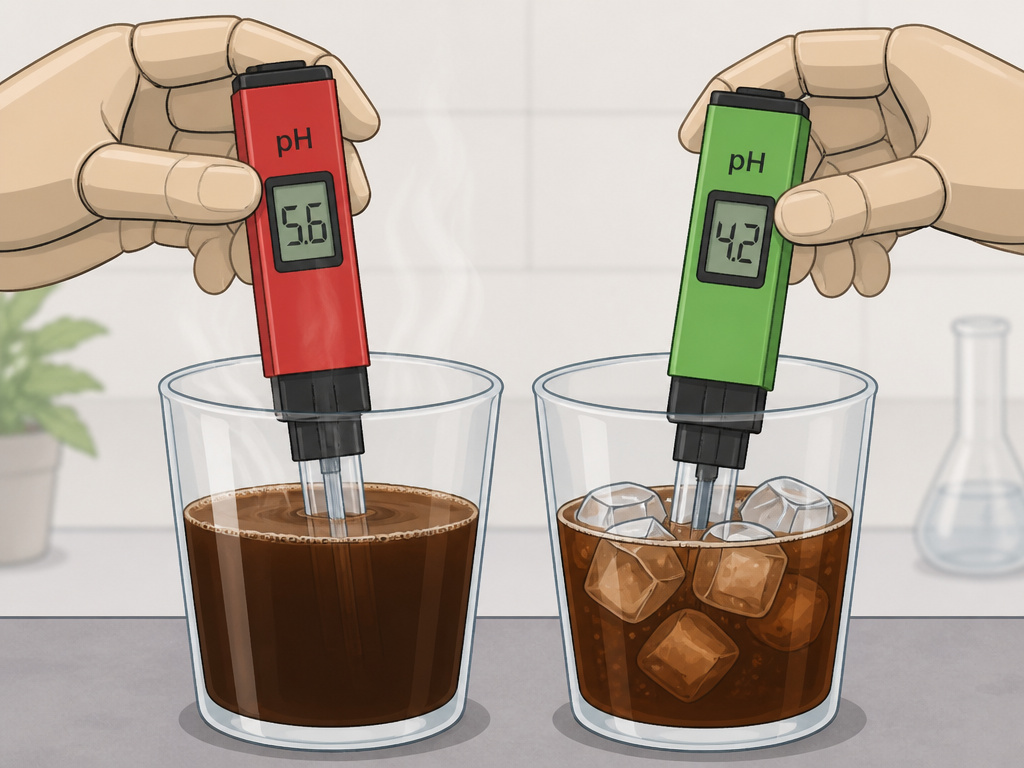
Let’s move past vague claims. Here’s what happens in your cup and your body.
Flavor Profile: Hot brew, with its rapid extraction, creates a complex, volatile aroma and a fuller body. It can highlight both bright acids and deep caramelized sugars. Cold brew mutes the high notes and emphasizes chocolate, nut, and smooth sweet flavors. It loses some aroma but gains in perceived smoothness.
Caffeine Content: This is a common mix-up. Because cold brew is often a concentrate, people think it’s inherently higher in caffeine. An NIH study comparing cold and hot brew clarifies this. When compared at the same drinking strength, cold brew usually has slightly less caffeine. The cold water is less efficient at extracting caffeine molecules. If you drink cold brew concentrate straight, yes, you’re getting a massive dose. Diluted to normal strength, it’s comparable or lower.
Digestive Impact: The lower titratable acidity of cold brew is the main reason it’s easier on sensitive stomachs. The reduced acid load is less likely to trigger heartburn or acid reflux. Furthermore, the coffee and digestion link isn’t just about acid; certain compounds in hot coffee can stimulate gastric acid production. The slower, cooler extraction of cold brew may result in lower levels of these stimulants.
| Aspect | Cold Brew | Hot Brew | Winner for Low Acid |
|---|---|---|---|
| Titratable Acidity | Lower (~1.31 g/L) | Higher (~1.48 g/L) | Cold Brew |
| Chlorogenic Acid | Higher (preserved) | Lower (degraded by heat) | Draw |
| Quinic Acid (Bitterness) | Lower | Higher | Cold Brew |
| Caffeine (at equal strength) | Slightly Lower | Slightly Higher | Cold Brew |
| Body & Mouthfeel | Smooth, silky | Fuller, richer | Personal Preference |
Troubleshooting Your Acidic Cold Brew
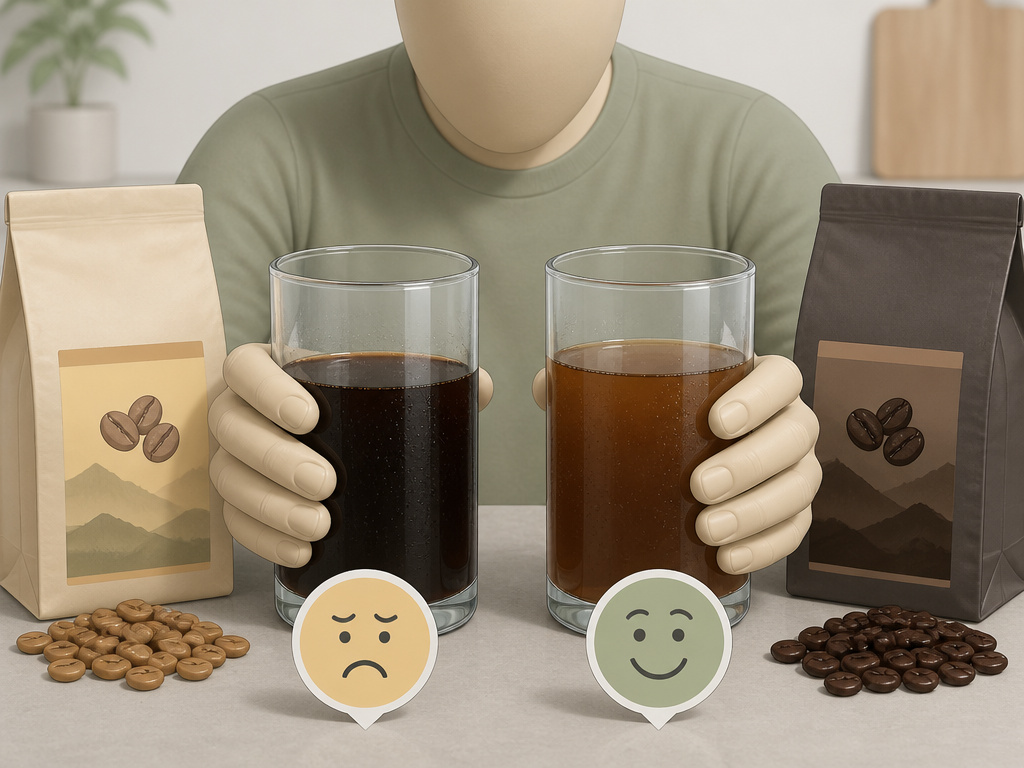
Your batch came out too sharp. Here’s how to diagnose and fix it.
Problem: It tastes sour or vinegary.
- Likely Cause: Your beans are a very light roast from a high-acid region (e.g., Kenya, Ethiopia). The cold water is still extracting those citric and malic acids.
- The Fix: Switch beans. Use a dark roast Brazilian or Sumatran. Next time, try a slightly shorter steep (14-16 hours).
Problem: It tastes bitter and astringent.
- Likely Cause: Your grind is too fine, your steep time is too long (over 24 hours), or you used stale coffee.
- The Fix: Grind coarser. Set a timer for 18 hours. Always use fresh beans (roasted within the last 2-4 weeks).
Problem: It gives me heartburn even though it’s cold brew.
- Likely Cause: You’re drinking the concentrate undiluted, or your “low-acid” bean is actually a light roast.
- The Fix: Dilute your concentrate with at least an equal part water or milk. Consider an almond milk acidity check—some dairy alternatives are more basic and can better neutralize acids. Also, review your bean choice.
Common mistake: Blaming the cold brew method for heartburn when the culprit is drinking a highly concentrated extract made from light roast beans. Dilution and bean selection fix 90% of issues.
Frequently Asked Questions
Is cold brew coffee less acidic than iced coffee?
Yes, categorically. Iced coffee is hot-brewed coffee that’s been cooled. It contains all the acids extracted at high temperatures, which are then locked in when you chill it. Cold brew never encounters heat, so it lacks that full spectrum of hot-extracted acids.
Can I make cold brew with pre-ground coffee?
You can, but you lose control. Pre-ground coffee is almost always ground for drip machines, which is too fine for ideal cold brew. It will over-extract and taste bitter. If you must use it, drastically reduce your steeping time to 8-12 hours.
Does adding milk reduce the acidity of cold brew?
Yes, it can. The proteins in milk (or milk alternatives) act as buffers, neutralizing some of the acids. This is why a cold brew latte often feels smoother than black cold brew. The fat content also coats your stomach lining, providing a physical barrier.
How long does homemade cold brew last?
When stored in an airtight container in the refrigerator, cold brew concentrate stays at peak flavor for about 1 week. After 2 weeks, it’s still safe to drink but will taste noticeably flatter and more muted. Never store it at room temperature.
Do coffee filters affect acidity?
Paper coffee filters, especially bleached ones, trap oils and fine particulates called diterpenes. These compounds can contribute to bitterness and a heavier body. By filtering them out, you get a cleaner, brighter cup that might allow more perceived acidity to come through. An unfiltered method (like a French press for hot coffee) retains these oils, resulting in a fuller but sometimes rougher taste.
Before You Go
Cold brew is a genuinely less acidic option, but it’s not a universal cure. The science shows a real reduction in titratable acidity, around 11-15%, which matters for your digestion. Your perception of taste, however, is tied to specific acids that cold water doesn’t eliminate.
Start with the right bean—a dark roast from a low-acid origin. Grind it coarse, steep it in the fridge for 18 hours, and filter it well. Dilute the concentrate. This process maximizes smoothness and minimizes the compounds that cause discomfort.
If you still experience issues, look beyond the brew method. Your overall coffee caffeine content and individual sensitivity play huge roles. Cold brew is a tool, not a magic wand. Use it to explore a different, smoother side of coffee, but let the beans and your technique do the real work.
