
When Did Iced Coffee Become Popular | The Tipping Point
Iced coffee became a mainstream, everyday obsession in the United States around 2015, when Starbucks rolled out cold brew nationally. This capped a decade of build-up where specialty roasters like Blue Bottle (2002) and Stumptown legitimized bottled cold brew and nitro taps, while social media platforms like Instagram and TikTok turned the drink’s visual appeal into a personal identity marker.
Most people think iced coffee was always popular. They miss the century and a half where it was a regional oddity, a soldier’s field ration, or a niche café offering. The drink existed, but it wasn’t a cultural force.
This guide traces the real timeline. We’ll start in 1840 Algeria, move through 20th-century hardware inventions, and land on the specific business decisions and social media shifts that made iced coffee unavoidable by the mid-2010s.
Key Takeaways
- The first iced coffee, Mazagran, was invented in 1840 by French soldiers in Algeria, but it remained a regional curiosity for over a century.
- Hardware innovations like the Toddy cold brew system (1964) and Kyoto-style drip towers created new, less-bitter cold coffee categories, but they stayed within specialty circles.
- The modern craft movement began around 2002 with Blue Bottle Coffee and accelerated in 2012 when Blue Bottle and Stumptown launched bottled cold brew, giving the category shelf-stable credibility.
- Starbucks’ national cold brew rollout in 2015 was the tipping point, moving cold coffee from a seasonal specialty to a year-round, mass-market menu item.
- Social media, particularly Instagram after 2010 and later TikTok, transformed iced coffee from a beverage into a visual status symbol and personal identity anchor.
From Colonial Algeria to Cafeteria Staple
The story doesn’t start in a Brooklyn café. It starts in the sweltering North African desert. In 1840, French Foreign Legion soldiers stationed in Algeria needed a way to stay alert without drinking hot coffee in the heat. Their solution was Mazagran, sweetened coffee quickly cooled with ice and served in a tall glass. This was a field ration, not a trendy drink. It migrated to France and even Portugal, where it evolved to include lemon. But for over a hundred years, iced coffee remained a geographically specific answer to a climate problem.
Other cultures developed their own cold coffee workarounds with the ingredients they had. In Vietnam, where fresh milk was historically unreliable and expensive, cà phê sữa đá used sweetened condensed milk as both dairy and sweetener, creating a uniquely rich and potent drink. In Japan, a method of brewing hot coffee directly over ice, now called Japanese iced coffee, preserved brighter acidity, while the elaborate Kyoto-style cold drip towers produced a concentrate of unusual clarity over 6 to 12 hours.
The French Foreign Legion’s Mazagran, invented in Algeria in 1840, is the first documented iced coffee. It was a pragmatic field ration, not a commercial product, and its popularity remained regional for decades.
These were parallel developments, not a unified trend. In American diners and cafeterias through the mid-20th century, “iced coffee” typically meant stale, hot-brewed coffee poured over ice, often resulting in a watered-down, bitter cup. It was a seasonal afterthought. The real change required a new way of thinking about coffee extraction itself, and that came from an inventor in the 1960s.
The Hardware Revolution: Toddy and the Cold Brew Breakthrough
Iced coffee couldn’t become a daily habit until it tasted good consistently. Hot coffee poured over ice tastes thin and sour because the rapid cooling locks in certain acidic compounds. The solution was to never apply heat in the first place. Cold brew coffee, made by steeping coarse grounds in cold water for 12 to 24 hours, produces a concentrate with about two-thirds less acidity. This was the game-changer, and it needed a dedicated tool.
In 1964, Todd Simpson invented the Toddy cold brew system after a trip to Peru. It was a simple two-stage immersion brewer with a felt filter. For the first time, making smooth, low-acid cold brew at home or in a café was repeatable and mess-free. The Toddy created an entirely new product category: coffee concentrate. This concentrate could be diluted with water or milk and served over ice without turning acrid. The KitchenAid Cold Brew Coffee Maker, a later countertop appliance, follows this same principle, producing 840 mL of concentrate designed to be mixed at a 1:3 ratio.
| Brewing Innovation | Year | Key Impact |
|---|---|---|
| Mazagran | 1840 | First documented iced coffee; a field ration, not a commercial product. |
| Toddy Cold Brew System | 1964 | Made low-acid cold brew concentrate repeatable for home and commercial use. |
| Kyoto-style Cold Drip | 20th Century | Created a ultra-clarified, potent concentrate, cementing cold coffee’s craft status. |
| Japanese Iced Coffee | Late 20th Century | Popularized flash-chilling hot coffee to preserve bright, tea-like acidity. |
These tools solved the taste problem. But they were still niche, the domain of coffee enthusiasts and a handful of forward-thinking cafes. For cold brew to jump to the mainstream, it needed the marketing muscle and distribution channels of the modern specialty coffee movement.
TL;DR: The Toddy brewer (1964) made consistent, low-acid cold brew possible, creating the concentrate category that forms the base of most modern commercial iced coffee.
The Craft Catalyst (2002–2012)
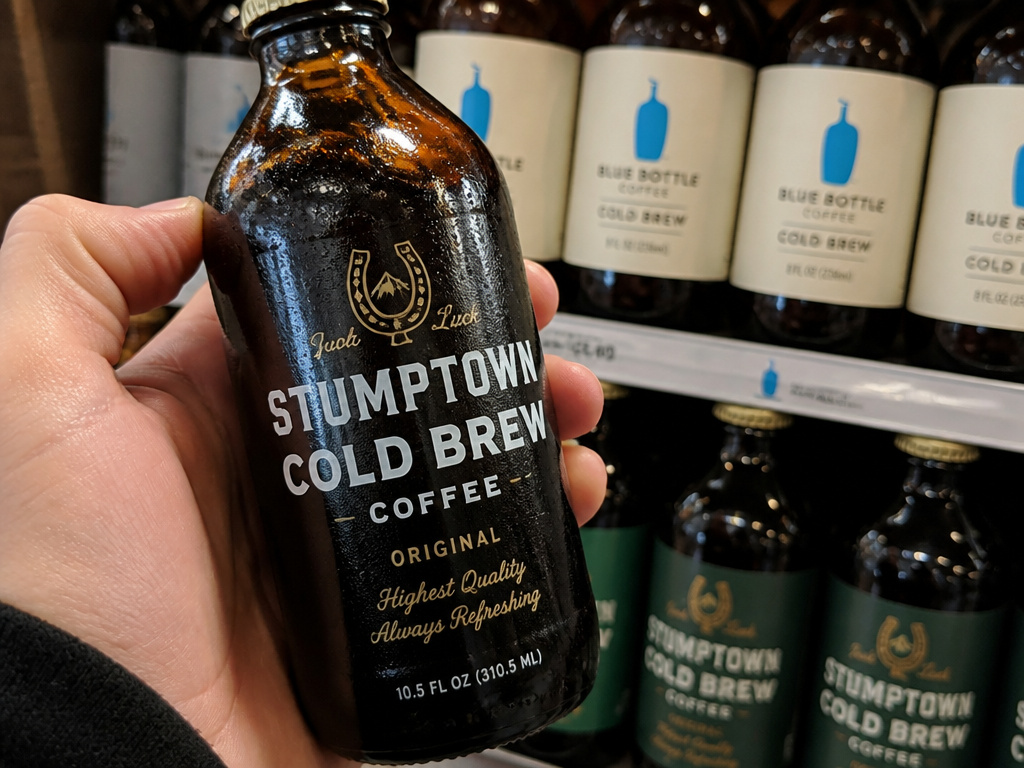
The new millennium set the stage. The “third wave” of coffee emphasized bean origin, light roasts, and precise brewing. This culture of experimentation was the perfect incubator for iced coffee’s reinvention. In 2002, James Freeman started Blue Bottle Coffee in Oakland, famously offering a New Orleans-style iced coffee sweetened with chicory. This wasn’t diner slush; it was a carefully crafted product.
The real legitimacy came when cold brew escaped the draft tap and hit the shelf. In 2012, both Blue Bottle and Portland’s Stumptown Coffee Roasters launched bottled cold brew products. This was critical. Bottling meant cold brew was no longer a perishable café-only item; it was a stable, grab-and-go consumer good you could find in grocery stores. It gave the category scale and prestige.
Then, in 2013, Stumptown ran the first commercial nitro cold brew tap at its Brooklyn location. Infusing cold brew with nitrogen gas created a smooth, creamy texture and a visually appealing cascading effect like a Guinness stout. It made cold brew an experience. The visual spectacle was tailor-made for the next force that would propel iced coffee into the stratosphere: social media.
Common mistake: Thinking cold brew and nitro cold brew are the same. Nitro is cold brew infused with nitrogen gas, which changes the texture and mouthfeel dramatically, it’s not just a flavor difference.
The 2015 Tipping Point: Starbucks and Social Media
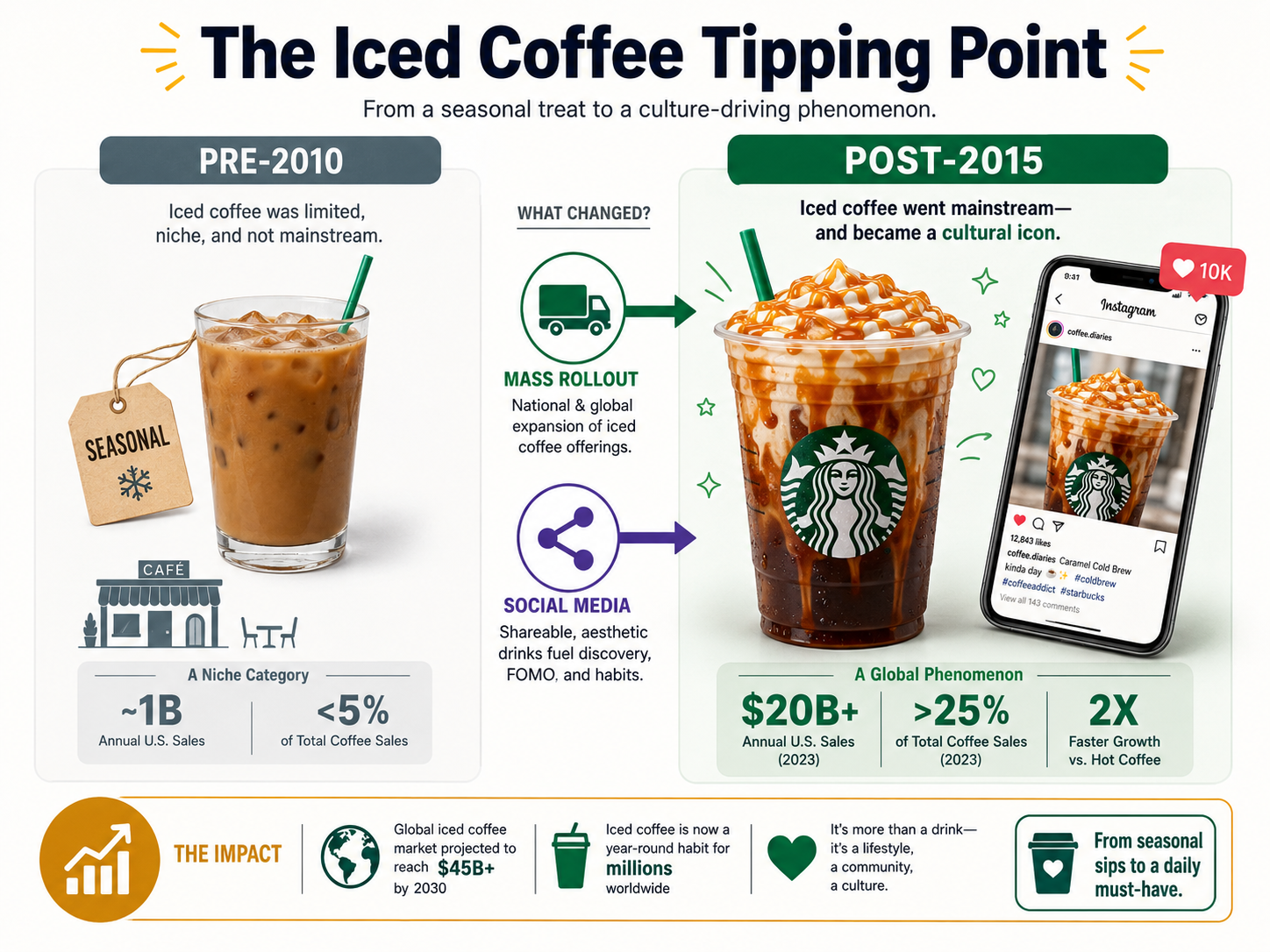
By the early 2010s, all the pieces were in place: better brewing methods, craft credibility, and bottled convenience. But the mass market was still only dabbling in iced coffee as a summer special. The final push came from the world’s largest coffee chain. In 2015, Starbucks rolled out cold brew nationally across the United States.
This was the tipping point. Starbucks’ massive distribution and marketing power moved cold brew from a specialty item to a mainstream menu staple available year-round. It signaled to every other café and quick-service restaurant that cold coffee was no longer a seasonal sidebar. It was a core product. By 2016, nitro cold brew was a fixture in cafes, with canned versions appearing shortly after.
This commercial explosion happened in parallel with a social one. As noted in a YouTube documentary on the trend, “Iced coffee didn’t really blow up in America until 2010… Suddenly, iced lattes, cold brew, and other endless flavors weren’t just drinks. They were content and status symbols.”
Platforms like Instagram, and later TikTok, turned the aesthetic of iced coffee, the clear plastic cup, the caramel drizzle, the layered cold foam, into a highly shareable visual. Your drink became part of your personal brand. The ritual of posting your morning coffee became a daily identity marker for millions. This social validation loop drove demand relentlessly upward, making iced coffee a multi-billion dollar segment of the coffee industry.
| Factor | Pre-2010 Role | Post-2010 Role |
|---|---|---|
| Product | Seasonal, often poorly made diner coffee. | Year-round, craft-focused cold brew and nitro taps. |
| Distribution | Café-only, mostly draft. | Bottled, canned, and available in grocery stores nationwide. |
| Marketing | Limited, summer-focused promotions. | Core menu item backed by massive chain rollouts (Starbucks, 2015). |
| Cultural Status | A beverage choice. | A personal identity marker and social media content staple. |
The difference is stark. Before 2010, iced coffee was something you drank. After 2015, it was something you were.
TL;DR: Starbucks’ 2015 national rollout provided mass-market legitimacy, while Instagram and TikTok turned the drink’s visual appeal into a social identity, creating a feedback loop that cemented iced coffee as an everyday obsession.
What This Means for Your Cup Today

The history isn’t just trivia. It explains why your options today are so vast and why quality varies wildly. Understanding the timeline helps you navigate the modern iced coffee landscape.
- You’re drinking a product of 1964. If you order a smooth, chocolatey cold brew, you’re tasting the direct result of Todd Simpson’s Toddy system. That low-acid profile is a deliberate invention.
- The “craft” vs. “chain” divide is about a decade old. The meticulous single-origin cold brew at your local roaster traces its ethos to Blue Bottle circa 2002. The consistent, sweetened version at the drive-thru is a product of the post-2015 standardization.
- Social media still shapes the menu. The current obsession with layered cold foams, vibrant syrups, and photogenic clear cups is a direct continuation of the Instagram effect that took hold after 2010. Cafes design drinks to be shared online.
This evolution also highlights a key choice for home brewers. You can follow the Japanese iced coffee method for a brighter, tea-like cup, or commit to the 12–24 hour steep for a classic cold brew concentrate. Each has its roots in a different branch of this historical tree.
I prefer the Japanese iced coffee method for light roast single-origin coffees from Ethiopia or Colombia. The flash-chilling preserves the floral and fruity notes that a long cold brew steep can mute. It turns a brewing limitation, heat, into a highlight.
Frequently Asked Questions
Was iced coffee popular in the 90s?
Not in its modern form. In the 1990s, iced coffee was generally a seasonal offering, often just hot coffee poured over ice, which resulted in a diluted and bitter drink. The smooth, dedicated cold brew and espresso-based iced lattes that define today’s market were rare outside of specialty coffee shops in major cities.
What is the difference between cold brew and iced coffee?
This is a fundamental distinction rooted in the history above. Iced coffee is traditionally brewed hot and then chilled or poured over ice. Cold brew is never heated; coarse grounds are steeped in cold water for 12-24 hours, producing a less acidic concentrate. Most high-quality commercial iced coffee today is actually cold brew.
Why did nitro cold brew become so popular?
Nitro cold brew’s popularity, which took off around 2016, is due to two factors: texture and theater. Infusing cold brew with nitrogen gas creates a smooth, creamy mouthfeel without adding dairy or sugar. Visually, the cascading bubble effect as it pours is highly distinctive and shareable, making it a perfect product for the social media era.
How did Vietnamese iced coffee develop separately?
Vietnamese iced coffee (cà phê sữa đá) developed due to local ingredient constraints. During the colonial period and after, fresh milk was scarce and expensive. Sweetened condensed milk, which was shelf-stable and imported, became the default dairy and sweetener, creating the drink’s signature rich, sweet, and strong character. It’s a delicious example of innovation within limitation.
When did pre-bottled iced coffee start appearing in stores?
The major shift happened in 2012 when pioneering specialty roasters Blue Bottle and Stumptown launched their bottled cold brew products. This move legitimized cold brew as a shelf-stable consumer good, paving the way for the countless bottled and canned options you see in grocery stores today.
The Bottom Line
Iced coffee’s journey from a French soldier’s field ration in 1840 to a global social media staple wasn’t inevitable. It was built. It was built by an inventor in 1964 who figured out how to steep coffee without acid, by craft roasters in the early 2000s who treated it as a serious product, and by a coffee giant in 2015 who decided it belonged on every menu. Finally, it was adopted by a generation who turned a daily caffeine fix into a digital signature. The next time you lift that cold, condensation-covered cup, you’re holding over 180 years of history, innovation, and cultural shift. That’s a lot more interesting than just a drink.
{
“@context”: “https://schema.org”,
“@type”: “HowTo”,
“name”: “How to Trace the History of Iced Coffee Popularity”,
“totalTime”: “PT10M”,
“tool”: [
{
“@type”: “HowToTool”,
“name”: “Historical timeline template”
},
{
“@type”: “HowToTool”,
“name”: “Primary source documents (OEM manuals, historical accounts)”
}
],
“step”: [
{
“@type”: “HowToStep”,
“name”: “Identify the colonial origin point”,
“text”: “Locate the 1840 invention of Mazagran by French Foreign Legion soldiers in Algeria, the first documented iced coffee.”
},
{
“@type”: “HowToStep”,
“name”: “Track the 20th-century hardware innovations”,
“text”: “Note the 1964 invention of the Toddy cold brew system and the development of Kyoto-style slow-drip towers, which created new categories.”
},
{
“@type”: “HowToStep”,
“name”: “Pinpoint the specialty coffee catalyst”,
“text”: “Mark the early 2000s launches of Blue Bottle and Stumptown, whose bottled cold brew and nitro taps gave the category craft credibility.”
},
{
“@type”: “HowToStep”,
“name”: “Isolate the mass-market explosion”,
“text”: “Identify 2015 as the key year when Starbucks rolled out cold brew nationally, moving it from a niche to a mainstream menu staple.”
},
{
“@type”: “HowToStep”,
“name”: “Analyze the social media amplification”,
“text”: “Examine the period from 2010 onward, where Instagram and TikTok turned the aesthetic of iced coffee into a personal identity marker.”
}
]
}
{
“@context”: “https://schema.org”,
“@type”: “FAQPage”,
“mainEntity”: [
{
“@type”: “Question”,
“name”: “Was iced coffee popular in the 90s?”,
“acceptedAnswer”: {
“@type”: “Answer”,
“text”: “Not in its modern form. In the 1990s, iced coffee was generally a seasonal offering, often just hot coffee poured over ice, which resulted in a diluted and bitter drink. The smooth, dedicated cold brew and espresso-based iced lattes that define today’s market were rare outside of specialty coffee shops in major cities.”
}
},
{
“@type”: “Question”,
“name”: “What is the difference between cold brew and iced coffee?”,
“acceptedAnswer”: {
“@type”: “Answer”,
“text”: “This is a fundamental distinction rooted in the history above. Iced coffee is traditionally brewed hot and then chilled or poured over ice. Cold brew is never heated; coarse grounds are steeped in cold water for 12-24 hours, producing a less acidic concentrate. Most high-quality commercial iced coffee today is actually cold brew.”
}
},
{
“@type”: “Question”,
“name”: “Why did nitro cold brew become so popular?”,
“acceptedAnswer”: {
“@type”: “Answer”,
“text”: “Nitro cold brew’s popularity, which took off around 2016, is due to two factors: texture and theater. Infusing cold brew with nitrogen gas creates a smooth, creamy mouthfeel without adding dairy or sugar. Visually, the cascading bubble effect as it pours is highly distinctive and shareable, making it a perfect product for the social media era.”
}
},
{
“@type”: “Question”,
“name”: “How did Vietnamese iced coffee develop separately?”,
“acceptedAnswer”: {
“@type”: “Answer”,
“text”: “Vietnamese iced coffee (cà phê sữa đá) developed due to local ingredient constraints. During the colonial period and after, fresh milk was scarce and expensive. Sweetened condensed milk, which was shelf-stable and imported, became the default dairy and sweetener, creating the drink’s signature rich, sweet, and strong character. It’s a delicious example of innovation within limitation.”
}
},
{
“@type”: “Question”,
“name”: “When did pre-bottled iced coffee start appearing in stores?”,
“acceptedAnswer”: {
“@type”: “Answer”,
“text”: “The major shift happened in 2012 when pioneering specialty roasters Blue Bottle and Stumptown launched their bottled cold brew products. This move legitimized cold brew as a shelf-stable consumer good, paving the way for the countless bottled and canned options you see in grocery stores today.”
}
}
]
}
