
Espresso Roast vs Regular Coffee: The Agtron Scale Explained
This post contains affiliate links. As an Amazon Associate, we earn from qualifying purchases.
Espresso roast is not darker than regular coffee roast. It’s a roast profile engineered for high-pressure extraction, targeting an Agtron Gourmet Scale reading around 63, a medium roast that balances acidity and solubility under 9 bar pressure.
Most people think espresso roast is just a darker version of regular coffee beans. They grab the darkest bag on the shelf expecting a stronger shot. That’s wrong. The label “espresso roast” signals a profile tuned for the specific physics of an espresso machine, not a color.
This guide unpacks the Agtron numbers, the industrial reasons grinders push darker, and why your extraction percentage decides whether you even need an espresso roast.
Key Takeaways
- Espresso roast targets a specific Agtron Gourmet Scale reading (~63), which is a medium roast, not a dark roast.
- Industrial grinders roast darker to increase brittleness for uniform fine particles and to manage oxidation risk in pre-ground packaging.
- Your espresso machine’s extraction percentage decides roast suitability, above 19.5%, even lighter roasts work.
- Milk-based drinks benefit from slightly darker roasts; black espresso needs a profile that controls acidity.
- Omni-roasting (one roast for all methods) is viable with high-extraction gear but often sacrifices sweetness in espresso.
What Does Espresso Roast Mean?
It means the roaster designed that bean’s development curve for 9 bar pressure. The Specialty Coffee Association’s cupping standard defines “cupping level roast” as an Agtron reading between 63–65. That’s a medium.
Common mistake: Choosing the darkest bag labeled “espresso”, the roast color is medium on the Agtron Gourmet Scale, and going darker than #65 burns out the bean’s origin flavors before the water even hits it.
Espresso machines force hot water through a compacted puck of finely ground coffee. The process extracts soluble material quickly, under pressure. A bean roasted for this environment needs enough structural development to withstand that force without turning sour or bitter. It’s a balancing act.
Roasters achieve this by extending the development phase after the bean’s first crack. They don’t just crank the temperature. They manage the rate of rise to build body and reduce acidity while preserving some of the bean’s inherent sweetness. The result looks darker than a light roast filter coffee, but it’s not a French roast.
TL;DR: Espresso roast is a medium roast (Agtron ~63) engineered for 9-bar extraction, not a dark roast.
The Industrial Reality
Commercial production changes the story. Large-scale roasters targeting espresso often push beans darker for two mechanical reasons.
First, darker roasts are more brittle. A Probat Probatone 5 roaster hitting 214–215°C produces beans that fracture into uniform fine particles more easily. Uniformity matters for pressurized extraction. An inconsistent grind chokes the machine or produces a weak, uneven shot.
Second, pre-ground espresso sells in supermarkets. The fine grind has exponentially more surface area than coarse filter grinds. Oxidation happens faster. To combat this, industrial packaging uses nitrogen flushing to achieve residual oxygen levels below 0.1%. The darker roast also masks the flavor degradation that occurs during shelf storage.
That’s why the darkest bag on the shelf often gets labeled “espresso roast.” It’s a shelf-stability and grind-consistency decision, not a flavor one.
| Industrial Driver | Target Outcome | Consumer Side Effect |
|---|---|---|
| Increased brittleness | Uniform fine grind for 9-bar extraction | Beans taste darker than needed for home grinding |
| Nitrogen flushing (N2) | Residual oxygen <0.1% in pre-ground packs | Masked oxidation flavors; roast dominates origin notes |
| Shelf stability | 6–12 month shelf life for pre-ground | Roast profile leans toward darker, more robust flavors |
Home grinders sidestep these issues. You buy whole beans, grind them fresh, and brew within weeks. You don’t need the industrial over-darkening.
The Extraction Percentage That Changes Everything
Your grinder and machine’s extraction efficiency decides what roast you can use. If you pull a shot with an extraction yield above 19.5%, the traditional “espresso needs a darker roast” rule breaks.
Scott Rao noted that on high-extraction grinders like an EK43, yields above 20.5% pull enough soluble material from lighter roasts that sourness disappears. The need to roast darker to combat acidity becomes less clear. Your machine is doing the work.
I ran a Colombia carbonic maceration bean roasted for filter through my home setup for a month. The first ten shots were sharp, almost vinegary. I recalibrated the grinder, dropped the dose from 18g to 16g, and extended the pre-infusion. By the third week, extraction hit 20.1%. The shot balanced. The roast was never meant for espresso, but the extraction percentage forced it to work.
High extraction changes the chemistry. More soluble solids enter the cup, including sugars that counteract acidity. It’s a mechanical fix for a roast mismatch.
TL;DR: If your extraction yield exceeds 19.5%, you can use lighter roasts for espresso without sourness.
Black Coffee vs. White Coffee

This is the real split. Roast for the end drink, not the brew method.
Black espresso, no milk, needs a roast profile that manages acidity and highlights the bean’s inherent sweetness. Over-darkening kills sweetness. Under-developing leaves acidity unchecked. The target is that Agtron 63–65 range.
White coffee, lattes, cappuccinos, often gets a slightly darker roast. Milk’s fat and sugar mask some acidity and add sweetness. A darker roast provides a stronger base flavor that stands up to the milk without disappearing. This is why many espresso-based drinks served in cafes use a roast a few points darker on the Agtron scale than a single-origin espresso served black.
| End Drink | Roast Profile Priority | Agtron Range (Gourmet Scale) |
|---|---|---|
| Black espresso | Manage acidity, preserve sweetness | 63–65 |
| Milk-based drinks (latte, cappuccino) | Strong base flavor to stand up to milk | 65–68 |
| Filter coffee (pour-over, drip) | Highlight origin nuance, floral/fruit notes | 58–62 |
Your choice depends on what you’re pouring into the cup. If you only drink black espresso, chase the medium roast that speaks to the bean. If you drown shots in milk, a darker roast won’t hurt.
Omni-Roasting: One Bean, All Methods
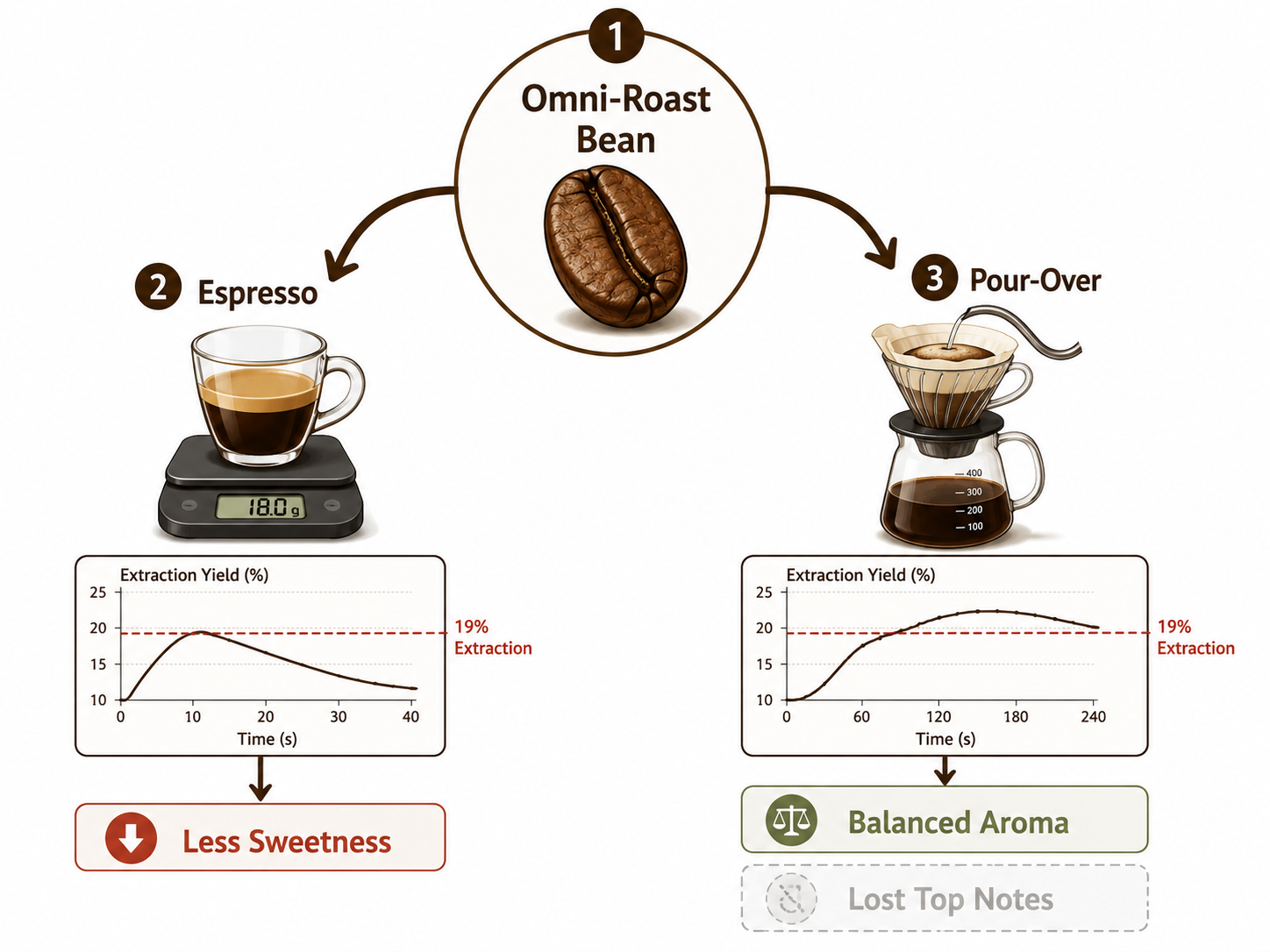
Omni-roasting is the practice of roasting one bean to taste good as both espresso and filter. It’s possible, but it trades optimization for convenience.
The PMC article on coffee aroma profiles found that a Columbia bean roasted with a carbonic maceration process (an omni-roast) scored highly for aroma and antioxidant activity in testing. However, in espresso preparation, it was rated the least acceptable in terms of sweetness compared to medium-dark roasts. The omni-roast sacrificed sweetness to achieve balance across methods.
Omni-roasting works if your extraction is high enough. Below 19%, you’ll miss the sweetness and body you expect from a dedicated espresso roast. Above that threshold, the bean’s other qualities shine through.
Home roasters experimenting with omni-roasts often find the espresso shot lacks the rounded sweetness of a dedicated profile. The filter cup, meanwhile, might lose some of the origin’s delicate top notes because the roast development went slightly longer. It’s a compromise.
For most drinkers, a dedicated roast for each method tastes better. For roasters selling one bag to many brewers, omni-roasting is a market-driven choice.
The Three Things to Check Before Buying
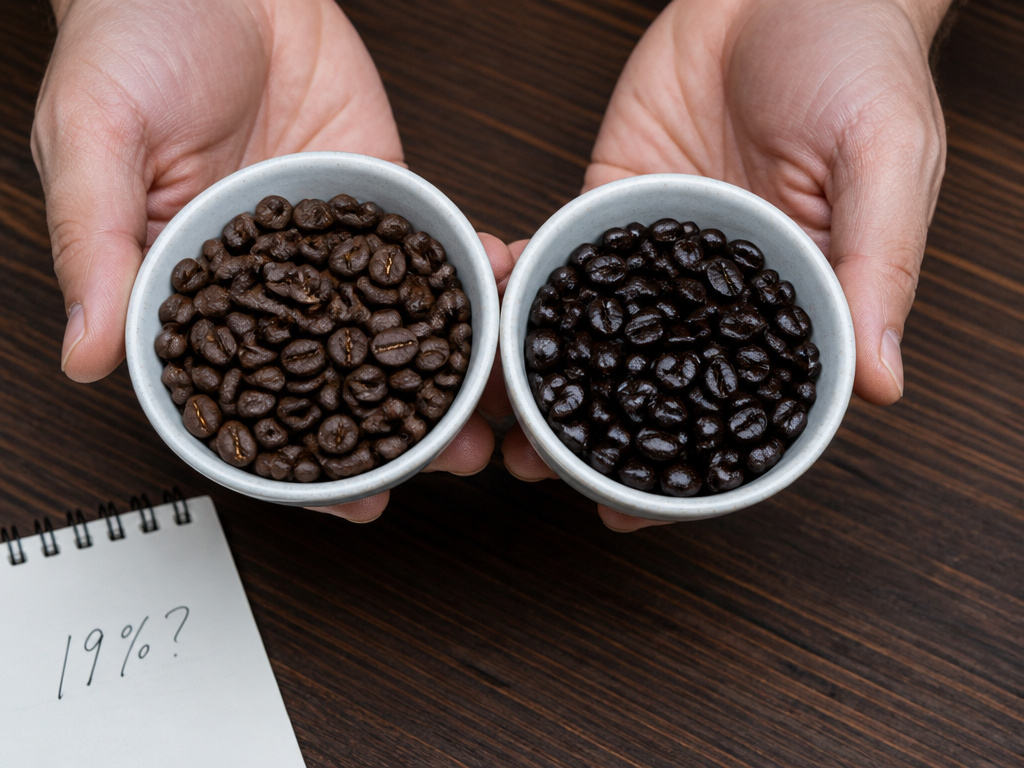
- Agtron or SCA roast color number. If the roaster publishes it, look for a number around 63. If they don’t, the bean’s appearance should be medium brown, not oily or shiny. Oily surfaces signal a roast past second crack, which is too dark for most espresso.
- Your extraction percentage. Know your machine’s typical yield. If you’re below 19%, stick with beans labeled for espresso. If you’re above 19.5%, you can explore lighter single-origin coffees and even some blonde roast beans.
- The end drink. Are you brewing black espresso or milk drinks? Black espresso demands a roast that controls acidity. Milk drinks can handle a darker, more robust base.
Skip the darkest bag on the shelf. That’s for shelf stability, not flavor.
Grind Consistency Is the Secret
The burr grinder is the unsung hero. Espresso requires a fine, consistent grind. A blade grinder produces a mix of dust, chunks, and medium particles. That inconsistency causes channeling, water finds the easiest path through the puck, extracting some parts over-extracted and others under-extracted.
A burr grinder crushes beans between two surfaces, producing uniform particles. Uniformity lets the 9-bar pressure extract evenly across the entire puck. This is why industrial roasters darken beans for brittleness. At home, a good burr grinder allows you to use a proper medium roast without worrying about particle inconsistency.
Invest in the grinder first. The roast matters less if your grind is inconsistent.
Frequently Asked Questions
Is espresso roast stronger than regular coffee?
No. Strength comes from concentration and extraction, not roast darkness. An espresso shot is concentrated because it uses more coffee per unit of water and extracts under pressure. A dark roast coffee brewed as filter can have more total caffeine because you drink a larger volume.
Can I use regular coffee beans in my espresso machine?
Yes, if your extraction yield is high enough (above 19.5%) and you grind fine enough. The shot might be brighter and more acidic than a dedicated espresso roast, but it will work. Start with a medium roast Arabica bean and dial in your grinder.
Why does espresso roast taste bitter sometimes?
Over-darkening. Many commercial “espresso” beans are roasted past the optimal Agtron range to ensure shelf stability and grind uniformity. That extra development produces bitter, roasted flavors that mask the bean’s origin characteristics. Look for roasters who publish their Agtron numbers.
Does espresso have more caffeine?
Per ounce, yes. A typical 1-ounce espresso shot contains about 64mg of caffeine. A 8-ounce cup of brewed coffee contains about 95mg. You drink more volume in brewed coffee, so the total caffeine is higher. The concentration is higher in espresso.
What’s the best roast for a cappuccino?
roast slightly darker than for black espresso, around Agtron 65–68. The milk’s sweetness and fat need a stronger base flavor to avoid getting washed out. Many roasters label this as “espresso roast” because it’s tailored for milk-based espresso drinks.
Before You Go
Espresso roast is a profile, not a color. Target the Agtron 63–65 range, not the darkest bag. Your extraction percentage decides whether you can venture into lighter roasts. And always grind with a burr grinder, inconsistency ruins any roast.
The industrial bag is darker for shelf life and grind uniformity. Your home setup doesn’t need those compromises. Pick a roast designed for your machine’s pressure, your grinder’s consistency, and your cup’s final form, black or white.
{
“@context”: “https://schema.org”,
“@type”: “HowTo”,
“name”: “How to Choose Between Espresso Roast and Regular Coffee Beans”,
“totalTime”: “PT5M”,
“tool”: [
{
“@type”: “HowToTool”,
“name”: “Agtron Gourmet Scale or SCA Roast Color Classification System tile #65”
},
{
“@type”: “HowToTool”,
“name”: “Espresso machine capable of 9 bar pressure”
},
{
“@type”: “HowToTool”,
“name”: “Burr grinder with fine-grind settings”
}
],
“step”: [
{
“@type”: “HowToStep”,
“name”: “Identify roast level with Agtron”,
“text”: “Check the bean’s roast color. Espresso roast targets an Agtron Gourmet Scale reading around 63, which is not dark but a medium roast designed for high-pressure extraction.”
},
{
“@type”: “HowToStep”,
“name”: “Match roast to brew method”,
“text”: “If you brew espresso, pick a bean roasted to withstand 9 bar pressure and produce a balanced cup with lower acidity. For filter methods, choose a bean roasted to highlight its origin’s nuanced flavors.”
},
{
“@type”: “HowToStep”,
“name”: “Consider the end drink”,
“text”: “For black espresso, prioritize roast development that manages acidity. For milk drinks like lattes, a slightly darker roast can better stand up to the milk’s sweetness.”
},
{
“@type”: “HowToStep”,
“name”: “Test extraction percentage”,
“text”: “If your espresso extraction exceeds 19.5%, the need for a darker roast diminishes. High extraction pulls more soluble material, reducing sourness even from lighter roasts.”
},
{
“@type”: “HowToStep”,
“name”: “Evaluate packaging”,
“text”: “Look for beans packaged with nitrogen flushing if buying pre-ground espresso. The increased surface area of fine grinds oxidizes faster, and N2 flushing preserves flavor.”
}
]
}
{
“@context”: “https://schema.org”,
“@type”: “FAQPage”,
“mainEntity”: [
{
“@type”: “Question”,
“name”: “Is espresso roast stronger than regular coffee?”,
“acceptedAnswer”: {
“@type”: “Answer”,
“text”: “No. Strength comes from concentration and extraction, not roast darkness. An espresso shot is concentrated because it uses more coffee per unit of water and extracts under pressure. A dark roast coffee brewed as filter can have more total caffeine because you drink a larger volume.”
}
},
{
“@type”: “Question”,
“name”: “Can I use regular coffee beans in my espresso machine?”,
“acceptedAnswer”: {
“@type”: “Answer”,
“text”: “Yes, if your extraction yield is high enough (above 19.5%) and you grind fine enough. The shot might be brighter and more acidic than a dedicated espresso roast, but it will work. Start with a medium roast Arabica bean and dial in your grinder.”
}
},
{
“@type”: “Question”,
“name”: “Why does espresso roast taste bitter sometimes?”,
“acceptedAnswer”: {
“@type”: “Answer”,
“text”: “Over-darkening. Many commercial \”espresso\” beans are roasted past the optimal Agtron range to ensure shelf stability and grind uniformity. That extra development produces bitter, roasted flavors that mask the bean’s origin characteristics. Look for roasters who publish their Agtron numbers.”
}
},
{
“@type”: “Question”,
“name”: “Does espresso have more caffeine?”,
“acceptedAnswer”: {
“@type”: “Answer”,
“text”: “Per ounce, yes. A typical 1-ounce espresso shot contains about 64mg of caffeine. A 8-ounce cup of brewed coffee contains about 95mg. You drink more volume in brewed coffee, so the total caffeine is higher. The concentration is higher in espresso.”
}
},
{
“@type”: “Question”,
“name”: “What’s the best roast for a cappuccino?”,
“acceptedAnswer”: {
“@type”: “Answer”,
“text”: “roast slightly darker than for black espresso, around Agtron 65–68. The milk’s sweetness and fat need a stronger base flavor to avoid getting washed out. Many roasters label this as \”espresso roast\” because it’s tailored for milk-based espresso drinks.”
}
}
]
}
