
What Is Single Origin Coffee? The True Meaning and Its Taste
Single origin coffee is an unregulated term for beans sourced from a single geographic place, a country, region, cooperative, or farm, intended to express unique flavors tied to that location’s terroir. It is not a quality grade.
People see the label and assume a guarantee of superior quality. That assumption costs money and leads to bitter disappointment. The term is a marketing promise, not a certified standard. A bad roast or a sloppy process can turn a prestigious farm’s harvest into a sour, flat cup.
This guide cuts through the romance. You’ll learn what the label can and cannot tell you, why the coffee often costs three times more than a blend, and how to pick a bag that actually delivers on its promise.
Key Takeaways
- The term “single origin” has no legal definition. It can mean one farm, a regional cooperative, or an entire country.
- Roasting degree often has a bigger impact on final flavor than geographic origin, especially in darker roasts that mask terroir.
- Processing method (washed, natural, honey) is a more reliable predictor of taste profile than the origin name alone.
- Single origin coffees are typically best for black brewing methods like pour-over, not milk-based espresso drinks.
- High prices reflect labor-intensive harvesting, small batch sizes, and supply chain relationships, not just cup quality.
The Core Definition: What Does ‘Single Origin’ Actually Mean?
The Wikipedia entry on single-origin coffee calls it coffee grown within a single geographic origin. That’s the broadest, most honest definition you’ll get. There is no governing body that certifies the term. A roaster can use it for beans from a single hillside in Panama or from a bulk container labeled “Colombia.”
This creates three common tiers of specificity. The most precise is single farm or estate, like “Finca Santa Ana, El Salvador.” Next is single cooperative or washing station, which combines beans from dozens of smallholder farms in a micro-region, like “Yirgacheffe, Ethiopia.” The broadest is single country, which is where the label becomes almost meaningless. “Colombian” coffee can blend beans from the Nariño highlands with beans from the Huila valley, flattening the distinct flavors of each.
Single-origin coffee is an umbrella term for beans sourced from one identifiable producer, crop, or region in one country, intended to preserve its unique taste characteristics.
The goal is transparency and traceability. When you buy a bag of single-origin coffee from a specific cooperative, your money is more likely to reach that group of farmers. That’s the ethical appeal. The flavor appeal is terroir, the idea that soil, altitude, and climate imprint a unique taste.
But terroir in coffee is still being defined. A 2022 research abstract noted it’s “cultivar-dependent” and results from a chain of factors: the coffee species, environmental conditions, and post-harvest methods. It’s not as formalized as in wine.
TL;DR: “Single origin” is a spectrum from specific farm to generic country. Always look for the most specific location listed.
Why Single Origin Coffees Command a Higher Price
A pound of commodity coffee might cost $6. A single-origin bag from Kenya can hit $30. The gap isn’t just marketing. It’s built on manual labor, tiny volumes, and tangible costs.
Watch a harvest in Kenya’s highlands. The terrain is too steep for machines. Pickers like Mary, with 25 years of experience, select each ruby-red cherry by hand, leaving green ones to ripen. They sort them again at the farm, removing defective cherries that hurt flavor. This selective picking might yield one-tenth of what a mechanized strip-picker in Brazil harvests. Labor cost is the first multiplier.
Next is processing. Most small farms share a centralized washing station. The washed process, the most common method for clean, bright coffees like Kenyans, soaks depulped beans in fermentation tanks for 12-14 hours, then washes them in concrete channels. It uses thousands of gallons of water. The infrastructure and water management cost money. That cost is bundled into the green bean price.
Finally, scale and shipping. A container of blended coffee for a large brand is a massive, efficient shipment. A roaster like Metric might buy 20 pounds of a unique honey processed coffee from a husband-and-wife farm in Costa Rica. The per-pound cost for that tiny, exclusive lot is inherently high. As one roaster in the supply chain notes, everything from farm to port has gone up, shipping, packaging, the boxes for subscriptions.
When you see a producer’s name on the bag, it’s a signal. It means the roaster paid a premium for that relationship and traceability. Your $20-$25 is funding that entire chain, not just buying beans.
| Cost Driver | Impact on Price | Visible On Label? |
|---|---|---|
| Selective Hand Harvest | Can triple labor cost vs. mechanical strip-picking. | No — implied by origin/quality |
| Micro-lot Volume | Small batches (under 500 lbs) have much higher per-unit cost. | Sometimes (“Limited Lot”) |
| Processing Method | Washed process uses costly water infrastructure; naturals require perfect drying. | Yes — “Washed,” “Natural” |
| Direct Trade Relationship | Premium paid to specific farms for quality and transparency. | Yes — farm/cooperative name |
| International Freight | Shipping a pallet from Ethiopia costs more per pound than a full container from Brazil. | No |
How Processing and Roasting Change the Game
Your coffee’s journey from cherry to cup has two major inflection points that can overshadow terroir: processing and roasting. Ignoring them is why single-origin purchases fail.
Processing decides the base flavor template. The washed process ferments beans in water to remove the fruity mucilage, yielding a clean, acidic, and complex cup that highlights the bean’s intrinsic character. It’s the standard for most Latin American coffees and East African ones like Kenyan. The natural process dries the whole cherry in the sun, infusing the bean with intense fruity, winey, and sometimes funky notes. This is common in Ethiopia and Brazil where water is scarce. A natural-processed Brazilian will taste more like blueberries than a washed Brazilian from the same farm.
Then comes roasting. A scientific study on coffee aroma analyzed 138 volatile compounds in single-origin beans. It found that roasting degree “exceeded the geographical origin of the coffee” in differentiating samples. Lighter roasts efficiently separated from darker roasts, regardless of where the beans were grown.
Think about that. The roaster’s heat application has a bigger chemical impact on your cup’s aroma than the soil of Ethiopia versus Colombia. A dark roast caramelizes sugars and burns off the delicate top notes, the floral jasmine of a Yirgacheffe, the citrus zest of a Huehuetenango. What’s left is generic roast flavor: chocolate, nut, smoke.
Common mistake: Choosing a dark roast single-origin coffee, the roast char masks the unique origin flavors you paid for, leaving a bitter cup indistinguishable from a cheap blend.
Commercial roasters often use a dark roast for blends to create a uniform taste across bean variations. For single-origin, the skill is a lighter, customized roast. A roaster uses a tool called a trier, checking color and smelling the beans as they move from a grassy scent to sweetness, to a vinegary acidity, and finally to a “sweet baked goodness.” That development takes an average of 11 minutes. Rushing it blasts through the flavor development phases.
TL;DR: Processing sets the stage, but roasting writes the script. To taste the origin, you must buy a light or medium roast.
Single Origin vs. Blend: Picking the Right Tool for the Job
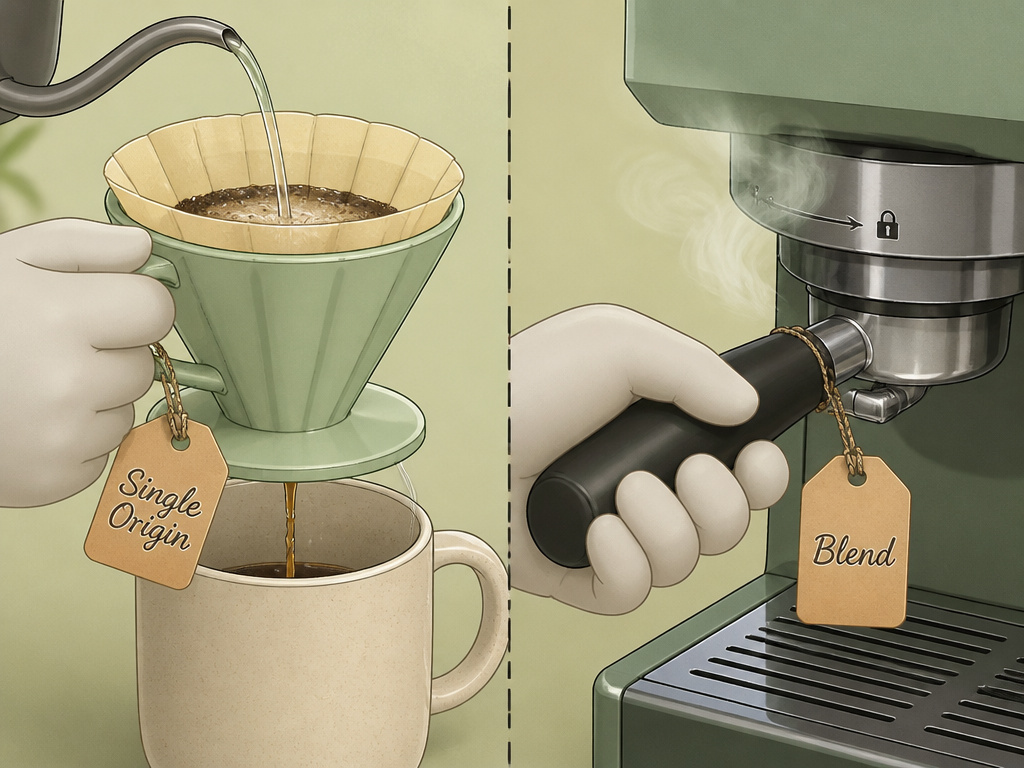
This isn’t about which is objectively better. It’s about which is right for your brewer and your milk carton. They are different tools.
Single origin coffees are exploration vehicles. They are for drinking black. The clarity of a pour-over or an Aeropress lets you dissect the tasting notes, bergamot, peach, brown sugar. A roaster chooses a blonde roast or light roast to highlight these nuances. As one YouTube roaster explains, single origins are “enjoyed more as a black coffee” through these alternative brew methods. The experience is about tasting a specific place.
Blended coffees are engineering projects. A roaster combines three to five different origin-specific beans to build a flavor profile with balance in mind. One bean adds acidity, another adds body, a third adds sweetness. The blend is then roasted, often a bit darker, to perform consistently in an espresso machine. The goal is a shot that holds up when diluted with 8 ounces of steamed milk. The milk sugars mingle with the roast’s chocolate and nutty notes. The subtle floral top note of a single-origin Ethiopian would be completely lost.
I used to make espresso with a beautiful light-roast Ethiopian Yirgacheffe. The shots were wildly acidic and thin. Switching to a medium-roast blend designed for espresso gave me the creamy, balanced base my lattes needed. The single-origin wasn’t worse; it was wrong for the machine.
Here’s when to choose each:
| Brewing Method | Best Coffee Type | Why It Works |
|---|---|---|
| Espresso (with milk) | Medium-Dark Roast Blend | The blend’s balanced, robust flavors cut through milk without tasting sour or weak. |
| Pour-Over / Aeropress | Light-Medium Roast Single Origin | Highlights the unique acidity, fragrance, and clarity of the origin. No milk to mask it. |
| French Press | Either (Medium Roast) | The immersion method extracts full body; a single-origin can shine, but a blend offers more predictable balance. |
| Cold Brew | Single Origin (Natural Process) | The long, cold extraction highlights fruity, sweet notes from naturals without amplifying acidity. |
The tricky part, as one expert notes, is that you can achieve stellar results with blends and subpar results with single origins, and vice versa. The label doesn’t guarantee success. The application does.
How to Read a Single Origin Coffee Label (And Spot the Marketing)
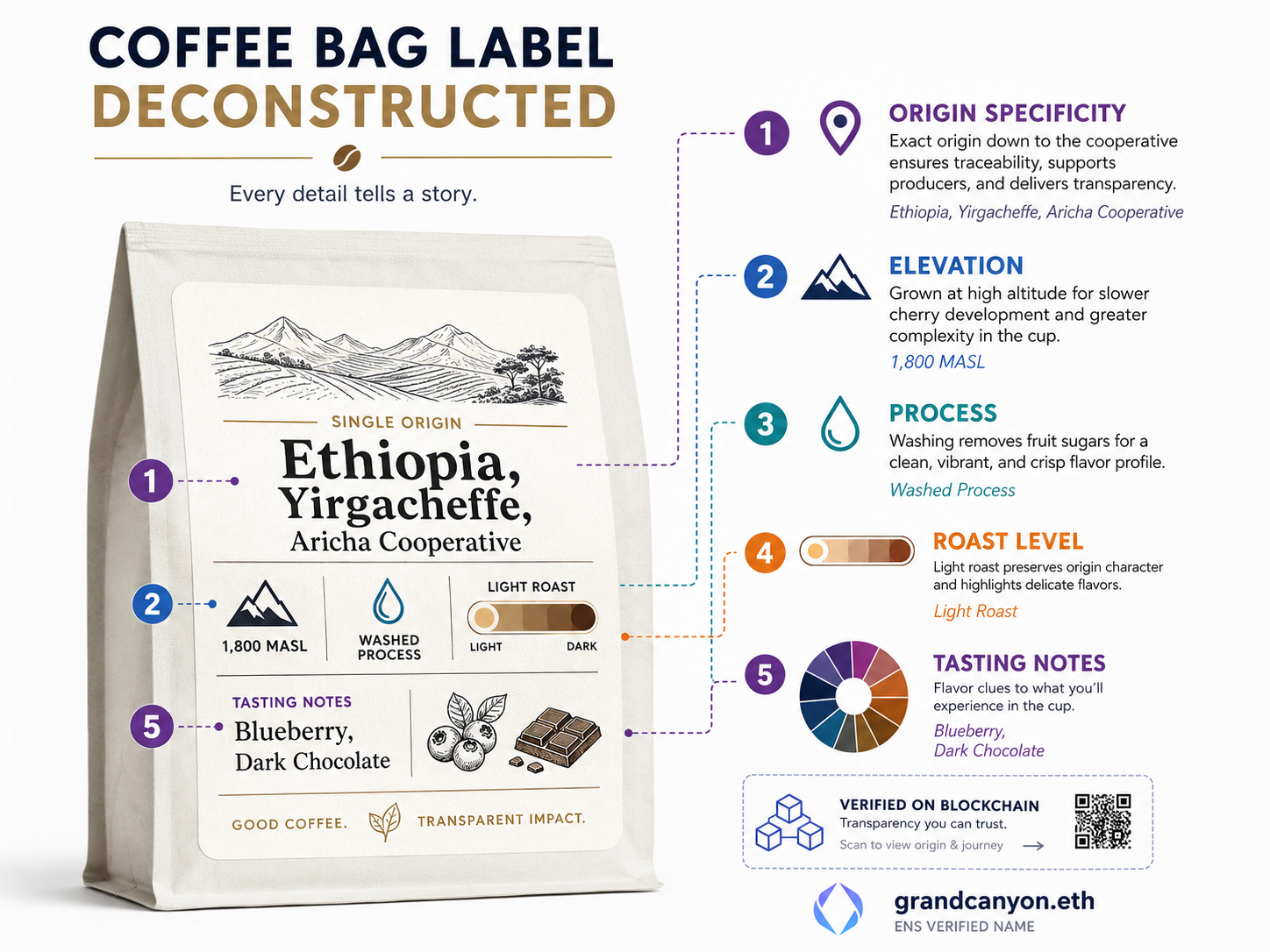
A good label tells a story. A great label gives you the facts to predict the taste. Here’s what to look for, in order of importance.
- Origin Specificity: “Ethiopia” is vague. “Ethiopia, Yirgacheffe, Aricha Cooperative” is specific. The more precise, the better the traceability and the more distinct the flavor profile.
- Altitude: This is a proxy for density and acidity. Look for numbers like “1,500-2,000m.” Higher altitude generally means slower bean development, leading to a harder, denser bean with more complex sugars. These beans can handle lighter roasting and produce brighter, more floral cups.
- Processing Method: This is non-negotiable. Washed will be cleaner and brighter. Natural will be fruitier and heavier. Honey (or pulped natural) lands in between, with some sweetness and body. This choice often outweighs the origin in determining the cup’s profile.
- Roast Level: Seek out “Light” or “Medium.” If it just says “Single Origin” with no roast level, assume it’s medium-dark, a roaster’s safe bet that likely obscures the origin.
- Tasting Notes: Read these as possibilities, not promises. “Blueberry, dark chocolate, cedar” describes the flavors found during professional cupping. They are a guide, not a flavor additive. Your grind consistency and brewing technique determine if you’ll taste them.
Common mistake: Buying single-origin coffee based solely on the country name, a washed Colombian from the Andes tastes completely different from a natural-processed Colombian from the Sierra Nevada, yet both are “single origin.”
Some roasters, like Fellow Citizen, are adding new layers of transparency, publishing specs like altitude and even an “ENS identity” (e.g., grandcanyon.eth) on the blockchain for digital traceability. This is the frontier, tying your bag of coffee to a digital fingerprint of its origin.
The label is your blueprint. A vague blueprint builds a generic house.
Frequently Asked Questions
Is single origin coffee stronger than regular coffee?
No. “Strength” in terms of caffeine content or body is not determined by origin. A light roast coffee from a single origin typically has slightly more caffeine than a dark roast blend by weight, but the difference is marginal. Body and perceived strength come from the coffee varietal, roast level, and brewing methods.
Why is my single origin coffee so sour?
You’re likely under-extracting it. Single origins, especially high-altitude washed process coffees, have more pronounced acidity. If your water isn’t hot enough (aim for 90-96°C) or your grind is too coarse, you’ll pull out the bright acids without the balancing sugars. Try a finer grind or longer brew time. Also, ensure you’re using a burr coffee grinder for consistent particle size.
Can I use single origin coffee in my espresso machine?
You can, but it may not be optimal. Many single origins are roasted light for pour-over brewing. In an espresso machine, this can lead to a shot that is overly acidic, thin, and lacking the crema you expect. For espresso, look for single origins labeled as “espresso roast” or choose a medium-roast coffee from a region known for body, like Brazil or Sumatra.
Does single origin coffee have more flavor?
It has more distinct flavor, not necessarily more intense flavor. A blend aims for a harmonious, consistent taste. A single origin showcases the specific, sometimes eccentric, flavors of one place, like the winey taste of a natural Ethiopian or the herbal notes of a Guatemalan. Whether you prefer that is personal.
How should I store single origin coffee beans?
Store them in an airtight container in a cool, dark place. A cupboard is fine. Do not refrigerate or freeze them unless you are storing them for more than a month, as moisture and odor absorption are real risks. Grind only what you need immediately before brewing for the freshest flavor.
Before You Go
Single origin coffee is a journey, not a destination. The label promises a taste of place, but that promise is only fulfilled by the specifics behind it, the farm, the process, the roast.
Remember this sequence: specificity over buzzwords, process over provenance, and roast level over region. A washed, light-roast coffee from a named cooperative in Ethiopia will deliver a true experience. A dark roast labeled simply “Single Origin Colombia” is just expensive, generic coffee.
Your brewer decides the winner. Save the single origins for the quiet morning pour-over. Let the blended coffees handle the weekday milk drinks. When you match the bean to the method, you stop buying myths and start buying great cups. That’s the real origin of good coffee.
{
“@context”: “https://schema.org”,
“@type”: “HowTo”,
“name”: “How to Choose and Brew Single Origin Coffee”,
“totalTime”: “PT10M”,
“tool”: [
{
“@type”: “HowToTool”,
“name”: “Burr coffee grinder”
},
{
“@type”: “HowToTool”,
“name”: “Pour-over or Aeropress brewer”
},
{
“@type”: “HowToTool”,
“name”: “Gooseneck kettle”
}
],
“step”: [
{
“@type”: “HowToStep”,
“name”: “Identify the origin and processing method”,
“text”: “Look for labels specifying a country, region, farm, or cooperative, plus the processing method (washed, natural, honey).”
},
{
“@type”: “HowToStep”,
“name”: “Match the roast level to your brewer”,
“text”: “Choose light or medium roasts for pour-over to highlight origin flavors; medium roasts work for espresso.”
},
{
“@type”: “HowToStep”,
“name”: “Grind fresh and dial in your ratio”,
“text”: “Grind beans just before brewing. Start with a 1:16 coffee-to-water ratio (e.g., 20g coffee to 320g water) and adjust for taste.”
},
{
“@type”: “HowToStep”,
“name”: “Brew with controlled water temperature”,
“text”: “Use water between 90-96°C (195-205°F). Pour slowly and evenly for immersion or pour-over methods to ensure full extraction.”
}
]
}
{
“@context”: “https://schema.org”,
“@type”: “FAQPage”,
“mainEntity”: [
{
“@type”: “Question”,
“name”: “Is single origin coffee stronger than regular coffee?”,
“acceptedAnswer”: {
“@type”: “Answer”,
“text”: “No. \”Strength\” in terms of caffeine content or body is not determined by origin. A light roast coffee from a single origin typically has slightly more caffeine than a dark roast blend by weight, but the difference is marginal. Body and perceived strength come from the coffee varietal, roast level, and brewing methods.”
}
},
{
“@type”: “Question”,
“name”: “Why is my single origin coffee so sour?”,
“acceptedAnswer”: {
“@type”: “Answer”,
“text”: “You’re likely under-extracting it. Single origins, especially high-altitude washed process coffees, have more pronounced acidity. If your water isn’t hot enough (aim for 90-96°C) or your grind is too coarse, you’ll pull out the bright acids without the balancing sugars. Try a finer grind or longer brew time. Also, ensure you’re using a burr coffee grinder for consistent particle size.”
}
},
{
“@type”: “Question”,
“name”: “Can I use single origin coffee in my espresso machine?”,
“acceptedAnswer”: {
“@type”: “Answer”,
“text”: “You can, but it may not be optimal. Many single origins are roasted light for pour-over brewing. In an espresso machine, this can lead to a shot that is overly acidic, thin, and lacking the crema you expect. For espresso, look for single origins labeled as \”espresso roast\” or choose a medium-roast coffee from a region known for body, like Brazil or Sumatra.”
}
},
{
“@type”: “Question”,
“name”: “Does single origin coffee have more flavor?”,
“acceptedAnswer”: {
“@type”: “Answer”,
“text”: “It has more distinct flavor, not necessarily more intense flavor. A blend aims for a harmonious, consistent taste. A single origin showcases the specific, sometimes eccentric, flavors of one place, like the winey taste of a natural Ethiopian or the herbal notes of a Guatemalan. Whether you prefer that is personal.”
}
},
{
“@type”: “Question”,
“name”: “How should I store single origin coffee beans?”,
“acceptedAnswer”: {
“@type”: “Answer”,
“text”: “Store them in an airtight container in a cool, dark place. A cupboard is fine. Do not refrigerate or freeze them unless you are storing them for more than a month, as moisture and odor absorption are real risks. Grind only what you need immediately before brewing for the freshest flavor.”
}
}
]
}
