
What is Medium Roast Coffee? Taste, Caffeine, & Brewing Guide
Medium roast coffee is roasted to an internal temperature between 410–428°F (210–220°C), stopping after the first crack but before the second crack finishes. The beans reach a caramelized brown color with little to no surface oil, and the cup tastes balanced, moderate acidity, a fuller body than light roast, and notes of caramel, chocolate, or nuts.
Most people think medium roast is just a color. They scoop beans by volume into their grinder and assume the caffeine content is fixed. That’s why their second cup sometimes tastes weak, or the morning buzz feels inconsistent.
This guide walks through what medium roast actually means on a roaster’s log, why two “medium” coffees can taste completely different, and how to brew each type correctly. You’ll learn why a scale matters more than a scoop, and which brewing method hides a bad roast.
Key Takeaways
- Caffeine content is stable by weight, not volume. A scoop of light roast beans contains more caffeine than a scoop of medium roast because light beans are denser. Use a scale.
- “Medium” is a range, not a point. City roast (light medium) and Full City roast (dark medium) land in the same category but need different brew temperatures and grind sizes.
- “Espresso roast” is a roast level, not a brew method. It’s typically a Full City or Vienna roast, a darker medium that extracts easily under pressure. You can brew it as drip.
- Burr grinders are mandatory. Blade grinders produce uneven particles that over-extract the dark bits and under-extract the light bits in a medium roast, turning balanced into muddled.
- Brew hotter for darker mediums, cooler for lighter ones. City roast shines at 195°F; Full City needs 205°F to pull the caramelized sugars out.
What “Medium Roast” Actually Means to a Roaster
The label “medium roast” covers beans that have passed the first crack but haven’t reached the end of the second crack. First crack is the audible popping sound as steam pressure fractures the bean’s cellulose structure. Second crack is a quieter, faster snapping sound as the bean’s oils start to migrate to the surface.
Medium roast coffee beans reach an internal temperature of 210–220°C (410–428°F) during roasting, which is between the first and second crack. This temperature range caramelizes sucrose and other sugars in the bean, developing body and sweetness while preserving some of the origin’s acidity.
The beans turn a uniform medium brown. You won’t see shiny oil spots on them, those appear in dark roasts after second crack finishes. If your beans are glossy, they’re a dark roast masquerading as medium.
Roasters log this stage with names like City, City+, or Full City. City roast is a light medium, stopped just after first crack. Full City is a dark medium, stopped just before second crack begins. Both are sold as “medium roast,” but their flavor and brewing needs are different.
Common mistake: Assuming all medium roasts brew the same, using the same grind size, dose, and temperature for a City roast and a Full City roast guarantees one cup will taste flat and the other harsh.
The Sub-Categories Within Medium
| Roast Name | Internal Temperature | Visual Mark | Best For |
|---|---|---|---|
| City (Light Medium) | 410–415°F | Light brown, dry surface | Pour-over, drip |
| City+ (True Medium) | 415–425°F | Medium brown, dry surface | All methods |
| Full City (Dark Medium) | 425–428°F | Dark brown, dry surface | Espresso, drip |
City roast tastes brighter, with more acidity and floral notes from the origin. Full City tastes deeper, with stronger caramel and chocolate tones. City+ is the true middle, what most people imagine as a balanced medium roast coffee.
If you buy a bag labeled just “medium,” it’s likely a City+ roast. Specialty roasters will specify City or Full City.
The Caffeine Myth Most People Believe
You hear that light roast has more caffeine. Or that dark roast has more. The truth is simpler.
Caffeine content per bean is stable across roast levels. The molecule doesn’t break down until temperatures far above roasting ranges. What changes is bean density.
Light roast beans spend less time in the roaster. They lose less water and expand less. They are denser. Dark roast beans expand more, becoming less dense. If you measure by volume, using a scoop, a scoop of light roast contains more beans, and therefore more caffeine, than a scoop of dark roast.
Common mistake: Scooping beans by volume, a tablespoon of light roast beans weighs more than a tablespoon of medium roast, so you get a stronger caffeine hit and a different flavor profile without realizing it.
When you measure by weight, the caffeine difference between light, medium, and dark roast becomes negligible. A 20g dose of light roast beans and a 20g dose of medium roast beans deliver roughly the same caffeine content.
This is why every serious brewing guide insists you use a scale. A burr grinder paired with a scale is the baseline for consistent coffee, not a luxury.
The YouTube transcript from a coffee educator puts it bluntly: “since a light roast takes less time, it’s denser and heavier than darker ones. If you measure equal volumes, the light coffee beans will have more caffeine. That’s why it’s always a good idea to use a scale and go by weight instead.”
TL;DR: Caffeine per bean is constant. Bean density changes with roast. Scooping by volume gives inconsistent caffeine and flavor. Use a scale.
Why Two Medium Roasts Can Taste Totally Different
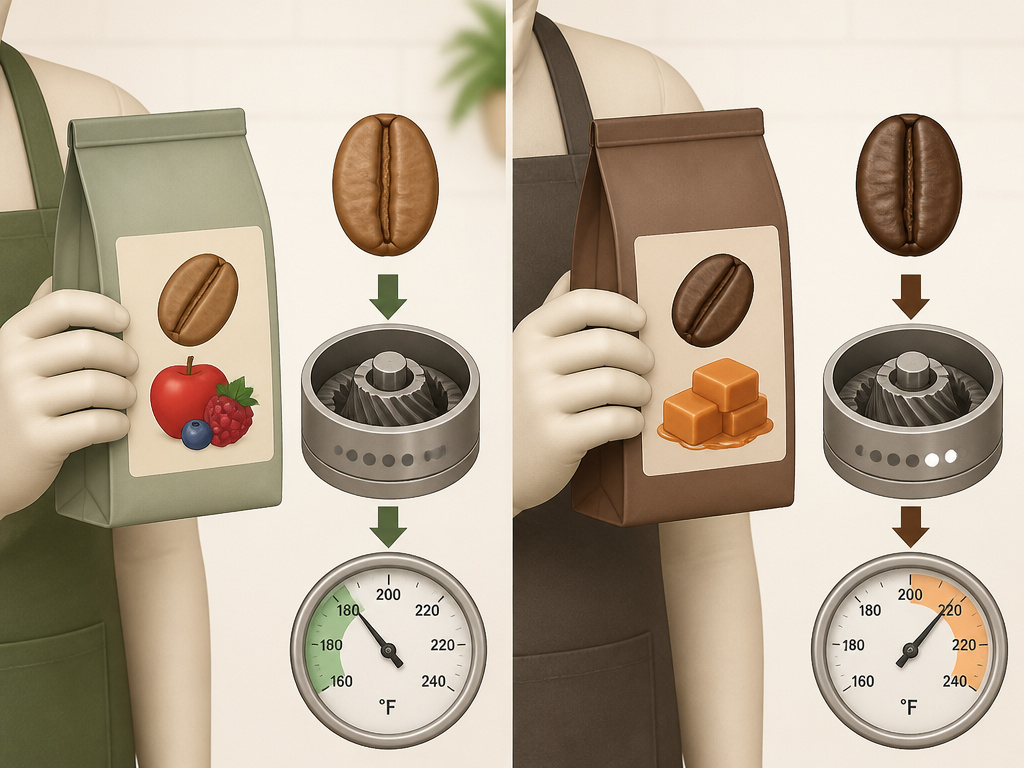
Roast level is just one variable. Roast profile, how heat is applied over time, changes everything. A roaster can push a bean quickly to 425°F or slowly ramp it. The fast roast preserves more acidity; the slow roast builds more body.
Bean density and moisture content also play a role. A dense, high-altitude Ethiopian bean and a softer, low-altitude Brazilian bean both roasted to 420°F will taste different. The Ethiopian stays brighter; the Brazilian turns sweeter.
Post-roast handling matters too. Beans degas CO2 for days after roasting. A medium roast bagged immediately tastes sharper and more acidic. A medium roast rested for a week tastes smoother and more balanced.
This variability is why a brewing recipe designed for a light-medium City roast will over-extract a dark-medium Full City roast. The Full City’s sugars caramelize earlier, so it extracts faster. If you use the same grind size, water temperature, and time, the Full City cup turns bitter.
You have to adjust your brewed coffee method to match the roast. The rule is simple: darker mediums need hotter water and slightly coarser grinds to avoid over-extraction; lighter mediums need cooler water and finer grinds to pull enough flavor.
How to Identify Your Medium Roast’s Personality
- Look at the bag label. If it says “City” or “Light Medium,” treat it like a light roast with more body. Start with a 195°F brew temperature and a finer medium grind.
- Smell the beans. City roast smells fruity or floral. Full City roast smells like caramel or chocolate. Your nose knows before your grinder does.
- Check the roast date. Beans within 3 days of roasting are still degassing. Use a slightly coarser grind and expect more acidity. Beans older than 7 days are settled. Use your normal grind.
If your medium roast coffee tastes harsh or flat, you’re likely treating a City roast like a Full City, or vice versa.
How to Brew Medium Roast Coffee
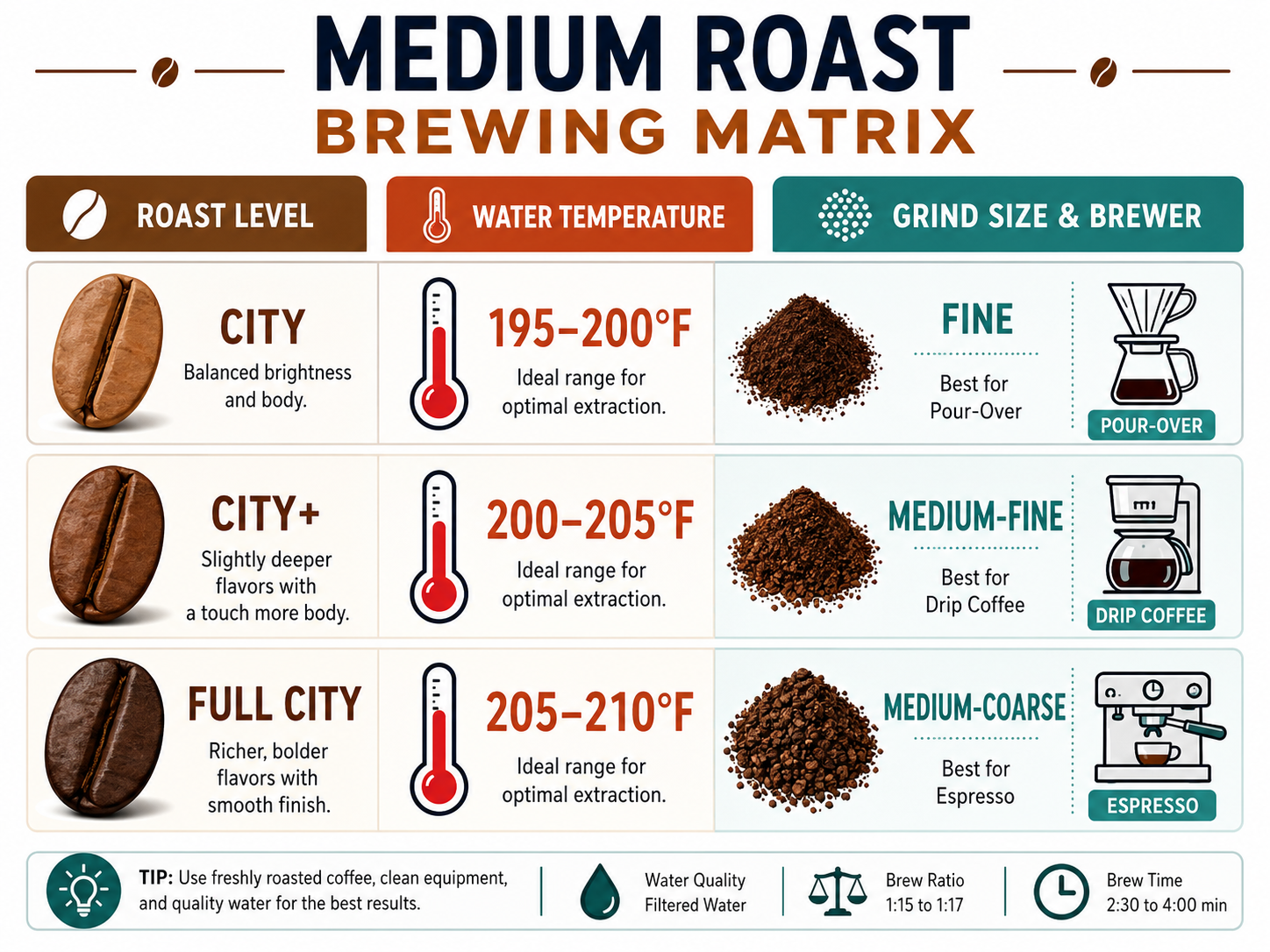
Brewing medium roast is forgiving, but it’s not universal. You must match the method to the roast’s position within the medium spectrum.
The Equipment You Actually Need
- A burr grinder. Blade grinders are useless here. They create a mix of dust and boulders that over-extract the dark bits and under-extract the light bits in a medium roast. The cup tastes both bitter and sour at once.
- A digital scale. As explained, volume measurement fails. A $20 scale fixes it.
- A thermometer or temperature-controlled kettle. Stovetop kettles boil at 212°F. That’s too hot for City roast, perfect for Full City.
- Fresh beans. Medium roast peaks 7–14 days after roasting. After 30 days, the caramelized sugars start to stale and the cup tastes flat regardless of your technique.
Brew Temperature by Roast Type
| Roast Type | Target Water Temperature | Why It Matters |
|---|---|---|
| City (Light Medium) | 195–200°F (90–93°C) | Higher temperature over-extracts, killing the origin’s acidity and turning the cup bland. |
| City+ (True Medium) | 200–205°F (93–96°C) | The middle ground extracts caramelized sugars without scorching the bean’s remaining acidity. |
| Full City (Dark Medium) | 205–210°F (96–99°C) | Hotter water pulls the developed chocolate and caramel notes out; cooler water leaves them behind. |
For drip coffee machines: Most machines brew at 195–205°F automatically. That’s fine for City+ roast. For City roast, consider mixing cooler water into the reservoir. For Full City roast, let the machine heat fully, don’t interrupt the cycle.
For pour-over: You control temperature directly. City roast at 195°F, City+ at 200°F, Full City at 205°F.
For espresso: Espresso roast is usually a Full City or Vienna roast. The darker medium extracts easily under 9 bars of pressure. If you try to espresso a City roast, you’ll need a finer grind and possibly a lower pressure to avoid channeling.
I brewed a City roast Ethiopian with my espresso machine at 9 bars. The shot ran fast and tasted sour. Grinding finer made it bitter. The fix was dropping pressure to 6 bars and keeping the fine grind, the bean couldn’t handle the full pressure without cracking.
The Grind Size Matrix
Grind size is your adjustment knob. Medium roast forgives one variable change at a time, don’t change grind, dose, and temperature together.
- Drip coffee: Medium-coarse grind. If the cup tastes weak, grind finer. If it tastes bitter, grind coarser.
- Pour-over: Medium-fine grind. The pour-over’s longer contact time needs a slightly finer grind than drip to extract fully.
- Espresso: Fine grind. Espresso machines need a fine, consistent powder from a burr grinder. Blade grinders cannot produce this.
TL;DR: City roast = cooler water, finer grind. Full City roast = hotter water, coarser grind. City+ roast = middle settings. Always use a scale and a burr grinder.
“Espresso Roast” Is Just a Darker Medium Roast
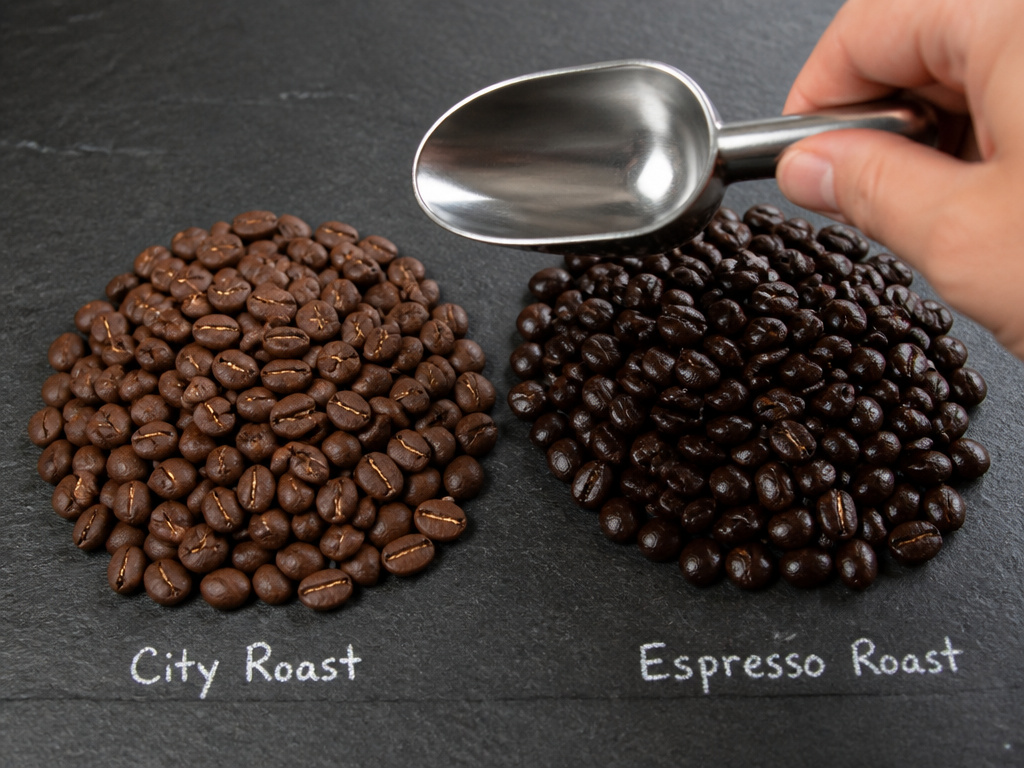
The term “espresso roast” on a bag doesn’t mean you must brew it as espresso. It means the roaster took the beans to a Full City or Vienna level, a darker medium that develops the body and caramelized sugars that extract well under pressure.
You can brew an espresso roast as drip, pour-over, or cold brew. The result is a cup with deeper chocolate notes and less acidity than a City roast. Some roasters label their darkest medium as “espresso roast” to signal its suitability for espresso, not to restrict its use.
This is a marketing convenience, not a brewing law. I’ve used espresso roast beans in a drip machine for years. The cup is stronger and sweeter than a City roast, but it works.
The opposite is also true: you can brew a City roast as espresso. It’s harder, the bean lacks the developed sugars that extract easily under pressure, but it’s possible with a finer grind and lower pressure.
Common mistake: Believing “espresso roast” beans only work in an espresso machine, they’re just a darker medium roast, and they brew fine in any method that uses hot water.
The real constraint is your grinder. Espresso requires a fine, uniform grind. If you have a blade grinder, don’t attempt espresso with any roast. Stick to drip or pour-over.
Frequently Asked Questions
Is medium roast coffee stronger than light roast?
It’s stronger in body and sweetness, not caffeine. The longer roast develops caramelized sugars that give a fuller, smoother mouthfeel. Caffeine content is nearly identical when measured by weight.
Which brewing method is best for medium roast?
Drip and pour-over are the safest. Espresso works if the roast is a Full City or darker medium. Cold brew also works, but it mutes the caramel notes, you get a smooth, low-acidity cup without the signature balance.
Does medium roast have more caffeine than dark roast?
No. When measured by weight, the caffeine difference is negligible. When measured by volume, medium roast has slightly more caffeine than dark roast because the beans are denser. Always use a scale.
Why does my medium roast coffee sometimes taste bitter?
You’re over-extracting. This happens if you use too hot water, too fine a grind, or too long a brew time for your specific roast. A City roast brewed at 210°F will taste bitter. A Full City roast ground for espresso and brewed as drip will also taste bitter.
Can I use medium roast in a French press?
Yes. Use a coarse grind and a 4-minute steep. French press highlights body, which medium roast has. Avoid City roast here, the press’s metal filter lets oils through, which can clash with the roast’s brightness.
How long does medium roast stay fresh after opening?
Peak flavor lasts 2 weeks after opening if stored in an airtight container away from light and heat. After 4 weeks, the caramelized sugars stale and the cup tastes flat. Grind just before brewing to extend freshness.
Before You Go
Medium roast coffee is a range, not a single point. City, City+, and Full City roasts all fall under the label, and each needs a slightly different brew temperature and grind size.
The biggest practical takeaway is to use a scale. Scooping beans by volume gives inconsistent caffeine and flavor because bean density changes with roast level. A $20 scale fixes that.
Match your brew method to your roast’s position within the medium spectrum. City roast likes cooler water and finer grinds. Full City roast likes hotter water and coarser grinds. And remember, “espresso roast” is just a darker medium roast. You can brew it any way you like.
{
“@context”: “https://schema.org”,
“@type”: “HowTo”,
“name”: “How to Brew Medium Roast Coffee”,
“totalTime”: “PT5M”,
“tool”: [
{
“@type”: “HowToTool”,
“name”: “Burr grinder”
},
{
“@type”: “HowToTool”,
“name”: “Digital scale”
},
{
“@type”: “HowToTool”,
“name”: “Pour-over dripper or drip coffee maker”
}
],
“step”: [
{
“@type”: “HowToStep”,
“name”: “Grind to the right size”,
“text”: “Set your burr grinder to a medium grind—coarser than espresso, finer than cold brew. A pour-over needs a finer medium grind than a drip machine.”
},
{
“@type”: “HowToStep”,
“name”: “Measure by weight, not volume”,
“text”: “Use a scale to measure 18-20 grams of beans. Scooping by volume gives inconsistent caffeine and flavor because bean density changes with roast.”
},
{
“@type”: “HowToStep”,
“name”: “Adjust your brew temperature”,
“text”: “Heat water to 195-205°F (90-96°C). Darker medium roasts like Full City need hotter water; lighter medium roasts like City need cooler.”
},
{
“@type”: “HowToStep”,
“name”: “Follow a 3:1 water-to-coffee ratio”,
“text”: “Use 55-60 grams of water per 18 grams of coffee. A 3:1 ratio extracts the caramelized sugars without pulling bitter tannins.”
},
{
“@type”: “HowToStep”,
“name”: “Taste and tweak the grind”,
“text”: “If the cup tastes flat, grind finer. If it tastes bitter or harsh, grind coarser. Medium roast forgives one adjustment—don’t change dose and temperature at once.”
}
]
}
{
“@context”: “https://schema.org”,
“@type”: “FAQPage”,
“mainEntity”: [
{
“@type”: “Question”,
“name”: “Is medium roast coffee stronger than light roast?”,
“acceptedAnswer”: {
“@type”: “Answer”,
“text”: “It’s stronger in body and sweetness, not caffeine. The longer roast develops caramelized sugars that give a fuller, smoother mouthfeel. Caffeine content is nearly identical when measured by weight.”
}
},
{
“@type”: “Question”,
“name”: “Which brewing method is best for medium roast?”,
“acceptedAnswer”: {
“@type”: “Answer”,
“text”: “Drip and pour-over are the safest. Espresso works if the roast is a Full City or darker medium. Cold brew also works, but it mutes the caramel notes, you get a smooth, low-acidity cup without the signature balance.”
}
},
{
“@type”: “Question”,
“name”: “Does medium roast have more caffeine than dark roast?”,
“acceptedAnswer”: {
“@type”: “Answer”,
“text”: “No. When measured by weight, the caffeine difference is negligible. When measured by volume, medium roast has slightly more caffeine than dark roast because the beans are denser. Always use a scale.”
}
},
{
“@type”: “Question”,
“name”: “Why does my medium roast coffee sometimes taste bitter?”,
“acceptedAnswer”: {
“@type”: “Answer”,
“text”: “You’re over-extracting. This happens if you use too hot water, too fine a grind, or too long a brew time for your specific roast. A City roast brewed at 210°F will taste bitter. A Full City roast ground for espresso and brewed as drip will also taste bitter.”
}
},
{
“@type”: “Question”,
“name”: “Can I use medium roast in a French press?”,
“acceptedAnswer”: {
“@type”: “Answer”,
“text”: “Yes. Use a coarse grind and a 4-minute steep. French press highlights body, which medium roast has. Avoid City roast here, the press’s metal filter lets oils through, which can clash with the roast’s brightness.”
}
},
{
“@type”: “Question”,
“name”: “How long does medium roast stay fresh after opening?”,
“acceptedAnswer”: {
“@type”: “Answer”,
“text”: “Peak flavor lasts 2 weeks after opening if stored in an airtight container away from light and heat. After 4 weeks, the caramelized sugars stale and the cup tastes flat. Grind just before brewing to extend freshness.”
}
}
]
}
