
What is a Macchiato Coffee | The Real Drink vs. Starbucks
A macchiato coffee is a traditional Italian espresso drink “stained” with just 5-10 grams of steamed milk, served in a small demitasse. The Starbucks version is a large, sweet, layered beverage invented for its menu, making the two drinks fundamentally different in size, recipe, and flavor profile.
A macchiato is a shot of espresso marked, or “stained,” with a small dash of steamed milk and a tiny bit of foam. The authentic version uses 5-10 grams of milk, served in a 60-90ml demitasse. Its total volume stays under 90ml, making it one of the smallest, most espresso-forward drinks on any café menu.
The universal mistake is assuming all drinks called “macchiato” are the same. Walk into a chain café and order one, and you’ll likely get a tall, sweet, layered beverage that shares little with the Italian original. This guide cuts through the confusion. We’ll cover the two real macchiato types, their exact specs, how to order them without error, and why the Starbucks version is a completely different animal.
Key Takeaways
- A true espresso macchiato is a 1:1 ratio of espresso to a dash of milk (roughly 1:0.25), served in a tiny cup. It’s not a small latte.
- The milk must be steamed to 60-66°C (140-150°F). Go hotter and you scald it, losing sweetness and creating a burnt note that clashes with the espresso.
- Ordering just “a macchiato” at a chain café will get you a caramel-vanilla latte. Specify “espresso macchiato” or “traditional macchiato” to baristas outside specialty shops.
- In Australia, a “long macchiato” is a double espresso in a larger cup with a dash of milk, while a “long mac topped up” fills the cup. Know the regional code.
- The layered “latte macchiato” reverses the build: steamed milk is stained with a shot of espresso poured over the back of a spoon. It’s a visual drink, not a stronger latte.
The Core Recipe: Espresso Macchiato
Forget everything you’ve seen in a drive-thru. The espresso macchiato is about restraint. You start with a perfect shot, 18-20 grams of finely ground coffee yielding 30-40 grams of liquid in 25-30 seconds. The crema should be a thick, tiger-striped blanket. Then, you violate it.
An espresso macchiato is defined by a 1 : 0.1–0.25 ratio of espresso to milk, with a total volume of 30–90 ml. The milk, steamed to 60–66°C (140–150°F), is added in a 5–10 gram “stain” that barely dilutes the espresso’s intensity.
The goal is not to make a milky drink. It’s to take the raw, acidic edge off the espresso without masking its flavor. The milk’s sweetness and fat round the sharp corners. Use too much, and you’ve made a cortado or a piccolo latte. That’s a different drink.
The tools matter. You need a proper steam wand capable of texturing a tiny amount of milk. Attempting this with an automatic frother usually fails, it can’t heat such a small volume accurately. A burr grinder set for espresso is non-negotiable for the base shot. Inconsistent grounds from a blade grinder will channel, producing a sour, weak foundation that no amount of milk can fix.
TL;DR: Steam 5-10g of milk to 60-66°C and pour it as a central “stain” on a fresh espresso shot. Serve in a demitasse. Do not stir.
Why the Milk Temperature is Non-Negotiable
Steam your milk to 140°F and it tastes sweet, almost nutty. Take it to 160°F, and the lactose breaks down into simpler sugars that taste flat and bland. The proteins also denature differently, creating larger, less stable bubbles. Your tiny dollop of foam will collapse before it hits the espresso, and the milk itself will impart a cooked flavor.
I learned this the hard way on a busy Saturday morning. I was steaming milk for macchiatos back-to-back, letting the pitcher get too hot, and rushing the process. By the tenth drink, the shots looked right but tasted oddly flat and bland, with a hint of scalded milk. The customers didn’t complain, but I knew. Now I keep a digital thermometer clipped to my steaming pitcher. The difference in the cup is night and day.
Common mistake: Steaming milk above 155°F for a macchiato, the milk loses its inherent sweetness and the foam dissipates within 30 seconds, leaving a lukewarm, lifeless stain on top of cooling espresso.
How It Compares to Other Small Milk Drinks
This is where most guides get vague. They’ll say a macchiato has “a little milk,” a cortado has “equal parts,” and a cappuccino has “more foam.” That’s true, but the proportions on paper don’t capture the experience on the tongue.
| Drink | Espresso | Milk | Foam | Serving Vessel | Experience |
|---|---|---|---|---|---|
| Espresso Macchiato | 30-40ml | 5-10ml steamed | A spoonful | Demitasse (60-90ml) | A bold espresso sip, softened by a sweet center. |
| Cortado | 30-40ml | 30-40ml steamed | Light layer | Gibraltar glass | Perfectly balanced, silky texture, espresso and milk in harmony. |
| Cappuccino | 30-40ml | 30-40ml steamed | 30-40ml thick foam | Ceramic cup (150-180ml) | Light, airy, and comforting. The foam is the star. |
| Flat White | 30-40ml (often ristretto) | 60-80ml microfoam | Integrated microfoam | Ceramic cup (160-200ml) | Velvety, dense, and strong. The milk is stretched, not frothed. |
The macchiato is for the espresso purist who wants just a hint of concession. The cortado is for someone who wants balance in a small package. Choosing the wrong one leads to disappointment. If you want a milky drink, order a cappuccino or a latte. Don’t ask for a “wet macchiato” and expect the barista to read your mind.
The Latte Macchiato: A Layered Spectacle
This is the inverse of everything above. A latte macchiato is a glass of steamed milk, “stained” or marked by a shot of espresso poured carefully through the foam. The visual is the point. You get distinct layers: steamed milk on the bottom, espresso in the middle, and a cap of milk foam on top.
The build requires a steady hand. Fill a tall, clear glass (200-350ml) two-thirds full with steamed milk, leaving plenty of foam in the pitcher. Rest a teaspoon just on the surface of the milk, dome-side up. Slowly pour your espresso shot over the back of the spoon. The espresso should sink through the foam and float on the denser milk below, creating a striated effect. Finally, spoon the remaining foam on top.
It’s a drink about theater. The flavor is mild and sweet, dominated by the milk. The espresso caffeine content is the same, but it’s diluted across a much larger volume. People often confuse it with a regular latte, but the construction is opposite: a latte is espresso with milk poured in, a latte macchiato is milk with espresso poured in.
The Global Confusion: Starbucks and Regional Codes
Walk into an Italian café, say “un caffè macchiato,” and you’ll get the demitasse with a dash of milk. No syrup. No caramel. You drink it at the bar in two sips and leave. The chain version, popularized by Starbucks, uses the name but follows a different logic entirely.
The Starbucks Caramel Macchiato is built like an inverted vanilla latte. Vanilla syrup goes in the cup first. Then steamed milk is poured over ice (or hot). Finally, a shot of espresso is poured slowly over the top, and it’s finished with a criss-cross of caramel drizzle. The “macchiato” here refers to the espresso marking the milk drink, and the caramel marking the top. It’s a sweet, dessert-like beverage. Calling it a “macchiato” is a marketing move that has permanently confused the term for millions.
This is why you must specify. In a chain-heavy café, order a “single espresso macchiato, no syrup, in a demitasse” if you want the real thing. Otherwise, you’re getting a 12-ounce sugar bomb.
The Australian Rules
Australia has its own macchiato dialect that can trip up travelers. A “long macchiato” is typically a double shot of espresso served in a larger cup (like a 6-8oz glass) with a dash of textured milk on top, leaving the glass mostly empty. It’s a strong, slow-sipping drink. In Perth, if you order a “long mac topped up,” the barista will fill the rest of that glass with that same textured milk, making it more like a strong flat white.
In Melbourne, it can get even more specific. Some cafes serve a macchiato as a double-shot with the glass half-filled with water, topped with that dash of milk. It’s essentially an Americano coffee that’s been macchiato-ed. Knowing these regional coffee flavor profiles and customs saves you from a surprising, and potentially disappointing, first sip.
How to Order (And Get What You Actually Want)
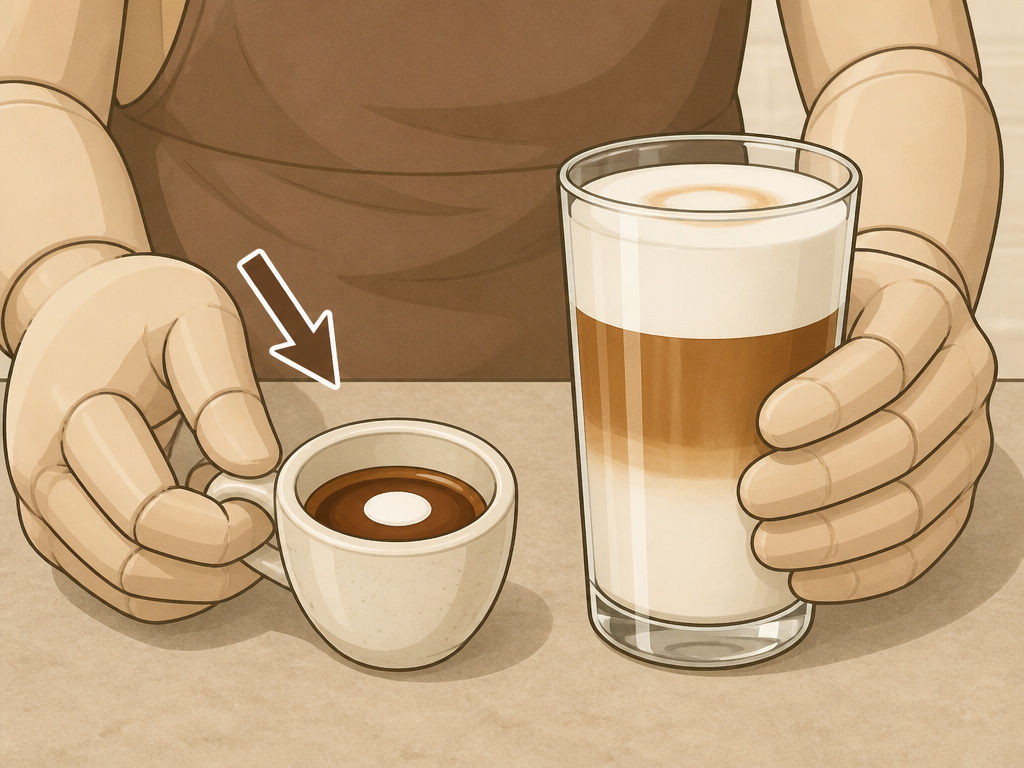
The single word “macchiato” is now ambiguous. Your ordering strategy needs to match the venue.
At a Specialty Coffee Shop:
Just say “macchiato.” A trained barista will default to the traditional espresso version. You can specify “double” if you want more caffeine. If you want the layered milk drink, say “latte macchiato.”
At a Chain Café (Starbucks, etc.):
You must use precise language. “I’d like a traditional espresso macchiato. Just a shot of espresso with a little steamed milk on top, in your smallest cup. No syrup, no caramel.” Be prepared for a clarifying question. It’s not their default.
At an Italian Café or Restaurant:
“Un caffè macchiato, per favore.” That’s it. You might be asked “caldo?” (warm milk) which is standard, or “freddo?” (cold milk). Stick with “caldo.”
I once ordered a macchiato at an airport Starbucks before a redeye. I was tired and didn’t specify. What I got was a venti cup of sweet, lukewarm milk with a faint coffee taste. It was undrinkable. I now use the full script every single time, no matter how rushed I feel.
Your choice of espresso bean blends or single-origin beans will shine in a traditional macchiato. A bright Ethiopian with citrus notes will be softened by the milk. A chocolatey Brazilian blend will become even richer. Don’t waste a subtle, complex shot in a latte macchiato, the milk overwhelms those nuances.
Equipment and Ingredients for the Home Barista
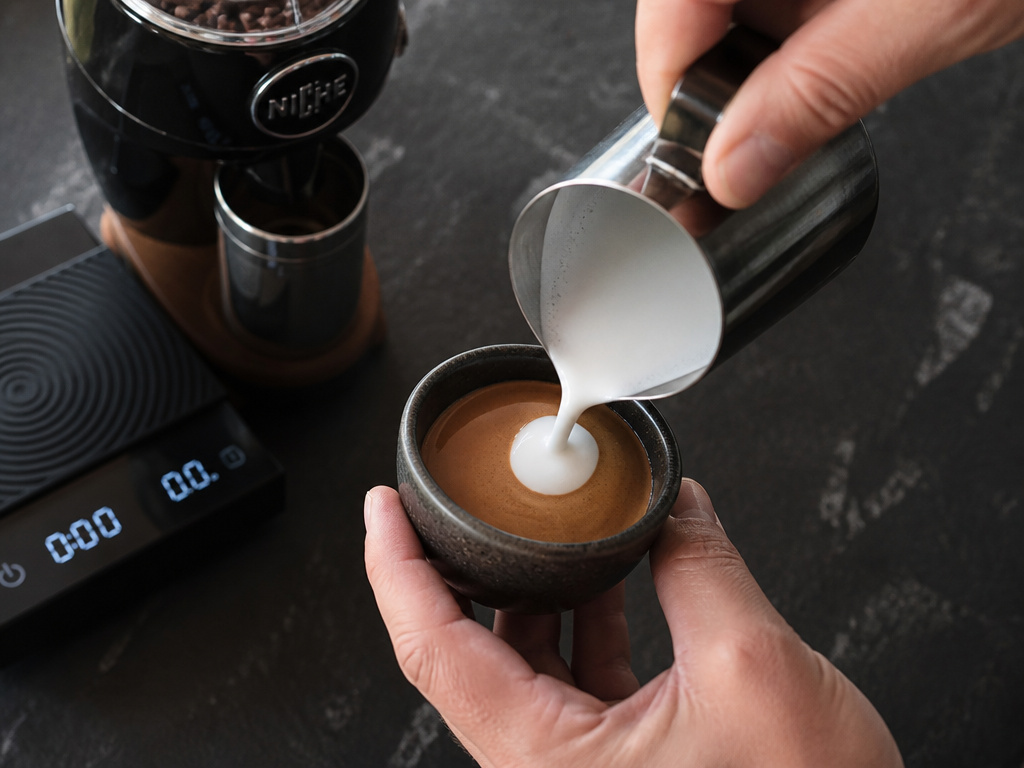
You can make a credible macchiato at home without a $3,000 machine. Focus on the essentials.
The Espresso:
This is the foundation. You need a machine capable of producing 9 bars of pressure. A manual lever machine like a Flair Pro 2 or a semi-automatic like a Gaggia Classic Pro will work. Pair it with a quality burr grinder set to a fine espresso grind. The espresso grind consistency is more important than the machine’s brand. Inconsistent grounds lead to channeling and a sour shot that no amount of milk can save.
The Milk:
A steam wand is ideal. If your machine doesn’t have one, a standalone battery-operated frother like a Nanofoamer can texture milk to a decent microfoam. For a dairy-free milk alternative, oat milk or almond milk frothing works well, but know that they sweeten and behave differently than dairy. Whole milk is the standard for its fat content and sweetness.
The Vessel:
A 60-90ml demitasse cup is traditional. Pre-warm it with hot water before pulling your shot. A cold cup will shock the espresso and kill the crema on contact.
A simple espresso scale that measures in 0.1-gram increments is the best tool for replicating the 5-10 gram milk dose accurately. Eyeballing it leads to a cortado.
Frequently Asked Questions
What’s the difference between a macchiato and a cortado?
macchiato is an espresso with a dash of milk (5-10ml). A cortado is equal parts espresso and steamed milk (typically 1:1). The cortado is a balanced, smooth drink; the macchiato is still a strong, espresso-forward shot.
How much caffeine is in a macchiato?
An espresso macchiato contains the caffeine in espresso from a single shot, roughly 64 milligrams. The tiny amount of milk does not affect the espresso caffeine content. A latte macchiato, being larger, has the same amount of caffeine but diluted, so it feels less potent.
Can I make a macchiato with cream or non-dairy milk?
Yes, but it changes the drink. Heavy cream will not texture the same way and will make the drink very rich. Almond milk frothing or oat milk can work, but they often contain added sugars and stabilizers that alter the flavor. The result will be different from the traditional version.
Is a macchiato stronger than a latte?
In terms of pure espresso concentration, yes. An espresso macchiato is a concentrated shot with a tiny bit of milk. A latte is a single shot diluted in 8+ ounces of milk. The macchiato delivers a stronger, more intense coffee flavor per sip.
Why did my macchiato come in a big cup?
You almost certainly received a latte macchiato or a chain café’s version. The traditional espresso macchiato should always be served in a small demitasse. If you get a large cup, politely clarify with the barista.
Before You Go
A macchiato, at its heart, is a minimalist’s drink. It’s for when you want the pure taste of espresso but need just a touch of softening, a concession to comfort without surrender. The espresso-based drinks family is large, but the macchiato occupies a unique, uncompromising corner.
Remember the numbers: 5-10 grams of milk, 60-66°C, in a cup no larger than 90ml. That’s your benchmark. Use them to judge what you’re served. And when ordering, deploy the full phrase: “traditional espresso macchiato.” Those two extra words are the barrier between you and a cup of sweet, milky confusion. Your taste buds will thank you.
{
“@context”: “https://schema.org”,
“@type”: “HowTo”,
“name”: “How to Make a Traditional Espresso Macchiato”,
“totalTime”: “PT5M”,
“tool”: [
{
“@type”: “HowToTool”,
“name”: “Espresso machine with steam wand”
},
{
“@type”: “HowToTool”,
“name”: “Demitasse cup (60-90 ml)”
},
{
“@type”: “HowToTool”,
“name”: “Milk steaming pitcher”
},
{
“@type”: “HowToTool”,
“name”: “Espresso scale (optional)”
}
],
“supply”: [
{
“@type”: “HowToSupply”,
“name”: “Freshly roasted espresso beans (18-20g)”
},
{
“@type”: “HowToSupply”,
“name”: “Whole milk (5-10 ml)”
}
],
“step”: [
{
“@type”: “HowToStep”,
“name”: “Pull a shot of espresso”,
“text”: “Grind and tamp 18-20g of espresso beans. Pull a standard 30-40ml shot directly into a pre-warmed demitasse cup.”
},
{
“@type”: “HowToStep”,
“name”: “Steam a small amount of milk”,
“text”: “Pour about 30 ml of cold milk into a steaming pitcher. Steam until the milk reaches 60-66°C (140-150°F), creating a small amount of microfoam.”
},
{
“@type”: “HowToStep”,
“name”: “Add the milk stain”,
“text”: “Using a spoon to hold back the foam, pour 5-10 grams (about 1-2 teaspoons) of steamed milk onto the center of the espresso crema. The goal is a visible ‘stain’, not a layer.”
},
{
“@type”: “HowToStep”,
“name”: “Serve immediately”,
“text”: “Do not stir. Serve the drink immediately while the espresso is hot and the layered effect is visible.”
}
]
}
{
“@context”: “https://schema.org”,
“@type”: “FAQPage”,
“mainEntity”: [
{
“@type”: “Question”,
“name”: “What’s the difference between a macchiato and a cortado?”,
“acceptedAnswer”: {
“@type”: “Answer”,
“text”: “macchiato is an espresso with a dash of milk (5-10ml). A cortado is equal parts espresso and steamed milk (typically 1:1). The cortado is a balanced, smooth drink; the macchiato is still a strong, espresso-forward shot.”
}
},
{
“@type”: “Question”,
“name”: “How much caffeine is in a macchiato?”,
“acceptedAnswer”: {
“@type”: “Answer”,
“text”: “An espresso macchiato contains the caffeine in espresso from a single shot, roughly 64 milligrams. The tiny amount of milk does not affect the espresso caffeine content. A latte macchiato, being larger, has the same amount of caffeine but diluted, so it feels less potent.”
}
},
{
“@type”: “Question”,
“name”: “Can I make a macchiato with cream or non-dairy milk?”,
“acceptedAnswer”: {
“@type”: “Answer”,
“text”: “Yes, but it changes the drink. Heavy cream will not texture the same way and will make the drink very rich. Almond milk frothing or oat milk can work, but they often contain added sugars and stabilizers that alter the flavor. The result will be different from the traditional version.”
}
},
{
“@type”: “Question”,
“name”: “Is a macchiato stronger than a latte?”,
“acceptedAnswer”: {
“@type”: “Answer”,
“text”: “In terms of pure espresso concentration, yes. An espresso macchiato is a concentrated shot with a tiny bit of milk. A latte is a single shot diluted in 8+ ounces of milk. The macchiato delivers a stronger, more intense coffee flavor per sip.”
}
},
{
“@type”: “Question”,
“name”: “Why did my macchiato come in a big cup?”,
“acceptedAnswer”: {
“@type”: “Answer”,
“text”: “You almost certainly received a latte macchiato or a chain café’s version. The traditional espresso macchiato should always be served in a small demitasse. If you get a large cup, politely clarify with the barista.”
}
}
]
}
