
What Can I Use as a Coffee Filter? A Guide to Improvising
You can use an unbleached paper towel, a #60 grade cheesecloth, a clean cotton cloth napkin, or a 100-micron nut milk bag as a temporary coffee filter. The right choice depends entirely on your brewer: espresso needs a 25-35 micron barrier, pour-over needs 15-25 microns, and a French press needs 100-120 microns. Mismatch the pore size and you get sludge or a weak, over-extracted cup.
The universal mistake is grabbing whatever’s closest, a scented paper towel, a cheesecloth used for straining stock, a cloth napkin washed with fragrant detergent. You get coffee, sure. You also get a faint chemical aftertaste, visible sediment, or a soapy note that ruins the cup. The filter isn’t just a strainer; it’s the final gatekeeper for flavor and clarity.
This guide walks through every viable emergency filter, ranked by risk and brew quality. We’ll cover the paper towel hack step-by-step, why cheesecloth is better for cold brew than hot, and which permanent metal filter fits your machine without modifying the grind. You’ll also get the hard numbers on pore sizes and replacement schedules so you know exactly what you’re trading.
Key Takeaways
- Paper towels work in a pinch, but only if they are unbleached and free of dyes, scents, or “ultra-strong” bonding adhesives, these can leach glue and chemicals into hot water.
- Cheesecloth must be #60 grade or finer; the common #50 grade lets too many fines through, resulting in a silty, gritty cup.
- A clean cotton cloth napkin is a decent reusable stand-in, but if it was recently washed with scented detergent or fabric softener, it will leave a soapy aftertaste.
- Permanent metal filters (304 or 316 stainless steel) are the only real long-term substitute, but they require a coarser grind and add oily body at the cost of some clarity.
- Never reuse a paper filter. After one use, the fibers swell and the pore structure widens by an average of 11%, guaranteeing a muddy second cup.
Why Pore Size Is Everything (And What Happens When You Guess Wrong)
A coffee filter’s job is mechanical separation, not just straining. The pore size, measured in microns, dictates which particles pass through and which get trapped. Get this wrong and the brew physics break down.
Standard paper filters for drip machines have a pore size of 25–35 microns. Pour-over cones like the V60 use 15–20 micron paper. A French press relies on a 100–120 micron stainless steel mesh. Espresso paper filters are rated between 20–35 microns depending on the roast.
Use a V60 filter in a drip machine and the water pools, over-extracting the grounds into bitterness. Use a drip machine filter for espresso and the pressure blows channels through the puck, spraying grounds everywhere. The wrong filter changes flow rate, extraction yield, and mouthfeel.
TL;DR: Match the filter’s micron rating to your brewer’s intended flow. Too small equals over-extraction and bitterness; too large equals under-extraction and silt.
The 3-Step Paper Towel Emergency Filter (and Why It’s a Last Resort)
The YouTube hack is real. Fold a paper towel into a cone, fit it into your brewer, and it will hold back the grounds. It also adds flavors you didn’t order.
I tried the paper towel method with a generic “ultra-strong” brand. The coffee brewed. It also tasted faintly of chlorine and left a waxy film on my tongue. That’s the bonding adhesive and bleach residue hitting 200°F water. Unbleached, non-scented paper towels are less risky, but they’re still a single-use emergency stopgap.
Before you start: Paper towels are not food-grade. Dyes, fragrances, and strengthening chemicals can migrate into hot water. Use only plain, unbleached sheets. Have a heat-safe vessel ready, the towel can sag when wet and dump grounds into your carafe.
- Cut a single sheet into a rough circle or square large enough to line your brew basket with a 2-inch overhang. Double-layering seems smart but restricts flow and increases the risk of a blowout.
- Fold it in half, then half again to form a cone or basket shape that fits your brewer. Press it into the basket, making sure it contacts all sides. A gap means bypass and weak coffee.
- Pre-rinse with hot water before adding grounds. This saturates the fibers, washes away loose dust, and helps the towel adhere to the basket. Skip the rinse and the first few seconds of brew water just wet the towel instead of extracting coffee.
The brew will be slow. Expect a total time about 50% longer than with a proper paper filter. That extra contact time pulls more bitter compounds. Drink it fast and don’t plan a second cup with the same towel, the fibers degrade completely.
Common mistake: Using a scented or “ultra-strong” paper towel, the adhesives and perfumes dissolve at brewing temperatures, leaving a chemical aftertaste that lingers through the entire cup.
Cheesecloth, Cloth Napkins, and Nut Milk Bags: The Fabric Stand-Ins
When paper isn’t an option, woven fabrics step in. They each trade clarity for body, and they each fail in their own way.
Cheesecloth (#60 Grade or Finer)
Cheesecloth is a loose weave, usually cotton. The common #50 grade has pores around 100 microns, fine for straining stock, terrible for coffee. #60 grade brings that down to about 70 microns, which is your minimum for a sludge-free hot brew.
| Grade | Pore Size (approx.) | Best For | Risk If Used for Coffee |
|---|---|---|---|
| #50 | 100 µm | Straining stocks, making cheese | Silty, gritty cup; visible sediment in bottom of mug |
| #60 | 70 µm | Cold brew, nut milks | Slight sediment; okay for hot brew if pre-rinsed |
| #90 | 45 µm | Yogurt, fine straining | Clogs quickly with coffee fines; flow stalls |
The weave stretches when wet. You must secure it tightly over your vessel with a rubber band or thread. Even then, expect some sediment. It’s a one-and-done material, reusing it traps rancid oils.
Clean Cotton Cloth Napkin
A plain cotton napkin is thicker and denser than cheesecloth. Its pore size is unpredictable, but it’s generally fine enough for drip or pour-over if you pre-rinse it with hot water to remove any starch.
The catch is the laundry. A napkin washed with scented detergent or fabric softener will impart a soapy, perfumed note to your coffee. You’ll smell it before you taste it. If you must use one, run it through a hot water rinse cycle with no detergent first, then air-dry it.
Nut Milk Bag (100-Micron Nylon)
These are my preferred fabric filter for cold brew. The 100-micron nylon mesh is durable, chemically inert, and easy to clean. For hot coffee, it’s too porous, you’ll get French-press-level silt and all the oils.
They work because the nylon doesn’t absorb flavors or oils. Rinse it immediately after use, hang it to dry, and it’ll last months. Don’t use it for espresso or any pressurized method; the mesh can’t handle 9 bars of pressure.
TL;DR: Cheesecloth for cold brew only. A pre-washed cotton napkin for a single hot cup in a pinch. A nut milk bag is a dedicated cold-brew tool that outlasts paper.
Permanent Metal Filters: The Only Real Long-Term Substitute
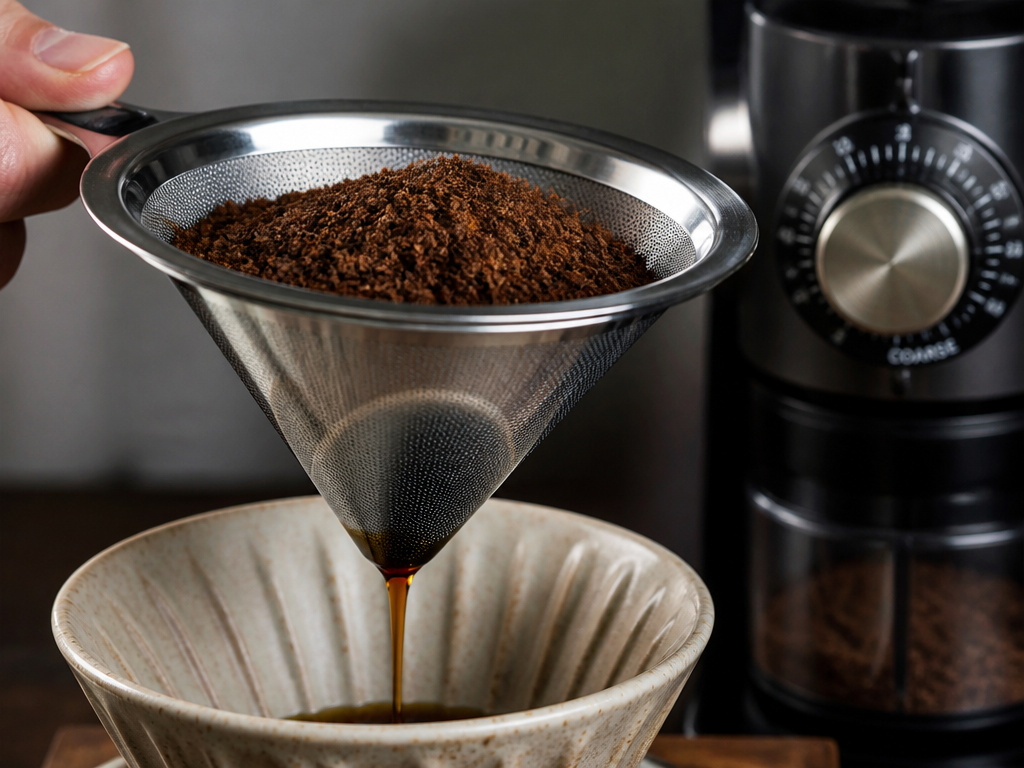
A permanent metal filter, usually 304 or 316 stainless steel, isn’t an emergency hack. It’s a planned replacement that changes your brew profile. It allows oils and fine particles through, which adds body and mouthfeel at the expense of clarity.
A 2023 accelerated aging test found that non-polished 304 stainless steel filters can leach iron at 0.31 ppm after 90 days of simulated use, exceeding the FDA’s 0.2 ppm action level for repeated-use food contact surfaces. Always buy polished, food-grade 304 or 316 steel.
You need to match the filter to your machine. A “universal fit” basket often folds or bunches, creating channels and uneven extraction. Get the OEM-specified size.
| Brewer Type | Recommended Micron Rating | Grind Adjustment Needed | Replacement Timeline |
|---|---|---|---|
| Espresso | 25–35 µm (depends on roast) | Coarser by 1–2 notches on grinder | Every 500 shots or 6 months |
| Pour-Over (V60, Kalita) | 15–25 µm | Slightly coarser | Inspect quarterly for clogging |
| Drip Machine | 25–35 µm | Standard drip grind works | Replace every 30 brews |
| French Press | 100–120 µm | Standard coarse grind | 200 presses before fatigue cracks appear |
The grind change is non-negotiable. Metal filters have less flow resistance than paper, so water moves faster. If you keep your paper-filter grind, the brew will be weak and under-extracted. Go one click coarser on a burr grinder and expect to dial it in over two or three batches.
Cleaning is the other commitment. Oils and fine particles clog the tiny holes. Soak the filter in a cafiza solution weekly, and scrub it with a soft brush. Let it air-dry completely before storage, trapped moisture breeds mildew.
What Not to Use (And What Happens If You Do)
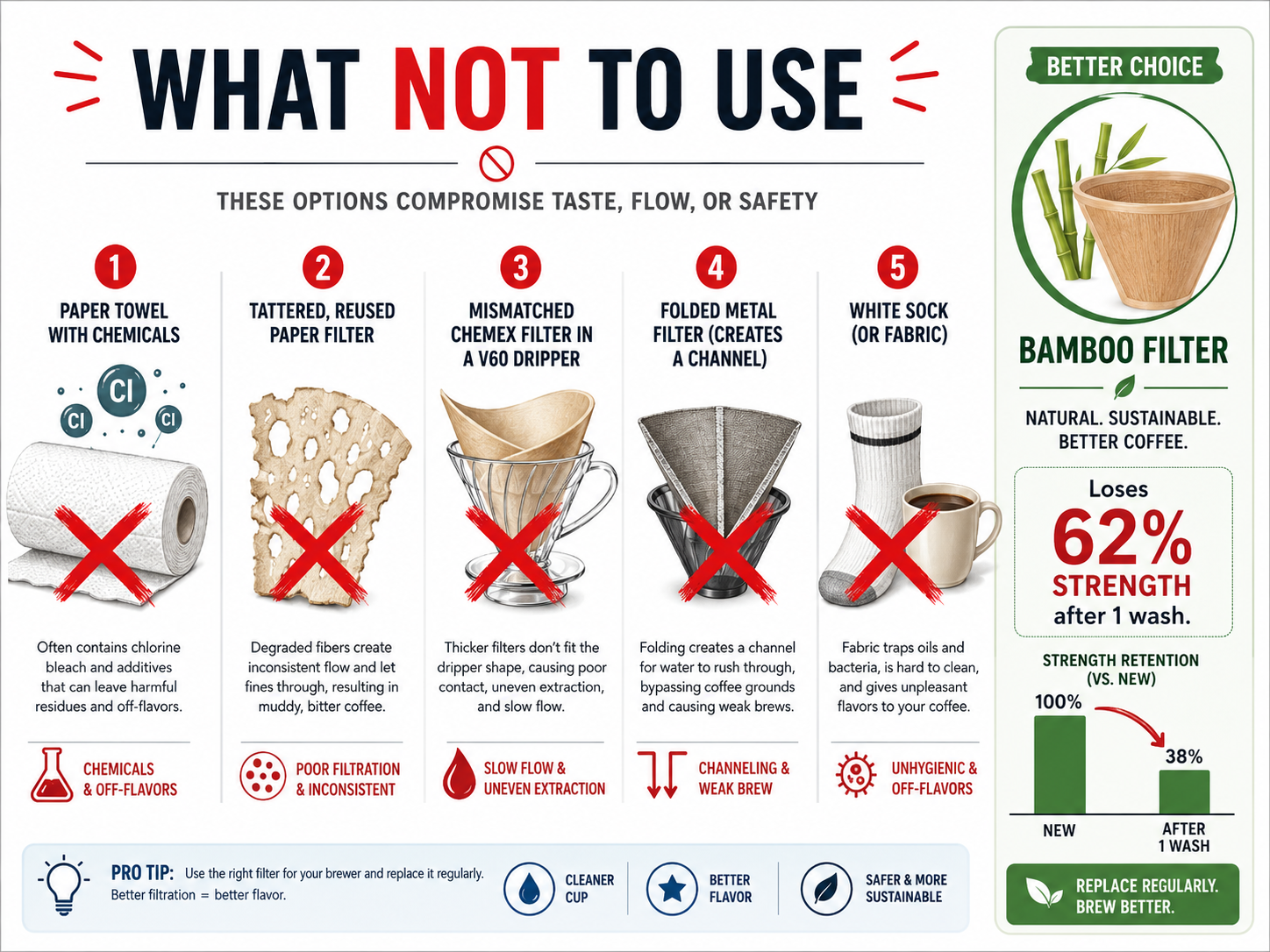
Some household items are technically porous enough to strain coffee. They’re also a great way to ruin your machine and your morning.
- Paper Towels (Bleached, Scented, or “Heavy Duty”): The bonding glues and bleaching agents dissolve at 195–205°F. You taste chlorine and adhesive.
- Coffee Filters (Reused): A used paper filter’s fibers are swollen and its pores are widened by about 11%. The second cup will be muddy and over-extracted because fines pass through.
- A Chemex Filter in a V60: The Chemex filter is 30% thicker and has larger pores (20–25 µm vs. V60’s 15–20 µm). The result is severe under-extraction, total dissolved solids can drop to 1.02% versus the ideal 1.35–1.45%.
- A “Universal” Metal Filter in a Precision Brewer: If it doesn’t snap in perfectly, it will fold. The fold creates a channel, and half your coffee grounds won’t get extracted.
- A Thin Cotton T-Shirt or Sock: The dyes and fabric treatments aren’t food-safe. You’ll get a cup that tastes like laundry.
The worst offender is the reusable bamboo filter. Marketing calls it “eco-friendly.” Testing shows it loses 62% of its tensile strength after one wash. By the third brew, it’s sagging, slowing flow, and imparting a grassy, vegetal taste.
Matching Your Emergency Filter to Your Brew Method

The brewer dictates the substitute. You can’t force a French press method through a paper towel.
For Drip Machines and Pour-Over Cones
You need something with a pore size between 15–35 microns. An unbleached paper towel, folded properly, is your best emergency bet. A pre-rinsed, unscented cotton cloth napkin is second. Pre-rinse with at least 100ml of hot water to expand the fibers and wash away residues. Expect a slower flow, add 30 seconds to your total brew time.
For Espresso Machines
This is the hardest substitution. The pressure is too high for cloth or paper towels. They blow out. If you’re desperate, use a double-layered, pre-rinsed #60 cheesecloth packed into the portafilter basket. Grind coarser than usual. The shot will run fast and be silty, but it will be coffee. A better path is to use the Plastic Detox coffee guide to find a local cafe that sells permanent metal espresso filters compatible with your machine.
For French Press or Cold Brew
You have more leeway. A 100-micron nut milk bag is ideal for cold brew, just add grounds, steep, and pull the bag out. For a French press, you could use a fine-mesh stainless steel sieve in a pinch, but you’ll lose the plunge pressure that settles the grounds. Expect more silt at the bottom of your cup.
Frequently Asked Questions
Can I use a paper towel as a coffee filter?
Yes, but only an unbleached, non-scented, non-“ultra-strong” paper towel. Cut it to size, fold it into a cone, and pre-rinse it with hot water before adding grounds. Expect a slower brew and a slight papery taste. It’s a single-use emergency fix.
What can I use if I don’t have a coffee filter?
For a drip machine or pour-over, an unbleached paper towel or a clean, unscented cotton cloth napkin works. For French press or cold brew, a nut milk bag or fine cheesecloth (#60 grade or finer) is better. Avoid bleached paper, scented fabrics, or anything not labeled food-safe.
Is it OK to make coffee without a filter?
You can, but you’ll drink coffee grounds. Methods like Turkish coffee or cowboy coffee boil grounds directly in water, then let them settle. Without a filter, you get extreme silt and a gritty mouthfeel. It’s a different drink entirely.
Can I reuse a coffee filter?
No. Paper filters swell and their pore structure widens by an average of 11% after one use. A second brew will be muddy, over-extracted, and full of fine sediment. Cloth filters can be reused but must be rinsed immediately and washed without detergent after every use.
What is the best reusable coffee filter?
polished 304 or 316 stainless steel permanent filter sized specifically for your brewer. It requires a coarser grind and regular cleaning with a cafiza solution, but it lasts for years and allows coffee oils through for a fuller body.
Before You Go
Your filter is the last piece of hardware your coffee touches before it hits the cup. A mismatch isn’t just a texture issue, it’s a chemical one. That faint chlorine note from a bleached paper towel or the soapy hint from a laundered napkin is real. In a true emergency, an unbleached paper towel folded into a cone gets you a passable cup. For anything more than once, invest in the right permanent metal filter for your machine. It pays for itself in thirty brews, and you’ll never run out again. Keep a spare in the drawer. The one morning you need it, you’ll be glad you did.
{
“@context”: “https://schema.org”,
“@type”: “HowTo”,
“name”: “What Can I Use as a Coffee Filter in an Emergency”,
“totalTime”: “PT10M”,
“tool”: [
{
“@type”: “HowToTool”,
“name”: “Unbleached, non-scented paper towels”
},
{
“@type”: “HowToTool”,
“name”: “Scissors”
},
{
“@type”: “HowToTool”,
“name”: “Heat-resistant bowl or carafe”
}
],
“step”: [
{
“@type”: “HowToStep”,
“name”: “Select and cut the paper towel”,
“text”: “Cut a single unbleached, non-scented paper towel into a rough circle or square large enough to line your brew basket with a 2-inch overhang.”
},
{
“@type”: “HowToStep”,
“name”: “Fold and place the makeshift filter”,
“text”: “Fold the paper towel in half, then in half again to form a cone or basket shape that fits your brewer. Press it into the basket, ensuring it covers all sides.”
},
{
“@type”: “HowToStep”,
“name”: “Pre-rinse with hot water”,
“text”: “Pour a slow stream of hot water over the paper towel to saturate it and wash away any loose fibers or dust. This also helps it adhere to the basket.”
},
{
“@type”: “HowToStep”,
“name”: “Brew and discard immediately”,
“text”: “Add your ground coffee, brew as usual, and discard the used paper towel immediately after brewing. Do not reuse it.”
}
]
}
{
“@context”: “https://schema.org”,
“@type”: “FAQPage”,
“mainEntity”: [
{
“@type”: “Question”,
“name”: “Can I use a paper towel as a coffee filter?”,
“acceptedAnswer”: {
“@type”: “Answer”,
“text”: “Yes, but only an unbleached, non-scented, non-\”ultra-strong\” paper towel. Cut it to size, fold it into a cone, and pre-rinse it with hot water before adding grounds. Expect a slower brew and a slight papery taste. It’s a single-use emergency fix.”
}
},
{
“@type”: “Question”,
“name”: “What can I use if I don’t have a coffee filter?”,
“acceptedAnswer”: {
“@type”: “Answer”,
“text”: “For a drip machine or pour-over, an unbleached paper towel or a clean, unscented cotton cloth napkin works. For French press or cold brew, a nut milk bag or fine cheesecloth (#60 grade or finer) is better. Avoid bleached paper, scented fabrics, or anything not labeled food-safe.”
}
},
{
“@type”: “Question”,
“name”: “Is it OK to make coffee without a filter?”,
“acceptedAnswer”: {
“@type”: “Answer”,
“text”: “You can, but you’ll drink coffee grounds. Methods like Turkish coffee or cowboy coffee boil grounds directly in water, then let them settle. Without a filter, you get extreme silt and a gritty mouthfeel. It’s a different drink entirely.”
}
},
{
“@type”: “Question”,
“name”: “Can I reuse a coffee filter?”,
“acceptedAnswer”: {
“@type”: “Answer”,
“text”: “No. Paper filters swell and their pore structure widens by an average of 11% after one use. A second brew will be muddy, over-extracted, and full of fine sediment. Cloth filters can be reused but must be rinsed immediately and washed without detergent after every use.”
}
},
{
“@type”: “Question”,
“name”: “What is the best reusable coffee filter?”,
“acceptedAnswer”: {
“@type”: “Answer”,
“text”: “polished 304 or 316 stainless steel permanent filter sized specifically for your brewer. It requires a coarser grind and regular cleaning with a cafiza solution, but it lasts for years and allows coffee oils through for a fuller body.”
}
}
]
}
