
Coffee and Breastfeeding: Is It Safe? Caffeine Timing Tips
Yes, you can drink coffee while breastfeeding, but you need to watch two things: daily caffeine intake (300 mg is the consensus safe ceiling) and timing (caffeine peaks in breast milk 1-2 hours after you drink it). The real risk isn’t just a fussy baby, it’s a drop in breast milk iron content if you drink more than 450 mL daily, which can lead to mild anemia in some infants.
Most nursing mothers fixate on the baby’s immediate reaction, fussiness, sleeplessness. They miss the slower, quieter problem. Coffee over 450 mL daily pulls iron out of your milk. The drop is measurable. By the third month, some exclusively breastfed babies show lower hemoglobin and hematocrit levels at their checkup. That’s the part the quick-answer articles skip.
This guide walks through the caffeine transfer numbers, the half-life difference between a newborn and a six-month-old, the hidden caffeine in chocolate, and the three-day test to confirm sensitivity. It also covers why you should nurse right before your coffee, not after.
Key Takeaways
- Caffeine reaches your baby, between 0.06% and 1.5% of your intake passes into breast milk, peaking 1-2 hours after you drink it.
- Newborns metabolize caffeine slowly, with a half-life of several days. By six months, that half-life drops to about 2.5 hours.
- The safe daily limit is 300 mg caffeine, roughly two 8-oz cups of brewed coffee or one large coffee shop drink.
- Chocolate matters, theobromine, a caffeine metabolite from cocoa, accounted for 56% to 88% of all caffeine metabolites in one human milk study.
- Drinking more than 450 mL of coffee daily can decrease breast milk iron concentration by about one-third, risking mild iron deficiency anemia in the infant.
- If your baby shows extra fussiness, hyper-alertness, or trouble settling after you drink coffee, run the three-day caffeine test: cut intake to 150 mg or less and watch for change.
How Does Caffeine Transfer to Breast Milk?
Caffeine passes into breast milk. The amount is small, between 0.06% and 1.5% of the maternal dose, but it’s enough to affect a newborn.
Caffeine concentrations in human milk peak approximately 2 hours after maternal consumption, according to a 2022 study published in the journal Nutrients. The transfer rate is influenced by maternal genetics, physiology, and concurrent diet.
The half-life difference is the real variable. For a six-month-old baby, caffeine’s half-life is about 2.5 hours. For a newborn, it’s a few days. That means a newborn exposed to caffeine on Monday could still be processing it on Thursday. This explains why some babies seem fine after one cup but accumulate symptoms over a week of daily drinking.
The American Academy of Pediatrics classifies caffeine as a “maternal medication usually compatible with breastfeeding.” The LactMed database from the NIH places it in Lactation Risk Category L2, safer. But “usually compatible” and “safer” aren’t guarantees. They’re statistical averages. Your baby’s liver enzyme activity, weight, and overall health shift the curve.
TL;DR: Caffeine transfers at 0.06-1.5% of your dose, peaks 2 hours post-drink, and lingers for days in newborns versus hours in older infants.
What’s the Safe Daily Caffeine Limit?
300 milligrams per day. That’s the number from the NIH’s MotherToBaby caffeine fact sheet and repeated in most obstetric guidelines.
| Source | Caffeine Amount | Equivalent in Coffee |
|---|---|---|
| NIH MotherToBaby | 300 mg/day | Two 8-oz cups of brewed coffee |
| LactMed Database | 300 mg/day | One large coffee shop latte or cold brew |
| KellyMom (Hale 2017) | 300 mg/day | Three shots of espresso (approx) |
That 300 mg ceiling isn’t just coffee. It’s total caffeine, from tea, soda, energy drinks, chocolate, and even some medications. A standard 8-oz cup of brewed coffee holds about 95 mg. A single shot of espresso runs 64 mg. A 12-oz can of cola has 34 mg. Dark chocolate can add 20 mg per ounce.
Common mistake: Counting only coffee, chocolate and soda push you over the 300 mg limit without touching a second cup. A morning latte, a midday soda, and an evening chocolate bar can hit 350 mg before dinner.
The limit exists because doses above 300 mg daily correlate with decreased infant weight gain in some studies. A 2013 survey of exclusively breastfeeding mothers found caffeine consumption up to 130 mg daily was linked to increasing infant weight percentile. Consumption over 130 mg daily was linked to decreasing weight percentile. The correlation wasn’t strong enough to be a rule, but it’s a signal.
Excessive intake, defined as over 750 mg per day in Hale’s Breastfeeding Answers Made Simple, can cause clear caffeine stimulation signs in the baby: irritability, jitteriness, poor sleep.
TL;DR: 300 mg total caffeine per day is the safe ceiling. Count everything, coffee, tea, soda, chocolate, medications.
Which Babies Are Sensitive to Caffeine?
Some babies react. Some don’t. Premature infants and newborns under four weeks are the most vulnerable because their liver enzymes aren’t fully active.
The signs aren’t subtle. They’re amplification of normal newborn behavior. Extra fussiness that doesn’t resolve with feeding or rocking. Hyper-alertness, the baby stares wide-eyed for hours instead of dozing off. Trouble settling even when exhausted. More spit-up or gas than baseline. It sounds like a regular Tuesday with a newborn. That’s why you need a test.
The three-day caffeine test works. Cut your intake to 150 mg or less per day for three full days. Observe if the extra fussiness, the alertness, the spit-up frequency drops. If it does, caffeine is the trigger. If it doesn’t, the symptoms are unrelated and you should talk to your pediatrician.
I ran this test with my second kid. The first cup of coffee after a week of abstinence produced a baby who refused to nap for four hours. He stared at the ceiling like it held secrets. We dropped back to half a cup a day for a month, then slowly ramped up as his metabolism caught up.
Caffeine is given directly to premature babies for breathing problems at doses far higher than breast milk exposure. That fact sometimes gets cited as proof of safety. It’s not. Therapeutic caffeine in a neonatal ICU is monitored, titrated, and adjusted by a team. Your daily latte is not.
TL;DR: Sensitivity signs are amplified baseline newborn behavior, extra fussiness, hyper-alertness, trouble settling. Run the three-day test (150 mg or less daily) to confirm.
Why Does Timing Matter More Than Volume?

Nurse your baby right before you drink your coffee, not after. Caffeine peaks in breast milk 1-2 hours after ingestion. Feeding first creates a buffer.
The NIH LactMed caffeine entry notes that caffeine reaches maximum levels in blood 30–120 minutes after ingestion and passes into breast milk. Waiting two hours after drinking before the next feed minimizes the peak exposure.
That timing trick is straightforward, but most mothers reverse it. They drink coffee while nursing, thinking the caffeine hasn’t hit yet. It hasn’t, but it will peak during the next feed if they wait two hours. Better to feed, then drink, then let the two-hour window pass before the next session.
| Timing Strategy | Peak Exposure | Risk |
|---|---|---|
| Drink coffee while nursing | Caffeine peaks during current feed | Baby gets the highest concentration |
| Nurse, then drink coffee | Peak occurs before next feed | Baby gets lower concentration at next feed |
| Drink, wait 2 hrs, then nurse | Peak has passed before feeding | Lowest exposure |
The half-life in a newborn stretches days. Timing can’t fix that. But for a six-month-old with a 2.5-hour half-life, timing cuts the dose by half.
TL;DR: Feed your baby first, then drink your coffee. Wait two hours before the next feeding session to avoid the peak concentration in your milk.
How Does Coffee Affect Breast Milk Iron?

Coffee over 450 mL daily, about two large mugs, decreases breast milk iron concentration by about one-third. The drop is measurable.
A WebMD article cites a finding that mothers who drink three cups of coffee per day have about one-third less iron in their breast milk than mothers who drink none. The LactMed database notes that coffee intake over 450 mL daily may decrease breast milk iron concentrations and lead to mild iron deficiency anemia in some breastfed infants.
The mechanism isn’t fully mapped, but the correlation is strong enough to warrant caution. Iron deficiency anemia in infants presents as pallor, lethargy, poor weight gain, and irritability. Those symptoms overlap with caffeine sensitivity, which complicates diagnosis.
Common mistake: Assuming the baby’s fussiness is only caffeine-related, it could be iron-deficiency anemia from high coffee intake masking as stimulation.
If you drink more than 450 mL of coffee daily, consider an iron supplement for yourself or reduce your intake. The human milk caffeine content study also flagged a cohort in Costa Rica where high coffee drinkers had decreased concentrations of infant hemoglobin and hematocrit at birth, and lower iron levels in breast milk.
TL;DR: Drinking more than 450 mL of coffee daily can reduce breast milk iron by one-third, risking mild anemia in your baby.
What About Chocolate and Other Sources?
Chocolate is a caffeine source. Dark chocolate especially. Theobromine, a caffeine metabolite from cocoa, accounted for 56% to 88% of all caffeine metabolites in one human milk study.
That study found higher levels of caffeine in the milk of women living in cities, with secondary education, aged 34–44 years old, and in mature milk during the 3rd and 4th lactation periods. Genetic variation, body physiology, and diet also influence caffeine content in breast milk.
Your total caffeine count must include chocolate, tea, soda, and energy drinks. A single ounce of dark chocolate adds 20 mg. A cup of black tea adds 47 mg. A can of cola adds 34 mg. A 16-oz energy drink can hit 200 mg alone.
Switching to decaf coffee cuts the biggest source, but decaf still contains 2-5 mg per cup. It’s negligible, but not zero.
TL;DR: Chocolate, tea, soda, and energy drinks add caffeine. Theobromine from chocolate was the dominant metabolite in one breast milk study.
How to Track and Adjust Your Intake
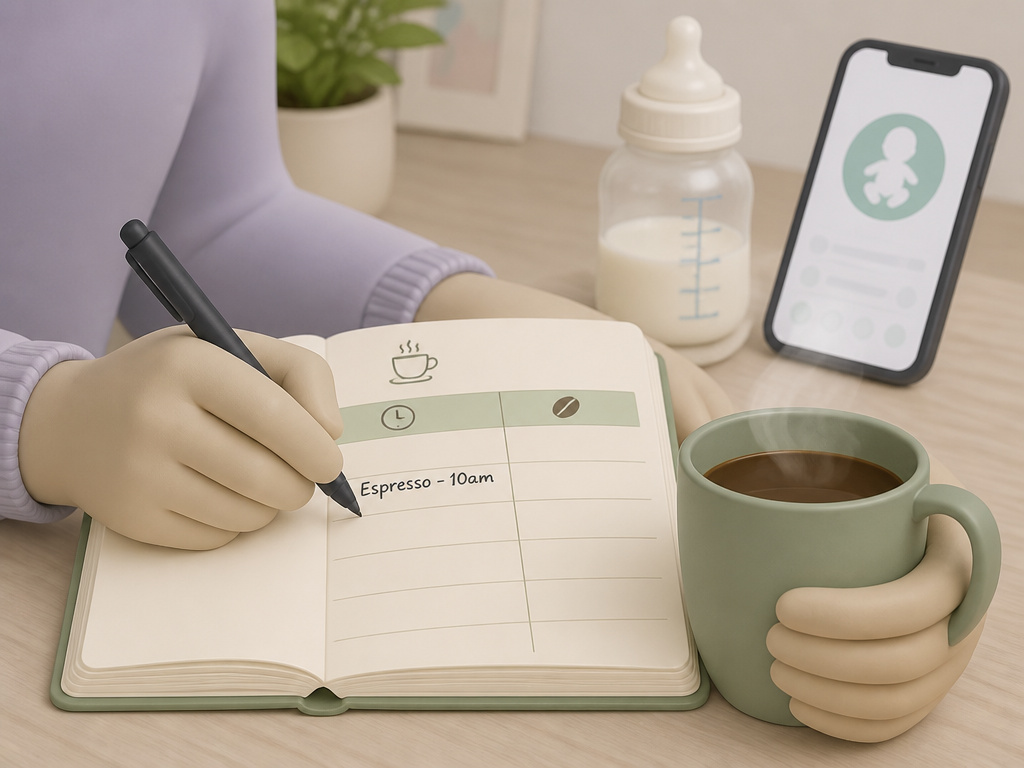
Use a caffeine tracking app or a notebook. Write down every source for three days to see your real total.
The caffeine in espresso versus brewed coffee matters if you drink both. Espresso shots are smaller but concentrated. Cold brew can be stronger per ounce than hot coffee. Know your drinks.
If you need to cut back, replace one coffee with a low-caffeine alternative like green tea. Green tea’s L-theanine can smooth the caffeine edge. Or try a decaffeinated coffee option if you miss the ritual.
Watch your baby. Note feeding times, fussiness peaks, and sleep patterns alongside your caffeine log. Patterns emerge over a week, not a day.
TL;DR: Log your caffeine from all sources for three days. Replace high-caffeine items with low-caffeine alternatives if you’re near the 300 mg limit.
Frequently Asked Questions
Will one cup of coffee hurt my baby?
Probably not. The transfer rate is low (0.06-1.5%), and one cup is under the 300 mg daily limit. But if your baby is a newborn or premature, that caffeine lingers for days. One cup today plus one cup tomorrow adds up.
How long does caffeine stay in breast milk?
Caffeine peaks 1-2 hours after you drink it and then declines. The half-life, the time it takes for the concentration to drop by half, is several days in a newborn and about 2.5 hours in a six-month-old.
Can I drink coffee if my baby is fussy?
Run the three-day test first. Cut your caffeine to 150 mg or less per day for three days. If the fussiness decreases, caffeine is contributing. If it doesn’t, the fussiness has another cause.
Does decaf coffee have any caffeine?
Yes, but very little, 2-5 mg per cup. That’s negligible against the 300 mg daily limit. Decaf is a safe substitute if you want the coffee ritual without the caffeine load.
Before You Go
Coffee and breastfeeding coexist, but with rules. The 300 mg daily limit is firm. Timing matters, nurse before you drink, not after. Chocolate and soda count toward your total.
Watch for two problems: immediate caffeine sensitivity (fussiness, alertness) and the slower iron drop if you drink more than 450 mL daily. The three-day test tells you which is happening.
Your baby’s metabolism changes monthly. A newborn holds caffeine for days; a six-month-old clears it in hours. Adjust as they grow.
Track your intake. Know your drinks. And when you need a break, swap coffee for green tea benefits or a decaffeinated coffee option. The goal isn’t abstinence, it’s managed enjoyment.
{
“@context”: “https://schema.org”,
“@type”: “HowTo”,
“name”: “How to Safely Drink Coffee While Breastfeeding”,
“totalTime”: “PT3D”,
“tool”: [
{
“@type”: “HowToTool”,
“name”: “Standard 8 oz coffee mug”
},
{
“@type”: “HowToTool”,
“name”: “Caffeine tracking app or notebook”
},
{
“@type”: “HowToTool”,
“name”: “Pediatrician contact information”
}
],
“step”: [
{
“@type”: “HowToStep”,
“name”: “Calculate your daily caffeine intake”,
“text”: “Add up caffeine from coffee, tea, soda, energy drinks, chocolate, and medications. The safe ceiling is 300 mg per day for most nursing mothers.”
},
{
“@type”: “HowToStep”,
“name”: “Feed before you drink”,
“text”: “Nurse your baby right before you have your coffee. Caffeine peaks in breast milk 1-2 hours after you drink it, so this creates a buffer window.”
},
{
“@type”: “HowToStep”,
“name”: “Watch for sensitivity signs”,
“text”: “Monitor your baby for extra fussiness, hyper-alertness, trouble settling, or increased spit-up over the next 24 hours after your caffeine intake.”
},
{
“@type”: “HowToStep”,
“name”: “Run the three-day caffeine test”,
“text”: “If you suspect sensitivity, cut caffeine to 150 mg or less per day for three days. Observe if the symptoms fade. If they do, caffeine is the trigger.”
},
{
“@type”: “HowToStep”,
“name”: “Check iron levels if you drink over 450 mL daily”,
“text”: “Mothers consuming more than 450 mL of coffee per day have about one-third less iron in their breast milk. Consider an iron supplement or reducing intake if your baby shows signs of mild anemia.”
}
]
}
{
“@context”: “https://schema.org”,
“@type”: “FAQPage”,
“mainEntity”: [
{
“@type”: “Question”,
“name”: “Will one cup of coffee hurt my baby?”,
“acceptedAnswer”: {
“@type”: “Answer”,
“text”: “Probably not. The transfer rate is low (0.06-1.5%), and one cup is under the 300 mg daily limit. But if your baby is a newborn or premature, that caffeine lingers for days. One cup today plus one cup tomorrow adds up.”
}
},
{
“@type”: “Question”,
“name”: “How long does caffeine stay in breast milk?”,
“acceptedAnswer”: {
“@type”: “Answer”,
“text”: “Caffeine peaks 1-2 hours after you drink it and then declines. The half-life, the time it takes for the concentration to drop by half, is several days in a newborn and about 2.5 hours in a six-month-old.”
}
},
{
“@type”: “Question”,
“name”: “Can I drink coffee if my baby is fussy?”,
“acceptedAnswer”: {
“@type”: “Answer”,
“text”: “Run the three-day test first. Cut your caffeine to 150 mg or less per day for three days. If the fussiness decreases, caffeine is contributing. If it doesn’t, the fussiness has another cause.”
}
},
{
“@type”: “Question”,
“name”: “Does decaf coffee have any caffeine?”,
“acceptedAnswer”: {
“@type”: “Answer”,
“text”: “Yes, but very little, 2-5 mg per cup. That’s negligible against the 300 mg daily limit. Decaf is a safe substitute if you want the coffee ritual without the caffeine load.”
}
}
]
}
