
How to Remove Coffee Stains from Stainless Steel Quickly & Safely
To remove coffee stains from stainless steel, apply a paste of baking soda and water with the grain, let it sit for 5-10 minutes, then gently scrub and rinse. For set-in stains inside mugs or carafes, a solution of boiling water and baking soda soaked for 8 hours is more effective than vinegar.
Most people grab the nearest abrasive cleaner or scrub pad. That works for a week. Then you notice the dull, scratched patch that now attracts dirt and new stains twice as fast as the original spot.
This guide covers the right methods for travel mugs, sink stains, and appliance surfaces. It explains why some stains won’t budge and when you’re actually looking at permanent damage, not a stain.
Key Takeaways
- Baking soda paste is the first-line fix for surface stains; apply and scrub with the grain to avoid micro-scratches.
- For interior stains on carafes or thermoses, a boiling water and baking soda soak for 8 hours works better than a quick vinegar fizz.
- Abrasive cleaners and steel wool strip the protective chromium oxide layer, making the steel more prone to future staining and rust.
- If a stain persists after chemical cleaning, it may be etching from prolonged acidic contact, which no cleaner can reverse.
- Always do a spot test in an inconspicuous area, especially on brushed finishes, as some cleaners can alter the sheen.
Why Coffee Stains Stainless Steel
Coffee contains tannins and natural dyes that bond to surfaces. Stainless steel isn’t a non-stick coating. Its resistance comes from a thin, invisible chromium oxide passive layer that forms on the surface. This layer prevents rust. It can still hold onto organic compounds.
The stain is a surface deposit, not a breach of the metal. That’s good news. It means a chemical lift, not abrasive grinding, is the correct removal method. Using the wrong abrasive is the single most common reason a simple cleanup creates a permanent problem.
The passive layer on stainless steel is only a few atoms thick. Abrasives scrape it off, exposing raw iron that can then rust or stain more easily, defeating the material’s purpose.
TL;DR: Coffee stains sit on top of stainless steel’s protective layer. Your goal is to dissolve the stain without damaging that layer.
The 3-Step Method for Most Stains
This process works for coffee splatters on appliance doors, countertop rims, and sink basins. It uses materials you already have.
Grab a soft microfiber cloth, baking soda, mild dish soap, and a non-abrasive scrubbing pad like a Scotch-Brite non-scratch pad. Do not use steel wool or green scouring pads.
Step 1: Pre-clean with soap and water. Wash the area with warm water and a drop of dish soap. This removes surface oils and loose residue so the cleaner can target the stain. Dry it with a cloth. Skipping this means the baking soda fights grease instead of tannins.
Step 2: Apply a baking soda paste. Mix three tablespoons of baking soda with just enough water to make a spreadable paste, about one tablespoon. The paste should be thick, not runny. Using your finger or a cloth, apply it directly to the stain.
Rub the paste in gently, following the direction of the metal’s grain. You can see the grain as faint, parallel lines on brushed stainless. On polished finishes, any direction is fine, but a consistent motion still matters. Let the paste sit for 5 to 10 minutes. The baking soda acts as a mild abrasive and a pH neutralizer.
Step 3: Gently scrub and rinse. Dampen your non-abrasive pad or a fresh corner of your cloth. Scrub the pasted area with light pressure, again moving with the grain. You’ll see the paste turn a light brown as it lifts the stain. Rinse thoroughly with warm water.
Dry the area immediately with a clean, dry microfiber cloth. Letting water air-dry on stainless steel leaves spotty mineral deposits, especially if you have hard water. That creates a new cleaning problem.
When Baking Soda and Vinegar Aren’t Enough
The classic internet hack is to combine baking soda and vinegar for a fizzy reaction. That reaction happens in the bowl, not on the stain. The fizz is carbon dioxide escaping, which does little for cleaning. What helps is the mild acidity of the vinegar afterward.
For a combined coffee and hard water stain, vinegar first makes sense. The acetic acid dissolves mineral deposits that lock in the coffee pigments.
Common mistake: Pouring vinegar directly onto a baking soda paste on the stain — the reaction happens instantly and the cleaning agents wash away. Apply them separately.
Here is the effective sequence for tough, combo stains:
1. Dampen a cloth with white vinegar. Wipe the stained area and let it sit for two minutes.
2. Rinse with water.
3. Now apply your baking soda paste as described in the 3-step method.
4. Scrub, rinse, and dry.
This two-step attack tackles the two different binders: minerals and organic compounds. If this doesn’t work, the issue might not be a stain at all. It could be etching.
Is It a Stain or Permanent Etching?
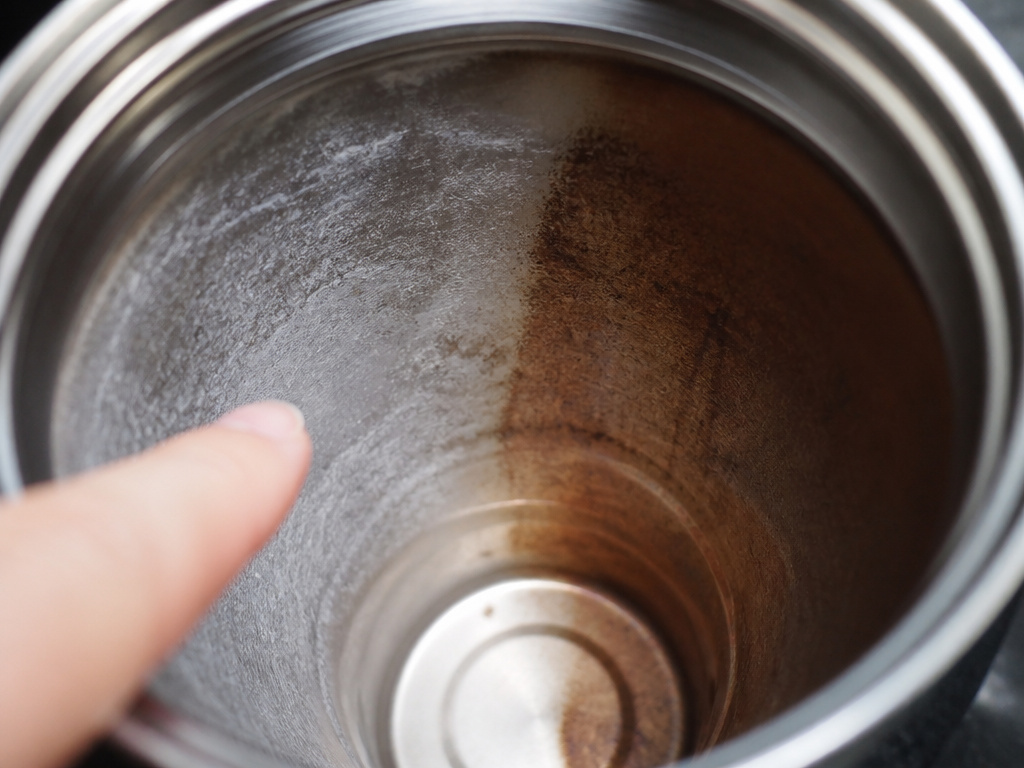
This is the critical distinction most guides miss. If black coffee sits in a thermos for days or a spill dries on a warm appliance for weeks, the acidic pH can actually damage the passive layer.
Etching is a chemical alteration of the metal surface. It looks like a dull, cloudy, or slightly rough patch. A true stain will be darker but the metal underneath still feels smooth.
| Sign | Coffee Stain | Acid Etching |
|---|---|---|
| Surface Feel | Smooth | Dull, slightly rough |
| Response to Cleaners | Lifts with baking soda or vinegar | Unchanged by any chemical cleaner |
| Visual Clue | Dark brown discoloration | Cloudy white or grey haze |
| Cause | Short-term contact (hours) | Prolonged contact (days/weeks) with acidic coffee |
Etching cannot be cleaned. It requires professional refinishing or, on appliances, living with the flaw. This is why a consistent coffee machine maintenance routine that includes prompt wiping matters more than heroic cleaning later.
TL;DR: If the discoloration remains smooth, it’s a stain. If it feels rough and looks cloudy, the metal itself is damaged and cleaning won’t fix it.
The Boiling Water Soak for Mugs and Carafes
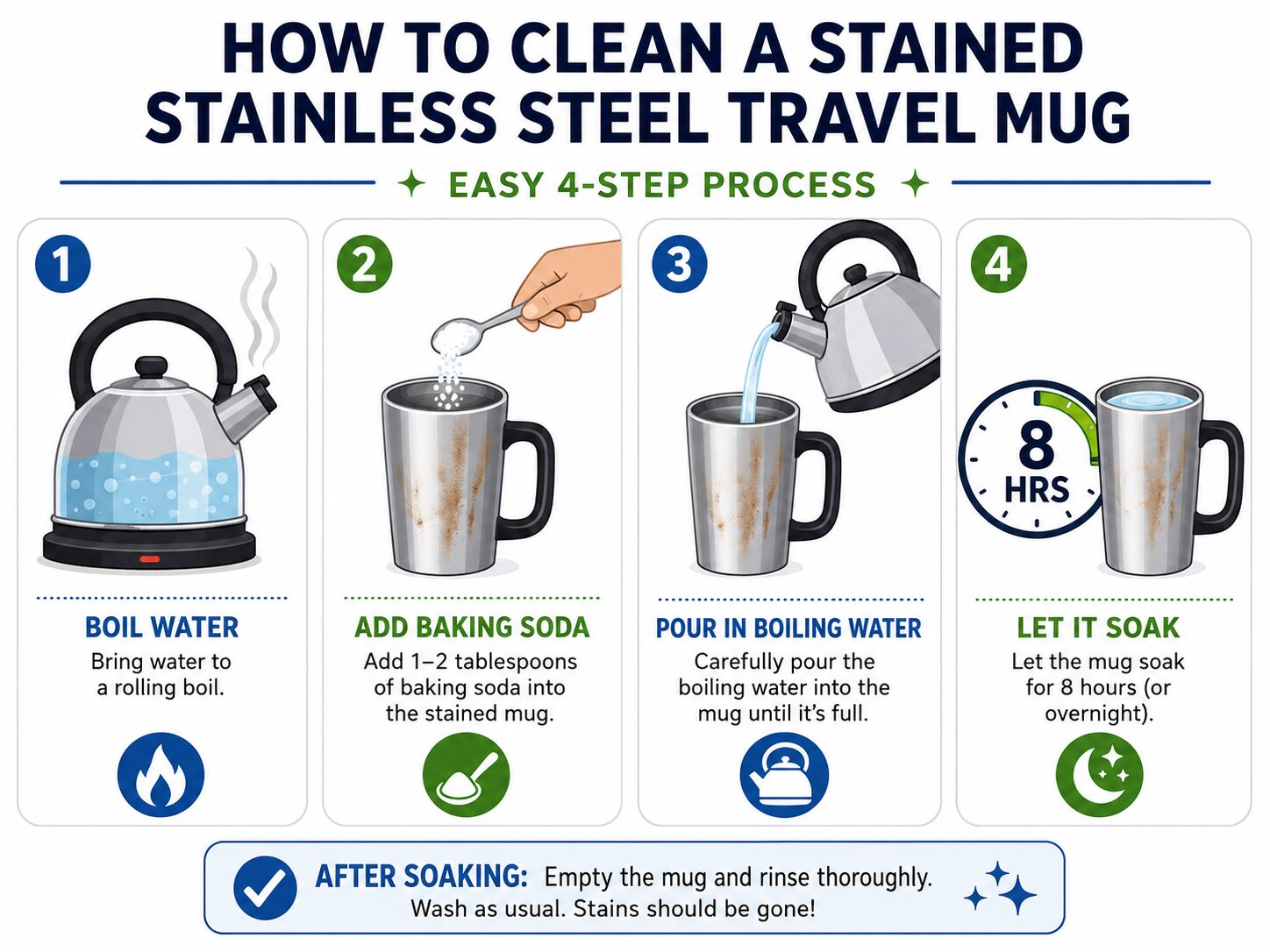
Interior stains on travel mugs, thermoses, and coffee carafes are a different challenge. The curved surfaces are hard to scrub, and stains bake onto the bottom. The boiling water method from the YouTube transcript is vastly more effective here than surface pastes.
You need a kettle, baking soda, and about 8 hours of patience.
- Boil a pot or kettle of water.
- Add three tablespoons of baking soda directly to your empty, stained vessel.
- Carefully pour the boiling water into the vessel until it’s full.
- Let it soak overnight, or for at least 8 hours.
The combination of heat, water, and baking soda slowly hydrolyzes and loosens the bonded tannins. In the morning, pour out the solution. You’ll likely see dark brown flakes in the water. Use a bottle brush or non-scratch sponge with a little soap to wipe the interior clean. Rinse thoroughly.
This method works because it gives the cleaner time and consistent contact. The quick vinegar-and-baking-soda fizz inside a mug is theatrical but less effective. The reaction ends in seconds, while the stain needs hours of contact.
For daily coffee maker care, rinsing your carafe right after use prevents the need for this deep soak. Letting the dregs sit is the real enemy.
What About Commercial Stainless Steel Cleaners?
Specialized stainless steel cleaners are formulated to clean and often leave a protective oil film. They work well for general smudges and light stains. For baked-on coffee rings, they may not be strong enough.
If you use one, spray it on a cloth first, not directly on the appliance. Direct spraying can lead to drips into seams or electrical components. Buff with the grain until the surface is clean and streak-free.
These products are a good part of regular appliance care, but they aren’t magic. For a severe stain, you’ll still need the baking soda paste first, followed by the cleaner to restore the uniform shine.
The Tools and Supplies You Actually Need
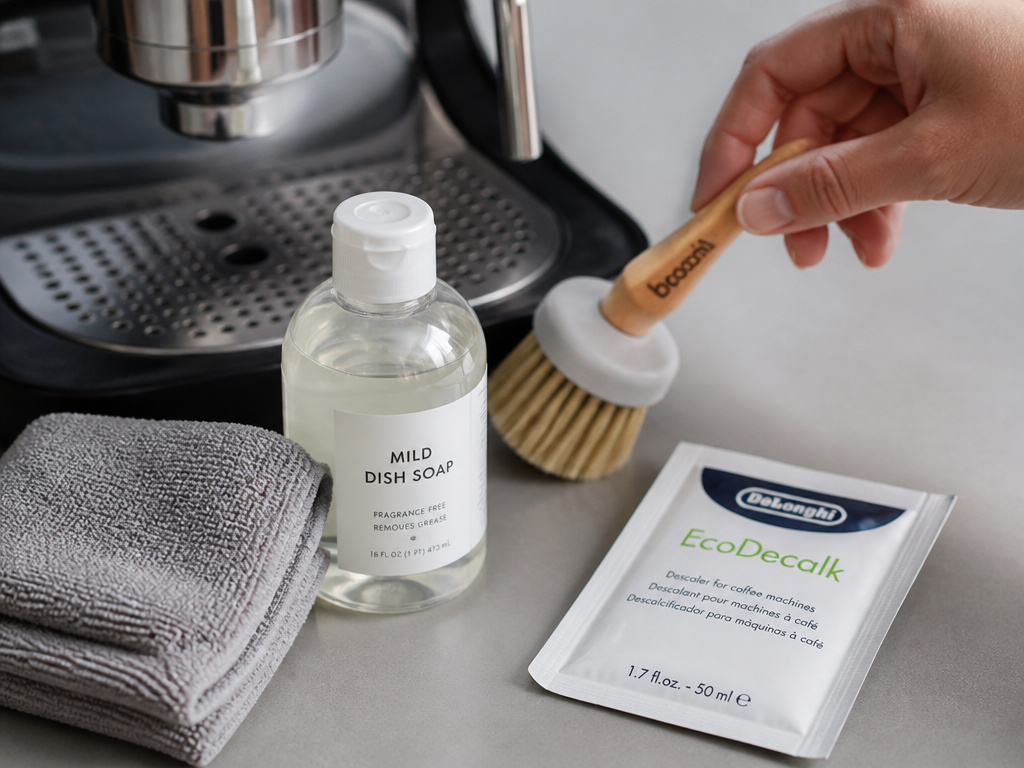
You don’t need a specialty kit. Your kitchen likely has the right tools already. Using the wrong tool causes most of the damage.
- Soft Microfiber Cloths: These are non-abrasive and lint-free. Use them for applying paste, rinsing, and the final dry. Paper towels can scratch polished finishes.
- Non-Abrasive Scrubbing Pad: The blue Scotch-Brite “non-scratch” pad is the standard. The green “heavy duty” pad will scratch stainless steel.
- Baking Soda: A cheap, mild abrasive and deodorizer. It’s your primary cleaning agent.
- White Vinegar: For dissolving hard water minerals. Apple cider vinegar works but may leave a slight scent.
- Bottle Brush: Essential for cleaning the interior curves of travel mugs and carafes without scratching.
Abrasive tools like steel wool, metal scrapers, or harsh powdered cleansers should stay far away from your stainless steel. They create a fog of tiny scratches that becomes a permanent eyesore.
How to Prevent Future Coffee Stains
Stain prevention is simpler than stain removal. It comes down to timing and habit.
Rinse coffee equipment immediately after use. Don’t let the dregs sit and dry. For appliances and sinks, wipe up spills and splatters with a damp cloth as soon as you see them. This takes ten seconds and saves a ten-minute scrub later.
For frequently used travel mugs, consider a weekly hot water and baking soda soak as part of your routine, before a visible stain forms. This is easier than the descaling procedures for a machine but follows the same logic: regular maintenance prevents major problems.
If your home has very hard water, using distilled water for the final rinse can prevent spotty mineral deposits that trap new stains. This is a trick from the official World Stainless cleaning FAQ for achieving a streak-free finish.
Frequently Asked Questions
Can I use bleach to remove coffee stains from stainless steel?
No. Bleach is highly corrosive and can permanently damage the protective chromium oxide layer on stainless steel. It may cause pitting, discoloration (yellowing), or rust. Stick to baking soda or vinegar.
Why do I see streaks after cleaning?
Streaks are usually caused by mineral deposits in your water or cleaner residue. Always do a final rinse with clean water and dry immediately with a dry microfiber cloth. For persistent streaking, use distilled water for the final rinse.
How do I clean brushed stainless steel versus polished?
The technique is the same, but direction is critical for brushed finishes. Always scrub and wipe with the direction of the grain (the visible lines). Going against the grain on brushed steel will create visible cross-hatch scratches. Polished steel is more forgiving, but a consistent direction still gives the best result.
Will lemon juice work like vinegar?
Yes, lemon juice is acidic and can help dissolve mineral deposits. However, it is also more acidic than vinegar. Rinse it off thoroughly within a minute or two to avoid any risk of etching, especially on lower-grade steel.
What if the stain is on the outside of my coffee maker?
Use the standard baking soda paste method. Be extra careful around logos, displays, and seams. Apply the paste with a cloth-tipped finger for control, and avoid getting moisture into any vents or openings. Refer to your maker maintenance guide for model-specific warnings.
Before You Go
Coffee stains on stainless steel are a nuisance, not a catastrophe. The fix is almost always a simple paste of baking soda and water, applied with patience and with the grain. Save the boiling water soak for the interior of forgotten travel mugs.
Remember that abrasive force is your last resort. It often creates a worse, permanent problem. If a discolored patch feels rough and doesn’t respond to any chemical cleaner, you’re likely dealing with etching. In that case, focus on prevention for the rest of your gear.
Your daily coffee appliance care habit is the best defense. A quick rinse and wipe beats a long soak every time. For technical details on surface preparation, the Nickel Institute cleaning guide covers the industrial principles behind keeping this material spotless.
{
“@context”: “https://schema.org”,
“@type”: “HowTo”,
“name”: “How to Remove Coffee Stains from Stainless Steel”,
“totalTime”: “PT30M”,
“tool”: [
{
“@type”: “HowToTool”,
“name”: “Soft microfiber cloths”
},
{
“@type”: “HowToTool”,
“name”: “Non-abrasive sponge or Scotch-Brite non-scratch pad”
},
{
“@type”: “HowToTool”,
“name”: “Small bowl for mixing paste”
}
],
“supply”: [
{
“@type”: “HowToSupply”,
“name”: “Baking soda”
},
{
“@type”: “HowToSupply”,
“name”: “White vinegar or apple cider vinegar”
},
{
“@type”: “HowToSupply”,
“name”: “Mild dish soap”
},
{
“@type”: “HowToSupply”,
“name”: “Distilled water (for final rinse)”
}
],
“step”: [
{
“@type”: “HowToStep”,
“name”: “Mix a baking soda paste”,
“text”: “Combine three parts baking soda with one part water in a bowl to create a thick, spreadable paste.”
},
{
“@type”: “HowToStep”,
“name”: “Apply with the grain”,
“text”: “Using a soft cloth, spread the paste over the stain, rubbing gently in the direction of the metal’s grain. Let it sit for 5-10 minutes.”
},
{
“@type”: “HowToStep”,
“name”: “Scrub gently and rinse”,
“text”: “Use a non-abrasive pad or cloth to scrub the area lightly. Rinse thoroughly with warm water and dry immediately with a clean microfiber cloth to prevent water spots.”
},
{
“@type”: “HowToStep”,
“name”: “Use vinegar for hard water stains”,
“text”: “If mineral deposits are present, wipe the area with a cloth dampened with white vinegar before the baking soda step to dissolve the minerals.”
}
]
}
{
“@context”: “https://schema.org”,
“@type”: “FAQPage”,
“mainEntity”: [
{
“@type”: “Question”,
“name”: “Can I use bleach to remove coffee stains from stainless steel?”,
“acceptedAnswer”: {
“@type”: “Answer”,
“text”: “No. Bleach is highly corrosive and can permanently damage the protective chromium oxide layer on stainless steel. It may cause pitting, discoloration (yellowing), or rust. Stick to baking soda or vinegar.”
}
},
{
“@type”: “Question”,
“name”: “Why do I see streaks after cleaning?”,
“acceptedAnswer”: {
“@type”: “Answer”,
“text”: “Streaks are usually caused by mineral deposits in your water or cleaner residue. Always do a final rinse with clean water and dry immediately with a dry microfiber cloth. For persistent streaking, use distilled water for the final rinse.”
}
},
{
“@type”: “Question”,
“name”: “How do I clean brushed stainless steel versus polished?”,
“acceptedAnswer”: {
“@type”: “Answer”,
“text”: “The technique is the same, but direction is critical for brushed finishes. Always scrub and wipe with the direction of the grain (the visible lines). Going against the grain on brushed steel will create visible cross-hatch scratches. Polished steel is more forgiving, but a consistent direction still gives the best result.”
}
},
{
“@type”: “Question”,
“name”: “Will lemon juice work like vinegar?”,
“acceptedAnswer”: {
“@type”: “Answer”,
“text”: “Yes, lemon juice is acidic and can help dissolve mineral deposits. However, it is also more acidic than vinegar. Rinse it off thoroughly within a minute or two to avoid any risk of etching, especially on lower-grade steel.”
}
},
{
“@type”: “Question”,
“name”: “What if the stain is on the outside of my coffee maker?”,
“acceptedAnswer”: {
“@type”: “Answer”,
“text”: “Use the standard baking soda paste method. Be extra careful around logos, displays, and seams. Apply the paste with a cloth-tipped finger for control, and avoid getting moisture into any vents or openings. Refer to your maker maintenance guide for model-specific warnings.”
}
}
]
}
