
How to Make Nespresso Pods into Espresso: A Complete Guide
To make Nespresso pods into espresso, you need an OriginalLine machine, an espresso-designated pod, and you must manually stop the brew early to create a concentrated ristretto shot of 15-25ml. The machine’s 19-bar pump creates pressure, but the fixed pod design and pre-ground coffee limit true espresso extraction.
Most people think pressing the “espresso” button on their Nespresso gives them espresso. It doesn’t. You get a small, strong coffee with crema, built to a specific volume by a machine that prioritizes consistency over craft.
This guide walks through what your machine is actually doing, the two methods to force a more authentic shot, and why third-party refillable pods usually fail. You will learn how to reprogram your machine, identify the physical limits of the system, and decide if the result is worth the effort.
Key Takeaways
- Only Nespresso OriginalLine machines with a 19-bar pump can produce an espresso-like shot; VertuoLine machines spin pods and cannot create pressure-based extraction.
- A true ristretto requires stopping the automated brew at 15-25ml, not the default 40ml, which over-extracts the 5-6 grams of coffee in the pod.
- Third-party refillable pods made of stainless steel or plastic bypass Nespresso’s engineering, leading to inconsistent grind, poor tamping, and frequent machine jams within a month of use.
- The crema on a Nespresso shot comes from the pod’s built-in foil and pressurized extraction, not from freshly ground coffee oils—this is a visual trick, not a sign of quality.
- For a stronger flavor profile, use intense espresso pods like Kazaar or Ristretto and reprogram the volume; switching to a lighter roast pod will make a weaker, more acidic shot.
The 19-Bar Reality: What Your Machine Actually Does
Your Nespresso OriginalLine machine, like a Pixie or Essenza Mini, hits the coffee with water at 19 bars of pressure. That number is printed on the box. A traditional espresso machine operates between 8 and 10 bars. The higher pressure in a Nespresso is a workaround. It forces water through a pre-packed, sealed capsule of finely ground coffee to generate crema instantly, regardless of bean freshness or grind quality.
The Nespresso system, detailed in patent US9247833B2, relies on precise interaction between the capsule’s foil lid and the machine’s brewing chamber to create a pressurized extraction environment. This design ensures consistency but locks out user control over key variables like grind size and tamp.
The pod itself is the filter basket, tamper, and dose all in one. It contains 5 to 6 grams of coffee for a standard espresso pod like Arpeggio. The machine pierces the foil, injects hot water at high pressure, and the liquid exits through the pierced bottom into your cup. The entire process lasts about 25 seconds and yields roughly 40ml. That default volume is the first problem. Forty milliliters from 5 grams is a brew ratio over 1:8, which is long for espresso. It washes out the coffee.
TL;DR: Your 19-bar machine makes pressurized coffee, not craft espresso. The fixed pod and automated volume are the main constraints.
How to Reprogram Your Shot for a Real Ristretto
The factory setting delivers a lungo. You want a ristretto. The machine’s reprogramming function is your only tool.
First, know your pod. A Ristretto or Kazaar intensity pod has a darker roast and finer grind tailored for a shorter extraction. Using a blonde roast pod for this will likely produce a sour, weak shot because the lighter roast needs more water for balanced extraction.
Here is the step-by-step reset for any OriginalLine machine:
- Insert your chosen espresso pod and place a small scale or clear measuring cup under the spout.
- Press and HOLD the espresso button. The machine will start brewing.
- Watch the output. Release the button the moment you see 15 to 25 ml in your cup. For a scale, aim for 15-20 grams of liquid.
- The machine beeps and saves this new volume as the default for that button.
The consequence of skipping the scale is guessing. You will release at 30ml one day and 20ml the next, making your morning coffee unpredictable. The first shot after reprogramming might run a bit fast as the machine’s internal timer adjusts. That is normal.
Common mistake: Reprogramming with a mug instead of a small cup — you cannot see the tiny volume increments, and you will consistently over-pour by 10-15ml, defeating the purpose.
This method effectively turns any espresso pod into a ristretto pod. The flavor becomes more concentrated and syrupy. The trade-off is intensity over nuance. You are extracting mostly the front-end sugars and acids from the coffee grounds, leaving the bitter compounds behind in the spent pod.
| Pod Type | Default Output | Ristretto Target | Flavor Shift |
|---|---|---|---|
| Ristretto (Intensity 10) | 25ml | 15-20ml | More chocolate, less bitterness |
| Arpeggio (Intensity 9) | 40ml | 20-25ml | Enhanced cocoa & woody notes |
| Livanto (Intensity 6) | 40ml | 25-30ml | Risk of sourness, needs longer extraction |
Why VertuoLine Pods Can’t Become Espresso
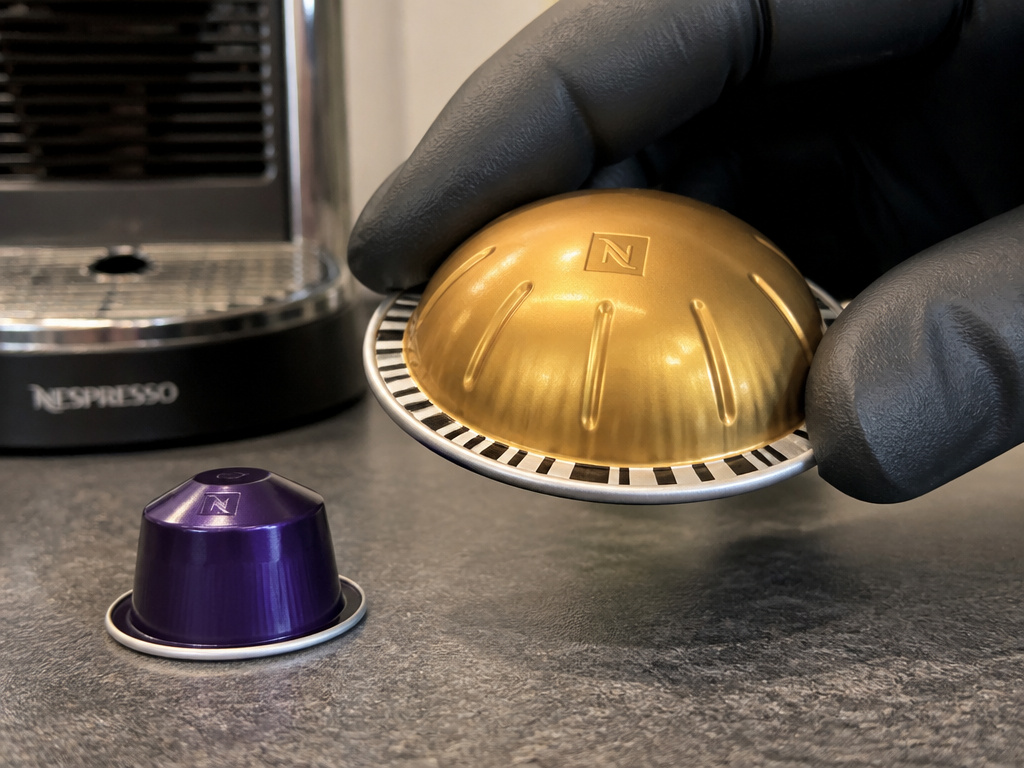
If you have a Vertuo Next or Evoluo, you have a different appliance. It uses Centrifusion™ technology, spinning the dome-shaped pod at up to 7,000 RPM while injecting water. There is no pump building pressure against a coffee puck. The spin creates a centrifugal force that pushes water through the coffee and out of the pod, generating a frothy layer that mimics crema.
You cannot make espresso from a Vertuo pod. The system is designed for specific cup sizes—espresso (40ml), double espresso (80ml), gran lungo (150ml), and coffee (230ml). The machine reads a barcode on the pod’s rim and automatically sets the spin speed, water volume, and temperature. The double espresso pods contain 7-8 grams of coffee, but the extraction is via centrifugation, not pressure.
Some users double-tap the button on certain Vertuo models to bypass the barcode and force a second infusion from the same pod. This yields a hotter, slightly stronger drink, but it is not espresso. The coffee grind consistency in these pods is also coarser, suited for the longer contact time of centrifugal brewing. Trying to force a ristretto from a Vertuo pod results in a thin, underwhelming cup.
The two systems are incompatible. A Vertuo pod will not fit in an OriginalLine machine, and vice-versa. Forcing it can break the locking mechanism.
The Third-Party Pod Gamble
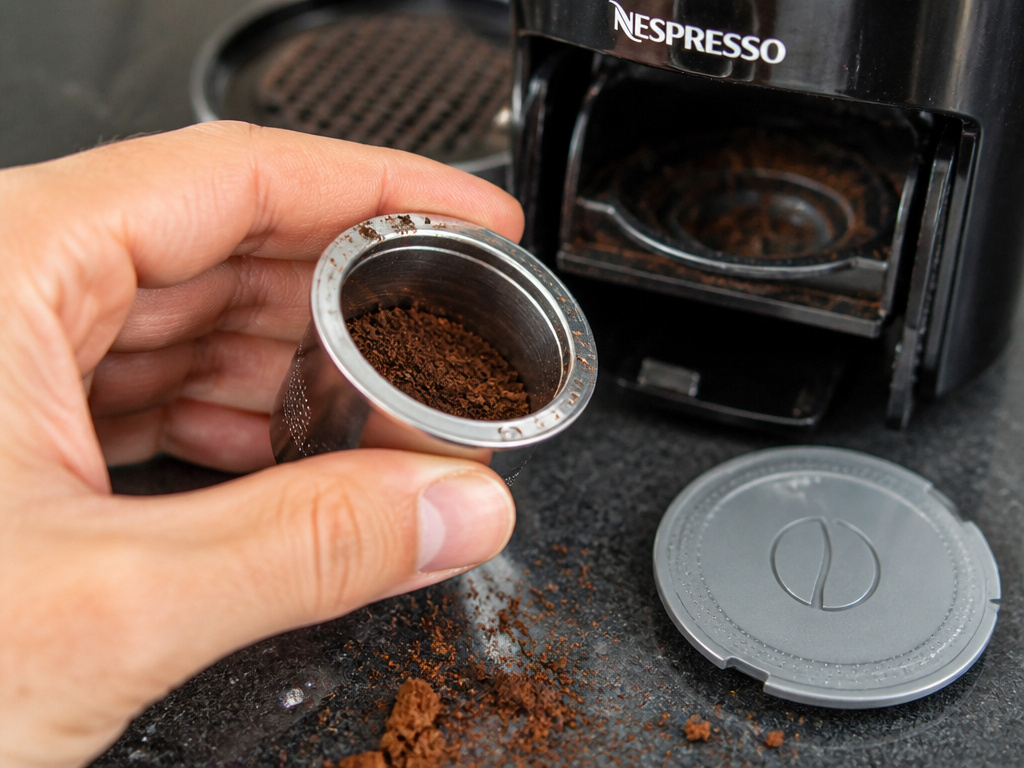
Refillable pods promise freedom. You buy a stainless steel or plastic capsule, fill it with your own ground coffee, and seal it with a reusable lid. This seems like the path to real espresso from your Nespresso. It almost never works.
The failure is mechanical. A genuine Nespresso pod is filled with nitrogen-flushed, precision-ground coffee and sealed under factory conditions. The grind is tailored to the pod’s paper filter and the machine’s pressure profile. When you dose your own coffee, three things go wrong:
- Grind size is off. If you use pre-ground supermarket coffee, it’s too coarse. If you use an entry-level blade grinder, the inconsistent particles will over-extract and under-extract simultaneously, causing channeling inside the pod.
- Tamping is impossible. You cannot properly tamp coffee inside a tiny, shallow refillable pod. A light finger press is not equivalent to 15kg of force from a professional tamper. The water will find the path of least resistance.
- The seal fails. The reusable silicone lids often do not replicate the airtight seal of the factory foil. Pressure leaks out, resulting in a pale, watery shot with no crema.
I tested a popular stainless steel refillable pod over a month. The first few shots were drinkable. By week three, grounds were consistently leaking into the brew chamber, and the machine started flashing an error light every fourth cycle. The cleanup of wet, spent grounds from the machine’s interior took longer than brewing.
I won’t recommend refillable pods for daily use. The marginal cost savings vanish after you account for the time spent cleaning, the wasted coffee from bad shots, and the risk of wearing out your machine’s pump with inconsistent resistance.
For the curious, the process is simple but finicky. Dose 5-6 grams of very finely ground coffee into the clean, dry pod. Use a distribution tool like a paperclip to level the grounds. Snap the reusable lid on firmly. Run the cycle immediately. Expect a mess about 30 percent of the time.
Choosing the Right Pod for Maximum Strength
Not all Nespresso pods are equal for this experiment. You want a pod designed for intensity and a short extraction. The roast level and blend composition matter more than the “espresso” label.
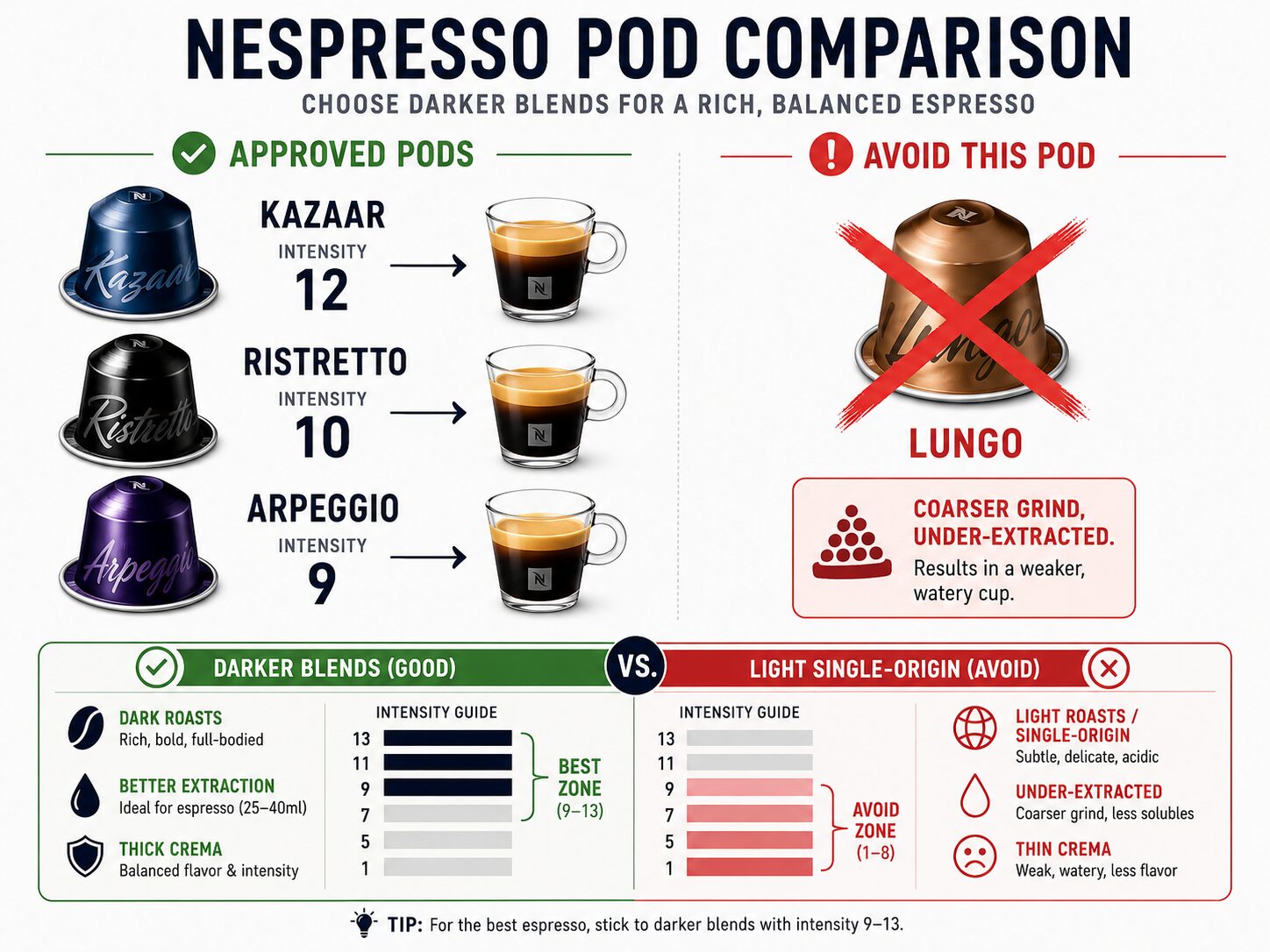
The best pods for a reprogrammed ristretto are those with a high intensity rating (9-13) and a described flavor profile of “body” and “roasted notes.” These darker roasts can withstand the shorter, more aggressive extraction without turning sour.
- Nespresso Kazaar (Intensity 12): A blend of robusta and arabica beans. The robusta provides a thicker crema and a powerful caffeine kick, which aligns well with the espresso caffeine content you might be seeking.
- Nespresso Ristretto (Intensity 10): The namesake. Blended for a short shot, with cocoa and spicy notes that concentrate nicely at 20ml.
- Nespresso Arpeggio (Intensity 9): A pure arabica pod with a fine grind. It produces a dense crema and works well for a 25ml ristretto.
Avoid pods labeled “Lungo” or “Gran Lungo.” They contain more coffee (7-8 grams) but are ground coarser to accommodate a longer, slower pour. Stopping these pods early leaves a lot of coffee under-extracted. Also, be wary of limited-edition single-origin beans from Nespresso. While fascinating for a standard cup, their nuanced floral or fruity notes often get lost in a truncated ristretto extraction. The darker, simpler flavor profiles of a blend cut through better.
This is a case where the engineered coffee blends in the Nespresso system have an advantage over more delicate single-origin offerings for the specific goal of a strong, short drink.
Frequently Asked Questions
Can you make real espresso from Nespresso pods?
No. You can make a concentrated, pressurized coffee drink that resembles espresso. True espresso requires fresh coffee ground to order, a precise dose (usually 18-20g), and a controlled extraction time and pressure—variables a sealed pod system does not allow.
What’s the difference between an espresso pod and a regular pod?
An espresso pod, like Nespresso’s Ristretto, contains 5-6 grams of very finely ground coffee and is designed to brew with 25-40ml of water. A “regular” or lungo pod may have slightly more coffee ground slightly coarser, intended for 110ml of water. Using them interchangeably leads to over- or under-extraction.
Does stopping a Nespresso shot early make it stronger?
Yes, stopping a shot early makes it stronger and more concentrated, creating a ristretto. It also makes it smaller. The risk is under-extraction if you stop too soon, which highlights sour and acidic flavors from the coffee.
Why is there so much crema on Nespresso?
The crema is created by the interaction of the high-pressure water with the nitrogen-flushed, finely ground coffee and the foil seal on the pod. It is a stable, persistent foam, but it lacks the aromatic complexity and silky texture of crema from freshly ground coffee oils.
Can you reuse a Nespresso pod?
Officially, no. The pod is designed for single use. Technically, some people open them, add new ground coffee, and reseal them with sticker lids. The results are extremely inconsistent, and wet grounds often clog the machine. It is not recommended.
Before You Go
Making a Nespresso pod into something closer to espresso is about working within tight constraints. Use an OriginalLine machine. Pick a dark, intense pod. Most importantly, reprogram the shot volume down to 15-25ml. That single action changes the drink from a standard small coffee to a potent ristretto.
Accept that this is the ceiling. The system cannot deliver the nuanced extraction of a semi-automatic machine. The convenience trade-off is real. For a stronger morning kick or a better base for espresso-based drinks like an Americano, these methods work. For exploring the craft of espresso, you will need different equipment. Your Nespresso is a reliable, consistent brewer. Pushing it to be something else has diminishing returns after you master the volume button.
{
“@context”: “https://schema.org”,
“@type”: “HowTo”,
“name”: “How to Make Nespresso Coffee Pods into Espresso”,
“totalTime”: “PT5M”,
“tool”: [
{
“@type”: “HowToTool”,
“name”: “Nespresso OriginalLine machine (e.g., Pixie, Essenza Mini)”
},
{
“@type”: “HowToTool”,
“name”: “Nespresso OriginalLine espresso pod (e.g., Arpeggio, Ristretto)”
},
{
“@type”: “HowToTool”,
“name”: “A small scale or measuring cup”
}
],
“step”: [
{
“@type”: “HowToStep”,
“name”: “Identify your machine type”,
“text”: “Check if you have an OriginalLine machine (uses small, cup-shaped pods) or a VertuoLine machine (uses larger, dome-shaped pods). Only OriginalLine machines with a 19-bar pump can produce espresso.”
},
{
“@type”: “HowToStep”,
“name”: “Select an espresso pod”,
“text”: “Use a pod designed for espresso, such as Arpeggio or Ristretto, which contains 5-6 grams of finely ground coffee.”
},
{
“@type”: “HowToStep”,
“name”: “Reprogram for a ristretto shot”,
“text”: “Insert the pod. Press and hold the espresso button. Release the button when your scale or cup shows 15-25 ml of liquid for a concentrated ristretto.”
},
{
“@type”: “HowToStep”,
“name”: “Taste and adjust”,
“text”: “The shot will be stronger and more syrupy than the default 40ml pour. If it’s too bitter, stop the flow a few seconds earlier next time.”
}
]
}
{
“@context”: “https://schema.org”,
“@type”: “FAQPage”,
“mainEntity”: [
{
“@type”: “Question”,
“name”: “Can you make real espresso from Nespresso pods?”,
“acceptedAnswer”: {
“@type”: “Answer”,
“text”: “No. You can make a concentrated, pressurized coffee drink that resembles espresso. True espresso requires fresh coffee ground to order, a precise dose (usually 18-20g), and a controlled extraction time and pressure—variables a sealed pod system does not allow.”
}
},
{
“@type”: “Question”,
“name”: “What’s the difference between an espresso pod and a regular pod?”,
“acceptedAnswer”: {
“@type”: “Answer”,
“text”: “An espresso pod, like Nespresso’s Ristretto, contains 5-6 grams of very finely ground coffee and is designed to brew with 25-40ml of water. A \”regular\” or lungo pod may have slightly more coffee ground slightly coarser, intended for 110ml of water. Using them interchangeably leads to over- or under-extraction.”
}
},
{
“@type”: “Question”,
“name”: “Does stopping a Nespresso shot early make it stronger?”,
“acceptedAnswer”: {
“@type”: “Answer”,
“text”: “Yes, stopping a shot early makes it stronger and more concentrated, creating a ristretto. It also makes it smaller. The risk is under-extraction if you stop too soon, which highlights sour and acidic flavors from the coffee.”
}
},
{
“@type”: “Question”,
“name”: “Why is there so much crema on Nespresso?”,
“acceptedAnswer”: {
“@type”: “Answer”,
“text”: “The crema is created by the interaction of the high-pressure water with the nitrogen-flushed, finely ground coffee and the foil seal on the pod. It is a stable, persistent foam, but it lacks the aromatic complexity and silky texture of crema from freshly ground coffee oils.”
}
},
{
“@type”: “Question”,
“name”: “Can you reuse a Nespresso pod?”,
“acceptedAnswer”: {
“@type”: “Answer”,
“text”: “Officially, no. The pod is designed for single use. Technically, some people open them, add new ground coffee, and reseal them with sticker lids. The results are extremely inconsistent, and wet grounds often clog the machine. It is not recommended.”
}
}
]
}
