
The Art of How to Make Greek Coffee: A Step-by-Step Guide
To make Greek coffee, combine cold water, sugar, and finely ground coffee in a briki, stir once, then heat slowly on a medium flame. The critical step is lifting the briki off the heat 2-3 times as the foam rises to build a thick kaimaki without boiling over, then pouring immediately into a cup to let the grounds settle.
Most first attempts fail at the foam. People stir too much, use high heat, or let it boil over, all of which destroy the velvety kaimaki layer that defines a proper Greek coffee. Without that foam, you’ve just made muddy, overcooked coffee.
This guide walks through the equipment, the three sugar styles, and the patient heating technique that turns four simple ingredients into an authentic cup. You’ll learn the lift-and-settle rhythm, what to listen for, and the one stir you must not skip.
Key Takeaways
- Use a briki (cezve) with a tapered neck, its shape is designed to concentrate the foam as the coffee rises.
- Stir the coffee, sugar, and water only once at the start. Stirring after the heat is applied breaks the foam structure.
- The foam (kaimaki) is non-negotiable. Build it by lifting the briki off the heat for 2-3 seconds each time the foam rises, then returning it. Do this 2-3 times.
- Never drink the sludge at the bottom of the cup. The settled grounds are for reading fortunes (tasseography), not for drinking.
- In Cyprus, it’s traditional to serve Greek coffee with a glass of cold water and a spoonful of fruit preserve (glyko tou koutaliou).
The Tools and Terms You Actually Need
You need three specific items. Substitutions change the physics of the brew.
First, the briki. This is the small, long-handled pot, also called a cezve. Its tapered neck is not decorative. As the coffee heats and foam rises, the narrowing neck compresses the bubbles, creating a denser, creamier kaimaki. A wide saucepan will let the foam spread thin and collapse. Briki sizes are designated by cup count. A one-cup briki is tiny, holding just the water from one demitasse. A four-cup briki is significantly wider. Match the size to your needs, a pot that’s too large for your single cup will heat unevenly.
Second, the coffee. You must use Greek coffee, which is a very fine, powder-like grind. It’s closer to Turkish coffee grind than to espresso. This fine grind is what suspends in the water and creates the characteristic body and settled grounds. Using a standard pre-ground coffee for drip machines will result in a weak, grainy cup without proper foam. Brands like Bush’s Greek style coffee are formulated for this method.
Third, the heat source. A gas flame or a hot plate with responsive control is mandatory. You need the ability to quickly lower and raise the heat, which is accomplished by physically lifting the briki. An electric coil that stays hot risks boiling the coffee the moment you look away.
The briki’s tapered neck is a foam concentrator. As the coffee heats, bubbles rise and are forced through the narrow opening, merging into a denser, more stable foam layer than a straight-sided pot could ever produce.
Sketo, Metrio, or Gliko: Choosing Your Sweetness Level
Ordering Greek coffee requires knowing three Greek words. They don’t describe roast or strength, they dictate the sugar-to-coffee ratio added before heating. This isn’t a sweetness adjustment you make after the fact.
Sketo means plain. It uses one teaspoon of coffee and no sugar. The result is intensely focused, highlighting the coffee’s inherent bitterness and earthy notes. It’s the choice for purists.
Metrio means medium. The standard ratio is one teaspoon of sugar for every teaspoon of coffee. This is the most common order, providing a balanced cup where sweetness rounds the edge of the bitterness without dominating. In the YouTube transcript, the brewer notes his preference: “I like a metrio coffee which is medium sweetness so I just add about less than one teaspoon.”
Gliko means sweet. The ratio doubles to two teaspoons of sugar per teaspoon of coffee. This creates a notably sweet, almost syrupy drink. The sugar also contributes to a slightly thicker, more robust foam.
The sugar is always added to the cold water in the briki along with the coffee grounds. It dissolves during the initial stir and integrates throughout the brew, caramelizing slightly during heating to contribute to the foam’s stability and the coffee’s signature mouthfeel. Adding sugar later is not the same.
TL;DR: Your sweetness choice (sketo, metrio, gliko) is a fixed ratio added at the start. It changes the foam texture and the coffee’s balance, not just its taste.
The 5-Step Greek Coffee Method (and the One Step Everyone Rushes)

The process is simple. Rushing any part ruins the foam. Follow this sequence exactly.
Step 1: Measure cold water with the cup. Fill the demitasse cup you’ll drink from with cold water. Pour this water into the briki. This guarantees the perfect volume, no guessing, no overflow. Using hot water speeds the process but shocks the grounds and can lead to a weaker extraction.
Step 2: Add coffee and sugar, then stir once. Add your measured coffee (one heaped teaspoon per cup) and your chosen amount of sugar to the water in the briki. Using a burr coffee grinder set to its finest Turkish setting is ideal for the freshest flavor, but pre-ground Greek coffee works. Stir with a spoon just once, in one direction, to combine everything. This is the only stir.
Now, wait. Let the mixture sit untouched for about 30 seconds. You’ll see the grounds begin to sink. This rest period allows the coffee to hydrate and start releasing its gases slowly. If you skip this wait and apply heat immediately, the gases release violently and can tear the foam later.
Common mistake: Stirring the coffee after applying heat, this agitates the forming foam bubbles and causes them to coalesce into larger, unstable bubbles that pop instead of building the creamy kaimaki.
Step 3: Apply medium heat and watch the edges. Place the briki on a medium flame. Do not stir. Do not walk away. In a minute or so, you’ll see a ring of tiny bubbles form around the edge of the briki. This is the first sign of proper, even heating. The center will still look placid.
Step 4: Lift and settle to build the foam (kaimaki). This is the patience game. As the heat penetrates, a froth will begin to rise in the center. Just before it swells and threatens to boil over the rim, lift the entire briki off the heat for 2-3 seconds. The foam will instantly settle back down. Lower the briki back onto the flame. Wait for it to rise again, then lift and settle once more. This cycle of rising and settling, done 2-3 times, is what develops the foam’s thickness and creaminess. It’s the difference between a thin, bubbly head and a velvety kaimaki. The transcript emphasizes this: “you don’t want it to rise and over boil and to do to fix that you start lifting it.”
Step 5: Pour at the peak and wait. After the final lift, when the foam is thick and just begins to pull away from the sides of the briki, it’s time. Pour the coffee slowly into your cup, aiming to get all the foam on top. Then, wait one full minute. This lets the fine grounds settle into a dense layer at the bottom. The coffee above it is clear and ready to drink.
| Step | Action | What Happens If You Skip It |
|---|---|---|
| 1. Water from Cup | Measure with the serving cup | Too much water causes boil-over; too little makes sludge too thick. |
| 2. Single Stir + Wait | Stir once, then let sit 30 sec | Grounds don’t hydrate evenly, causing weak extraction and weak foam. |
| 3. Medium Heat | Use a steady, moderate flame | High heat boils coffee before foam forms; low heat never creates foam. |
| 4. Lift & Settle (2-3x) | Lift briki off heat as foam rises | Foam boils over once, collapses, and you’re left with no kaimaki. |
| 5. One-Minute Rest | Let cup sit after pouring | You drink a mouthful of fine grounds; the texture is gritty and unpleasant. |
TL;DR: The single stir and the 30-second wait are non-negotiable for foam structure. The lift-and-settle cycle is what builds the kaimaki, not just preventing a mess.
Choosing Your Briki and Heat
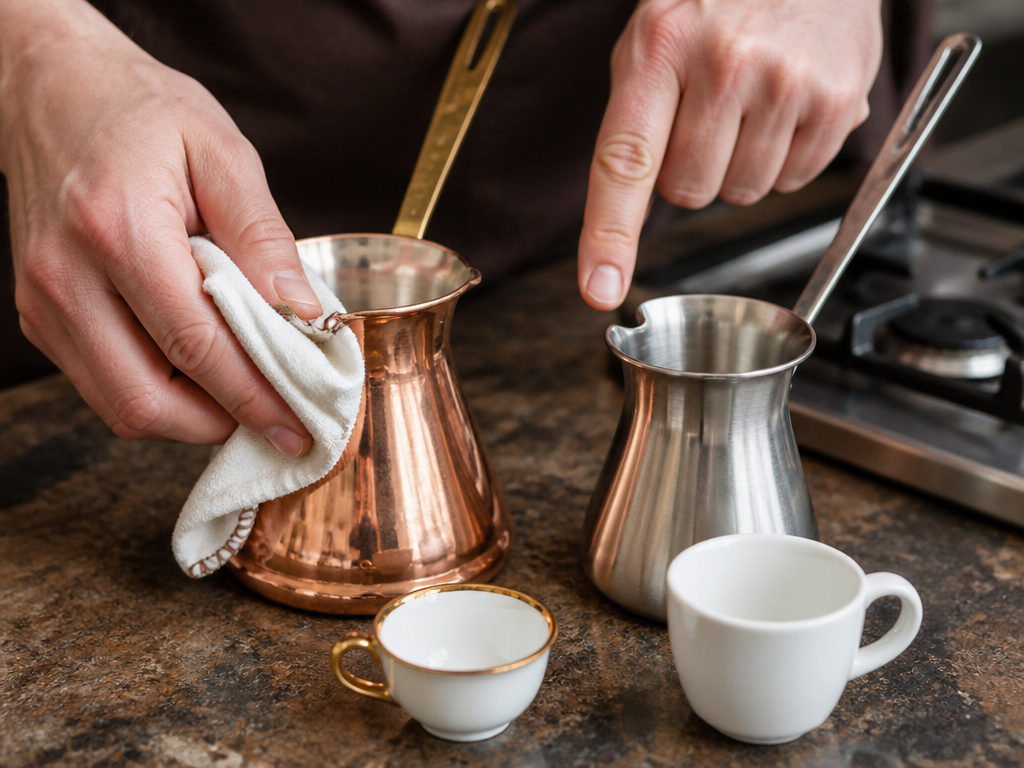
Not all brikis are equal. The material and size dictate your technique.
Copper or brass brikis are traditional and conduct heat very quickly and evenly. This responsiveness is perfect for the lift-and-settle technique. The downside is they tarnish and require polishing. Stainless steel brikis are more durable and easier to clean, but they heat slightly slower. You may need to adjust your timing by a few seconds.
The size must match your output. A one-cup briki is for a single serving. A four-cup briki is for small gatherings. Never use a four-cup briki to make one cup, the water layer will be too shallow, heating too fast and scorching the coffee against the wide bottom. The YouTube maker points this out: “there’s various sizes here you’d use this one here for about three to four cups… it’s a standard 1 cup bricky.”
Your heat source is the other half of the equation. Gas is king because the flame dies the moment you lift the pot. Electric coils and induction plates retain residual heat, so your “lift” is less effective, you have to move the briki completely off the cooking surface. This is why dedicated electric brikis often get criticized; they run too hot and too fast, denying you the control needed for perfect foam.
Serving, Drinking, and the Grounds at the Bottom
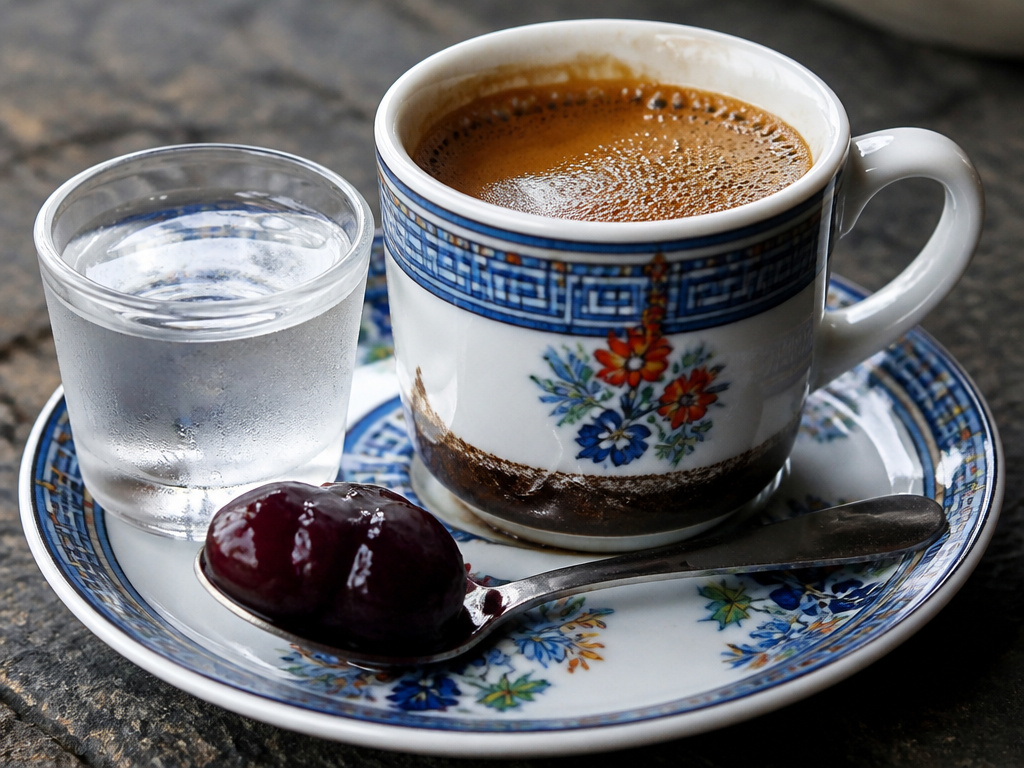
You’ve poured the coffee. Now serve it correctly. Traditionally, Greek coffee is served with a glass of cold water on the side. You sip the water first to cleanse your palate, then drink the coffee. In Cyprus, the service often includes a small spoonful of a fruit preserve, like sour cherry or bitter orange spoon sweet (glyko tou koutaliou). The sweet, intense preserve is eaten alternately with sips of the bitter coffee, creating a dynamic flavor experience.
Drink the coffee slowly. Enjoy the thick foam first. Never, ever drink the muddy layer of settled grounds at the bottom of the cup. That’s not coffee; it’s spent grounds and silt. Drinking it is a gritty, unpleasant mistake. That sediment layer is for tasseography, the tradition of reading fortunes in the coffee grounds. After finishing your drink, you swirl the cup, invert it onto the saucer, and interpret the patterns left behind.
What about health? Unlike many modern coffee blends designed for clarity, Greek coffee’s fine grind and boiling method mean it retains more cafestol and kahweol, compounds linked to both raising LDL cholesterol and providing antioxidants. The social ritual, sipping slowly with friends, is itself a documented benefit, linked to lower stress. As noted in the transcript, “it’s also the fact that it’s a social drink you have it with friends normally… which also improves your health.”
| Serving Element | Purpose | Consequence If Omitted |
|---|---|---|
| Cold Water Glass | Palate cleanser before first sip | The coffee’s full, bitter complexity can be overwhelming on an unprepared palate. |
| Glyko (Fruit Preserve) | Sweet counterpoint (Cyprus style) | Misses a cultural layer of flavor contrast; the experience is less balanced. |
| One-Minute Settling | Allows grounds to fall to bottom | The first several sips will be unpleasantly gritty with suspended fines. |
| Not Drinking Sludge | Preserves grounds for fortune telling | You ingest a mouthful of bitter, spent grounds with a chalky texture. |
Troubleshooting Your Greek Coffee Foam
Your foam didn’t form, or it collapsed. Here’s why.
Problem: No foam (kaimaki) formed.
- Cause 1: Heat was too high. The water boiled violently before a stable foam network could establish. The bubbles that did form were large and popped immediately.
- Fix: Use a lower, steady flame from the start. Patience is required.
- Cause 2: The coffee was stirred after heating began. This breaks the delicate bubble structure as it tries to form.
- Fix: Stir once at the beginning, then never again.
Problem: Foam boiled over and made a mess.
- Cause: You didn’t lift the briki in time. The foam rises quickly in the final 30 seconds. If you’re not watching, it goes from rising to overflowing in seconds.
- Fix: Do not walk away. Have your lifthand ready. At the first sign of a vigorous rise, lift the briki. It’s better to lift early and settle multiple times than to clean a stovetop.
Problem: Foam was thin and bubbly, not creamy.
- Cause: You only lifted once. A single rise-and-settle produces a weak foam. The creamy texture comes from the proteins and sugars being worked through multiple heat cycles.
- Fix: Commit to the 2-3 lift cycle. Let it rise, lift and settle, repeat. The foam will visibly thicken with each cycle.
Problem: Coffee tastes weak or watery.
- Cause 1: Incorrect coffee-to-water ratio. You used too much water for the amount of coffee.
- Fix: Always measure water with your drinking cup. Use one heaped teaspoon of finely ground Greek coffee per cup.
- Cause 2: Grind is too coarse. If you’re grinding your own Arabica coffee beans and the setting isn’t fine enough, extraction will be weak.
- Fix: Use a burr coffee grinder set to its finest (Turkish) setting. A blade grinder cannot achieve the necessary powder-like consistency.
I’ve found that using a slightly heaped teaspoon of coffee, rather than a level one, gives the foam more body to cling to. It’s a small adjustment that makes the kaimaki noticeably more stable, especially when making metrio or gliko where the sugar helps.
Frequently Asked Questions
Can I make Greek coffee without a briki?
You can attempt it in a small saucepan, but the results will not be authentic. The straight sides of a pan won’t concentrate the foam, resulting in a thin, weak kaimaki layer. The briki’s shape is part of the brewing device.
What’s the difference between Greek and Turkish coffee?
The preparation method is virtually identical, fine grounds, sugar added before brewing, served unfiltered. The difference is largely cultural and semantic. In Greece, it’s Greek coffee; in Turkey and much of the Middle East, it’s Turkish coffee. The beans and grind are interchangeable.
How fine should Greek coffee be ground?
It should be a powder, finer than espresso. When pinched between your fingers, it should feel like flour or powdered sugar with no gritty sensation. Most pre-packaged Greek or Turkish coffee is ground to this specification.
Why is my Greek coffee gritty?
You didn’t let it settle long enough after pouring. Wait a full minute for the grounds to fall to the bottom of the cup. Also, ensure you are using correctly ground coffee; if it’s not fine enough, some particles will remain suspended.
Can I add flavors like cinnamon or cardamom?
Traditionally, no. Greek coffee is about the pure taste of coffee and sugar. However, some modern variations add a pinch of spices like cinnamon in coffee or cardamom to the grounds before heating. This is a personal adaptation, not the classic preparation.
Is Greek coffee stronger than espresso?
It’s not directly comparable. A demitasse of Greek coffee may have slightly more caffeine than a single shot of espresso due to the full immersion of fine grounds, but it’s also diluted with more water. Its “strength” is perceived more as a dense, full-bodied texture and intense flavor rather than a caffeine punch.
The Bottom Line
Greek coffee is a ritual of patience. The reward is the kaimaki, that velvety foam that demands you watch the pot, lift it at the right moment, and settle it back down. Get the tools right: a tapered briki, fine Greek grounds, and a controllable flame. Choose your sweetness level before you start, stir once, and then let the heat do the work. Remember the foam is the goal, not a byproduct. Serve it with water, let the grounds settle, and never drink the sludge. It’s a simple method that turns waiting into the most important ingredient.
{
“@context”: “https://schema.org”,
“@type”: “HowTo”,
“name”: “How to Make Traditional Greek Coffee”,
“totalTime”: “PT8M”,
“tool”: [
{
“@type”: “HowToTool”,
“name”: “Briki (cezve) – small, long-handled pot”
},
{
“@type”: “HowToTool”,
“name”: “Gas stove or hot plate”
},
{
“@type”: “HowToTool”,
“name”: “Demitasse coffee cup”
}
],
“supply”: [
{
“@type”: “HowToSupply”,
“name”: “Finely ground Greek coffee”
},
{
“@type”: “HowToSupply”,
“name”: “Cold water”
},
{
“@type”: “HowToSupply”,
“name”: “Sugar (optional)”
}
],
“step”: [
{
“@type”: “HowToStep”,
“name”: “Measure water into the briki”,
“text”: “Pour cold water into your briki. For one cup, fill your demitasse cup with water and pour it into the briki—this guarantees the correct ratio.”
},
{
“@type”: “HowToStep”,
“name”: “Add sugar and coffee, then stir once”,
“text”: “Add your chosen amount of sugar (none for sketo, one tsp for metrio, two for gliko) and one heaping teaspoon of Greek coffee per cup. Stir just once to combine, then let it sit for 30 seconds so the grounds start to sink.”
},
{
“@type”: “HowToStep”,
“name”: “Apply medium heat and watch the edges”,
“text”: “Place the briki on a medium flame. Do not stir again. Watch for small bubbles forming around the edges of the pot, which signals the coffee is heating evenly.”
},
{
“@type”: “HowToStep”,
“name”: “Lift and settle to build the foam”,
“text”: “As the foam (kaimaki) rises and threatens to boil over, lift the briki off the heat for 2-3 seconds to let it settle. Lower it back. Repeat this lift-and-settle cycle 2-3 times to build a thick, creamy foam.”
},
{
“@type”: “HowToStep”,
“name”: “Pour immediately and let grounds settle”,
“text”: “When the foam is dense and just begins to pull away from the sides, pour the coffee slowly into your cup, ensuring the foam transfers. Wait 1 minute for the grounds to settle at the bottom before drinking.”
}
]
}
{
“@context”: “https://schema.org”,
“@type”: “FAQPage”,
“mainEntity”: [
{
“@type”: “Question”,
“name”: “Can I make Greek coffee without a briki?”,
“acceptedAnswer”: {
“@type”: “Answer”,
“text”: “You can attempt it in a small saucepan, but the results will not be authentic. The straight sides of a pan won’t concentrate the foam, resulting in a thin, weak kaimaki layer. The briki’s shape is part of the brewing device.”
}
},
{
“@type”: “Question”,
“name”: “What’s the difference between Greek and Turkish coffee?”,
“acceptedAnswer”: {
“@type”: “Answer”,
“text”: “The preparation method is virtually identical, fine grounds, sugar added before brewing, served unfiltered. The difference is largely cultural and semantic. In Greece, it’s Greek coffee; in Turkey and much of the Middle East, it’s Turkish coffee. The beans and grind are interchangeable.”
}
},
{
“@type”: “Question”,
“name”: “How fine should Greek coffee be ground?”,
“acceptedAnswer”: {
“@type”: “Answer”,
“text”: “It should be a powder, finer than espresso. When pinched between your fingers, it should feel like flour or powdered sugar with no gritty sensation. Most pre-packaged Greek or Turkish coffee is ground to this specification.”
}
},
{
“@type”: “Question”,
“name”: “Why is my Greek coffee gritty?”,
“acceptedAnswer”: {
“@type”: “Answer”,
“text”: “You didn’t let it settle long enough after pouring. Wait a full minute for the grounds to fall to the bottom of the cup. Also, ensure you are using correctly ground coffee; if it’s not fine enough, some particles will remain suspended.”
}
},
{
“@type”: “Question”,
“name”: “Can I add flavors like cinnamon or cardamom?”,
“acceptedAnswer”: {
“@type”: “Answer”,
“text”: “Traditionally, no. Greek coffee is about the pure taste of coffee and sugar. However, some modern variations add a pinch of spices like cinnamon in coffee or cardamom to the grounds before heating. This is a personal adaptation, not the classic preparation.”
}
},
{
“@type”: “Question”,
“name”: “Is Greek coffee stronger than espresso?”,
“acceptedAnswer”: {
“@type”: “Answer”,
“text”: “It’s not directly comparable. A demitasse of Greek coffee may have slightly more caffeine than a single shot of espresso due to the full immersion of fine grounds, but it’s also diluted with more water. Its \”strength\” is perceived more as a dense, full-bodied texture and intense flavor rather than a caffeine punch.”
}
}
]
}
