
How to Make Coffee Without a Filter: 3 Proven & Simple Methods
To make coffee without a filter, use an immersion brewing method like a French press, the stovetop cowboy method, or an improvised fine-mesh strainer. The universal requirement is a coarse grind, similar to breadcrumbs, and a brew time of four minutes. Using a fine grind will clog the mesh, over-extract, and leave a silt-like sludge in your cup that no amount of settling will fix.
Most people reach for a paper filter out of habit. They assume its absence means a muddy, gritty cup. That’s the wrong worry. The real mistake is using the wrong grind size.
This guide walks through three reliable methods, from the polished French press to the bare-bones cowboy technique. You’ll get the ratios, the timing, and the physical reason each step matters.
Key Takeaways
- A coarse grind is non-negotiable. Fine grounds pass through mesh and won’t settle, creating an over-extracted, silty mess.
- The French press is the most consistent filterless method, using a built-in metal mesh to separate grounds after a four-minute steep.
- Cowboy coffee relies on a splash of cold water after boiling to make grounds sink; pouring too fast stirs them back up.
- Total brew time controls strength. After four minutes, over-extraction begins, pulling bitter compounds from the grounds regardless of method.
- All filterless coffee will have a heavier body and some sediment. It’s a feature, not a bug.
What is the best grind for filterless coffee?
You need a coarse grind, period. The particle size should look like rough breadcrumbs or sea salt. This is the single most important variable.
A coarse coffee grind, with particles between 800-1000 microns, is essential for filterless brewing. This size allows water to flow freely during immersion and enables grounds to settle or be captured by a mesh, preventing silt from passing into the final cup. Using a fine espresso grind (around 300 microns) guarantees a clogged French press filter and a muddy, over-extracted brew.
A blade grinder pulses unevenly, creating a mix of dust and boulders. That dust is your enemy. It slips through mesh screens and stays suspended in your cup. A burr grinder set to a coarse setting produces uniform particles. The consistency is what lets the water extract flavor evenly without dragging out bitterness.
TL;DR: Grind coarse, like breadcrumbs. Fine dust makes silt.
The three reliable no-filter methods
You have three proven paths. Each trades some convenience for a different kind of control. The French press gives you a clean separation. Cowboy coffee needs no equipment. An improvised strainer is a quick fix.
| Method | Best For | The Trade-Off |
|---|---|---|
| French Press | Consistency, full-bodied flavor | Requires the device; some fine sediment always passes the mesh |
| Cowboy Coffee | Emergencies, camping, zero equipment | Requires careful pouring; more sediment |
| Improvised Strainer | Using what you have on hand | Hardest to get a clean cup; most likely to clog |
The French press wins for daily use. Its built-in metal mesh filter does 90% of the work. The cowboy method works when you have absolutely nothing else. A fine-mesh kitchen strainer is the last resort, it clogs easily and requires patience.
The French Press Method
This is your baseline. A device like the Bodum Chambord 8-cup uses a three-part stainless steel mesh filter. It’s designed for this.
You need a coarse grind. Add one gram of coffee for every 15 milliliters of water. For a standard 8-ounce cup, that’s about 15 grams of coffee. Boil your water, then let it sit for 30 seconds. The target is 200°F.
Pour the water over the grounds in the press. Start a timer for four minutes. After one minute, stir the crust of grounds that forms on top. This ensures even saturation.
After four total minutes, press the plunger down slowly and steadily. Stop if you feel strong resistance, that means your grind is too fine and is jamming the filter. Pour all the coffee out into your mug immediately. Leaving it in the press keeps it in contact with the grounds, and over-extraction starts within a minute.
Common mistake: Pressing the plunger too fast, this forces water and fine grounds through the mesh, clouding your cup. A slow, steady press keeps the filter cake intact.
The cup will be full-bodied, oily, and have a silty layer at the bottom. That’s normal. The metal mesh doesn’t catch particles smaller than about 100 microns.
Cowboy Coffee (The Stovetop Method)
This is the original no-filter brew. You need a pot, water, heat, and coffee. The goal is to get the grounds to sink so you can pour the clear coffee off the top.
Use the same coarse grind and ratio: 1 gram of coffee per 15 ml of water. Add the grounds to your pot of cold water. Bring the whole thing to a rolling boil. Let it boil for two full minutes. This agitates the water, forcing extraction.
Turn off the heat. Wait 30 seconds for the boil to settle. Now, add a quarter-cup of cold water. The thermal shock makes the grounds sink rapidly. Wait another two minutes for them to form a dense layer at the bottom.
Pour the coffee slowly and in one smooth motion. Tip the pot gently. Stop pouring the moment you see grounds start to lift from the bottom. If you pour too fast or swirl the pot, you’ll stir the sludge back into suspension.
The result is stronger and smokier than French press coffee. The extended boil extracts more bitter compounds, which some people enjoy. You’ll always have some solids in the cup. It’s part of the tradition.
Using an Improvised Strainer
This is the least reliable method, but it works in a pinch. Any fine-mesh sieve, a clean cloth napkin, or even a paper towel can act as a filter. The challenge is flow rate.
The grind must be even more coarsely ground, if possible. A uneven grind will immediately clog the pores of your straining medium. Place your strainer over a mug or jar.
Add your coarse grounds to a separate heatproof container. Pour your hot water over them and steep for three minutes, shorter than other methods because the straining process adds time.
After steeping, slowly pour the coffee through your strainer. If using cloth, pour in batches to avoid overflow. If the flow stops completely, your grind is too fine. You’ll have to accept a slower drip or a grittier cup.
This method is messy. It’s a salvage operation, not a first choice.
Why water quality and temperature matter more now
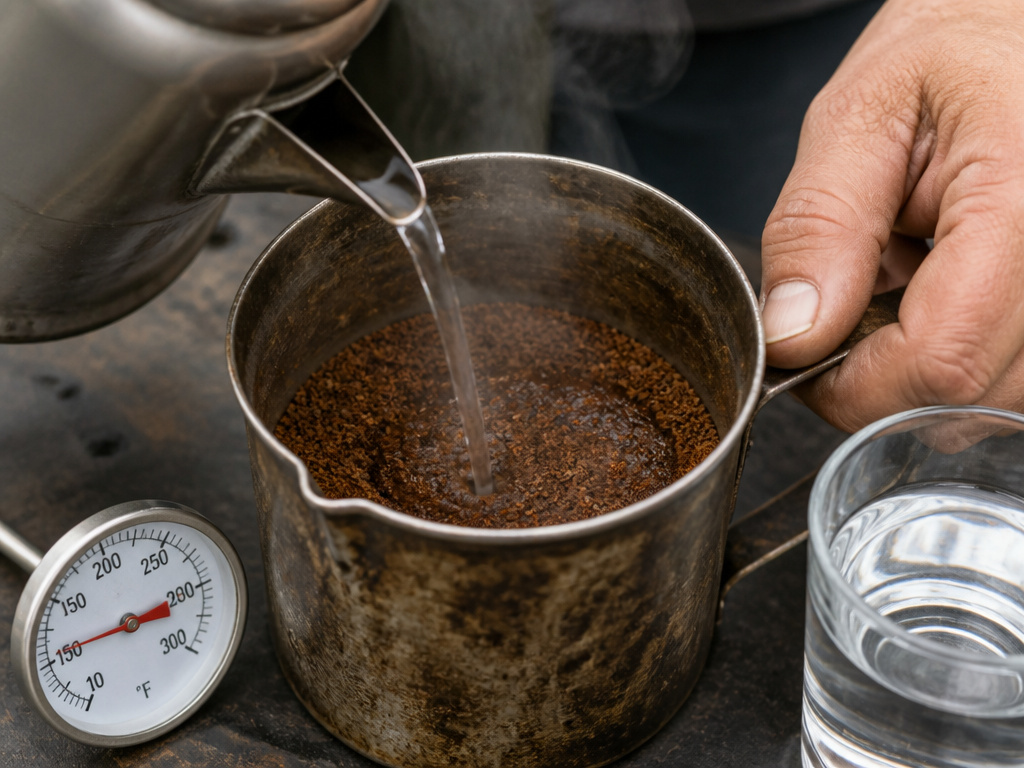
Without a paper filter to absorb oils and trap fine particles, everything in the water ends up in your cup. That includes the flavor of the water itself.
Use filtered water if you can. Hard water high in minerals like calcium and magnesium will under-extract your coffee, leaving it tasting flat and weak. Very soft water can over-extract, accentuating bitterness. The Specialty Coffee Association recommends water with a total dissolved solids (TDS) level between 75-250 parts per million for balanced extraction.
Temperature is your other lever. The ideal range is 195-205°F. Water that’s not hot enough won’t extract the sugars and acids properly. Boiling water, used in the cowboy method, extracts everything faster, including the bitter, astringent compounds. That’s why the cowboy coffee brew time is shorter.
If your coffee tastes sour, your water was too cold. If it’s harsh and bitter, it was too hot or you steeped too long.
The sediment situation: what to expect
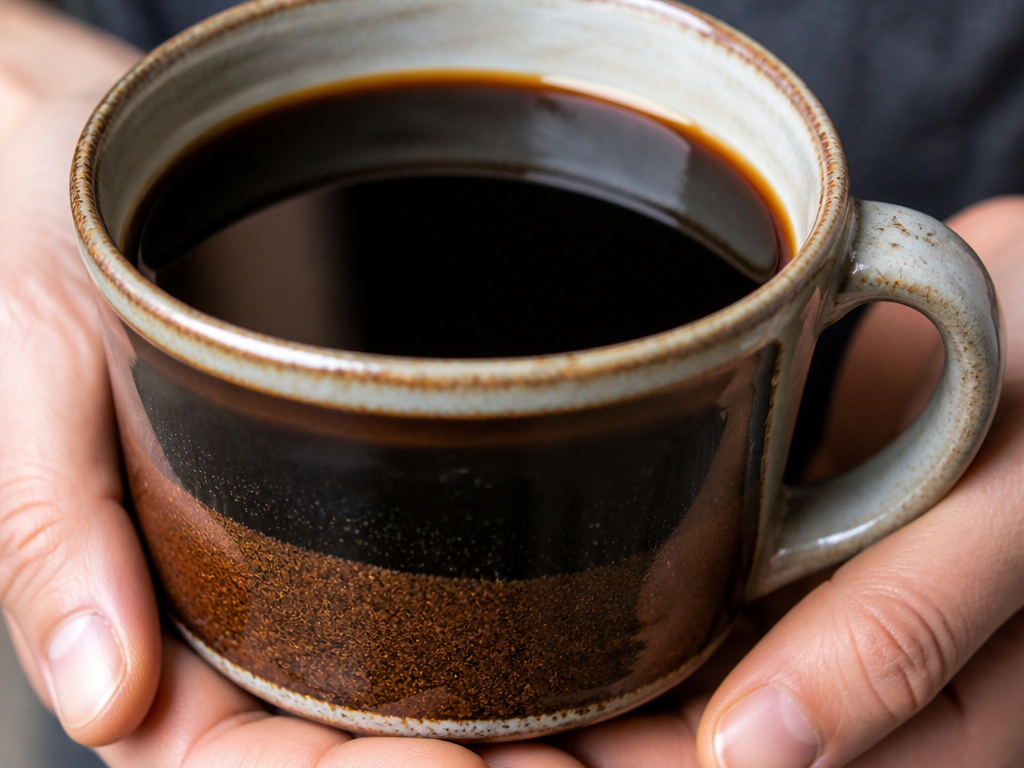
You will have sediment. It’s the defining characteristic of filterless coffee. A paper filter removes nearly all insoluble solids and most of the coffee oils. A metal mesh or a settling process does not.
The sediment is made of very fine coffee particles and insoluble fibers. It’s not harmful, but it changes the mouthfeel. The cup feels heavier, richer, and sometimes gritty. Many people enjoy this texture, it’s a sign of a full extraction.
If you hate the silt, there’s a trick. After brewing, let the coffee sit in your mug for a minute. The heaviest particles will fall to the bottom. Drink the coffee from the top, and leave the last half-inch in the mug. That’s where the sludge lives.
Don’t try to filter it out after the fact. Pouring hot coffee through a paper filter at this stage strips all the oils and body, leaving a thin, hollow-tasting drink. You’ve defeated the purpose.
Frequently Asked Questions
Is filterless coffee stronger?
It’s not stronger in caffeine content if you use the same coffee-to-water ratio. It is bolder in flavor and body because the oils and fine solids that paper filters remove remain in the cup. This creates a more intense mouthfeel and can accentuate bitter notes.
Can I use an AeroPress without a filter?
Yes, but it’s not ideal. The AeroPress uses pressure to force water through the coffee. Without the paper filter, many fine grounds will pass through the perforated plastic cap and end up in your cup. If you try it, use an extremely coarse grind and press very slowly. A metal disc filter for the AeroPress is a better no-paper option.
What’s the best coffee bean for no-filter brewing?
Choose a medium or dark roast. The longer roasting process makes the bean structure more brittle, which allows for a cleaner coarse grind with less dust. Lighter roasts are harder and can produce more fine particles when ground coarsely, increasing sediment. A good blend vs single-origin coffee decision matters less than the roast profile here.
How do I clean a French press?
Rinse it immediately after use. Coffee oils solidify as they cool, cementing fine grounds to the mesh filter. Dump the grounds, disassemble the plunger, and wash all parts with warm, soapy water. A bottle brush is essential for scrubbing the mesh screen. Let it dry fully before reassembling to prevent mold.
Can I make cold brew without a filter?
Absolutely. Cold brew is one of the easiest no-filter methods because the grounds never get agitated. Combine coarse grounds and cold water in a jar (use a 1:8 ratio). Steep for 12-24 hours in the fridge. Strain through a fine-mesh sieve lined with a cheesecloth or a dedicated cloth coffee filter. The result is very clean because the slow, cold extraction produces fewer fines.
Before You Go
Making coffee without a filter isn’t a compromise. It’s a different destination. You trade crystal clarity for a richer, oilier body and a more tactile experience. The French press is the tool that makes it repeatable. Cowboy coffee is your fallback when the power’s out. A strainer is the MacGyver move.
Remember the rule of coarse. It’s the guardrail that keeps your cup from turning to mud. Control your time, four minutes is the sweet spot. And embrace the silt at the bottom of the mug. It’s the signature of a coffee that hasn’t been stripped clean.
