
Keep Ground Coffee Fresh: Essential Tips for Maximum Flavor
To keep ground coffee fresh, get it into an airtight, opaque container immediately after opening the bag and store that container in a cool, dark place. Once opened, ground coffee loses its peak flavor in about two weeks. Refrigeration introduces moisture and absorbs odors, which degrades flavor faster than room-temperature storage.
Most people think the enemy is air. It’s not just air. It’s time, light, and humidity working together. You can buy the fanciest vacuum canister on the market, but if you leave it on the counter next to a sunny window for a month, you’ve already lost the battle.
This guide walks through the mechanics of why coffee stales, picks the right container for your kitchen, and lays out a storage routine that actually works. We’ll also cover what to do with that giant bag from the warehouse club and why the freezer is a last resort, not a daily strategy.
Key Takeaways
- Once opened, ground coffee has a two-week shelf life for peak flavor. After that, oxidation and moisture absorption turn bright notes flat.
- Freezing is for long-term storage of unopened bags only. Thawing a frozen, opened container introduces condensation that soaks into the grounds, creating a musty, stale flavor almost immediately.
- Light degrades coffee oils 200 times faster than darkness. A clear container on a countertop destroys freshness in days, not weeks.
- Pre-ground supermarket coffee often sits for months before you buy it. Its clock started ticking at the roastery. You have days, not weeks, to use it after opening.
- Ziploc bags and original paper bags fail because they don’t block light and aren’t truly airtight. Coffee also releases CO2 gas after grinding, which needs to vent without letting new air in.
Why Ground Coffee Goes Stale (It’s Not Just Air)
Coffee staling is a chemical race. Grinding accelerates it by increasing surface area. Three things push the reaction forward: oxygen, moisture, and light.
Oxygen is the main actor. It reacts with the aromatic oils and compounds in coffee, a process called oxidation. Think of a sliced apple turning brown. Grinding exposes thousands of tiny surfaces to air, speeding this up dramatically. A study published in Scientific Reports tracked roasted coffee quality and found that oxygen exposure is the primary driver of flavor degradation in the first few weeks after grinding.
Moisture is a silent partner. Coffee grounds are hygroscopic; they pull water from the air. In a humid kitchen, each ground acts like a tiny sponge. This absorbed water doesn’t just dilute flavor, it catalyzes other staling reactions and can lead to mold in extreme cases. This is why the National Coffee Association (NCA) explicitly advises against refrigeration for daily use. The condensation that forms when moving a container from the cold fridge to warm room air is pure liquid damage.
Light delivers the final blow. Ultraviolet and even visible light break down the molecular structures that give coffee its character. Research cited by the NCA suggests light can degrade coffee oils 200 times faster than storage in the dark. That clear glass apothecary jar on your windowsill? It’s a display case for destroying your coffee.
Ground coffee releases carbon dioxide for hours after grinding. A truly sealed container without a vent will pressurize and eventually leak. This is why quality coffee bags have a one-way valve, it lets gas out without letting air in.
TL;DR: Staling is oxidation + moisture + light. Grinding makes the coffee vulnerable to all three.
The 4-Step Transfer Process (and the One Thing Everyone Forgets)
You opened the bag. Now what? Speed matters. Follow this sequence every single time.
- Have your container ready before you open anything. This seems obvious, but it’s the step people skip. Fumbling for a container while the bag is open gives minutes for humid kitchen air to start working. Your container must be clean, completely dry, and within arm’s reach.
- Pour the entire contents into the container in one motion. Do not scoop. Pouring minimizes how long the grounds are exposed. If you’re using a vacuum canister like the Fellow Atmos, have the lid off and the sealing mechanism disengaged.
- Seal it immediately. For a standard airtight canister, press the lid down until it clicks. For a vacuum canister like the Fellow Atmos, twist the pump mechanism until you feel resistance. For an Airscape, press the inner lid down until it seats, then seal the outer lid.
- Label it with the date. Use a piece of masking tape and a permanent marker. Write the roast date if you have it, and the “opened” date. This isn’t for organization, it’s for honesty. You will forget.
Common mistake: Scooping from the bag daily instead of transferring it all at once, every time you open that bag, you’re letting in a fresh batch of humid, oxygen-rich air. The coffee at the bottom will be stale weeks before you finish it.
The one thing everyone forgets? Wipe the rim. Grounds on the sealing surface prevent an airtight closure. A single coarse ground can let in enough air to ruin the batch. Run a dry finger around the container’s lip before you seal it.
Picking Your Fighter: Vacuum, Displacement, or Basic Airtight?
Not all containers are equal. Your choice depends on how fast you drink coffee and how much you value convenience over absolute maximum freshness.
| Container Type | Best For | How It Works | Real-World Limitation |
|---|---|---|---|
| Vacuum Canister (e.g., Fellow Atmos) | The freshness-obsessed who drink a bag within 3–4 weeks. | A pump mechanism removes almost all air from the container, drastically slowing oxidation. | Daily pumping can feel tedious. The seal relies on a perfectly clean silicone gasket. |
| Air Displacement (e.g., Airscape) | Households that go through a bag in 2–3 weeks and want simple operation. | A plunger-style inner lid pushes air out the top before the outer lid seals. | Some air remains trapped below the plunger. Not as absolute as a vacuum. |
| Standard Airtight Canister | Anyone drinking a bag within 10–14 days. The practical daily driver. | A simple silicone gasket and latch create a solid seal against air and moisture. | Offers no active air removal. Relies on a perfect seal every time. |
Vacuum vs. displacement is the big debate. A vacuum canister like the Fellow Atmos creates a near-total oxygen-free environment. The Fellow Atmos Vacuum Canister product page claims it can “extend coffee’s shelf life by up to 50%.” In practice, that means your two-week window might stretch to three. The trade-off is the ritual: you pump it every time you close it.
An Airscape canister is simpler. You press the inner lid down, it displaces air out the top, and you cap it. It’s faster, but as the PMC coffee storage conditions research on green and roasted beans shows, any remaining oxygen continues to work. For most people drinking a bag within the two-week window, an Airscape or a good standard canister is perfect.
TL;DR: For under two weeks, any airtight container works. For pushing past two weeks, you need active air removal (vacuum or displacement).
The Freezer Debate: Emergency Storage, Not Daily Strategy
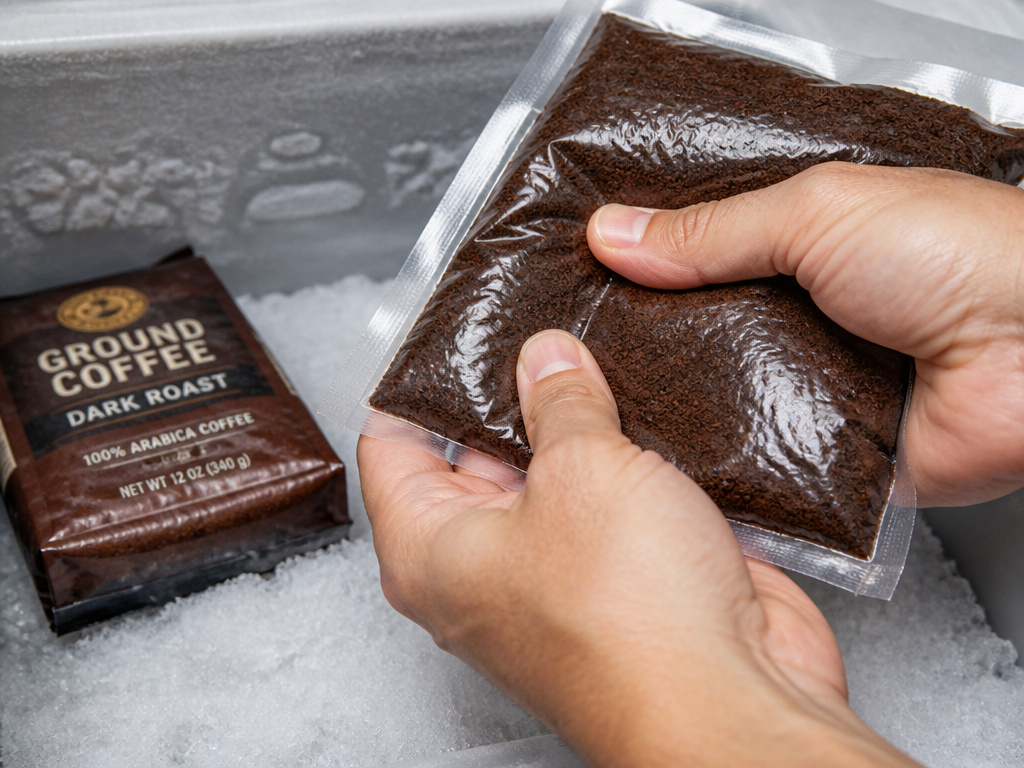
The internet is full of conflicting advice on freezing coffee. Here’s the stance grounded in mechanics, not opinion.
Freezing unopened, factory-sealed bags of pre-ground coffee is a legitimate long-term storage method. The original packaging is designed to handle low temperatures without letting in moisture. If you buy in bulk, freeze the unopened bags immediately. When you’re ready, move one bag to the pantry and let it come to room temperature fully before opening it. This prevents condensation from forming inside the bag.
Freezing opened containers of ground coffee is where you lose. When you take that container from the freezer, warm, humid air immediately condenses on the cold grounds. Those microscopic water droplets get absorbed. The result is a damp, musty flatness that no brewing method can fix. This is why the NCA and most roasters say do not refrigerate or freeze your daily coffee.
If you must freeze an opened portion, do it like a pro:
* Divide the grounds into single-use portions.
* Seal each portion in an airtight vacuum bag (not a Ziploc).
* Force out as much air as possible before sealing.
* Thaw the entire sealed bag at room temperature before opening it.
Even done perfectly, you’ll lose some aromatic top notes. Freezing is a salvage operation for surplus, not a freshness plan.
What About the Original Bag?
The bag your coffee came in is not a storage container. It’s transportation.
Many bags have a resealable zipper and a one-way valve. The valve is there to let CO2 escape after roasting, it doesn’t keep new air from getting in. The zipper is better than nothing for a day or two, but it’s not airtight. Paper is porous. Light gets through. If you leave ground coffee in its bag on the counter, you’re giving it the worst possible environment.
The one-way valve is not your friend for storage. It’s a one-way street out. It stops the bag from bursting, but it doesn’t prevent air from slowly seeping back in through the paper and the zipper seal. Transfer your coffee. Always.
Special Cases: Humidity, Supermarket Coffee, and Delicate Beans
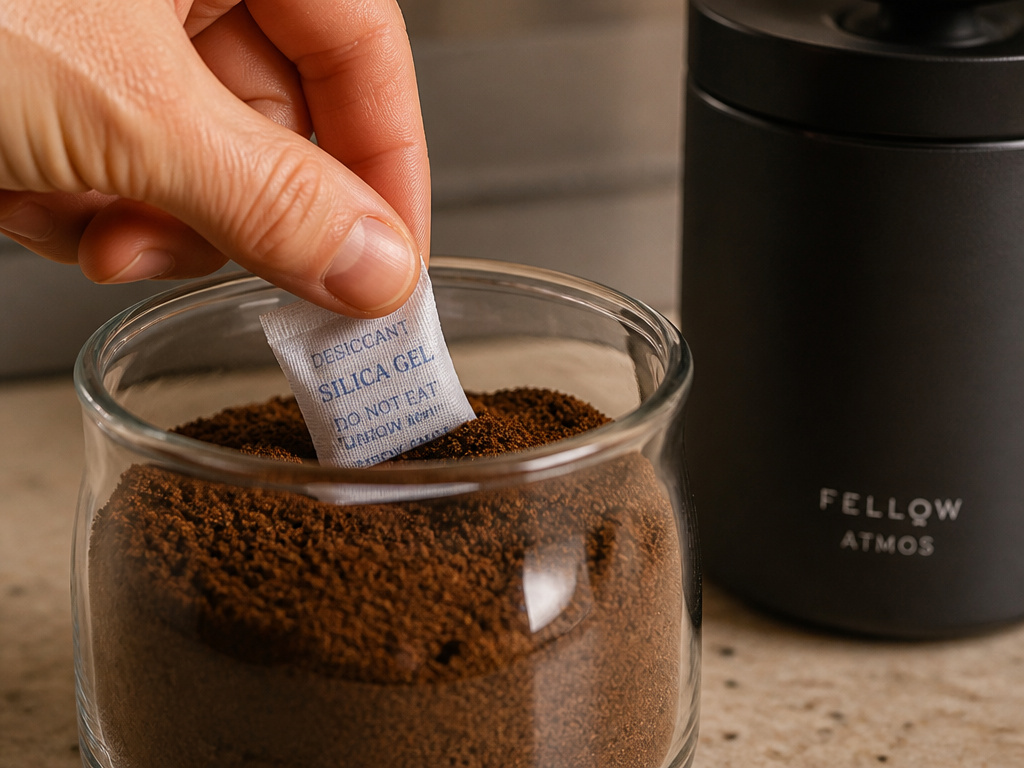
The standard advice assumes a normal kitchen. Some situations break the rules.
High-Humidity Environments
In coastal or tropical climates, the “airtight container at room temperature” rule has a leak. Humidity finds a way. In these cases, a vacuum canister isn’t a luxury, it’s necessary. The Fellow Atmos or a similar pump-seal system actively lowers the humidity inside the container by removing the moist air. If you don’t have one, add a food-safe silica gel desiccant packet to your standard canister. Change it monthly.
Pre-Ground Supermarket Coffee
That large can or brick of pre-ground coffee has likely been sitting in a warehouse and on a shelf for months. Its freshness countdown started at the grinding facility. When you open it, you’re already weeks or months behind. Your storage window is shorter, more like 7–10 days for peak flavor. This is the strongest case for immediate transfer to an airtight container and aggressive consumption.
Delicate Light Roasts and Single-Origins
A bright Ethiopian Yirgacheffe or a floral Geisha has volatile aromatic compounds that are the first to oxidize. They are the canaries in the coal mine of staling. While a dark roast might taste “okay” after three weeks in a so-so container, a light roast will taste like cardboard. For these coffees, storage is non-negotiable. Use your best container, a vacuum system, and stick to the two-week rule religiously. The nuanced flavors you paid for are the first to disappear.
Frequently Asked Questions
Can you keep ground coffee in the fridge?
No. The refrigerator is a high-humidity environment full of food odors. Coffee grounds will absorb both the moisture and the smells of whatever else is in there, leading to off-flavors. The National Coffee Association explicitly advises against it.
How long does an unopened bag of ground coffee last?
An unopened, vacuum-sealed bag of ground coffee from a roaster can retain reasonable quality for about 3-4 months if stored in a cool, dark pantry. However, the countdown to staling began the moment it was ground. For peak flavor, always check the roast date and aim to use it within a month of that date, even unopened.
Does freezing ground coffee ruin it?
Freezing does not inherently ruin coffee, but the process of freezing and thawing often does. If you freeze an opened container, condensation forms on the grounds when you thaw it, creating a damp, stale flavor. Freezing is only recommended for long-term storage of unopened, factory-sealed bags.
What is the best container for ground coffee?
The best container is an airtight, opaque one made of ceramic, stainless steel, or tinted glass. For maximum freshness extension, a vacuum canister (like Fellow Atmos) or an air displacement canister (like Airscape) is superior to a basic airtight tin.
Why does my coffee taste sour or flat after a week?
Sour or flat tastes are classic signs of staling from oxidation and moisture absorption. If your coffee tastes noticeably worse after a week, your storage method is failing. The likely culprits are a clear container, a loose lid, storage near heat, or simply leaving the grounds in the original bag.
Before You Go
Fresh ground coffee is a fleeting pleasure. You can’t stop the clock, but you can slow it down dramatically. Get it out of the bag, into a sealed, dark container, and away from heat. Remember the two-week rule for opened packages. And leave the freezer for the beans you haven’t opened yet.
Your morning cup deserves that much.
{
“@context”: “https://schema.org”,
“@type”: “HowTo”,
“name”: “How to Keep Ground Coffee Fresh for Maximum Flavor”,
“totalTime”: “PT5M”,
“tool”: [
{
“@type”: “HowToTool”,
“name”: “Airtight, opaque storage container”
},
{
“@type”: “HowToTool”,
“name”: “Measuring scoop or kitchen scale”
},
{
“@type”: “HowToTool”,
“name”: “Permanent marker for labeling”
}
],
“step”: [
{
“@type”: “HowToStep”,
“name”: “Select the right container”,
“text”: “Choose an airtight, opaque container made of ceramic, stainless steel, or tinted glass. Avoid clear glass or plastic that lets in light.”
},
{
“@type”: “HowToStep”,
“name”: “Transfer immediately after opening”,
“text”: “As soon as you open a bag of ground coffee, pour the entire contents into your chosen container. Do not leave it in the original paper bag.”
},
{
“@type”: “HowToStep”,
“name”: “Seal and label”,
“text”: “Close the container lid tightly. Use a marker to write the roast date and the date you opened the bag on the container.”
},
{
“@type”: “HowToStep”,
“name”: “Store in a cool, dark place”,
“text”: “Place the sealed container in a pantry or cupboard away from the stove, oven, dishwasher, or direct sunlight.”
}
]
}
{
“@context”: “https://schema.org”,
“@type”: “FAQPage”,
“mainEntity”: [
{
“@type”: “Question”,
“name”: “Can you keep ground coffee in the fridge?”,
“acceptedAnswer”: {
“@type”: “Answer”,
“text”: “No. The refrigerator is a high-humidity environment full of food odors. Coffee grounds will absorb both the moisture and the smells of whatever else is in there, leading to off-flavors. The National Coffee Association explicitly advises against it.”
}
},
{
“@type”: “Question”,
“name”: “How long does an unopened bag of ground coffee last?”,
“acceptedAnswer”: {
“@type”: “Answer”,
“text”: “An unopened, vacuum-sealed bag of ground coffee from a roaster can retain reasonable quality for about 3-4 months if stored in a cool, dark pantry. However, the countdown to staling began the moment it was ground. For peak flavor, always check the roast date and aim to use it within a month of that date, even unopened.”
}
},
{
“@type”: “Question”,
“name”: “Does freezing ground coffee ruin it?”,
“acceptedAnswer”: {
“@type”: “Answer”,
“text”: “Freezing does not inherently ruin coffee, but the process of freezing and thawing often does. If you freeze an opened container, condensation forms on the grounds when you thaw it, creating a damp, stale flavor. Freezing is only recommended for long-term storage of unopened, factory-sealed bags.”
}
},
{
“@type”: “Question”,
“name”: “What is the best container for ground coffee?”,
“acceptedAnswer”: {
“@type”: “Answer”,
“text”: “The best container is an airtight, opaque one made of ceramic, stainless steel, or tinted glass. For maximum freshness extension, a vacuum canister (like Fellow Atmos) or an air displacement canister (like Airscape) is superior to a basic airtight tin.”
}
},
{
“@type”: “Question”,
“name”: “Why does my coffee taste sour or flat after a week?”,
“acceptedAnswer”: {
“@type”: “Answer”,
“text”: “Sour or flat tastes are classic signs of staling from oxidation and moisture absorption. If your coffee tastes noticeably worse after a week, your storage method is failing. The likely culprits are a clear container, a loose lid, storage near heat, or simply leaving the grounds in the original bag.”
}
}
]
}
