
How to Clean a Drip Coffee Maker & Avoid the Vinegar Mistake
To clean a drip coffee maker, use a 1:1 vinegar-water solution or commercial descaler. Run a full cycle, then immediately run 2-3 fresh water cycles to flush all acidic residue. This prevents the sour taste caused by leftover vinegar in the internal tubing, which can taint your next dozen pots.
To clean a drip coffee maker, you must descale the internal tubes and heating element with an acidic solution, white vinegar or a commercial descaler, followed by multiple thorough water rinses, and wash all removable parts with soap. The specific vinegar-to-water ratio and rinse count depend on your machine’s manual, with a common failure point being insufficient rinsing, which leaves a sour, acidic taste in your next dozen pots.
People get this wrong because they treat cleaning as a single rinse job. They pour in half-strength vinegar, run one cycle, and call it done. The internal plastic and silicone tubing hold onto that acidic residue. Your next pot tastes like a sour, stale version of yesterday’s coffee, and you blame the beans.
This guide walks through the exact descaling intervals, the mechanical reason vinegar lingers, and the deep-clean steps for the carafe and filter basket that most quick tutorials skip. We’ll use specifics from Keurig, Cuisinart, and BUNN manuals so you know the factory-approved numbers, not just internet guesses.
Key Takeaways
- Follow your manual’s vinegar ratio. The Keurig K-Elite specifies 10 oz of undiluted white vinegar; the Cuisinart DCC-1200 uses a 1:2 vinegar-to-water mix. Guessing here can damage seals or leave ineffective solution.
- Rinse with at least two full reservoirs of fresh water. One rinse is never enough. The internal lines trap cleaner, and you’ll taste it.
- Remove integrated water filters before descaling. The acidic solution will destroy the filter media, a mistake that voids warranties on models like certain Keurigs.
- Deep clean the carafe and basket weekly. Oils and fine grounds build up in these parts faster than scale forms internally, directly souring flavor.
- Hard water demands monthly descaling. The standard 3-6 month interval is for soft water. Ignoring this turns your heating element into a limestone cave.
Before You Start: The Non-Negotiables
Unplug the coffee maker. Every time. Wiping down the heating plate or poking around the reservoir with a damp cloth while the unit is live is how you fry the circuitry or get a shock. Also, clear the area. You’ll have a wet carafe, a bottle of vinegar, and maybe some overflow during the rinse cycles. A towel on the counter saves a mess.
Before you start: Always unplug the machine. The heating plate stays hot enough to burn skin for 20 minutes after the last brew cycle. Vinegar and descaling solutions are acidic, wear gloves if you have sensitive skin and avoid contact with eyes.
Check if your machine has a built-in water filter. Many Keurig models and some higher-end drip machines like certain Breville units have a charcoal filter in the reservoir or an inline filter. The Breville coffee machine filter is a common example. You must remove this filter before running any descaling solution through the machine. The acid will neutralize the charcoal and can damage the filter housing.
Gather your tools. You need white distilled vinegar or a commercial descaler like Bar Keepers Friend Coffee Maker Descaler, fresh water, a soft brush (an old toothbrush works), microfiber cloths, and mild dish soap. Avoid abrasive scouring pads on any plastic or glass parts, they scratch, and those scratches trap old coffee oils.
TL;DR: Unplug it, check for and remove any water filter, and use non-abrasive tools. The heating plate is hot, and vinegar eats filters.
Why Your Coffee Tastes Funky: The Science of Scale and Oil
Two things corrupt your coffee’s flavor: mineral scale and rancid coffee oils. They work on different timelines and require different fixes.
Mineral scale, or limescale, builds up inside the machine’s internal tubes and on the heating element. Your water heater has the same problem. As water heats, calcium and magnesium carbonate precipitate out and stick to surfaces. This insulating layer makes the heating element work harder, potentially shortening its life, and can constrict water flow through the small tubes leading to the shower head.
Coffee oils are a faster, smellier problem. Every time you brew, oils from the grounds coat the plastic of the filter basket, the glass or stainless steel of the carafe, and even the inside of the lid. Exposed to air, these oils oxidize and turn rancid within days. That rancidity gives coffee a stale, sour note that no amount of fresh beans can overcome. This is why washing the removable parts is a weekly task, while descaling is a monthly or quarterly one.
The confusion happens when people taste sour coffee and assume it’s scale. They run a vinegar cycle, but the taste persists because the rancid oils in the carafe are still there. You have to attack both.
Scale buildup is gradual, robbing heat efficiency over months. Rancid oil taste appears suddenly, usually after you’ve skipped a week of carafe washing. They feel different in the cup, scale makes coffee taste flat and weak; oil makes it taste sour and stale.
The 7-Step Descale and Rinse Procedure (and the One Step Nobody Skips)
This is the core internal cleaning. It removes the mineral scale. Do this over a sink or with a large bowl to catch the solution.
Step 1: Empty and clean the removable parts. Take out the carafe, filter basket, and any lids. Wash them thoroughly with warm, soapy water. Let them air-dry. Do not put them back in the machine yet. You want the machine empty for the descaling cycle.
Step 2: Prepare the descaling solution. This is where your manual is king. Do not guess.
* Keurig K-Elite: Use 10 oz of undiluted white vinegar or Keurig Descaling Solution.
* Cuisinart DCC-1200: Use a 1:2 ratio, one part vinegar to two parts water.
* BUNN Speed Brew Classic: Use 2-4 cups of undiluted white vinegar.
If you don’t have your manual, a 1:1 ratio of vinegar to water is a safe, effective starting point for most generic drip machines. For a detailed walkthrough of a specific brand’s process, consulting a resource like the Braun coffee maker manual can provide model-specific clarity. Pour the solution into the empty water reservoir.
Step 3: Start a brew cycle. Place the empty carafe on the heating plate. Start the machine as if you were brewing a full pot. If your machine has a “clean” button, use that.
Step 4: Pause and let it soak. This is the step everyone skips. Once about half the solution has brewed into the carafe, turn the machine off. Let the remaining solution sit in the reservoir and internal lines for 15-20 minutes. This dwell time lets the acid break down the mineral deposits. Without it, you’re just rinsing the tubes with weak vinegar.
Step 5: Complete the cycle. Turn the machine back on and let it finish brewing the rest of the solution into the carafe. You’ll likely see brownish, gritty water in the carafe. That’s the scale.
Step 6: The critical rinse cycles. Dump the descaling solution from the carafe. Fill the reservoir with fresh, cold water only. Run a full brew cycle. Dump that water. Do it again. For machines that specify, like the Keurig K-Elite which calls for three 12-oz water brews after descaling, follow that. Two full cycles is the absolute minimum. The goal is to run clear, odorless water through the system.
Step 7: Final inspection and wipe. After the final rinse, unplug the machine. Use a damp microfiber cloth to wipe inside the now-empty reservoir and around the shower head. Reassemble with your clean, dry carafe and basket.
| Machine Model | Descaling Solution | Minimum Rinse Cycles | Key Warning |
|---|---|---|---|
| Keurig K-Elite | 10 oz undiluted white vinegar | Three 12-oz water brews | Remove charcoal filter first |
| Cuisinart DCC-1200 | 1 part vinegar to 2 parts water | Two full water reservoirs | Solution may need repeating if brew time is slow |
| BUNN Speed Brew Classic | 2-4 cups undiluted vinegar | One full reservoir of water | More frequent needed for hard water |
| Generic Drip Maker | 1:1 vinegar-to-water ratio | Two full water reservoirs | Always pause cycle for a 15-min soak |
TL;DR: Mix solution per your manual, run half, pause for 20 minutes, finish, then rinse at least twice. The pause is non-negotiable.
How Often Should You Descale? It’s Not Every 3 Months
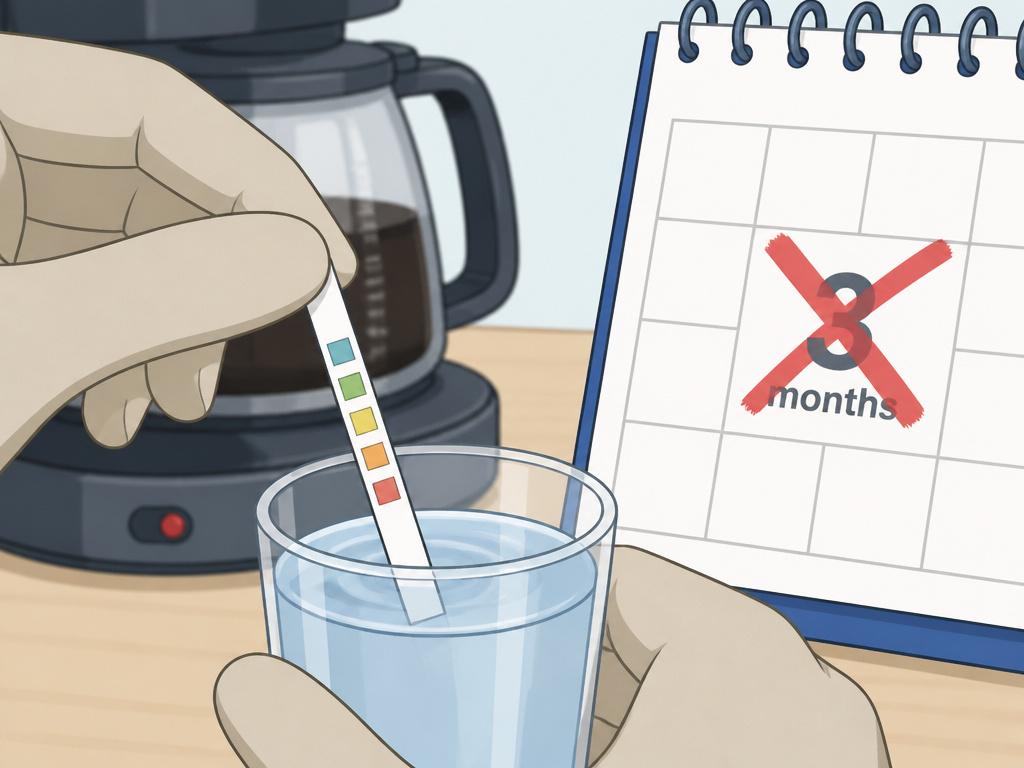
Manufacturers give a range: every 3 to 6 months. That’s a baseline for municipal water of average hardness. If you have hard water, that interval is useless. Hard water will coat the heating element in scale within 4-6 weeks. You’ll know because the machine takes longer to brew, or the coffee never gets as hot.
The only way to set your schedule is to know your water. You can check your local water utility’s annual report online. If your hardness is above 120 ppm (parts per million), plan to descale monthly. Below 60 ppm, you can stretch to the 3-month mark.
Another signal is performance. If the brew time noticeably increases or the carafe isn’t as full as it used to be for the same water input, scale is likely constricting the internal lines. Don’t wait for the calendar.
Common mistake: Descaling only by the calendar in a hard water area, the heating element crusts over by the second month, overworks itself, and fails a year early. You replace the whole machine for a $5 bottle of vinegar.
For the external and removable parts, the schedule is tighter. Wash the carafe, lid, and filter basket with soap and water every week. Wipe the machine’s exterior and the heating plate with a damp cloth weekly. This prevents oil rancidity, which is the most common cause of “off” flavors between descales.
The Deep Clean: Carafe, Basket, and Those Crusty Nooks
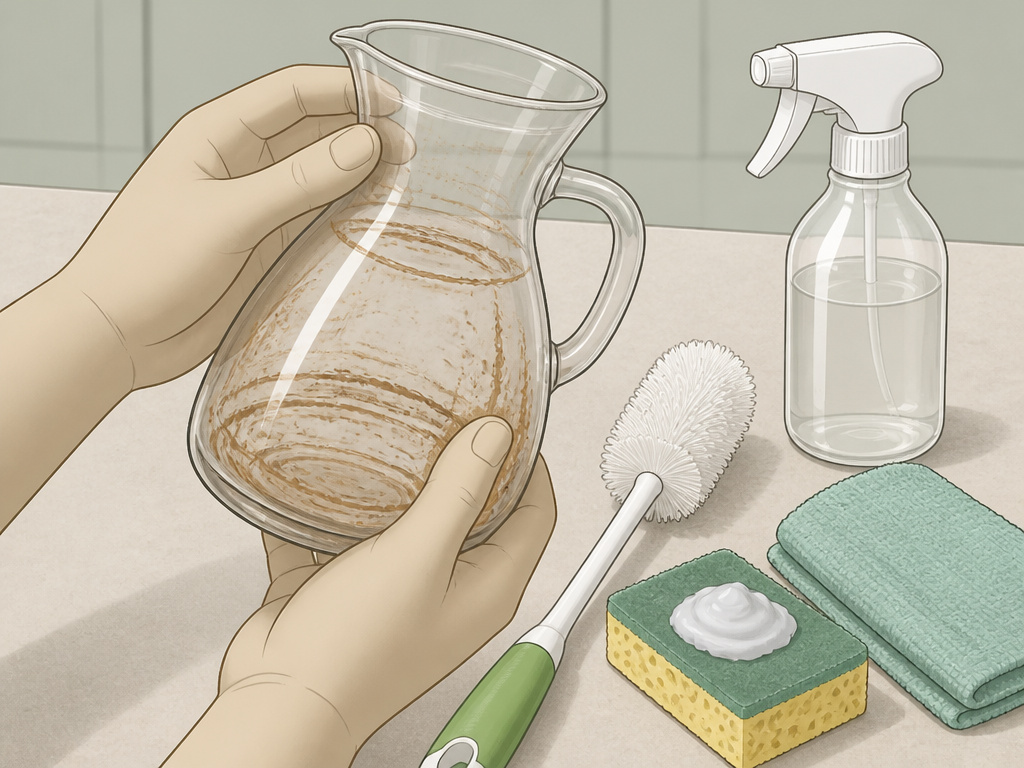
Descaling handles the inside. The deep clean handles everything you touch and see. This is about removing baked-on coffee stains and oily residue.
Start with the carafe. Glass caraves get stained brown. Fill it with a mixture of warm water, a squirt of dish soap, and two tablespoons of white vinegar. Let it soak for 30 minutes. Use a soft bottle brush to scrub the inside. For stubborn stains, a paste of baking soda and water on a sponge works wonders. Rinse thoroughly.
The filter basket is a grime magnet. Coffee grounds and oils cake in the corners and the little holes. Soak it in the same soapy vinegar water. Use an old toothbrush to scrub every crevice. Pay attention to the underside where the water drips through, that’s often the grimiest part.
Now, the machine itself, unplugged. Mix a spray bottle with one cup water, one cup white vinegar, and a teaspoon of dish soap. Spray this onto a microfiber cloth, not directly onto the machine. Wipe down the entire exterior. Focus on the area around the filter basket where grounds spill, and the heating plate where coffee drips and bakes on.
I once skipped the heating plate wipe for a month on a machine I used daily. The spilled drops carbonized into a black, sticky crust that smelled like burnt toast. It took a razor blade at a shallow angle and a lot of vinegar spray to scrape off. Now I wipe it while it’s still warm from the morning brew.
For the water reservoir, if it’s removable, take it out and wash it in the sink. If not, wipe it thoroughly with your damp vinegar-cloth. Ensure no old water is sitting in the bottom.
Let all parts air-dry completely before reassembling. Trapped moisture breeds mildew, which brings a whole new set of flavors you don’t want.
Vinegar vs. Commercial Descaler: Which One Actually Works?
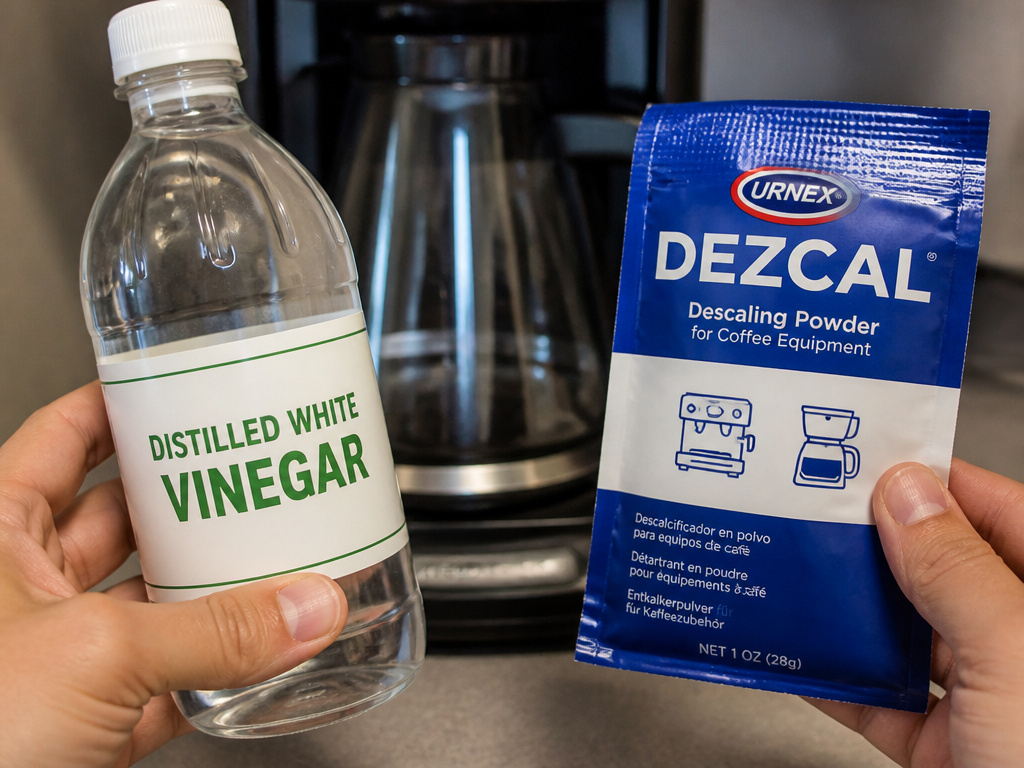
Both work. The difference is in the mess, the smell, and the potential for residue.
White vinegar (acetic acid) is cheap and effective. It’s also what most manufacturer manuals specify. The downside is the pungent smell that fills your kitchen during the process, and the risk of that smell lingering if you don’t rinse enough. As the Consumer Reports guide to cleaning coffee makers notes, thorough rinsing is critical after vinegar to avoid taste transfer.
Commercial descalers, like Bar Keepers Friend or Dezcal, are typically citric or sulfamic acid blends. They are often odorless or pleasantly scented, and they foam, which can help dislodge chunks of scale. They are formulated to rinse away more cleanly. They are more expensive per cleaning.
The choice often comes down to your machine and sensitivity. For a heavily scaled machine in a hard water area, a commercial descaler might be more powerful. For routine maintenance, vinegar is perfectly fine if you commit to the multiple rinses.
Common mistake: Using lemon juice as a descaler. The citric acid works, but the sugars in the juice can caramelize on the heating element, creating a sticky, sweet mess that’s harder to clean than the original scale.
There’s also a debate about vinegar damaging rubber seals over time. This is where following your manual matters. If Keurig says use 10 oz of straight vinegar in their machine with its rubber seals, they’ve tested it. For an older machine with unknown seal integrity, a diluted solution or a commercial descaler might be the gentler choice.
Troubleshooting: When Cleaning Doesn’t Fix the Problem
You’ve descaled, deep cleaned, and your coffee still tastes bad. A few specific issues could be at play.
Problem: Coffee tastes sour or like vinegar after cleaning.
Cause: Insufficient rinsing. The internal plastic tubing is porous and holds onto acidic residue.
Fix: Run three more full cycles of fresh water through the machine. If it persists, try a cycle with just baking soda (two tablespoons in a full reservoir) to neutralize the acid, followed by two more water rinses.
Problem: Machine is slower to brew than before.
Cause: Severe scale blockage, or a failing heating element.
Fix: Descale again, this time using a commercial descaler and extending the soak time to 30 minutes. If no improvement, the internal tube may be blocked or the pump may be failing. Consult your Black & Decker troubleshooting guide or the manufacturer.
Problem: Water leaks from the bottom during the brew cycle.
Cause: A seal has failed, often the gasket where the reservoir meets the base, or a tube connection has come loose internally.
Fix: Unplug immediately. This is often beyond a simple clean. It requires disassembly, which voids warranties. Check for obvious cracks in the reservoir. If not, it’s likely a service call.
Problem: White flakes or particles in the brewed coffee.
Cause: You didn’t rinse well enough after descaling, and chunks of dislodged scale are coming through.
Fix: Run several more water-only brew cycles until the water runs completely clear. Always use a clean carafe to monitor the rinse water.
| Symptom | Likely Cause | Immediate Fix | If It Persists |
|---|---|---|---|
| Sour/vinegar taste | Acidic cleaner residue | Run 3+ additional water rinse cycles | Neutralize with a baking soda water cycle |
| Slow brewing | Heavy scale in tubes/heating element | Repeat descale with longer soak time | Internal pump or tube may be failing |
| Water leaking from base | Failed internal seal or loose connection | Unplug, dry, inspect reservoir for cracks | Requires professional service |
| Visible particles in coffee | Dislodged mineral scale | Continue flushing with fresh water | Check and clean the shower head assembly |
Frequently Asked Questions
Can I use apple cider vinegar to clean my coffee maker?
No. Apple cider vinegar contains sugars and other organic compounds that can leave a sticky residue and promote mold growth inside the machine’s internal components. Only use white distilled vinegar.
How do I clean a coffee maker without vinegar?
Use a commercial descaling product like Dezcal or Bar Keepers Friend Coffee Maker Descaler, which are specifically formulated for this purpose. Alternatively, you can use citric acid powder mixed with water, following package instructions.
Is it safe to use bleach to clean my coffee maker?
Never use bleach or ammonia-based cleaners. These chemicals can damage internal plastic and rubber parts, are extremely difficult to rinse out completely, and pose a serious health risk if any residue remains.
Why does my coffee maker smell like mildew?
This is usually caused by standing water in the reservoir or internal lines, often from a machine that isn’t used daily. Run a vinegar descaling cycle, then ensure you empty the reservoir and leave the lid open to air dry after each use.
Can I run cleaning solution through my coffee maker’s built-in grinder?
No. Descale only the brewing unit. If your machine has a built-in burr or blade grinder, clean that separately according to its manual. Introducing liquid cleaner to the grinder will ruin it. For more on grinder maintenance, see our comparison of burr vs blade grinder cleaning needs.
Do I need to use special filters for my coffee maker?
Using the correct filter ensures proper water flow and prevents grounds from ending up in your carafe. Always check your manual for the recommended size and type, whether it’s a standard #4 basket filter or a specific shape for your model, like Bunn coffee maker filters.
The Bottom Line
Cleaning a drip coffee maker isn’t a single task. It’s two separate rhythms: a weekly wash of the carafe and basket to stop oils from turning rancid, and a monthly descale of the internal plumbing to melt away mineral scale. The factory manual gives you the numbers, the vinegar amount, the rinse count. Your water hardness sets the calendar.
The taste of your morning cup depends on this maintenance more than you think. A $10 bag of freshly roasted blonde roast coffee is wasted in a machine coated in last month’s oil and scale. The process takes 45 minutes once a month and five minutes once a week. That’s a cheap price for coffee that actually tastes like coffee.
{
“@context”: “https://schema.org”,
“@type”: “HowTo”,
“name”: “How to Clean a Drip Coffee Maker”,
“totalTime”: “PT45M”,
“tool”: [
{
“@type”: “HowToTool”,
“name”: “White distilled vinegar or commercial descaling solution”
},
{
“@type”: “HowToTool”,
“name”: “Soft-bristled brush or old toothbrush”
},
{
“@type”: “HowToTool”,
“name”: “Microfiber cloths”
},
{
“@type”: “HowToTool”,
“name”: “Mild dish soap”
}
],
“supply”: [
{
“@type”: “HowToSupply”,
“name”: “Fresh water for rinsing”
},
{
“@type”: “HowToSupply”,
“name”: “Baking soda (optional for odor removal)”
}
],
“step”: [
{
“@type”: “HowToStep”,
“name”: “Remove and clean all removable parts”,
“text”: “Take out the carafe, filter basket, and lid. Wash them with warm, soapy water and let them air-dry completely.”
},
{
“@type”: “HowToStep”,
“name”: “Prepare the descaling solution”,
“text”: “Fill the reservoir with a solution of white vinegar and water, or with a commercial descaler mixed according to its label. Check your manual for specific ratios.”
},
{
“@type”: “HowToStep”,
“name”: “Run a descaling cycle”,
“text”: “Start a brew cycle without coffee grounds. Let the solution run halfway through, then pause the machine for 15-20 minutes to let it descale internally.”
},
{
“@type”: “HowToStep”,
“name”: “Complete the cycle and rinse thoroughly”,
“text”: “Finish the brew cycle. Empty the carafe, then run at least two full reservoirs of fresh water through the machine to flush out all cleaner.”
},
{
“@type”: “HowToStep”,
“name”: “Wipe down exterior and internal components”,
“text”: “Unplug the machine. Use a damp microfiber cloth to wipe the heating plate, the inside of the reservoir, and the shower head. A vinegar-water spray can tackle crusted coffee.”
},
{
“@type”: “HowToStep”,
“name”: “Reassemble and run a final water brew”,
“text”: “Once all parts are dry, reassemble the coffee maker. Run one final pot of plain water through it to ensure no cleaning taste remains before your next coffee.”
}
]
}
{
“@context”: “https://schema.org”,
“@type”: “FAQPage”,
“mainEntity”: [
{
“@type”: “Question”,
“name”: “Can I use apple cider vinegar to clean my coffee maker?”,
“acceptedAnswer”: {
“@type”: “Answer”,
“text”: “No. Apple cider vinegar contains sugars and other organic compounds that can leave a sticky residue and promote mold growth inside the machine’s internal components. Only use white distilled vinegar.”
}
},
{
“@type”: “Question”,
“name”: “How do I clean a coffee maker without vinegar?”,
“acceptedAnswer”: {
“@type”: “Answer”,
“text”: “Use a commercial descaling product like Dezcal or Bar Keepers Friend Coffee Maker Descaler, which are specifically formulated for this purpose. Alternatively, you can use citric acid powder mixed with water, following package instructions.”
}
},
{
“@type”: “Question”,
“name”: “Is it safe to use bleach to clean my coffee maker?”,
“acceptedAnswer”: {
“@type”: “Answer”,
“text”: “Never use bleach or ammonia-based cleaners. These chemicals can damage internal plastic and rubber parts, are extremely difficult to rinse out completely, and pose a serious health risk if any residue remains.”
}
},
{
“@type”: “Question”,
“name”: “Why does my coffee maker smell like mildew?”,
“acceptedAnswer”: {
“@type”: “Answer”,
“text”: “This is usually caused by standing water in the reservoir or internal lines, often from a machine that isn’t used daily. Run a vinegar descaling cycle, then ensure you empty the reservoir and leave the lid open to air dry after each use.”
}
},
{
“@type”: “Question”,
“name”: “Can I run cleaning solution through my coffee maker’s built-in grinder?”,
“acceptedAnswer”: {
“@type”: “Answer”,
“text”: “No. Descale only the brewing unit. If your machine has a built-in burr or blade grinder, clean that separately according to its manual. Introducing liquid cleaner to the grinder will ruin it. For more on grinder maintenance, see our comparison of burr vs blade grinder cleaning needs.”
}
},
{
“@type”: “Question”,
“name”: “Do I need to use special filters for my coffee maker?”,
“acceptedAnswer”: {
“@type”: “Answer”,
“text”: “Using the correct filter ensures proper water flow and prevents grounds from ending up in your carafe. Always check your manual for the recommended size and type, whether it’s a standard #4 basket filter or a specific shape for your model, like Bunn coffee maker filters.”
}
}
]
}
