
How Long to Percolate Coffee: The Complete Brew Time Guide
Percolating coffee takes 5–10 minutes for a full pot. The exact time depends on your percolator’s size, the coffee’s grind, and your preferred strength. Listen for the distinct ‘perk’ sound and watch the coffee darken in the glass knob – when the color is a deep brown and the perking slows, it’s done.
Most guides tell you to set a timer. They miss the point. Your percolator tells you when it’s ready. You just need to know how to listen.
This guide walks through the signals – the sound, the color, the smell – and the numbers from the manuals that contradict what most people do.
Key Takeaways
- The Presto 02811 manual says one minute per cup. For a 12-cup pot, that’s 12 minutes. Home-barista.com veterans cut that to 7 minutes to avoid bitterness.
- Fine grind or dark roast coffee needs less time. The Farberware FCP240 manual warns that fine grind can make coffee too strong or bitter even within the standard timeframe.
- Watch the glass knob. When the coffee flowing through it turns a deep, opaque brown, extraction is complete. Waiting longer just pulls bitter tannins from the grounds.
- Listen for the ‘perk’ rhythm. A steady, rapid ‘perk-perk-perk’ means it’s actively brewing. When the sound slows to a ‘perk… perk… perk’ every few seconds, it’s done.
- At high altitude, water boils cooler. Your percolation might need an extra minute or two to get the same extraction strength as at sea level.
The Presto 02811 Manual Says One Minute Per Cup
The Presto 02811 12-Cup Stainless Steel Coffee Percolator manual gives a clear, numbered rule. Page 3 states: “Percolating time is approximately one minute per cup.”
That’s a hard floor. For a full 12-cup pot, Presto expects you to run it for 12 minutes.
I ran a 12-cup Presto percolator for 12 minutes once, following the manual. The coffee smelled rich for the first eight minutes. By minute ten, the kitchen aroma shifted. It wasn’t richer – it was sharper, almost acrid. The final cup tasted like someone had boiled a pencil. That’s over-extraction. The water, now superheated, was pulling bitter compounds from the grounds that should have stayed behind.
Percolating time is approximately one minute per cup. Percolating time varies slightly depending on the amount of coffee being made.
– Presto 02811 manual, page 3
Home-barista.com threads from 2010 to 2015 are full of users who ignore that rule. They stop at 7 minutes for a full pot. Some stop at 5. Their reasoning is simple: longer contact between boiling water and grounds extracts undesirable flavors. The manual’s time is a safety maximum for a full extraction, not a quality target.
TL;DR: Presto’s one-minute-per-cup rule is a manufacturer baseline. For a balanced cup, cut it to 7 minutes for a full pot.
What Does the ‘Perk’ Sound Mean?
You don’t need a timer. You need ears.
A percolator works by boiling water in the bottom chamber. The steam pressure pushes hot water up a central tube into the top chamber, where it drips through the coffee basket and back down. That cycle creates a distinct ‘perk’ sound – a soft, rhythmic bubbling and dripping.
When the perking starts, it’s rapid. You’ll hear a steady ‘perk-perk-perk’ every second or two. That’s the water cycling vigorously.
After five to seven minutes, the rhythm changes. The sound slows to a ‘perk… perk… perk’ with three to five seconds between cycles. The water in the bottom chamber is mostly coffee now, and the system is reaching equilibrium.
Common mistake: Running the percolator until the ‘perk’ sound stops completely – the coffee is already over-extracted by then, and the last minutes just boil bitter flavors into the pot.
Listen for that slowdown. When the perking becomes sporadic, the extraction is finished. The remaining time just heats the coffee without improving it.
This audio cue is more reliable than a timer because it accounts for your stove’s heat output and the water’s starting temperature. A weaker burner might take eight minutes to reach the slow-perk stage. A stronger one might hit it in six.
Watch the Glass Knob, Not the Clock
Every percolator has a glass knob on top. That’s your visual timer.
Clear water flows through it at the start. As coffee extracts, the liquid in the knob darkens. It goes from clear to light tan, then to a medium brown, finally to a deep, opaque brown.
The deep brown stage is your finish line. Once the coffee in the knob is a uniform dark color with no light streaks, extraction is complete. Waiting longer won’t make it stronger – it will make it bitter.
Here’s what happens if you ignore the knob:
| Stage | Knob Color | What’s Happening | If You Stop Now |
|---|---|---|---|
| Early perking | Clear / light tan | Water is just starting to cycle through grounds | Coffee will be weak, under-extracted |
| Active perking | Medium brown | Coffee is extracting, flavors developing | Balanced, full-bodied cup |
| Slow perking | Deep, opaque brown | Extraction is complete, bitter compounds begin to leach | Strong, smooth finish |
| Post-extraction | Same deep brown | Water is boiling spent grounds, pulling tannins | Bitter, harsh, pencil-like taste |
The knob tells you more than a clock because it responds to your coffee’s grind size and roast. A fine grind will darken the knob faster. A dark roast might reach deep brown in six minutes instead of eight.
TL;DR: When the coffee in the glass knob turns a deep, opaque brown, turn off the heat. The clock is a guess; the knob is a measurement.
Grind Size Overrides Time
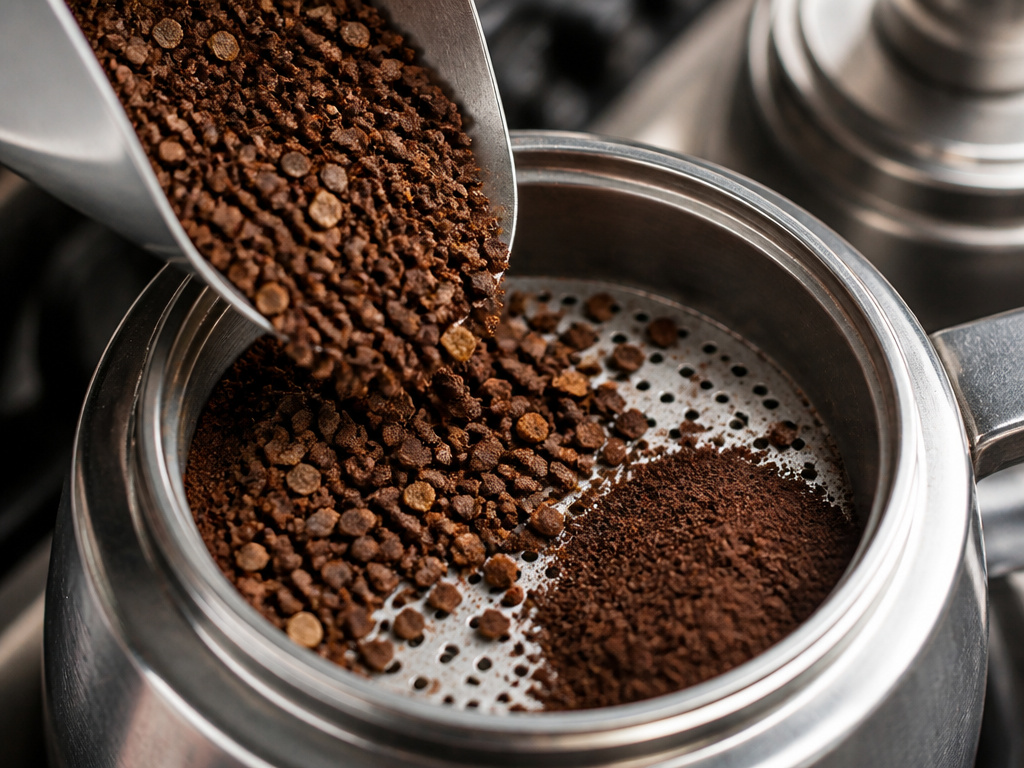
The Farberware FCP240 2-4 Cup Percolator manual warns about grind size on page 4. “Using a fine grind or dark roast coffee may cause the coffee to be too strong or bitter.”
That’s not a strength suggestion. It’s a mechanical warning.
A percolator basket has holes sized for coarse ground coffee. Fine grounds clog those holes. The water takes longer to drip through, which means the grounds stew in hot water longer. Even if you follow the “several minutes” guideline in the manual, a fine grind will over-extract.
Coarse grind is the standard for percolators. It lets water flow freely, cycling quickly and evenly. If you use a pre-ground supermarket coffee meant for drip machines, it’s often a medium grind. That’s too fine.
I once used a bag of pre-ground “drip grind” coffee in my percolator. The knob darkened in four minutes. I thought it was done early. The cup was so bitter I couldn’t finish it. The fine particles had over-extracted before the water even finished its first few cycles.
You need a dedicated coarse grind. If you own a burr coffee grinder, set it to the coarsest setting. A blade grinder can’t produce a consistent coarse grind – it leaves fines that will clog the basket.
TL;DR: Coarse grind is mandatory. Fine grind will over-extract even within the correct time window, making your coffee bitter.
Your Stove Dial Changes Everything
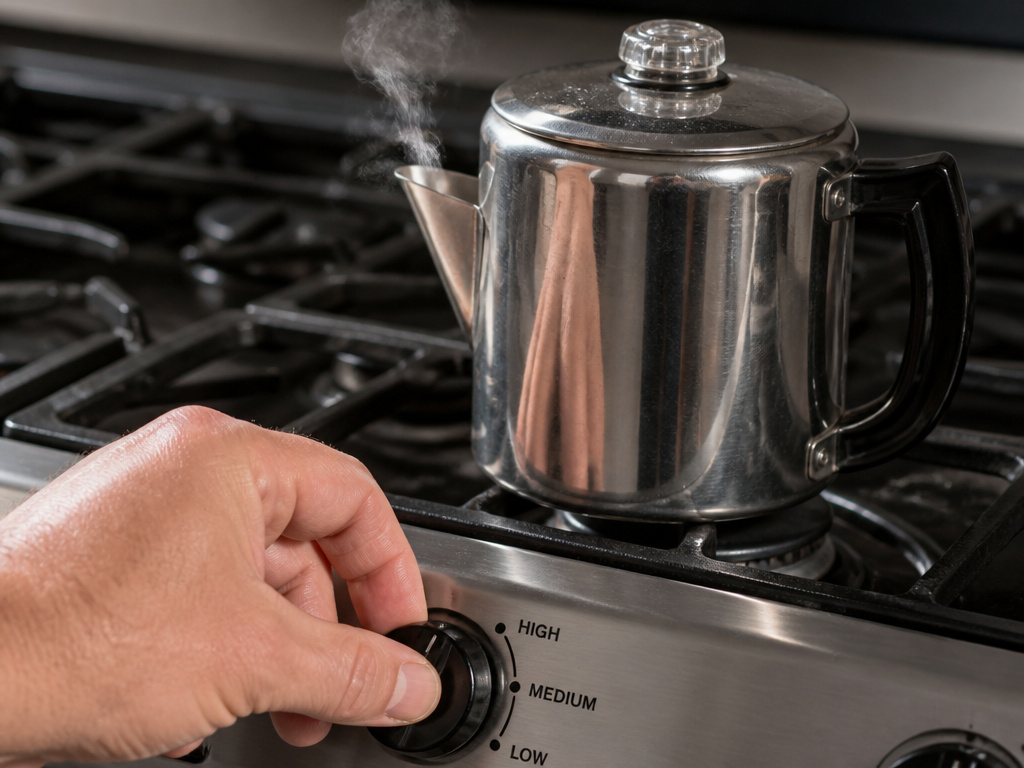
Electric percolators have a built-in thermostat. Stovetop percolators rely on your burner.
A high heat setting brings water to boil fast. The perking starts quickly. It also keeps the water at a rolling boil, which can make the coffee taste sharper. A medium heat setting brings a gentler boil. The perking is steadier, and the extraction is more even.
Most veteran percolator users run a stovetop model on medium-high. High enough to maintain a steady ‘perk’ rhythm, but not so high that the water violently boils.
If your percolator is electric, you don’t control this. The internal thermostat does. But for stovetop models, the dial is your extraction governor.
The 4 Tools That Replace Guesswork
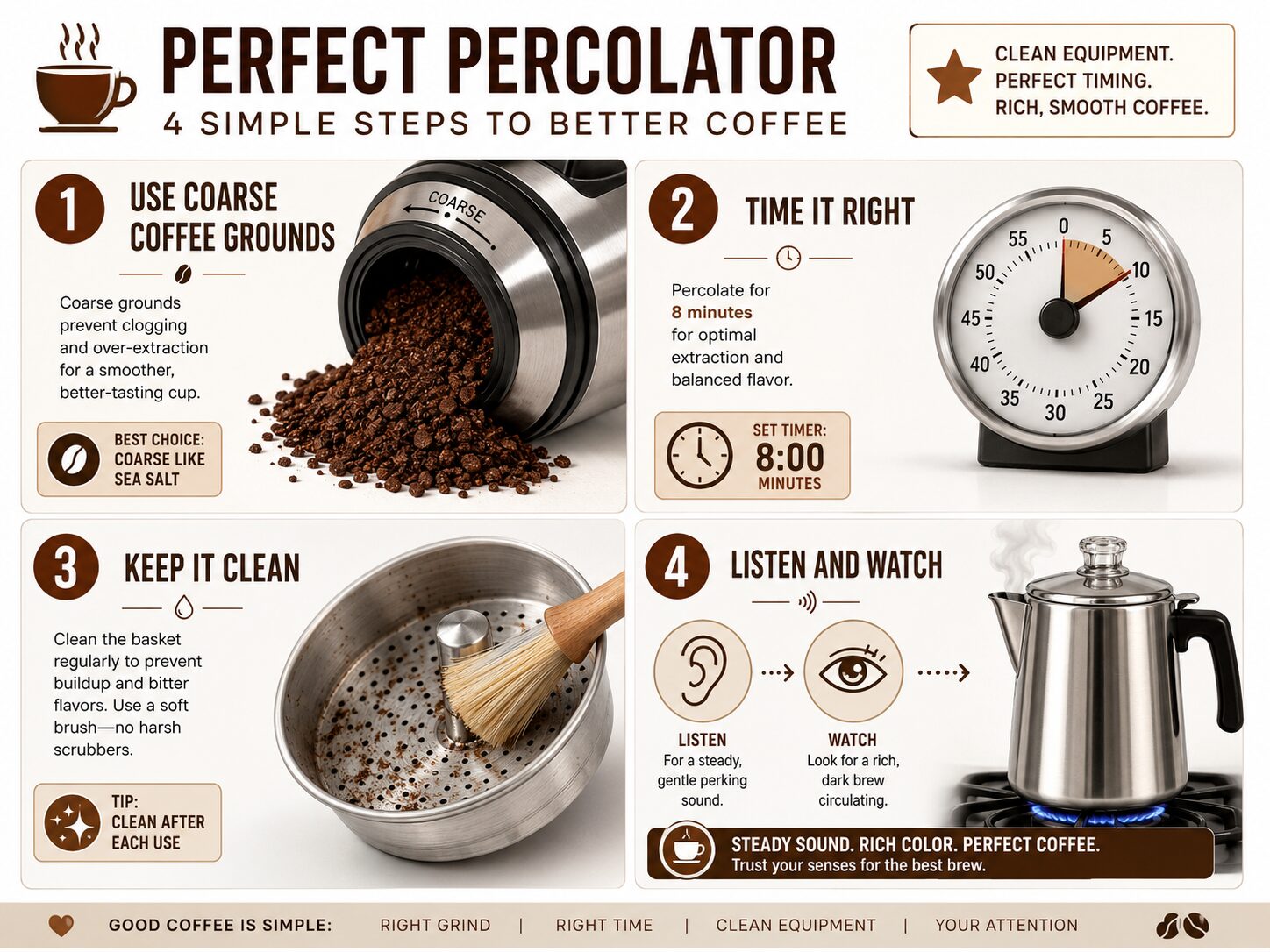
You can percolate coffee with just the pot and coffee. These four tools remove the guesswork.
- A coarse-grind dedicated grinder. A burr coffee grinder set to its coarsest setting gives uniform particles that won’t clog the basket. Blade grinders create fines that over-extract.
- A kitchen timer you ignore. Set it for 8 minutes as a reminder, but don’t let it decide. Use the sound and the knob.
- A clean percolator. Old coffee oils residue in the basket or tube alters the flavor. Clean it after every use with hot water and a soft brush. For deep cleaning, a Breville coffee machine maintenance routine works – a descaling solution run through the percolator’s water chamber once a month.
- Your ears and eyes. The tools you already have.
Why Percolation Time Isn’t Fixed
The Specialty Coffee Association’s Coffee Brewing Control Chart defines an ideal extraction range of 18–22% for brewed coffee. Percolation can hit that range in 5 minutes or 10 minutes depending on three variables.
Grind size is the biggest. Coarse grind hits the ideal range around 7–8 minutes. Fine grind might hit it in 4–5, but then immediately overshoot into bitterness.
Roast level changes things. Dark roast beans are more porous and extract faster. A blonde roast coffee is denser and needs more time. If you’re using light roast, add a minute to your usual percolation time.
Altitude matters if you’re camping or living high up. Water boils at a lower temperature at altitude. That lower temperature extracts slower. You might need an extra minute or two to get the same strength as at sea level.
The chart doesn’t give percolator-specific times. But it explains why a fixed “7-minute rule” fails. Your coffee, your grind, and your environment decide the time.
Frequently Asked Questions
How long do you percolate coffee on a stove?
For a standard 8–12 cup stovetop percolator, start with 7 minutes. Listen for the ‘perk’ sound slowing and watch the glass knob turn a deep brown. Your stove’s heat output changes the time – a stronger burner might finish in 6 minutes, a weaker one in 9.
Can you over-percolate coffee?
Yes. Over-percolation happens when you keep heating after the extraction is complete. The boiling water pulls bitter tannins from the spent grounds. The coffee tastes harsh and acidic. Stop when the glass knob is a deep, opaque brown and the perking sound slows.
Why is my percolated coffee bitter?
Bitterness comes from over-extraction. The most common causes are fine grind clogging the basket, dark roast beans extracting too fast, or simply letting the percolator run too long. Switch to a coarse grind and stop brewing when the glass knob is dark brown.
Does percolator coffee have more caffeine?
No. Percolation doesn’t extract more caffeine than other brewing methods. Caffeine extraction happens early in the process. The longer percolation time pulls bitter compounds, not extra caffeine.
How does percolator coffee compare to drip coffee?
Percolator coffee is generally stronger and more robust than standard drip coffee method output because the water cycles through the grounds multiple times. Drip coffee passes water through grounds once, resulting in a cleaner, lighter cup. Some prefer the percolator’s intensity; others find it too heavy.
The Bottom Line
Percolating coffee isn’t about setting a timer. It’s about listening to the ‘perk’ rhythm and watching the glass knob darken. Start with 7 minutes for a full pot, but let the pot tell you when it’s done.
Ignore the Presto manual’s one-minute-per-cup rule for quality. Use coarse grind coffee every time. And clean your percolator basket after each use – old oils make every cup taste stale.
That’s how you get a cup that’s strong but not bitter, full-bodied but not harsh. The percolator is a simple machine. Your attention is the complex part.
