
How Do You Make a Perfect Americano Coffee Drink? Step-by-Step
This post contains affiliate links. As an Amazon Associate, we earn from qualifying purchases.
To make an Americano coffee drink, pull a double shot of espresso (60ml) and dilute it with hot water at 71°C (160°F) in a 1:2 ratio. The water must go over the espresso, not the other way around, to properly mix the crema and produce a balanced cup.
Most people get the water temperature wrong. They use boiling water straight from the kettle, which scalds the delicate crema and turns a smooth drink bitter in the first three sips. The difference between a sharp, acidic cup and a rich, rounded one is about 30 degrees.
This guide walks through the exact steps, tools, and ratios. We’ll settle the espresso-first versus water-first debate with data from barista workflows, explain why 71°C is the magic number, and show you how to adapt the method for an iced version or when you don’t have an espresso machine.
Key Takeaways
- Use water heated to 71°C (160°F), not boiling. Water above 77°C destroys the espresso’s crema and releases harsh, bitter compounds.
- The standard ratio is 1 part espresso to 2 parts hot water. A double shot (60ml) gets 120ml of water.
- Pour the hot water over the espresso, not espresso into water. This method, standard in North American cafes, integrates the crema for a balanced flavor from first sip to last.
- A proper Americano requires real espresso brewed at 9 bars of pressure. Drinks made with a Moka pot or Aeropress are Americano-style, not true Americanos.
- For an iced Americano, pull the espresso directly over a full glass of ice and cold water. The rapid cooling locks in the aroma.
The Core Americano Recipe (and the Debate That Changes It)
You need two ingredients: espresso and hot water. The quality of each defines the drink.
Start with a double shot of espresso. That’s 60ml, extracted from 18-20 grams of finely ground coffee at 9 bars of pressure and a water temperature between 90°C and 96°C. The shot should have a viscous, honey-like consistency and a layer of golden-brown crema on top. This crema holds the volatile aromatics and oils.
Common mistake: Using boiling (100°C) water for dilution — it fractures the crema’s delicate foam structure within seconds and pulls astringent tannins from the coffee grounds still present in the shot, making the entire cup taste harsh.
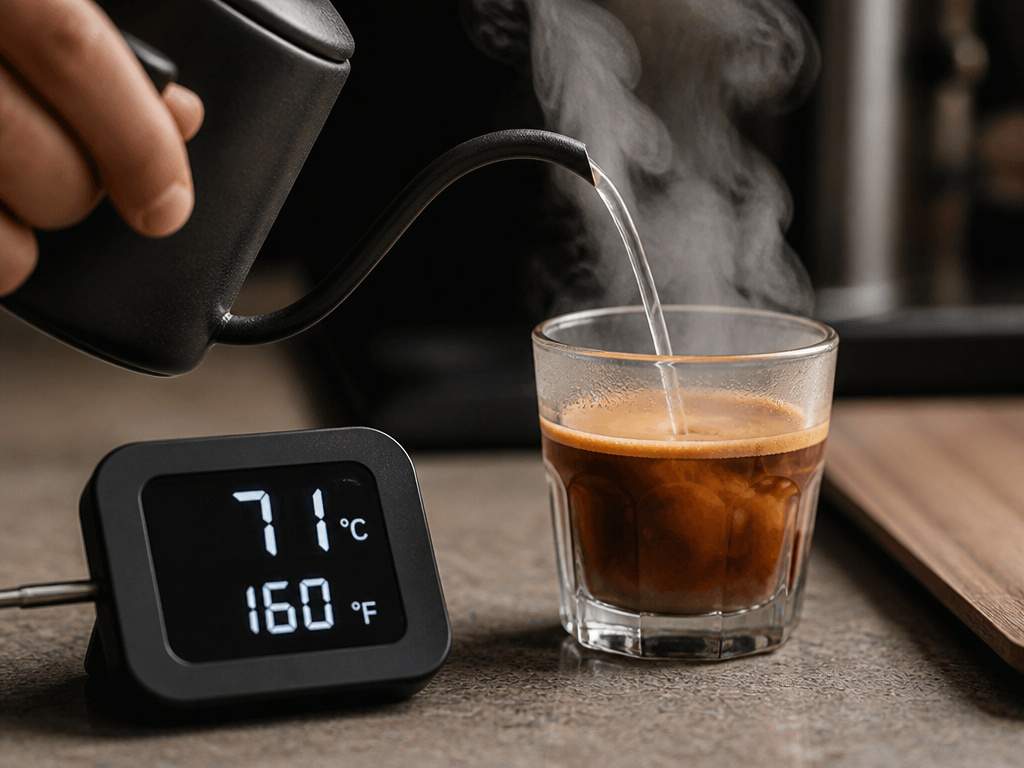
Now, heat fresh water to 71°C (160°F). This is the spec. Water at this temperature is hot enough to dilute the espresso but cool enough to preserve the crema’s texture and integrate it slowly into the drink. Pour 120ml of this water directly over the espresso in the cup.
Why the order matters. There is a loud, ongoing debate. Some sources, particularly from Australia and New Zealand, insist a “Long Black” is made by pulling espresso over hot water to preserve a thick crema layer on top. In most North American coffee shops, however, the standard operational procedure is water over espresso. The practical reason is integration. Pouring water over the espresso immediately mixes the crema throughout the volume, giving a consistent flavor in every sip. The espresso-over-water method often leaves the first few sips overpoweringly strong and the last few sips weak.
| Method | Order | Result | Best For |
|---|---|---|---|
| North American Standard | Hot water poured over espresso | Crema is integrated, balanced sip from start to finish | Drinkers who want consistency, similar to a clean drip coffee |
| Long Black / Alternate | Espresso pulled over hot water | Crema forms a distinct layer on top, bold first sip | Those seeking a stronger initial espresso hit and visual presentation |
TL;DR: Pull a 60ml double shot, heat water to 71°C, and pour 120ml of that water over the espresso. Stir once.
The Tools You Actually Need (And One You Can’t Skip)
You can’t make an Americano without espresso. That eliminates most home coffee makers from the start.
- An Espresso Machine. It must generate 9 bars of pressure. A stovetop Moka pot produces about 1-2 bars, which creates a strong coffee but not the emulsified oils and body of true espresso. Machines like the Breville Bambino or a Gaggia Classic are entry-points.
- A Burr Grinder. This is non-negotiable. A blade grinder creates inconsistent particles that will channel under pressure, yielding a sour, weak shot. A burr grinder, like the Baratza Encore ESP, gives you control over the fine, even powder espresso demands. The quality of your espresso grind quality directly dictates the shot’s flavor.
- A Digital Scale. Volume measurements for coffee are useless. Dose your coffee beans by weight (18-20g for a double) and weigh your water output (60ml should weigh 60g). Eyeballing it introduces a 15-20% error, which throws the entire ratio off.
- A Gooseneck Kettle with Temperature Control. You need to hit 71°C reliably. A variable-temperature kettle removes the guesswork. Without one, you’re waiting for boiled water to cool down, which wastes time and often leads to using water that’s still too hot.
Skipping the scale or using a blade grinder is the fastest path to a disappointing Americano. The drink will lack body and taste either hollow or muddy.
Dialing In Your Espresso: The Foundation
A great Americano is built on a perfect shot. Sour, bitter, or weak espresso only gets worse when diluted.
The variables are locked in a chain: grind size, dose weight, and extraction time. Change one, and you must adjust the others.
- Grind: Fine, like table salt. If water gushes through in under 20 seconds, grind finer. If it drips slowly and yields less than 60ml in over 35 seconds, grind coarser.
- Dose: 18-20 grams for a double basket. This is your anchor weight.
- Time: 25-30 seconds for a 60ml yield. This includes a few seconds of pre-infusion if your machine has it.
Before you start: Espresso machines involve hot water, steam, and high pressure. Never open the portafilter during a shot. Keep hands clear of the group head and steam wand. Always have a dry cloth for handling hot components.
Here’s a diagnostic table for fixing a bad shot:
| Symptom | Likely Cause | Fix |
|---|---|---|
| Shot runs too fast (<20 sec), tastes sour | Grind is too coarse | Adjust grinder to a finer setting |
| Shot runs too slow (>35 sec), tastes bitter | Grind is too fine | Adjust grinder to a coarser setting |
| Shot is balanced but weak | Dose weight is too low | Increase dose by 1 gram |
| Channeling (sprays sideways) | Uneven tamp or stale coffee | Redistribute grounds before tamping; use fresher beans |
The bean matters. A medium or dark roast is more forgiving and delivers the classic chocolatey notes people expect. A light or blonde roast can be brilliant but requires precise grinding to avoid extreme acidity. For a balanced cup, start with a dedicated espresso blend.
TL;DR: Aim for 18-20g of coffee yielding 60ml of espresso in 25-30 seconds. If it’s sour, grind finer; if it’s bitter, grind coarser.
Water Quality and Temperature: The Silent Variables
Tap water can kill your drink. Chlorine and minerals directly affect taste and machine health.
Use filtered water. If your tap water is hard, scale will build up in your machine’s boiler and lines, degrading performance over months. This is why following your Breville machine filter or descaling schedule is critical maintenance, not an optional chore.
Now, the temperature. The research is specific: dilution water should be between 71°C and 77°C (160°F–170°F).
The 9-bar pressure of an espresso machine extracts coffee at 94°C, creating a stable emulsion. Adding 71°C water gently lowers the overall temperature without shocking that emulsion. Water at 100°C breaks it apart, releasing bitter flavors that were bound in the crema.
Heat your water in your kettle to 71°C. If you don’t have a temperature-control kettle, boil water and let it sit off the boil for 60 seconds. That usually brings it into the right range.
Ratios and Variations: One Drink, Many Strengths
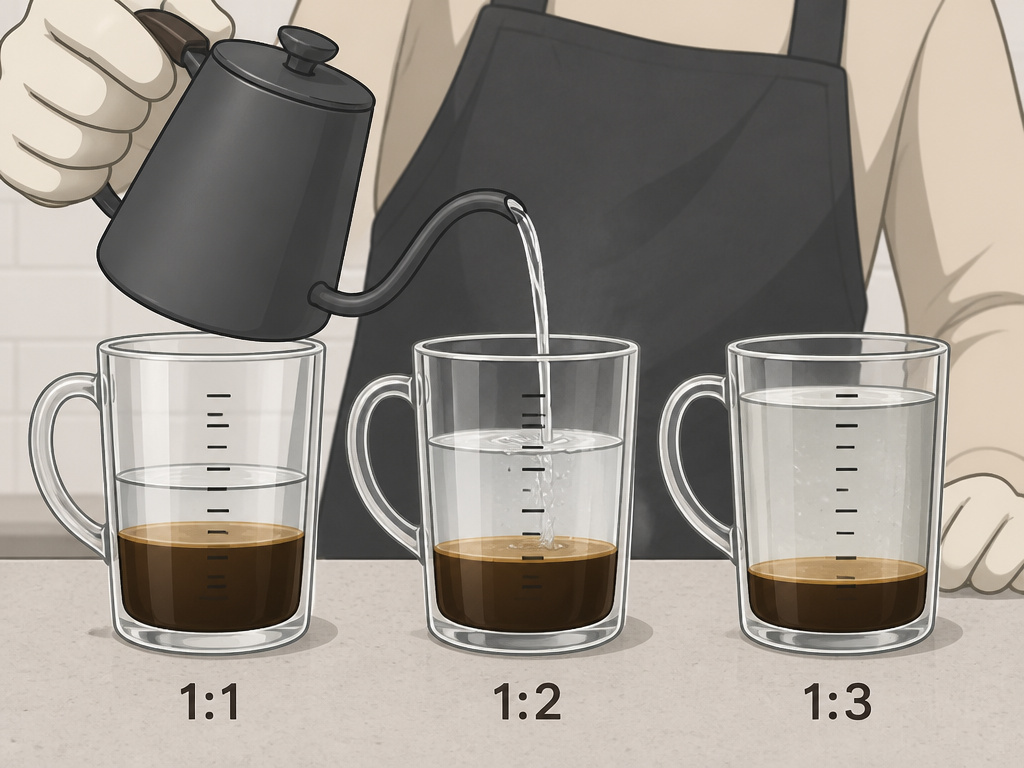
The classic 1:2 ratio (espresso to water) is a starting point. Your preference dictates the final recipe.
- 1:1 Ratio: Equal parts espresso and water. This is essentially a “short Americano” or a very long espresso. It’s intense, retaining most of the espresso’s body and punch.
- 1:2 Ratio: The standard. 60ml espresso to 120ml water. It produces a drink similar in strength to a typical drip coffee but with the espresso’s distinct flavor profile. This is the best place to begin.
- 1:3 Ratio: 60ml espresso to 180ml water. A longer, milder drink. This is common for a large “to-go” Americano. The espresso flavor is more muted, approaching a weak brewed coffee.
The caffeine content is fixed by the espresso shot. A double shot has roughly 80mg of caffeine, whether you add 120ml or 180ml of water. This is a key difference from drip coffee, where caffeine content scales with brew volume.
The Iced Americano Shortcut
This isn’t just a hot Americano poured over ice. That melts the ice too fast and waters it down.
- Fill a tall glass to the brim with ice cubes.
- Add cold water until the glass is about 2/3 full.
- Pull a double shot of espresso directly over the ice and water.
The espresso cools instantly as it hits the ice, locking in its aromatic compounds. The result is a clean, strong, and refreshing drink. Adding the espresso last is non-negotiable for flavor.
Americano-Style Drinks (Without an Espresso Machine)
If you lack a 9-bar machine, you can mimic the drink. Understand it’s a different beverage.
- Moka Pot “Americano”: Brew a strong concentrate with your Moka pot. Dilute it 1:2 with hot water. The result will be heavier and more robust than true espresso, with a distinct metallic note from the pot.
- Aeropress “Americano”: Use a fine grind and a short, strong brew with the Aeropress. Dilute to taste. This can produce a very clean, tea-like drink that resembles an Americano more closely than the Moka pot version.
These are enjoyable, but they lack the creamy mouthfeel and complex crema of a true espresso-based drink.
Frequently Asked Questions
What’s the difference between an Americano and a Long Black?
The difference is primarily in the order of assembly. A Long Black is made by pulling the espresso shot over hot water to preserve a layer of crema on top. An Americano, especially in North America, is made by pouring hot water over the espresso, which integrates the crema for a more uniform flavor. The ratios are often identical.
Can I make an Americano with regular brewed coffee?
No. An Americano is defined by the use of espresso as its base. Diluting regular drip coffee with hot water just makes weak, hot coffee. The distinct flavor profile comes from espresso’s high-pressure extraction, which produces a concentrated, syrupy liquid with crema that interacts with water differently.
How much caffeine is in an Americano?
The caffeine in a shot is what counts. A single shot (30ml) has about 40mg, and a double (60ml) has about 80mg. Adding water doesn’t change the caffeine content. So, a 12-oz Americano has roughly the same caffeine as a double espresso, not a 12-oz cup of drip coffee.
What are the best coffee beans for an Americano?
Start with a medium-dark roast blend designed for espresso. These coffee blends offer balance and chocolatey notes that stand up to dilution. You can also use a high-quality Arabica coffee bean from a single origin, but be prepared to dial in your grind more precisely to manage acidity.
Why does my Americano taste bitter?
The most common cause is using water that is too hot for dilution. Boiling water scorches the espresso. Ensure your dilution water is between 71°C and 77°C. The second cause is over-extracted espresso—if your shot runs longer than 35 seconds, grind coarser.
Before You Go
Making a proper Americano hinges on three fixed points: real espresso, controlled water temperature, and the correct order of assembly. Pull a 60ml double shot. Heat fresh water to 71°C, not boiling. Pour 120ml of that water over the espresso. That sequence integrates the crema and gives you a smooth, consistent cup from top to bottom.
Experiment from that baseline. Try a 1:1 ratio for a stronger kick or a 1:3 for a longer drink. Make it iced by pulling the shot directly over a full glass of ice and cold water. Just remember the core rule—espresso first, then water, always at the right temperature. Everything else is a variation on that theme.
