
How to Descale Your Breville Coffee Maker | The Right Way
To descale a Breville coffee maker, use one 30g pouch of Breville Descaling Solution dissolved in 1 liter of warm water. Enter the machine’s descale mode by holding the POWER and 2-CUP buttons, then follow the on-machine prompts to cycle the solution through the coffee, steam, and hot water systems. Finish with a full rinse cycle using clean water.
Most people get this wrong by using vinegar or guessing the timing. They follow generic appliance advice that doesn’t account for Breville’s specific internal seals and the programmed “CLEAN ME” alert logic. The wrong acid cracks rubber over months, and ignoring the light eventually clogs the pump.
This guide walks through the official Breville procedure, explains why their branded solution matters, and shows you how to interpret your machine’s alerts based on your actual water hardness. We’ll also cover the exact consequences of skipping descales and what to do if you’ve already used vinegar.
Key Takeaways
- Use only Breville’s Descaling Solution (BKC002) or pure citric acid; vinegar degrades internal seals and voids warranties.
- The descale cycle takes 25–30 minutes on a Breville Barista Express Impress and about 15 minutes on a Bambino Plus.
- Your machine’s “CLEAN ME” alert is based on a calculated usage counter, not visual inspection; you cannot reset it without completing a descale cycle.
- In very hard water areas, you may need to descale monthly; with soft or filtered water, the interval might stretch to four months.
- Skipping descaling leads to limescale clogging the thermoblock or pump, requiring a professional service call that costs more than a year’s supply of descaling solution.
What Descaling Actually Does Inside Your Breville
Descaling removes limescale, the hard, chalky mineral deposit left when hard water heats up. In a Breville, water flows through a narrow thermoblock heating element and a small vibration pump. Scale builds up there first.
Common mistake: Thinking descaling is just about taste, scale accumulation reduces heating efficiency, strains the pump, and can completely block water flow. The machine will stop brewing before it starts making bad coffee.
The thermoblock’s internal channels are barely wider than a coffee stirrer. Even a thin layer of scale restricts flow, forcing the pump to work harder. You might hear a straining sound or notice longer heat-up times. Left unchecked, the pump motor burns out. Replacing it involves disassembling the entire machine.
TL;DR: Descaling protects the thermoblock and pump from mineral buildup that restricts water flow and causes mechanical failure.
Why Vinegar Is a Terrible Idea for Espresso Machines
You will see vinegar recommended everywhere for descaling kettles and drip coffee makers. It is cheap and acidic. For a Breville espresso machine, it is a slow machine killer.
Breville’s official solution is a specific blend of citric acid and citric acid salts. It is phosphate-free and biodegradable. Vinegar is acetic acid. Acetic acid is more aggressive on rubber and plastic components over repeated use.
I used a diluted vinegar solution on a previous machine for two years, following a popular online tutorial. By the third year, the group head gasket turned brittle and crumbled during a routine seal change. The repair tech pointed to acetic acid degradation. Now I use only citric acid or the Breville pouches.
The seals inside your machine, around the group head, in the steam wand valves, in the water tank connector, are all food-grade rubber. Citric acid cleans scale without attacking these polymers. Vinegar makes them hard and brittle. A cracked seal means leaks, pressure loss, and steam escaping where it shouldn’t.
| Descaling Agent | Best For | Risk to Breville Machines |
|---|---|---|
| Breville Descaling Solution (Citric Acid) | All Breville espresso machines | None when used as directed |
| Pure Citric Acid Powder | Cost-conscious owners | Minimal if thoroughly rinsed |
| White Vinegar (Acetic Acid) | Kettles, drip machines | Degrades rubber seals over time, can void warranty |
The Official Breville Descaling Procedure (Step-by-Step)
The process is similar across most Breville espresso models like the Barista Express, Bambino Plus, and Touch. The main difference is which buttons you hold to enter descale mode. Always start with a cool, powered-off machine.
Before you start: The descaling solution is an acid. It can irritate skin and eyes. Wear gloves if you have sensitive skin. Have a large bowl or measuring jug ready to catch waste liquid, it will be hot and contain dissolved scale.
Step 1: Mix the Solution
Empty the water tank completely and remove the water filter if you use one. The filter can be damaged by the acid. Use 1 liter (34 fl. oz.) of warm water, not hot, as it can cause the powder to clump. Add one 30g Breville Descaling Solution pouch (BKC002) and stir until fully dissolved. Pour this solution into the empty tank and seat the tank back on the machine.
Skipping this precise ratio means the solution is either too weak to be effective or too concentrated, leaving acidic residue that’s hard to rinse out. Both waste your time.
Step 2: Enter Descale Mode
Place a container under both the group head and the steam wand. The waste water will come out of both. – For Barista Express/Pro/Impress models: Press and hold the POWER button and the 2-CUP button simultaneously for about 3 seconds. The “DESCALE” or “CLEAN ME” light will illuminate. – For Bambino Plus: The process is similar; consult your manual if the button combination differs.
The machine is now in its automated descaling program. You cannot pause it.
Step 3: Run the Automated Cycle
Press the 1-CUP button to begin. The machine will pump descaling solution through the coffee circuit for about 25-30 seconds (Barista Express) or 15 seconds (Bambino Plus). It will then stop and prompt you, often with a blinking light, to activate the steam wand.
Open the steam wand valve for 10-15 seconds to flush the steam system. The machine will then prompt you to turn the hot water dial or press the hot water button. Run that for about 8 seconds. This three-step sequence constitutes one cycle. The machine will repeat it automatically.
Step 4: Rinse Thoroughly
Once the solution tank is empty, the machine may beep or stop. Remove the tank, rinse it thoroughly, and fill it with fresh, cold water. Place it back on the machine. The descale mode should still be active. Run the exact same cycle sequence, 1-CUP, steam wand, hot water, until the fresh water tank is empty. This flushes all residual acid from the system.
Turn the machine off. Wipe down the group head, steam wand, and drip tray with a damp cloth. Reinsert your water filter if you use one. You can now brew again.
What Does the “CLEAN ME” Light Really Mean?
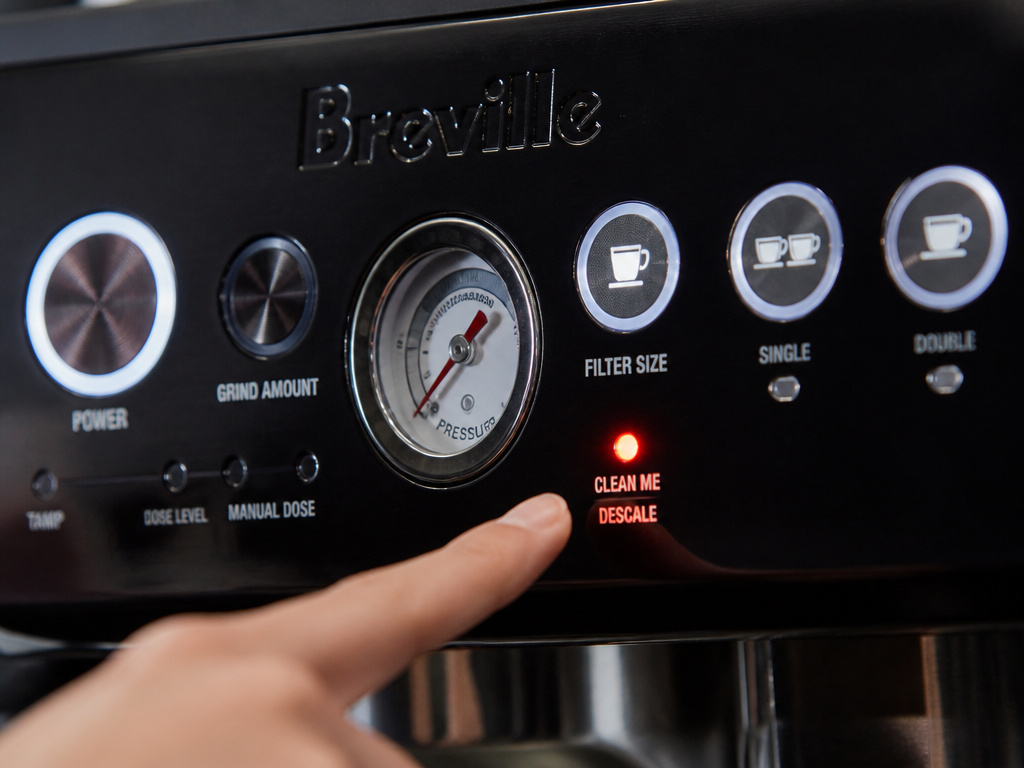 Your Breville doesn’t have a sensor that detects limescale. The “CLEAN ME” or “DESCALE” alert is triggered by a simple counter. The machine increments this counter every time you brew coffee or use steam. After a factory-set number of cycles (which assumes average water hardness), the light comes on.
The Breville Barista Express Impress manual states the descaling frequency depends on water hardness and usage. The machine’s internal counter is a best guess, not a measurement.
This is why the alert’s timing feels arbitrary. If you have very hard water, scale builds up faster than the counter assumes. Your machine might need descaling every month even if the light isn’t on. If you use soft, filtered water, you could go four months between descales safely, even if the light triggers earlier.
You cannot manually reset the descale alert without completing a full descaling cycle as described above. The machine needs to see the specific button sequence and flow patterns to know the job is done.
How Often Should You Descale Your Specific Machine?
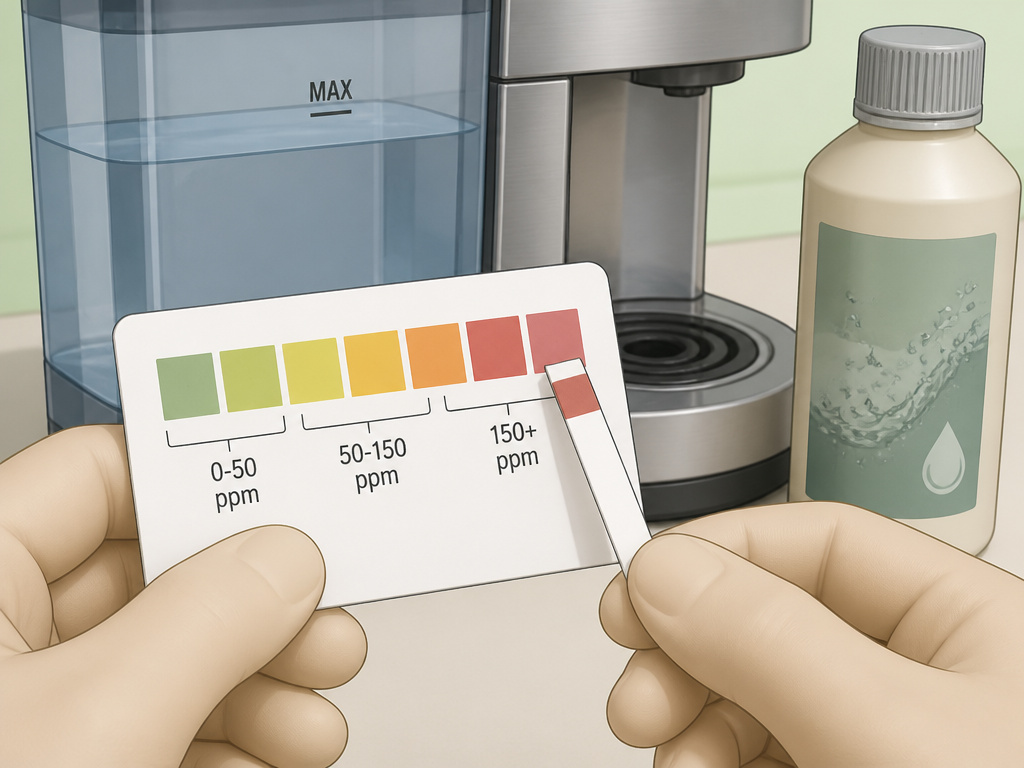 There is no universal answer. It hinges on two things: your water’s hardness and how often you use the machine. A daily latte artist with hard tap water is the worst-case scenario. A weekend brewer with a water softener is the easiest.
| Usage & Water Profile | Recommended Descaling Frequency | Signs You’re Overdue |
|---|---|---|
| Daily use, hard tap water | Every 4–6 weeks | Longer heat-up times, weaker steam pressure, unusual pump noise |
| Daily use, filtered/soft water | Every243 months | Primarily the machine’s “CLEAN ME” alert |
| Occasional use (weekly), any water | Every 4–6 months | Alert may never trigger; descale proactively every season |
If you want to be precise, buy a water hardness test strip. Anything above 150 ppm (parts per million) or 9 grains per gallon is considered hard. At that level, stick to the frequent end of the range. Below 60 ppm (soft water), you can follow the machine’s alert or descale quarterly.
This proactive approach is more reliable than waiting for performance issues. By the time steam pressure drops, scale is already extensive.
The Tools and Supplies You Actually Need
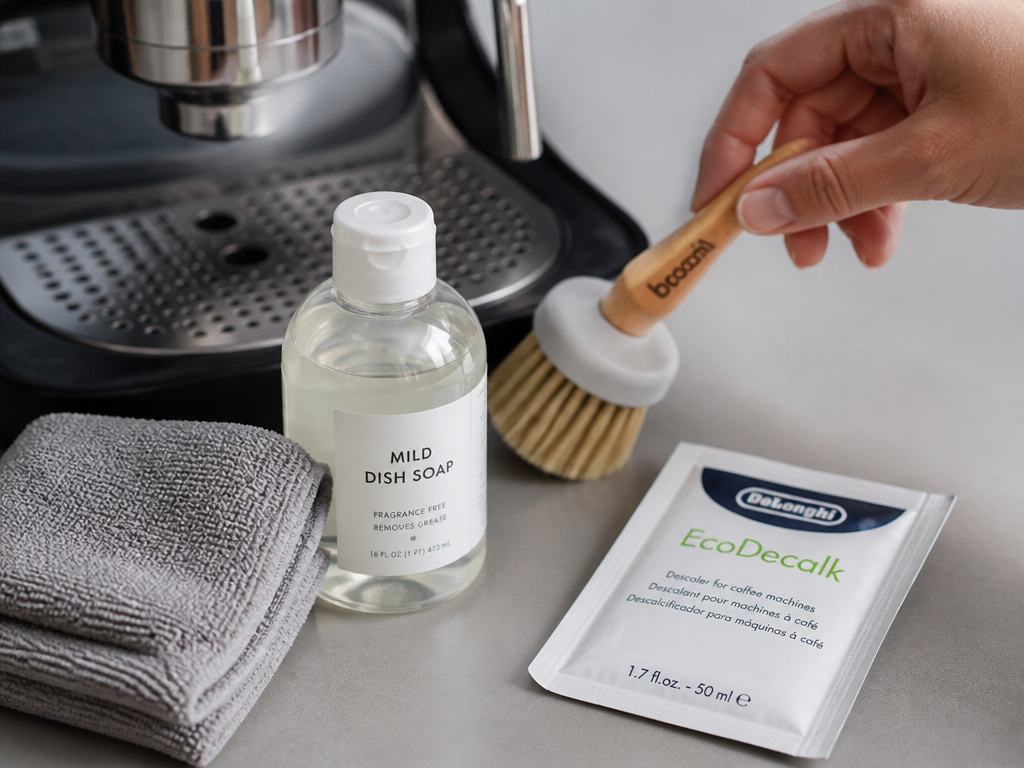 You need fewer items than most lists suggest. The goal is to have everything on hand so you can descale the moment the light appears.
- Breville Descaling Solution (BKC002): The guaranteed-safe option. One pouch is exactly measured for the 1-liter tank mix.
- Pure Citric Acid Powder: A food-grade alternative. Use 30g (about 2 tablespoons) per liter of warm water. It must be fully dissolved.
- A 1-Liter Measuring Jug: For mixing the solution accurately. Plastic is fine.
- A Large, Heatproof Bowl: To catch the hot, acidic waste water. A 2-quart Pyrex bowl works perfectly.
- Soft Cloth or Paper Towels: For wiping spills and cleaning the exterior after rinsing.
You do not need special brushes, syringes, or additional cleaners for a standard descale. Keep it simple. Having the right acid on hand is 90% of the battle.
What Happens If You Don’t Descale?
Ignoring the alert seems harmless until it isn’t. The decline follows a predictable path.
First, heating times increase. The scale layer on the thermoblock acts as an insulator. The machine works harder to reach temperature, using more electricity. Next, you might notice the pump sounds labored, especially at the start of a shot. The scale restricts the narrow inlet port.
Finally, flow stops. Either the thermoblock’s channel gets completely blocked, or the pump seizes from the constant strain. At this point, a descale cycle won’t fix it. The scale is too thick and hardened. The machine requires disassembly and manual descaling or part replacement by a technician.
Common mistake: Trying to descale a completely clogged machine, the concentrated solution has nowhere to flow and can cause leaks at weak points. If no water passes through the group head when you try to brew, contact Breville support first.
A professional descaling service can cost $150 or more. A year’s supply of Breville descaling pouches is under $50. The math is straightforward.
Frequently Asked Questions
Can I use vinegar just once to descale my Breville?
Breville’s warranty and support materials strongly advise against it. A single use likely won’t cause immediate damage, but it starts degrading rubber seals. Why risk a $500 machine to save $2 on a pouch of citric acid? Stick to the recommended solution.
My descale light won’t turn off after a cycle. What now?
This usually means the machine didn’t register a complete cycle. Ensure you used the full 1 liter of solution and followed all rinse steps. Turn the machine off, unplug it for 60 seconds, then restart and try entering descale mode again. If the light persists, the internal counter may need a hard reset via a service center.
Is the Breville descaling solution different from other brands?
Yes. It is a specific, mild formulation of citric acid and its salts designed to be compatible with Breville’s internal materials. Generic descalers may be stronger or contain other acids that could be harmful. When in doubt, use the Breville product or pure citric acid.
Do I need to remove the shower screen before descaling?
No. The descaling solution flows through the shower screen and group head during the cycle. Removing it is an unnecessary extra step for routine maintenance. Just ensure you wipe the group head area clean after the process.
How do I dispose of the used descaling solution?
The waste water is acidic and contains dissolved minerals. Dilute it with plenty of water and pour it down the drain with the cold water running. Do not pour it directly into plants or on the ground.
The Bottom Line
Descaling your Breville isn’t optional, but doing it wrong causes its own problems. Use the Breville Descaling Solution or pure citric acid, follow the button-press sequence in your manual, and rinse until the water runs clear. Your machine’s “CLEAN ME” light is a reminder, not a precise gauge, adjust the frequency based on your water hardness. Ignoring scale leads to a dead pump; using vinegar leads to cracked seals. The right acid, on the right schedule, keeps the espresso flowing for years.
