
The Ultimate Guide to Espresso vs Drip Coffee Differences
This post contains affiliate links. As an Amazon Associate, we earn from qualifying purchases.
The core difference between espresso and drip coffee is the brewing method. Espresso uses high pressure (9 bars) to force hot water through finely-ground coffee, creating a concentrated, syrupy shot. Drip coffee relies on gravity to slowly percolate water through a medium-coarse bed, yielding a larger, milder cup.
Espresso vs drip coffee is a choice between two fundamentally different brewing processes: high-pressure extraction for a concentrated shot and gravity-fed percolation for a larger, cleaner cup. The gear, the grind, the roast, and the daily ritual are not interchangeable. Picking one over the other changes your countertop, your budget, and the flavor in your mug.
Most comparisons stop at “strong vs weak” or “little cup vs big cup.” That misses the point. The real divide is mechanical. It’s the 9 bars of force in a brass boiler versus the gentle showerhead in a glass carafe. Get that wrong and you buy a machine that fights your beans, your schedule, and your taste buds every morning.
This guide walks through the pressure versus gravity split, the exact gear each method demands, and the beans that work. We’ll cover the hidden costs, the maintenance traps, and the flavor profiles you actually get from a La Marzocco Linea Mini versus a Technivorm Moccamaster.
Key Takeaways
- Espresso is about pressure, not strength. It requires 9 bars of force to extract oils and solids into a 1-2 ounce shot. The required gear, a capable machine and a precise burr grinder, starts around $800 and needs daily engagement.
- Drip coffee is about volume and clarity. Gravity pulls hot water through a bed of coarse grounds, producing a cleaner, brighter cup. A top-tier SCA-certified brewer like a Bonavita costs a fraction of an espresso setup and works hands-off.
- The caffeine math is counterintuitive. Espresso has more caffeine per ounce, but a standard 81-ounce cup of drip coffee delivers more total caffeine. Choosing for a buzz means looking at total volume, not concentration.
- Bean roast dictates method success. Darker roasts withstand espresso’s high-pressure extraction, yielding chocolate and caramel notes. Lighter roasts shine in drip, where gentle water flow preserves floral and fruity acidity.
- Maintenance is non-negotiable. Espresso machines scale up fast and need weekly backflushing. Drip brewers grow stale oils in the carafe and need monthly decalcifying. Skip either and the coffee turns sour or flat within weeks.
The Core Mechanical Difference: Pressure vs Gravity
Espresso is not just strong coffee. Drip is not just weak espresso. The difference is physical. Espresso machines force water. Drip brewers let it fall.
An espresso machine uses a pump to generate 9 bars of pressure, about 130 psi. That pressurized hot water blasts through a compacted puck of finely ground coffee in 25-30 seconds. The force emulsifies oils and suspends fine solids, creating the signature syrupy body and crema. The required precision is brutal. The grind must be fine enough to create resistance, but not so fine it chokes the machine. The dose must be exact. The tamp must be level. Miss one variable and the shot channels, running sour or bitter.
Technical snippet: Espresso extraction occurs at 9 bars (130 psi) of pressure, forcing 200°F water through a finely ground (flour-like), compacted coffee puck within a 25-30 second window. This process emulsifies oils and creates crema, a tan-colored foam of CO2 and coffee solids. Drip coffee extraction relies on gravity, with 200°F water dispersing over a bed of coarser grounds (sea salt texture) through a paper or metal filter over 4-6 minutes, yielding a cleaner, oil-free cup.
Drip coffee makers work on gravity. A heating element brings water to between 195°F and 205°F, then a showerhead disperses it over a bed of coarser grounds in a filter. Water percolates down through the coffee bed, extracting flavors more slowly and leaving most oils behind in the filter. The result is a clearer, brighter cup where origin characteristics, acidity, fruit notes, floral hints, are more pronounced. It’s a forgiving process. Grind size can vary a bit. Water volume isn’t as critical. The machine does the work while you get dressed.
TL;DR: Espresso needs force, precision, and fine grind. Drip needs gravity, a good showerhead, and coarse grind. Mix the mechanics and you get underextracted soup or overextracted tar.
The Gear Divide: $800 Entry vs $300 Excellence
Your choice locks you into a specific gear ecosystem. The price floors and space requirements are not subtle.
A functional espresso setup requires two dedicated machines: the espresso machine itself and a burr grinder capable of fine, precise adjustments. The grinder is the more important investment. A cheap blade grinder or an inconsistent burr set will ruin every shot. You need something like a Baratza Sette 270 or a Eureka Mignon Specialita, grinders that cost between $300 and $500 on their own. The machine needs a reliable pump, a stable heating system, and a decent portafilter. The Breville Bambino Plus is the common entry point at around $500. A “buy once, cry once” prosumer machine like an ECM Synchronika or a La Marzocco Linea Mini starts at $2,500 and goes up. Counter space is significant. You need room for both machines, a knock box, and space to maneuver the portafilter.
Drip coffee gear is simpler and cheaper. The brewer is the only essential appliance. A top-tier, SCA-certified model like the Bonavita Connoisseur (BV1901TS) or the Technivorm Moccamaster KBGV Select costs between $200 and $350. These machines guarantee water temperature between 195°F and 205°F and even saturation. You can use a separate burr grinder for better flavor, but a pre-ground bag from a decent roaster will still produce a good cup in a drip machine. The footprint is a single appliance about the size of a toaster.
| Gear Category | Espresso Minimum | Drip Coffee Minimum |
|---|---|---|
| Core Appliance | Espresso machine + burr grinder | Drip coffee maker |
| Entry Price Point | ~$800 (machine $500 + grinder $300) | ~$200 (SCA-certified brewer) |
| Critical Spec | 9-bar pump, precise grind adjustment | 195°–205°F water temp, even showerhead |
| Counter Space | Significant (two devices + workflow) | Compact (single appliance) |
| Forgiveness | Low — grind, dose, tamp must be exact | High — grind size flexible, volume adjustable |
That price gap isn’t just for show. It buys consistency. The ECM Synchronika‘s dual PID controllers hold boiler temperature within a degree. The La Marzocco Linea Mini‘s saturated group head delivers thermal stability shot after shot. In the drip world, the Technivorm‘s copper heating element brings water to temperature faster and maintains it more accurately than cheaper aluminum elements. You pay for repeatability.
Common mistake: Buying a $150 “espresso” machine that uses steam pressure or a weak pump. These devices cannot generate true 9-bar pressure. They produce a bitter, thin liquid that tastes nothing like real espresso and will frustrate you into abandonment within a month.
Flavor Profile: Concentration vs Clarity
The mechanics dictate the flavor in your cup. Espresso tastes the way it does because of pressure. Drip tastes the way it does because of filtration.
Espresso’s high-pressure extraction pulls out soluble solids and oils that gravity brewing leaves behind. This creates a heavier body, a syrupy, almost creamy mouthfeel. The flavors are intense and often roast-forward: dark chocolate, caramelized sugar, toasted nuts, and a pleasant bitterness. The crema adds a slight texture and traps aromatic compounds. Because the process is fast and forceful, it amplifies the characteristics of the roast. A dark roast espresso is rich and sweet. A light roast espresso can be intensely sour and sharp if not dialed in perfectly.
Drip coffee, by contrast, is a cleaner, brighter drink. The paper filter traps most of the oils and fine solids, resulting in a lighter body and a crisper finish. This allows the inherent acidity and nuanced flavors of the bean to come forward. A light roast Ethiopian in a drip brewer will taste floral and tea-like with lemon brightness. A medium roast Colombian will have a balanced, nutty sweetness. The longer, gentler extraction also means fewer bitter compounds make it into the cup.
| Brew Method | Body & Mouthfeel | Dominant Flavor Notes | Best Bean Roast Level | Risk If Mismatched |
|---|---|---|---|---|
| Espresso | Syrupy, heavy, creamy | Chocolate, caramel, toasted nuts, bitter-sweet | Medium-Dark to Dark | Light roasts turn piercingly sour; under-extracted shots taste watery. |
| Drip Coffee | Light, clean, crisp | Floral, fruity, tea-like, nutty, balanced | Light to Medium | Dark roasts taste ashy and flat; over-extracted batches taste hollow. |
Your preference here is visceral. Do you want a small, potent sip that coats your tongue? Or a large, aromatic mug you can sip for twenty minutes? The answer dictates your entire setup. This is also where your choice of blended coffees vs single-origin coffees matters. Blends, designed for balance, often excel in espresso. Single-origins, showcasing terroir, frequently shine in drip.
Caffeine Content: The Pervasive Myth
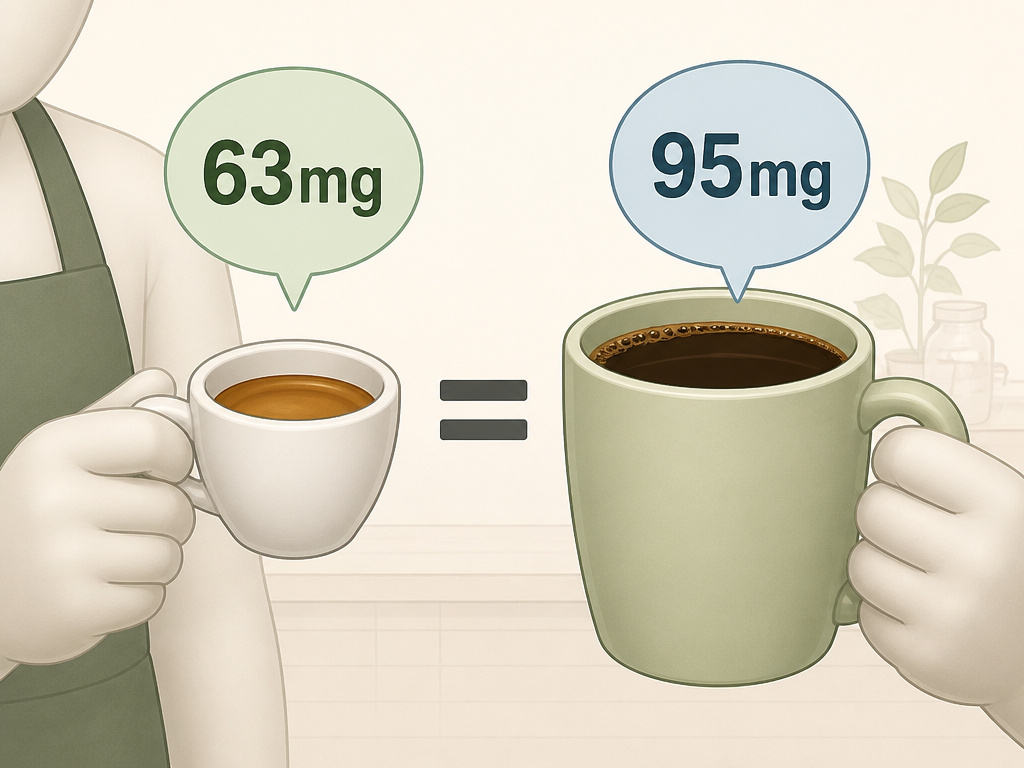
Everyone thinks espresso has more caffeine. Per ounce, that’s true. Per serving, it’s almost always false.
A single 1-ounce shot of espresso contains about 63 milligrams of caffeine. A standard 8-ounce cup of drip coffee contains about 95 milligrams. You get more total stimulant from the mug of drip. The confusion comes from concentration. Espresso crams that caffeine into a tiny volume, so it feels more potent. But if you drink a double shot (2 ounces, ~126 mg), you’re still under the caffeine in a large 12-ounce mug of drip (~142 mg).
This math matters for routine. If you need a morning jolt to function, a full carafe of drip is a more efficient delivery system. If you prefer smaller, punctuated breaks, espresso shots throughout the day provide controlled bursts. Chasing a buzz is about total volume, not method prestige. For a deeper dive into the numbers, our guide on espresso caffeine content vs brewed coffee breaks it down with serving sizes.
Expert tip: I used to drink three espresso shots before noon thinking I was maximizing efficiency. I switched to one large pour-over and my focus plateau lasted longer without the mid-afternoon crash. The total caffeine was similar, but the delivery rate changed everything.
Bean Requirements: Roast Level Is a Command
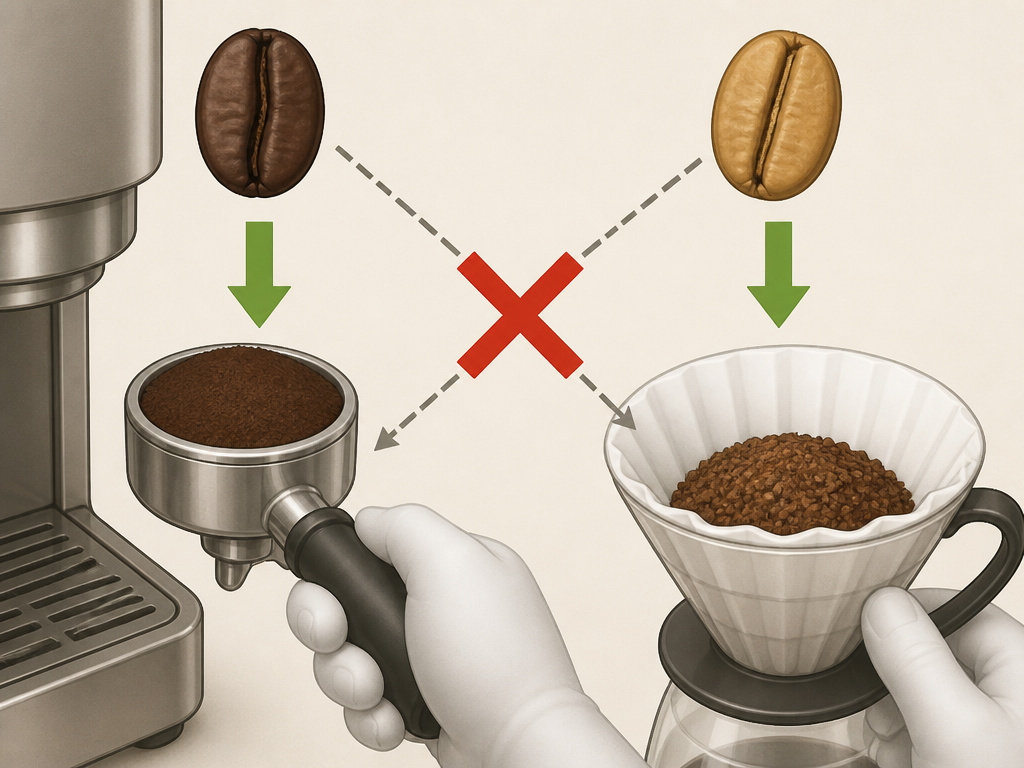
You cannot brew any bean with any method. The roast level issues a command. Dark roasts demand pressure. Light roasts demand gentleness.
Espresso machines excel with medium-dark to dark roasts. The longer, hotter roast process develops sugars and breaks down acids, creating flavors that stand up to and are enhanced by high-pressure extraction. The result is the classic espresso profile: bittersweet chocolate, caramel, molasses. Trying to pull a shot with a light roast Ethiopian is a battle. The bright, acidic notes amplify under pressure, often turning sharp and sour. It can be done with extreme precision, a very fine grind, a lower temperature, a pre-infusion, but it’s advanced technique.
Drip coffee is the preferred home for light to medium roasts. The gentler extraction preserves the delicate acidity and complex aromatics that define these beans. A light roast blonde roast coffee will taste of jasmine and peach in a drip brewer. In an espresso machine, those same notes often get smashed into a one-dimensional tartness. Dark roasts in drip coffee can taste ashy and flat because the filter removes the oils that carry the roast’s sweetness, leaving behind the charred notes.
TL;DR: Match dark roasts to espresso. Match light roasts to drip. Fighting this rule costs you money in wasted beans and time in failed brews.
The Hidden Costs: Time, Maintenance, and Failure
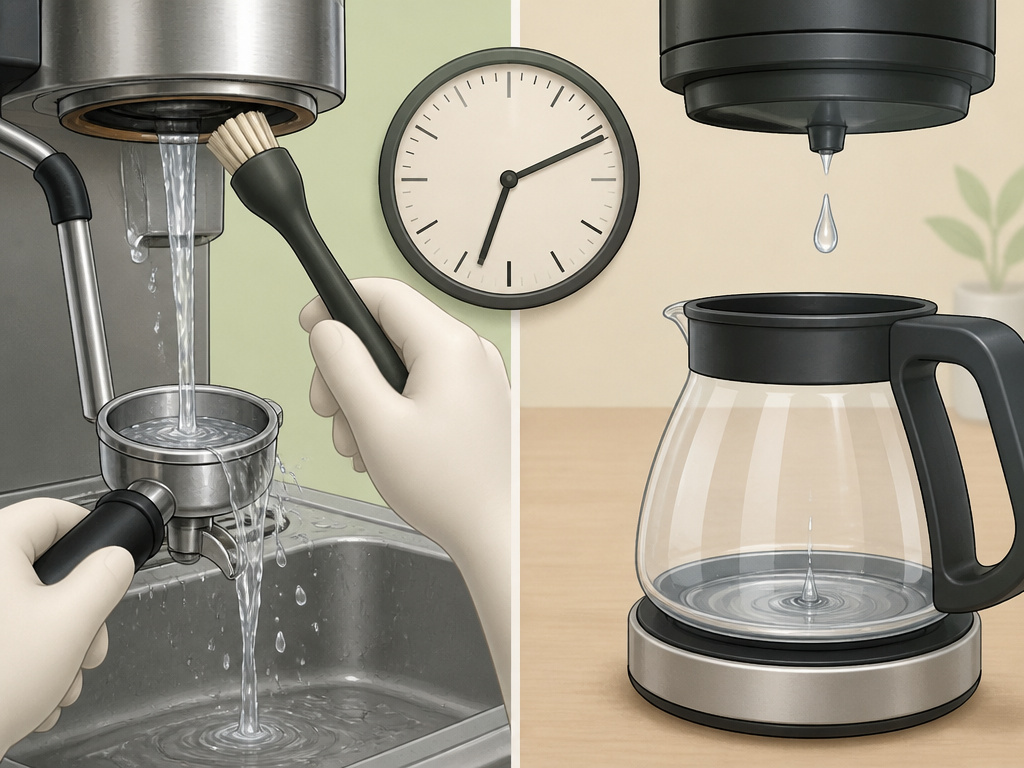
The sticker price is the first cost. The ongoing costs of time and maintenance are the real budget.
Espresso Time Tax: Making espresso is an active, involved process. You must heat the machine (10-15 minutes for an E61 group head like the ECM Synchronika, 5 for a saturated group like the Linea Mini). You must weigh and grind beans, distribute the grounds in the portafilter, tamp, pull the shot, and clean the portafilter and basket. A single shot takes 5-7 minutes of hands-on work. A milk-based drink adds steaming and frothing time. This is a ritual, not a convenience.
Drip Time Gift: You put water in the reservoir, put grounds in the filter, and press a button. The brewer does the rest while you make breakfast. A full carafe is ready in 6-8 minutes with zero supervision. It’s the ultimate hands-off method.
Maintenance is heavier for espresso. Machines with boilers need weekly backflushing with detergent to clean the group head and prevent coffee oil buildup. They need annual descaling to remove mineral deposits that can clog lines and damage heating elements. Ignore this and the machine’s performance degrades steadily, shots run slower, temperature fluctuates, and eventually the boiler fails.
Drip brewers need cleaning too, but it’s simpler. The carafe and filter basket must be washed regularly to prevent rancid oil buildup. The water reservoir should be decalcified every month or two depending on your water hardness. The 2018 recall of certain Bonavita models due to wiring overheating is a stark reminder that even simple appliances require attention and proper use.
Making the Choice: A Diagnostic for Your Kitchen
Forget what you “should” drink. Answer these questions to find what you will drink.
- What’s your morning volume? Do you drink one large mug alone, or do you need a carafe for a household? Drip wins on volume.
- What’s your budget for gear? Under $500? Look at SCA-certified drip brewers. Over $800? You can start considering espresso.
- How much counter space do you have? Espresso needs a dedicated station. Drip needs a single outlet.
- Do you enjoy the process or just the result? If tinkering with grind size and shot timing sounds fun, espresso is your hobby. If you want coffee to appear, choose drip.
- What flavors do you crave? Syrupy, intense, and roast-forward? Lean espresso. Bright, clean, and nuanced? Lean drip.
Your answers might split the difference. Many enthusiasts own both: a drip brewer for weekday mornings and an espresso machine for weekends and entertaining. That’s a honest, if expensive, solution.
Frequently Asked Questions
Which is stronger, espresso or drip coffee?
Espresso is more concentrated, but a standard cup of drip coffee contains more total caffeine. “Strength” is about flavor concentration and body, espresso wins there. “Stimulant strength” is about total milligrams, drip often wins.
Can you make espresso in a regular coffee maker?
No. A regular coffee maker cannot generate the 9 bars of pressure required for true espresso extraction. You will get a strong, small amount of coffee, but it will lack the body, crema, and flavor profile of espresso.
Is espresso just finely ground coffee?
No. Finely ground coffee is one requirement, but the method is defined by pressure. You can put espresso-fine grounds in a drip filter, but water will just pool on top and extract poorly, resulting in a bitter, over-extracted mess.
Why is espresso more expensive than drip coffee at cafes?
The equipment cost is vastly higher, the skill required to operate it is specialized, and the output per unit of coffee is much smaller. A cafe sells 1 ounce of espresso versus 12 ounces of drip from a similar amount of ground beans.
Can I use the same beans for espresso and drip?
You can, but you shouldn’t. Beans are roasted and blended with a brewing method in mind. Espresso blends are often darker and more robust. Using a light roast single-origin meant for drip in an espresso machine will likely produce a sour, disappointing shot. Always match your beans to your method.
The Bottom Line
Espresso and drip coffee are different sports. One is weightlifting, a brief, intense burst requiring specialized equipment and technique. The other is distance running, a longer, steadier effort with simpler gear.
Choose espresso if you have the budget for the gear, the counter space for the setup, and the time for the daily ritual. You’re buying into a hobby that rewards precision with unmatched flavor concentration.
Choose drip coffee if you value convenience, volume, and clarity of flavor. You can achieve excellence with a simpler machine and less daily fuss, enjoying the nuanced characteristics of Arabica beans from around the world.
There is no “better.” There is only what fits your kitchen, your clock, and your palate. The best coffee is the one you’ll actually brew and enjoy every day.
{
“@context”: “https://schema.org”,
“@type”: “HowTo”,
“name”: “How to Choose Between Espresso and Drip Coffee”,
“totalTime”: “PT5M”,
“tool”: [
{
“@type”: “HowToTool”,
“name”: “Espresso machine with 9-bar pump”
},
{
“@type”: “HowToTool”,
“name”: “SCA-certified drip coffee maker”
},
{
“@type”: “HowToTool”,
“name”: “Burr grinder with fine and coarse settings”
}
],
“step”: [
{
“@type”: “HowToStep”,
“name”: “Assess your time and volume needs”,
“text”: “Drip coffee brews a full carafe hands-off in minutes. Espresso requires active prep for each 1-2 ounce shot.”
},
{
“@type”: “HowToStep”,
“name”: “Evaluate your gear budget and counter space”,
“text”: “A quality espresso setup (machine + grinder) starts around $800 and needs dedicated space. A top-tier drip brewer like a Technivorm Moccamaster costs less and has a smaller footprint.”
},
{
“@type”: “HowToStep”,
“name”: “Identify your flavor preference”,
“text”: “Espresso delivers concentrated, syrupy body with pronounced roast notes. Drip coffee highlights brighter, more nuanced acidity and cleaner finish.”
},
{
“@type”: “HowToStep”,
“name”: “Match your beans to the method”,
“text”: “Use darker roasts for espresso to balance high-pressure extraction. Use light to medium roasts for drip to preserve delicate origin flavors.”
},
{
“@type”: “HowToStep”,
“name”: “Commit to the required maintenance”,
“text”: “Espresso machines need weekly backflushing and annual descaling. Drip brewers need monthly decalcifying and regular carafe cleaning to avoid stale oils.”
}
]
}
{
“@context”: “https://schema.org”,
“@type”: “FAQPage”,
“mainEntity”: [
{
“@type”: “Question”,
“name”: “Which is stronger, espresso or drip coffee?”,
“acceptedAnswer”: {
“@type”: “Answer”,
“text”: “Espresso is more concentrated, but a standard cup of drip coffee contains more total caffeine. \”Strength\” is about flavor concentration and body, espresso wins there. \”Stimulant strength\” is about total milligrams, drip often wins.”
}
},
{
“@type”: “Question”,
“name”: “Can you make espresso in a regular coffee maker?”,
“acceptedAnswer”: {
“@type”: “Answer”,
“text”: “No. A regular coffee maker cannot generate the 9 bars of pressure required for true espresso extraction. You will get a strong, small amount of coffee, but it will lack the body, crema, and flavor profile of espresso.”
}
},
{
“@type”: “Question”,
“name”: “Is espresso just finely ground coffee?”,
“acceptedAnswer”: {
“@type”: “Answer”,
“text”: “No. Finely ground coffee is one requirement, but the method is defined by pressure. You can put espresso-fine grounds in a drip filter, but water will just pool on top and extract poorly, resulting in a bitter, over-extracted mess.”
}
},
{
“@type”: “Question”,
“name”: “Why is espresso more expensive than drip coffee at cafes?”,
“acceptedAnswer”: {
“@type”: “Answer”,
“text”: “The equipment cost is vastly higher, the skill required to operate it is specialized, and the output per unit of coffee is much smaller. A cafe sells 1 ounce of espresso versus 12 ounces of drip from a similar amount of ground beans.”
}
},
{
“@type”: “Question”,
“name”: “Can I use the same beans for espresso and drip?”,
“acceptedAnswer”: {
“@type”: “Answer”,
“text”: “You can, but you shouldn’t. Beans are roasted and blended with a brewing method in mind. Espresso blends are often darker and more robust. Using a light roast single-origin meant for drip in an espresso machine will likely produce a sour, disappointing shot. Always match your beans to your method.”
}
}
]
}
