
Baking Ingredient Guide: Espresso Powder vs Instant Coffee
Espresso powder is a fat-soluble baking ingredient made from finely ground, dark-roasted beans that intensifies chocolate flavor. Instant coffee is a water-soluble, dehydrated brewed coffee designed for drinking. They are not interchangeable; using instant coffee in baking yields a weak, bitter taste instead of a rich, chocolaty depth.
Most people see “espresso” and think “coffee drink.” They grab the jar of instant crystals from the back of the pantry and dump it in. The recipe fails quietly, the cake bakes fine, it just tastes wrong. You get a muted, vaguely bitter note instead of the deep, rounded chocolate flavor the baker intended.
This guide walks through the manufacturing difference, the one FDA recall that proves instant coffee isn’t always safe, and the exact substitution math that works when you’re in a pinch. You’ll learn which product belongs in your brownie batter and which one belongs in your camping mug.
Key Takeaways
- Espresso powder is a fat-soluble flavor enhancer for baking; instant coffee is a water-soluble drink mix. They dissolve in different mediums.
- Substituting instant coffee for espresso powder in baking requires doubling the volume and adding a liquid, which can throw off a recipe’s chemistry.
- A 2024 FDA recall for glass contamination in Clover Valley instant coffee highlights that even shelf-stable products carry manufacturing risks.
- The best espresso powders, like King Arthur Baking’s, are labeled specifically for baking and come in small, airtight tins to preserve volatile oils.
- Instant coffee quality varies wildly, from dollar-store “dirt” to microground options like Starbucks Via Ready Brew that aim to mimic brewed coffee.
What Is Espresso Powder?
Look at the label. If it says “espresso powder” and the container is a 2-ounce tin, you’re holding a baking ingredient, not a beverage. King Arthur Baking Espresso Powder is the benchmark. It’s a superfine, dark powder processed from intensely roasted beans, then ground to a consistency closer to cocoa than coffee.
The goal is concentration, not solubility. The fine grind and dark roast maximize surface area, packing volatile oils and bitter compounds into a form that disperses in fat. When you cream butter and sugar for a chocolate cake, the fat in the butter grabs those coffee compounds and carries them evenly throughout the batter. The result is a deeper, more complex chocolate flavor without a distinct coffee taste.
Common mistake: Using instant coffee in place of espresso powder in a brownie recipe, the water-soluble crystals don’t bond with the fat, leaving a separate, weak coffee flavor that can’t intensify the chocolate. The brownies taste flat.
TL;DR: Espresso powder is a fat-soluble baking concentrate. It’s not for drinking.
How It’s Made (And Why That Matters)
Commercial espresso powder starts with beans roasted well past the typical drinking profile, often into a French or Italian roast range. This extended roasting develops Maillard reaction products and bitter notes that, in a cup, would be unpleasant. In a tiny baking dose, they act as flavor catalysts.
The roasted beans are then ground to an extremely fine powder, sometimes with added cocoa powder or other anti-caking agents. The final product is hygroscopic, it pulls moisture from the air. That’s why the best brands use small, sealed tins. Leave it in an open jar for a month and it clumps into a brick, losing its dispersive power.
The process creates a shelf-stable product with a potent, one-dimensional flavor profile. It’s not nuanced. It’s a tool.
| Characteristic | Espresso Powder | Typical Instant Coffee |
|---|---|---|
| Primary Use | Baking, flavor enhancement | Beverage |
| Solubility | Fat-soluble | Water-soluble |
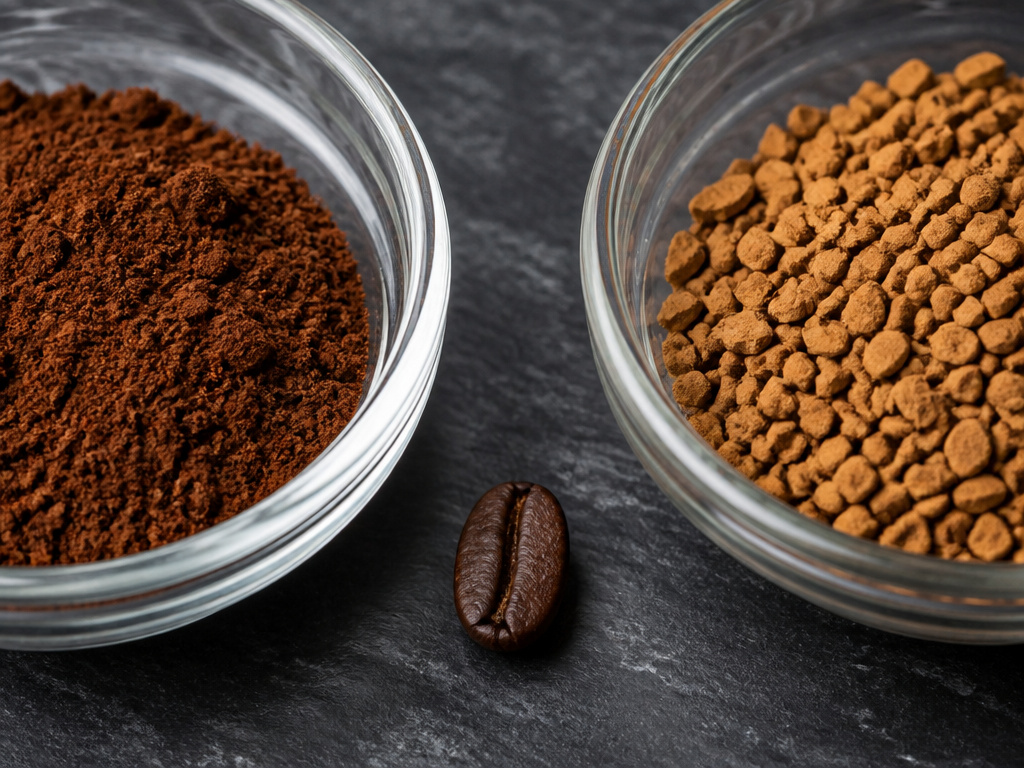
| Texture | Fine powder, like cocoa | Crystals or granules |
| Roast Level | Very dark (French/Italian) | Medium to dark |
| Packaging | Small, airtight tin | Large jar or single-serve packets |
What Is Instant Coffee?
Instant coffee is brewed coffee that has been dehydrated. Companies like Nescafé take brewed coffee, often a blend of Arabica and Robusta beans, and remove the water through spray-drying or freeze-drying. The Nescafé Gold Blend jar in your cupboard contains soluble coffee solids designed to dissolve in hot water quickly.
The quality spectrum is vast. A YouTube taste test comparing dollar-store, mid-range, and premium options laid it bare. The cheapest stuff looked like “dirt” and smelled of “chicken broth.” The $5 option looked and smelled like coffee. The $30 freeze-dried specialty product released a fruity, cherry aroma upon opening and tasted distinctly of its origin. You get what you pay for.
Freeze-dried instant, like Mount Hagen Organic, generally tastes smoother than spray-dried because the process preserves more aromatic compounds. But even the best instant is a compromise. It will never fully replicate the body and crema of a freshly pulled shot or a carefully brewed cup. It exists for speed, shelf stability, and situations where brewing equipment isn’t practical.
Starbucks markets its Via Ready Brew as “rich and flavorful, just like a freshly brewed cup.” Many users disagree, noting it still lacks the full body and nuanced aroma of a barista-prepared drink. They see it as a “good for instant” option, not a true replacement.
The Instant Coffee Recall You Missed
In January 2024, the FDA announced a voluntary recall of Clover Valley instant coffee single-serve packets due to potential glass contamination. The FDA recall notice for instant coffee is a matter of public record. No illnesses were reported, but the recall highlights a real, if rare, risk in mass-produced, shelf-stable food products.
The incident underscores a point most commodity articles miss: convenience has a cost. The industrial processes that turn brewed coffee into stable crystals involve high heat, rapid drying, and packaging on high-speed lines. Foreign material contamination, while uncommon, is a documented failure mode. It’s a different class of risk than your local roaster grinding beans fresh.
For bakers, the recall is a reminder. That jar of instant coffee crystals sitting for years in the back of your pantry isn’t inert. It’s a manufactured food product with its own set of vulnerabilities. Espresso powder, typically sold in smaller batches for a niche market, hasn’t seen a similar widespread recall. Its risks are different, mainly oxidation and clumping.
Espresso Powder vs. Instant Coffee: The Direct Comparison
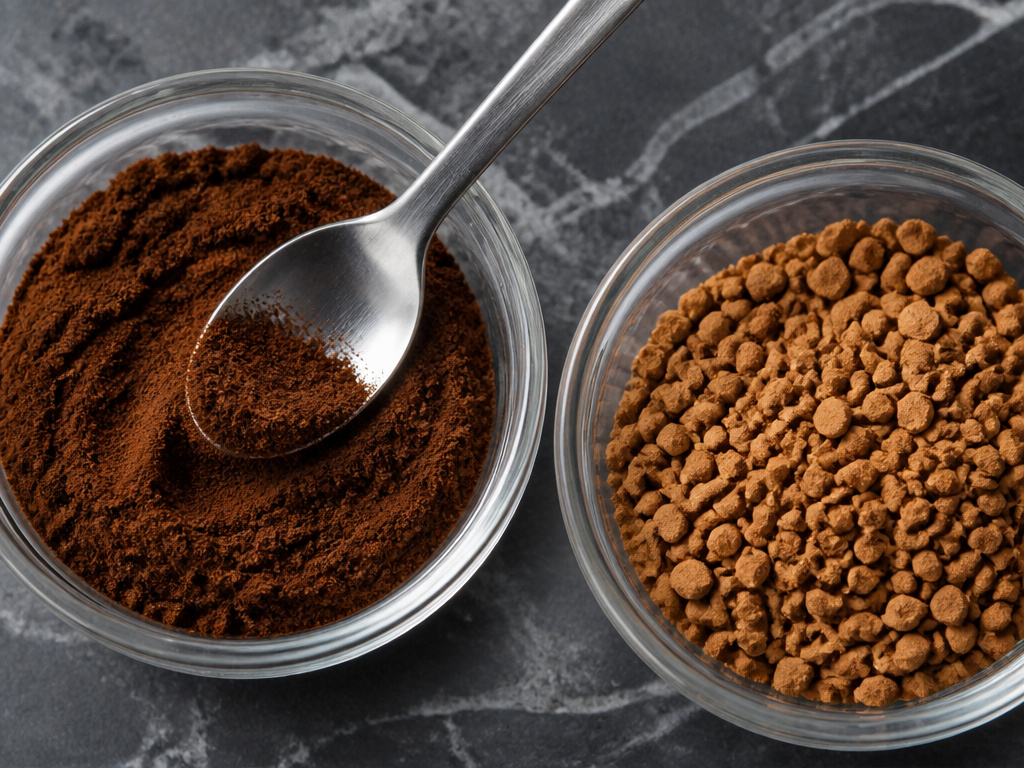
They are different tools for different jobs. Confusing them is like using a flathead screwdriver on a Phillips head screw. It might turn, but it’ll strip the head.
Espresso powder is for baking. Its superfine texture blends seamlessly into dry mixes. Its fat-soluble nature means it incorporates into butter, oil, or chocolate without seizing or separating. A teaspoon can transform a chocolate recipe.
Instant coffee is for drinking. Its crystals are engineered to dissolve completely in hot water, creating a clear, if thin, beverage. When baked, those crystals dissolve into the batter’s moisture, distributing a mild coffee flavor. They cannot provide the concentrated flavor punch espresso powder delivers.
Think of it in terms of chemical affinity. Espresso powder bonds with fats. Instant coffee bonds with water. Most baking recipes are a fat-based system (butter, oil, egg yolks). Introducing a water-soluble compound where a fat-soluble one is expected changes the recipe’s chemistry on a microscopic level. The flavor delivery mechanism breaks.
| Scenario | Use Espresso Powder | Use Instant Coffee |
|---|---|---|
| Chocolate cake, brownies, frosting | Yes – intensifies chocolate | No – adds weak coffee flavor |
| Tiramisu | Maybe – in the ladyfinger batter | Yes – in the mascarpone filling (dissolved in liquor) |
| Coffee-rubbed steak | No – won’t dissolve in oil | Yes – dissolves in spice rub |
| Coffee-flavored buttercream | Yes – blends into butter | No – can make frosting grainy |
| Quick cup of coffee while camping | No – doesn’t dissolve well in water | Yes – that’s its purpose |
When You Have No Choice: The Emergency Substitution
You’ve started a recipe and your tin of espresso powder is empty. The grocery store is closed. Here is the only workaround that approximates the function.
- Grind your instant coffee crystals as finely as possible. A clean spice grinder or mortar and pestle works.
- For every 1 teaspoon of espresso powder your recipe requires, use 2 teaspoons of this finely ground instant coffee.
- This is critical: Dissolve the ground instant coffee in the smallest possible amount of hot water, start with 1/2 teaspoon of water per 2 teaspoons of coffee. You want a thick paste, not a liquid.
- Add this paste to your wet ingredients (like creamed butter or eggs) and mix vigorously before combining with dry ingredients.
Why double the volume and add water? Instant coffee is less concentrated by weight. The water is necessary to fully extract its flavor compounds since your recipe’s fat won’t do the job. The paste method minimizes the extra liquid added. Your cake might be slightly denser, and the flavor will be more “coffee” than “chocolate-enhancer,” but it will work in a pinch.
I tried this substitution in a batch of brownies during a holiday baking marathon. I used a heaping tablespoon of finely ground Nescafé Gold Blend dissolved in a teaspoon of hot water. The brownies baked fine but tasted distinctly of mild coffee. The deep, fudgy chocolate note I expected was gone. Never again.
The Acrylamide Question
A common health concern raised around instant coffee is its acrylamide content. Acrylamide is a chemical that can form in starchy foods during high-temperature cooking processes, like roasting coffee beans. Because instant coffee production involves additional heating steps (spray-drying or freeze-drying), some sources claim it contains higher levels.
The science is more nuanced. All roasted coffee contains acrylamide. The level depends more on the roast degree (darker roasts generally have less) and the bean type than the production method. Switching from instant to brewed coffee made with a burr grinder doesn’t eliminate acrylamide; it just changes the delivery system. If this is a primary concern, your move isn’t to switch instant brands, it’s to choose a darker roast overall or explore alternative brewing methods that use lower water temperatures.
The real issue for bakers is that espresso powder, being made from very dark roasted beans, likely starts with a lower acrylamide level than a medium-roast instant coffee. It’s an incidental benefit, not a selling point.
Buying Guide: What to Look For
Your goal dictates your purchase. Walking into the store confused leads to the wrong jar going home.
For Baking (Espresso Powder)
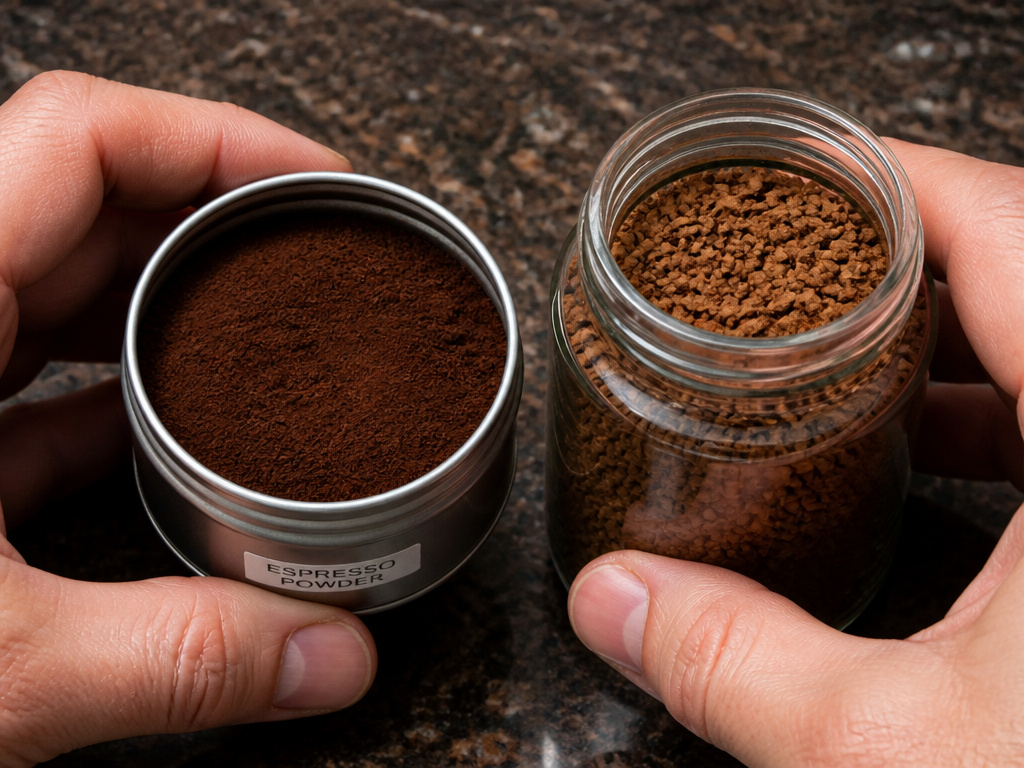
- Label: It must say “espresso powder” or “espresso baking powder.” Do not buy “instant espresso coffee.” That’s a drink mix.
- Packaging: Small, airtight metal tins are best. Plastic jars or cardboard containers allow moisture and air in, degrading the product faster.
- Texture: It should pour like powdered sugar, not clump. If you can, check the consistency before buying.
- Brand: King Arthur Baking Espresso Powder is the industry standard for a reason. It’s reliable, consistently fine, and sold in a proper tin.
For Drinking (Instant Coffee)
- Process: “Freeze-dried” typically beats “spray-dried” for flavor and aroma. Look for it on the label.
- Contents: “100% Arabica” generally indicates a smoother, less bitter cup than blends containing Robusta beans.
- Form: Granules are standard. “Microground” options, like Starbucks Via, include actual fine coffee grounds for better body.
- Certifications: If organic or Fair Trade matters to you, brands like Mount Hagen Organic make it a selling point.
For those exploring single origin coffee flavors, note that instant coffee rarely highlights specific origin characteristics the way a blonde roast brewed coffee can. The processing homogenizes much of the terroir.
Storage and Shelf Life
They both go stale, but in different ways.
Espresso powder’s enemy is moisture and air. Once you open that tin, the clock starts. The volatile oils that carry its potent flavor begin to oxidize. Within three months in a humid kitchen, you’ll notice it clumps harder and requires sifting. The flavor weakens. Store it in its original tin with the lid tightly sealed, in a cool, dark cupboard. Do not transfer it to a larger container.
Instant coffee’s enemy is time and light. The crystals themselves are stable, but the aromatic compounds break down. An opened jar of instant coffee left on the counter for a year will make a flat, stale-tasting cup. It’s still safe to drink, but the pleasure is gone. Store it in a cool, dark place in its original container. Single-serve packets avoid this problem entirely.
Common mistake: Storing espresso powder in a transparent spice jar on the back of the stove, heat and light degrade the oils within weeks, and the powder will cement itself into a solid block you have to chip out with a knife.
Frequently Asked Questions
Can I use instant coffee instead of espresso powder?
Not directly. Instant coffee is a water-soluble drink mix; espresso powder is a fat-soluble baking concentrate. Substituting requires doubling the amount and dissolving it in a tiny bit of hot water first, which alters your recipe’s liquid balance.
What’s the difference between instant espresso and espresso powder?
“Instant espresso” is a misnomer that causes most of the confusion. It typically refers to a finely ground instant coffee meant for drinking. “Espresso powder” is the baking-specific product. Always check the label, if it says “instant,” it’s for beverages.
Why does my chocolate dessert taste bland even though I added coffee?
You probably used instant coffee. Its flavor disperses in the batter’s water content, creating a mild, separate coffee note. Espresso powder bonds with the fats in chocolate and butter, amplifying the chocolate flavor itself without adding a distinct coffee taste.
Does espresso powder have more caffeine than instant coffee?
No. In fact, because you use such a small amount of espresso powder (a teaspoon versus a whole teaspoon of instant coffee for a drink), the total caffeine per serving in a baked good is minimal. The caffeine in espresso used for drinking is far more concentrated per ounce.
Can I make espresso powder at home?
Technically, yes. Grind dark roast coffee beans as finely as possible, then bake the grounds on a sheet tray at a very low temperature (200°F) until completely dry and brittle. The result will be coarse, oily, and less potent than commercial powder, and it won’t store well. For the cost and effort, just buy the King Arthur tin.
The Bottom Line
Espresso powder and instant coffee live on the same shelf but exist for completely different purposes. One is a surgical tool for baking; the other is a convenient shortcut for a hot drink.
Reach for the espresso powder tin when your recipe’s chocolate flavor needs a backbone. It works in the background. Reach for the instant coffee jar when you need a fast cup and the kettle is already boiling. It works in the foreground.
Mixing them up doesn’t cause a baking catastrophe, your cake won’t collapse. It causes a flavor catastrophe. The difference is subtle, expensive, and entirely in the chemistry. Keep both in your pantry, but know which one you’re opening. Your taste buds will tell you if you got it wrong.
