
Does Black Coffee Make You Poop? Understanding the Effect
Yes, black coffee makes many people poop. The effect is driven by three physiological triggers: the release of digestive hormones like gastrin and cholecystokinin (CCK), the stimulation of the gastrocolic reflex, and the action of caffeine and acids like chlorogenic acid. A 1990 study found caffeinated coffee increased colonic motility by over 200% compared to hot water, with effects starting in as little as four minutes for some individuals.
Most people assume the morning sprint is all about the caffeine. They’re wrong. The real story involves a specific hormone, a genetic quirk in about a third of the population, and a hot liquid convincing your gut it’s time to move.
This guide walks through the exact mechanisms, why your friend might not feel a thing, and what to do if coffee’s effect becomes a problem.
Key Takeaways
- The primary trigger isn’t just caffeine; it’s coffee’s stimulation of gastrin, a hormone that directly orders your colon to contract.
- Caffeinated coffee is more potent, but decaf still triggers the gastrocolic reflex and hormone release, so switching may not solve the issue.
- Roughly 29% of people experience a strong colonic motor response within 20 minutes, a figure from a 1990 Gut journal study highlighting major individual variability.
- If you have IBS or SIBO, coffee can act like a irritant, worsening symptoms like pain and diarrhea rather than just providing a gentle nudge.
- The heat and volume of the liquid itself contribute by relaxing gut muscles and activating stretch receptors, speeding everything up.
How Black Coffee Triggers a Bowel Movement
Head design changes the entire process. Look at the business end of your trimmer.
Coffee consumption stimulates gastrin release within minutes. Gastrin increases gastric acid secretion and directly enhances colonic motility, acting as a primary chemical signal for the digestive system to prepare for passage.
The process starts in your stomach. Chlorogenic acid and other compounds in black coffee contact your stomach lining. This contact signals specialized cells to release gastrin into your bloodstream. Gastrin has two main jobs: tell your stomach to produce more acid and tell the muscles in your colon to start contracting.
This is the gastrocolic reflex. Your stomach stretches from the liquid volume, and the chemical signal from gastrin tells your entire digestive tract, “Something’s coming, make room.” The colon’s response is a wave of coordinated contractions called peristalsis. A 1990 study in the journal Gut measured this. It found caffeinated coffee increased the colonic motility index to 60.3, versus just 19.8 for hot water. Decaffeinated coffee landed in the middle at 23.9.
Caffeine supercharges this process. It independently stimulates colonic muscles and may block receptors that normally slow things down. Think of gastrin as the starter pistol and caffeine as the tailwind.
TL;DR: Black coffee makes you poop by triggering gastrin release and the gastrocolic reflex, with caffeine adding a significant stimulant boost measured in medical studies.
Caffeinated vs. Decaf: What’s the Real Difference?
You switch to decaf hoping for relief. The bathroom trips continue.
The difference is one of degree, not kind. Decaffeinated coffee still contains chlorogenic acid and the other compounds that stimulate gastrin. It still has volume and heat. The 1990 Gut study data shows decaf’s motility index (23.9) was closer to hot water (19.8) than to regular coffee (60.3). But it still triggered a response.
Caffeine is the accelerant. It crosses the blood-brain barrier, but it also directly affects smooth muscle tissue in your gut. The combined effect, hormonal signal plus direct muscle stimulant, creates the powerful urgency many feel. This is why comparing the caffeine content in coffee across brew methods matters. A strong drip coffee has more accelerant than a single shot of espresso.
If your goal is a predictable morning routine, regular coffee is the reliable tool. If coffee’s effect is too intense or aggravates a sensitive gut, decaf might dial it back from an eight to a four. It rarely drops it to zero.
| Coffee Type | Primary Trigger | Colonic Motility Index (Brown et al. 1990) | Best For |
|---|---|---|---|
| Caffeinated Black Coffee | Gastrin + Caffeine + Heat | 60.3 ± 10.9 | Those seeking a consistent, strong laxative effect. |
| Decaffeinated Black Coffee | Gastrin + Heat | 23.9 ± 5.6 | Individuals sensitive to caffeine but who still want mild digestive stimulation. |
| Hot Water | Heat/Volume Only | 19.8 ± 4.5 | Establishing a baseline; minimal chemical stimulation. |
TL;DR: Decaf coffee can still make you poop via gastrin and heat, but caffeinated coffee’s effect is measurably 2-3 times stronger due to direct muscle stimulation.
Why Only Some People Feel the Urge
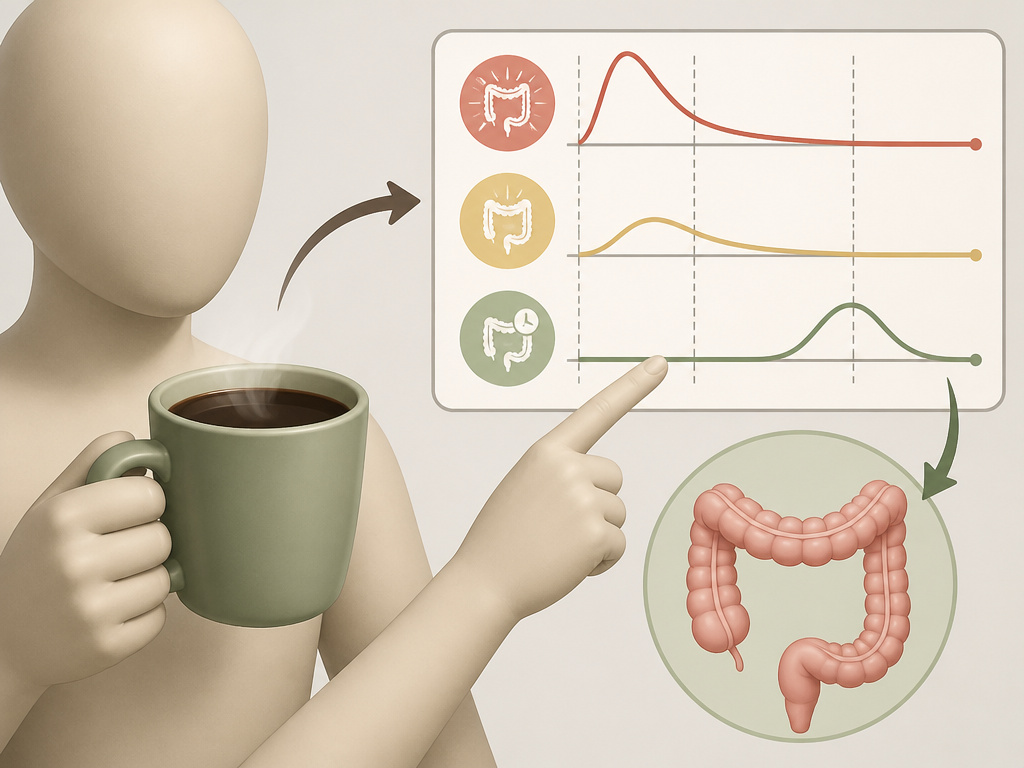
Your colleague drinks two cups before a meeting without a second thought. You have one sip and map the nearest restroom.
Individual biology is the wild card. The same 1990 study that gave us the motility numbers also found only 29% of subjects experienced a strong colonic motor response within 20 minutes of drinking caffeinated coffee. The rest had milder or delayed reactions. This points to genetic differences in hormone receptor sensitivity, gut nerve density, or baseline gut motility.
Common mistake: Assuming everyone reacts to coffee the same way, the 1990 Gut study data shows a stark range, with only 29% of subjects having a strong colonic response. Your experience is your own benchmark.
People with naturally faster gut transit times will feel the effect more acutely. Your gut’s microbiome also plays a role. Certain bacteria metabolize coffee compounds differently, producing gases or other byproducts that can further stimulate the colon. This variability is why blanket statements fail. Your reaction is a personal diagnostic tool, not a universal law.
If you’re in the sensitive cohort, the timing is predictable. The gastrointestinal tract effects of coffee research notes gastrin levels spike within minutes. For you, that means the clock starts with the first sip. Plan accordingly.
When Coffee’s Effect Becomes a Problem

For most, the coffee poop is a convenience. For some, it’s a liability.
The main issue is when the stimulant effect crosses into irritation. This is most common in people with functional gut disorders like Irritable Bowel Syndrome (IBS) or Small Intestinal Bacterial Overgrowth (SIBO). In these conditions, the gut is hypersensitive. The normal gastrin-and-motility response is amplified into cramping, pain, and urgent diarrhea.
Coffee is acidic. That acidity can irritate a sensitive stomach lining or intestinal tract directly. It’s not just moving things along; it’s causing inflammation. The caffeine can also worsen anxiety, which directly tightens gut muscles and exacerbates IBS symptoms, a double whammy.
I used to drink a large black coffee every morning on an empty stomach. For years it was my ritual. Then I developed IBS-like symptoms. The coffee didn’t just make me poop; it caused 20 minutes of cramping and made the rest of the morning digestively chaotic. I switched to a small, milky coffee after breakfast. The difference wasn’t subtle.
If coffee consistently causes pain, not just urgency, it’s time to reassess. This isn’t about optimizing a routine; it’s about avoiding a trigger. Resources like the SIBO Academy’s guide on coffee detail how coffee can feed certain bacteria or worsen symptoms, making it a drink to avoid during treatment.
TL;DR: If coffee causes pain or diarrhea, especially if you have IBS/SIBO, it’s acting as an irritant, not a gentle stimulant. Changing timing, adding milk, or eliminating it may be necessary.
Managing the Effect: Tips and Alternatives

You don’t have to quit. You can engineer the outcome.
First, control the variables. Drinking coffee on an empty stomach maximizes the direct contact with your stomach lining and the speed of gastrin release. Having it with or after a meal buffers this effect. The food absorbs some of the acids and slows gastric emptying, blunting the peak of the hormonal signal.
Second, consider the brew. The coffee acidity of a light roast Ethiopian is higher than a dark roast Sumatran. Higher acidity means more potential gastrin stimulation and more direct irritation. A dark roast or a cold brew (which is less acidic) might be gentler.
Here is a simple protocol to test your personal tolerance:
- Change the timing. Drink your first cup after breakfast, not before. Note any change in urgency or discomfort.
- Modify the brew. Switch to a dark roast or cold brew for one week. The lower acidity changes the chemical stimulus.
- Adjust the volume. Cut your mug size in half. The reduced volume lessens the stretch on your stomach and the total dose of stimulants.
- Add a buffer. Include a splash of milk or cream. The fat and protein can coat the stomach lining slightly.
If after all this the effect is still too disruptive, explore alternatives. The goal is the morning ritual and the caffeine, not the gut chaos.
| Strategy | Mechanism | Expected Result |
|---|---|---|
| Drink With Food | Buffers acid, slows gastric emptying. | Milder, more delayed urge. |
| Switch to Dark Roast/Cold Brew | Reduces chlorogenic acid content. | Less hormonal stimulation, potentially less irritation. |
| Reduce Serving Size | Lowers total dose of stimulants and acid. | Weaker overall effect. |
| Try a Decaf Blend | Removes caffeine accelerant, keeps some gastrin trigger. | Significantly reduced motility push. |
TL;DR: You can manage coffee’s laxative effect by drinking it with food, choosing a less acidic brew method, reducing your cup size, or switching to decaf.
Frequently Asked Questions
Does black coffee make you poop more than coffee with milk?
Yes, typically. The fats and proteins in milk or cream can slightly buffer the coffee’s acids, potentially moderating the gastrin release. The effect is still there, but it might be less sharp or urgent.
How long after drinking coffee do you need to poop?
For those who are sensitive, the urge can begin within 4-10 minutes as gastrin spikes. For most, the process takes 20-60 minutes as the gastrocolic reflex moves contents through the colon.
Is coffee a good laxative for constipation?
It can be an effective occasional stimulant laxative for some people. However, relying on it daily can lead to tolerance, where your colon becomes dependent on the stimulus. For chronic constipation, better solutions include fiber, water, and exercise. The coffee’s laxative effect is better viewed as a side effect than a treatment.
Why does coffee make me poop but not energy drinks with more caffeine?
Coffee contains a unique mix of acids and compounds like chlorogenic acid that specifically trigger gastrin. An energy drink’s caffeine might stimulate your colon, but without the same cocktail of acids, the hormonal kick is missing. The high-caffeine drinks like Monster provide a jittery, cardiac stimulant effect that doesn’t directly mirror coffee’s targeted gut response.
Can you build a tolerance to coffee making you poop?
Yes, regular drinkers often experience a diminished effect over time. Your body can downregulate its response to the gastrin signal or the caffeine. This is why the first cup of the day or a cup after skipping several days has the most pronounced effect.
The Bottom Line
Black coffee makes you poop through a specific, multi-stage physiological process led by gastrin hormone release. Caffeine intensifies it. About a third of people feel it strongly due to their individual wiring.
If it’s a helpful part of your routine, you now know the mechanics behind your morning ritual. If it’s a problem, you have a blueprint for troubleshooting: change the timing, modify the brew, adjust the dose. Listen to your gut, it’s giving you direct feedback on one of the most complex beverages we consume daily.
