
Cold Brew Decaf Coffee: The Swiss Water Fix for Low-Acid Taste
Cold brew decaf coffee is made by steeping coarsely ground, decaffeinated beans in cold water for 12-24 hours, then straining to produce a smooth, less acidic concentrate. Use a 1:8 coffee-to-water ratio, a 16-hour steep at room temperature, and beans processed with the Swiss Water method for the cleanest flavor.
Most people ruin their batch by using the same grind size they would for regular beans. Decaffeinated coffee beans have a more porous, brittle structure after processing. A standard coarse grind turns into fine silt that over-extracts, leaving you with a bitter, muddy concentrate instead of the smooth, chocolatey cup you wanted.
This guide walks through choosing the right decaf beans, adjusting your grind, and nailing the steep time to make a cold brew that stands up to its caffeinated counterpart.
Key Takeaways
- Decaf beans are structurally different; use a slightly finer-than-typical coarse grind to control extraction and avoid silt.
- The Swiss Water Process removes 99.9% of caffeine without chemical solvents, preserving the bean’s origin flavor best for cold brew.
- Steep for 16 hours at room temperature for optimal extraction; refrigerated steeps need 20-24 hours and often taste weaker.
- Store your decaf beans and cold brew concentrate in airtight containers immediately, decaf stales nearly twice as fast as regular coffee.
- Always dilute your finished concentrate 1:1 with water or milk; drinking it straight is overpowering and masks its subtle flavors.
Why Decaf Beans Need a Different Approach
You cannot treat decaf beans the same as regular ones. The decaffeination process, regardless of method, alters the bean’s cellular structure. Solvents or water wash away caffeine, but they also extract some oils and swell the bean’s pores.
A 2012 study in Food Chemistry found that different decaffeination methods significantly alter the bean’s antioxidant activity and phenolic content. This isn’t just about caffeine removal, it changes how the bean interacts with water.
That increased porosity is the root of every decaf cold brew mistake. A grind that works for dense, caffeinated beans will shatter decaf beans into a mix of chunks and powder. The powder over-extracts in hours, contributing harsh, bitter notes. The chunks under-extract, leaving flavor on the table.
Your grind should look like coarse sea salt, but with fewer dusty fines. If you see a cloud of powder when you dump your grounds, you’ve gone too fine. Dial your grinder one click finer than your usual cold brew setting and test. The grounds should feel granular, not sandy.
TL;DR: Decaf beans are more porous. Use a slightly finer coarse grind to get even extraction without silt.
Choosing Your Decaffeination Method

All decaf is not created equal. The method used to remove caffeine dictates the final flavor profile, especially in a subtle, slow extraction like cold brew. You’re looking for a method that preserves the bean’s origin character without adding chemical notes.
| Decaffeination Method | Process Summary | Best For Cold Brew Because… | Potential Drawback |
|---|---|---|---|
| Swiss Water Process | Uses water and carbon filters to remove caffeine. | No chemical solvents; preserves origin flavors cleanly. The PMC cold brew optimization study notes methods matter for final acidity. | Can taste slightly muted compared to original bean. |
| Ethyl Acetate (EA) | Uses a natural solvent (found in fruits) to bind and remove caffeine. | Often labeled “naturally decaffeinated”; can retain bright, fruity notes. | May impart a faint, sweet, fruity ester note some find artificial. |
| Direct Contact (DCM) | Uses dichloromethane solvent to directly dissolve and wash away caffeine. | Very efficient; often leaves bean structure intact for a familiar mouthfeel. | Strict residue limits (2 mg/kg in roasted coffee per EFSA). |
The Swiss Water Process is the safest bet for a clean, predictable cup. Its certification guarantees 99.9% caffeine-free coffee, and the lack of chemical solvents means no risk of off-flavors leaching during the long steep. For a brighter, fruitier profile, a high-quality Ethyl Acetate decaf from a reputable roaster can work. I avoid Direct Contact (DCM) beans for cold brew, the long contact time with water seems to exaggerate any subtle papery notes the solvent might leave behind.
Common mistake: Buying decaf solely by roast level, a dark roast Swiss Water decaf will taste completely different from a dark roast Ethyl Acetate decaf. The process is more important than the roast color.
The Core Ratio and Steep Time That Never Fails
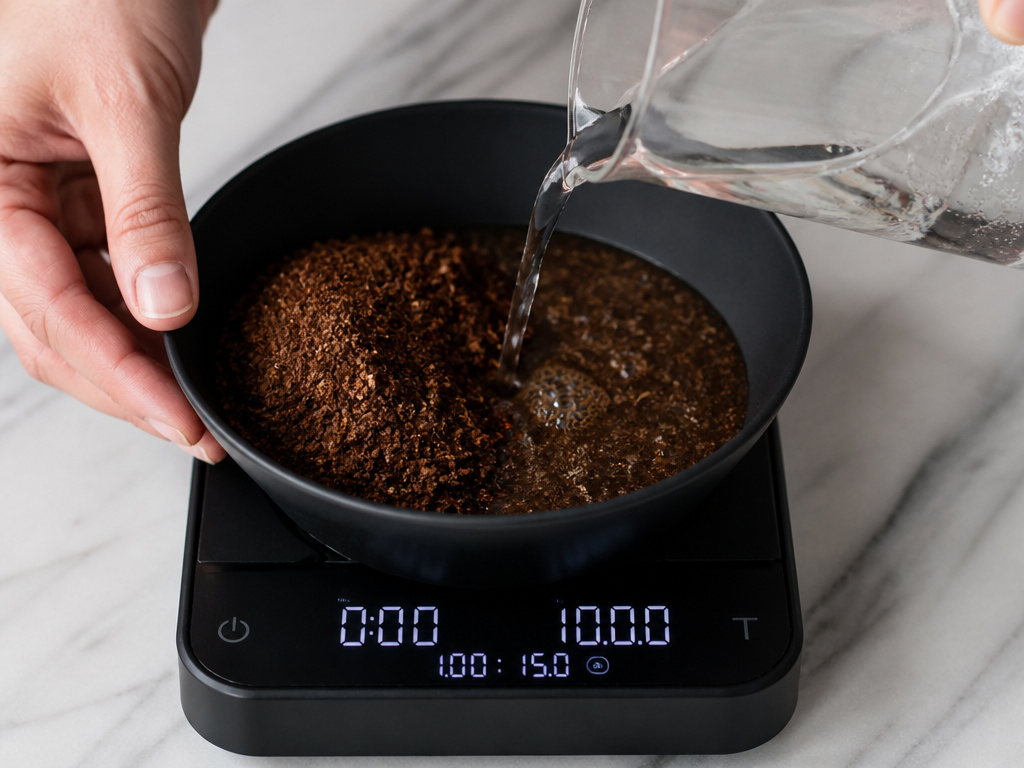
Cold brew is forgiving, but it rewards precision. The standard 1:8 coffee-to-water ratio (by weight) is your anchor. For decaf, I tighten it to 1:7.5 if the beans feel especially light and porous, which you can judge by their sheen, less oily often means more porous.
Combine your coarse grounds and cold, filtered water in your brewer. Stir vigorously for 30 seconds to ensure every ground is fully saturated. This step prevents dry clumps that never fully extract.
Steep at room temperature for 16 hours. This is the sweet spot. The ScienceDirect physicochemical properties analysis on ultrasound-assisted extraction reinforces that time and temperature are the primary drivers for cold brew. A 12-hour steep tastes weak and thin. An 18-hour steep starts to pull out woody, tannic notes. Set a timer.
I steep on the counter, not in the fridge. Refrigeration slows extraction molecularly. A fridge-steeped batch at 24 hours consistently tastes weaker and less rounded than a 16-hour room-temp batch. The only reason to use the fridge is if your kitchen is above 80°F.
After steeping, strain through a fine mesh filter. A paper coffee filter inside a strainer gives the cleanest result, removing all silt. Cheesecloth is faster but lets through fine particles that make the concentrate cloudy. Press the grounds gently to extract all liquid without squeezing bitter oils.
TL;DR: Use a 1:8 ratio, stir well, and steep at room temperature for 16 hours. Strain through a paper filter for clarity.
Equipment: Fancy Maker or Simple Jar?

Your container matters less than your filter. You have two reliable paths.
- The Dedicated Brewer: Devices like the OXO Good Grips Cold Brew Coffee Maker or the Toddy system have built-in filters and a clean dispensing mechanism. They’re foolproof for straining and make the process neat. The OXO’s stainless steel mesh filter is good, but I still line it with a paper filter for decaf to catch the extra fines.
- The DIY Setup: A large glass jar and a separate filtration system. This is more flexible and cheaper. After steeping, pour the mixture through a Fellow Clara French Press to do the primary strain, then a second pass through a paper filter in a pour-over cone. It takes an extra five minutes but gives you ultimate control.
The dedicated brewer wins on convenience. The DIY method wins on clarity and cost. Don’t buy a unitasker unless you make cold brew weekly.
Storing Beans and Concentrate: The Decaf Clock Ticks Faster
This is non-negotiable. Decaffeinated coffee stales quicker than regular coffee. The same porous structure that affects grind also lets oxygen in faster, degrading flavors.
Buy whole beans in small quantities, enough for two or three batches. Store them in an airtight container in a cool, dark cupboard. Do not freeze them unless you vacuum-seal individual batch portions first. The freeze-thaw cycle introduces moisture that decaf beans absorb like a sponge, accelerating staling.
Your finished cold brew concentrate lasts up to two weeks in the fridge in a completely airtight container. Glass is better than plastic. I use a swing-top bottle. After two weeks, it won’t spoil, but it will taste flat and cardboard-like. This timeline is about half as long as a robust caffeinated cold brew.
Common mistake: Storing decaf beans in the bag they came in, even with a clip, the bag is not airtight after opening. Oxygen degrades the volatile compounds within a week, turning your next batch sour and hollow.
Troubleshooting Your Decaf Cold Brew Batch
Your concentrate is the product of four variables: grind, ratio, time, and temperature. If the flavor is off, one of them is out of balance.
| Symptom | Likely Cause | The Fix |
|---|---|---|
| Bitter, harsh taste | Grind is too fine, creating over-extracted silt. | Grind coarser. Strain through a paper filter (not just mesh) to remove fines from this batch. |
| Weak, watery flavor | Steep time too short, ratio too weak, or steeping in the fridge. | Increase steep time by 2 hours, tighten ratio to 1:7.5, or steep at room temp. |
| Cloudy concentrate | Inadequate filtration; fine particles suspended. | Perform a secondary filtration through a paper filter or coffee sock. |
| Flat, cardboard aftertaste | Beans were stale before brewing, or concentrate is over two weeks old. | Source fresher beans from a roaster with a “roasted on” date. Make smaller batches more frequently. |
If your brew is consistently bitter even with a coarse grind, consider your water. Hard water with high mineral content can over-extract. Use filtered or bottled water with low mineralization. The goal is to extract slowly and evenly, not aggressively.
Frequently Asked Questions
Does decaf cold brew have any caffeine?
Yes, but trace amounts. The FDA allows coffee labeled “decaffeinated” to contain up to 0.10% caffeine by weight. The Swiss Water Process guarantees 99.9% removal. A typical 8-ounce serving of diluted decaf cold brew contains about 2-5 mg of caffeine, compared to 100-200 mg in a regular cup. For context, that’s less than the caffeine in decaffeinated coffee options like some teas.
Can I use pre-ground decaf coffee?
You can, but I don’t recommend it. Pre-ground is almost always ground for drip machines, which is too fine for cold brew and will guarantee a bitter, over-extracted batch. Furthermore, pre-ground coffee stales exponentially faster, and decaf is already on a fast clock. Grinding fresh is the single biggest quality lever you can pull.
Why is my decaf cold brew sour?
Sourness indicates under-extraction. Your steep time was likely too short, your water too cold (if refrigerated), or your grind too coarse. Ensure a full 16-hour steep at room temperature with your slightly-finer coarse grind. Sourness can also come from using a light roast bean that naturally has higher acidity; try a medium or dark roast decaf for a smoother, chocolatier profile.
Is decaf cold brew less acidic than regular cold brew?
Yes, inherently. The cold brewing process itself extracts fewer acidic compounds than hot brewing. Starting with decaf beans, which often undergo processes that can further reduce acidity, results in an exceptionally smooth and low-acid beverage. This makes it a great option for anyone managing acid reflux or sensitive digestion, which can be triggered by the coffee acidity effects of hot coffee.
How should I dilute and serve decaf cold brew?
Start with a 1:1 ratio of concentrate to water, milk, or a milk alternative. Pour over a glass full of ice. Adjust to your taste, some prefer it stronger (1:2 water-to-concentrate) or weaker (1:1.5). Add simple syrup, vanilla, or a dash of cinnamon if you like. The smooth, low-acid base makes it incredibly versatile.
The Bottom Line
Making exceptional cold brew decaf coffee requires respecting the bean’s changed structure. Grind slightly finer than usual, steep for 16 hours at room temperature, and strain meticulously. The Swiss Water Process delivers the cleanest slate for flavor. Your reward is a concentrate that is smooth, deeply flavorful, and virtually acid-free, a perfect option for late afternoons, sensitive stomachs, or when you want the ritual without the stimulant. Store it cold, drink it cold, and tweak the dilution until it hits your sweet spot.
