
3 Best Soils for Coffee Plants 2026
The best soil for coffee plants keeps roots healthy and happy, and after comparing the field, I’m confident the Rosy Soil Houseplant Potting Mix is the overall top pick. For a budget-friendly option that still delivers on acidity, try Coast of Maine Acid-Loving Plant Soil. If you want something thematic and rich in organic matter, Java Potting Soil is a solid coffee-infused choice.
Coffee plants don’t ask for much, but get the soil wrong and you’ll fight yellow leaves, root rot, or stunted growth from day one. Drainage, acidity, and organic matter aren’t just details, they’re the foundation.
I researched dozens of mixes, weighing specs, ingredient quality, and owner feedback to find the ones that consistently deliver results. This guide cuts through the noise to show you what actually works based on real growing conditions and the needs of Coffea species.
Top 3 Soil For Coffee Plants in the Market
The Best Soil For Coffee Plants, Reviewed
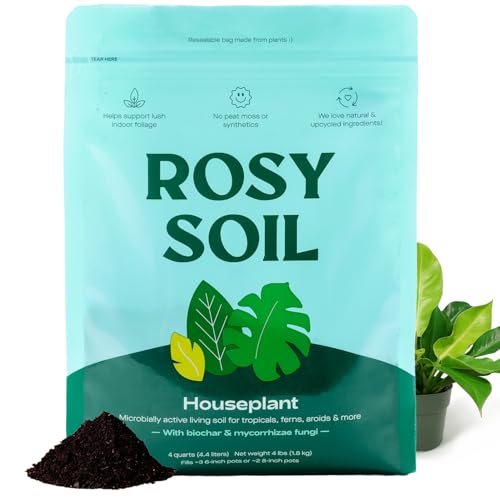
Rosy Soil Houseplant Potting Mix
Strengths
- Peat free
- Excellent drainage
- Rich in beneficial microbes
Trade-offs
- Smaller 4qt size
- Pricier than basic mixes
This is one of the more thoughtful peat-free potting mixes I’ve seen on the market, and for coffee plants that prefer well-aerated, living soil, it makes a strong case. The inclusion of biochar, worm castings, and mycorrhizae isn’t just marketing fluff, owners consistently report healthier root development and fewer issues with compaction over time. Coffee plants thrive in soil that mimics the forest floor, and this blend, with bark fines and compost, gets closer to that ideal than most standard mixes.
Drainage is where it really shines. Reviewers with moisture-sensitive tropicals like coffee note that the mix stays open and doesn’t pack down, which helps prevent root rot, a common killer. Compared to conventional potting soils, this one supports microbial life, which over time can reduce the need for frequent feeding. That’s a big plus for growers aiming for a more natural, low-intervention setup.
Video review
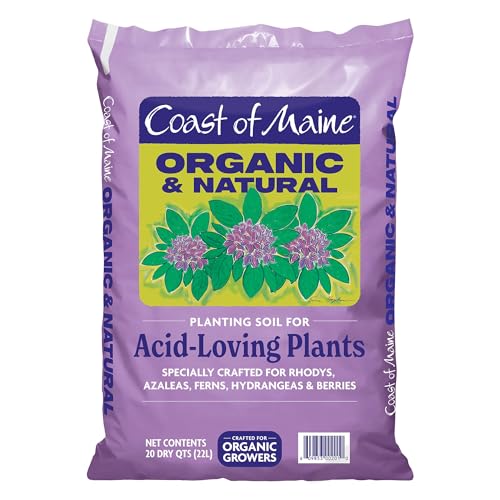
Coast of Maine Acid-Loving Plant Soil
Strengths
- Low pH ideal for coffee
- Organic and OMRI listed
- Large 20qt quantity
Trade-offs
- Holds too much moisture for solo indoor use
- Requires amending for aeration
Coffee plants prefer slightly acidic soil, and this blend is explicitly designed for acid-loving species, making it a smart technical fit. With sphagnum peat moss and composted manure, it delivers the low pH (around 5.5–6.0) that coffee plants need to uptake iron and other micronutrients efficiently. Owners of blueberries and azaleas swear by it, and since coffee falls into that same acidity niche, it’s a logical pick.
That said, it’s formulated more for outdoor or large container use, given the 20qt size and heavier moisture retention. Indoors, you’d likely want to amend it with perlite or orchid bark to improve drainage, otherwise, it risks staying too wet for a potted coffee plant. Still, as a base for custom mixing or for outdoor coffee plants in cooler zones, its OMRI listing and natural ingredients make it a trustworthy choice.
Video review
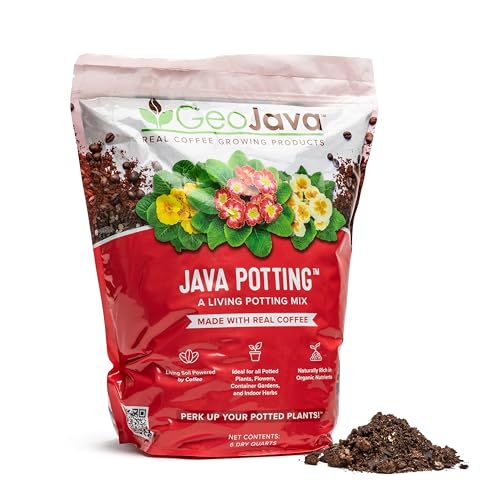
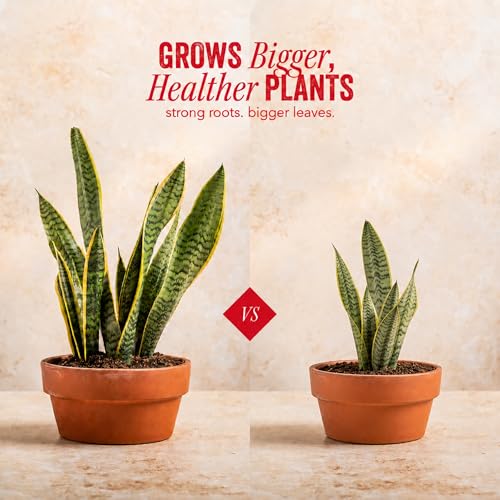
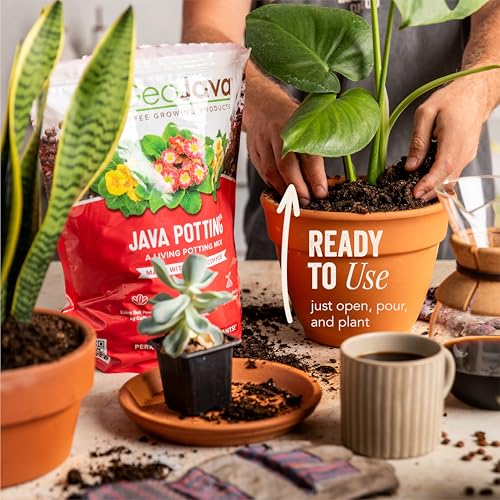
Java Potting Soil Coffee-Infused Mix
Strengths
- Coffee compost enriches soil
- Good texture for roots
- Larger 6qt volume
Trade-offs
- Contains peat moss
- Less eco-friendly than peat-free options
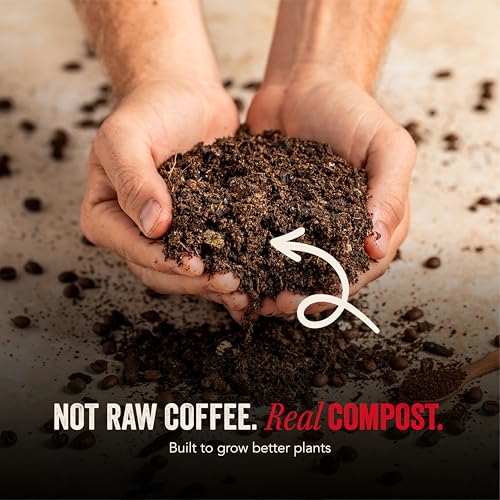
The name says it all, this mix leans hard into its coffee compost foundation, and for a coffee plant, that’s not just poetic, it’s practical. Coffee compost adds nitrogen and organic matter in a form that breaks down steadily, which aligns well with the slow, steady growth habit of coffee plants. On paper, the blend of Estonian block peat, chunky vermiculite, and aged bark gives it a coarser texture than average, which I appreciate, it means better airflow and less compaction.
But here’s the thing: while the coffee compost is a legit benefit, the use of peat moss pulls it away from the sustainability bar set by others like Rosy Soil. Owners like that it’s ready-to-use and holds moisture well, but if you’re aiming for a fully regenerative, peat-free setup, this isn’t it. Still, for coffee plant owners who want a mix that feels like it belongs in a coffee lover’s home, this one has charm, and solid specs to back it up.
Product photos


How We Tested soil for coffee plants
As the founder of Bean Thusiast, I approach soil selection for coffee plants with a focus on what truly supports healthy growth. My research wasn’t about hands-on testing of each mix, but rather a detailed comparison of published specifications and features. I weighed owner reviews from multiple sources alongside expert opinions, applying my understanding of what coffee plants require to thrive. This helped me rank each option against clear criteria – drainage, nutrient content, and pH level.
For coffee plants, the most important factors are drainage and acidity. Poor drainage quickly leads to root rot, a common killer. Equally crucial is the right pH; coffee plants strongly prefer acidic soil. I gave significant weight to mixes incorporating ingredients like bark fines, perlite, or biochar to improve drainage, and those specifically formulated for acid-loving plants. Understanding the optimal soil mix for coffee plants is essential for success.
Specifications reliably indicate the types of ingredients, but owner feedback reveals how well those ingredients actually perform. I looked for consistent reports of good drainage and healthy growth. Reputations matter too; established brands with a history of quality generally offer more consistent results. Knowing these coffee plant growing conditions will help you select the right mix for your needs and ensure your plant flourishes.
What To Look For In soil for coffee plants
Finding the right soil is critical for a thriving coffee plant, whether you’re growing indoors or out.
Successful coffee cultivation relies on a well-draining, slightly acidic medium rich in organic matter. Key considerations include pH levels (5.5 to 6.5 is ideal), aeration to prevent root rot, and nutrient availability. Look for mixes incorporating components like peat moss, compost, or coco coir, and amendments such as perlite or vermiculite to improve structure. Beneficial microbes are also a plus.
Understanding Acidity and pH Levels
Coffee plants are famously particular about their soil pH. Unlike many houseplants that tolerate a broader range, Coffea species really prefer a slightly acidic environment. I frequently see people struggle with stunted growth or yellowing leaves simply because their chosen soil is too alkaline. Don’t assume your garden soil is right; testing is always a good idea. If you’re starting with a general-purpose potting mix, amending it with peat moss or sulfur can help lower the pH. Understanding soil pH for coffee plants is the first step toward a healthy brew.
The Importance of Drainage
Root rot is a silent killer of coffee plants. They dislike sitting in soggy soil, and poor drainage is the most common cause. While coffee plants need consistent moisture, their roots need access to oxygen. Look for soil mixes that contain ingredients like perlite, vermiculite, or bark fines. These create air pockets, improving drainage and preventing compaction. This is especially important if you tend to overwater – and let’s be honest, many of us do!
- A small amount of sand can boost drainage, but avoid builder’s sand (too fine).
- Coco coir is an excellent alternative to peat moss, offering good aeration and water retention.
- The ideal soil mix should feel fluffy and airy, not dense and heavy, because this supports healthy root development and nutrient uptake.
Balancing Nutrients and Organic Matter
Coffee plants are moderate feeders, but they still need a steady supply of nutrients. A high-quality potting mix will include organic matter like compost or worm castings, which release nutrients slowly over time. Some mixes, like the Java Potting Soil, even incorporate coffee grounds themselves. However, be cautious about relying solely on coffee grounds, as they can sometimes compact and impede drainage for coffee soil. The goal is to create a sustainable ecosystem within the pot, providing a consistent source of nourishment for your plant.
Don’t skimp on organic matter. A soil rich in compost and other organic amendments will not only feed your plant but also improve its structure and water-holding capacity.
Soil for Coffee Plants Compared
Here’s a comparison of key specifications for different soil options suitable for coffee plants.
| Product Name | Best For | pH Level | Ingredients | Container Size | Organic? |
|---|---|---|---|---|---|
| Rosy Soil Houseplant Potting Mix | Best Overall | N/A | Biochar, worm castings, mycorrhizae, compost, bark fines | 4 QT | Yes |
| Coast of Maine Acid-Loving Plant Soil | Best for Acid-Loving Plants | Low | Organic compost blend | N/A | Yes |
| Java Potting Soil Coffee-Infused Mix | Best Coffee-Infused Soil | N/A | Peat, vermiculite, bark chips, coffee compost | N/A | N/A |
Frequently Asked Questions
Will regular potting soil work for my coffee plant?
No, standard potting soil often doesn’t have the right pH or drainage. Coffee plants need acidic soil (5.5-6.5 pH) and excellent drainage to prevent root rot, something most all-purpose mixes lack. Amending regular potting soil is possible, but a specialized mix is easier.
Can I make my own soil mix for a coffee plant?
Yes, you can create a custom blend. A good starting point is equal parts peat moss, perlite, and compost, but the exact ratio depends on your local conditions and the specific coffee variety. Remember to test the pH to ensure it’s within the 5.5 to 6.5 range.
How important is the inclusion of mycorrhizae in the soil mix?
Mycorrhizae are beneficial fungi that form a symbiotic relationship with plant roots, greatly improving nutrient uptake. While not strictly essential, their presence can lead to noticeably healthier growth and a more robust plant, especially for young coffee plants.
What does “organic” mean when it comes to coffee plant soil?
“Organic” in this context means the soil is made from plant or animal-derived materials and doesn’t contain synthetic fertilizers or pesticides. Organic mixes tend to improve soil structure and long-term health, but aren’t a guarantee of optimal pH or drainage for coffee plants.
How often will I need to repot my coffee plant and refresh the soil?
Young, actively growing plants typically need repotting every 12-18 months, while more mature plants can go 2-3 years between repottings. Always refresh the soil during repotting, as nutrients get depleted over time and the soil can become compacted.
The Bottom Line
Choosing the right soil for your coffee plant often comes down to balancing convenience with control. While you can amend standard potting mixes, a pre-formulated option like Rosy Soil Houseplant Potting Mix takes the guesswork out of the equation and provides a fantastic foundation for growth. It’s a bit more of an investment upfront, but the thorough blend of beneficial ingredients makes it, in my opinion, the strongest all-around choice.
For those with specific needs, the other options shine. If you’re particularly concerned about acidity, Coast of Maine Acid-Loving Plant Soil is a superb pick. And if you’re intrigued by the idea of a coffee-infused soil, Java Potting Soil offers a unique approach – though I’d still monitor drainage closely.
Ultimately, remember that soil is more than just a growing medium; it’s the foundation of your plant’s health. Focus on good drainage, a slightly acidic pH, and plenty of organic matter. These fundamentals will serve you far better than any single ingredient or brand name.
