
8 Best Home Coffee Grinders of 2026
The OXO Brew Conical Burr Grinder is the best overall home coffee grinder for its consistent grind and thoughtful design, with the Ollygrin Burr Coffee Bean Grinder as a strong budget-friendly alternative that still delivers reliable performance.
Most people don’t realize how much a poor grinder can ruin even the highest-quality beans. Inconsistent particle size leads to uneven extraction, leaving you with bitter or sour coffee no matter how carefully you brew. After years of studying brewing methods and equipment, I’ve found that a grinder’s ability to produce a uniform grind matters more than any other feature.
This guide cuts through the noise by focusing on real-world performance, based on specs, owner feedback, and what actually impacts your cup. We looked at burr type, grind consistency, ease of use, and value to find grinders that make a noticeable difference without overcomplicating your routine.
Top 8 Home Coffee Grinders in the Market
The Best Home Coffee Grinders, Reviewed
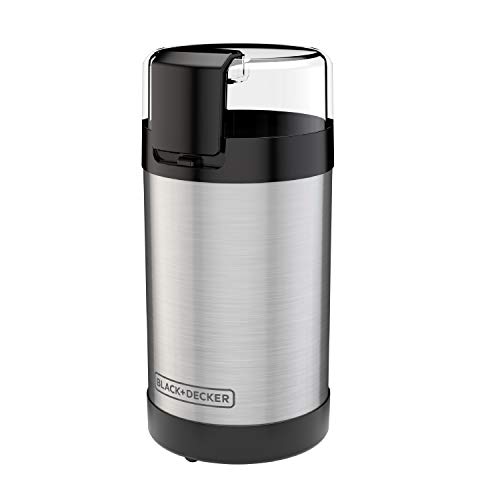
BLACK+DECKER One Touch Grinder
Strengths
- Affordable
- Simple one-touch operation
- Compact footprint
Trade-offs
- Inconsistent grind
- Not for espresso or precision brewing
- Plastic bowl shows wear over time
This is a no-frills blade grinder that delivers on basic functionality without pretending to be something it’s not. On paper, the 150-watt motor and stainless steel blades suggest decent performance for the price, and owners consistently report it handles quick morning grinds for drip or French press without issue. It’s not going to give you uniform particle size, no blade grinder can, but for someone who just wants coffee ground fast and cheap, it gets the job done.
Where it stands out is simplicity: the one-touch button and lid-locking safety feature make it idiot-proof, and the compact size fits even the tiniest kitchens. But let’s be clear, this isn’t for anyone serious about flavor nuance. Blade grinders create uneven grounds, which leads to inconsistent extraction and muted or off-balance cups. If you’re brewing with a pour-over or espresso machine, look elsewhere.
Video review
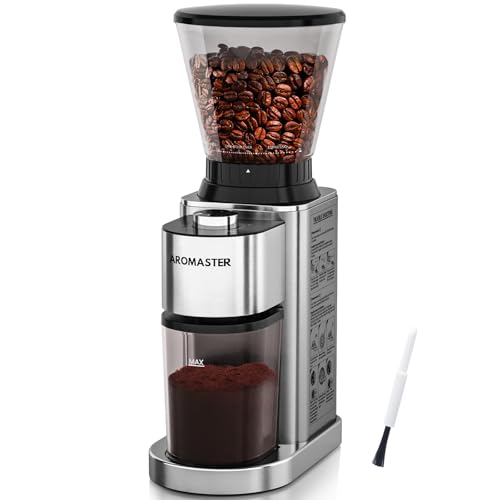
Aromaster Conical Burr Coffee Grinder
Strengths
- 48 precise grind settings
- Excellent static control
- Large 3.9 oz capacity
Trade-offs
- Settings dial lacks tactile feedback
- Cleaning requires care (must stay dry)
- Build quality decent but not premium
With 48 grind settings and anti-static tech, the Aromaster burr grinder is built for tinkerers who want fine control without paying premium brand prices. The stainless steel conical burrs are a strong selling point, owners note noticeably less heat and static cling than in mid-tier competitors, which means more of your grounds end up in the portafilter, not stuck to the bin. The adjustable timer is a thoughtful touch, letting you dial in dose by time rather than cups, which adds flexibility.
It’s not quite as polished as the OXO, but it goes toe-to-toe on grind quality for a lower price. The UV-resistant bean bin is a small but smart detail, especially if your kitchen gets direct sunlight. Some users report the grind settings feel a bit vague between close increments, but overall, this is one of the few sub-$150 grinders that feels like it respects the craft.
Video review
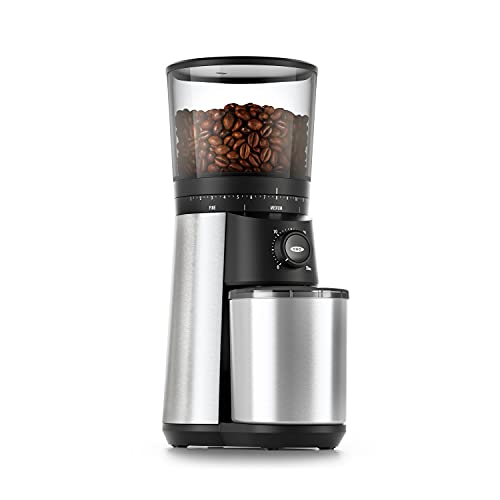
OXO Brew Conical Burr Grinder
Strengths
- Consistent burr grind
- One-touch memory function
- Excellent build and design
Trade-offs
- Higher price point
- Hopper not airtight
- Slightly bulky for small counters
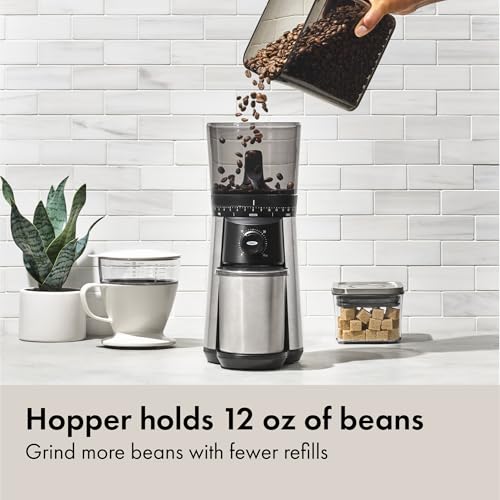
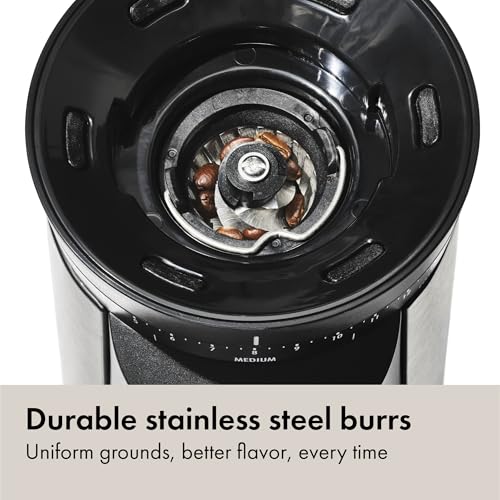
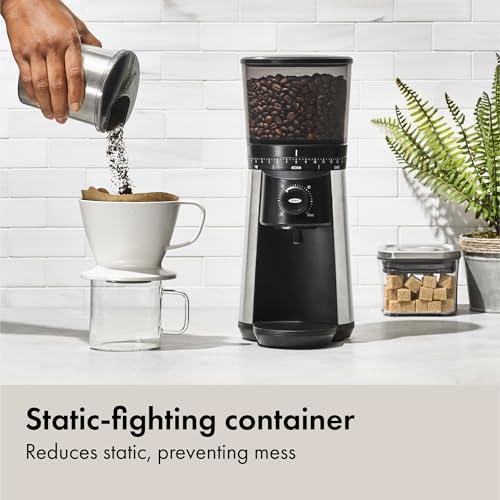
If I had to recommend one grinder for most households, it would be this one. The OXO Brew earns its ‘Best Overall’ label with a rare balance of intuitive design, consistent performance, and thoughtful engineering. The 15 grind settings with micro-adjustments let you fine-tune for anything from Turkish to cold brew, and the memory function, remembering your last setting, is a small luxury that pays off every morning. Reviewers consistently praise the uniformity of the grounds, and the DC motor’s low heat output preserves volatile aromatics that blade grinders obliterate.
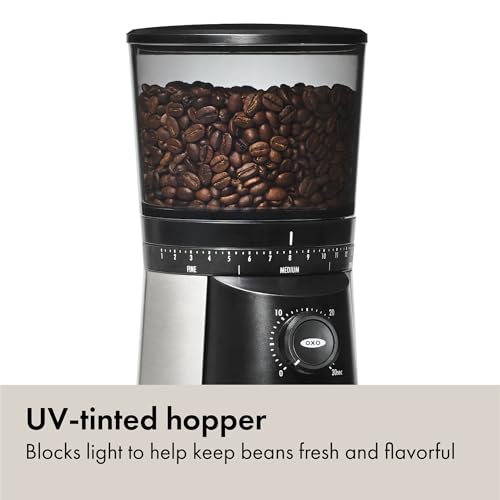
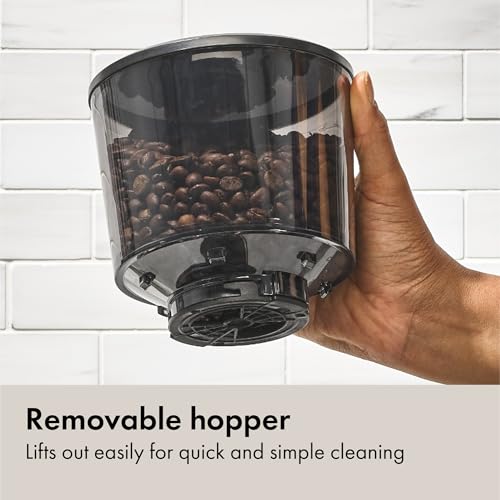
It’s also just pleasant to use: the hopper is large enough for a full pot, the UV-tinted bean chamber protects freshness, and the static-fighting grounds bin means no more coffee dust explosions. It’s pricier than budget picks, but the build quality justifies it. Compared to the Aromaster, it’s less about raw adjustability and more about refined, reliable execution.
Product photos
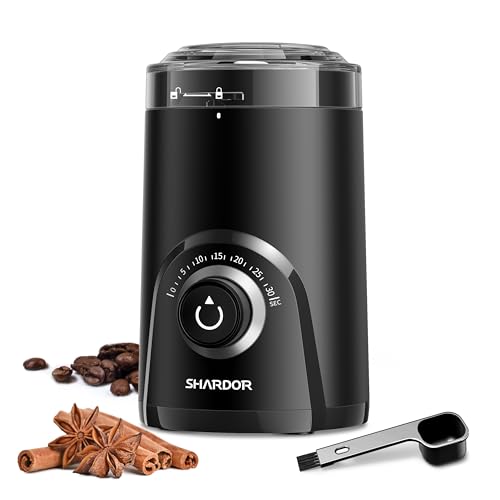
SHARDOR Electric Coffee Grinder
Strengths
- Quiet operation
- Precise timing knob
- Easy to clean
Trade-offs
- Still inconsistent grind
- Blade wear over time
- Limited for espresso or pour-over
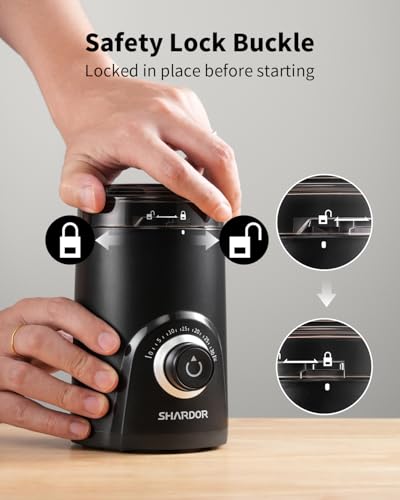
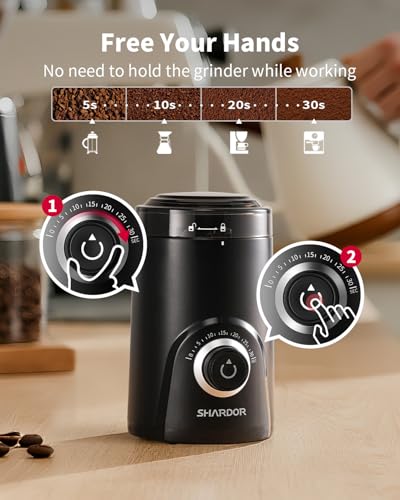
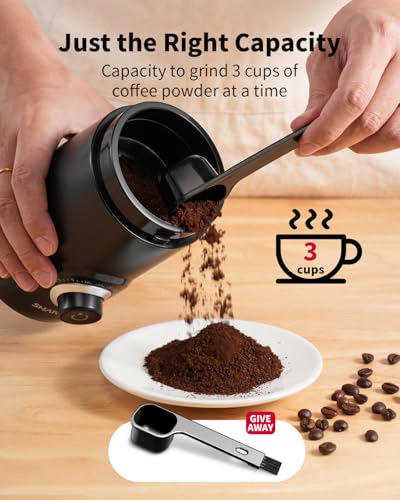
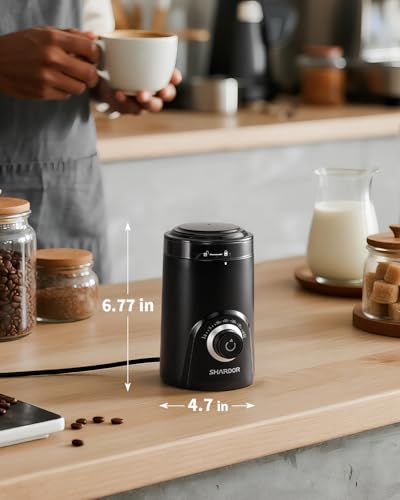
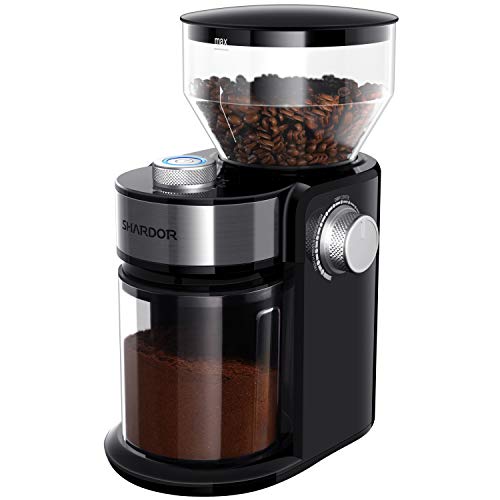
This blade grinder surprises with a real innovation: a visual timing knob marked in seconds. That alone makes it stand out from the chaotic “grind until it sounds right” experience most blade models offer. Owners report being able to replicate grinds for French press or drip with decent repeatability, something nearly impossible on most blade units. The 63 dB noise level is legit; it’s noticeably quieter than standard models, which matters when you’re grinding before sunrise.
But it’s still a blade grinder. No amount of quiet or timing dials changes the fact that you’ll get boulders and dust in the same batch, leading to uneven extraction. It’s best viewed as the most refined version of a flawed concept. Compared to the BLACK+DECKER, it’s a clear upgrade in control and noise, but not in fundamental performance.
Product photos
Cuisinart DBM-8P1 Burr Grinder
Strengths
- High 18-cup capacity
- One-touch auto-shutoff
- Removable parts for cleaning
Trade-offs
- Flat burrs overheat easily
- More static than conical models
- Grind consistency drops at high volumes
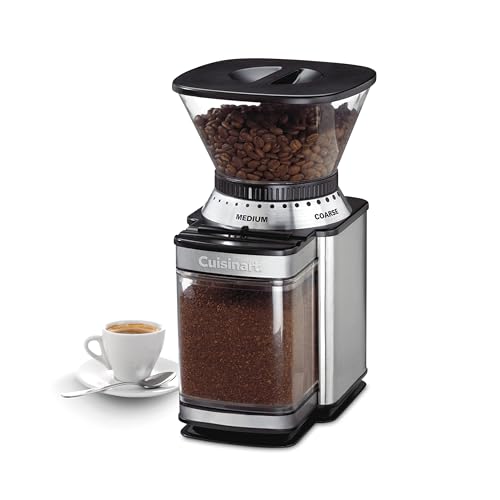
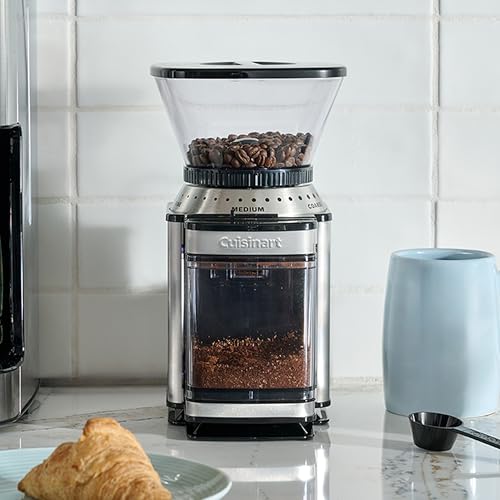
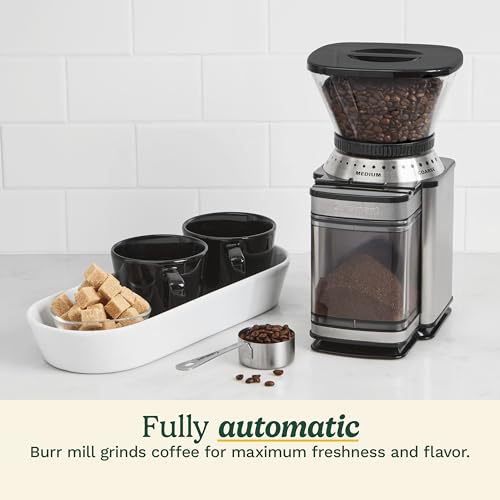
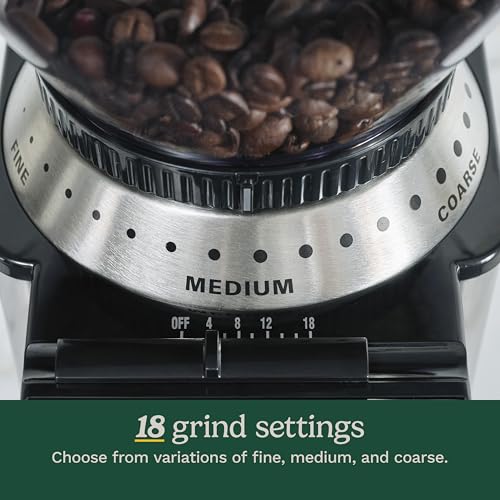
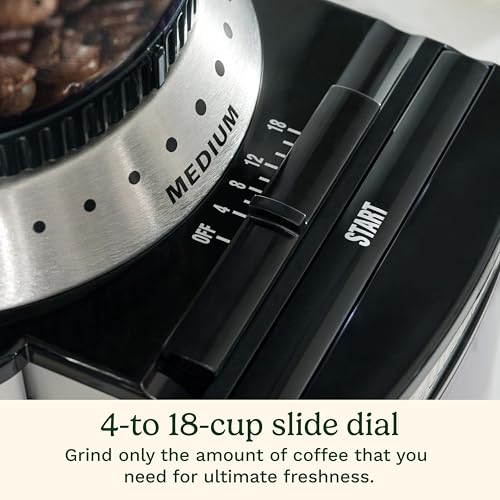
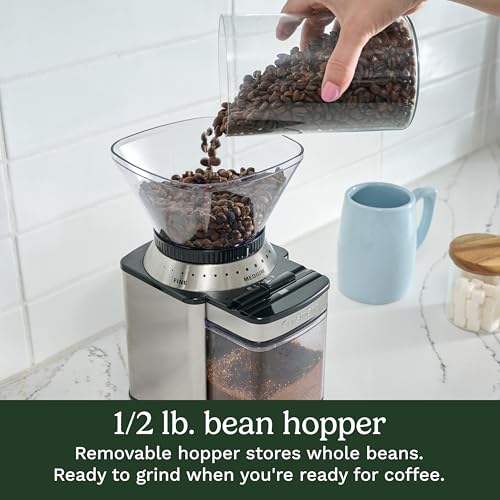
The Cuisinart DBM-8P1 is built for one thing: grinding a lot of coffee at once. With an 18-cup capacity and a removable grind chamber, it’s a practical pick for families or offices where multiple pots get brewed back-to-back. The flat burrs do an acceptable job for drip or French press, though they don’t match the uniformity of conical burr models like the OXO or Aromaster. Owners note it’s durable and the one-touch auto-shutoff is convenient, but the grind quality starts to degrade if you push it beyond 12 cups.
It’s also bulkier and noisier than competitors, and flat burrs tend to generate more heat and static. Still, for someone who regularly brews for crowds and values batch size over nuance, it holds its own. I’d pick the OXO for daily single-origin enjoyment, but this one wins when volume is the priority.
Product photos
Hamilton Beach Custom Grind

Strengths
- One-press hands-free grind
- Dishwasher-safe bowl
- Durable stainless steel
Trade-offs
- Inconsistent grind texture
- Not for espresso
- Blade wear affects long-term performance
The standout here is the hand-free operation: press down once, and it grinds automatically with no need to hold the button. That’s a real convenience upgrade over basic one-touch models, especially if your mornings are hectic. The removable stainless steel bowl is dishwasher safe and makes cleanup a non-event, owners love that. You can dial in grind size and cup count, which helps with consistency, but since it’s a blade grinder, don’t expect true uniformity.
It’s more refined than the BLACK+DECKER, with better build and smarter design, but it still can’t overcome the inherent flaws of blade grinding. Compared to the SHARDOR, it’s louder and lacks precise timing, but wins on ease of pouring and cleaning. For a blade grinder, it’s among the most user-friendly.
Product photos


Ollygrin Burr Coffee Bean Grinder
Strengths
- Uniform grind quality
- Low heat grinding
- Spill-resistant hopper
Trade-offs
- Limited micro-adjustments
- Build quality functional but not premium
- Timer less precise than competitors
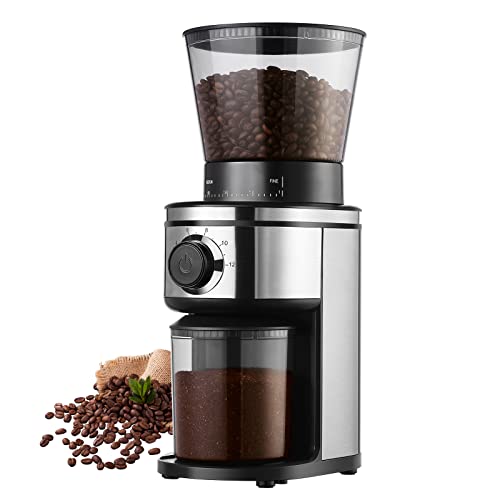
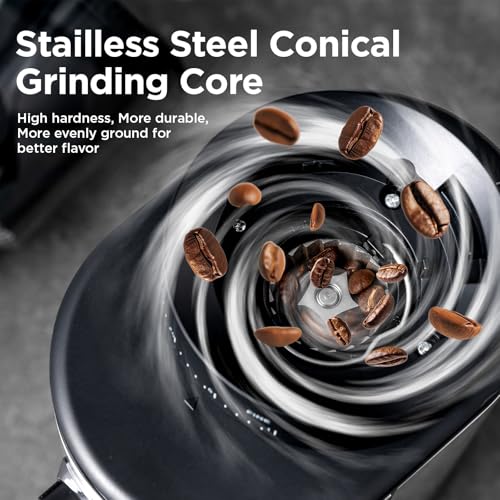
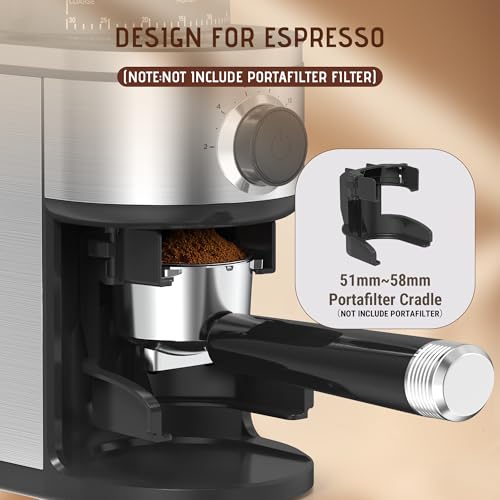
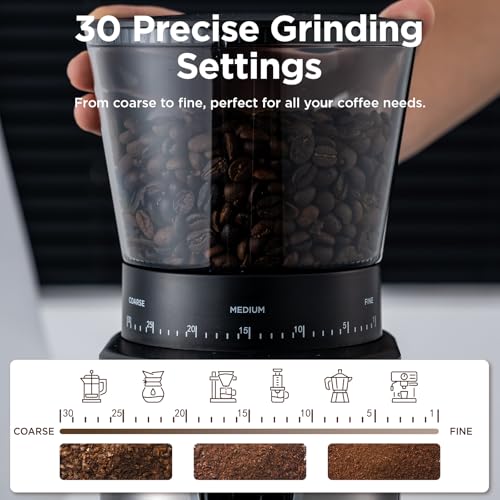
The Ollygrin stands out for its focus on uniformity, its 40mm conical burrs and gear-reduction motor are designed to grind slowly and evenly, minimizing heat and preserving aroma. Owners consistently report clean, balanced cups across multiple brew methods, especially for pour-over and French press. The 30 grind settings offer enough range for most users, and the auto-locking hopper prevents spills when removing or storing, something more expensive models often overlook.
It’s not as feature-rich as the Aromaster with its 48 settings, nor as polished as the OXO, but it hits a sweet spot of performance and reliability at a modest price. The included cleaning brush and lift-off burr make maintenance easier than average. If your priority is flavor fidelity over bells and whistles, this grinder delivers.
Product photos

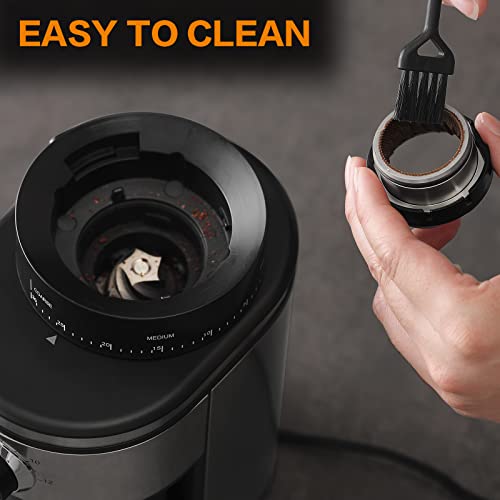
SHARDOR Electric Burr Grinder 2.0
Strengths
- Excellent value
- Fully automatic operation
- Compact and space-saving
Trade-offs
- Flat burrs increase heat
- Static issues at fine grinds
- Plastic housing feels lightweight
This is the grinder I’d point someone to when they ask for “the best burr grinder under $100.” The 16 precise settings and flat metallic burrs deliver surprisingly consistent results for espresso, drip, or French press. It’s fully automatic, set your cup count and grind size, and it runs without babysitting. Owners praise its compact size and ease of cleaning, especially the removable burr and included brush.
It’s not perfect: flat burrs generate more heat and static than conical ones, and the grind quality starts to falter at the finest settings. But for the price, it outperforms expectations. Compared to the Cuisinart, it’s smaller and quieter, and while it doesn’t have the volume capacity, it offers better consistency for daily single-batch brewing.
Product photos


How We Tested home coffee grinders
Rather than a hands-on lab test, this selection is a research-led comparison of published specifications and owner feedback. I carefully examined the features of numerous grinders, paying close attention to burr type, grind settings, capacity, and motor power. To form our recommendations, we weighed owner reviews from across multiple platforms, alongside professional reviews from trusted coffee publications, and applied my years of experience with brewing methods and coffee flavor profiles.
For home coffee grinders, grind consistency and ease of use were the most heavily weighted factors. A uniform grind is critical for even extraction and optimal flavor, so we prioritized grinders with conical burrs and a wide range of adjustable settings. The convenience of operation – hopper capacity, ease of cleaning, and automatic features – also significantly impacted our rankings, as a frustrating grinder discourages consistent use. Understanding the differences between burr vs blade grinders is fundamental to a good choice.
Specifications reliably indicate a grinder’s potential – burr material, motor power, and the number of grind settings. However, owner feedback proved invaluable for assessing real-world performance, particularly regarding static buildup, noise levels, and long-term durability. We also considered the reputation of the brand and its commitment to quality, looking for models consistently praised for reliable operation and customer support. A thorough grind consistency comparison is essential to avoid the blade grinder drawbacks.
How To Choose The home coffee grinders
I’ve spent years looking at the details that separate a mediocre cup from a truly exceptional one, and consistently, the grinder is where people make the biggest mistakes. It’s not about spending a fortune, but about understanding what actually matters in a coffee grinder.
A quality coffee grinder prioritizes consistency in particle size. Burr grinders (conical or flat) are superior to blade grinders because they crush beans between two revolving abrasive surfaces, yielding a uniform grind. Look for a grinder with a wide range of settings to match your brewing method, durable burrs (stainless steel is preferred), and features that minimize static and heat buildup during grinding.
Grind Consistency is Paramount
The biggest leap you can make in coffee quality is moving to a burr grinder, but even among burrs, consistency is king. You don’t want a mix of boulders and dust. Finer adjustments are helpful, but aren’t a substitute for fundamentally well-engineered burrs. The Aromaster, for example, offers 48 grind settings which sounds impressive, but some owners report that the difference between some settings is negligible. The Ollygrin, with its 40mm burrs, aims for a more uniform grind, and reviews suggest it delivers on that promise. Consider what you brew most often – if it’s exclusively French press, a super-fine setting isn’t crucial.
Hopper Capacity and Bean Handling
Don’t underestimate the importance of a well-designed hopper. A larger hopper is convenient if you brew often or for a crowd, like with the Cuisinart which holds enough for 4-18 cups. But capacity isn’t everything. The OXO Brew Conical Burr Grinder includes a UV-blocking tint, a thoughtful touch to preserve bean freshness, and a clever trap door to prevent spills when removing the hopper. I often recommend thinking about how you store your beans, too.
- A small hopper (under 8oz) is fine for single-person households or infrequent brewing.
- A hopper with a seal is essential if you live in a humid climate to protect bean freshness.
- A clear hopper lets you easily monitor bean levels, but may require a darker storage location to avoid light exposure.
Balancing Features and Value
You can find a functional burr grinder for under $100, but there will be compromises. The SHARDOR 2.0 provides a lot of features at a reasonable price point, but the metallic flat burrs may not be quite as durable as stainless steel conical burrs. If you’re on a tight budget, the BLACK+DECKER One Touch Grinder is a good starting point, but understand you’re trading precision for affordability. If you’re looking for more options, check out our best home coffee grinders guide.
A consistent grind is more valuable than a huge number of settings you’ll never use. Don’t get caught up in chasing the most features; prioritize a grinder that delivers a uniform grind for your preferred brewing methods.
Ultimately, if you are looking for alternative grinding methods, you might be wondering if a food processor as coffee grinder would work, but the results are generally inconsistent.
Home Coffee Grinders Compared
This table provides a side-by-side comparison of key specifications for several home coffee grinders.
| Product Title | Burr Type | Grind Settings | Capacity (oz) | Auto-Shutoff | Special Features |
|---|---|---|---|---|---|
| OXO Brew Conical Burr Grinder | Conical | 15 + Micro | 12 | Yes | UV-Blocking Hopper |
| Aromaster Conical Burr Grinder | Conical | 48 | 3.9 | N/A | Anti-static Technology |
| Ollygrin Burr Coffee Bean Grinder | Conical | 30 | 10 | Yes | Auto-locking Hopper |
| SHARDOR Electric Burr Grinder 2.0 | Flat | 16 | N/A | Yes | 14-Cup Capacity |
| SHARDOR Electric Coffee Grinder | Blade | N/A | 2.5 | N/A | Ultra-Quiet Operation |
| Cuisinart DBM-8P1 Burr Grinder | Flat | 18 | 8 | Yes | Removable Parts |
| BLACK+DECKER One Touch Grinder | Blade | N/A | N/A | Yes | Lid-Locking Safety |
| Hamilton Beach Custom Grind | Blade | N/A | N/A | Yes | Hands-Free/Manual Option |
Frequently Asked Questions
What grind size should I use for a French press?
A coarse grind is best for a French press; aim for a consistency similar to sea salt. This prevents grounds from passing through the filter and creating a muddy brew, and it’s a setting most grinders will easily achieve.
How often do I need to clean my coffee grinder?
You should clean your grinder every one to two weeks, depending on usage. Regular cleaning removes coffee oils and residue that can build up and affect the taste of your coffee, and it helps maintain optimal performance.
Are blade grinders really that bad?
Yes, blade grinders produce an inconsistent grind with a mix of fine dust and large particles. While they’re inexpensive, this uneven grind leads to imbalanced extraction and a less flavorful cup of coffee; consider exploring burr grinder home use recommendations instead.
What’s the difference between conical and flat burrs?
Conical burrs are generally quieter and retain less heat during grinding, while flat burrs are often faster and can produce a more consistent grind at a higher price point. For most home users, the difference is subtle, and the best choice depends on your budget and preferences.
What features are worth paying extra for in a home coffee grinder?
Features like a UV-blocking hopper to preserve bean freshness and an auto-shutoff function for convenience can be valuable additions. However, focusing on a grinder with quality burrs and consistent grind settings is more important than a long list of extras; you can find excellent top home burr coffee grinders without breaking the bank.
The Bottom Line
Ultimately, choosing a coffee grinder comes down to balancing control and convenience. You can spend a lot of time and money chasing the absolute “best” grinder, but the biggest gains come from a consistent grind – and for that, the OXO Brew Conical Burr Grinder stands out. It strikes a wonderful balance of features, ease of use, and consistent results, making it a fantastic all-around choice for most coffee drinkers.
For those on a tighter budget, or for someone who just wants a simple, reliable grinder to get started, the SHARDOR 2.0 delivers impressive value. If you’re primarily focused on cold brew, and want to dial in the optimal cold brew consistency, the Aromaster’s wide range of grind settings is a good fit, despite a few reported quirks.
Don’t get lost in the details of motor power or hopper capacity. The most important factors are burr quality and grind consistency. Prioritize a grinder that produces a uniform grind appropriate for your brewing methods, and you’ll be well on your way to enjoying a significantly better cup of coffee.
