
Black Tea vs Black Coffee Compared: Energy, Focus & Health
Black tea vs black coffee differ in energy, focus, and health due to their unique compounds. Tea’s L-theanine and caffeine offer a calm-alert focus, while coffee provides a sharper jolt. For health, black tea supports heart health, while black coffee is linked to liver protection but may hinder iron absorption.
Black tea and black coffee are both brewed from the Camellia sinensis plant and coffee beans, respectively, and both deliver caffeine, but their chemical profiles, physiological effects, and health impacts diverge sharply after that first sip. The real difference isn’t just strength; it’s about what happens in the 30 minutes after you drink them. One gives you a jolt that can fray your nerves. The other delivers a glide that sharpens your mind without the edge.
Most comparisons stop at caffeine content. They miss the L-theanine in tea that changes how your brain uses that caffeine. They skip the diterpenes in unfiltered coffee that can nudge your cholesterol. And they never mention the clock on your iron absorption. Picking a side based on buzz alone is like choosing a car for the color of its seats.
Here’s how the two stack up on energy, health, flavor, and the specific situations where one clearly beats the other.
Key Takeaways
- Black coffee delivers a faster, sharper caffeine spike (95-100mg per cup) ideal for immediate alertness, but it can cause jitters and a crash. Black tea provides less caffeine (about 50mg) paired with L-theanine, promoting calm, sustained focus.
- For cardiovascular health, both drinks show benefits in the 2-5 cup daily range. However, unfiltered coffee (French press, Turkish) contains diterpenes that can raise LDL cholesterol, filtered or instant coffee removes this risk.
- Coffee consumption is strongly linked to a lower risk of liver and endometrial cancers. The evidence for tea preventing specific cancers is less consistent, though both drinks may protect against cognitive decline.
- The high heat of brewing both drinks is a hidden risk: consuming any beverage above 65°C (149°F) significantly increases the risk of esophageal cancer. Let your cup cool for a few minutes.
- Both tea and coffee inhibit the absorption of non-heme iron (the type found in plants). To mitigate this, consume them at least one hour before or after a meal, especially if you have low iron levels.
Caffeine Content: The Jolt vs. The Glide
The energy you feel from these drinks tells two different stories. It’s not just about milligrams.
A standard 8-ounce cup of brewed black coffee packs about 95 to 100 milligrams of caffeine. An espresso shot rings in at roughly 64mg per ounce, but since a serving is small, the total is less, though the concentration hits faster. Black tea, by comparison, offers about 50 milligrams per cup. Green tea drops to around 28mg, while concentrated forms like matcha or yerba mate can bridge the gap, containing 70mg and 85mg respectively.
The caffeine in coffee absorbs rapidly, producing a spike in alertness and adrenaline within 15-20 minutes. Tea’s caffeine absorbs more slowly, moderated by other compounds, resulting in a gentler onset and a longer, smoother curve of effect.
The critical separator is L-theanine, an amino acid almost exclusive to tea. It crosses the blood-brain barrier and promotes alpha-wave activity, which is linked to relaxed alertness. This is why tea can sharpen your focus without the nervous energy. Coffee lacks this modulator. You get the raw stimulant.
If you need a hard, fast start to power through a brutal morning, coffee wins. If your work requires sustained, calm concentration over hours, coding, writing, deep analysis, the L-theanine in tea creates a mental state less prone to distraction. That’s the glide.
TL;DR: Coffee for a sharp, urgent kick; tea for steady, calm focus. The presence of L-theanine in tea changes the entire caffeine experience.
The Heart of the Matter: Cardiovascular Support
Both drinks get a checkmark here, but the fine print matters. Generalizations about “antioxidants” are commodity content. The specifics are where you make a choice.
A systematic review in Food & Function concluded regular black tea consumption improves endothelial function and can reduce blood pressure. The sweet spot appears to be around two to three cups daily. Beyond four cups, the benefit seems to plateau. Green tea shows a more linear benefit with increased intake. For coffee, numerous studies associate moderate consumption (2-5 cups daily) with a lower risk of heart disease.
The major caveat for coffee drinkers concerns diterpenes, oily compounds present in coffee beans. These can raise LDL (the “bad”) cholesterol. The brewing method is everything here.
| Brewing Method | Diterpenes Present? | Best For |
|---|---|---|
| Paper-filtered drip (Moccamaster KBGT, etc.) | No | Anyone concerned with cholesterol; clean, bright cup |
| French Press, Turkish, Cezve | Yes | Flavor enthusiasts who want full-bodied oils |
| Instant Coffee | No | Convenience without the cholesterol risk |
| Espresso | Some, but less than unfiltered | Fast, concentrated brew with moderate oil |
If your cholesterol tends to run high, you should avoid unfiltered methods. Stick with paper-filtered drip or switch to instant. This isn’t a minor detail, it’s the difference between a health-positive habit and one that silently undermines your lipids.
Common mistake: Drinking multiple cups of French press coffee daily while managing high cholesterol, the diterpenes can elevate LDL levels over time, counteracting other cardiovascular benefits.
Both beverages also interact with common additives. Loading either with sugar and cream turns a health-neutral or positive drink into a dessert. The cardiovascular risks then shift squarely to the additives, not the brew.
Cancer Risk & Cognitive Protection: Where the Evidence Diverges

This is where the paths split most clearly. The data favors one drink for specific protection.
Coffee has a stronger, more consistent link to reduced cancer risk, particularly for liver and endometrial cancers. The evidence is robust enough that some health bodies note the association. The chlorogenic acids and other polyphenols in coffee are thought to play a role. For tea, the cancer-prevention picture is murkier. Some studies suggest a link to lower oral cancer risk, but for most cancer types, the evidence is inconsistent.
I relied on black coffee for years during long writing sessions, valuing the sharp focus. Then I read the liver cancer data. It wasn’t just about the buzz anymore; it felt like a tangible, long-term benefit I was banking with every cup.
For brain health, both drinks are allies. Consumption of 2-4 cups daily of either coffee or tea is linked to reduced cognitive impairment and lower dementia risk. The mechanisms likely differ, coffee’s anti-inflammatory compounds versus tea’s catechins and L-theanine, but the destination is similar: a more resilient brain.
There is, however, a hidden risk factor common to both: temperature. Drinking any beverage, tea or coffee, above 65°C (149°F) is classified as a probable carcinogen for esophageal cancer. Letting your drink cool for a few minutes isn’t just about comfort; it’s a risk-reduction step.
TL;DR: Coffee has stronger evidence for reducing certain cancer risks, especially liver cancer. Both support long-term brain health. Always let your drink cool below 149°F to protect your esophagus.
Acidity & Digestion: The Gut Check

Your stomach will vote. Coffee is notably more acidic, with a pH often around 5, while black tea sits closer to a pH of 6. For some, this difference is everything.
Coffee’s acidity can trigger heartburn or acid reflux, especially on an empty stomach. Tea’s lower acidity is generally gentler. But acidity isn’t the only gut factor. Both drinks influence digestion. Coffee is a stimulant laxative for many people. Tea, particularly strong black tea, can have a constipating effect due to its tannin content.
If you have a sensitive stomach or GERD, black tea is the safer default. The lower acidity levels are less likely to cause discomfort. If you struggle with sluggish digestion, coffee might provide a helpful nudge. It’s a straightforward trade-off: potential for heartburn versus potential for regularity.
The Iron Absorption Clock
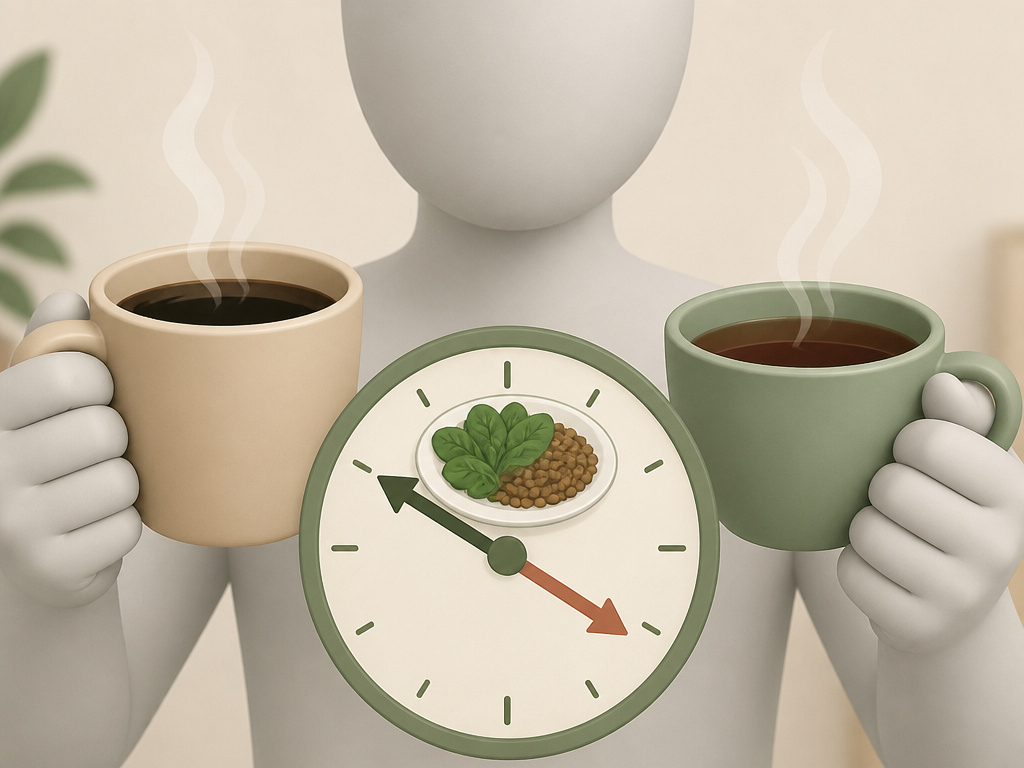
This is the most overlooked, practical interaction. Both tea and coffee inhibit the absorption of non-heme iron, the type found in plant-based foods like spinach, lentils, and beans. Tea has a stronger inhibitory effect than coffee.
The polyphenols in both beverages bind to iron in the digestive tract, making it less available. It’s not that you can’t have your tea or coffee; it’s about timing.
Common mistake: Drinking a cup of black tea with a spinach salad, you could be reducing your iron absorption from that meal by 50-70%. Wait an hour.
The rule is simple: consume tea or coffee at least one hour before or after a meal rich in plant-based iron. If you have iron-deficiency anemia, this timing is non-negotiable. If you’re an omnivore getting plenty of heme iron from meat, the effect is less critical but still present.
Brewing & Flavor: Two Worlds of Preparation
The ritual defines the experience. Coffee demands more precision; tea offers more simplicity.
For a consistent, clean cup of black coffee, you’re looking at equipment. A Moccamaster KBGT drip machine with a paper filter ensures optimal water temperature (92-96°C) and removes diterpenes. For single servings, an AeroPress or a Bruvi BV-03 pod system offers control and convenience. The variables, grind size, water temperature, brew time, are numerous. Get one wrong, and your cup turns sour or bitter.
Tea is comparatively forgiving. Heat fresh water to a rolling boil (100°C). Use about one teaspoon of loose-leaf black tea per 8-ounce cup. Steep for 3-5 minutes. Over-steeping leads to excessive bitterness from tannins. The main equipment is a decent infuser and a preheated pot.
The flavor profiles are continents apart. Black coffee, especially light to medium roasts, can present notes of fruit, chocolate, or nuts, with a characteristic brightness from acidity. Black tea offers malt, earth, honey, or floral notes, with a drying astringency rather than sharp acidity. Your preference for bitterness versus astringency is the deciding factor.
| Aspect | Black Coffee | Black Tea |
|---|---|---|
| Optimal Brew Temp | 92-96°C (197-205°F) | 100°C (212°F) |
| Key Flavor Compounds | Chlorogenic acids (brightness, bitterness) | Catechins, theaflavins (astringency, body) |
| Brew Time | 4-6 minutes (drip), 25-30 seconds (espresso) | 3-5 minutes |
| Critical Gear | Burr grinder, scale, gooseneck kettle, filter | Kettle, infuser or teapot, thermometer (optional) |
| Failure Mode | Under-extraction (sour) or over-extraction (bitter) | Over-steeping (bitter, astringent) |
Who Should Choose Which?
This isn’t a tie. Your physiology and goals pick the winner.
Choose Black Coffee If:
- You need an immediate, powerful energy boost to jumpstart your day or a workout.
- You prefer the ritual of precision brewing and enjoy tinkering with grind size, ratio, and temperature.
- Your primary health concern is supporting liver health or you’re motivated by the cancer-protective data.
- You don’t have issues with acid reflux or caffeine-induced anxiety.
- You enjoy the bold, complex acidity of a well-brewed cup.
Choose Black Tea If:
- You want sustained, jitter-free focus for extended mental work.
- You have a sensitive stomach or are prone to acid reflux.
- You are managing caffeine sensitivity or insomnia but still want a stimulant effect.
- You value simplicity in preparation and a wider range of flavor profiles (Assam, Darjeeling, Ceylon).
- Your daily ritual is more about calm and mindfulness than raw stimulation.
For everyone else, alternating or enjoying both is perfectly valid. Just mind the iron-absorption clock and let your drinks cool.
Frequently Asked Questions
Does black tea have more caffeine than coffee?
No. Per equal volume, brewed black coffee typically contains about 95-100mg of caffeine per 8-ounce cup. Black tea contains roughly half that, around 50mg. Even strong black tea rarely approaches coffee’s caffeine content. Concentrated forms like espresso or matcha are exceptions based on serving size.
Which is better for weight loss, black tea or black coffee?
Both can support weight management through slightly different mechanisms. Coffee may slightly increase metabolic rate and fat oxidation. Tea, through compounds like catechins, may also support metabolism. However, neither is a magic bullet. The critical factor is what you add to them, sugar and cream can turn either into a high-calorie drink.
Can I drink black tea or coffee if I have high blood pressure?
Moderate consumption of both is generally considered safe for most people with hypertension. The caffeine in both can cause a short-term spike in blood pressure, but regular consumption does not appear to cause long-term hypertension. In fact, the health benefits comparison for cardiovascular function is positive for both. Always consult your doctor for personalized advice.
Is black tea or black coffee more acidic?
Black coffee is generally more acidic, with a pH often around 5. Black tea is less acidic, usually around pH 6. This makes tea a better choice for individuals who experience acid reflux triggers from coffee. Brewing method also affects coffee’s acidity; cold brew, for example, is significantly less acidic than hot-brewed.
Which has more antioxidants?
Both are rich in antioxidants, but of different types. Coffee is high in chlorogenic acids. Black tea is rich in theaflavins and thearubigins. Comparing them directly is like comparing apples and oranges; both contribute beneficial compounds. The antioxidants in beverages from both tea and coffee are linked to their various health-protective effects.
The Bottom Line
The choice between black tea and black coffee isn’t about which is universally “better.” It’s about matching the drink to your body’s chemistry and your day’s demands. Coffee is the tactical tool for immediate, uncompromising alertness. Tea is the strategic partner for calm, sustained concentration.
Pay attention to how each makes you feel an hour after drinking it. That’s your answer. If coffee leaves you jittery and tea feels underwhelming, you have your directive. Beyond the buzz, consider the long-term play: coffee’s stronger link to liver health, tea’s gentler impact on your stomach, and the shared rule to drink them cool and away from meals. Your perfect cup is the one that works for you, not just in the first sip, but for the whole morning after.
